

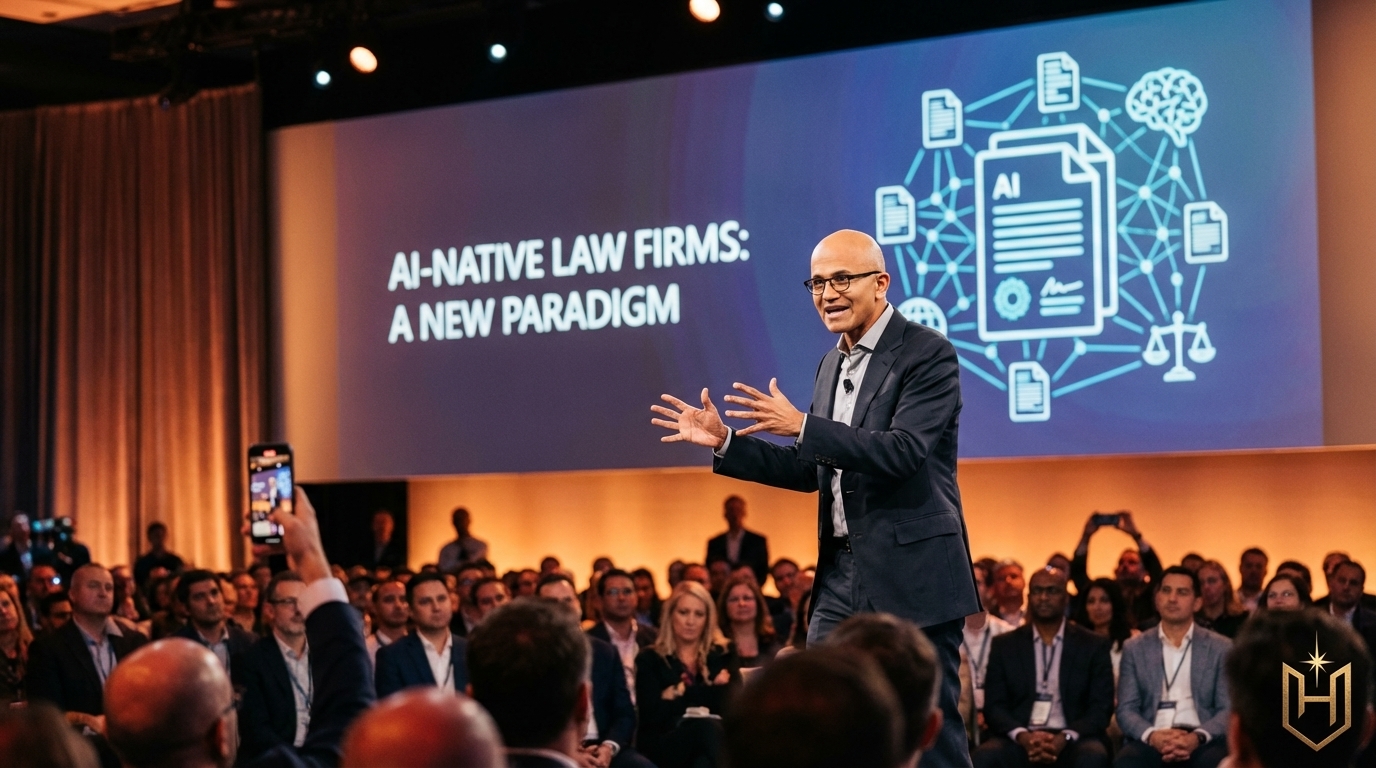
AI-Native Law Firms: The Ultimate Guide to Thriving in a New Era
The legal industry stands at a pivotal juncture, experiencing a seismic shift driven by artificial intelligence. Just recently, Pulse 2.0 reported a significant development: Lawhive, a pioneering AI-native law firm, has expanded its footprint by opening a New York office, signaling an aggressive US acquisition strategy.
This move, spearheaded by co-founder and CEO Nadim Choudhury, is not merely an expansion; it's a clear declaration that a new breed of legal practice, one built from the ground up on AI, is here to fundamentally reshape how legal services are delivered and consumed.
For traditional law firms, this isn't just news; it's a call to action, an urgent signal to re-evaluate their operational frameworks and embrace the transformative power of AI to remain competitive.
Lawhive's strategic entry into the bustling U.S. market underscores a broader trend: the evolution from AI-enhanced tools to fully AI-native law firms.
These firms don't just use AI; they are architected around it, embedding intelligent automation into every facet of their operations, from client intake and document review to case management and legal research. This integrated approach allows for unprecedented efficiency, cost-effectiveness, and scalability, challenging the long-standing hourly billing model and making legal services more accessible.
The implications for existing legal practices are profound, necessitating a strategic pivot towards adopting comprehensive AI solutions that can mirror, and even surpass, the capabilities of these emerging powerhouses. To understand how your firm can leverage cutting-edge AI, discover the HODOS 360 difference today.
AI-Native Law Firms: A New Paradigm in Legal Practice
The concept of an AI-native law firm represents a fundamental departure from the traditional legal model. Unlike firms that merely adopt AI tools to augment existing processes, AI-native firms are designed with artificial intelligence as their core operating principle. This foundational integration allows for a seamless, automated workflow that optimizes every stage of legal service delivery.
From the moment a client engages to the final resolution of a matter, AI orchestrates processes, manages data, and even generates drafts, significantly reducing human effort and error. This isn't just about efficiency; it's about redefining the very nature of legal work, shifting the focus of human lawyers to higher-value, strategic tasks that require nuanced judgment and client interaction.
This paradigm shift is not a distant future but a present reality, as evidenced by Lawhive's rapid growth and strategic expansion. According to a 2023 report by McKinsey & Company, generative AI alone could add trillions of dollars in value to the global economy, with the professional services sector, including legal, being a prime beneficiary.
Firms that embrace an AI-native approach are positioned to capture a significant share of this value by offering superior service at competitive price points. They leverage AI to handle routine legal tasks, such as contract review, due diligence, and initial client consultations, freeing up legal professionals to focus on complex litigation, strategic advisory, and deep client relationships, thereby enhancing both profitability and job satisfaction.
Traditional firms often struggle with legacy systems and an inherent resistance to radical change, making it difficult to compete with the agility and cost-effectiveness of AI-native law firms. The challenge isn't just about implementing new software; it's about a complete cultural and operational overhaul. Learn more about AI Legal Assistant 2026: Revolutionizing Law Firm Efficiency.
This involves investing in robust AI infrastructure, retraining staff, and reimagining business models. Firms that fail to adapt risk being left behind, losing market share to agile, tech-forward competitors. The imperative is clear: embrace digital transformation or face obsolescence in an increasingly AI-driven legal marketplace.
Moreover, the rise of AI-native firms is democratizing access to legal services. By lowering operational costs, these firms can offer more affordable and transparent pricing, making legal assistance accessible to a broader segment of the population that might otherwise be priced out. This aligns with the public interest and the legal profession's ethical obligations to ensure access to justice, as highlighted by organizations like the American Bar Association (ABA).
The strategic move by Lawhive into the U.S. market is not just a business expansion; it's a testament to the viability and growing demand for accessible, AI-powered legal solutions.
The Rise of AI Operating Systems in Law
At the heart of the AI-native law firm model lies the concept of an 'AI operating system' – a sophisticated, integrated platform that orchestrates all aspects of legal practice. Lawhive, for instance, has explicitly stated its ambition to build such an AI operating system for consumer law.
This system goes far beyond simple document automation or e-discovery tools. It encompasses client intake, case management, document generation, billing, and even predictive analytics, all powered by interconnected AI modules. Imagine a system where a new client's information automatically populates relevant documents, triggers workflow tasks, schedules appointments via an AI voice assistant, and updates billing records in real-time.
This level of integration is what defines an AI operating system.
These comprehensive systems are designed to minimize manual intervention, reduce administrative overhead, and virtually eliminate human error in routine tasks. Learn more about Legal AI Gap Widens: Strategic Imperative for Law Firms 2026. They learn and adapt over time, continuously improving efficiency and accuracy.
For a firm, this means not just cutting costs but also enhancing consistency and compliance, a critical factor in a highly regulated profession. The data generated by these systems also provides invaluable insights into firm performance, client needs, and market trends, enabling data-driven strategic decisions.
Firms without such an integrated system will find themselves at a severe disadvantage, struggling with fragmented data, inefficient workflows, and higher operational costs compared to their AI-native counterparts.
The Lawhive Model: Disrupting Traditional Legal Services
Lawhive's entry into the U.S. market through its New York office is a case study in disruption. Founded by Nadim Choudhury and Edward Walker, the UK-based startup has rapidly gained traction by focusing on consumer law and offering flat-fee legal services, a stark contrast to the traditional hourly billing model prevalent in the U.S. This approach, enabled by their underlying AI operating system, provides transparency and predictability for clients, addressing a significant pain point in the legal market.
Their strategy of leading with acquisitions signals a clear intent to scale rapidly and challenge established firms directly, particularly in high-volume, routine legal matters that are ripe for AI automation.
This aggressive expansion strategy is not unique to Lawhive; other legal tech startups like Harvey AI, which recently partnered with Allen & Overy, are demonstrating the power of AI to enhance and streamline legal operations for even the largest global firms.
However, Lawhive's model is distinct in its AI-native foundation, aiming to deliver legal services directly to consumers with unprecedented efficiency. This creates significant competitive pressure on traditional firms, many of whom are still grappling with digital transformation. The conflict between the agile, tech-driven newcomers and the established, often slower-to-adapt incumbents defines the current legal landscape.
The implications for market share are substantial. Learn more about Agentic Marketing: The Ultimate Guide for Law Firms. As Lawhive and similar AI-native law firms expand, they will inevitably draw clients away from traditional practices, especially those seeking affordable and predictable legal solutions for common issues like family law, immigration, and property disputes.
This forces traditional firms to either adapt by integrating advanced AI into their own operations or risk becoming niche players focused solely on highly complex, bespoke legal matters where human expertise remains irreplaceable. The market competition is intense, and firms that embrace AI not just as a tool, but as a core strategic asset, will be the ones that thrive.
Moreover, the success of startups like Lawhive is fueled by significant venture capital investment. Lawhive, for example, secured substantial funding to fuel its expansion, indicating investor confidence in the AI-native law firm model. This influx of capital allows these firms to invest heavily in technology, talent, and aggressive marketing, further widening the gap between them and firms reliant on outdated operational methods.
The narrative arc here is clear: innovation, backed by strategic investment, is rapidly outpacing tradition, creating a dynamic and often challenging environment for all legal professionals.
- ✓Streamlined Client Intake: AI systems automate information gathering, conflict checks, and initial assessments, drastically reducing onboarding time and effort.
- ✓Enhanced Document Automation: AI generates and reviews legal documents with speed and accuracy, minimizing manual drafting and proofreading errors.
- ✓Predictive Analytics for Case Management: AI analyzes vast datasets to forecast case outcomes, identify risks, and optimize litigation strategies.
- ✓Cost-Effective Service Delivery: Automation of routine tasks lowers operational overhead, enabling firms to offer competitive, transparent pricing models.
- ✓24/7 Client Support: AI Voice Assistants and chatbots provide instant answers to common queries, improving client satisfaction and accessibility.
- ✓Scalability and Growth: AI-powered workflows allow firms to handle a larger volume of cases without proportionally increasing headcount, facilitating rapid expansion.
- ✓Data-Driven Decision Making: Comprehensive analytics provide insights into firm performance, client needs, and market trends, informing strategic planning.
Leveraging AI for Competitive Advantage: HODOS 360's Approach
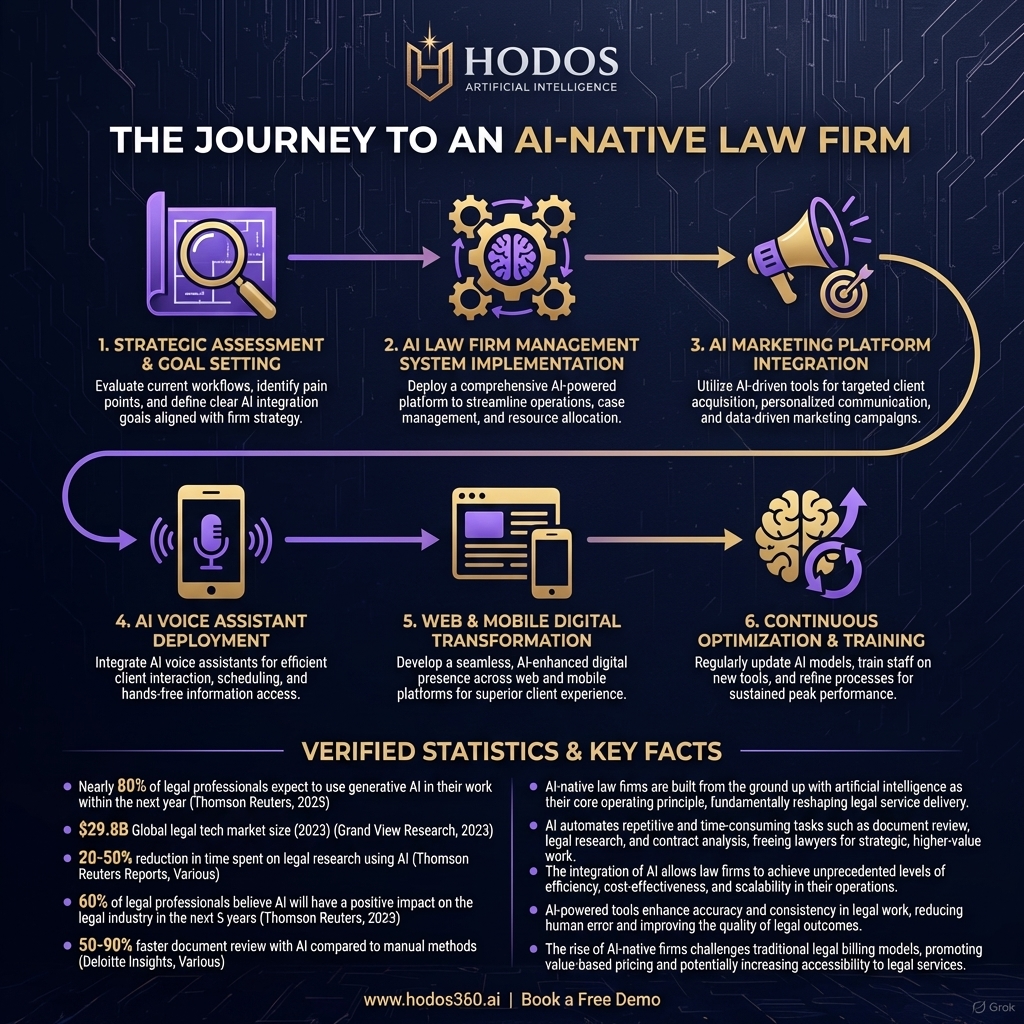
For law firms looking to not only survive but thrive in this new era dominated by AI-native law firms, the adoption of comprehensive AI solutions is no longer optional—it's imperative. HODOS 360 offers an integrated suite of AI-powered services designed to equip traditional firms with the tools they need to compete effectively and even lead.
Our AI Law Firm Management System provides an all-encompassing solution for case management, billing, client intake, and document automation, essentially offering firms their own 'AI operating system' to streamline operations and enhance productivity. This system integrates AI-powered legal workflows, allowing firms to automate repetitive tasks, reduce administrative burden, and ensure consistency across all legal processes, much like Lawhive's internal mechanisms but tailored for existing practices.
Beyond internal operations, HODOS 360 also empowers firms to enhance their external presence and client acquisition. Our AI Marketing Platform leverages AI for video creation, social media automation, and content generation, ensuring firms can effectively reach and engage their target audience. With built-in analytics and ROI tracking, firms can optimize their marketing spend and demonstrate tangible results, a crucial advantage when competing against well-funded AI-native law firms with aggressive marketing strategies.
This allows firms to not only automate internal processes but also intelligently grow their client base, ensuring sustained relevance in a competitive market.
Furthermore, HODOS 360's AI Voice Assistants provide a crucial competitive edge in client communication and lead qualification. Learn more about Voice AI Assistant: The Ultimate Guide for Law Firms.
Offering 24/7 phone answering, multilingual support, and intelligent call routing, these assistants ensure no lead is missed and every client feels valued. This level of responsiveness and accessibility directly addresses client expectations for immediate service, mirroring the 'always-on' nature of digital-first firms. Finally, our Web & Mobile Development services, featuring AI-powered website building and SEO optimization, ensure that firms have a strong, high-converting digital presence, essential for attracting modern clients who increasingly seek legal services online.
By integrating these four pillars—Law Firm Management, Marketing, Voice Assistants, and Web Development—HODOS 360 offers a holistic approach to digital transformation. This allows traditional firms to build their own AI-native capabilities, enhancing efficiency, improving client experience, and securing a robust competitive advantage. It's about empowering firms to evolve, not just with isolated tools, but with a fully interconnected ecosystem that drives growth and innovation.
Ready to transform your practice and compete effectively in the AI era? Explore HODOS 360's comprehensive AI solutions.
Beyond Efficiency: Redefining Client Experience
The impact of AI in legal services extends far beyond internal efficiency; it fundamentally redefines the client experience. AI-native law firms, by design, prioritize client convenience and transparency. HODOS 360's AI Voice Assistants, for example, offer 24/7 availability, ensuring clients can get answers to basic questions or book appointments outside traditional office hours.

This immediate responsiveness significantly improves client satisfaction and builds trust. The multilingual support further broadens access, catering to a diverse client base and removing language barriers that often hinder effective legal assistance.
Moreover, AI-powered client intake systems simplify the initial engagement process, making it less daunting and more efficient for clients.
Learn more about AI Marketing: The Ultimate Playbook for Law Firms. Document automation ensures that clients receive accurate, personalized documents promptly, enhancing their perception of the firm's professionalism and speed. By freeing up attorneys from routine administrative tasks, AI allows them to dedicate more time to meaningful client interactions, offering personalized advice and building stronger relationships.
This shift from transactional to relational service delivery, facilitated by AI, positions firms to not only meet but exceed modern client expectations, fostering loyalty and positive referrals.
Navigating the Future: Strategies for Traditional Firms
The emergence of AI-native law firms like Lawhive presents a clear challenge but also a profound opportunity for traditional practices. The key to navigating this evolving landscape lies in strategic adaptation and comprehensive digital transformation. Firms must move beyond piecemeal technology adoption and embrace an integrated AI strategy across their operations.
This starts with a thorough assessment of existing workflows to identify areas where AI can deliver the most significant impact, from automating administrative tasks to enhancing legal research and analysis. Investing in an AI-powered legal management system, for instance, can immediately boost efficiency and provide a centralized platform for all firm activities.
A critical strategy involves upskilling legal professionals. The role of the attorney is evolving, requiring not just legal acumen but also technological literacy. Firms should invest in training programs that educate lawyers and staff on how to effectively use AI tools, interpret AI-generated insights, and collaborate with AI systems.
This ensures that the human element remains central, with AI serving as a powerful co-counsel rather than a replacement. The American Bar Association's 2023 Legal Technology Survey Report consistently highlights the growing importance of tech competence for legal professionals, underscoring this imperative. Learn more about Marketing Automation: Powering Law Firm Growth & Efficiency in 2026.
Firms that empower their teams with AI literacy will be better equipped to leverage these new tools to their full potential.
Furthermore, traditional firms should consider strategic partnerships and collaborations with legal tech providers. Rather than attempting to build all AI capabilities in-house, partnering with specialized platforms like HODOS 360 allows firms to rapidly adopt cutting-edge technology without significant upfront development costs.
This approach enables firms to stay agile, access best-in-class AI solutions, and focus on their core legal competencies while leveraging external expertise for technological advancement. This collaborative model can accelerate digital transformation and help firms quickly bridge the gap with AI-native law firms.
Finally, firms must re-evaluate their service offerings and pricing models.
The flat-fee model championed by AI-native law firms is gaining traction due to its transparency and predictability. Traditional firms should explore hybrid models that combine hourly billing for complex matters with fixed fees for routine services, leveraging AI to make these fixed fees profitable. This adaptability in service delivery, coupled with a commitment to technological innovation, will enable traditional firms to attract and retain clients in a competitive market.
It’s about demonstrating value through both unparalleled legal expertise and cutting-edge operational efficiency.
The Imperative of Digital Transformation
Digital transformation is no longer a strategic option but an existential imperative for law firms. The rise of AI-native law firms like Lawhive, with their integrated AI operating systems and aggressive market strategies, underscores the urgency. Firms that delay comprehensive digital adoption risk falling behind in efficiency, client satisfaction, and overall market competitiveness.
This transformation must be holistic, encompassing not just individual software tools but a complete rethinking of workflows, client engagement, and business development through an AI lens.
This holistic approach involves investing in robust AI-powered platforms that cover all aspects of law firm management, marketing, and client communication.
It also requires a cultural shift within the firm, fostering an environment where innovation is encouraged, and continuous learning about new technologies is prioritized. Firms that embrace digital transformation will not only streamline their operations but also unlock new avenues for growth, client acquisition, and service delivery, ensuring their relevance and prosperity in the AI-driven legal landscape.
The time to act decisively and invest in the future is now.

Key Takeaways and Next Steps for Your Firm
The legal profession is experiencing an undeniable revolution, with AI-native law firms setting new benchmarks for efficiency, cost-effectiveness, and client experience. Lawhive's expansion into the U.S. is a clear signal that this transformation is accelerating, demanding a proactive response from all legal practices. Firms that embrace AI not merely as a tool but as an integral part of their operational and strategic framework will be best positioned for success.
This means investing in comprehensive AI solutions that streamline management, automate marketing, enhance client communication, and fortify digital presence.
For law firms aspiring to thrive, the path forward involves a commitment to continuous innovation, strategic technology adoption, and a client-centric approach empowered by AI. By leveraging platforms like HODOS 360, firms can build their own AI-native capabilities, ensuring they remain competitive, relevant, and capable of delivering exceptional legal services in an increasingly AI-driven world.
The future of law is AI-powered, and the time to act is now. Request a free HODOS 360 demo and chart your firm's path to innovation.
Frequently Asked Questions
What defines an AI-native law firm?+
An AI-native law firm is built from the ground up with artificial intelligence as its foundational operating system. This means AI is integrated into every core process, from client intake and document automation to case management and billing, rather than merely using AI tools to augment existing, traditional workflows. This integrated approach allows for unparalleled efficiency, scalability, and often, more transparent pricing models.
How are AI-native firms disrupting traditional legal services?+
AI-native firms disrupt by offering significantly greater efficiency and often lower, more predictable costs through flat-fee models. They automate routine tasks, freeing human lawyers for complex work, and provide 24/7 client access. This challenges the traditional hourly billing model and legacy operational structures, forcing traditional firms to innovate or risk losing market share to more agile, tech-forward competitors like Lawhive.
What is an 'AI operating system' in the legal context?+
An 'AI operating system' in law refers to a comprehensive, integrated platform that uses AI to orchestrate all aspects of a law firm's operations. This includes automating client intake, managing cases, generating documents, handling billing, and providing analytics. It acts as a central nervous system, ensuring seamless workflows and data flow across different functions, leading to superior efficiency and consistency.
What strategies can traditional firms adopt to compete with AI-native firms?+
Traditional firms should embrace comprehensive digital transformation, integrating AI solutions across management, marketing, and client communication. Key strategies include investing in AI-powered legal management systems, upskilling legal professionals in AI literacy, exploring strategic partnerships with legal tech providers, and re-evaluating service offerings to include more transparent, AI-enabled pricing models.
How does HODOS 360 help firms become AI-ready?+
HODOS 360 provides an integrated suite of AI-powered services: AI Law Firm Management, AI Marketing Platform, AI Voice Assistants, and Web & Mobile Development. These services empower firms to streamline operations, automate marketing, enhance client engagement, and build a robust digital presence. HODOS 360 essentially provides the tools for traditional firms to build their own AI-native capabilities, ensuring competitive advantage.