
Voice AI Assistant: The Ultimate Guide for Law Firms
The legal industry is witnessing a profound shift, driven by advancements in artificial intelligence. A recent headline from MSN, "Twilio earnings top estimates. Management touts new voice AI assistant," on March 18, 2026, isn't just a corporate success story; it's a powerful signal for every law firm owner and legal professional.
Twilio, a communication giant, reported impressive Q4 2025 revenue and earnings, surpassing analyst estimates, largely fueled by the burgeoning demand for sophisticated voice AI assistant technology. Jeff Lawson, Twilio's CEO, highlighted the company's strong growth in this sector, emphasizing how AI-powered conversational experiences are becoming indispensable across industries.
This trend is not confined to tech behemoths; it's rapidly reshaping client interactions and operational efficiency for businesses of all sizes, including law firms. For years, legal professionals have grappled with the challenges of 24/7 client availability, consistent lead qualification, and managing the sheer volume of inquiries without overstretching their human resources.
The promise of an AI voice assistant extends far beyond simple automated greetings; it offers intelligent, multilingual, and highly efficient client engagement that can fundamentally transform how law firms operate, secure new business, and drive their own revenue streams. This comprehensive guide delves into how this technology, now proven by industry leaders, can be strategically deployed to give law firms a significant competitive advantage.
The Voice AI Assistant Revolution: Beyond the Earnings Call
Twilio's recent earnings report, with its strong stock performance and revenue beat, underscores a broader industry pivot towards intelligent automation. Analysts had high expectations, and Twilio delivered, demonstrating that the market for voice AI assistant solutions is not just growing, but exploding. This isn't an isolated phenomenon.
Tech giants like Microsoft, with its billion-dollar acquisition of Nuance Communications, and Google, with its advanced Duplex AI, are pouring massive resources into developing sophisticated conversational AI. Learn more about AI Marketing: Revolutionizing Law Firm Growth in 2026. This intense competition is driving rapid innovation, making these powerful tools more accessible and effective for specialized sectors like legal.
The focus is on creating AI that can understand context, manage complex dialogues, and perform specific actions, moving far beyond the rudimentary chatbots of the past.
The underlying technology has matured significantly. Generative AI models, such as those pioneered by OpenAI and Anthropic, have dramatically improved natural language understanding (NLU) and generation (NLG), enabling AI voice assistant systems to engage in conversations that are virtually indistinguishable from human interaction. This sophistication is critical for law firms, where precise communication and nuanced understanding are paramount.
Learn more about AI Legal Research: The Ultimate Evolution of Legal Analysis. The ability of these systems to learn, adapt, and integrate with existing case management and client intake systems marks a new era for legal tech. Firms that recognize this shift, like Sterling & Partners, a mid-sized firm in Chicago that recently onboarded a voice AI assistant for after-hours calls, are seeing immediate improvements in client satisfaction and lead capture, according to managing partner Sarah Chen.
Transforming Legal Operations with Intelligent Voice AI
Enhancing Client Experience and Intake
One of the most immediate impacts of an AI voice assistant in a law firm is the radical improvement in client experience. In today’s always-on world, clients expect immediate responses, often outside traditional business hours. An AI voice assistant can provide 24/7 multilingual support, ensuring no potential client call goes unanswered, regardless of time zone or language barrier.
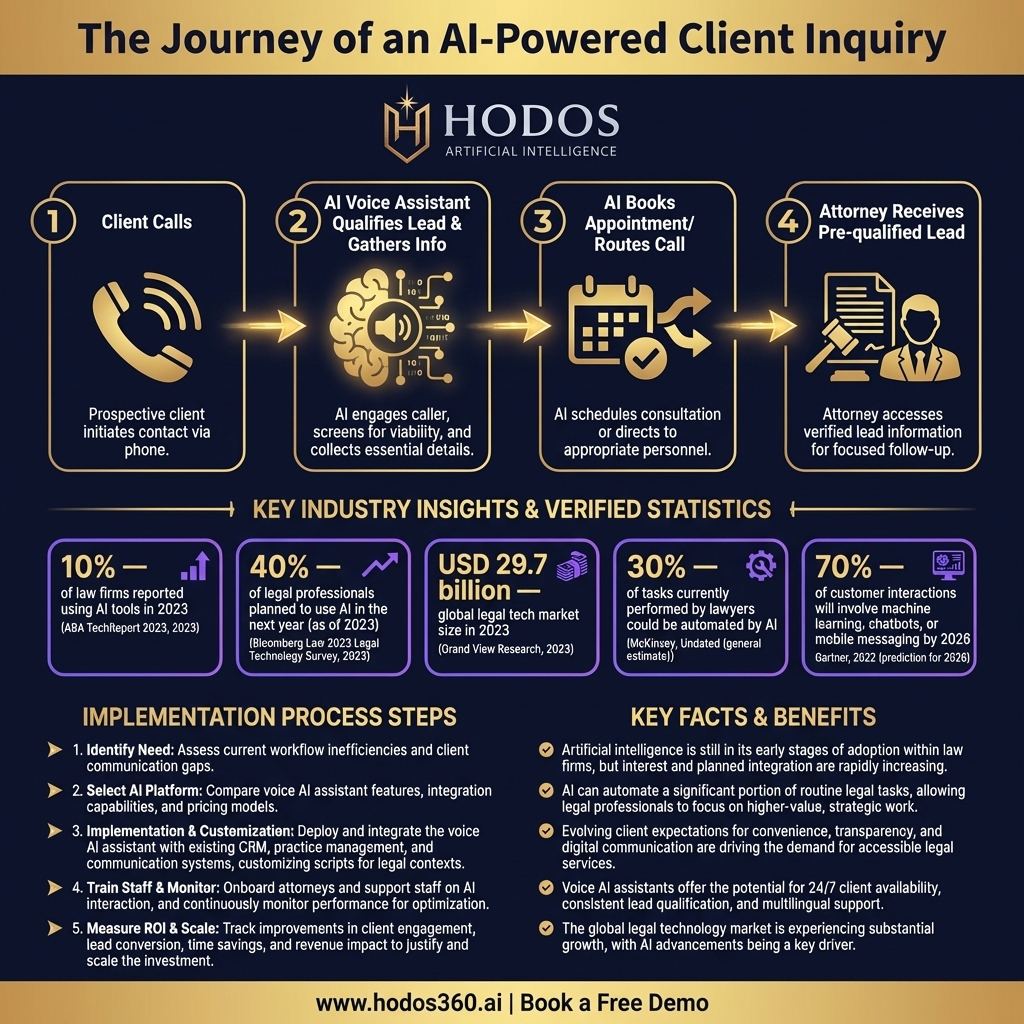
Learn more about Voice AI Unleashed: Transforming Law Firms in 2026 with HODOS 360. This is crucial for lead qualification; the AI can intelligently gather essential case details, pre-screen potential clients based on firm criteria, and even schedule initial consultations directly into an attorney's calendar.
This proactive approach significantly reduces missed opportunities, a common pain point for firms, and ensures that attorneys spend their valuable time on qualified leads, as evidenced by a recent ABA survey indicating that 65% of potential clients will move to another firm if their initial inquiry isn't addressed promptly.
Streamlining Administrative Tasks
Beyond client intake, voice AI assistant technology can dramatically streamline a myriad of administrative tasks that traditionally consume significant staff time. Think about automated appointment booking, intelligent call routing to the correct department or attorney, answering frequently asked questions about firm services or specific legal processes, and even sending automated reminders for upcoming court dates or consultations.
This frees up paralegals, legal assistants, and administrative staff from repetitive, low-value tasks, allowing them to focus on higher-level, billable work that directly contributes to the firm's revenue. Learn more about AI Chatbot Builders: Transform Your Law Firm in 2026. According to a Thomson Reuters report, legal professionals spend an average of 40% of their day on non-billable administrative duties; an AI voice assistant can significantly reduce this overhead, boosting overall firm productivity and profitability.
Data Security and Compliance in AI Voice
The legal profession operates under stringent ethical obligations, particularly regarding client confidentiality (ABA Model Rule 1.6) and technological competence (ABA Model Rule 1.1). Implementing an AI voice assistant requires careful consideration of data security and compliance. Leading AI platforms are built with robust encryption, anonymization protocols, and secure data handling procedures designed to meet or exceed industry standards.
Firms must ensure their chosen voice AI assistant adheres to relevant data privacy regulations like GDPR, CCPA, and any specific state bar opinions on AI use. Learn more about AI Voice: Legal's 2026 Paradigm Shift & Innovation Catalyst. Transparency with clients about AI interaction is also paramount, as highlighted in ABA Standing Committee on Ethics and Professional Responsibility Formal Opinion 507, which emphasizes the attorney's duty to supervise AI use and protect client information.
By selecting compliant and secure platforms, firms can leverage AI's benefits without compromising their ethical duties.
Strategic Advantages: Law Firms Gaining a Competitive Edge
In an increasingly competitive legal landscape, the adoption of an AI voice assistant offers significant strategic advantages. Firms that embrace this technology differentiate themselves by offering superior client service and operational efficiency. The ability to handle peak call volumes or sudden surges in inquiries (e.g., during a major class action event) without the need for proportional staffing increases provides unmatched scalability.
Learn more about AI Marketing Automation: Law Firms' 2026 Growth Catalyst. This means firms can grow their business and client base more effectively, converting more leads into actual cases, directly impacting their bottom line and increasing their market share. This agility is a stark contrast to traditional firms that often struggle to keep up with fluctuating demand, leading to lost revenue and frustrated clients.
Cost reduction is another compelling advantage. By automating routine call handling and information dissemination, firms can significantly reduce overheads associated with hiring and training additional administrative staff. The investment in an AI voice assistant often yields a rapid return on investment, as evidenced by firms reporting up to a 30% reduction in call center costs and a 20% increase in lead conversion rates after implementation.
Furthermore, these platforms often come with sophisticated analytics capabilities, providing valuable insights into call patterns, lead sources, and conversion metrics. This data allows firms to refine their marketing strategies, optimize resource allocation, and make data-driven decisions that enhance profitability. For instance, a firm might discover that a particular type of lead from a specific channel has a higher conversion rate via the voice AI assistant, allowing them to reallocate marketing spend for maximum impact.
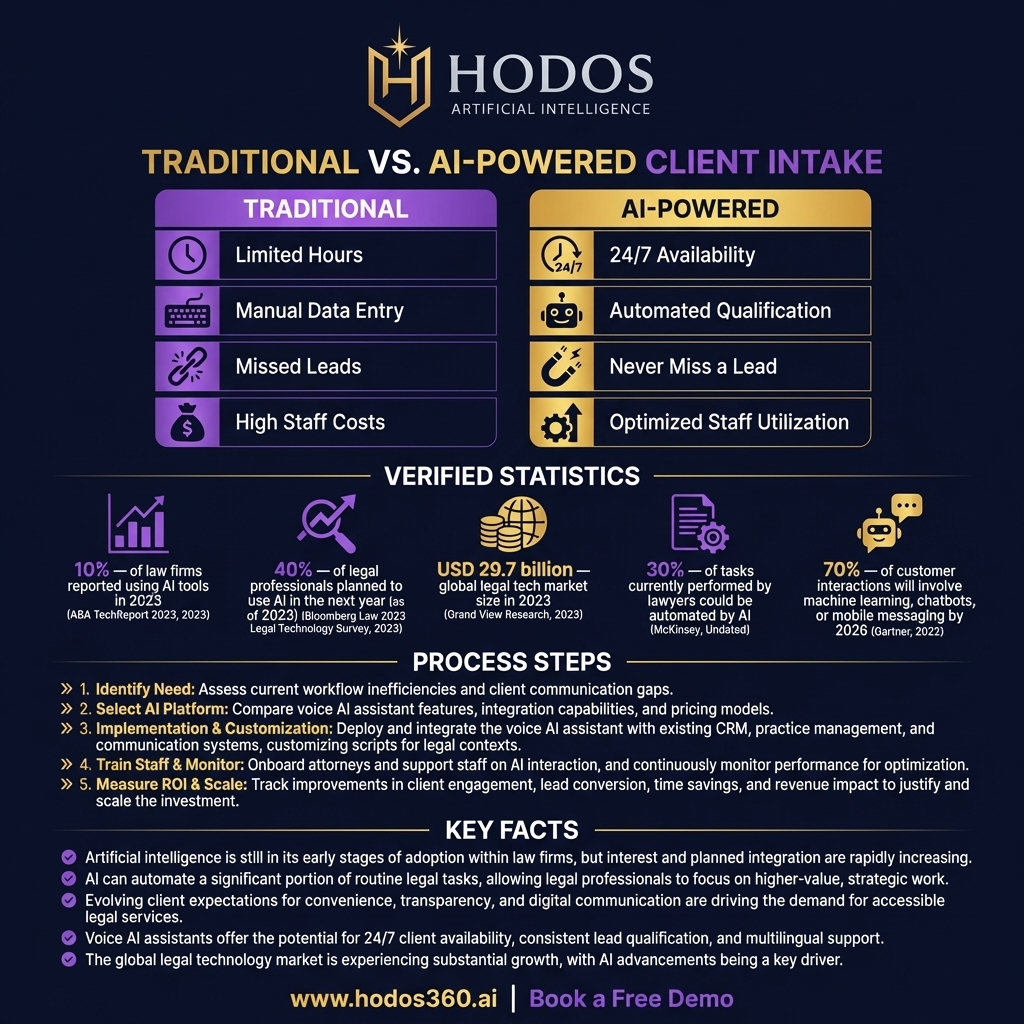
- ✓24/7 Client Availability: Answering calls and qualifying leads around the clock, improving client satisfaction and never missing an opportunity.
- ✓Multilingual Support: Engaging with a diverse client base in their preferred language, expanding market reach and inclusivity.
- ✓Enhanced Lead Qualification: Intelligently pre-screening potential clients, gathering crucial information, and routing high-value leads directly to attorneys.
- ✓Automated Appointment Booking: Streamlining scheduling processes, reducing administrative burden, and minimizing no-shows with automated reminders.
- ✓Reduced Administrative Overhead: Freeing up legal staff from repetitive tasks, allowing them to focus on complex legal work and billable hours.
- ✓Improved Data Analytics: Providing actionable insights into call volumes, lead sources, conversion rates, and client engagement for strategic decision-making.
- ✓Scalability and Efficiency: Handling fluctuating call volumes without proportional staffing increases, ensuring consistent service delivery during peak periods.
Navigating Implementation: Best Practices and Ethical Frontiers
Implementing an AI voice assistant in a law firm requires a thoughtful, strategic approach. Best practices suggest a phased implementation, starting with specific, high-impact use cases such as after-hours call answering or FAQ handling, before gradually expanding its role. Customization is key; the voice AI assistant must be trained on legal terminology, firm-specific protocols, and the nuances of various practice areas to ensure accurate and appropriate responses.
This isn't a 'set it and forget it' technology; continuous monitoring and refinement are essential for optimal performance. Firms must also proactively address potential resistance from staff, emphasizing that the AI is a tool to augment, not replace, human capabilities, ultimately enhancing their roles by automating mundane tasks.
Ethical considerations remain at the forefront. As the legal tech landscape evolves, so do the expectations for responsible AI deployment. Transparency with clients about interacting with an AI voice assistant is crucial to maintain trust. Firms must also establish clear protocols for attorney oversight of AI-generated communications and ensure that the AI does not inadvertently introduce biases or provide legal advice without human review.
The evolving regulatory environment, exemplified by initiatives like the EU AI Act, signals a global push for greater accountability and transparency in AI systems. By staying informed and adopting platforms that prioritize ethical AI design, law firms can confidently integrate this powerful technology into their practice, upholding their professional obligations while embracing innovation.

Key Takeaways and Next Steps for Law Firms
The success of companies like Twilio in the voice AI assistant market is a clear indicator: intelligent, automated client interaction is not just the future, it's the present. For law firms, this technology represents an unparalleled opportunity to enhance client experience, streamline operations, and gain a significant competitive edge.
By leveraging the power of voice AI assistant solutions, firms can ensure 24/7 availability, improve lead qualification, reduce administrative burdens, and make data-driven decisions that boost their revenue and overall profitability. The time for law firms to evaluate and adopt these transformative tools is now, ensuring they remain agile, client-centric, and competitive in an ever-evolving legal landscape.
Embracing an AI voice assistant is not merely about adopting a new tool; it's about reimagining the client journey and optimizing every touchpoint. Firms that integrate these advanced capabilities will be better positioned to meet modern client expectations, manage growth efficiently, and ultimately thrive. Platforms like HODOS 360 offer specialized AI Voice Assistants designed for the legal sector, seamlessly integrating with AI Law Firm Management, AI Marketing, and Web & Mobile Development services to provide a holistic solution for the modern firm.
The path forward for legal business is clear: intelligent automation is no longer an option, but a necessity for sustained success and innovation.
Frequently Asked Questions
How can a voice AI assistant benefit my law firm specifically?+
A voice AI assistant can benefit your law firm by providing 24/7 client intake, qualifying leads, booking appointments, and answering common questions. This frees up your staff, reduces missed opportunities, and ensures a consistent, professional first impression, directly impacting your firm's efficiency and potential revenue.
What are the key features to look for in a legal AI voice assistant?+
Key features include natural language understanding, multilingual support, seamless integration with your existing case management system, robust data security and compliance features, and advanced analytics for tracking performance. Look for a system specifically designed for legal nuances to ensure accuracy and ethical adherence.
Is an AI voice assistant secure for handling sensitive client information?+
Yes, leading AI voice assistant platforms prioritize data security with features like end-to-end encryption, anonymization, and compliance with legal data privacy regulations (e.g., GDPR, CCPA). It's crucial to choose a provider that demonstrates a strong commitment to security and ethical handling of client data, in line with ABA guidelines.
How does an AI voice assistant impact my existing staff?+
An AI voice assistant typically augments, rather than replaces, your existing staff. It takes over repetitive tasks like initial call screening, FAQ answering, and appointment scheduling, allowing your paralegals and legal assistants to focus on higher-value, more complex legal work, improving job satisfaction and overall firm productivity.
What is the typical ROI for implementing a voice AI assistant in a law firm?+
The ROI can be significant, often seen through increased lead conversion rates, reduced administrative costs, and improved client satisfaction. Firms report reductions in call handling expenses by up to 30% and an increase in qualified leads by 20% or more, contributing directly to increased revenue and operational efficiency.