


AI Legal Research: The Ultimate Evolution of Legal Analysis
The legal profession, often characterized by its adherence to tradition, is currently experiencing an unprecedented technological seismic shift. Nowhere is this more evident than in the realm of legal research, a foundational pillar of legal practice. The recent announcement by LawSites' Robert Ambrogi, detailing the joint venture between Benchly and Servient to introduce legagain, the first truly AI-native legal research platform, signals a pivotal moment.
This isn't merely an incremental upgrade to existing search tools; it represents a fundamental re-imagining of how attorneys interact with legal data, predict outcomes, and formulate strategy. The implications for law firms, from solo practitioners to global enterprises, are profound, challenging established methodologies and demanding a new understanding of legal competence in the digital age.
For decades, legal research has been dominated by keyword-based systems, requiring immense human effort to sift through vast archives of statutes, case law, and secondary sources. While powerful, these systems often leave attorneys vulnerable to human error, information overload, and the sheer time commitment required for comprehensive analysis.
The emergence of legagain at Legalweek NYC 2026, as reported, marks a clear departure. It promises a platform designed from the ground up to leverage artificial intelligence, offering not just faster retrieval but deeper analytical capabilities that were previously unattainable. This development is not occurring in a vacuum; it’s part of a broader trend where AI is permeating every facet of legal operations, from client intake to document automation, creating a competitive imperative for firms to adapt or risk falling behind.
The tension between traditional approaches and the disruptive potential of AI-native solutions is palpable, creating a dynamic environment where innovation is both a challenge and an immense opportunity.
Ready to transform your firm? Discover how HODOS 360's AI-powered solutions can integrate seamlessly with advanced legal research, streamlining your operations and boosting efficiency. [CTA: Explore HODOS 360 Today]
The Genesis of AI-Native Legal Research: Benchly, Servient, and legalgain
The collaboration between Benchly, a company known for its innovative data processing capabilities, and Servient, a leader in advanced legal analytics, has culminated in legagain—a platform poised to redefine legal practice. What distinguishes an "AI-native" platform from traditional AI-enhanced tools? It’s a fundamental architectural difference.
While many legacy legal research platforms have integrated AI features retrospectively, often layering machine learning atop existing infrastructure, an AI-native solution is built with AI at its core. This means that every function, from query processing to predictive modeling, is inherently designed to leverage sophisticated algorithms, natural language processing (NLP), and machine learning (ML) models from the ground up.
This approach enables legagain to not only understand the nuances of legal language but also to identify patterns, make connections, and even anticipate legal arguments with a precision unmatched by human researchers or retrofitted AI systems.
Consider the immense volume of legal data generated daily—new statutes, appellate decisions, regulatory changes.
A purely AI-native system can ingest, categorize, and cross-reference this data in real-time, providing attorneys with an always up-to-date and contextually relevant knowledge base ActiveCampaign 2026: AI Marketing Unleashes Law Firm Growth. This contrasts sharply with the laborious process of manual data input and periodic updates characteristic of older systems.
The vision articulated by leaders at Benchly and Servient during the Legalweek announcement emphasized not just speed, but depth of insight. They highlighted how legagain moves beyond simple information retrieval to offer genuine analytical support, acting as an intelligent co-pilot for legal professionals. This shift is critical; it transforms legal research from a search-and-find mission into a sophisticated analytical process, where AI augments human intellect rather than merely supplementing it.
The joint venture exemplifies a growing trend of specialized tech firms combining strengths to tackle complex challenges, pushing the boundaries of what is possible in legal tech.
Defining the 'AI-Native' Advantage in Legal Research
The 'AI-native' designation for platforms like legagain signifies a paradigm shift in software development for the legal sector. Unlike older systems that might add an AI-powered search bar, AI-native platforms embed intelligence into every layer of their architecture. This means the underlying data models, the user interface, and the output generation are all optimized for AI processing.
For instance, an AI-native platform can dynamically learn from a user's research patterns, refining future results and suggesting tangential, yet relevant, legal precedents that a human might overlook Legal AI Revolution: Unlocking 2026 Firm Growth with HODOS. It goes beyond simple keyword matching to understand the semantic context and legal implications of a query, delivering not just documents, but actionable insights.
This holistic integration of AI allows for a more fluid, intuitive, and ultimately more effective research experience, significantly reducing the cognitive load on attorneys and allowing them to focus on high-value strategic thinking rather than exhaustive data retrieval. This fundamental difference is what positions legagain to truly disrupt the market.
Beyond Traditional Search: The Transformative Power of AI Analysis
The true disruptive potential of AI-native platforms like legagain lies in their ability to perform advanced analytical tasks that transcend the capabilities of traditional legal research. No longer are attorneys limited to finding cases based on keywords or headnotes. Instead, AI can dissect entire legal arguments, identify intricate patterns across thousands of judicial opinions, and even predict the likelihood of success for specific legal strategies.
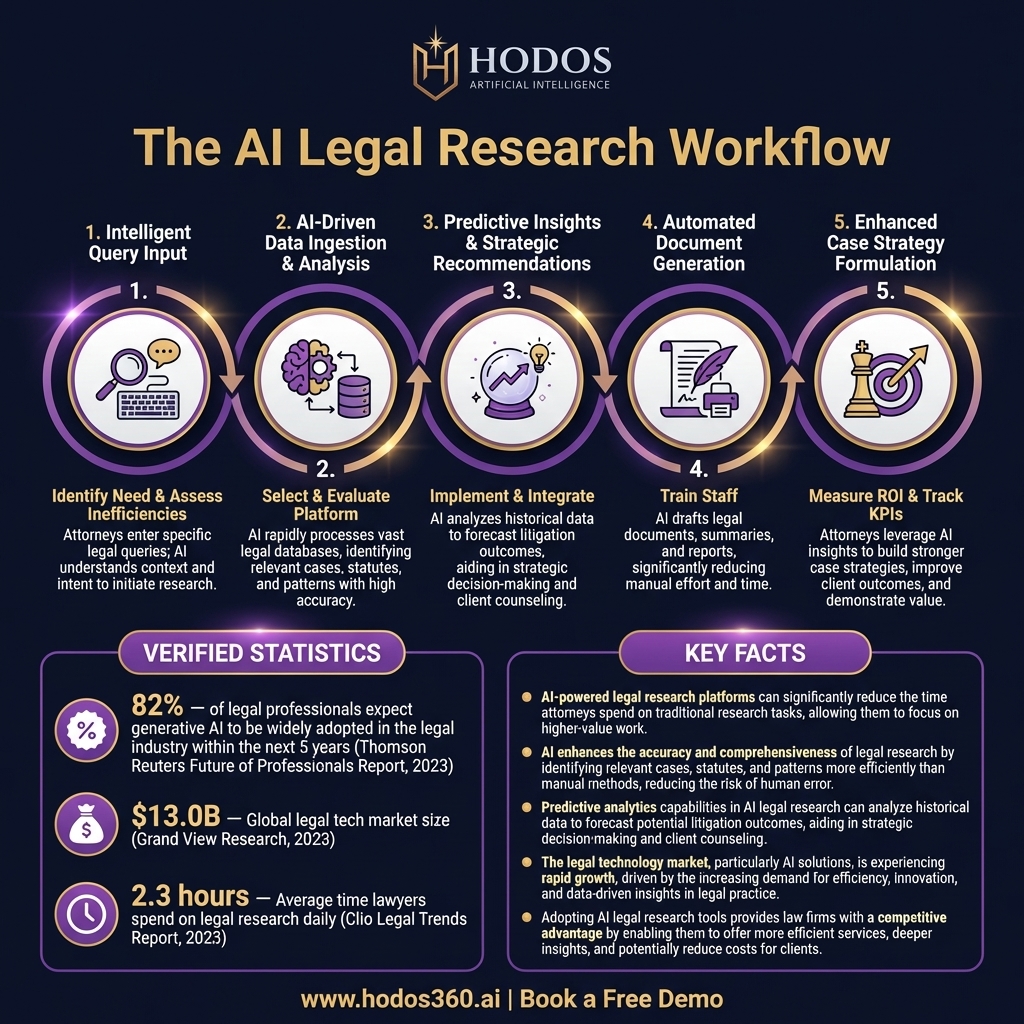
This capability is powered by sophisticated algorithms that leverage natural language processing to understand the context, sentiment, and persuasive elements within legal texts. For example, a system could analyze how specific judges rule on particular types of motions, or how certain arguments have fared in different jurisdictions, providing a data-driven edge in litigation.
This level of analysis moves beyond simple information retrieval, offering genuine strategic intelligence.
Consider the application of predictive analytics, a cornerstone of advanced AI legal research. Platforms can analyze historical case data, including outcomes, judge tendencies, and even the success rates of specific arguments or expert witnesses, to forecast potential results in new cases Law Firm Return on Investment: Maximize AI in 2026.
This empowers attorneys to make more informed decisions about settlement, trial strategy, and client expectations. A report by McKinsey & Company highlighted that AI could automate up to 23% of lawyers' tasks, with a significant portion of this stemming from enhanced research and analytical capabilities.
This isn't about replacing lawyers but augmenting their capacity to process complex information and derive deeper insights faster. The shift from reactive research to proactive, predictive analysis fundamentally alters the strategic planning process within a law firm, allowing for more agile and evidence-based decision-making in a highly competitive legal market.
This level of insight was once the exclusive domain of highly specialized, time-intensive human analysis, now democratized by AI.
Deep Dive into Predictive Analytics for Case Strategy
Predictive analytics in AI legal research goes far beyond simple statistical likelihoods. It involves complex machine learning models trained on vast datasets of legal documents, including court filings, judgments, and even juror demographics where available. For a firm like Allen & Overy, which famously partnered with Harvey AI, the ability to rapidly assess the viability of a new case or the potential outcomes of an appeal can be a game-changer.
These tools can identify subtle correlations between case facts and judicial decisions, providing attorneys with a nuanced understanding of their position AI Legal Startup Sandstone: Unlocking 2026's Legal Tech Future. This capability allows firms to better manage client expectations, allocate resources more effectively, and even identify high-risk areas in their litigation portfolio before they escalate.
The strategic advantage derived from such deep data-driven insights is immense, transforming a reactive legal process into a proactive, outcome-oriented approach, directly influencing a firm's bottom line and reputation.
Navigating the Competitive Landscape: Established Players vs. Innovators
The emergence of AI-native platforms like legagain has ignited a fierce competition within the legal tech industry, creating a fascinating dynamic between long-standing giants and agile innovators. Established players like Thomson Reuters (owners of Westlaw) and LexisNexis, which have dominated the legal research market for decades, are not standing idly by.
Thomson Reuters, for instance, made a significant move by acquiring Casetext, a prominent AI legal research startup, for $650 million, signaling their intent to integrate advanced AI capabilities into their offerings. This acquisition highlights the tension: legacy providers are scrambling to adapt, often through M&A, to prevent being outmaneuvered by nimble startups that are unburdened by outdated infrastructure.
The market is witnessing a classic disruption narrative, where the incumbents must innovate rapidly while maintaining their vast user base and data archives, a complex balancing act.
This competition is not just about technology; it's about market share, talent, and the future of legal information services.
Startups like Benchly and Servient are attracting top-tier engineering and AI talent, driven by the allure of building something truly revolutionary Essential AI Website Builder for Law Firms: A Complete Guide. Meanwhile, larger firms are leveraging their extensive data libraries and established client relationships to integrate AI features, attempting to offer a comprehensive ecosystem.
The drama unfolds at major conferences like Legalweek, where these companies unveil their latest advancements, often engaging in subtle (and sometimes not-so-subtle) jabs at their rivals' approaches. The ultimate beneficiaries are law firms, which now have an expanding array of powerful tools at their disposal.
However, this also presents a challenge: how to navigate a rapidly evolving market, discern genuine innovation from marketing hype, and invest wisely in technologies that will provide a sustainable competitive advantage. The decision to adopt an AI-native platform is therefore not just a tech choice, but a strategic business imperative, impacting everything from efficiency to client retention.
The Economic Imperative: ROI and Efficiency Gains
The adoption of AI legal research platforms is increasingly driven by a clear economic imperative. Law firms are under constant pressure to optimize costs, improve billing efficiency, and deliver greater value to clients. AI-native tools directly address these challenges by drastically reducing the time spent on mundane research tasks.
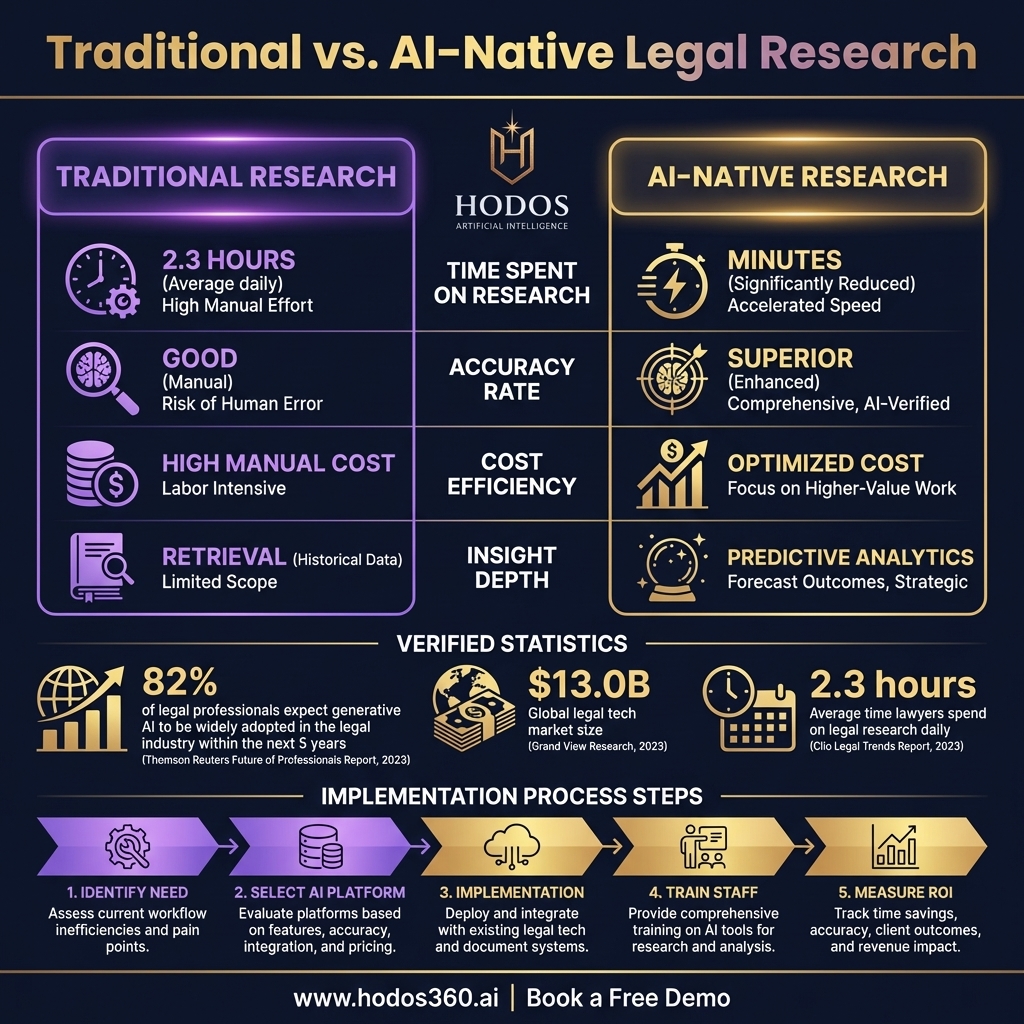
For instance, an attorney who previously spent hours manually reviewing discovery documents can now use AI to identify key information, privilege issues, or relevant precedents in minutes AI Website Builder: The Ultimate Guide for Law Firms. This translates into more billable hours focused on high-value strategic work, faster case resolution, and ultimately, a stronger financial performance for the firm.
Gartner predicts that by 2030, AI will automate 80% of routine legal tasks, underscoring the potential for massive ROI for early adopters. Firms that embrace these technologies are not just modernizing; they are strategically positioning themselves for sustained growth and profitability in an increasingly competitive market, leaving those who hesitate at a significant disadvantage.
The Ethical and Practical Implications for Law Firms
While the promise of AI legal research is immense, its integration into law firm operations brings forth a critical set of ethical and practical considerations. Attorneys have a professional obligation under ABA Model Rule 1.1 (Competence) to understand the benefits and risks associated with technology relevant to their practice.
This includes being proficient enough to evaluate AI tools for accuracy, potential biases, and the risk of "hallucinations"—where AI generates plausible but incorrect information. Firms must establish clear protocols for human oversight, ensuring that AI-generated insights are always verified by a qualified legal professional. The ethical duty of confidentiality, outlined in ABA Model Rule 1.6, also becomes paramount when using AI tools that process sensitive client data.
Firms must rigorously vet vendors for their data security practices, encryption standards, and adherence to privacy regulations like GDPR or CCPA, especially when leveraging cloud-based AI solutions. Failing to do so could expose firms to severe data breaches, reputational damage, and professional misconduct claims.
Beyond ethics, the practical integration of AI legal research requires a strategic approach to change management and talent development.
It’s not enough to simply purchase a subscription; firms must invest in training their attorneys and staff to effectively utilize these tools. This includes understanding how to formulate precise queries, interpret AI-generated outputs, and integrate these insights into existing workflows. Many firms are finding success by designating "AI champions" within their teams, individuals who become experts and help disseminate knowledge.
The goal is to cultivate an "AI-ready" legal workforce that views technology as an augmentation, not a threat. This proactive approach ensures that the firm can maximize the efficiency gains and strategic advantages offered by AI, while mitigating the inherent risks. Firms that neglect these aspects risk not only underutilizing their investments but also exposing themselves to unforeseen liabilities in a rapidly evolving technological landscape.
Cultivating an AI-Ready Legal Workforce
Cultivating an AI-ready legal workforce is less about tech-savviness and more about fostering a culture of continuous learning and adaptability. Law firms must move beyond the traditional models of legal education and embrace ongoing professional development focused on legal tech literacy. This involves understanding the capabilities and limitations of tools like legagain, as well as the ethical frameworks governing their use.
The EU AI Act, for example, sets a global precedent for regulating AI, and legal professionals must be aware of such evolving legislative landscapes. Firms should implement structured training programs, encourage cross-departmental collaboration on AI initiatives, and create opportunities for experimentation with new tools in a controlled environment.
By empowering their teams with the knowledge and skills to effectively harness AI, firms can transform potential resistance into enthusiastic adoption, ensuring that their human capital remains at the forefront of legal innovation and maintains a competitive edge.

Key Takeaways and Next Steps for Your Firm
The introduction of AI-native platforms like legagain marks a definitive turning point for the legal profession. It signals an era where legal research transcends mere information retrieval, evolving into sophisticated AI legal research that offers predictive insights and strategic advantages. For law firm owners and attorneys, the imperative is clear: embrace this transformation not as an option, but as a necessity for sustained relevance and growth.
Firms that proactively integrate these advanced tools will gain a significant competitive edge, enabling them to deliver faster, more accurate, and more cost-effective services to their clients.
However, adopting cutting-edge AI legal research is just one piece of the puzzle. A truly future-proof law firm requires a holistic approach to technology integration.
This is where comprehensive platforms like HODOS 360 become indispensable. By combining AI Law Firm Management, AI Marketing, AI Voice Assistants, and Web & Mobile Development, HODOS 360 provides the infrastructure to not only leverage powerful research tools but also to streamline every other aspect of your operations.
From automating case management and billing to generating compelling marketing content and providing 24/7 client support, HODOS 360 ensures your firm is optimized for the AI era. The future of legal practice is integrated, intelligent, and efficient. Are you ready to lead the way?
- ✓Evaluate AI-Native Solutions: Conduct thorough due diligence on new AI legal research platforms to understand their unique capabilities and how they differ from AI-enhanced legacy systems.
- ✓Prioritize Ethical Integration: Develop internal guidelines for the responsible use of AI, focusing on data privacy, accuracy verification, and maintaining human oversight in all AI-driven processes.
- ✓Invest in Workforce Training: Implement continuous professional development programs to ensure attorneys and staff are proficient in leveraging AI tools for maximum efficiency and strategic advantage.
- ✓Assess ROI and Efficiency Gains: Track metrics related to time saved, improved case outcomes, and client satisfaction to quantify the benefits of AI adoption and justify further investment.
- ✓Strategic Partnership with Tech Providers: Consider engaging with comprehensive legal tech platforms like HODOS 360 to integrate AI across all firm operations, from management to marketing and client service.
- ✓Stay Abreast of Regulatory Changes: Monitor evolving legal tech regulations, such as those inspired by the EU AI Act, to ensure compliance and ethical practice in an AI-driven environment.
Unlock your firm's full potential with AI. Don't get left behind in the rapidly evolving legal tech landscape. [CTA: Schedule Your HODOS 360 Demo Today]
Frequently Asked Questions
What is an AI-native legal research platform?+
An AI-native legal research platform, like legalgain, is built from the ground up with artificial intelligence at its core. This means AI is integrated into every function, from data ingestion and processing to analytical output, rather than being an add-on feature. It allows for deeper contextual understanding, pattern recognition, and predictive capabilities unmatched by traditional or retrofitted AI-enhanced systems.
How does AI legal research differ from traditional methods?+
Traditional legal research primarily relies on keyword searches and manual review, which can be time-consuming and prone to human error. AI legal research, conversely, uses natural language processing and machine learning to understand legal nuances, perform predictive analysis on case outcomes, identify complex patterns, and offer strategic insights, transforming research from mere retrieval into advanced analytical support.
What are the ethical considerations for using AI in legal practice?+
Ethical considerations include ensuring competence (ABA Model Rule 1.1) in using AI tools, maintaining client confidentiality (ABA Model Rule 1.6) by vetting data security, and guarding against AI biases or 'hallucinations.' Firms must implement human oversight, verify AI-generated information, and adhere to evolving data privacy regulations to ensure responsible and ethical AI integration.
Will AI replace legal professionals?+
No, AI is not expected to replace legal professionals but rather augment their capabilities. Tools like legagain automate routine, time-consuming tasks, allowing attorneys to focus on higher-value strategic thinking, client interaction, and complex problem-solving. AI transforms the role of legal professionals, making them more efficient, data-driven, and capable of handling more sophisticated legal challenges.
How can law firms prepare for the widespread adoption of AI legal tech?+
Law firms can prepare by investing in continuous legal tech education for their staff, fostering a culture of innovation, establishing clear ethical guidelines for AI use, and strategically partnering with comprehensive AI platforms. Adopting a holistic approach, encompassing AI in management, marketing, and client services, ensures the firm remains competitive and efficient in the evolving legal landscape.