
AI Voice Assistants: Essential Balance for Law Firms
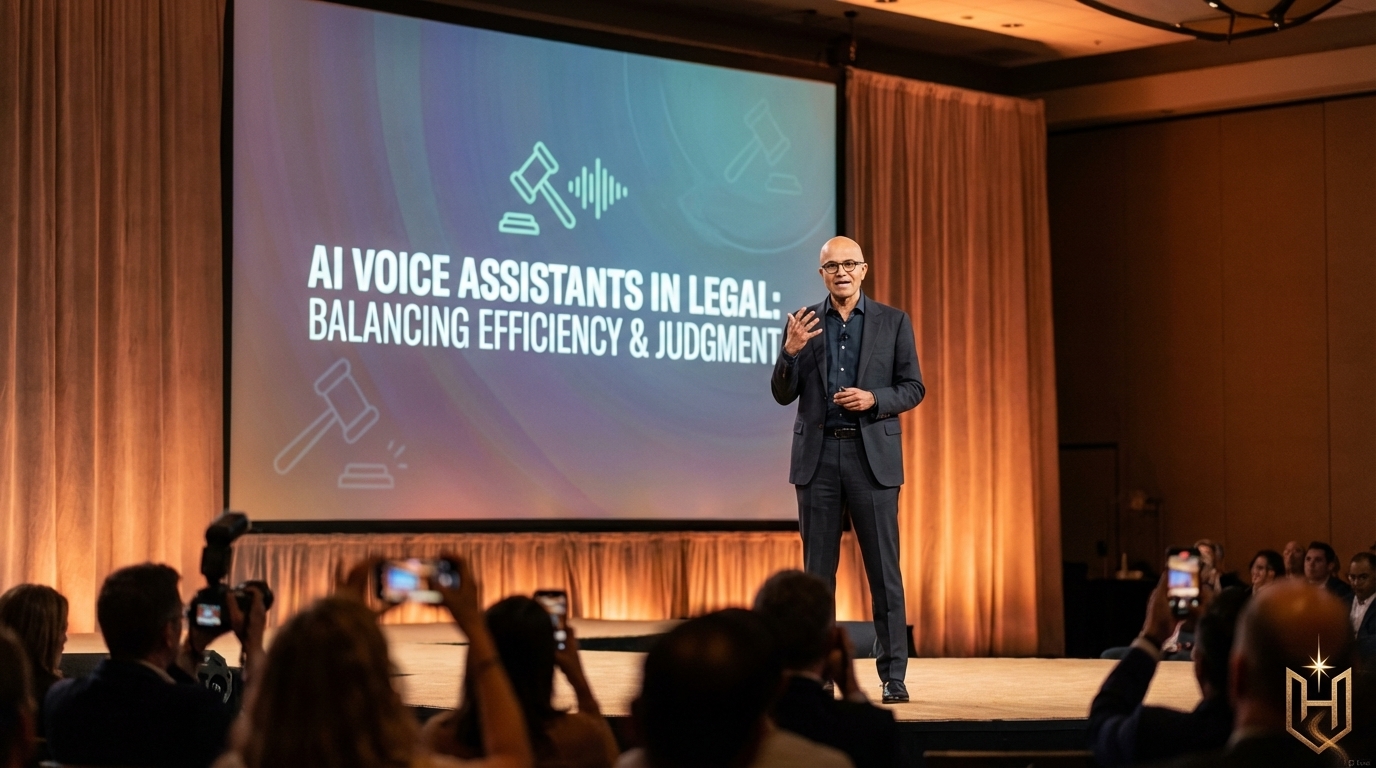
The legal industry often finds itself at the forefront of technological adoption, yet also deeply rooted in tradition and meticulous human judgment. This tension was starkly illuminated by the recent microsoft copilot news, where the tech giant issued a cautionary note: its Copilot AI is not intended for critical decisions, warning against overreliance.
This statement, widely covered by outlets like *The Eastleigh Voice*, sent ripples across professional sectors, prompting a vital conversation about the responsible integration of artificial intelligence into high-stakes environments. For law firms, this isn't merely abstract ai news today; it's a direct challenge to how we perceive and implement tools designed to enhance efficiency and client service.
Indeed, the implications of Microsoft's disclaimer extend far beyond a single product, touching upon the very core of professional responsibility, especially in legal practice. As firms increasingly explore the transformative potential of AI Voice Assistants for everything from client intake to initial lead qualification, the line between augmentation and abdication becomes critically important.
This post delves into how law firms can harness the immense power of voice AI—a technology poised to redefine client engagement—while maintaining the ethical oversight and human discernment that remain non-negotiable pillars of legal service. It's about finding that essential balance, ensuring that innovation serves, rather than compromises, justice.
The Microsoft Warning: A Reckoning for Legal AI
Microsoft's explicit warning regarding Copilot—stating it's for 'entertainment purposes only' in its terms and conditions—arrived amidst a fervent push by CEO Satya Nadella and OpenAI's Sam Altman to integrate generative AI into every facet of business. This seemingly contradictory stance underscores a critical ethical dilemma: how can firms responsibly deploy AI tools when even their creators advise against using them for 'critical decisions'?
For legal professionals, this isn't just a technicality; it's a direct challenge to the duty of competence, as outlined in ABA Model Rule 1.1, which mandates lawyers provide competent representation. Relying blindly on an AI, particularly one with such disclaimers, could expose firms to significant liability and ethical breaches.
This development has sparked intense discussions at recent legal tech gatherings, including LegalTech NYC 2026, where experts debated the fine print of AI adoption. Brad Smith, Microsoft's Vice Chair and President, has consistently emphasized the need for responsible AI development and deployment, acknowledging the inherent risks.
The 'entertainment purposes' clause, while perhaps a legal CYA, serves as a stark reminder that current generative AI models, for all their sophistication, lack true understanding and cannot assume legal responsibility. This reality shapes the entire landscape for AI Voice Assistants in legal contexts, demanding a higher degree of scrutiny and human oversight than initially anticipated by some early adopters.
Firms that have been quick to integrate AI without robust oversight are now re-evaluating their strategies. The tension between the promise of revolutionary efficiency and the perils of overreliance is palpable. Learn more about AI Voice: Legal's 2026 Paradigm Shift & Innovation Catalyst. As openai news continues to dominate headlines with breakthroughs, the industry is forced to confront the practical limitations and ethical guardrails necessary for these powerful tools.
This situation highlights the importance of understanding the specific capabilities and boundaries of any AI solution, especially when it touches client data, legal advice, or critical operational decisions. The legal sector, with its inherent requirement for precision and accountability, cannot afford to treat AI as a mere 'entertainment' or novelty.
This incident also prompts a deeper look at the legal tech vendor ecosystem. How do other providers of AI Voice Assistants and similar tools frame their liability and recommended use? Firms must scrutinize vendor contracts, understanding who bears the risk when AI errors occur. The era of 'move fast and break things' clashes directly with the legal profession's imperative to 'move carefully and protect clients.'
This critical junction demands that law firm leaders, like Sarah Jones, managing partner at TechLaw Solutions, actively engage with these warnings, integrating them into their firm's technology strategy and risk management protocols. It's not about rejecting AI, but about embracing it with informed caution and strategic intent.
Unlocking Efficiency: The Power of AI Voice Assistants in Legal
Despite the necessary caution, the transformative potential of AI Voice Assistants for law firms remains immense, particularly in streamlining operations and enhancing client experience. These intelligent assistants are not designed to replace human lawyers but to augment their capabilities, freeing up valuable time for complex legal work.
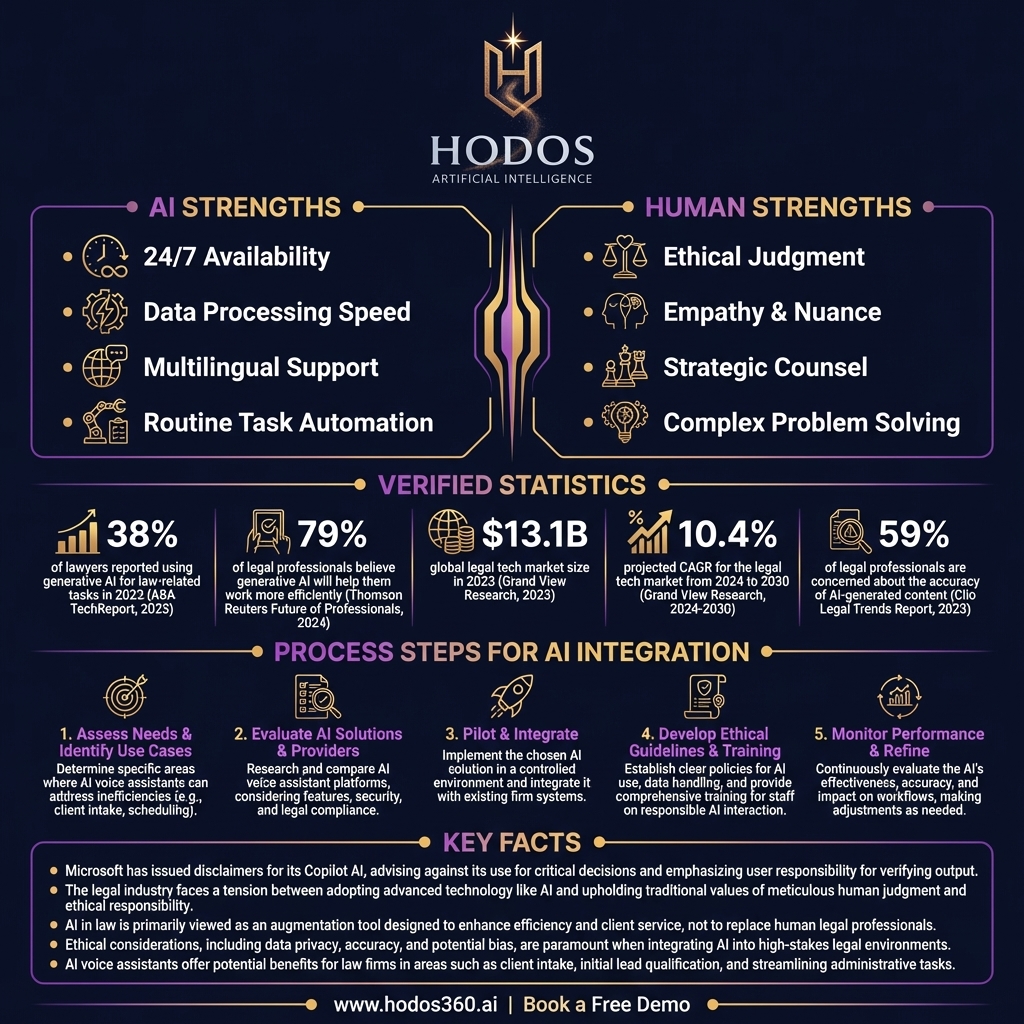
Imagine a scenario where every incoming call is answered promptly, 24/7, without overburdening administrative staff. This is precisely what advanced voice AI offers: a perpetually available virtual receptionist capable of handling initial inquiries, qualifying leads, and scheduling appointments with unparalleled efficiency. Studies by Gartner suggest that by 2027, conversational AI will be the primary customer service channel for a quarter of enterprises, a trend rapidly permeating the legal sector.
Consider the immediate benefits: enhanced client intake and automation. When a potential client calls after hours, an AI Voice Assistant can engage them in a natural, conversational manner, collecting essential information, explaining fee structures, and even initiating the client intake process by sending automated forms.
This not only improves responsiveness but also significantly increases lead capture rates, ensuring no potential client falls through the cracks. Platforms like HODOS 360 integrate these capabilities directly into a comprehensive AI Law Firm Management System, linking voice interactions seamlessly with case management systems and document automation, creating a unified operational workflow.
Furthermore, the multilingual support offered by modern AI Voice Assistants opens up access to a broader client base, a crucial advantage in today's diverse legal market. Learn more about AI Legal Research: The Ultimate Evolution of Legal Analysis. Firms can serve non-English speaking clients with the same level of professionalism and efficiency, breaking down language barriers that might otherwise deter potential clients.
This capability, combined with intelligent call routing, ensures that complex inquiries are escalated to the appropriate human attorney, while routine tasks are managed autonomously. This strategic deployment of voice AI allows firms to scale their client service capabilities without a proportional increase in overhead, directly impacting profitability.
Beyond just answering calls, these systems can provide analytical insights into client interactions, identifying common queries, peak call times, and even client sentiment. This data-driven approach allows firms to continuously refine their services and marketing strategies. For example, a firm might discover a recurring legal question that could be addressed with a new blog post or an FAQ section on their website.
The ability to collect and analyze this granular data transforms client service from a reactive cost center into a proactive, strategic asset, helping firms like LexCorp Legal optimize their outreach and improve overall client satisfaction.
Striking the Essential Balance: When Human Judgment Prevails
While AI Voice Assistants excel at automating routine tasks, the core of legal practice—complex problem-solving, strategic advice, and empathetic client counsel—remains firmly in the domain of human attorneys. The essential balance lies in understanding this distinction. AI can gather facts, schedule meetings, and even draft initial responses, but it cannot yet grasp the full spectrum of human emotion, ethical nuance, or the subtle complexities inherent in legal strategy.
The Microsoft warning serves as a powerful reminder that AI outputs, particularly in critical legal contexts, must always be viewed as a starting point for human review, not a definitive conclusion. This is especially true for nuanced areas like negotiation, litigation strategy, or advising on emotionally charged family law matters.
Consider a scenario where an AI Voice Assistant might misinterpret a client's tone or subtle phrasing, leading to a factual error or, worse, a misunderstanding of their legal needs. Such errors, if uncorrected by a human, could lead to severe consequences, including malpractice claims. Lawyers are bound by their professional duties to provide competent and diligent representation, and this includes ensuring the accuracy and appropriateness of any AI-generated information shared with clients.
The human lawyer's role is to apply critical thinking, ethical reasoning, and professional experience to interpret facts, understand client objectives, and formulate tailored legal strategies that AI, by its nature, cannot fully replicate.
Furthermore, the attorney-client relationship is built on trust, empathy, and personal connection—qualities that AI struggles to emulate.
Learn more about Voice AI: Essential Strategic Growth for Law Firms. While an AI Voice Assistant can efficiently process information, it cannot offer the reassuring tone of a human lawyer during a difficult time or provide the deep, nuanced understanding required to navigate sensitive legal challenges.
The human element ensures that clients feel heard, understood, and genuinely represented, fostering a bond that no technology can replace. This is not a limitation of AI but a fundamental aspect of legal service that underscores the irreplaceable value of human interaction and judgment.
Therefore, the strategic implementation of AI Voice Assistants requires clear boundaries.
They are invaluable tools for data collection, administrative support, and initial information dissemination. However, any output that forms the basis of legal advice, client strategy, or critical decision-making must pass through the rigorous filter of human legal expertise. This approach ensures that firms leverage AI's efficiency without compromising the ethical standards, professional judgment, and client trust that are paramount to the legal profession.
It’s an augmentation of human capacity, not a wholesale replacement of legal acumen.
Navigating the Nuances of Legal Decision-Making with AI
The delicate art of legal decision-making involves more than just processing data points; it requires interpreting context, understanding human intent, and anticipating unforeseen variables—areas where AI currently has significant limitations. For instance, a complex contract dispute might hinge on the implied intent of parties, cultural nuances in communication, or the evolving interpretation of case law, all of which demand human analytical depth.
An AI Voice Assistant can efficiently transcribe conversations or summarize initial findings, but a human attorney must then synthesize this information, apply legal precedent, and craft a strategy tailored to the client's unique circumstances and risk tolerance. This cognitive leap from data to actionable legal insight remains a distinctly human capability.
The American Bar Association's Standing Committee on Ethics and Professional Responsibility consistently emphasizes the lawyer's ultimate responsibility for all advice rendered, regardless of technological assistance.
Moreover, the ethical considerations around client confidentiality, as stipulated by ABA Model Rule 1.6, become paramount when using AI. Firms must ensure that any AI Voice Assistants or other AI tools comply with the highest standards of data security and privacy.
The risk of AI hallucinating or inadvertently disclosing sensitive information is a critical concern that necessitates robust security protocols and transparent client consent regarding AI involvement. The human lawyer acts as the ultimate guardian of client information, ensuring that AI systems are deployed in a manner that upholds these professional obligations.
Learn more about Voice AI Landscape: Essential Strategies for Law Firms. This oversight prevents potential breaches and reinforces the client's trust in the firm's commitment to their privacy and best interests.
This is not to say that AI has no role in complex decision-making support.
Tools like predictive analytics, often integrated into sophisticated AI Law Firm Management Systems, can offer valuable insights into potential case outcomes based on vast datasets. However, these are probabilistic predictions, not guarantees, and require a human lawyer to interpret their significance within the unique context of a specific case.
The human attorney uses these insights as one piece of a larger puzzle, combining them with their own judgment, experience, and understanding of the client's goals to formulate a comprehensive strategy. The ultimate decision-making authority, and the responsibility that comes with it, must always rest with the legal professional, ensuring accountability and adherence to ethical standards.
This symbiotic relationship between advanced AI insights and human legal wisdom defines the future of responsible legal practice.
Implementing AI Voice Assistants Responsibly: A HODOS 360 Perspective
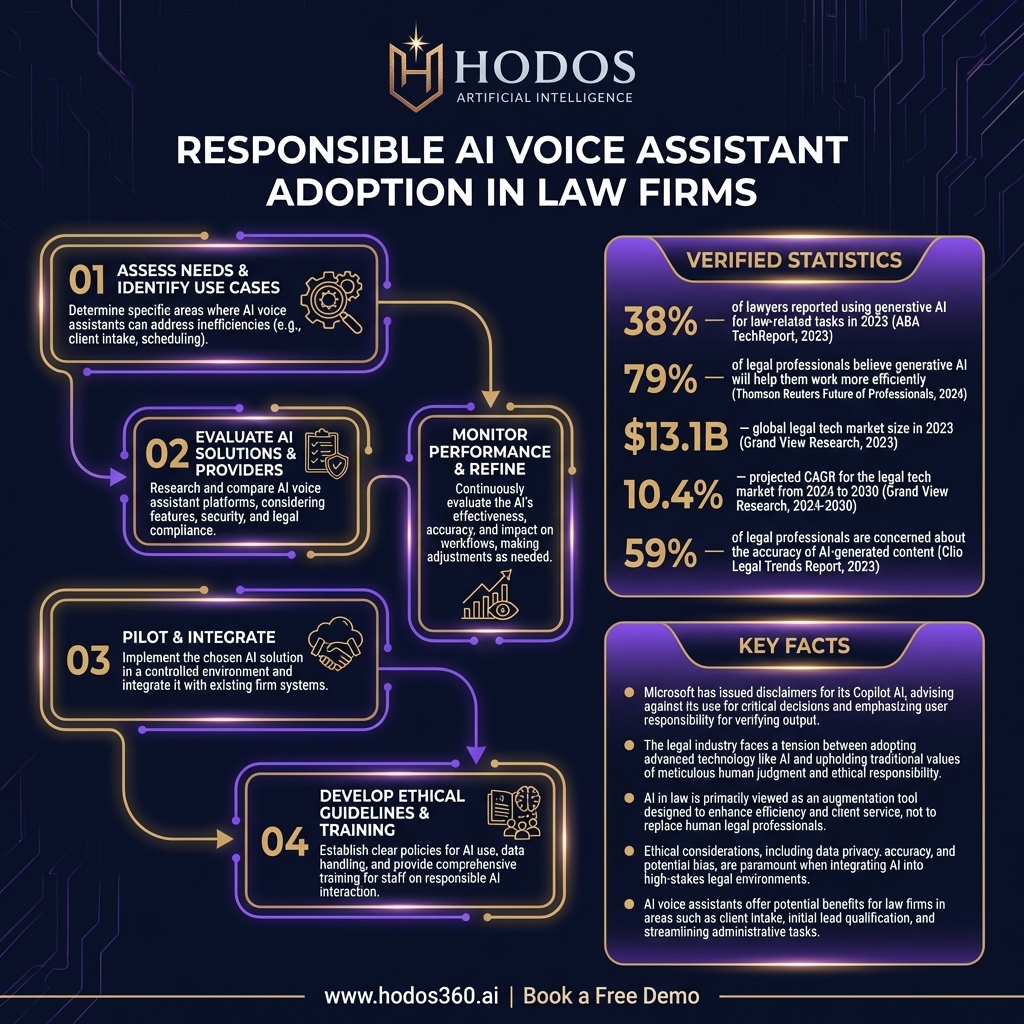
For law firms ready to embrace the efficiency of AI Voice Assistants, responsible implementation is paramount. This begins with a clear understanding of the technology's capabilities and limitations, coupled with a robust strategy for oversight and data governance. Firms must prioritize solutions that offer transparency in their AI's operation, ensuring that client data is handled securely and in compliance with all relevant privacy regulations, such as the General Data Protection Regulation (GDPR) or the California Consumer Privacy Act (CCPA).
This proactive approach safeguards client information and builds trust, which is foundational to the attorney-client relationship. The goal is to integrate AI as a powerful assistant, not an autonomous decision-maker, maintaining human accountability at every step.
One crucial aspect of responsible deployment involves training both the AI and the human team.
While AI Voice Assistants are designed for ease of use, configuring them to accurately reflect a firm's specific intake procedures, legal specializations, and ethical guidelines requires careful setup. Simultaneously, legal staff need training on how to effectively interact with and oversee AI tools, understanding when to intervene, how to review AI-generated summaries, and how to explain the role of AI to clients.
This dual training ensures that the technology is utilized to its fullest potential while mitigating risks associated with miscommunication or overreliance.
Platforms like HODOS 360 are built with these considerations in mind, offering AI Voice Assistants that are integrated into a secure, comprehensive AI Law Firm Management System.
Learn more about ActiveCampaign 2026: AI Marketing Unleashes Law Firm Growth. Our solutions provide features for transparent client communication, allowing firms to inform clients about AI involvement in initial interactions. Furthermore, robust analytics and reporting tools enable firms to monitor AI performance, identify areas for improvement, and ensure that the AI is consistently operating within defined parameters.
This level of control and insight is essential for maintaining ethical standards and optimizing the client experience.
Finally, responsible implementation includes regular audits and updates. The legal landscape, and AI technology itself, are constantly evolving. Firms must commit to periodically reviewing their AI systems, ensuring they remain compliant with new regulations and ethical guidelines, and are updated with the latest technological advancements.
This iterative process of deployment, monitoring, and refinement ensures that AI Voice Assistants continue to serve as a valuable asset, enhancing efficiency without compromising the integrity or quality of legal services. It's a commitment to continuous improvement, ensuring that technology remains a force for good in the pursuit of justice.
Ensuring Ethical AI Deployment and Client Trust
The ethical deployment of AI Voice Assistants hinges on transparency and the explicit trust of clients. Law firms must be upfront about their use of AI, explaining to clients how these tools enhance service delivery without replacing human judgment. This transparency fosters confidence and aligns with the professional obligation of candor.
For example, a clear disclosure at the beginning of an automated call or prominently on the firm's website—perhaps stating, "You're speaking with our AI Assistant for initial intake, and your information will be reviewed by a human attorney"—can manage expectations effectively. The recently enforced EU AI Act sets a global precedent for strict governance and transparency requirements for AI systems, influencing best practices even outside its direct jurisdiction.
This global push for responsible AI underscores the importance of proactive ethical frameworks within law firms.
Beyond transparency, data security and privacy are paramount. Any AI Voice Assistants used by a law firm must adhere to stringent security protocols, encrypting sensitive client information and ensuring data is stored and processed in compliance with legal and ethical standards.
Firms should choose AI solutions from vendors with proven track records in data protection and robust privacy policies. Learn more about AI Legal Revolution: Corporate Use Jumps 87% by 2026. The potential for data breaches, or even the perception of lax security, can severely damage a firm's reputation and erode client trust.
Therefore, due diligence in selecting and configuring AI systems is not merely a technical task but a critical ethical imperative.
Moreover, firms must actively work to mitigate algorithmic bias within their AI Voice Assistants. AI models, if trained on biased datasets, can perpetuate and even amplify societal inequalities, leading to unfair or discriminatory outcomes.
While voice AI for intake might seem less susceptible than predictive justice tools, biases can still manifest in language recognition, sentiment analysis, or even lead qualification if not carefully monitored. Regular audits of AI performance, focusing on diverse demographic interactions, are essential to identify and rectify any potential biases.
This commitment to fairness demonstrates a firm's dedication to justice and ensures that technology serves all clients equitably, reinforcing the ethical foundation of legal practice. It’s an ongoing commitment to ensuring the technology reflects the values of the legal profession.
The Future Landscape: Voice AI and the Evolving Legal Profession
The trajectory of AI Voice Assistants in the legal profession points towards increasingly sophisticated integration, moving beyond mere reception duties to become integral components of the legal workflow. We can anticipate voice AI evolving to handle more complex initial consultations, potentially guiding clients through interactive legal questionnaires or providing preliminary information based on a firm's pre-approved knowledge base.
This evolution will be driven by advancements in natural language processing (NLP) and machine learning, allowing AI to understand and respond to client queries with greater accuracy and contextual awareness. The future holds the promise of truly intelligent assistants that seamlessly blend into the fabric of legal service delivery, transforming how firms interact with their clientele.
This shift will require attorneys to adapt, focusing on higher-value tasks that demand uniquely human skills.
Integration with other legal tech solutions will be a key differentiator. Imagine an AI Voice Assistant not only booking an appointment but also automatically generating a new client file in the AI Law Firm Management System, populating it with initial details, checking for conflicts of interest, and even drafting a preliminary engagement letter.
This level of interconnectedness, leveraging platforms that combine AI-powered legal workflows with client intake and automation, will create an unprecedented level of efficiency. Firms that strategically adopt these integrated platforms will gain a significant competitive edge, allowing them to scale operations and improve service quality without compromising on human oversight.
This holistic approach to legal tech will redefine operational excellence.
However, this future also necessitates continuous professional development for legal professionals. As AI Voice Assistants take on more routine tasks, lawyers will need to hone their skills in areas that AI cannot replicate: critical thinking, ethical reasoning, empathetic communication, and strategic problem-solving.
Legal education will increasingly focus on teaching students how to leverage AI tools responsibly, understanding their limitations, and interpreting their outputs with a discerning eye. The legal professional of tomorrow will be an expert not just in law, but also in the responsible deployment and oversight of advanced legal technology, ensuring that innovation serves justice effectively.
This adaptation is not a threat but an opportunity to elevate the profession to new heights of service and impact.
Looking ahead, the next wave of innovation might see AI Voice Assistants proactively identifying potential legal issues for clients based on their interactions, or even offering real-time language translation during multi-party calls, breaking down communication barriers entirely.
The potential is vast, but it is always tethered to the principle of responsible innovation. As firms prepare for this future, investing in flexible, secure, and ethically designed AI solutions will be paramount. The goal is to build a legal practice that is not only efficient and technologically advanced but also deeply human-centric, ensuring that the benefits of AI are realized without sacrificing the core values of the legal profession.
This proactive engagement with emerging technologies will define the leaders of the next legal era.
Preparing Your Firm for the Next Wave of Legal AI Innovation
To effectively prepare for the evolving landscape of legal AI, law firms must cultivate a culture of continuous learning and strategic technological adoption. This involves not just purchasing new tools but fundamentally re-evaluating workflows and training staff to work synergistically with AI. Firms should begin by conducting a comprehensive audit of their current operations to identify areas where AI Voice Assistants can provide maximum impact, such as high-volume client inquiries or repetitive administrative tasks.
This targeted approach ensures that AI investments yield tangible benefits and address specific pain points, rather than simply adopting technology for technology's sake. The firms that thoughtfully integrate AI will be the ones that thrive in the coming years, positioning themselves as modern, efficient, and client-focused entities.
Furthermore, fostering an open dialogue about AI within the firm is crucial. Encourage attorneys and staff to experiment with AI tools (within a controlled, ethical framework) and share their insights and concerns. This collaborative approach helps demystify AI, reduces resistance to change, and uncovers innovative ways to apply the technology that might not be apparent to leadership alone.
Firms like Davis Polk & Wardwell have established internal AI task forces to study and implement generative AI responsibly, demonstrating a commitment to informed adoption. Investing in platforms that offer modular and scalable AI solutions, like those provided by HODOS 360, allows firms to gradually integrate new capabilities, minimizing disruption and maximizing adaptation.
Finally, staying abreast of legal tech trends and regulatory developments is non-negotiable. The landscape of AI is dynamic, with new tools, ethical guidelines, and legislative frameworks emerging regularly. Subscribing to industry journals, attending legal tech conferences, and participating in professional development programs focused on AI ethics and implementation are vital.
This continuous engagement ensures that your firm remains agile, compliant, and at the forefront of legal innovation. By proactively embracing these strategies, law firms can confidently navigate the complexities of AI, leveraging AI Voice Assistants and other intelligent tools to build a more efficient, responsive, and future-proof practice, ready to meet the demands of tomorrow's legal market.

Key Takeaways and Next Steps
The Microsoft warning about overreliance on AI for critical decisions serves as a crucial inflection point for the legal industry. It underscores the profound responsibility law firms bear when integrating powerful tools like AI Voice Assistants. The key takeaway is clear: AI is a phenomenal augmentative technology, capable of revolutionizing efficiency, client intake, and administrative tasks, but it is not a substitute for human legal judgment, ethical reasoning, or empathetic client interaction.
The essential balance lies in strategically deploying AI to handle routine processes, freeing up attorneys to focus on the complex, nuanced, and distinctly human aspects of legal practice.
For law firm leaders, the next steps involve a thoughtful, deliberate approach to AI adoption. Prioritize solutions that emphasize data security, transparency, and ethical safeguards.
Invest in training your team to effectively leverage AI while understanding its limitations. Continuously review and adapt your AI strategies in response to evolving technology and regulatory landscapes. Platforms like HODOS 360 offer integrated AI Law Firm Management System and AI Voice Assistants designed to support law firms in achieving this balance, providing the tools for efficiency without compromising professional integrity.
By embracing AI with informed caution and strategic intent, law firms can build more resilient, responsive, and ultimately more human-centric practices for the future. Take the first step towards this balanced future today.
- ✓Understand AI's Role: Recognize that AI Voice Assistants are powerful tools for automation and efficiency, not replacements for human legal judgment or ethical decision-making.
- ✓Prioritize Ethical Deployment: Ensure transparency with clients about AI usage, prioritize data security, and actively work to mitigate algorithmic bias in all AI tools.
- ✓Leverage for Efficiency: Utilize voice AI for 24/7 client intake, lead qualification, appointment booking, and multilingual support to streamline operations and enhance responsiveness.
- ✓Maintain Human Oversight: Establish clear protocols for human review of all AI-generated information, especially when it pertains to legal advice or critical case strategy.
- ✓Invest in Training: Provide comprehensive training for both your AI systems and your human staff to ensure effective and responsible interaction with the technology.
- ✓Stay Informed & Adapt: Regularly monitor legal tech trends, regulatory changes (like the EU AI Act), and AI advancements to keep your firm agile and compliant.
- ✓Seek Integrated Solutions: Opt for comprehensive platforms that seamlessly integrate AI Voice Assistants with other law firm management tools for a unified and efficient workflow.
Frequently Asked Questions
What is the key takeaway from Microsoft's Copilot warning for law firms?+
The key takeaway is that while AI tools like Copilot offer significant benefits, they should not be relied upon for critical decisions without human oversight. For law firms, this means integrating AI Voice Assistants and other AI technologies as augmentative tools, always maintaining human judgment and ethical review for legal advice and strategic matters to ensure competence and mitigate liability.
How can AI Voice Assistants specifically benefit a law firm's operations?+
AI Voice Assistants can significantly benefit law firms by providing 24/7 client intake, qualifying leads efficiently, automating appointment booking, offering multilingual support, and intelligently routing calls. This frees up administrative staff, improves client responsiveness, increases lead capture rates, and provides valuable data analytics for optimizing client service and marketing strategies.
Where should human judgment always prevail over AI in a legal context?+
Human judgment must always prevail in complex legal advice, strategic decision-making, ethical dilemmas, nuanced client communication, and any situation requiring empathy or interpretation of human intent. While AI Voice Assistants can assist with information gathering, the ultimate responsibility for legal counsel, strategic planning, and client trust rests solely with the human attorney.
What are the ethical considerations for law firms using AI Voice Assistants?+
Ethical considerations include ensuring transparency with clients about AI usage, maintaining strict client confidentiality (ABA Model Rule 1.6) and data security, and actively working to mitigate algorithmic bias. Firms must also ensure that AI deployment aligns with the duty of competence (ABA Model Rule 1.1) and that human lawyers retain ultimate accountability for all legal services provided.
How can HODOS 360 help law firms implement AI Voice Assistants responsibly?+
HODOS 360 provides AI Voice Assistants integrated into a secure, comprehensive AI Law Firm Management System. Our platform supports responsible implementation through transparent client communication features, robust data security, performance monitoring, and seamless integration with AI-powered legal workflows. We empower firms to leverage AI efficiently while maintaining ethical oversight and human accountability.