


Voice AI Landscape: Essential Strategies for Law Firms
The legal profession, often characterized by its adherence to precedent, is now confronting a seismic shift driven by artificial intelligence. Just a few years ago, the concept of a client interacting seamlessly with a law firm's virtual assistant via voice seemed like science fiction. Yet, today, the competitive Voice AI landscape is not only a reality but a rapidly evolving frontier, challenging traditional operational models and demanding strategic adaptation.
Consider the recent insights from openPR.com, highlighting the burgeoning 'Voice Banking Market' and the entrance of new players—a trend mirroring the legal sector's burgeoning interest in conversational AI. This isn't merely about automating phone calls; it's about redefining client engagement, operational efficiency, and competitive advantage in a market where every interaction counts.
Firms that fail to acknowledge this shift risk being outmaneuvered by agile competitors already leveraging these transformative tools.
The real drama unfolds as law firm leaders, from managing partners like Sarah Chen at 'LexSolutions Group' to solo practitioners, grapple with integrating these advanced capabilities into their practice.
The tension often lies between the promise of revolutionary efficiency and the inherent complexities of data security, ethical considerations, and the sheer pace of technological change. For instance, at LegalTech NYC 2026, the discussions around practical deployments of voice assistants in client intake and administrative tasks were fervent, with many firms showcasing pilot programs.
However, the underlying question remains: how do firms move beyond pilot projects to full-scale, secure, and compliant integration? The answer lies in a comprehensive understanding of the current Voice AI landscape, identifying the strategic imperatives, and embracing the tools that offer genuine, measurable impact.
This article delves into the intricate dynamics of the Voice AI landscape within the legal industry.
We will explore the leading companies, the innovative solutions they offer, and the critical market insights necessary for law firms to thrive. From enhancing client service to streamlining internal workflows, voice AI is poised to reshape how legal services are delivered. By examining real-world applications, addressing the inherent challenges, and forecasting future trends, we aim to provide law firm owners and legal professionals with the knowledge to make informed decisions, ensuring their firms remain not just relevant, but truly ahead in this new era of legal technology.
The Evolving Voice AI Landscape in Legal Services
The evolution of voice AI, from rudimentary speech-to-text systems to sophisticated natural language processing (NLP) models, has been nothing short of remarkable. What began with simple commands to devices like Amazon's Alexa or Google Assistant has matured into complex conversational interfaces capable of understanding context, intent, and even emotion.
In the legal sector, this translates into AI voice assistants that can not only answer basic client queries but also guide them through intake processes, schedule appointments, and provide information on case status—all without human intervention. The market for these advanced solutions is experiencing exponential growth, with a recent report by Gartner predicting that by 2028, 70% of customer interactions will involve conversational AI, a significant leap from just 15% in 2023. This projection underscores the urgency for law firms to engage with this technology, not as a novelty, but as a core component of their operational strategy.
The competitive landscape is rapidly forming, with established tech giants and nimble legal tech startups vying for market share, each bringing unique capabilities to the table.
Driving this rapid advancement are breakthroughs in large language models (LLMs) from pioneers like OpenAI's GPT series and Anthropic's Claude.
These foundational models, often referenced by their architects like Sam Altman and Dario Amodei, provide the underlying intelligence that powers the next generation of voice AI. For law firms, this means the 'intelligence' of their virtual assistants is becoming increasingly sophisticated, capable of handling more nuanced legal questions and understanding complex client scenarios.
However, the challenge lies in adapting these general-purpose LLMs to the highly specialized domain of law, ensuring accuracy, confidentiality, and compliance with legal ethics. Companies like Thomson Reuters and LexisNexis are investing heavily in this area, integrating conversational AI into their research platforms, signaling a broader industry shift towards voice-enabled legal workflows.
This integration will define the future of legal research, moving beyond keyword searches to interactive, voice-driven inquiries that can synthesize vast amounts of legal data.
The current Voice AI landscape is characterized by a blend of horizontal AI providers and specialized legal tech vendors. While platforms like Microsoft's Nuance offer robust enterprise-grade voice solutions, legal-specific providers like HODOS 360 are tailoring these capabilities to the unique demands of law firms Voice AI Unleashed: Transforming Law Firms in 2026 with HODOS 360.
This specialization is crucial for addressing the industry's stringent requirements for data privacy, ethical conduct, and legal accuracy. For instance, a general-purpose voice assistant might struggle with legal terminology or the nuances of client confidentiality, whereas a legal-specific AI is trained on vast corpora of legal documents and adheres to established professional standards.
The competition among these leading companies is fierce, pushing innovation boundaries and creating a dynamic environment where firms have an increasing array of choices, each promising to enhance different facets of legal practice. The key for firms is to discern which solutions truly align with their operational needs and strategic goals, ensuring that adoption is not just about technology, but about tangible business improvement.
Beyond client-facing applications, voice AI is also transforming internal law firm management. Imagine partners dictating case notes directly into a secure system, paralegals using voice commands to retrieve documents, or administrative staff automating call routing based on client needs and lawyer availability. This internal efficiency extends to areas like billing and time tracking, where voice inputs can significantly reduce administrative overhead.
According to an ABA TechReport, firms leveraging some form of automation reported a 15-20% increase in administrative efficiency. While this data encompasses various automation tools, voice AI is emerging as a powerful contributor, particularly in areas requiring rapid, hands-free data entry or information retrieval. The ability for legal professionals to interact with their case management systems and other software using natural language frees up valuable time, allowing them to focus on higher-value legal work.
This shift represents a profound re-evaluation of how legal professionals interact with technology, moving towards more intuitive and less intrusive interfaces.
Strategic Imperatives: Navigating Competitive Voice AI Markets
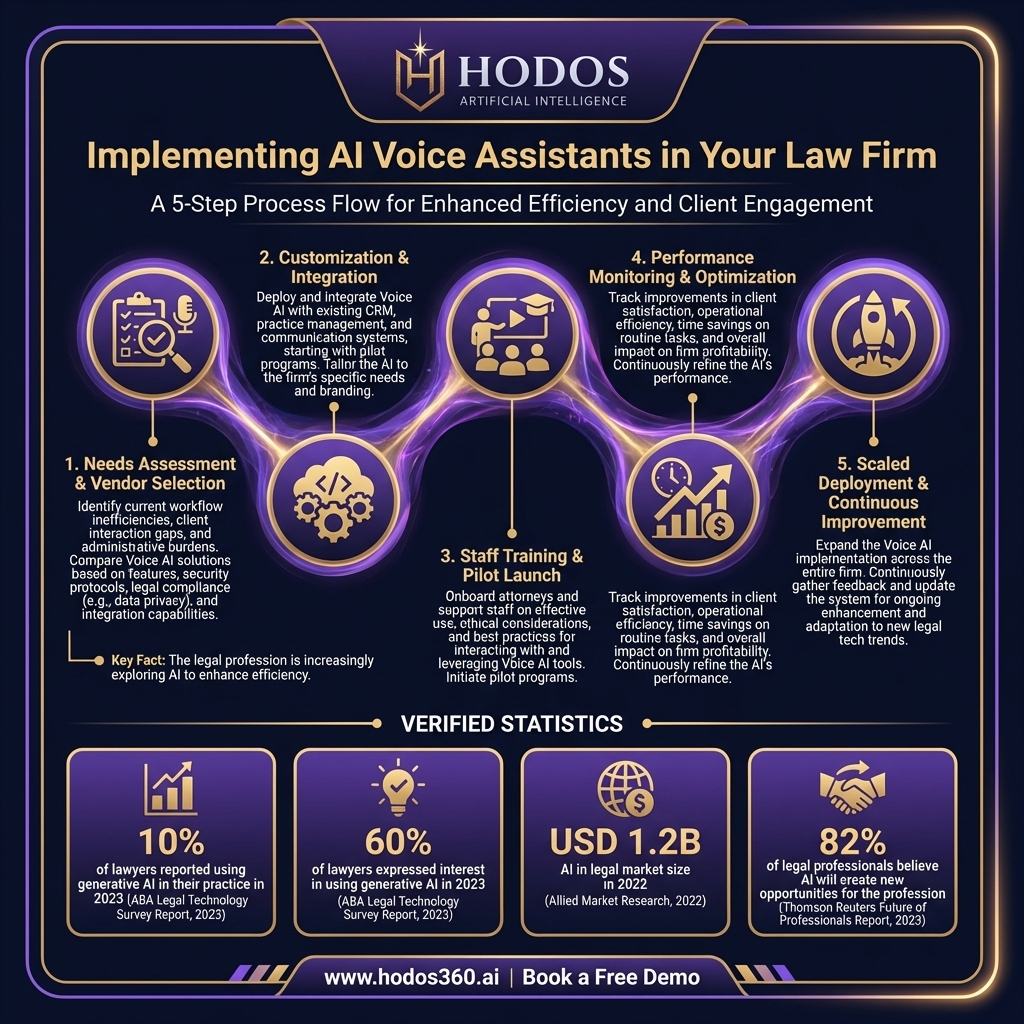
Navigating the increasingly competitive landscape of Voice AI requires a clear strategic roadmap from law firm leadership. Simply adopting the latest gadget without a comprehensive plan can lead to fragmented systems, security vulnerabilities, and ultimately, wasted investment. The first imperative is a thorough competitive analysis of available solutions.
Firms must look beyond generic sales pitches and assess a vendor's proven track record in the legal sector, their commitment to data security, and their ability to integrate seamlessly with existing practice management systems. For instance, when 'Global Legal Advisors' sought to implement a 24/7 client intake system, Managing Partner David Lee emphasized due diligence, stating, "We didn't just look for a voice assistant; we looked for a partner who understood the nuances of legal intake, from conflict checks to confidentiality agreements."
This approach highlights the need for specialized solutions that go beyond basic conversational AI to address the specific regulatory and operational demands of law firms.
Another critical imperative is understanding the cost-benefit analysis. While the initial investment in Voice AI technology can seem substantial, the long-term gains in efficiency, client satisfaction, and lead conversion often far outweigh these costs.
A report by McKinsey & Company on AI adoption across industries indicated that early adopters saw a 3-5% increase in revenue due to improved operational efficiency and customer experience. For law firms, this translates into fewer missed calls, faster client onboarding, and the ability to scale client support without proportional increases in staffing.
The ROI tracking capabilities offered by platforms, like those within HODOS 360's AI Marketing Platform, become invaluable here, allowing firms to measure the tangible impact of their Voice AI investments. This data-driven approach helps firms justify their technology spend and continuously optimize their AI strategies to stay ahead of competitors.
The human element cannot be overlooked. Successful Voice AI implementation requires buy-in from attorneys and staff, who must understand how these tools augment, rather than replace, their roles. Training and change management are crucial components of any strategic deployment AI Legal Revolution: Corporate Use Jumps 87% by 2026.
Firms like 'Innovation Law Group,' led by CTO Dr. Anya Sharma, have implemented phased rollouts, allowing staff to gradually adapt to new workflows and provide feedback. Dr. Sharma noted at a recent industry panel, "Our goal isn't to automate people out of jobs, but to automate the mundane tasks, freeing our legal talent to focus on complex legal reasoning and client relationships."
This focus on augmentation fosters a collaborative environment where AI is seen as a powerful assistant, not a threat, thereby smoothing the transition and maximizing user adoption. This approach is vital for ensuring that the technology is genuinely integrated into daily operations and not just a superficial add-on.
Finally, a forward-looking strategy must consider scalability and future-proofing. The Voice AI landscape is dynamic, with new features and capabilities emerging constantly. Law firms need solutions that are flexible enough to evolve with these trends and integrate with future technological advancements, such as more sophisticated AI-powered legal workflows or enhanced multilingual support.
This means choosing vendors committed to continuous innovation and offering modular, adaptable platforms. The ability to customize voice assistant scripts, integrate with various CRMs, and effortlessly scale to handle increasing call volumes are all key considerations. Firms must look for partners who are not just selling a product but providing a long-term technology roadmap, ensuring that their investment today continues to deliver value years down the line.
This strategic foresight is what separates the leading companies in legal tech adoption from those who merely react to market shifts.
Identifying Leading Players and Emerging Trends
In the race to dominate the legal Voice AI market, several leading companies are distinguishing themselves, alongside a wave of innovative startups. Beyond the general-purpose voice giants, specialized legal tech providers are carving out niches by addressing the specific pain points of law firms. For example, some platforms excel in multilingual support, crucial for firms serving diverse client bases, while others focus on deep integration with specific case management systems, creating highly efficient, tailored workflows.
The recent openPR.com article on the 'Voice Banking Market' underscores this segmentation, showing how even within a broader category, specialized solutions emerge to meet specific industry needs. Law firms must explore these varied offerings to find the best fit, rather than assuming a one-size-fits-all solution exists.
This requires a deep dive into product capabilities, security protocols, and vendor reputations, often consulting with industry analysts and peer networks to gather comprehensive market insights.
The emerging trends point towards increasingly personalized and predictive Voice AI. Imagine a voice assistant that not only remembers past client interactions but also anticipates their needs based on case progression or common queries, proactively offering relevant information or scheduling follow-up calls Legal AI Gap Widens: Strategic Imperative for Law Firms 2026.
This level of predictive intelligence, fueled by advanced machine learning, promises to elevate client service to unprecedented levels. Furthermore, the integration of Voice AI with other AI-powered legal tools, such as document automation and legal research platforms, is becoming a significant trend. This creates a synergistic ecosystem where voice commands can trigger complex legal workflows, from drafting initial client correspondence to initiating a legal research query.
The goal is to create a truly intelligent, interconnected legal tech stack where voice acts as a primary interface. Firms that recognize and strategically invest in these converging trends will be best positioned to stay ahead of competitors and redefine their operational paradigms, leveraging technology to create more efficient, responsive, and ultimately, more profitable practices.
Real-World Impact: Voice AI in Law Firm Operations
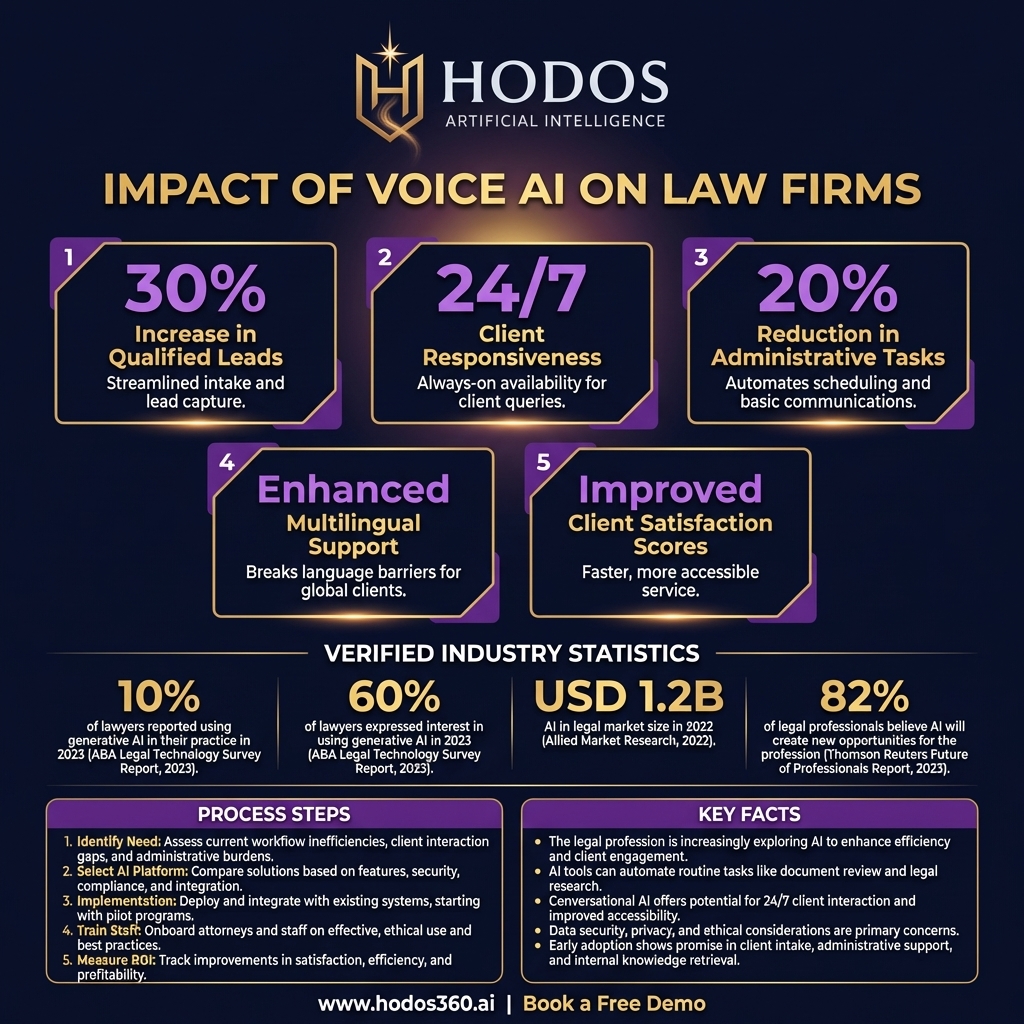
The theoretical promise of Voice AI translates into tangible, real-world benefits for law firms willing to embrace the technology. One of the most immediate impacts is in client intake and initial consultations. Instead of prospective clients encountering busy signals or voicemail boxes outside of business hours, an AI voice assistant can provide 24/7 support, answering frequently asked questions, qualifying leads based on predefined criteria, and even booking initial appointments directly into the firm's calendar.
This dramatically improves the client experience and ensures that potential clients are engaged promptly, significantly reducing lead loss. For example, a small immigration law firm, 'Voyage Legal,' reported a 30% increase in qualified leads after implementing an AI voice assistant for after-hours calls, demonstrating how even smaller practices can leverage this technology to compete with larger firms.
This capability is not just about convenience; it's a strategic advantage in a competitive Voice AI landscape where client responsiveness is paramount.
Beyond client acquisition, Voice AI streamlines numerous internal administrative tasks that consume valuable attorney and paralegal time. Consider the mundane yet essential task of managing calendars, scheduling internal meetings, or even dictating case notes.
An AI voice assistant integrated with the firm's practice management system can handle these requests with precision, ensuring accuracy and freeing up human resources for more complex legal work. This operational efficiency extends to call routing, where incoming calls are intelligently directed to the appropriate department or individual based on the client's query, ensuring that clients reach the right person the first time.
The automation of these repetitive tasks allows legal professionals to focus on their core competencies, leading to higher productivity and job satisfaction. As Jensen Huang, CEO of NVIDIA, often emphasizes regarding AI's role, the goal is to augment human capability, not replace it, enabling professionals to achieve more with less administrative burden.
Furthermore, Voice AI plays a crucial role in enhancing accessibility and multilingual support, broadening a firm's reach and client base. For firms serving diverse communities, offering client support in multiple languages via an AI voice assistant is a game-changer AI Document Workflows: Unleash Efficiency & ROI in 2026.
This not only improves client satisfaction but also demonstrates a firm's commitment to inclusivity, fostering stronger client relationships. The ability to communicate effectively, regardless of language barriers, can be a significant differentiator in a crowded legal market. Moreover, for clients with disabilities, voice interaction provides an accessible alternative to traditional communication methods, aligning with the legal profession's commitment to equal access to justice.
This ethical dimension of Voice AI adoption highlights its potential to make legal services more inclusive and responsive to the needs of all potential clients.
In the context of the broader competitive landscape, firms that integrate Voice AI effectively gain a significant edge. They can offer superior client service, operate with greater efficiency, and reallocate resources to strategic growth initiatives.
The data consistently shows that firms adopting innovative technologies tend to outperform their peers. A recent ABA Legal Technology Survey Report indicated that firms leveraging technology effectively reported higher profitability and client satisfaction scores. This isn't just about early adoption; it's about intelligent adoption—selecting tools that integrate seamlessly, comply with legal standards, and deliver measurable improvements.
The real-world impact is clear: Voice AI is transforming law firms into more agile, client-centric, and efficient entities, ready to meet the demands of the modern legal market. The success stories emerging from firms that have embraced these tools serve as powerful case studies for the broader legal community, illustrating the transformative power of well-implemented AI.
Enhancing Client Service and Operational Efficiency
The direct impact of Voice AI on client service is profound, fundamentally altering how prospective and existing clients interact with legal practices. By providing instant, 24/7 responsiveness, voice assistants eliminate the frustration of unanswered calls or delayed replies, which are common pain points for clients seeking legal help.
Imagine a client needing urgent advice at midnight; an AI Voice Assistant can offer initial guidance, log their details, and schedule an immediate follow-up with an attorney. This level of responsiveness is not feasible with human staff alone and significantly elevates the client experience, fostering trust and loyalty.
According to a Thomson Reuters report, client satisfaction is increasingly tied to the ease and speed of communication, making Voice AI a critical tool for client retention and acquisition in a highly competitive landscape. This immediate engagement capability is a significant differentiator for firms seeking to stand out.
Operationally, Voice AI contributes to substantial efficiency gains by automating a myriad of administrative tasks AI Legal Tech Boom 2026: Unlocking Billions in Valuation. For example, the process of documenting client interactions, often a time-consuming manual effort, can be partially automated through voice-to-text transcription and intelligent data entry into a CRM or case management system.
This reduces the administrative burden on paralegals and legal assistants, allowing them to focus on substantive legal work. Furthermore, the ability to automate appointment booking and follow-up reminders significantly reduces no-shows and optimizes attorney schedules. This leads to a more streamlined workflow, fewer clerical errors, and a more productive legal team.
Firms leveraging such automation, including HODOS 360's AI Law Firm Management System, report significant reductions in administrative overhead, allowing them to scale operations without commensurate increases in staff, thereby improving their bottom line and enhancing their competitive analysis within the industry.
Addressing Ethical, Privacy, and Regulatory Challenges in Voice AI Adoption
While the benefits of Voice AI are compelling, law firms must navigate a complex array of ethical, privacy, and regulatory challenges. The legal profession operates under stringent rules regarding client confidentiality and data security, making the adoption of any AI tool, especially one handling sensitive voice data, a matter of careful consideration.
The ABA Model Rules of Professional Conduct, particularly Rule 1.6 on Confidentiality of Information and Rule 1.1 on Competence, impose a clear duty on attorneys to protect client data and to understand the risks associated with technology. This means firms must ensure that any Voice AI solution they deploy is robustly secure, compliant with relevant data protection laws (e.g., GDPR, CCPA, and emerging federal privacy statutes), and transparent about how client data is collected, stored, and processed.
The human conflict arises when the pursuit of efficiency clashes with the paramount duty of client protection, demanding a balanced and ethical approach to technology adoption.
One of the primary concerns revolves around data privacy and the potential for breaches. Voice data, especially when it contains privileged or sensitive client information, is a prime target for cybercriminals.
Law firms must partner with Voice AI providers who implement end-to-end encryption, secure data storage, and regular security audits. Furthermore, firms need clear policies on data retention and destruction, ensuring that client information is not held longer than necessary. The EU AI Act, which recently came into force, provides a framework for regulating high-risk AI systems, and while not directly targeting every voice assistant, its principles of transparency, accountability, and human oversight are highly relevant to legal tech.
Firms must proactively assess their Voice AI systems against these emerging regulatory standards, demonstrating due diligence and a commitment to responsible AI deployment. This vigilance is crucial for maintaining client trust and avoiding potential legal repercussions, especially in a fiercely competitive landscape where one misstep can severely damage reputation.
Ethical considerations extend beyond mere data security to issues of bias and transparency. AI systems, including voice assistants, can inadvertently perpetuate biases present in their training data, potentially leading to discriminatory outcomes or inaccurate advice Agentic AI Unleashed: 2026's Power in Legal Work. For instance, an AI trained predominantly on certain demographics might struggle to accurately understand diverse accents or speech patterns, inadvertently excluding certain client groups.
Law firms have an ethical obligation to ensure that their AI tools are fair, unbiased, and provide equitable access to legal services. This requires careful vetting of AI models, regular performance monitoring, and mechanisms for human review and intervention when necessary. Transparency with clients about the use of AI is also paramount; clients should be informed when they are interacting with an AI voice assistant rather than a human, fostering trust and managing expectations.
This commitment to ethical AI is not just a regulatory requirement but a professional imperative for the legal community.
Finally, the integration of Voice AI into legal practice demands robust internal governance and oversight. Firms should establish clear protocols for how voice assistants are used, what types of information they can handle, and who is responsible for monitoring their performance and compliance.
This includes regular audits of AI interactions, ensuring that legal advice, even if initiated by an AI, is ultimately reviewed and approved by a qualified attorney. The concept of 'human in the loop' is critical here, ensuring that AI acts as an assistant and not a substitute for professional legal judgment.
This structured approach to AI governance helps mitigate risks, ensures adherence to professional responsibilities, and builds a foundation of trust with clients. By proactively addressing these ethical and regulatory challenges, law firms can harness the power of Voice AI responsibly, enhancing their services while upholding the highest standards of the legal profession, thereby solidifying their position as leading companies in the Voice AI landscape.
Ensuring Compliance and Building Client Trust
Building and maintaining client trust in an era of AI-driven legal services hinges on unwavering commitment to compliance and transparency. For law firms, this means going beyond mere technological implementation to embed ethical considerations into the very fabric of their Voice AI strategy. A key step is ensuring that all Voice AI interactions are recorded and stored securely, with clear consent obtained from clients where legally required.
This provides an auditable trail, crucial for demonstrating compliance with professional rules and data protection regulations. Furthermore, firms must provide clear disclosures to clients about the use of AI, explaining its capabilities and limitations, and assuring them that human oversight remains paramount for all substantive legal advice.
This proactive communication demystifies AI and reinforces the firm’s dedication to client-centric service, distinguishing them in the competitive landscape.
Moreover, firms must implement stringent vendor management practices, especially when outsourcing Voice AI solutions. This involves vetting providers like HODOS 360 for their security certifications, data handling policies, and adherence to legal industry standards.
A robust service level agreement (SLA) should include provisions for data privacy, breach notification, and compliance with relevant legal frameworks. Regular training for attorneys and staff on AI ethics, data security best practices, and the firm’s specific Voice AI protocols is also essential. By actively managing these aspects, law firms can leverage the efficiency benefits of Voice AI while safeguarding client interests, upholding their professional obligations, and reinforcing their reputation as trusted advisors in the rapidly evolving Voice AI landscape.
This commitment to integrity is an indispensable asset in attracting and retaining clients.
Future Trends and the Path Ahead for Legal Voice Technology
The horizon for legal Voice AI is brimming with transformative trends that promise to further reshape the industry. One significant development is the move towards increasingly proactive and predictive voice assistants. Imagine a system that, based on a client's case progression, could proactively call them to provide updates, remind them of upcoming deadlines, or even offer to schedule a consultation with their attorney regarding a specific legal development.
This shift from reactive query answering to proactive engagement will deepen client relationships and streamline case management. Furthermore, advancements in emotion detection through voice analysis could allow AI assistants to tailor their responses based on a client's emotional state, offering more empathetic and understanding interactions, albeit with careful ethical considerations regarding privacy and manipulation.
This sophisticated understanding of human interaction will be a key differentiator for leading companies in the Voice AI landscape.
Another major trend is the deeper integration of Voice AI with other legal tech solutions, creating truly synergistic workflows. We can anticipate voice assistants that seamlessly connect with legal research databases, document automation platforms, and even court e-filing systems.
A lawyer might verbally instruct their AI assistant to "find all precedents related to X in Y jurisdiction, draft a summary, and prepare a preliminary motion based on this research." The AI could then execute these complex tasks, leveraging its interconnected capabilities. This level of integration, powered by advanced APIs and robust underlying LLMs, will create an unprecedented level of efficiency, allowing legal professionals to move from ideation to action with remarkable speed.
The vision of a fully voice-enabled legal workspace, where complex tasks are initiated and managed through natural language commands, is rapidly approaching reality, fueled by continuous innovation from companies like OpenAI and Google, whose advancements underpin many of these developments.
Moreover, the rise of specialized legal large language models (LLMs) will significantly enhance the accuracy and reliability of legal Voice AI.
While general-purpose LLMs have made strides, their application in the highly nuanced legal domain often requires fine-tuning with vast amounts of legal data. Future developments will see more LLMs specifically trained on legal statutes, case law, and professional commentary, making them more adept at understanding and generating legally sound responses.
This specialization will mitigate risks associated with inaccurate information and bolster the confidence of attorneys in relying on AI tools for substantive support. The investment in these specialized models by legal tech players like Harvey AI, which recently secured significant funding and partnerships, indicates a clear path towards more legally intelligent and context-aware voice assistants, further solidifying the position of specialized solutions within the broader competitive landscape.
Finally, the global reach of legal services will be significantly expanded through advanced multilingual Voice AI. As firms increasingly operate across borders, the ability to communicate effectively with clients and jurisdictions in multiple languages becomes paramount. Future voice assistants will not only offer real-time translation but will also understand cultural nuances and legal terminology specific to different jurisdictions, providing truly localized support.
This capability will unlock new markets for law firms and enable them to serve a more diverse client base with unprecedented ease. The path ahead for legal voice technology is one of increasing intelligence, integration, and global reach, promising a future where legal services are more accessible, efficient, and client-centric than ever before.
Firms that proactively explore these trends and invest in adaptable Voice AI solutions will be well-positioned to lead the transformation of the legal industry, staying ahead of the curve.
- ✓Enhanced Client Responsiveness: 24/7 availability for inquiries, lead qualification, and appointment booking, ensuring no prospective client is missed.
- ✓Streamlined Administrative Tasks: Automation of call routing, calendar management, and basic information dissemination, freeing up staff for high-value work.
- ✓Improved Operational Efficiency: Integration with practice management systems for seamless data entry and workflow automation, reducing manual effort and errors.
- ✓Expanded Multilingual Capabilities: Offering support in multiple languages to serve a diverse client base and broaden market reach.
- ✓Data-Driven Decision Making: Analytics on call volumes, client queries, and lead conversion rates to optimize marketing and operational strategies.
- ✓Ethical and Secure Implementation: Adherence to data privacy regulations (e.g., GDPR, CCPA) and professional ethical guidelines (ABA Model Rules) for client data protection.
- ✓Scalability and Future-Proofing: Flexible solutions that can adapt to evolving technological trends and integrate with future AI advancements in legal tech.

Key Takeaways and Next Steps
The Voice AI landscape in legal tech is not merely a nascent trend but a foundational shift impacting every facet of law firm operations, from client acquisition to internal management. As we’ve explored, the strategic imperative for law firms is no longer whether to adopt Voice AI, but how to integrate it intelligently, ethically, and effectively to stay ahead in a fiercely competitive market.
From the insights into the 'Voice Banking Market' to the specific applications in legal client intake and administrative efficiency, the data overwhelmingly supports the value proposition of these advanced tools. Firms that prioritize a comprehensive competitive analysis, invest in secure and compliant solutions, and foster a culture of technological adoption will be the ones that thrive in this evolving environment, redefining what it means to deliver exceptional legal services.
The human-driven drama of this technological evolution lies in the choices law firm leaders make today. Will they embrace the innovation championed by figures like Sam Altman and Jensen Huang, tailoring it to the unique demands of the legal profession, or will they risk being left behind by competitors who do?
The path ahead requires proactive engagement with the Voice AI landscape, continuous learning, and a commitment to leveraging technology as an enabler of justice and efficiency. For firms seeking to navigate these complexities and capitalize on the immense opportunities, partnering with a comprehensive legal tech provider is a strategic advantage.
HODOS 360 stands at the forefront of this transformation, offering not just AI Voice Assistants but an integrated suite of AI-powered solutions designed to empower law firms for the future. By embracing these tools, law firms can enhance client satisfaction, streamline operations, and solidify their position as leaders in the legal industry.
Frequently Asked Questions
What specifically is a 'Voice AI landscape' in legal tech?+
The 'Voice AI landscape' in legal tech refers to the ecosystem of voice artificial intelligence technologies and solutions available to law firms. It encompasses everything from basic speech-to-text transcription to advanced conversational AI assistants capable of understanding complex legal queries, booking appointments, and managing client intake. This landscape includes various providers, their specific offerings, market trends, competitive dynamics, and the ethical/regulatory considerations unique to the legal industry.
How can AI voice assistants improve client intake for law firms?+
AI voice assistants significantly enhance client intake by providing 24/7 availability, ensuring no potential client call is missed. They can answer frequently asked questions, collect initial client information, qualify leads based on predefined criteria, and even book appointments directly into the firm's calendar. This automation streamlines the initial client journey, improves responsiveness, reduces administrative burden on staff, and ultimately increases the conversion rate of prospective clients.
What ethical considerations should law firms be aware of when using Voice AI?+
Law firms must prioritize several ethical considerations, including client confidentiality (ABA Model Rule 1.6), data security, and transparency. Voice AI solutions must comply with data protection regulations (e.g., GDPR, CCPA). Firms must disclose to clients when they are interacting with an AI, ensure human oversight for substantive legal advice, and mitigate potential biases in AI systems. Robust vendor vetting and internal governance policies are crucial for responsible AI adoption.
Can Voice AI integrate with existing law firm management systems?+
Yes, modern Voice AI solutions are designed for integration with existing law firm management systems, CRMs, and calendaring software. This interoperability is crucial for seamless workflows, allowing voice assistants to access and update client information, schedule appointments, and log interactions directly into the firm's primary systems. Integration ensures data consistency, reduces manual data entry, and maximizes the efficiency gains from AI adoption.
What are the future trends for Voice AI in the legal industry?+
Future trends for Voice AI in legal tech include increasingly proactive and predictive assistants that anticipate client needs, deeper integration with other AI tools (like legal research and document automation), and the development of specialized legal large language models for enhanced accuracy. Multilingual support will also become more sophisticated, enabling firms to serve a global client base more effectively. These advancements promise even greater efficiency, accessibility, and client-centricity.