


AI Document Workflows: Unleash Efficiency & ROI in 2026
The legal profession stands at a pivotal juncture in 2026, where the relentless tide of digital transformation is reshaping every facet of practice. For decades, the foundational work of law — drafting, reviewing, and managing documents — has been a time-intensive, often laborious process, prone to human error and inefficiency.
Yet, a new paradigm is emerging, driven by artificial intelligence, promising not just incremental improvements but a wholesale revolution. The narrative unfolding across the industry, exemplified by firms like Hand Arendall Harrison Sale achieving immediate ROI with AI-powered drafting and comparison tools, underscores a critical truth: the future of legal practice is inextricably linked to sophisticated AI document workflows.
This isn't merely about adopting new software; it's about fundamentally rethinking how legal work is performed. Law firm owners, managing partners, and legal professionals are confronting a mandate to optimize operations, enhance client service, and secure a competitive edge in an increasingly complex market. The promise of AI extends far beyond simple automation, offering advanced capabilities like predictive analysis, intelligent contract review, and dynamic document generation.
As firms navigate this transformative era, understanding the strategic imperative of robust AI document management systems becomes paramount. It's an investment not just in technology, but in the long-term viability and sustained profitability of the firm itself. The challenge now is to move beyond mere awareness to decisive action, integrating these powerful tools to unlock their full potential and usher in a new era of legal excellence.
The Evolution of Legal Document Workflows: From Manual to AI-Powered
The journey of legal document workflows has been a long one, marked by incremental shifts from parchment and quill to typewriters, then word processors, and eventually, basic digital storage. For generations, legal drafting and document review remained largely manual, requiring meticulous attention from highly compensated attorneys.
This traditional approach, while foundational, inherently built in bottlenecks, delayed timelines, and significant overheads. The sheer volume of legal documents generated daily—contracts, briefs, motions, and agreements—presented an ever-growing challenge for law firms striving for efficiency and accuracy Learn more about Legal AI Gap Widens: Strategic Imperative for Law Firms 2026.
The manual comparison of different versions, the painstaking search for specific clauses, and the administrative burden of filing and retrieval collectively consumed vast amounts of billable hours that could otherwise be dedicated to higher-value strategic work. This inefficiency wasn't just a matter of convenience; it directly impacted profitability and client satisfaction, creating a palpable tension between the demands of modern practice and the limitations of legacy systems.
The struggle to maintain consistency across a firm's output, especially for large, multi-attorney cases or transactional work, often led to redundant efforts and increased risk of errors, highlighting the urgent need for a transformative solution.
The Cost of Inefficiency: Why Transformation is Urgent
The hidden costs of inefficient document management are substantial, extending far beyond direct labor expenses. They manifest as missed deadlines, client dissatisfaction due to slow turnaround times, and increased exposure to professional liability from errors. A 2023 report by Thomson Reuters indicated that attorneys spend up to 40% of their time on administrative tasks, a significant portion of which involves document-related work.
This translates into hundreds of thousands, if not millions, of dollars in lost revenue potential for mid-to-large sized firms annually. Furthermore, the mental fatigue associated with repetitive, low-value tasks contributes to attorney burnout, impacting retention and overall firm culture Learn more about Agentic AI Unleashed: 2026's Power in Legal Work.
The traditional model also struggles with scalability; as a firm grows, the document burden grows exponentially, often outstripping the capacity of human resources. This creates a critical bottleneck that hinders growth and innovation. The urgency for transformation is thus not just about adopting new technology, but about safeguarding the firm's financial health, enhancing its reputation, and ensuring its long-term sustainability in a hyper-competitive legal market where clients expect speed, precision, and value.
Embracing advanced AI document workflows is no longer optional, but an imperative for survival and prosperity.
Immediate ROI: The Tangible Benefits of AI in Document Management
The most compelling argument for integrating AI into legal document management is the demonstrable and often immediate return on investment. Firms are no longer speculating about future gains; they are witnessing tangible benefits almost instantly. The experience of Hand Arendall Harrison Sale, leveraging Litera’s AI-powered drafting and comparison tools, provides a powerful case study.
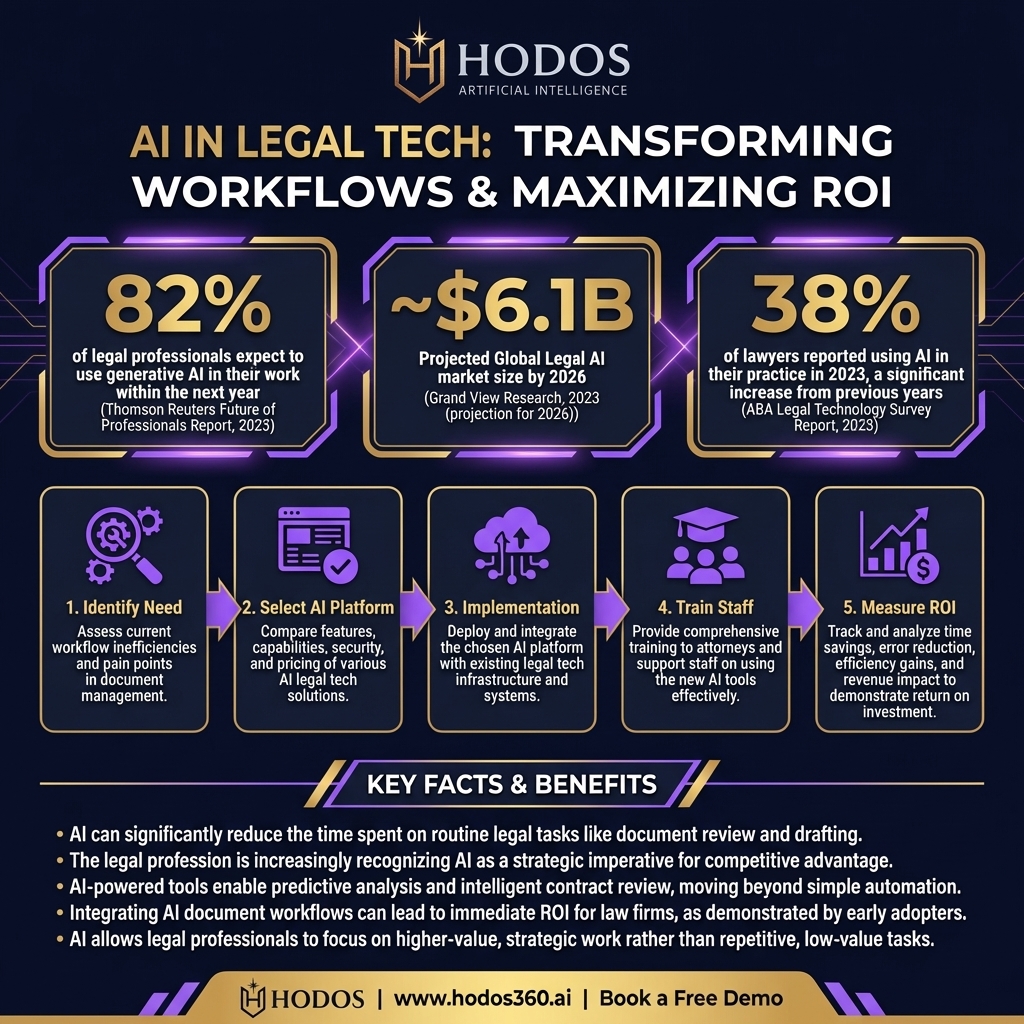
By automating routine tasks like document generation, version control, and clause identification, AI frees up attorneys from laborious, non-billable hours. This allows them to reallocate their expertise to strategic legal analysis, client consultation, and business development—activities that directly drive revenue Learn more about Legal AI Problem: Mastering Ethical Tech in Law Firms 2026.
Beyond time savings, AI significantly reduces the margin for error. Manual comparison and drafting are inherently susceptible to human oversight, which can lead to costly litigation, reputational damage, or even ethical breaches. AI tools offer forensic precision, ensuring consistency, compliance, and accuracy across all legal documents, thereby mitigating risk and bolstering client trust.
This enhanced reliability translates into fewer revisions, faster approvals, and a more streamlined overall process, directly impacting the firm’s bottom line.
Quantifiable Gains: Measuring Success
Measuring the ROI of AI in legal document management involves tracking key performance indicators (KPIs) such as reduced document turnaround times, decrease in errors, and reallocation of attorney hours. For instance, firms implementing AI for contract review often report a 50-70% reduction in review time, translating to significant cost savings and faster deal closures.
A study by the ABA Journal highlighted that firms utilizing AI for legal research and document review saw an average increase in billable hours per attorney by 10-15% annually, simply by eliminating mundane tasks. This efficiency gain isn't just about saving money; it's about maximizing the value of every attorney's time and expertise Learn more about AI Legal Assistant 2026: Revolutionizing Law Firm Efficiency.
Furthermore, the ability of AI to rapidly generate highly customized documents from templates, while ensuring adherence to specific legal standards and client preferences, empowers firms to take on more work without proportional increases in overhead. This scalability, coupled with improved accuracy and speed, positions firms to outcompete traditional practices, attract top talent, and deliver superior service—all contributing to a robust and immediate return on their technology investment.
The transformation of legal document workflows is not just about adopting tools, but about redefining the very metrics of success in legal practice.
Beyond Drafting and Comparison: A Holistic View of AI-Powered Legal Operations
While AI-powered drafting and comparison tools, as highlighted by the Hand Arendall Harrison Sale case, represent crucial advancements, the true transformative power of AI in legal operations extends far beyond these specific functionalities. A holistic approach to AI integration considers the entire lifecycle of a legal matter, from client intake and case management to billing and marketing.
For example, AI-driven systems can analyze vast datasets of past cases to predict litigation outcomes with remarkable accuracy, informing strategic decisions and client advice. Natural Language Processing (NLP) capabilities allow for intelligent extraction of key information from unstructured data, such as emails and scanned documents, turning them into actionable insights Learn more about Law Firm Return on Investment: Maximize AI in 2026.
This predictive power and data-driven intelligence fundamentally change how attorneys approach cases, moving from reactive problem-solving to proactive, informed strategy. The integration of AI across various operational silos creates a synergistic effect, where each AI-powered component amplifies the efficiency and effectiveness of the others, leading to a truly optimized and future-ready law firm.
Consider the impact on client intake. AI can qualify leads, gather initial information, and even schedule consultations, ensuring that attorneys engage with pre-vetted prospects, saving invaluable time. In case management, AI can monitor deadlines, assign tasks based on attorney workload and expertise, and flag potential conflicts of interest, providing a centralized, intelligent hub for all case-related activities.
For document automation, AI goes beyond simple template filling; it can dynamically generate complex legal documents by understanding context, jurisdiction-specific requirements, and client-specific variables, ensuring legal compliance and accuracy Learn more about Legal AI ROI: Maximizing Law Firm Value in 2026. This level of sophistication reduces the need for manual oversight and repetitive tasks, allowing legal professionals to focus on the nuanced legal strategy that only human intellect can provide.
The goal is not to replace attorneys but to augment their capabilities, empowering them to deliver higher quality, more efficient, and ultimately more valuable services. Firms that embrace this comprehensive vision of AI are not just optimizing; they are redefining what it means to practice law in the 21st century.
Navigating Implementation: Best Practices for AI Integration
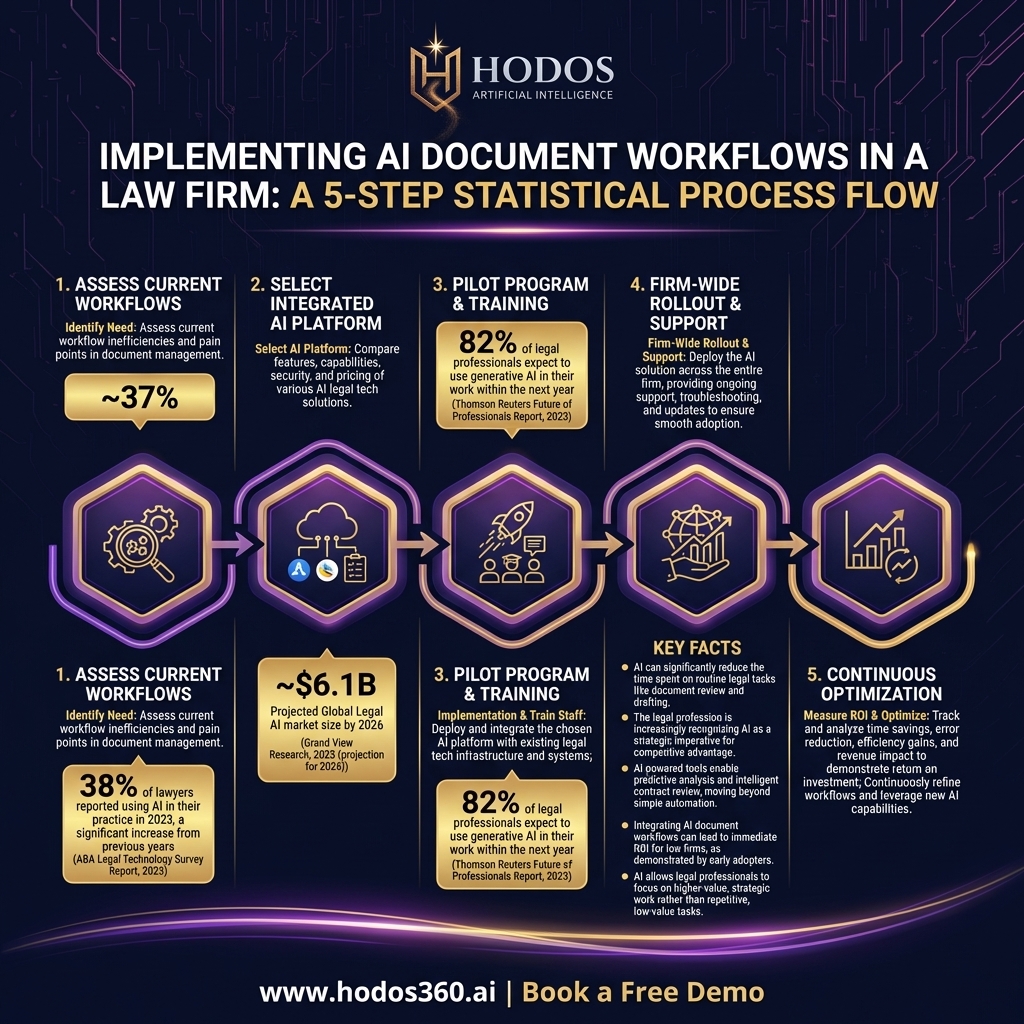
Implementing AI solutions in a law firm, while promising, is not without its challenges. The successful adoption of new technology hinges on careful planning, strategic execution, and a commitment to change management. The first best practice involves a thorough assessment of the firm's current workflows and identifying specific pain points where AI can deliver the most impact.
This might involve conducting an audit of time spent on document-related tasks, client intake processes, or even marketing efforts. Starting with a pilot program in a specific department or for a particular type of legal matter can provide valuable insights and build internal champions before a firm-wide rollout.
It's crucial to select AI tools that integrate seamlessly with existing systems, such as Microsoft 365, to minimize disruption and maximize user adoption. The goal should be to unify disparate systems, creating a cohesive technological ecosystem rather than adding another siloed application. This strategic approach ensures that the investment in AI technology yields its maximum potential, transforming operations rather than merely adding complexity.
Overcoming Resistance: A Change Management Blueprint
One of the most significant hurdles to AI adoption is resistance from within the firm. Attorneys, often accustomed to traditional methods, may view AI as a threat or an unnecessary complication. A robust change management blueprint is essential to overcome this. This includes clear communication about the benefits of AI—how it will enhance their work, reduce administrative burdens, and ultimately allow them to focus on more intellectually stimulating tasks.
Comprehensive training programs, tailored to different user groups, are paramount to ensure proficiency and comfort with the new tools. Moreover, fostering a culture of innovation and continuous learning is critical. Firms should establish internal champions who can advocate for the technology and provide peer support.
It's also vital to address ethical considerations, such as data privacy and the responsible use of AI, ensuring compliance with regulations like the ABA Model Rule 1.1, Comment 8, which emphasizes attorneys' duty of technological competence. By proactively engaging attorneys, demonstrating tangible benefits, and providing unwavering support, firms can successfully navigate the transition and fully realize the transformative power of AI document workflows.

How HODOS 360 Leads the Way in AI Law Firm Transformation
At HODOS 360, we understand that true transformation in the legal sector requires more than just isolated tools; it demands a unified, intelligent ecosystem. Our AI-powered platform is meticulously designed to address the comprehensive needs of modern law firms, offering a holistic suite of services that integrate seamlessly.
While firms like Hand Arendall Harrison Sale have seen success with specific AI drafting and comparison tools, HODOS 360 extends this efficiency across your entire operation, ensuring that every aspect of your practice benefits from cutting-edge AI. Our AI Law Firm Management System provides unparalleled capabilities, from advanced case management and automated billing to intelligent client intake and sophisticated document automation, including AI-powered legal workflows that adapt to your firm's unique needs.
This unifying approach eliminates the fragmentation often associated with piecemeal tech solutions, providing a single source of truth and a streamlined operational backbone.
Beyond internal operations, HODOS 360 empowers your firm with robust external engagement tools. Our AI Marketing Platform leverages AI for video creation, social media automation, and content generation, ensuring your firm's brand reaches its target audience effectively with measurable ROI tracking. Imagine AI-driven insights guiding your marketing spend, ensuring every dollar maximizes impact.
Furthermore, our AI Voice Assistants offer 24/7 phone answering, lead qualification, and appointment booking, providing multilingual support and intelligent call routing, ensuring no potential client is ever missed and every query is handled with precision. This front-line AI support dramatically enhances client experience and frees up administrative staff.
Finally, our Web & Mobile Development services ensure your digital presence is cutting-edge, with AI-powered website building, responsive design, and SEO optimization that drives high-converting traffic.
HODOS 360’s commitment to forensic precision and narrative drama in legal tech is reflected in every feature. We don't just offer tools; we offer a strategic partner in your firm's growth. Our platform is built to empower attorneys, streamline operations, and deliver immediate, quantifiable ROI, much like the success stories seen with targeted AI solutions, but on an exponentially grander scale.
We believe that by integrating AI across all touchpoints, from the most intricate legal drafting to the broadest marketing campaigns, law firms can not only survive but thrive in the dynamic legal landscape of 2026. This comprehensive approach ensures that your firm is not just keeping pace with technology, but leading the charge, setting new benchmarks for efficiency, profitability, and client satisfaction.
We provide the intelligence and automation necessary to transform your AI document workflows and indeed, your entire practice.
- ✓AI Law Firm Management System: Streamline case management, billing, client intake, and document automation with intelligent legal workflows.
- ✓AI Marketing Platform: Generate compelling content, automate social media, and create AI-powered videos with robust ROI tracking.
- ✓AI Voice Assistants: Provide 24/7 client support, qualify leads, and book appointments with multilingual, intelligent call routing.
- ✓Web & Mobile Development: Build high-converting, AI-powered websites with responsive design and advanced SEO optimization.
- ✓Unified Platform: Consolidate your tech stack into a single, intuitive system for unparalleled efficiency.
- ✓Scalable Solutions: Grow your firm without proportional increases in administrative overhead, thanks to AI automation.
Frequently Asked Questions
What kind of ROI can a law firm expect from AI document workflows?+
Law firms can expect immediate and substantial ROI from AI document workflows, often within months. This includes significant reductions in time spent on drafting, review, and comparison (up to 70%), leading to increased billable hours for attorneys. Firms also see improved accuracy, reduced errors, and faster turnaround times, which enhance client satisfaction and mitigate professional liability risks. The efficiency gains translate directly into cost savings and increased capacity for new business.
How does HODOS 360's AI Law Firm Management System differ from other solutions?+
HODOS 360 offers a comprehensive, integrated AI Law Firm Management System that goes beyond standalone tools. Unlike solutions focused solely on drafting or comparison, HODOS 360 unifies case management, billing, client intake, and document automation into a single AI-powered platform. This holistic approach ensures seamless data flow, eliminates silos, and provides intelligent workflows across all operational aspects, delivering a more profound and widespread transformation for your firm.
Is AI technology secure for handling sensitive legal documents?+
Yes, leading AI platforms like HODOS 360 are built with enterprise-grade security protocols, including advanced encryption, access controls, and compliance with stringent data privacy regulations. Reputable providers prioritize data protection, often exceeding industry standards to ensure the confidentiality and integrity of sensitive legal documents. Firms must, however, ensure their internal policies and attorney practices also adhere to ethical guidelines for technology use, such as those outlined in ABA Model Rule 1.6 (Confidentiality of Information).
What are the first steps for a law firm looking to adopt AI document workflows?+
The initial steps involve assessing your current pain points and identifying areas where AI can provide the most impact. This typically includes a workflow audit. Next, research and select an integrated AI platform that aligns with your firm's size, practice areas, and existing tech stack. Starting with a pilot program, providing comprehensive training, and fostering internal champions are crucial for successful firm-wide adoption and maximizing the benefits of your AI document management investment.
Can AI truly understand legal nuances and complex drafting requirements?+
Modern AI, particularly advanced Large Language Models (LLMs) trained on vast legal datasets, demonstrates remarkable capability in understanding legal nuances, context, and complex drafting requirements. While human oversight remains critical, AI tools can identify relevant clauses, suggest appropriate language based on jurisdiction and precedent, and ensure consistency far more rapidly than manual methods. They act as powerful co-pilots, augmenting human expertise rather than replacing it, ensuring both speed and the highest standard of legal precision in AI document workflows.