


AI-Native Law Firms: The Ultimate Guide to Modern Legal Practice
The legal industry is witnessing a profound transformation, one driven by the relentless march of artificial intelligence. Just recently, the legal tech world buzzed with news that The AI Firm Index, a directory dedicated to AI-native law firms launched by Lupl co-founder Matt Pollins, has swelled to 40 listings.
This milestone, reported by Legal IT Insider on April 25, 2026, isn't just a number; it signals a fundamental shift in how legal services are conceived, delivered, and managed. These aren't traditional firms merely dabbling in AI; they are practices built from the ground up with AI as their foundational operating system, leveraging advanced algorithms to reshape everything from client intake to complex litigation strategy.
The rise of these AI-native firms represents a new frontier, challenging established norms and setting a precedent for future legal innovation.
This burgeoning ecosystem of AI-first legal practices underscores a growing tension between legacy firms, often burdened by outdated infrastructure and entrenched methodologies, and agile startups that embrace technology as their core competency.
Firms like Eudia, Alaro, and AgileCounsel, featured prominently in the index, exemplify this new breed, demonstrating how AI can streamline operations, enhance client outcomes, and unlock unprecedented levels of efficiency. As the legal profession grapples with increasing demands for cost-effectiveness and speed, the blueprint laid out by these AI-native law firms offers a compelling vision for what's possible.
It’s a vision where AI isn't just a tool but an integral partner, empowering attorneys to focus on high-value strategic work, mitigate risks, and deliver superior client experiences. This guide explores the operational models, technological underpinnings, and strategic implications of this pivotal moment, offering insights for any legal professional navigating this rapidly evolving landscape.
Ready to explore how AI can revolutionize your law firm's operations and strategy?
The Rise of AI-Native Law Firms: A Paradigm Shift in Legal Service Delivery
The concept of an AI-native law firm is more than a buzzword; it signifies a strategic pivot from traditional, labor-intensive models to technology-driven, data-centric operations. These firms are not simply adopting AI tools; they are architecting their entire service delivery around artificial intelligence, embedding it into every workflow from client acquisition to case resolution.
This paradigm shift is being observed globally, with pioneers like Joshua Browder, founder of DoNotPay, demonstrating the potential for AI to democratize legal access, albeit controversially. While DoNotPay operates outside the traditional law firm structure, its impact highlights the disruptive potential that AI holds for legal service models, pushing even established firms to reconsider their technological integration.
The rapid expansion of The AI Firm Index to 40 listings in March 2026, as curated by Matt Pollins, a respected figure in legal tech, underscores the accelerating pace of this transformation. These listings aren't just names; they represent ventures that have secured significant funding, attracted top talent, and are actively challenging the status quo.
Historically, legal innovation has often been incremental, but the current wave of AI integration is proving to be exponential. Firms like Harvey AI, which recently secured substantial funding and partnered with global giants like Allen & Overy, demonstrate how large language models (LLMs) are being deployed to augment legal research, contract analysis, and even litigation support.
Learn more about AI Phone Assistant: Essential Guide for Modern Law Firms. This isn't just about efficiency; it's about re-imagining the very fabric of legal practice. According to a 2024 report by the Thomson Reuters Institute, law firms that have strategically invested in AI are reporting an average 15-20% increase in operational efficiency and a notable improvement in client satisfaction scores due to faster turnaround times and more predictable outcomes.
The competitive landscape is intensifying, forcing legacy firms to either adapt or risk obsolescence. The firms listed in Pollins' index, such as Farringdon, which just launched with an AI-first mandate, are setting new benchmarks for speed, accuracy, and scalability in legal service delivery. They are proving that a fancy deck and a round of funding can indeed translate into a formidable legal firm when AI is at its core, directly refuting skepticism and driving real market change.
The AI Firm Index: Tracking Legal Innovation
The AI Firm Index, a brainchild of Matt Pollins, serves as a critical barometer for the emerging AI-native law firm landscape. It's an independent, curated directory dedicated to tracking firms that are building law from the ground up with AI, rather than merely adopting off-the-shelf tools.
This initiative provides invaluable insights into the growth trajectory and operational philosophies of these pioneering firms. The rapid increase in listings from its launch to 40 in March 2026 highlights a significant market trend: AI is no longer a peripheral technology but a central pillar for new legal enterprises.
Learn more about Voice Assist: Essential AI Scheduling for Law Firms. Firms like Crosby and ElevateNext, an arm of Elevate, are leveraging AI to automate repetitive tasks, predict case outcomes, and provide more accessible and affordable legal solutions. This index is more than a list; it's a testament to the fact that a new generation of legal entrepreneurs, often backed by private equity, is fundamentally reshaping the industry, straining traditional models and forcing a broader conversation about the future of legal practice.
It's a clear signal that the digital transformation of legal services is not just coming, it's here, and it's expanding rapidly.
Operational Models: How AI-First Firms Redefine Legal Service Delivery
AI-native law firms operate on fundamentally different principles than their traditional counterparts. Their operational models are characterized by extreme automation, data-driven decision-making, and a lean, agile structure. Instead of relying heavily on billable hours for every task, these firms deploy AI-powered legal workflows to handle routine processes, from initial client intake to document review and even preliminary legal research.
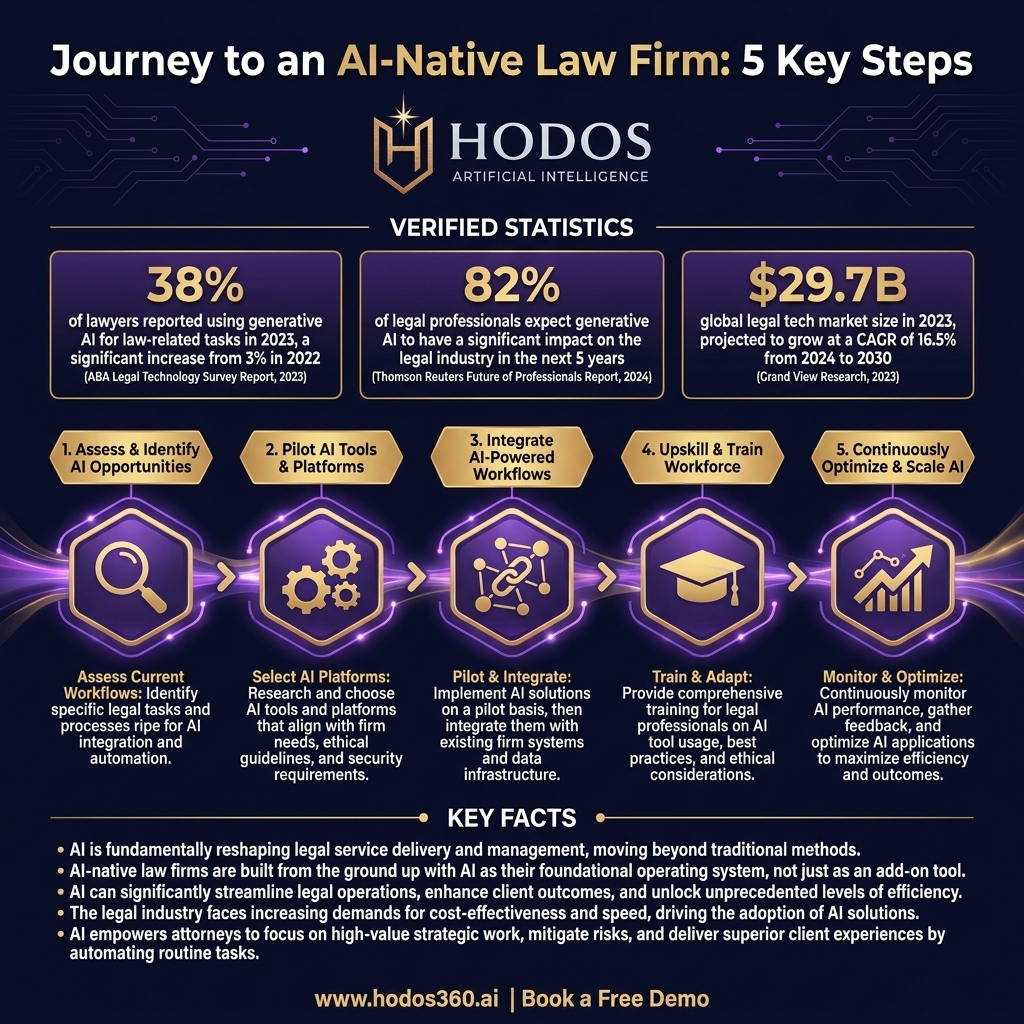
This allows human attorneys to dedicate their time to complex problem-solving, strategic advisory, and client relationship management—areas where human judgment and empathy remain irreplaceable. For example, a modern legal practice might use an AI-powered system for client intake, allowing prospective clients to provide details and even upload documents through an intuitive interface, with AI qualifying leads and automating appointment booking, streamlining the entire onboarding process.
This significantly reduces administrative overhead, allowing firms to offer more competitive pricing while maintaining high-quality service. The model emphasizes efficiency, scalability, and predictable outcomes, traits often elusive in traditional legal settings.
Consider the operational shift at a firm like Eudia, which, according to their public statements at LegalTech NYC 2026, uses proprietary AI to analyze vast datasets of case law and precedents in minutes, providing attorneys with strategic insights that would take human researchers days or weeks.
This isn't just about speed; it's about uncovering patterns and connections that human eyes might miss, leading to more robust legal arguments and better client representation. The integration of AI also extends to law firm management, with platforms providing real-time analytics on case progress, billing accuracy, and resource allocation.
This data-driven approach empowers firm leaders to make informed decisions, optimize staffing, and identify areas for further automation. Learn more about Essential AI Website Builder Guide for Law Firms. The result is a highly efficient, responsive, and innovative legal service delivery model that prioritizes client value and attorney effectiveness.
This approach ensures that firms are not just reacting to market demands but proactively shaping them, setting a new standard for what clients can expect from their legal partners.
One of the most significant advantages of this model is the ability to standardize and automate many aspects of legal work, leading to greater consistency and reduced error rates.
For instance, AI-native law firms often leverage advanced document automation platforms that can generate complex contracts, briefs, and pleadings with remarkable speed and accuracy, customized to specific client needs. This not only frees up attorney time but also minimizes the risk of human error in boilerplate language or procedural filings.
Moreover, the continuous learning capabilities of AI systems mean that these firms are constantly improving their processes, adapting to new legal precedents and regulatory changes with unparalleled agility. This continuous feedback loop ensures that the firm's knowledge base is always current and its operational efficiency is always being optimized.
This systematic approach to leveraging AI transforms the firm from a collection of individual practitioners into a cohesive, intelligent legal machine, capable of delivering superior outcomes at scale. Firms that fail to embrace this level of integration risk being left behind in a rapidly evolving market, unable to compete on speed, cost, or innovation.
- ✓Automated Client Intake: AI-powered systems qualify leads, gather initial information, and schedule consultations, significantly reducing administrative burden and improving response times.
- ✓Enhanced Legal Research: AI tools rapidly analyze vast legal databases, identify relevant precedents, and summarize complex legal texts, providing attorneys with comprehensive insights faster than ever before.
- ✓Document Generation & Review: AI automates the drafting of contracts, pleadings, and other legal documents, and performs meticulous review for errors, inconsistencies, and compliance.
- ✓Predictive Analytics: AI models analyze historical data to predict case outcomes, identify potential risks, and inform litigation strategy, enabling more proactive and effective counsel.
- ✓Workflow Automation: AI streamlines internal processes, managing tasks, deadlines, and resource allocation, ensuring smooth operation and reducing bottlenecks.
- ✓24/7 Client Support: AI voice assistants and chatbots provide instant answers to common client queries, improving client satisfaction and freeing up staff for complex issues.
- ✓Data-Driven Management: AI provides real-time insights into firm performance, financial health, and operational efficiency, empowering leaders to make informed strategic decisions.
Beyond the Hype: Practical AI Implementation in Modern Legal Practice
While the narrative around AI-native law firms can sometimes verge on the futuristic, the reality is that practical AI implementation is already yielding tangible benefits in modern legal practice. It's not about replacing lawyers but augmenting their capabilities, allowing them to perform at an elevated level.
Consider the impact of large language models (LLMs) from companies like OpenAI (led by Sam Altman) and Anthropic (co-founded by Dario Amodei), which are now being integrated into specialized legal platforms. These LLMs can draft initial legal memos, summarize depositions, and even identify nuanced arguments within complex legal texts.
For example, a senior partner at Allen & Overy recently lauded their partnership with Harvey AI for significantly reducing the time spent on due diligence for M&A transactions, allowing their legal teams to focus on strategic negotiation rather than exhaustive document review. This synergy between human expertise and AI efficiency is the hallmark of successful implementation.
Furthermore, the application of AI extends beyond just document processing. Many AI-native law firms are leveraging AI for sophisticated analytics, such as predicting litigation outcomes or assessing the risk profile of a particular contract. This capability, once the exclusive domain of highly specialized consultants, is now becoming integrated into standard legal workflows.
A 2025 report by McKinsey & Company on the future of professional services highlighted that firms embracing predictive AI in their legal service delivery saw a 30% reduction in average case duration and a 10% increase in client retention. This data unequivocally demonstrates that AI is not merely a tool for automation but a strategic asset for competitive advantage.
Learn more about Agentic Marketing: The Ultimate Guide for Law Firms. The focus for these firms is on creating value through data-driven insights, offering clients not just legal advice, but also foresight and risk mitigation strategies powered by advanced analytics. This shift from reactive legal counsel to proactive strategic partnership is a direct result of effective AI integration, enhancing the role of the attorney as a true business advisor.
For firms looking to transition towards an AI-centric model, the journey begins with identifying pain points and areas ripe for automation. This could involve leveraging an AI Law Firm Management System like HODOS 360, which integrates case management, billing, client intake, and document automation into a single, AI-powered platform.
Such comprehensive solutions enable firms to build AI-powered legal workflows, eliminating manual redundancies and freeing up valuable attorney time. The key is to adopt a modular approach, gradually integrating AI solutions that address specific operational challenges, then scaling up. This pragmatic strategy allows firms to realize immediate benefits while building a robust foundation for future AI expansion.
The goal is to create a symbiotic relationship between human intelligence and artificial intelligence, where each enhances the other, leading to a more efficient, effective, and ultimately more profitable legal practice. This measured but determined approach ensures that firms can harness the power of AI without overwhelming their existing infrastructure or staff.
Ethical AI and Responsible Adoption in Legal Practice
As AI-native law firms proliferate, the ethical implications of AI in legal practice become paramount. The ABA Model Rules of Professional Conduct, particularly Rule 1.1 on Competence, explicitly state that lawyers must keep abreast of changes in the law and its practice, including the benefits and risks associated with relevant technology.
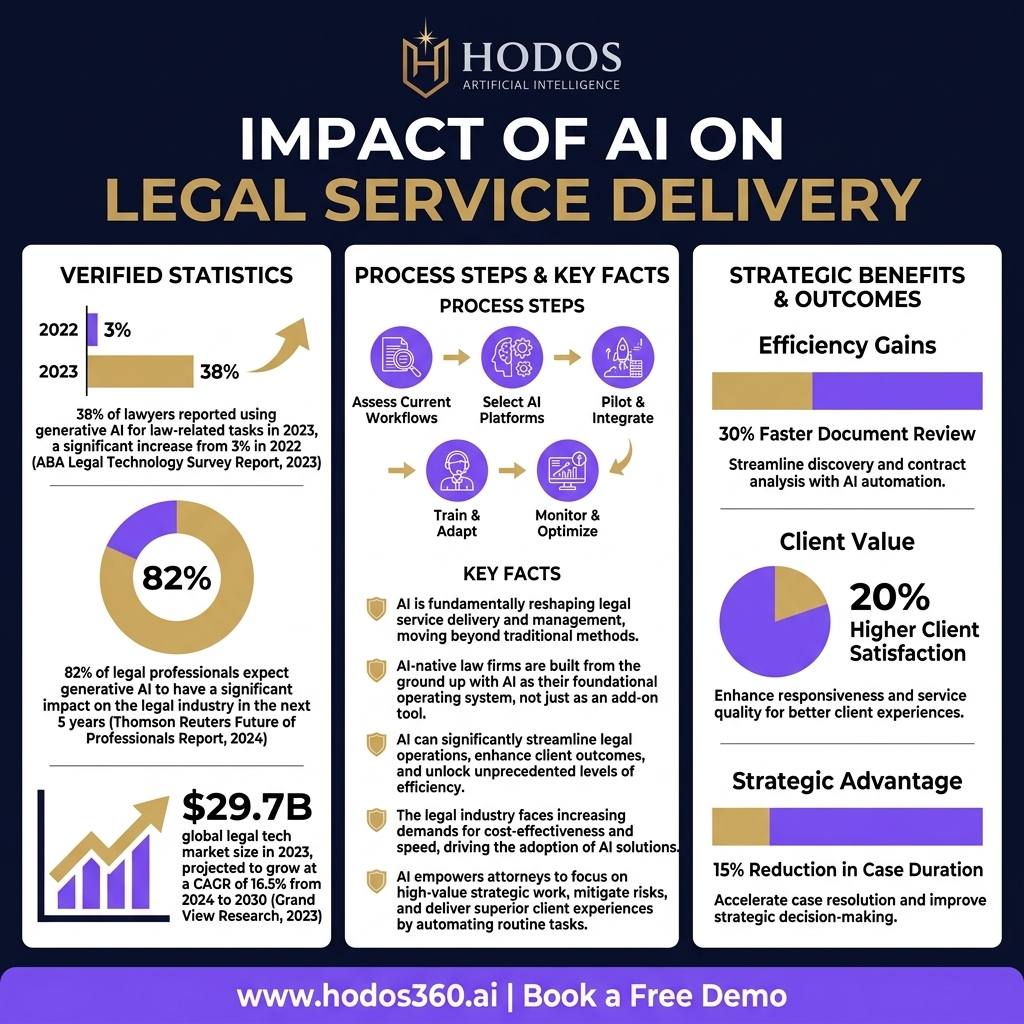
This necessitates a deep understanding of how AI systems function, their limitations, and potential biases. The recent enforcement of the EU AI Act further underscores the global push for responsible AI, imposing strict transparency and accountability requirements on high-risk AI systems, many of which are applicable to legal tech.
Firms must ensure their AI tools are not only efficient but also fair, transparent, and compliant with evolving regulations. Learn more about Voice AI Assistant: The Ultimate Guide for Law Firms. This involves rigorous testing, continuous monitoring, and a commitment to addressing algorithmic bias to ensure equitable access to justice.
The legal profession's commitment to ethics must extend to its technological tools, ensuring that AI enhances, rather than compromises, the integrity of the justice system. Firms like Alaro are actively working on explainable AI (XAI) models to ensure that their AI-driven decisions are auditable and understandable, addressing a core concern for ethical deployment.
Navigating the Future: Challenges and Opportunities for AI-Powered Legal Firms
The journey for AI-powered legal firms is not without its challenges. One significant hurdle is the initial investment in technology and the ongoing need for continuous software updates and talent acquisition. Training existing staff to effectively utilize AI tools, or hiring new talent with specialized AI proficiency, represents a substantial commitment.
The legal industry has historically been slow to adopt new technologies, making cultural resistance a genuine factor. However, the opportunities far outweigh these obstacles. AI-native law firms are uniquely positioned to capture market share by offering services that are faster, more cost-effective, and more data-driven than traditional practices.
They can scale operations more rapidly, handle a higher volume of cases with fewer resources, and offer innovative pricing models that appeal to a broader client base. This agility allows them to respond swiftly to market changes and client demands, cementing their position as leaders in the evolving legal landscape.
The competitive advantage gained by early adopters will only grow as AI technology matures and becomes even more sophisticated, allowing these firms to further expand their service delivery capabilities and reach previously underserved markets.
Another critical opportunity lies in the ability of AI to unlock new revenue streams and redefine legal products.
Firms can leverage AI to create specialized legal tools, offer subscription-based legal services, or even provide predictive legal intelligence as a standalone offering. This moves beyond the traditional hourly billing model, allowing firms to monetize their expertise in innovative ways. Furthermore, AI can significantly enhance risk management, identifying potential legal pitfalls before they materialize, thereby providing clients with proactive protection rather than reactive litigation.
Learn more about Essential AI Web Development: Build Legal Apps with Ease. This shift towards preventative legal care, powered by AI's analytical capabilities, positions AI-native law firms as indispensable partners in their clients' long-term success. The ability to forecast legal trends and anticipate regulatory changes through AI-driven insights provides an unparalleled level of strategic value, transforming the attorney from a problem-solver into a foresight provider.
This evolution of service offerings is not merely an improvement but a fundamental redefinition of what legal value entails.
However, AI-native law firms must also contend with the challenge of data privacy and security. Handling sensitive client information with AI systems requires robust cybersecurity measures and strict adherence to data protection regulations like GDPR and CCPA.
Breaches can have catastrophic consequences, both legally and reputationally. Therefore, investing in secure, compliant AI infrastructure is non-negotiable. Furthermore, the rapid pace of AI development means that firms must constantly evaluate and update their tech stack to remain competitive. This dynamic environment demands a culture of continuous learning and adaptation, where attorneys and staff are encouraged to engage with new technologies and methodologies.
Those firms that prioritize robust security protocols and foster a forward-thinking, adaptive culture will be best positioned to thrive in this new era of AI-powered legal firms, ensuring that innovation does not come at the expense of client trust or regulatory compliance. The responsibility to safeguard client data and maintain ethical standards remains paramount, even as technological capabilities expand exponentially.
Talent Acquisition in the AI Era: Building the Legal Workforce of Tomorrow
The emergence of AI-native law firms is profoundly impacting talent acquisition and development within the legal sector. The demand for attorneys with a strong grasp of technology, data analytics, and project management is skyrocketing. Firms are no longer just seeking legal expertise but also 'legal engineers' who can bridge the gap between law and technology.
This trend is creating a competitive market for a new breed of legal professionals, prompting universities to adapt their curricula to include legal tech courses. Furthermore, existing legal professionals must embrace continuous learning to remain relevant, acquiring new skills in prompt engineering, data interpretation, and AI governance.
Firms that invest in upskilling their workforce and attract tech-savvy talent will be at the forefront of this transformation, building the legal workforce of tomorrow. The ability to integrate these diverse skill sets into a cohesive team will be a defining characteristic of successful AI-native law firms, ensuring they can fully leverage their technological investments.

Key Takeaways and Next Steps for Law Firm Innovation
The rapid expansion of The AI Firm Index to 40 listings signifies an undeniable shift in the legal landscape: AI-native law firms are not a fleeting trend but a fundamental re-architecture of legal service delivery. These firms, built on a foundation of AI-powered workflows, data-driven insights, and agile operational models, are setting new benchmarks for efficiency, client satisfaction, and strategic value.
For established firms, this isn't a call to abandon tradition but an urgent invitation to innovate. The choice is no longer whether to adopt AI, but how comprehensively and strategically to integrate it into every facet of practice. From automating routine tasks to powering sophisticated analytics, AI offers a pathway to enhanced competence and competitive advantage.
The future of law belongs to those who embrace this technological evolution, understanding that AI is a powerful partner in elevating legal expertise, not replacing it.
To thrive in this new era, law firms must embark on a deliberate digital transformation journey. This involves assessing current operations, identifying opportunities for AI integration, and investing in platforms that can support this evolution.
Implementing an AI Law Firm Management System can be a pivotal first step, centralizing core functions and enabling the creation of intelligent, automated workflows. Beyond technology, it requires a cultural shift—fostering a mindset of continuous learning, ethical AI adoption, and interdisciplinary collaboration. Firms that proactively engage with these changes, embracing the power of AI to augment human capabilities, will not only survive but lead in the increasingly dynamic and tech-driven legal market.
The time to act is now, transforming challenges into opportunities and securing a prominent position in the future of legal practice.
Transform your legal practice with HODOS 360’s AI-powered solutions. Book a free demo today!
Frequently Asked Questions
What defines an AI-native law firm?+
An AI-native law firm is fundamentally built around artificial intelligence, integrating AI into its core operational models and service delivery from inception. Unlike traditional firms that adopt AI tools incrementally, AI-native firms leverage AI for everything from client intake and document automation to legal research and predictive analytics, aiming for maximum efficiency, scalability, and data-driven decision-making. They prioritize AI as a foundational technology.
How do AI-native firms impact legal service delivery?+
AI-native firms significantly impact legal service delivery by automating routine tasks, improving accuracy, and accelerating turnaround times. They can offer more cost-effective services, provide deeper data-driven insights, and scale operations more efficiently. This allows human attorneys to focus on complex, high-value strategic work and client relationships, ultimately leading to enhanced client satisfaction and more predictable, favorable outcomes.
What are the key technologies used by AI-native law firms?+
Key technologies include large language models (LLMs) for natural language processing and generation, machine learning algorithms for predictive analytics and pattern recognition, and specialized AI-powered legal software for case management, document automation, and legal research. Cloud computing infrastructure, data analytics platforms, and AI voice assistants also play crucial roles in their comprehensive tech stack.
What ethical considerations arise with AI in legal practice?+
Ethical considerations include ensuring AI systems are fair and unbiased, maintaining client confidentiality and data security, and ensuring transparency in AI decision-making. Lawyers must uphold their duty of competence (ABA Model Rule 1.1) by understanding AI's benefits and risks. Compliance with regulations like the EU AI Act is also crucial to ensure responsible and accountable deployment of AI in legal services.
How can traditional law firms transition towards an AI-native model?+
Traditional firms can transition by identifying key operational pain points suitable for AI automation, investing in integrated AI Law Firm Management Systems, and fostering a culture of technological adoption. Starting with modular AI solutions, training staff, and gradually expanding AI integration across workflows can help. Strategic partnerships with legal tech providers and a focus on continuous learning are also vital for a successful digital transformation.