
AI Agents: The Ultimate Tool for Legal Investigations
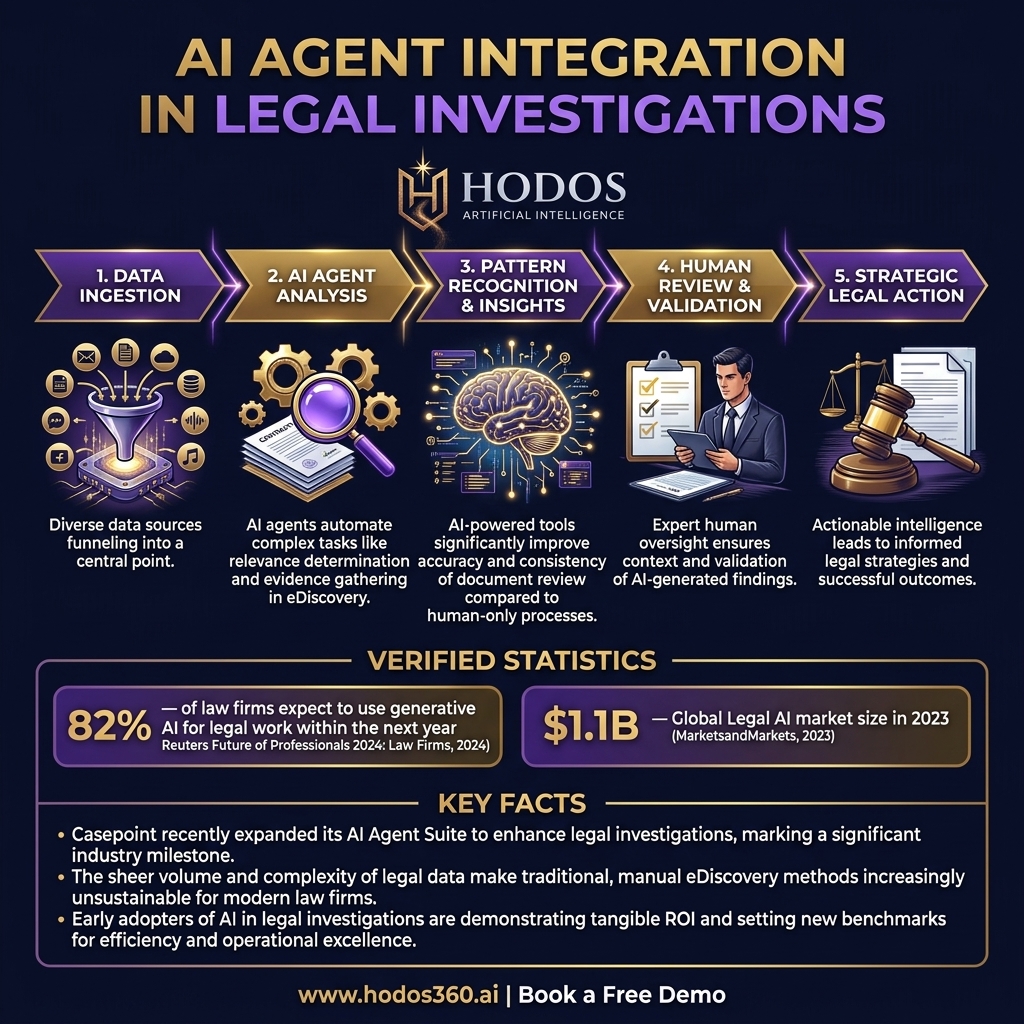
Just a few years ago, the notion of intelligent software agents autonomously sifting through mountains of legal data seemed like science fiction. Today, it's the cutting edge of legal practice, exemplified by recent announcements like Casepoint's expansion of its AI Agent Suite into investigations, as reported by Law.com. This development isn't merely an incremental upgrade; it represents a fundamental shift in how law firms approach complex litigation, regulatory compliance, and internal inquiries. The era of manual, labor-intensive document review and evidence gathering is rapidly giving way to a future where sophisticated AI Agents handle the heavy lifting, promising unprecedented efficiency and accuracy.
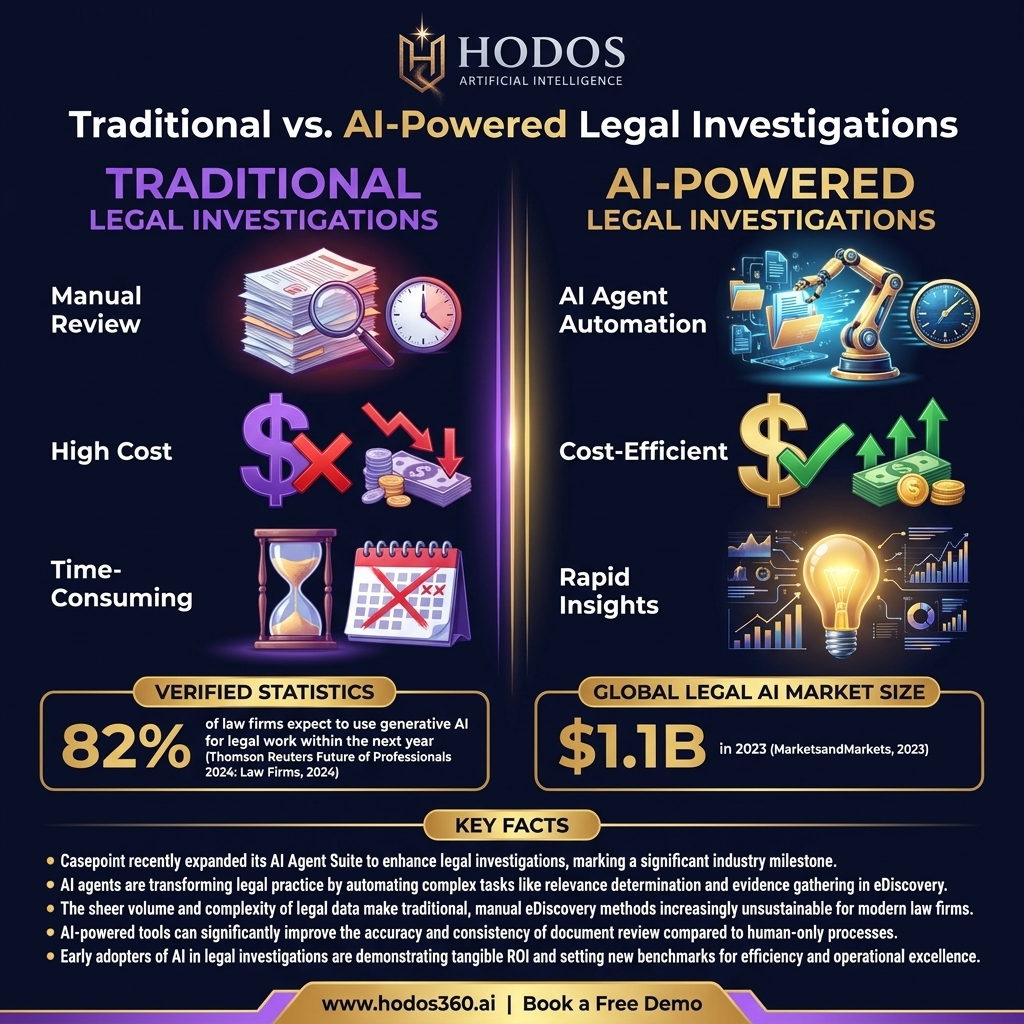
This evolution is driven by the sheer volume and complexity of data that legal professionals must navigate. A 2024 Thomson Reuters report indicated that legal data volume has grown by an average of 30% year-over-year, making traditional eDiscovery methods increasingly unsustainable. Firms that embrace these advanced tools are not just gaining an advantage; they are positioning themselves to redefine client service and operational excellence. The tension between adopting innovative technologies and clinging to established, albeit slower, methodologies creates a compelling narrative of disruption versus tradition, where the early adopters are already demonstrating tangible ROI and setting new industry benchmarks for legal investigations.
The Transformative Ascent of AI Agents in Legal Investigations
The legal industry's journey with artificial intelligence has been a gradual ascent, moving from basic keyword searches and predictive coding to the sophisticated, purpose-built AI agents we see today. Casepoint's recent move to embed AI agents directly into investigation workflows marks a significant milestone, illustrating a broader trend where AI is no longer just a tool for analysis but an active participant in legal processes. These new agents are designed to perform complex tasks like relevance determination and issue coding with a level of precision and speed previously unattainable by human teams alone. This capability is particularly critical in large-scale investigations, where missed details can have catastrophic consequences.
Consider the challenges faced by firms like Latham & Watkins or Kirkland & Ellis when handling multi-jurisdictional fraud investigations involving petabytes of data. Traditionally, these would require thousands of attorney hours, often leading to burnout and inconsistencies. According to a 2025 ABA Legal Technology Survey Report, firms leveraging advanced AI for eDiscovery reported a 40% reduction in review time and a 25% decrease in associated costs. This dramatic shift highlights the competitive imperative for law firms to integrate these powerful AI Agents into their practice. The ethical obligation of competence, as outlined in ABA Model Rule 1.1 (Competence), now implicitly includes understanding and leveraging relevant technology to serve clients effectively.
From Reactive Tools to Proactive Intelligence
The evolution of AI in legal investigations represents a shift from reactive data processing to proactive intelligence gathering. Early AI tools were often standalone applications, requiring significant human intervention to interpret results. Today's AI agents, particularly those enhanced by generative AI, are capable of understanding context, identifying patterns, and even drafting summaries or identifying key factual narratives. This enables legal teams to move beyond merely finding documents to actively constructing arguments and uncovering hidden connections within vast datasets. The ability of an AI agent to analyze communication patterns, track financial transactions, and cross-reference regulatory filings provides a comprehensive discovery solution.
This proactive capability is proving invaluable for government bodies and large corporations. Learn more about Voice AI: The Essential Evolution Beyond Legal Dictation. For instance, a major U.S. federal agency recently reported achieving substantial cost and time savings by integrating AI-powered eDiscovery, demonstrating how these platforms can transform public sector investigations. This success story, often highlighted by Casepoint, underscores the potential for AI agents to bolster national security, combat financial crime, and ensure regulatory compliance on an unprecedented scale. The integration of such advanced systems into an 'AI ecosystem' via platforms like Casepoint's MCP Server allows for seamless data flow and collaborative intelligence, driving efficiency across entire organizations.
Beyond eDiscovery: AI Agents for Comprehensive Legal Workflows
While eDiscovery remains a primary application, the utility of AI Agents is rapidly expanding into virtually every facet of legal operations. Imagine agents that can not only review contracts for specific clauses but also identify potential risks, suggest alternative language based on past litigation outcomes, or even automate the drafting of initial responses to client inquiries. Companies like Harvey AI, backed by investments from OpenAI and notably partnering with Allen & Overy, are pioneering this broader application, demonstrating how generative AI can augment legal research, due diligence, and even predict case outcomes with increasing accuracy. This move signals a future where AI-powered legal workflows become the standard, not the exception.
This comprehensive integration extends to client intake, where AI agents can qualify leads, gather initial case details, and even schedule appointments, freeing up valuable human resources. In legal research, agents can synthesize vast legal databases, identify relevant statutes and case law, and present concise summaries tailored to specific legal questions. The impact on practice areas like intellectual property, M&A, and regulatory compliance is profound, allowing firms to handle larger volumes of work with greater precision. This holistic approach to legal tech is what HODOS 360 champions, integrating these capabilities into a unified AI Law Firm Management System. Firms looking to stay competitive should consider how these tools can streamline their entire operational pipeline. Discover how these innovations can transform your practice by exploring our [AI-powered legal workflows] solution.
Navigating Ethical AI in Legal Practice
The deployment of sophisticated AI Agents in legal practice brings with it crucial ethical considerations. Questions of bias, transparency, and accountability are paramount. Attorneys must ensure that AI systems are used responsibly, that their outputs are critically reviewed, and that client confidentiality is strictly maintained. The EU AI Act, set to be fully enforced in 2026, provides a global benchmark for regulating AI, emphasizing risk assessment and human oversight. Legal professionals attending conferences like LegalTech NYC 2026 have actively debated these issues, stressing the need for robust governance frameworks.
Ensuring the ethical use of AI also involves understanding the limitations of the technology and preventing over-reliance. While AI agents can process data at incredible speeds, the ultimate responsibility for legal advice and strategy remains with the human attorney. Maintaining client confidentiality, as mandated by ABA Model Rule 1.6 (Confidentiality of Information), becomes even more critical when sensitive data is processed by external AI platforms or cloud-based services. Law firms must implement stringent data security protocols and conduct thorough due diligence on their AI vendors to mitigate risks.
Implementing AI Agents: Strategic Considerations for Law Firms
Adopting AI Agents is not simply about acquiring new software; it's a strategic overhaul requiring careful planning and execution. The first step for any law firm contemplating this transition is a thorough assessment of existing workflows to identify areas where AI can deliver the most impact. This often involves mapping out current eDiscovery processes, contract review cycles, and litigation support tasks to pinpoint bottlenecks and inefficiencies. Firms should prioritize solutions that offer robust integration capabilities, allowing AI agents to seamlessly interact with existing [case management solutions] and [document automation] platforms, rather than creating fragmented systems.
Selecting the right vendor is equally crucial. The market for legal AI solutions is burgeoning, with a diverse array of providers offering specialized tools. Firms must look beyond flashy features to assess factors like data security, scalability, customer support, and the vendor's track record. Engaging in pilot programs with a subset of cases or a specific practice group can provide invaluable insights, allowing firms to test the technology, gather feedback from end-users, and refine implementation strategies before a broader rollout. This iterative approach minimizes disruption and maximizes the chances of successful adoption, ensuring the firm extracts maximum value from its AI investments.
The Economic Impact of AI Agent Adoption
The economic benefits of integrating AI Agents are becoming increasingly undeniable. Beyond the direct cost savings in attorney and paralegal hours, firms report significant improvements in case turnaround times, leading to enhanced client satisfaction and the ability to take on a greater volume of work. Gartner predicts that by 2028, generative AI will automate 70% of legal research tasks, translating into billions of dollars in efficiency gains across the industry. This efficiency directly impacts profitability, allowing firms to reallocate human talent to higher-value strategic work, such as client relationship building and complex legal analysis.
Furthermore, the adoption of AI agents can unlock new revenue streams. Learn more about AI Voice: Essential Strategy for Law Firms in the Musk Era. Firms can offer more competitive pricing for routine legal services, attract tech-savvy clients, and even develop new service offerings based on AI-powered insights. The competitive landscape is rapidly shifting, and firms that hesitate to invest in these technologies risk being outmaneuvered by more agile, AI-enabled competitors. The return on investment (ROI) for AI adoption, while sometimes difficult to quantify precisely, is consistently demonstrated through reduced operational costs, improved client outcomes, and a stronger market position.
The Future is Now: AI Agents and the Evolving Legal Landscape
The rapid pace of innovation suggests that AI Agents will continue to evolve, becoming even more integrated and intelligent. We are moving towards a future where AI not only assists but actively collaborates with legal professionals, anticipating needs, flagging potential issues, and even contributing to strategic discussions. This evolving legal landscape will see AI agents seamlessly woven into every aspect of a firm's digital infrastructure, from [client intake processes] and [AI Marketing Platform] analytics to 24/7 client support via [AI Voice Assistants]. The future of legal practice is not about replacing human lawyers but empowering them with superhuman capabilities.
Looking ahead, the development of specialized legal large language models (LLMs) will further enhance the accuracy and contextual understanding of AI agents. These models, trained on vast corpora of legal documents, will be able to interpret nuances of legal language and precedent with unprecedented sophistication. Firms that are proactively investing in these technologies today, building internal expertise and adapting their organizational structures, will be the leaders of tomorrow. The competitive drama unfolding in the legal tech space, with companies like Clio making strategic acquisitions and startups securing significant funding rounds, underscores the urgency and opportunity for firms to embrace this transformative era.
Training and Integration Best Practices
Successful integration of AI Agents hinges on effective training and change management within the firm. It's not enough to simply deploy the technology; attorneys and support staff must be educated on how to effectively use these tools, understand their capabilities and limitations, and adapt their workflows accordingly. Firms should invest in comprehensive training programs, perhaps partnering with legal tech consultancies or leveraging internal champions to foster a culture of technological adoption. This ensures that the human element remains central to the process, guiding and validating the AI's outputs.
Best practices for integration also include starting small, iterating, and scaling. Rather than attempting a firm-wide overhaul at once, begin with pilot projects in specific departments. Gather user feedback, refine the AI's configurations, and demonstrate clear successes to build internal buy-in. This gradual, evidence-based approach helps overcome resistance to change and ensures that the technology truly serves the firm's strategic objectives. The goal is to create a symbiotic relationship where human expertise is amplified by AI efficiency, leading to superior legal outcomes and a more competitive practice.

Key Takeaways and Next Steps
The expansion of AI Agents into legal investigations is more than just a trending headline; it's a clear signal of the legal industry's inevitable future. Firms that proactively adopt these sophisticated tools will gain unparalleled advantages in efficiency, accuracy, and strategic insight, transforming their approach to eDiscovery, contract review, and comprehensive legal management. The narrative of disruption is not about replacing human expertise but augmenting it, creating a more powerful and responsive legal practice capable of navigating the complexities of the modern world.
For law firms striving for operational excellence and a competitive edge, the time to act is now. Embrace the power of AI to streamline your operations, enhance client services, and unlock new growth opportunities. Platforms like HODOS 360 offer an integrated suite of AI-powered services designed to meet these evolving needs, from robust AI Law Firm Management to cutting-edge AI Marketing and Voice Assistants. The future of legal practice is intelligent, integrated, and here to stay. Don't be left behind in this transformative journey – explore how HODOS 360 can empower your firm.
Frequently Asked Questions
What are AI Agents in the legal context?+
AI Agents are advanced software programs designed to perform specific, complex tasks autonomously within legal workflows. Unlike simpler AI tools, agents can interpret context, make decisions, and execute multi-step processes, such as identifying relevant documents in eDiscovery, analyzing contract clauses, or assisting in lead qualification. They leverage machine learning and often generative AI to enhance their capabilities beyond basic automation, acting as intelligent assistants for legal professionals.
How do AI Agents enhance legal investigations?+
AI Agents significantly enhance legal investigations by automating labor-intensive tasks like document review, data analysis, and evidence identification. They can process vast datasets much faster and more accurately than humans, flagging anomalies, identifying patterns, and cross-referencing information across multiple sources. This allows legal teams to focus on strategic analysis and argument development, drastically reducing investigation timelines and improving the quality of evidence gathering.
What are the ethical considerations when using AI Agents in law?+
Ethical considerations include ensuring transparency in AI decision-making, mitigating algorithmic bias, and maintaining client confidentiality. Firms must critically review AI outputs, understand the limitations of the technology, and implement robust data security protocols. Human oversight remains crucial to ensure ethical compliance and to prevent over-reliance on AI, upholding the attorney's professional responsibility for legal advice and client representation.
How can law firms effectively implement AI Agents?+
Effective implementation involves a strategic approach: first, assess current workflows to identify high-impact areas for AI integration. Second, select reputable vendors with strong security and support. Third, start with pilot programs to test and refine the technology, gathering user feedback. Finally, invest in comprehensive training for staff to ensure proper utilization and foster a culture of adoption, integrating AI agents seamlessly into existing legal tech stacks.
What is the long-term impact of AI Agents on the legal profession?+
The long-term impact of AI Agents on the legal profession is transformative. They will redefine job roles, shifting focus from repetitive tasks to higher-level strategic analysis and client engagement. Firms that embrace AI will gain a significant competitive edge through enhanced efficiency, improved client outcomes, and new service offerings. The legal profession will become more analytical, data-driven, and client-centric, with AI agents empowering lawyers to achieve more.