
AI Legal Management: The Ultimate Guide to Modern Law Firm Operations
The legal landscape is undergoing a monumental transformation, driven by the relentless march of artificial intelligence. October 2026 marks another significant milestone, with news breaking of legal tech giant Clio's acquisition of AI-powered regulatory intelligence platform Page, as reported by citybiz. This strategic move is not an isolated incident but rather a potent indicator of a broader industry shift, following closely on the heels of Clio's billion-dollar acquisition of vLex in 2023. These bold investments underscore a fundamental truth: AI is no longer a futuristic concept but an immediate, indispensable component of modern legal practice, especially in the realm of law firm management.
For years, legal professionals have grappled with the ever-increasing complexity of regulatory frameworks, the demands of efficient case management, and the constant pressure to optimize billing and client intake processes. The tension between traditional, manual methods and the promise of technological advancement has reached a crescendo. Firms that embrace this evolution are not just surviving; they are thriving, demonstrating superior efficiency, enhanced client satisfaction, and a clearer competitive edge. Those resistant to change risk being left behind in a rapidly accelerating market, struggling to keep pace with the efficiency and insights offered by AI-powered solutions.
This era of rapid innovation, championed by leaders like Clio CEO Jack Newton, who consistently emphasizes the importance of data-driven insights and lawyer-centric technology, demands a new approach to legal operations. The acquisition of specialized platforms like Page highlights the critical role AI plays in navigating regulatory complexities, transforming what was once a time-consuming, error-prone task into a streamlined, intelligent process. This article delves into the core tenets of AI legal management, exploring how these advancements are reshaping every facet of law firm operations, from the minutiae of daily tasks to overarching strategic decisions. Ready to explore how AI can revolutionize your practice? Discover the HODOS 360 AI Law Firm Management System today.
The Strategic Imperative: Why AI Acquisitions are Reshaping Legal Practice
The recent wave of AI acquisitions in the legal tech sector, exemplified by Clio's strategic moves, is a clear signal of market consolidation and the imperative for comprehensive, integrated solutions. These aren't merely opportunistic purchases; they represent a calculated response to the escalating demands on law firms. According to the 2023 ABA TechReport, over 60% of law firms are now using cloud-based software, and a growing percentage are exploring AI tools, demonstrating a clear appetite for technological advancement. Companies like Clio, Thomson Reuters, and LexisNexis are locked in a fierce competition to build ecosystems that offer end-to-end management, research, and intelligence capabilities. This market dynamic creates both pressure and opportunity for firms seeking to optimize their operations and stay competitive.
Jack Newton, often quoted on the future of legal technology, has consistently articulated a vision where technology empowers legal professionals to deliver better client outcomes. The acquisition of Page, with its focus on regulatory intelligence, directly supports this vision by providing firms with real-time, AI-driven insights into complex and ever-changing legal requirements. This capability is crucial in a world where regulatory landscapes are shifting at an unprecedented pace, from data privacy laws like GDPR and CCPA to industry-specific compliance mandates. Firms that can quickly adapt and ensure compliance gain a significant advantage, mitigating risk and building client trust.
Beyond just regulatory intelligence, the broader trend of AI acquisitions encompasses areas like legal research, document automation, and predictive analytics. Learn more about AI-Powered Legal Tech: The Essential Guide for Modern Firms. Companies like Harvey AI, which recently secured significant funding to expand its generative AI capabilities for legal professionals, are partnering with major firms like Allen & Overy to integrate cutting-edge AI directly into their workflows. This ecosystem-building approach reflects the understanding that standalone tools, while useful, cannot match the transformative power of a unified, AI-powered platform. The goal is to create a seamless experience where data flows intelligently across all aspects of law firm management, from client intake to final billing.
This competitive landscape also highlights a critical human conflict: the tension between established, often manual, legal practices and the disruptive potential of AI. Many senior partners, accustomed to decades-old systems, view AI with skepticism, fearing job displacement or loss of control. Yet, firms that have embraced early adoption, such as those leveraging AI for e-discovery or contract review, report significant time savings and accuracy improvements. The success stories of these pioneering firms, often led by visionary partners or CTOs, create a compelling narrative for change, demonstrating that AI is not about replacing human expertise but augmenting it, enabling lawyers to focus on higher-value, strategic work.
The Competitive Landscape and Market Consolidation
The legal tech market is experiencing rapid consolidation, with major players like Clio, Thomson Reuters, and LexisNexis actively acquiring innovative startups. This trend is fueled by the desire to offer comprehensive, integrated solutions that address every facet of law firm operations. The market is moving away from disparate tools towards unified platforms that provide seamless workflows and data synchronization, making it easier for firms to manage their entire practice.
This intense competition is driving innovation at an unprecedented pace. Startups that once specialized in niche AI applications are now being absorbed into larger ecosystems, bringing their cutting-edge technology to a broader audience. Learn more about AI Marketing Trends: The Essential Guide to Legal Martech. This dynamic creates a challenging environment for smaller, independent legal tech providers but ultimately benefits law firms by offering more robust and integrated choices for their AI legal management needs. The focus is increasingly on platforms that can deliver measurable ROI and streamline complex legal processes.
Beyond the Buzz: Practical Applications of AI in Law Firm Management
The true power of AI legal management lies in its practical application across the entire spectrum of law firm operations. It moves beyond abstract concepts to deliver tangible improvements in efficiency, accuracy, and client service. Take, for instance, client intake: traditionally a laborious process involving multiple forms, data entry, and manual checks. AI-powered systems can automate lead qualification, gather initial client information through intelligent chatbots or voice assistants, and even perform preliminary conflict checks by cross-referencing vast databases. This not only accelerates the intake process but also reduces human error, ensuring that critical data is captured accurately from the outset.
Case management, the backbone of any law firm, is similarly revolutionized. AI-driven platforms can automate the creation of case files, assign tasks based on predefined workflows, and provide predictive analytics on case outcomes by analyzing historical data. Imagine a system that automatically flags potential delays, suggests relevant precedents, or even drafts initial legal memos based on case facts. This frees up attorneys and paralegals from routine administrative burdens, allowing them to dedicate more time to strategic thinking and direct client interaction. The efficiency gains are substantial, directly impacting billable hours and overall firm profitability.
Document automation is another area where AI delivers immense value. Learn more about AI for Lawyers: Unlocking Proven Time Savings, Not Busywork. From drafting contracts and pleadings to generating complex legal documents, AI can create highly accurate, customized documents in a fraction of the time it would take manually. These systems can learn from existing templates, incorporate specific client details, and ensure compliance with regulatory standards. This capability is particularly impactful for high-volume practices, allowing firms to scale their operations without proportionally increasing their headcount. The reduction in repetitive tasks also improves job satisfaction for legal professionals, allowing them to engage in more stimulating work.
Furthermore, AI transforms billing and financial management. Intelligent systems can track billable hours with greater accuracy, automate invoice generation, and analyze billing data to identify patterns and optimize pricing strategies. This level of financial insight was previously unattainable for many firms, requiring extensive manual analysis. With AI, firms can gain a clearer understanding of their profitability drivers, identify underperforming areas, and make data-informed decisions to improve their bottom line. This comprehensive approach to AI legal management is precisely what platforms like the HODOS 360 AI Law Firm Management System offer, integrating these capabilities into a single, cohesive solution.
Transforming Workflows: From Intake to Invoice
AI streamlines every step of the legal workflow. From the moment a potential client makes contact, AI voice assistants can handle initial inquiries, qualify leads, and schedule appointments, ensuring no opportunity is missed. This seamless automation extends to client onboarding, where AI-powered document automation tools can generate engagement letters and privacy policies, pre-filling information to reduce manual input and accelerate the process.
Once a case is active, AI-driven case management systems take over, automating task assignment, tracking deadlines, and managing communications. This ensures that every team member is aligned and that critical milestones are met. Learn more about AI Callers: Essential Strategies for Law Firms in 2026. For billing, AI can accurately track time, categorize expenses, and generate detailed invoices, significantly reducing administrative overhead and accelerating payment cycles. This end-to-end automation transforms previously disjointed processes into a unified, efficient workflow.
Navigating Regulatory Complexity with AI-Powered Intelligence
The acquisition of regulatory intelligence platforms like Page by Clio underscores the critical role AI plays in managing the labyrinthine world of legal compliance. Regulatory frameworks are not static; they are constantly evolving, with new statutes, amendments, and interpretations emerging daily across jurisdictions. For a global law firm, keeping abreast of these changes manually is an impossible task, often leading to inadvertent non-compliance and significant financial or reputational risks. AI-powered platforms can continuously monitor legislative changes, court rulings, and regulatory guidance from thousands of sources, providing real-time alerts and analyses tailored to a firm's specific practice areas and client needs.
Consider the implications for a firm specializing in data privacy. The proliferation of regulations like the California Privacy Rights Act (CPRA) or Brazil's LGPD, alongside the EU AI Act, creates a dynamic compliance challenge. AI-powered regulatory intelligence can not only identify relevant changes but also assess their impact on existing client agreements, internal policies, and ongoing cases. This proactive approach allows firms to advise clients more effectively, anticipate potential legal challenges, and implement necessary adjustments before issues arise. This capability moves firms from a reactive stance to a truly predictive and preventative one, safeguarding client interests and the firm's integrity.
Furthermore, AI assists in the painstaking process of due diligence and risk assessment. Learn more about AI Law Firm: The Ultimate Guide to Smarter Practice. When advising on mergers and acquisitions, for example, AI can rapidly scan vast quantities of documents—contracts, litigation records, environmental reports—to identify hidden liabilities or compliance gaps that might escape human review. This enhances the accuracy and speed of legal opinions, providing clients with a more robust understanding of potential risks. The ability to quickly synthesize complex information from diverse sources is a game-changer for high-stakes legal work, where precision and speed are paramount.
However, the deployment of AI in regulatory compliance is not without its ethical considerations. Law firms have a professional obligation under rules such as ABA Model Rule 1.1 (Competence) to stay abreast of technology and its benefits and risks. Ensuring the accuracy and impartiality of AI outputs, protecting client confidentiality under ABA Model Rule 1.18 (Duties to Prospective Client), and maintaining data security are paramount. Firms must implement robust governance frameworks, conduct regular audits of AI systems, and ensure human oversight to validate AI-generated insights. The goal is to leverage AI's power while upholding the highest ethical standards of the legal profession.
Ethical AI and Data Security in Regulatory Compliance
The integration of AI into regulatory compliance raises critical ethical questions. Law firms must ensure that the AI systems they use are transparent, unbiased, and compliant with data privacy regulations. The potential for algorithmic bias, if not carefully managed, could lead to unfair or discriminatory outcomes, directly contradicting the principles of justice. This necessitates rigorous testing and continuous monitoring of AI models to ensure fairness and accuracy in their predictions and analyses.
Data security is another paramount concern. Learn more about AI Legal Unit Spinoff: Ultimate Strategy for Law Firms. Regulatory intelligence platforms handle highly sensitive client information and confidential legal data. Firms must ensure that these AI systems adhere to the highest standards of cybersecurity, protecting against breaches and unauthorized access. Compliance with regulations like HIPAA or PCI DSS is not optional but a fundamental requirement, reinforcing the need for AI solutions that are built with security and ethical governance at their core.
The Human-AI Synergy: Empowering Attorneys, Not Replacing Them
One of the most persistent myths surrounding AI in law is the idea that it will replace human lawyers. The reality, however, is a powerful synergy where AI empowers attorneys, freeing them from mundane, repetitive tasks to focus on high-value, strategic work that truly requires human judgment, empathy, and creativity. As Professor Gillian Hadfield of the University of Toronto, a leading scholar on the economics of legal markets, often posits, AI expands the scope of what legal services can be provided, rather than simply automating existing roles. It's about augmentation, not annihilation.
Consider the attorney who previously spent hours sifting through thousands of discovery documents. With AI-powered e-discovery tools, that process can be completed in minutes, allowing the lawyer to analyze the key findings, strategize, and build a more compelling case. Similarly, AI in contract review can highlight anomalous clauses or compliance risks, enabling the attorney to focus on negotiating critical terms rather than proofreading. This shift not only makes legal practice more efficient but also more intellectually stimulating for legal professionals, improving job satisfaction and reducing burnout.
This human-AI collaboration also enhances the quality of legal services delivered to clients. When lawyers are less burdened by administrative tasks, they have more time for client communication, deeper legal analysis, and innovative problem-solving. This leads to better client outcomes, stronger client relationships, and ultimately, a more positive perception of the legal profession. Clients benefit from faster service, more accurate advice, and potentially lower costs due to increased efficiency, aligning with the core promise of technology to deliver value.
The narrative of AI replacing lawyers often overlooks the unique human elements that are irreplaceable in legal practice: the ability to understand nuanced human stories, to persuade a judge or jury, to empathize with a client's distress, or to navigate complex ethical dilemmas. AI excels at processing data, identifying patterns, and automating rules-based tasks. But it cannot replicate human intuition, strategic foresight, or the emotional intelligence essential for advocacy and client counseling. The future of law is not AI *versus* lawyers, but AI *with* lawyers, creating a more effective, accessible, and just legal system. The shift towards AI-powered legal operations is undeniable. See how HODOS 360 is leading the way in comprehensive legal tech solutions.
Reimagining Legal Services Delivery
The synergy between humans and AI is fundamentally reimagining how legal services are delivered. AI-powered platforms enable firms to offer more proactive and preventative legal advice, identifying potential issues before they escalate. This shift from reactive problem-solving to proactive risk management adds immense value for clients, particularly in corporate and regulatory compliance fields.
Furthermore, AI facilitates greater access to justice. By automating routine tasks and reducing operational costs, legal services can become more affordable and accessible to a wider segment of the population. This democratization of legal services, while still in its nascent stages, holds the promise of a more equitable legal system where technology bridges gaps in access and affordability, benefiting both clients and the legal community at large.
Building the Future-Ready Firm: Implementing Advanced AI Legal Management
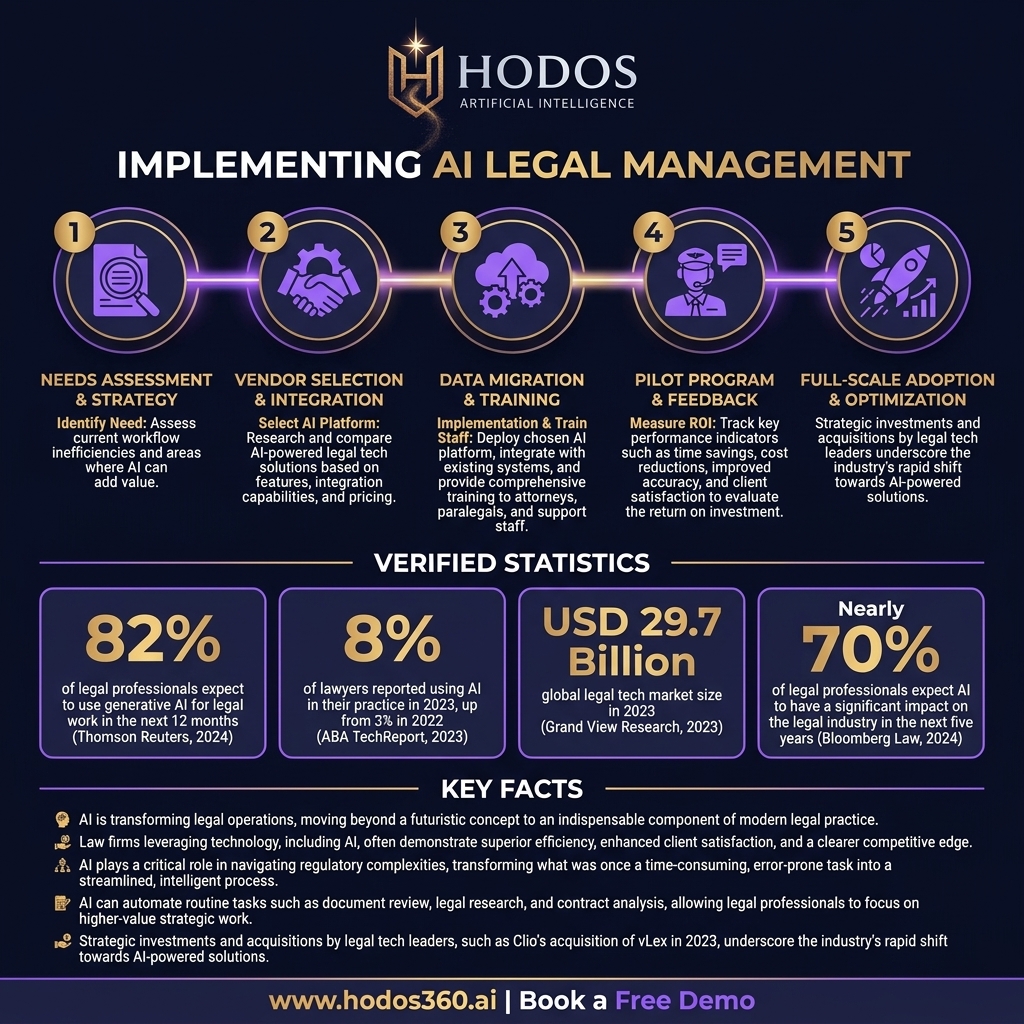
For law firms looking to future-proof their operations and capitalize on the advancements in AI legal management, strategic implementation is key. It's not enough to simply acquire a few AI tools; success lies in integrating these solutions into a cohesive, firm-wide strategy. This begins with a thorough assessment of current workflows and identifying pain points where AI can deliver the most significant impact. Prioritize areas like client intake, document automation, and case management, which often consume a disproportionate amount of time and resources.
Selecting the right AI platform is crucial. Firms should look for comprehensive solutions that offer integration across various functions, from billing and calendaring to advanced legal workflows. Scalability, robust security features, and user-friendliness are also vital considerations. The platform should grow with your firm and ensure data integrity and confidentiality. Investing in a system that can evolve with future AI advancements will save significant time and resources in the long run, preventing firms from being stuck with outdated technology.
Successful implementation also hinges on effective change management and training. Introducing new technology can be met with resistance, particularly from seasoned professionals. Firms must invest in comprehensive training programs, highlighting the benefits of AI for individual roles and demonstrating how it enhances, rather than diminishes, their expertise. Championing early adopters and showcasing their success stories can create internal momentum and foster a culture of innovation. This human-centric approach to technology adoption is as important as the technology itself.
Finally, the journey towards an AI-powered firm is continuous. It requires ongoing evaluation, adaptation, and a commitment to leveraging data for continuous improvement. Regularly assess the ROI of your AI investments, gather feedback from users, and explore new AI capabilities as they emerge. The legal tech landscape is dynamic, and staying agile is paramount. Firms that embrace this mindset will not only enhance their operational efficiency but also position themselves as leaders in a rapidly evolving industry, ready to meet the demands of tomorrow's legal challenges.
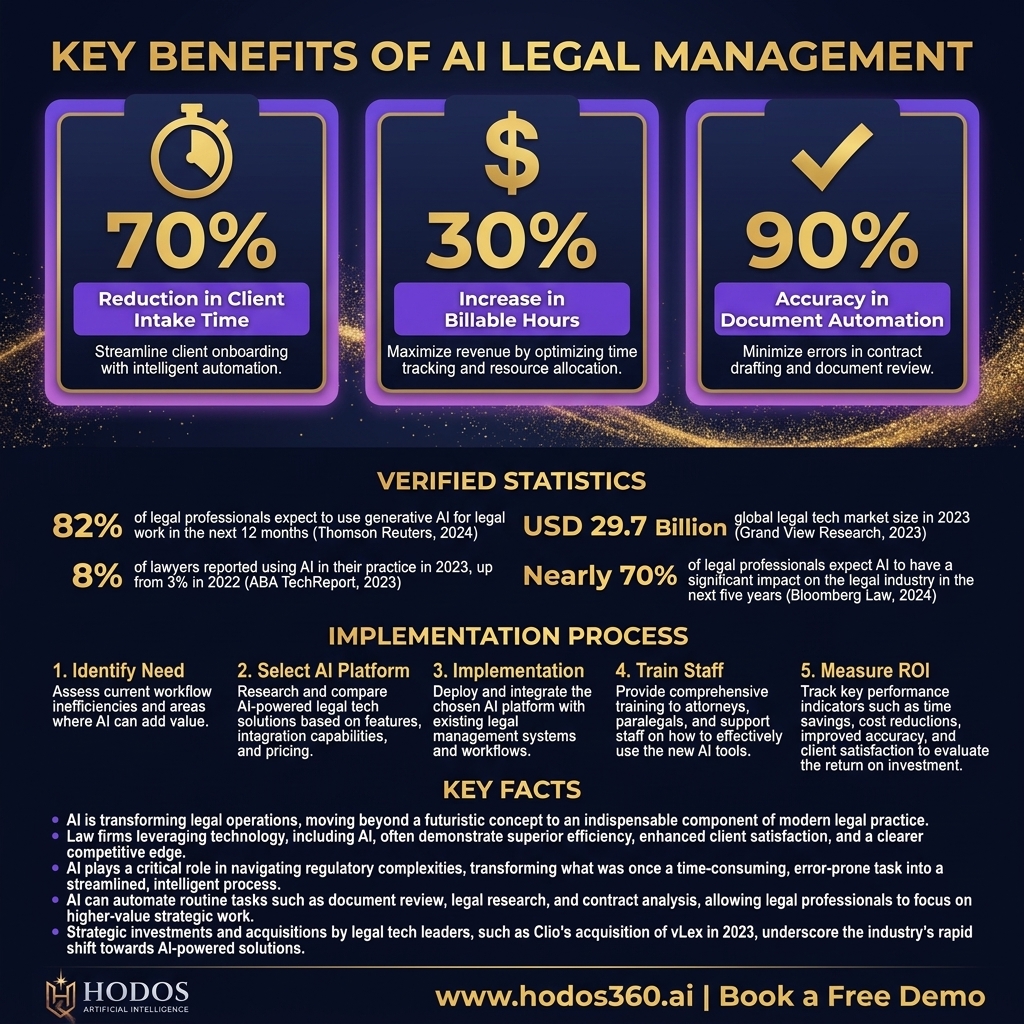
- ✓Streamlined Client Intake: Automate lead qualification, data gathering, and conflict checks, reducing onboarding time by up to 70%.
- ✓Enhanced Case Management: Utilize AI for task assignment, deadline tracking, and predictive analytics, improving case progression efficiency.
- ✓Accelerated Document Automation: Generate complex legal documents, contracts, and pleadings with 90%+ accuracy in minutes, not hours.
- ✓Precise Billing & Financial Analytics: Automate time tracking and invoice generation, gaining deeper insights into firm profitability and cash flow.
- ✓Proactive Regulatory Compliance: Leverage AI for real-time monitoring of legal changes and risk assessment, ensuring continuous adherence to evolving laws.
- ✓Improved Attorney Productivity: Free lawyers from administrative burdens, allowing them to focus on high-value legal strategy and client relationships.
- ✓Superior Data Security: Benefit from advanced encryption and compliance protocols, safeguarding sensitive client information and firm data.

Key Takeaways and Next Steps
The legal industry is at an inflection point, with AI legal management emerging as the definitive pathway to sustained success. The strategic acquisitions by industry leaders like Clio serve as a powerful testament to the inevitability and immense value of AI integration. Firms that proactively adopt comprehensive AI solutions will not only overcome current operational challenges but also unlock unprecedented opportunities for growth, efficiency, and client satisfaction. This isn't just about adopting new tools; it's about fundamentally rethinking how legal services are delivered in the 21st century, ensuring your firm remains agile, competitive, and highly effective.
The future of legal practice is intelligent, integrated, and client-centric. By embracing advanced AI legal management systems, firms can transform their operations, enhance their service offerings, and empower their legal professionals to deliver superior outcomes. Don't get left behind in the rapidly evolving legal landscape. Explore HODOS 360's full suite of AI-powered services and schedule a demo to future-proof your firm.
Frequently Asked Questions
What is AI legal management?+
AI legal management refers to the application of artificial intelligence technologies to streamline and optimize various aspects of law firm operations. This includes automating tasks like client intake, document generation, case management, billing, and regulatory compliance. The goal is to enhance efficiency, accuracy, and profitability while freeing legal professionals to focus on high-value strategic work.
How does AI improve law firm efficiency?+
AI improves efficiency by automating repetitive and time-consuming tasks, such as data entry, document review, and scheduling. It provides predictive analytics for case outcomes, optimizes resource allocation, and ensures real-time access to critical information. This automation reduces administrative overhead, minimizes human error, and accelerates workflows, allowing firms to handle more cases with existing resources.
Is AI replacing lawyers?+
No, AI is not replacing lawyers. Instead, it acts as a powerful augmentation tool, empowering legal professionals by taking over mundane tasks. This allows lawyers to dedicate their expertise to complex legal analysis, strategic thinking, client counseling, and courtroom advocacy—aspects that require uniquely human judgment, empathy, and creativity. AI enhances, rather than diminishes, the role of the attorney.
What are the ethical considerations of AI in law?+
Ethical considerations include ensuring AI system accuracy and impartiality to prevent bias, maintaining client confidentiality and data security, and adhering to professional duties like competence (ABA Model Rule 1.1). Firms must implement robust governance frameworks, conduct regular audits, and ensure human oversight to validate AI-generated insights and uphold the highest ethical standards.
How can small firms adopt AI legal management?+
Small firms can adopt AI legal management by starting with an assessment of their most pressing operational pain points. They should seek integrated, cloud-based AI platforms that offer scalability and a modular approach, allowing them to implement features like automated client intake or document generation incrementally. Prioritizing user-friendly solutions and investing in training are crucial for successful adoption without a large initial investment.