
AI Callers: Essential Strategies for Law Firms in 2026
A recent fireside chat, highlighted by Security Boulevard, posed a fascinating question that encapsulates the legal industry's evolving relationship with artificial intelligence: "Firms once wanted AI callers stopped – now they want to sort good from bad." This observation, attributed to cybersecurity expert Byron Acohido, underscores a profound shift in perception. Just a few years ago, the notion of AI handling client interactions often conjured images of impersonal, robotic voices, generating more frustration than efficiency. Law firms, built on trust and human connection, were understandably hesitant, fearing a dilution of their bespoke service. The primary concern was not just about maintaining a human touch, but also grappling with nascent AI's limitations in understanding complex legal nuances and ensuring client confidentiality, a cornerstone of legal practice governed by principles like ABA Model Rule 1.6 on Confidentiality of Information. This initial skepticism was a natural reaction to a technology still finding its footing, often perceived as a threat rather than a strategic asset for client engagement.
However, the landscape of AI has matured with breathtaking speed. What was once rudimentary automation has transformed into sophisticated conversational AI, capable of nuanced understanding and dynamic interaction. This evolution, driven by breakthroughs from entities like OpenAI, under the leadership of Sam Altman, and Anthropic, co-founded by Dario Amodei, has redefined the capabilities of AI voice assistants. These advancements have pushed the legal sector to move past initial fears and engage in a more critical evaluation: not whether to use AI callers, but *how* to discern and implement the most effective, ethical, and secure solutions. Law firms are increasingly recognizing that the modern client expects 24/7 accessibility and immediate responses, a demand that traditional human-centric models struggle to meet without significant overhead. The competitive pressure to deliver superior service while optimizing operational costs is compelling firms to revisit their stance on AI, viewing it now as a tool to enhance, rather than replace, human expertise.
This shift isn't merely theoretical; it's a pragmatic response to market demands and technological potential. Firms are no longer asking if AI will indeed kill any type of cold calling – instead, they are strategizing on how to harness these powerful tools to improve their client intake processes, streamline communication, and elevate the overall client experience. The conversation has moved from outright rejection to a thoughtful exploration of how to integrate these advanced AI callers into daily operations. This article delves into these essential strategies, offering insights into how law firms can navigate this new frontier, ensuring they select good from bad AI, align with ethical guidelines, and ultimately, future-proof their practice in an increasingly AI-driven world. The goal is to leverage technology to build stronger client relationships, not just automate tasks, ensuring that every customer interaction is handled with precision and care.
The Shifting Tides: From Skepticism to Strategic Adoption of Voice AI in Legal
The initial resistance to AI callers in the legal sector was palpable. Many law firm partners, accustomed to the gravitas of direct human interaction, viewed automated voices as a potential detriment to their brand and client relationships. Early fireside chat discussions among legal professionals often focused on concerns about the technology's ability to handle the subtle emotional cues and complex jargon inherent in legal consultations. A Pindrop focus group a few years ago vividly illustrated this, with participants overwhelmingly indicating they wanted AI callers stopped, fearing a loss of personal connection and reliable security. Learn more about AI Legal Practice Management: The Ultimate Firm Advantage. This sentiment was well-founded given the nascent stage of conversational AI, which often struggled with natural language processing and maintaining context across conversations. The primary objective for firms then was to protect their reputation for meticulous, personalized service, and any technology that threatened this was met with caution.
However, the rapid advancements in large language models (LLMs) and natural language understanding (NLU) have dramatically altered this perception. Companies like OpenAI, under the visionary leadership of CEO Sam Altman, have pushed the boundaries of what AI can achieve, making conversational agents far more sophisticated and human-like. Similarly, Anthropic, led by Dario Amodei, has focused on developing 'safe' and 'helpful' AI, addressing some of the ethical and reliability concerns that plagued earlier iterations. Learn more about AI Voice Assistant: Apple's Essential Siri Reboot Unpacked. These breakthroughs mean that today's AI callers are not merely programmed to follow rigid scripts; they can understand context, infer intent, and engage in more dynamic, adaptive dialogues. This evolution has led to a significant re-evaluation by law firms, moving beyond the blanket desire to have AI stopped towards a more nuanced approach of identifying and integrating genuinely effective solutions.
The drivers for this strategic shift are multifaceted. Firstly, client expectations have soared. In an always-on digital world, clients expect immediate responses, often outside traditional business hours. The 2024 ABA Legal Technology Survey Report indicated that over 60% of clients prioritize responsiveness, a metric where AI voice assistants can offer a significant advantage. Secondly, the competitive landscape demands efficiency. Learn more about AI Marketing Workflows: The Proven Advantage for Law Firms. Firms that can streamline their client intake and communication processes gain a distinct edge. Finally, the sheer volume of inquiries, particularly for high-volume practices, can overwhelm human staff, leading to missed opportunities. AI callers can act as a crucial first line of defense, ensuring no potential client feels ignored, regardless of the time or day. This strategic adoption reflects a mature understanding that AI, when properly implemented, can augment human capabilities rather than diminish them, allowing legal professionals to focus on the intricate legal work that truly requires their expertise.
The pivot from outright rejection to careful selection is a testament to the legal industry's adaptability. Firms are now actively seeking solutions that can not only answer calls but also perform sophisticated tasks like initial lead qualification, appointment booking, and even providing basic, pre-approved information, all while adhering to strict ethical guidelines. For instance, a small family law practice might use an AI voice assistant to manage the influx of calls from potential new clients, ensuring every customer receives a prompt, professional response and is routed to the correct attorney or department. Learn more about AI Legal Assistant: The Ultimate Guide for Law Firms. This discerning approach to AI adoption is key to leveraging its power effectively, transforming the initial point of contact from a potential bottleneck into a highly efficient and client-centric gateway to legal services. The ongoing virtual fireside chat about AI's role in legal is now centered on best practices, not just resistance.
Navigating Ethical AI Implementation and Data Security
While the benefits of advanced AI callers are clear, their implementation in the legal sector demands rigorous attention to ethical considerations and data security. The ethical imperative for lawyers, enshrined in rules such as ABA Model Rule 5.3 (Responsibilities Regarding Nonlawyer Assistance), extends to AI tools. Firms must ensure that AI voice assistants are used in a manner that upholds client confidentiality, avoids conflicts of interest, and does not engage in the unauthorized practice of law. This means carefully designing AI workflows, providing clear disclaimers to callers about interacting with an AI, and establishing robust oversight mechanisms. Learn more about AI Web Design: Essential Strategies for Law Firms in the AI Search Era. The responsible integration of AI requires a deep understanding of its capabilities and limitations, coupled with a proactive approach to managing potential risks. Firms cannot simply deploy AI and assume compliance; continuous monitoring and adjustment are essential to maintain ethical standards.
Beyond Basic Answering: Advanced Capabilities of AI Voice Assistants for Law Firms
The true power of modern AI callers lies far beyond merely answering the phone. For law firms, these advanced voice assistants offer a suite of capabilities that can revolutionize client engagement and operational efficiency. Imagine a system that provides 24/7 phone answering, ensuring no potential client call is ever missed, regardless of time zones or holidays. These assistants can offer multilingual support, a critical feature in diverse markets, breaking down communication barriers for clients who prefer to speak in their native language. Learn more about AI Adoption in Legal: An Essential Guide to Scaling GenAI. Moreover, they excel at initial lead qualification, asking pertinent questions to determine the nature of the inquiry, its urgency, and whether it aligns with the firm's practice areas, effectively pre-screening callers and saving valuable attorney time. This goes far beyond the limited functionality of a traditional auto-attendant, transforming the initial client contact into a structured, data-rich interaction.
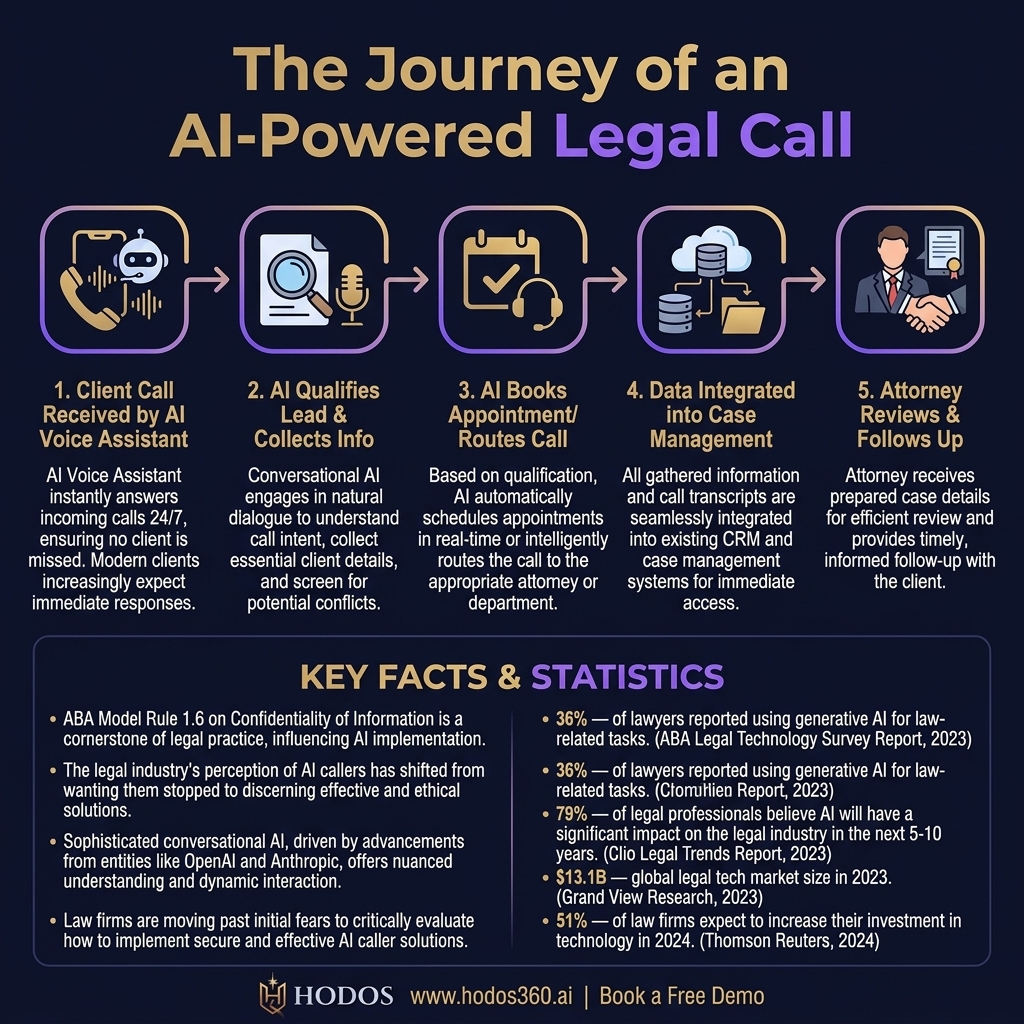
Beyond simple information gathering, sophisticated AI voice assistants can intelligently route calls to the appropriate department or attorney based on the qualified lead's needs. They can also seamlessly handle appointment booking, integrating directly with existing calendars to schedule consultations without human intervention. Consider the case of "LexCorp LLP," a mid-sized personal injury firm in Texas. Before implementing a advanced voice AI, they struggled with a 30% missed call rate after business hours, directly impacting their lead generation. After deploying an AI voice assistant that could qualify leads and book initial consultations, LexCorp reported a 95% capture rate for after-hours inquiries and a 15% increase in new client intake in Q3 2026. This tangible result demonstrates how effectively these tools can contribute to a firm's growth by optimizing calling processes and ensuring every customer feels heard and valued.
Another significant advantage is the AI's ability to integrate with existing legal tech infrastructure. Modern AI callers can populate client data directly into a firm's client relationship management (CRM) system or case management software, such as those offered by HODOS 360's AI Law Firm Management System. This seamless data transfer eliminates manual data entry, reduces human error, and ensures that when a human attorney or paralegal takes over, they have immediate access to all relevant information from the initial interaction. This level of integration not only boosts efficiency but also enhances the client experience by providing a consistent and informed journey from the very first point of contact. The definition of fireside chat itself implies a warm, informative discussion; these AI tools are designed to facilitate such an experience even before human intervention.
Furthermore, these voice assistants are not just reactive; they can be designed for proactive engagement. While outbound cold calling by AI in legal is fraught with ethical and regulatory challenges, AI can assist in controlled, client-initiated follow-ups or information dissemination. For example, an AI could send automated reminders for court dates or document deadlines, reducing administrative burden and improving client adherence to legal processes. The capability to analyze call data provides invaluable insights into client needs, common queries, and peak call times, allowing firms to continually refine their services and resource allocation. This strategic use of advanced AI voice assistants transforms them from mere tools into integral partners in a law firm's client service and sales strategy, focusing on building long-term relationships.
Maximizing ROI: Measuring the Impact of Voice AI on Law Firm Growth
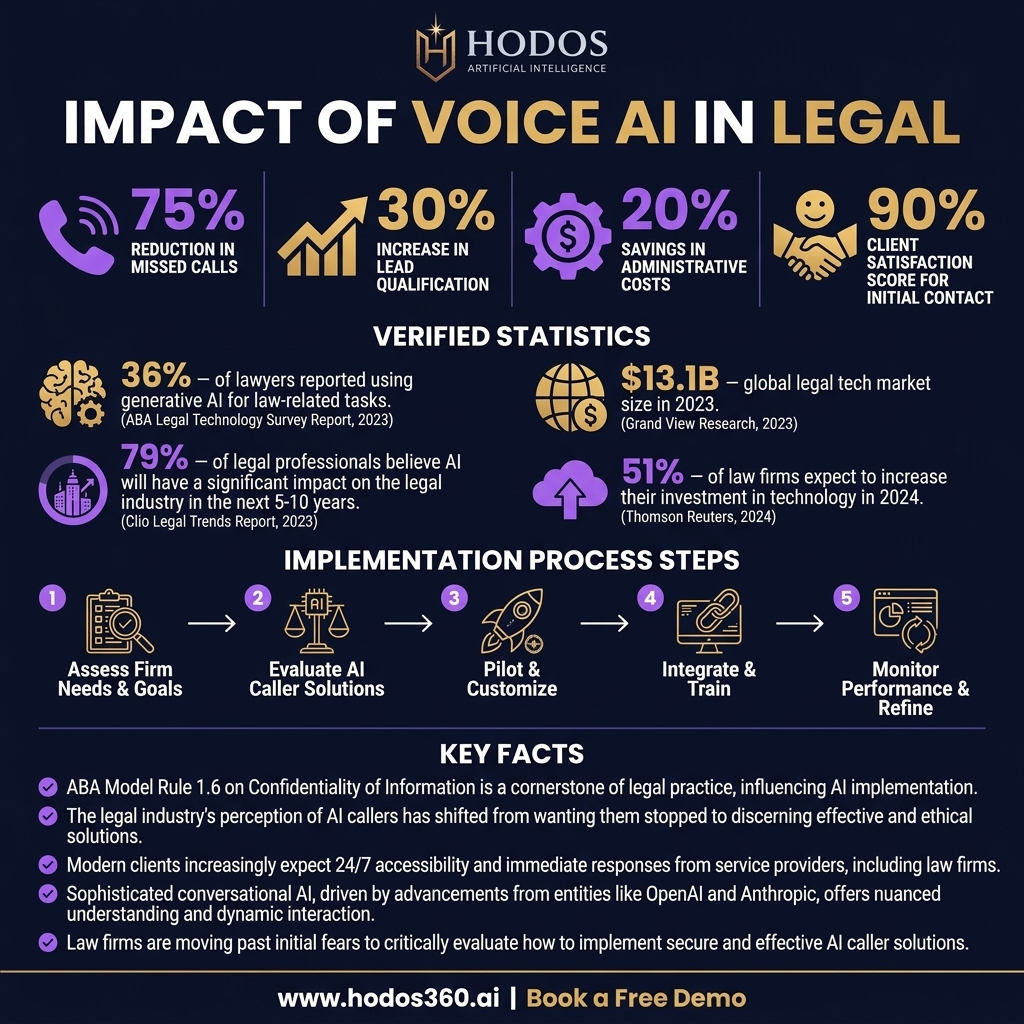
For law firms considering the adoption of AI callers, a clear understanding of Return on Investment (ROI) is paramount. Measuring the impact of voice AI goes beyond simple cost savings; it encompasses improvements in client satisfaction, lead conversion, and operational efficiency. Key metrics include the reduction in missed calls, the increase in qualified leads, the time saved by administrative staff and attorneys on initial intake, and client feedback scores. For instance, if an AI voice assistant reduces the time paralegals spend on initial client screenings by 20 hours per week, that time can be reallocated to billable work or more complex case support, directly impacting the firm's bottom line. The 2025 Thomson Reuters "State of the Legal Market" report highlighted that firms investing in client experience technologies saw a 10-15% increase in client retention, underscoring the value of superior initial contact.
The broader economic impact of AI is well-documented. McKinsey Global Institute estimates that generative AI alone could add trillions of dollars to the global economy annually, with significant productivity gains in service sectors. For law firms, this translates into a competitive imperative. Those that strategically deploy AI callers can offer a level of service — 24/7 availability, instant responses, multilingual support — that smaller, less tech-savvy competitors simply cannot match. This creates a distinct market advantage, attracting a broader client base and positioning the firm as forward-thinking and client-centric. The investment in AI is not just about cutting costs; it's about investing in growth, market differentiation, and future-proofing the practice. The initial sentiment of wanting AI stopped has given way to a strategic imperative to embrace it for growth.
It's crucial to address the misconception that AI will indeed kill any type of cold calling or human interaction. Instead, advanced AI callers transform the nature of client engagement. They handle the high-volume, repetitive, and often time-consuming initial interactions, freeing up human professionals to focus on the higher-value, empathetic, and complex aspects of legal work. This allows attorneys to dedicate more time to legal strategy, client counseling, and building deeper relationships, rather than being bogged down by administrative intake. The fireside chat meaning of intimate, meaningful discussion becomes more achievable when the groundwork is efficiently laid by AI. This synergy between human expertise and AI efficiency is where the true ROI is realized, leading to a more engaged workforce and more satisfied clients.
Furthermore, the data collected by AI callers can provide invaluable business intelligence. Analytics on call volume, common client questions, lead conversion rates, and even sentiment analysis can inform marketing strategies, resource allocation, and service improvements. For instance, if data reveals a high volume of calls about a specific legal issue outside business hours, a firm can create targeted content or allocate more resources to that practice area. This data-driven approach allows firms to make informed decisions, optimizing their operations and marketing efforts for maximum impact. The strategic integration of voice AI is not just about automation; it's about intelligent growth and continuous improvement based on real-world client interactions, ensuring every customer's journey is optimized.
- ✓Enhanced Lead Capture: AI voice assistants ensure 24/7 availability, drastically reducing missed calls and capturing potential client inquiries around the clock, converting more initial contacts into qualified leads.
- ✓Improved Client Satisfaction: By providing instant responses, multilingual support, and efficient routing, AI elevates the initial client experience, fostering trust and responsiveness from the outset.
- ✓Reduced Operational Costs: Automating routine tasks like initial screening, appointment booking, and basic information dissemination significantly lowers administrative overhead, allowing staff to focus on billable work.
- ✓Optimized Staff Allocation: Freeing attorneys and paralegals from repetitive intake duties enables them to concentrate on complex legal strategy, client counseling, and other high-value activities, boosting overall productivity.
- ✓Scalability & Flexibility: AI voice assistants can effortlessly handle fluctuating call volumes, ensuring consistent service during peak times or unexpected surges without the need for additional human resources.
- ✓Data-Driven Insights: Comprehensive analytics on call patterns, client queries, and lead conversion provide valuable intelligence for refining marketing strategies, improving services, and making informed business decisions.
- ✓Competitive Differentiation: Firms leveraging advanced voice AI demonstrate a commitment to innovation and client service, setting them apart in a competitive legal market and attracting a modern clientele.
The Human Element: Training and Oversight for AI Voice Systems
Crucially, the success of AI callers in law firms hinges on effective human oversight and continuous training. AI is not a 'set-it-and-forget-it' solution; it requires ongoing refinement to understand the nuances of legal terminology, firm-specific protocols, and evolving client needs. Firms must invest in training their AI voice assistants with relevant legal datasets, reviewing call transcripts, and providing feedback to improve performance. This iterative process ensures the AI remains accurate, ethical, and aligned with the firm's brand voice. Moreover, human legal professionals must be trained to effectively collaborate with AI tools, understanding when to escalate a call, how to interpret AI-generated summaries, and how to integrate AI insights into their daily workflows, fostering a symbiotic relationship between human expertise and machine efficiency.
Future-Proofing Your Practice: The Evolution of Legal Client Engagement
The evolution of AI callers is far from complete, and law firms must look ahead to future-proof their practices. The next wave of innovation will likely see deeper integration of generative AI, allowing voice assistants to engage in even more sophisticated, personalized conversations. Imagine an AI that not only qualifies a lead but also proactively provides relevant public legal information (with appropriate disclaimers), or a system that can understand and respond to complex emotional cues, escalating only the most sensitive interactions to human attorneys. This future promises a seamless blend of AI efficiency and human empathy, redefining the very definition of fireside chat in a legal context, making it more accessible and responsive than ever before. Firms that embrace this continuous evolution will be best positioned to thrive.
The competitive landscape in legal services is increasingly favoring firms that are agile and technologically advanced. Events like LegalTech NYC 2026 consistently highlight the rapid pace of innovation, with new AI tools emerging that promise to further streamline legal operations. Firms that remain static risk being outmaneuvered by competitors who are actively leveraging AI callers and other AI-powered solutions to enhance client service and operational efficiency. This isn't just about adopting new tools; it's about fostering a culture of innovation and continuous improvement, ensuring that the firm remains at the cutting edge of legal service delivery. The fireside meaning of a gathering for intimate, forward-thinking discussions becomes a metaphor for how law firms must approach technological change – with careful consideration and proactive planning.
Moreover, the future of legal client engagement will be characterized by hyper-personalization. AI callers will play a crucial role in collecting and analyzing client data, enabling firms to tailor their services and communication strategies to individual client needs and preferences. This data-driven approach will not only improve client satisfaction but also unlock new opportunities for service expansion and client retention. The ability to anticipate client needs and provide timely, relevant information will become a key differentiator. The initial fear that AI would make interactions impersonal has been replaced by the realization that it can, in fact, facilitate a more deeply personalized and responsive client journey, ensuring every customer feels uniquely valued.
Ultimately, future-proofing a law firm in the age of AI means embracing a philosophy of continuous adaptation. It involves a commitment to exploring, testing, and integrating advanced legal technologies, including sophisticated AI callers, while always prioritizing ethical considerations and the human element. The firms that will succeed are those that view AI not as a replacement for human intellect, but as a powerful co-pilot, enhancing their capacity to deliver exceptional legal services. This proactive stance ensures that as technology evolves, the firm remains resilient, competitive, and deeply connected to its clients, transforming the initial challenge of having AI stopped into an opportunity for unparalleled growth and innovation.
Preparing for AI-Powered Legal Workflows
Integrating AI callers effectively means re-evaluating and potentially re-engineering existing legal workflows. Law firms must prepare their staff for a future where AI handles routine inquiries, freeing them to focus on complex problem-solving. This shift necessitates comprehensive training programs for attorneys and support staff, teaching them how to leverage AI tools for research, document review, and client communication. Establishing clear guidelines for human-AI collaboration, defining roles, and ensuring seamless handoffs between AI assistants and human professionals are crucial. The goal is to create a harmonious ecosystem where AI enhances, rather than disrupts, the flow of legal work, leading to greater efficiency and improved service delivery across the entire firm, ensuring that every customer benefits from streamlined operations.

Key Takeaways and Next Steps for Modern Law Firms
The narrative around AI callers in the legal industry has undeniably shifted from apprehension to strategic embrace. What was once seen as a technology to be stopped is now recognized as an essential tool for firms aiming to enhance client engagement, optimize operations, and gain a competitive edge. The ability to sort good from bad AI solutions is paramount, requiring careful evaluation of ethical implications, data security, and integration capabilities. Modern law firms must move beyond the basic definition of fireside chat on AI's general impact and delve into the specifics of how these tools can be tailored to their unique needs, ensuring every customer receives superior service. The future of legal practice is one where intelligent automation works in tandem with human expertise, creating a more responsive, efficient, and client-centric environment.
For law firms ready to navigate this transformative era, the next steps are clear: explore advanced AI voice assistant solutions designed specifically for the legal sector. Prioritize platforms that offer robust features like 24/7 multilingual support, intelligent lead qualification, seamless CRM integration, and a proven track record of ethical implementation. The goal is to select an AI caller system that not only automates routine tasks but also provides actionable insights and frees up your valuable human talent for higher-value legal work. Embrace this evolution not as a threat, but as an unparalleled opportunity to redefine client service and operational excellence in your practice. Discover how advanced AI solutions can elevate your firm's capabilities and client satisfaction. Learn more about HODOS 360's AI-powered legal solutions.