


AI Legal Practice Management: The Ultimate Firm Advantage
The legal industry is abuzz with innovation, and nowhere was this more evident than at the 2026 Legalweek Awards, where Billables AI was crowned “Legal Tech Company of the Year.” This significant recognition, highlighted by LawSites' Robert Ambrogi, isn't just a win for Nancy Jeng and her pioneering team; it's a powerful signal of the accelerating transformation within legal practice management.
For years, law firms have grappled with the inherent inefficiencies of manual processes – from the labyrinthine complexities of case management and billing to the resource-intensive demands of client intake. Now, AI isn't merely optimizing these tasks; it's fundamentally redefining the operational blueprint of the modern law firm, moving beyond incremental improvements to systemic innovation that promises unprecedented efficiency and strategic advantage.
This award underscores a critical inflection point: the era of AI in legal practice is not just arriving; it's already here, reshaping competitive landscapes and demanding adaptation from firms of all sizes. The tension between tradition and technological disruption has never been more pronounced. While some firms cautiously observe from the sidelines, others, inspired by success stories like Billables AI, are aggressively integrating advanced solutions to streamline workflows, enhance client engagement, and unlock new revenue streams.
This shift isn't just about adopting new software; it's about embracing a paradigm where intelligence augments human expertise, allowing legal professionals to focus on high-value, strategic work that truly impacts client outcomes. The question is no longer *if* AI will transform legal practice, but *how quickly* firms can harness its power to secure their future.
Indeed, the rapid pace of development from companies like OpenAI, Anthropic, and Google DeepMind has permeated every sector, and legal is no exception. Firms that historically relied on conventional approaches are now confronting a new reality where data-driven insights, automated processes, and predictive analytics are becoming table stakes.
The recognition of Billables AI at Legalweek serves as a compelling case study, demonstrating that specialized AI solutions are not just theoretical but are delivering tangible, award-winning results in real-world legal environments. This moment calls for law firm owners and attorneys to critically assess their current operational models and explore the comprehensive capabilities of AI platforms designed to propel them into the next generation of legal service delivery.
The competitive landscape is shifting, and the firms that lead with AI will undoubtedly define the future of the profession.
Ready to transform your firm? Discover how AI legal practice management can elevate your operations and client service. [Learn More About HODOS 360’s AI Solutions]
The AI Revolution in Legal Practice Management
The accolade for Billables AI at Legalweek 2026 is a testament to a broader trend: AI is no longer a futuristic concept but a vital, integrated component of modern legal operations. Historically, law firms have struggled with fragmented systems, manual data entry, and time-consuming administrative tasks that chip away at billable hours and lawyer morale.
A 2023 ABA TechReport indicated that while AI adoption was growing, many firms were still in the early stages, primarily using it for legal research. However, the landscape has rapidly evolved, with advanced AI legal practice management systems now offering holistic solutions that integrate case management, billing, client intake, and document automation into a single, intelligent platform.
This integration is critical, as it eliminates data silos and creates a seamless flow of information, allowing attorneys to access crucial case details, client communications, and billing information instantly.
Consider the daily grind: an attorney spending hours manually tracking time for complex litigation, a paralegal sifting through reams of documents for discovery, or a managing partner struggling to gain a real-time overview of firm profitability.
AI-powered systems fundamentally alter this dynamic. For instance, AI-driven time tracking can automatically categorize activities and suggest billable entries, significantly reducing administrative overhead and improving billing accuracy. Companies like Clio, a long-standing leader in practice management, have increasingly integrated AI capabilities into their platform, demonstrating the industry-wide shift towards more intelligent, automated solutions.
This evolution means that tasks once considered unavoidable, like meticulous data entry for client intake forms or the manual drafting of routine legal documents, are now prime candidates for AI automation, freeing up valuable human capital for more strategic endeavors.
The real impact of these systems goes beyond mere efficiency; it’s about strategic advantage and improved client service.
Learn more about AI Marketing Revolution 2026: Autonomous Agents for Law Firms. Firms equipped with advanced AI can onboard clients faster, respond to inquiries more promptly, and manage cases with greater precision. McKinsey's research on AI adoption across industries consistently highlights that early adopters gain significant competitive advantages, often seeing productivity boosts of 15-20%.
In the legal sector, this translates to more cases handled, higher client satisfaction, and ultimately, increased revenue. The ability to automate repetitive tasks, such as scheduling appointments or drafting initial client communications, allows legal professionals to dedicate their expertise to complex legal analysis, client advocacy, and relationship building – the core competencies that truly differentiate a firm in a competitive market.
Moreover, the competitive tension in the legal tech market is palpable. While established players like Thomson Reuters and LexisNexis continue to innovate, nimble startups are constantly emerging with specialized AI solutions. This intense competition drives continuous improvement and pushes the boundaries of what AI can achieve in a legal context.
Law firms that proactively engage with these technologies are not just keeping pace; they are setting new benchmarks for operational excellence and client-centric service. The move towards AI-powered legal practice management is not simply about adopting a new tool; it's about fundamentally rethinking how legal services are delivered, ensuring that firms remain agile, efficient, and highly competitive in an increasingly technology-driven world.
From Case Management to Client Intake: The AI Workflow
The true power of AI in legal practice management lies in its ability to create seamless, intelligent workflows across various firm functions. Consider the journey of a new client: from initial contact to case resolution. Traditionally, this process involves numerous manual steps prone to error and delay.

With AI, client intake can be transformed through smart forms that pre-populate data, AI-powered lead qualification that routes inquiries to the right attorney, and automated conflict checks that save valuable time. Once a client is onboarded, AI-driven case management systems can automatically organize documents, track deadlines, and even suggest relevant legal precedents based on case specifics, drawing from vast databases of legal information.
This dramatically reduces the administrative burden on legal teams, allowing them to focus on the substantive legal work.
Furthermore, billing, often a source of contention and inefficiency, becomes remarkably streamlined. Learn more about Legal AI Problem: Mastering Ethical Tech in Law Firms 2026. AI can monitor attorney activities, track time spent on specific tasks, and generate accurate invoices with minimal human intervention.
This not only improves the firm's cash flow but also enhances transparency for clients, fostering greater trust. Document automation, a cornerstone of AI legal practice management, allows firms to generate complex legal documents—from contracts to pleadings—using pre-approved templates and client-specific data, drastically cutting down drafting time and minimizing errors.
This is particularly impactful in areas like corporate law or real estate, where large volumes of standardized documents are required. The integration of these capabilities into a single, intelligent platform means that firms can manage every aspect of their operations with unprecedented efficiency and precision, from the first client interaction to the final invoice.
Beyond Core Operations: AI for Marketing and Client Engagement
While AI legal practice management optimizes internal operations, its capabilities extend far beyond the firm's walls, fundamentally reshaping how law firms acquire clients and build their brand. The digital age has transformed client expectations, making a robust online presence and proactive client engagement non-negotiable. This is where AI marketing platforms become indispensable.
Gone are the days of generic advertising; AI enables hyper-personalized outreach, identifying potential clients based on specific legal needs and demographic data. For example, an AI marketing platform can analyze market trends and competitor strategies to identify underserved niches, then generate targeted content and social media campaigns that resonate directly with those prospective clients.
This data-driven approach ensures that marketing spend is optimized, and ROI is precisely tracked, moving beyond speculative advertising to strategic growth.
Consider the power of AI video creation and social media automation. Instead of spending countless hours drafting social media posts or outsourcing expensive video production, AI can generate engaging legal content, including short explainer videos or informational graphics, tailored for various platforms.
This allows firms to maintain a consistent, professional online presence without diverting significant attorney time. Moreover, social media automation tools ensure that this content is distributed strategically across platforms at optimal times, maximizing reach and engagement. The ability to track analytics and ROI in real-time provides invaluable insights, allowing firms to quickly adapt their marketing strategies to what is most effective, ensuring a steady pipeline of qualified leads.
This level of precision and automation in marketing was previously unattainable for most law firms, but now, AI democratizes access to sophisticated client acquisition strategies.
Furthermore, AI voice assistants are revolutionizing client intake and 24/7 support. Learn more about Generative AI Marketing: Law Firms' 2026 Growth Engine.
In a competitive market, prompt response times are crucial. A 2024 Thomson Reuters report highlighted client dissatisfaction with slow communication as a major reason for switching firms. AI voice assistants can answer calls 24/7, qualify leads, book appointments, and even provide multilingual support, ensuring no potential client inquiry goes unanswered.
This not only enhances the client experience by providing immediate assistance but also significantly reduces the burden on administrative staff, allowing them to focus on more complex tasks. These assistants can seamlessly route calls to the appropriate department or attorney, ensuring that clients connect with the right expert without frustrating delays.
Firms like Allen & Overy, known for their innovative use of AI, have explored similar technologies to enhance their client-facing operations, recognizing that superior client service begins with accessible and responsive communication.
In essence, AI marketing platforms and voice assistants transform a law firm into a perpetually active, highly responsive entity.
They enable firms to cast a wider net for client acquisition while simultaneously deepening engagement with existing clients through personalized communication and immediate support. This comprehensive approach, encompassing both internal operational efficiency and external client-facing excellence, is what truly sets apart the forward-thinking law firms in today's digital legal landscape.
It’s about creating a holistic ecosystem where technology supports every stage of the client journey, from initial interest to long-term loyalty. This is where HODOS 360 excels, offering an integrated suite of services designed to empower law firms across all these critical dimensions of growth and management.
Ethical Considerations and Responsible AI Adoption in Law
As AI permeates deeper into legal practice, the ethical implications become paramount. The legal profession is founded on principles of competence, confidentiality, and professional responsibility, and AI's integration must uphold these tenets. One of the primary concerns revolves around ABA Model Rule 1.1 (Competence), which requires lawyers to provide competent representation.
This now extends to technological competence, meaning attorneys must understand the benefits and risks associated with technology, including AI. The potential for AI 'hallucinations' – where AI generates plausible but factually incorrect information – poses a significant risk if not properly managed and verified by a human attorney.
Firms must implement robust review processes to ensure the accuracy and reliability of AI-generated content, whether it's legal research, document drafts, or client communications.
Confidentiality, governed by ABA Model Rule 1.6 (Confidentiality of Information), is another critical area. When leveraging AI tools, especially cloud-based platforms, firms must ensure that client data remains secure and private.
This involves vetting AI vendors for their data security protocols, understanding how data is stored and used by the AI model, and ensuring compliance with relevant data protection regulations like GDPR or state-specific privacy laws. The accidental disclosure of sensitive client information, or its misuse by an AI system, could have severe professional and reputational consequences for a firm.
The tension here lies in balancing the efficiency gains of AI with the absolute necessity of maintaining client trust and data integrity. Firms need clear policies on data governance and AI usage to mitigate these risks effectively.
Beyond competence and confidentiality, issues of bias, transparency, and accountability loom large.
Learn more about Marketing Automation: Powering Law Firm Growth & Efficiency in 2026. AI models are trained on vast datasets, and if these datasets contain historical biases, the AI can perpetuate or even amplify them, leading to unfair or discriminatory outcomes. For instance, in predictive analytics for litigation, a biased model could disproportionately affect certain demographics.
Legal professionals must demand transparency from AI providers regarding their data sources and algorithmic processes. The EU AI Act, a landmark piece of legislation, provides a framework for addressing these high-risk AI systems, emphasizing human oversight, risk management, and data quality. While the Act primarily targets EU markets, its principles are setting a global standard for responsible AI development and deployment, which legal tech companies and law firms worldwide are increasingly considering.
Ultimately, responsible AI adoption requires a proactive and informed approach. Law firms cannot simply delegate critical legal functions entirely to machines. Instead, AI should serve as an augmentative tool, enhancing human capabilities rather than replacing them. This means investing in ongoing education for legal staff, establishing clear ethical guidelines for AI usage, and fostering a culture of critical evaluation.
The legal industry has a unique responsibility to lead by example in the ethical deployment of AI, ensuring that these powerful tools serve justice and uphold the highest standards of the profession. The goal is not just to be technologically advanced, but to be ethically sound in the application of that technology.
Strategic Implementation: Building an AI-Powered Legal Practice
Building an AI-powered legal practice isn't an overnight endeavor; it requires a strategic, phased approach that considers the firm's unique needs, culture, and existing infrastructure. The initial step involves a thorough assessment of current workflows to identify pain points where AI can deliver the most significant impact.
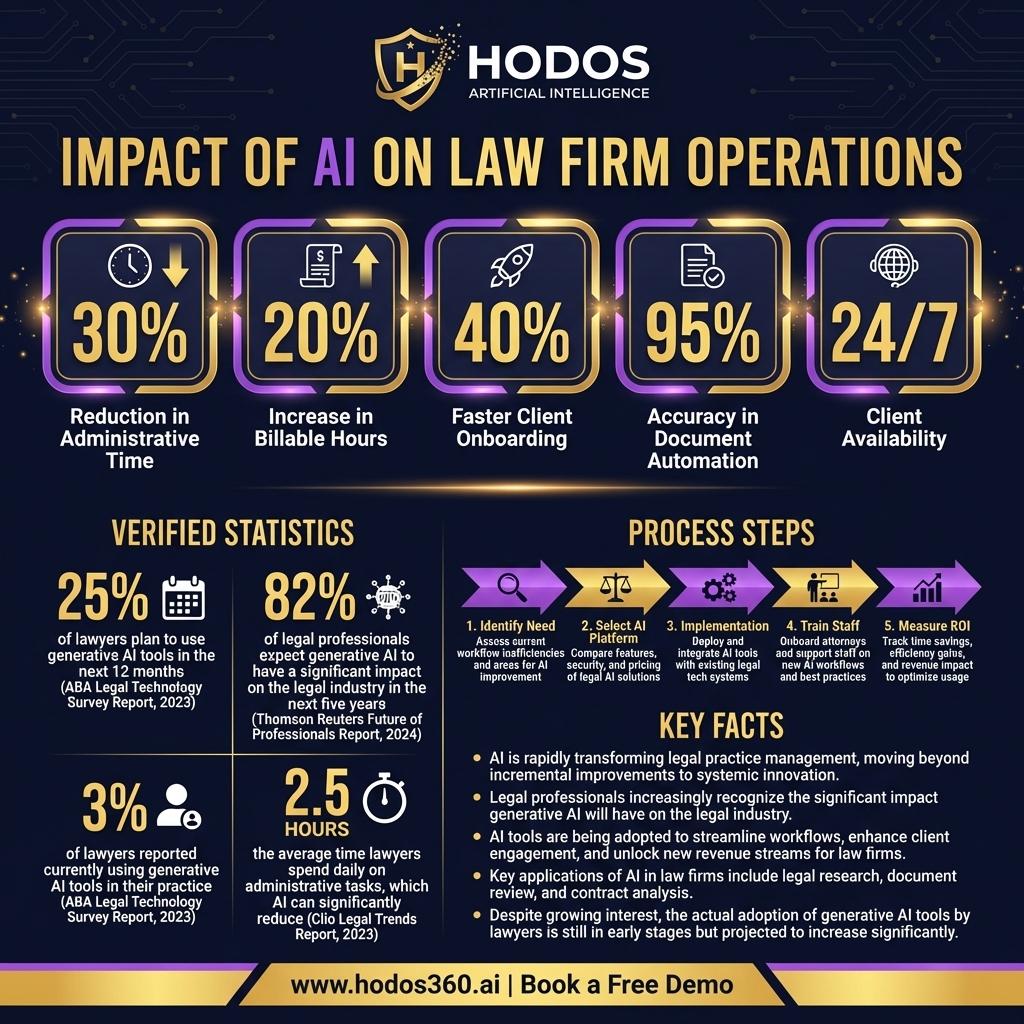
This isn't about wholesale replacement but targeted augmentation. For example, a firm struggling with document review might prioritize an AI-powered e-discovery tool, while one overwhelmed by new client inquiries might invest in AI voice assistants and automated intake forms. Firm leaders, often led by an innovation partner or a designated CTO, play a crucial role in championing this transformation, ensuring that technology initiatives align with the firm's strategic objectives and client service goals.
Successful implementation also hinges on effective change management and robust training programs. Resistance to new technology is natural, and attorneys and staff need to understand not only *how* to use AI tools but also *why* they are beneficial, both for their individual productivity and the firm's overall success.
Workshops, hands-on training sessions, and clear communication about AI's role as a force multiplier—freeing up time for more stimulating, high-value legal work—can alleviate concerns and foster enthusiastic adoption. Firms that have successfully integrated AI, such as the aforementioned Allen & Overy with their collaboration with Harvey AI, emphasize the importance of pilot programs and iterative deployment, allowing teams to adapt and provide feedback, ensuring the technology truly meets their needs.
Data integration is another critical component. For AI to be effective, it needs access to clean, organized data. Learn more about Website Design Cost 2026: Strategic Investment for Law Firms. This often means migrating legacy data, integrating disparate systems, and establishing consistent data entry protocols.
Investing in data infrastructure and ensuring interoperability between different AI tools and existing practice management systems is paramount. Without a unified data source, AI's ability to provide comprehensive insights and automate complex workflows is severely limited. Firms must view their data as a strategic asset and invest in its quality and accessibility, recognizing that robust data pipelines are the lifeblood of any intelligent system.
Finally, the journey towards an AI-powered practice is continuous. The legal tech landscape is evolving at an unprecedented pace, with new innovations emerging constantly. Firms must foster a culture of continuous learning and adaptation, regularly evaluating new AI tools and updating their strategies to leverage the latest advancements.
This commitment to ongoing innovation ensures that the firm remains at the forefront of legal service delivery, maintaining its competitive edge and consistently delivering superior outcomes for clients. It’s about building a future-proof practice that is resilient, efficient, and deeply client-focused, constantly seeking new ways to enhance value through intelligent technology.
Key Steps for AI Adoption in Your Law Firm
- ✓Assess Current Workflows: Identify manual, repetitive tasks across case management, billing, and client intake that consume significant time and are prone to human error.
- ✓Define Clear Objectives: Determine specific, measurable goals for AI adoption, such as reducing document review time by 30% or improving client intake speed by 50%.
- ✓Research & Pilot Solutions: Explore reputable AI legal tech vendors. Start with pilot programs in specific departments to test efficacy and gather user feedback before wider rollout.
- ✓Prioritize Data Governance: Establish robust policies for data privacy, security, and quality. Ensure compliance with all relevant regulations (e.g., ABA Model Rules, state privacy laws).
- ✓Invest in Training & Change Management: Provide comprehensive training for all staff. Communicate the benefits of AI to alleviate resistance and foster a culture of adoption and innovation.
- ✓Integrate Systems Strategically: Plan for seamless integration between new AI tools and existing practice management systems to ensure data flow and avoid silos.
- ✓Monitor & Iterate: Continuously track AI performance, gather feedback, and iterate on your implementation strategy to optimize results and adapt to new technological advancements.

The Future of Legal Excellence: A HODOS 360 Perspective
The recognition of Billables AI at the 2026 Legalweek Awards is not just an isolated event; it's a powerful indicator of the monumental shift occurring across the entire legal industry. Law firms are no longer just legal service providers; they are becoming technology-driven enterprises, and those that embrace this transformation comprehensively will be the leaders of tomorrow.
The journey to legal excellence in this new era demands more than just piecemeal solutions; it requires an integrated, intelligent ecosystem that supports every facet of a firm's operations and growth. From optimizing the minutiae of case management to orchestrating sophisticated marketing campaigns and ensuring 24/7 client engagement, AI offers a holistic pathway to unparalleled efficiency and competitive advantage.
The firms that prioritize strategic AI integration are not just adapting; they are actively shaping the future of legal practice, setting new standards for client service and operational agility.
The dramatic improvements in efficiency, accuracy, and client satisfaction driven by AI are no longer theoretical.
Real-world applications demonstrate tangible ROI, allowing firms to scale their operations, attract top talent, and deliver superior outcomes. The competitive landscape will increasingly favor those who can leverage AI to reduce administrative overhead, generate higher-value billable work, and cultivate deeper client relationships through seamless, intelligent interactions.
This isn't about replacing human lawyers but empowering them with tools that amplify their expertise, freeing them from mundane tasks to focus on the complex, strategic, and human-centric aspects of law. Learn more about AI Marketing Automation: Law Firms' 2026 Growth Catalyst. It's about building a practice that is not only robust and profitable but also deeply responsive to the evolving needs of clients and the dynamic challenges of the legal profession.
For law firms aspiring to achieve this elevated standard of excellence, a comprehensive AI partner is essential. The future of legal excellence lies in a unified approach to technology, where AI powers every aspect of your firm – from internal management to external engagement. Embracing AI is no longer optional; it is a strategic imperative for sustained growth and leadership in the legal industry.
The firms that harness the full spectrum of AI capabilities will not only survive but thrive, setting the benchmark for what it means to be a truly modern and effective legal practice. The time to act is now, transforming challenges into opportunities with intelligent, integrated solutions.
Ready to build a future-proof law firm? Explore HODOS 360’s complete suite of AI-powered solutions and schedule a personalized consultation today!
Frequently Asked Questions
What specifically does AI legal practice management encompass?+
AI legal practice management systems integrate various functionalities using artificial intelligence. This includes automating tasks like client intake, document generation, and billing, as well as providing AI-powered insights for case management, workflow optimization, and legal research. The goal is to streamline operations, reduce administrative burden, and enhance decision-making across the entire firm, allowing attorneys to focus on high-value legal work.
How does AI improve efficiency and profitability for law firms?+
AI significantly boosts efficiency by automating repetitive tasks, such as data entry, scheduling, and document drafting, which frees up valuable attorney and staff time. This automation reduces operational costs and minimizes errors. By optimizing workflows and providing data-driven insights, AI helps firms manage cases more effectively, improve billing accuracy, and increase billable hours, directly contributing to enhanced profitability and better resource allocation.
What are the primary ethical considerations when adopting AI in legal practice?+
Key ethical considerations include maintaining client confidentiality (ABA Model Rule 1.6) by ensuring data security and privacy with AI tools. Lawyers must also uphold competence (ABA Model Rule 1.1) by understanding AI's capabilities and limitations, verifying AI-generated output, and guarding against potential biases in AI systems. Transparency and accountability in AI's use are crucial to maintain professional responsibility and client trust.
Can small to mid-sized law firms realistically benefit from AI legal tech?+
Absolutely. AI legal tech is increasingly accessible and scalable, making it highly beneficial for small to mid-sized firms. These firms often face greater resource constraints, making AI's ability to automate administrative tasks, streamline operations, and enhance marketing particularly impactful. AI allows smaller firms to compete more effectively with larger entities by improving efficiency, client service, and outreach without needing extensive in-house tech teams.
How should a law firm approach selecting the right AI legal practice management platform?+
Firms should start by identifying their specific pain points and strategic goals. Look for platforms offering comprehensive, integrated solutions for case management, billing, client intake, and marketing. Prioritize vendors with strong data security, ethical AI principles, and robust support. Conduct pilot programs, solicit feedback from staff, and ensure the platform can seamlessly integrate with existing systems to maximize its effectiveness and ensure a smooth transition.