
AI Legal Assistant: The Ultimate Guide for Law Firms
The legal landscape is undergoing an unprecedented transformation, accelerated by the rapid advancements in artificial intelligence. A recent announcement from Nextgov/FCW, highlighting the U.S. Department of Justice's (DOJ) keen interest in piloting AI legal assistant technologies, serves as a powerful testament to this shift. This isn't merely a technological curiosity; it's a strategic embrace by a leading governmental legal body, signaling a new era where artificial intelligence will be integral to judicial and legal operations. For law firms, this development isn't just news; it's a clarion call to action, demanding a re-evaluation of current practices and a proactive approach to adopting cutting-edge legal technology.
The DOJ's exploration into piloting AI legal assistant capabilities underscores a broader trend: the move towards intelligent automation in tasks traditionally performed by human legal professionals. As Deputy Attorney General Lisa Monaco articulated in her February 2024 remarks at the University of Oxford, the DOJ recognizes both the immense potential and the inherent risks of AI, advocating for responsible yet aggressive adoption to enhance efficiency and uphold justice. This governmental interest effectively legitimizes the use of advanced AI in legal contexts, paving the way for private sector firms to integrate similar solutions with greater confidence. The competitive landscape is evolving, and firms that delay in leveraging AI risk being outmaneuvered by those who embrace this technological imperative. The question for law firms is no longer *if* to adopt AI, but *how* and *when* to implement these powerful tools to maintain their edge in a rapidly changing market.
The DOJ's Bold Move: Validating AI in Legal Practice
The U.S. Department of Justice's decision to signal interest in piloting AI legal assistant tools represents a monumental endorsement of artificial intelligence within the legal sector. This isn't theoretical; it's a practical step towards integrating AI into the very fabric of governmental legal work. The pilot aims to assess AI's capacity to execute multi-step legal tasks without constant attorney prompting, a clear indication of the sophistication and autonomy expected from these systems. For private law firms, this move by the DOJ provides crucial validation. It suggests that the ethical and practical concerns surrounding AI, while still paramount, are being actively addressed and overcome by authoritative bodies. This federal interest could accelerate the development of industry standards and best practices, making it easier for firms to navigate the complexities of AI adoption. Learn more about AI Marketing Workflows: The Proven Advantage for Law Firms. The implications extend beyond mere efficiency; it’s about setting a precedent for the future of legal operations, where AI is seen as a reliable partner in the pursuit of justice and legal excellence.
Historically, the legal profession has often been slow to adopt new technologies, preferring tried-and-true methods. However, the current wave of AI, powered by large language models, presents a paradigm shift that cannot be ignored. Firms that partner with companies like Harvey AI, such as Allen & Overy in 2023, have already demonstrated significant gains in legal research and document analysis. This proactive approach by leading firms, now mirrored by the DOJ's interest in piloting AI legal assistant tools, creates a compelling narrative for broader adoption. According to a 2024 report by the Thomson Reuters Institute, law firms that have embraced AI are reporting substantial improvements in efficiency, client satisfaction, and overall profitability, setting them apart in a fiercely competitive market. The DOJ's move is not just a signal; it's a catalyst that will undoubtedly spur further investment and innovation across the entire legal technology ecosystem.
Transforming Law Firm Operations with Advanced AI
For law firms today, the integration of an AI legal assistant is no longer a luxury but a strategic imperative to enhance attorney productivity and optimize legal operations. AI-powered platforms are revolutionizing every aspect of a firm’s workflow, from the initial client touchpoint to the final resolution of a case. Imagine a system that can automate the tedious tasks of legal research, document review, and contract drafting, freeing up attorneys to focus on higher-value, strategic work. This translates directly into improved client service, faster case turnaround times, and a significant reduction in operational costs. The competitive edge gained by firms leveraging these technologies is undeniable, allowing them to take on more cases, serve clients more effectively, and ultimately grow their practice in ways previously unimaginable. The shift is from reactive problem-solving to proactive, data-driven legal strategy, powered by intelligent systems that learn and adapt.
From case management to client intake, AI is streamlining processes that once consumed countless billable hours. Learn more about Voice AI: Essential for Law Firms, Touting Twilio's Success. AI-powered document automation systems can generate complex legal documents with unprecedented speed and accuracy, reducing human error and ensuring consistency. Similarly, intelligent client intake systems can qualify leads, gather essential information, and even schedule initial consultations, all without direct human intervention. This not only enhances the client experience but also significantly reduces the administrative burden on support staff. Platforms like HODOS 360 offer an AI Law Firm Management System that integrates these capabilities seamlessly, providing a comprehensive solution for firms seeking to modernize their operations. This integrated approach ensures that every aspect of your practice, from billing to legal workflows, benefits from the precision and speed of artificial intelligence.
Enhancing Case Management and Client Intake
Effective case management is the backbone of any successful law firm, and AI is poised to elevate it to new heights. An AI legal assistant can track deadlines, manage evidence, organize communications, and even predict potential outcomes based on historical data. This predictive analytics capability allows attorneys to make more informed decisions, mitigating risks and optimizing strategies. For example, AI can analyze vast quantities of discovery documents in minutes, identifying key patterns and relevant information that might take human paralegals weeks to uncover. Learn more about Essential Harvard AI & Web Development Courses for Law Firms. In client intake, AI voice assistants can provide 24/7 multilingual support, qualifying leads and booking appointments automatically, ensuring no potential client is missed. This level of workflow automation not only boosts efficiency but also significantly improves client satisfaction by offering immediate and consistent engagement.
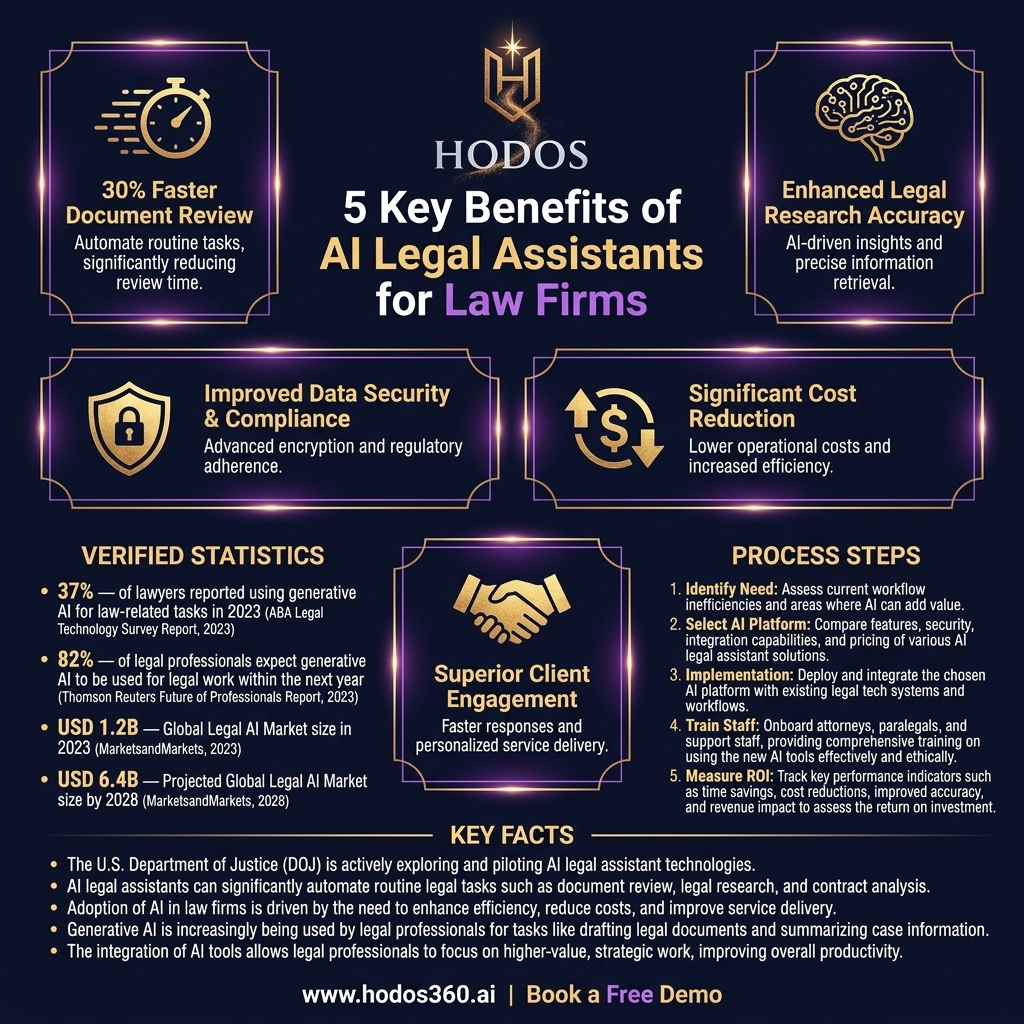
- ✓Automated Document Generation: AI can draft contracts, pleadings, and other legal documents based on templates and case specifics, significantly reducing drafting time and errors.
- ✓Predictive Analytics for Case Strategy: Leveraging historical case data, AI can offer insights into potential litigation outcomes, helping attorneys refine their strategies.
- ✓Intelligent Legal Research: AI tools can scour vast legal databases, statutes, and case law to find relevant precedents much faster than traditional methods.
- ✓Streamlined Client Onboarding: AI-powered intake forms and chatbots can collect client information, qualify leads, and initiate the onboarding process efficiently.
- ✓Enhanced Compliance Monitoring: AI can monitor regulatory changes and flag potential compliance issues in real-time, helping firms stay ahead of legal requirements.
- ✓Optimized Resource Allocation: By automating routine tasks, AI allows firms to reallocate human resources to complex legal analysis and client relationship building.
Navigating the Future: Implementation Strategies for Law Firms
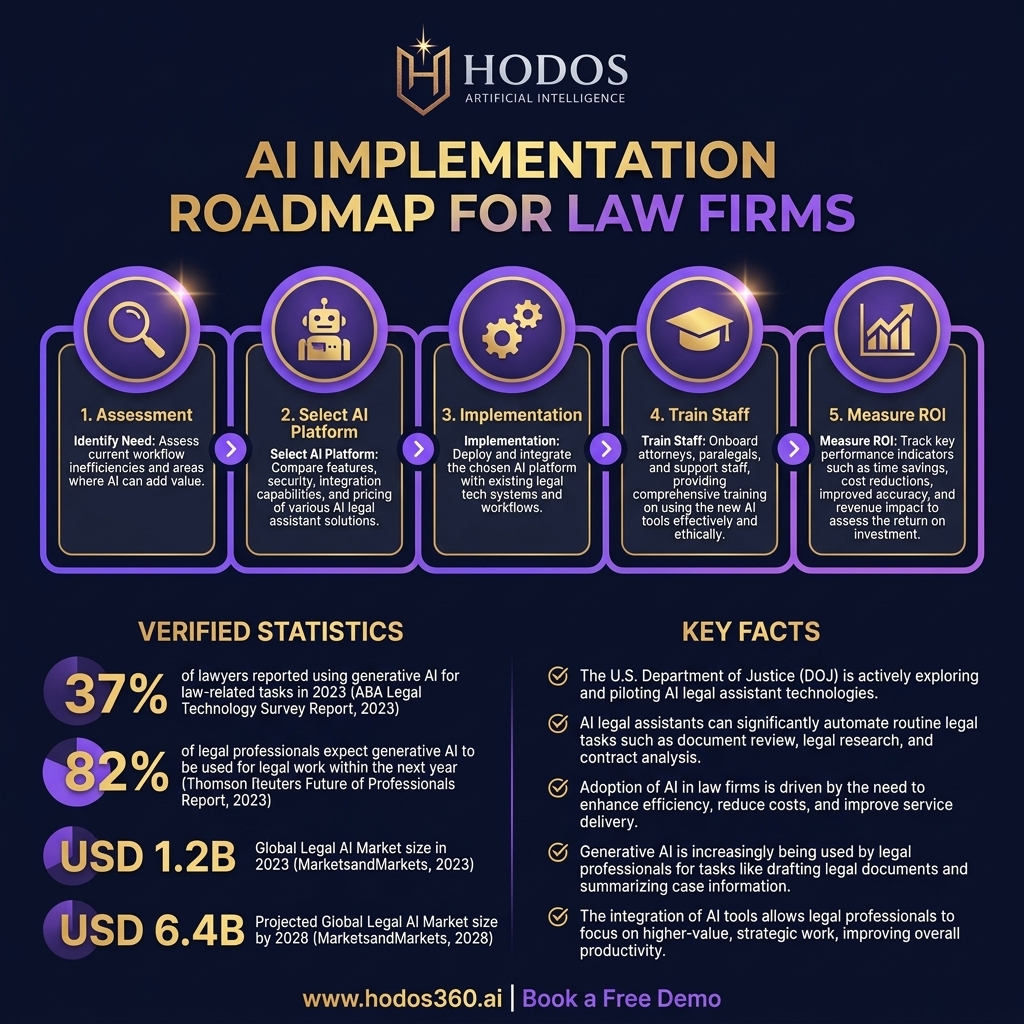
Implementing an AI legal assistant requires a thoughtful and strategic approach, not just a wholesale technology swap. Law firms must consider a phased adoption strategy, starting with areas where AI can deliver immediate, measurable impact, such as workflow automation in document review or client intake. This approach allows firms to build internal expertise, gain user buy-in, and refine processes iteratively. Key to successful implementation is robust training for all staff, from partners to paralegals, ensuring they understand how to leverage AI tools effectively and ethically. As Mike Williams, CIO of Winston & Strawn, often emphasizes, technology adoption is as much about people and process as it is about the software itself. Firms must also invest in data migration strategies to ensure that existing client data and case files are seamlessly integrated into new AI platforms, maintaining data integrity and accessibility.
The market for legal technology is booming, with new solutions emerging constantly. Choosing the right platform means assessing a provider's track record, security protocols, and commitment to continuous innovation. Learn more about AI-Powered Web Development: Essential SaaS Optimization for Law Firms. Firms should look for comprehensive solutions that integrate multiple AI capabilities rather than disparate tools. This ensures a unified experience and prevents data silos. Prioritizing platforms with strong data security and privacy features is non-negotiable, given the sensitive nature of legal information. A proactive approach to AI implementation, rather than a reactive one, positions firms for long-term success, enabling them to adapt to future market demands and technological advancements. The goal is to build an intelligent infrastructure that supports growth and enhances the overall quality of legal service delivery.
The Imperative of Data Security and Ethical AI
As law firms embrace the power of an AI legal assistant, the imperative of data security and ethical deployment becomes paramount. Client confidentiality, as enshrined in ABA Model Rule 1.6 (Confidentiality of Information), is non-negotiable. Firms must ensure that any AI platform they adopt adheres to the highest standards of data encryption, access control, and privacy compliance, including GDPR and CCPA where applicable. The ethical use of AI also extends to avoiding biases in algorithms, maintaining attorney oversight, and ensuring transparency in how AI-generated content is used. Learn more about Autonomous AI Agents: Essential for Law Firms' Future. For instance, using generative AI for legal filings without proper human review could lead to sanctions, as seen in recent cases involving fabricated citations. Firms must establish clear policies on AI usage, emphasizing that AI is a tool to augment, not replace, human legal judgment. Ignoring these ethical considerations could lead to severe reputational damage and professional liability.
ROI of AI: Measuring Success and Future Growth
The true measure of any technological investment lies in its return on investment (ROI). For an AI legal assistant, ROI isn't just about cost savings; it encompasses enhanced efficiency, improved client satisfaction, and increased capacity for growth. Firms can quantify ROI by tracking metrics such as reduced time spent on administrative tasks, faster document review cycles, higher client retention rates, and the ability to handle a larger volume of cases without proportional increases in staffing. According to a McKinsey report on AI adoption, legal firms leveraging AI can see efficiency gains of 20-30% in specific tasks, translating into significant financial benefits. These gains directly impact a firm's bottom line, allowing for reinvestment in talent, technology, or expansion into new practice areas. The initial investment in AI technology is quickly offset by the long-term operational efficiencies and strategic advantages it provides in a competitive market.
Beyond immediate financial returns, the adoption of an AI legal assistant positions a firm for sustained future growth. Learn more about Law Firms' Ultimate AI Problem: It's Data, Not Tech. By automating routine processes, attorneys can dedicate more time to complex legal analysis, client relationship building, and business development—activities that directly contribute to revenue generation and professional development. Furthermore, a tech-forward approach enhances a firm's appeal to both new talent and prospective clients, who increasingly seek out innovative and efficient legal service providers. The ability to deliver faster, more accurate, and more cost-effective services through AI creates a powerful competitive differentiator. Firms that embrace this technological evolution are not just adapting to the future; they are actively shaping it, ensuring their relevance and profitability in an ever-evolving legal landscape.
Sustaining Innovation in a Competitive Landscape
In today's dynamic legal market, sustaining innovation is crucial for maintaining a competitive edge. The implementation of an AI legal assistant is not a one-time event but an ongoing commitment to technological advancement. Firms must foster a culture of continuous learning and adaptation, regularly evaluating new AI tools and features to ensure their systems remain cutting-edge. This includes staying abreast of developments in generative AI, machine learning, and natural language processing, which are constantly evolving. Firms that proactively seek out and integrate these innovations will be better equipped to meet changing client demands, navigate complex legal challenges, and attract top talent. The competitive landscape demands not just adoption, but continuous strategic engagement with legal technology to ensure long-term success and market leadership.

Key Takeaways and Next Steps
The U.S. Department of Justice's interest in piloting AI legal assistant technology is a clear signal: artificial intelligence is no longer an optional add-on but a foundational element for the modern legal practice. For law firms, this means embracing AI to enhance attorney productivity, streamline legal operations, and deliver superior client service. The benefits extend beyond mere efficiency, encompassing improved decision-making, reduced costs, and a robust competitive advantage. Firms that hesitate risk being left behind in an increasingly AI-driven legal market. The path forward involves strategic implementation, a strong focus on data security and ethical AI use, and a commitment to continuous innovation.
To navigate this transformative era successfully, law firms must proactively explore comprehensive AI solutions. Platforms like HODOS 360, with its integrated AI Law Firm Management System, offer the tools necessary to optimize case management, automate document creation, and enhance client intake processes. The time to act is now. By strategically adopting AI, your firm can not only meet the challenges of today but also build a resilient, efficient, and future-ready practice. Don't wait for the tide to turn completely; be among the first to harness the full power of artificial intelligence to redefine your firm's success.
Frequently Asked Questions
What is an AI legal assistant?+
An AI legal assistant is a software tool powered by artificial intelligence designed to automate, streamline, and enhance various legal tasks. This can include legal research, document review, contract analysis, case management, client intake, and even predicting case outcomes, thereby increasing efficiency and freeing up attorneys for more complex work.
How will the DOJ's AI pilot impact private law firms?+
The DOJ's pilot program provides significant validation for AI in legal practice. It signals that AI is becoming a recognized and accepted tool, which will likely accelerate its adoption in private firms. This could lead to clearer regulatory guidelines, more robust AI solutions, and increased client expectations for AI-driven efficiency and innovation from their legal providers.
What are the primary benefits of AI for law firm management?+
AI offers numerous benefits, including enhanced efficiency through task automation (e.g., document generation, research), improved accuracy in legal analysis, better client service via faster responses and streamlined intake, optimized resource allocation, and data-driven insights for strategic decision-making. It ultimately boosts attorney productivity and firm profitability.
What ethical considerations should law firms address when using AI?+
Law firms must prioritize client confidentiality, data security, and avoiding algorithmic biases. Adherence to ABA Model Rules, particularly on competence and confidentiality, is crucial. Maintaining attorney oversight of AI-generated content, ensuring transparency, and preventing the unauthorized practice of law by AI are also vital to ethical AI deployment.
How can law firms measure the ROI of AI legal assistant implementation?+
Measuring ROI involves tracking metrics such as reductions in time spent on administrative tasks, faster turnaround for legal documents, improved accuracy rates, increased client retention and satisfaction, and the ability to handle a greater volume of cases without expanding staff. These quantifiable benefits demonstrate the financial and operational value of AI investments.