
AI Law Firm: The Ultimate Guide to Smarter Practice
The legal industry stands at a precipice, witnessing a tectonic shift driven by the relentless march of artificial intelligence. Traditional law firms, once bastions of paper and precedent, are now confronted with a new paradigm: the AI law firm. This isn't merely about adopting a new tool; it's about fundamentally rethinking the entire legal operating system. The recent buzz around companies like Lexfeeld, which aims to build a "smarter legal operating system," underscores a critical inflection point. Firms are no longer just seeking automation for mundane tasks; they are demanding integrated, intelligent platforms that can manage cases, streamline client intake, automate documents, and even drive marketing and client acquisition, all powered by sophisticated AI.
This transformation is not a distant future but a present reality, reshaping how legal professionals operate, interact with clients, and strategize for growth. The narrative arc of legal innovation, once characterized by incremental software improvements, has accelerated into a dramatic saga of disruption versus tradition. Forward-thinking firms recognize that AI law firm management is the linchpin for staying competitive, enhancing client value, and navigating the increasingly complex legal landscape. Those who embrace this shift are not just surviving but thriving, using artificial intelligence to unlock unprecedented levels of efficiency and strategic insight across their entire practice.
The Rise of AI Law Firm Operating Systems
The evolution of legal technology has moved far beyond rudimentary case management software. Today, the focus is on creating holistic AI-powered legal operating systems that integrate every facet of a law firm's operations. This trend is exemplified by innovative players like Lexfeeld, which entered the market with the ambitious goal of constructing a truly smarter legal operating system from the ground up. Their vision, and that of many emerging legal tech companies, is to move beyond disparate tools to a unified platform where AI acts as the central nervous system, orchestrating workflows, processing data, and providing actionable intelligence. This holistic approach ensures seamless data flow and consistent application of AI across the firm, driving efficiency and reducing the potential for human error.
Major players in the legal tech space are also rapidly acquiring and developing AI capabilities to meet this demand. Clio, for instance, has strategically expanded its ecosystem through acquisitions and integrations, positioning itself as a comprehensive practice management solution that increasingly leverages AI for various functions, from client intake to billing. Similarly, established giants like Thomson Reuters are investing heavily in AI research and development, integrating generative AI into their legal research and practice management offerings to enhance their core products. This competitive landscape demonstrates a broad industry consensus: AI is no longer optional but fundamental to the future of legal practice management, offering transformative potential for AI law firm management.
An AI law firm management system is more than just a collection of AI tools; it's an intelligent infrastructure. It encompasses robust case management features that can predict case outcomes, sophisticated billing systems that automate time tracking and invoicing, and AI-driven client intake processes that pre-qualify leads and gather essential information efficiently. Document automation, once a standalone feature, is now infused with AI to generate complex legal documents with greater accuracy and speed, learning from past interactions and firm-specific precedents. Learn more about AI Website Design: Essential Strategies for Law Firms. The integration of AI-powered legal workflows means that routine tasks are not just automated but intelligently optimized, adapting to new information and ensuring compliance at every step. This dynamic capability is a game-changer for firms seeking to optimize their operational efficiency.
Streamlining Case Management with AI
The impact of AI on case management is profound, transforming the entire lifecycle from initial client contact to resolution. AI-powered platforms can analyze vast quantities of data to identify patterns and predict potential outcomes, giving attorneys a strategic advantage. For example, AI can review discovery documents, summarize key findings, and even flag potential risks or opportunities that human review might miss. This not only accelerates the discovery process but also enhances the quality of strategic decision-making. Learn more about AI Website Building: The Ultimate Guide for Law Firms. Moreover, AI can automate calendar management, deadline tracking, and communication, ensuring that no critical task is overlooked. This allows legal teams to focus their valuable time on complex legal analysis and client advocacy rather than administrative overhead.
Beyond Automation: The Strategic Advantage of AI
The true power of AI in legal practice extends far beyond mere automation of repetitive tasks. It offers a strategic advantage that can redefine a firm's market position and growth trajectory. By offloading time-consuming, low-value work to AI, attorneys are freed to concentrate on higher-level strategic thinking, client counseling, and complex problem-solving. This shift addresses a critical tension in the legal profession: the fear that AI will replace lawyers. Instead, leading firms are demonstrating that AI augments human capabilities, allowing lawyers to deliver greater value and engage in more sophisticated legal work, thereby elevating the entire legal practice. This augmentation is key to driving growth and change through AI.
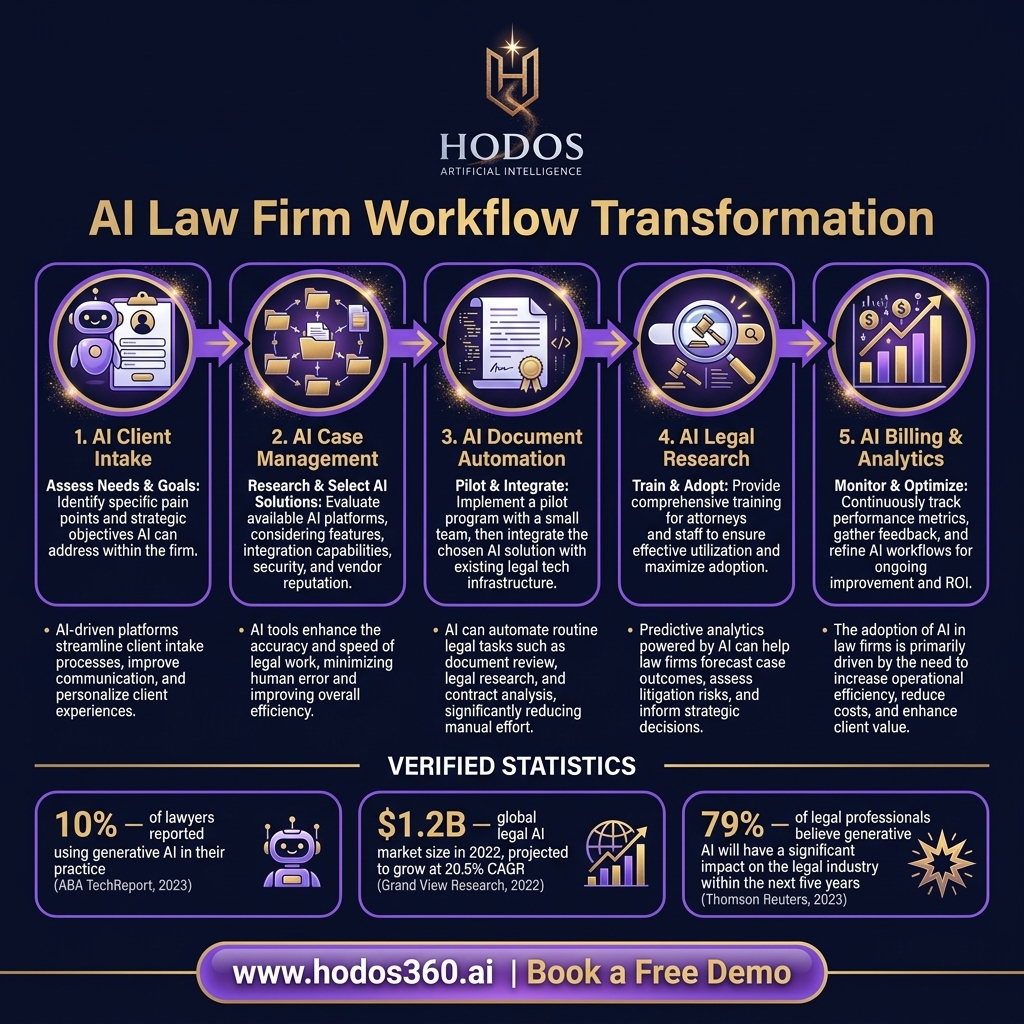
Data underscores this transformative potential. According to the ABA TechReport 2023, a significant percentage of firms leveraging AI reported improved efficiency and client satisfaction, with a projected 30% increase in overall legal productivity by 2030, as forecasted by McKinsey & Company. This isn't just about doing things faster; it's about doing them smarter. AI-powered analytics can uncover insights from past cases, predict litigation outcomes, and even assess the financial viability of potential clients, enabling firms to make data-driven decisions that were previously impossible. Noah Waisberg, co-founder of Kira Systems (acquired by Litera), often speaks on how AI allows lawyers to focus on judgment rather than rote review, emphasizing its role in enhancing strategic legal function.
The strategic advantage also manifests in improved client relationships and business development. With AI handling administrative burdens, lawyers have more time for direct client engagement, fostering deeper trust and understanding. Furthermore, AI can analyze market trends and client needs, helping firms identify new service areas or target specific client segments with tailored offerings. This proactive approach to business development, powered by intelligent insights, ensures sustained growth and relevance in a rapidly evolving market. It’s about building an AI law firm management system that isn't just reactive but predictive and prescriptive, guiding the firm towards future success. Embracing this means reimagining the legal function with AI at its core.
For firms looking to gain a competitive edge, integrating AI into their core operations is no longer optional. It's about establishing a foundation for sustained innovation and market leadership. The ability of AI to analyze vast datasets, automate complex workflows, and provide predictive insights positions firms to anticipate challenges, optimize resource allocation, and consistently deliver superior client outcomes. This strategic adoption of AI transforms the very nature of legal service delivery, moving from a reactive model to a proactive, insight-driven approach that benefits both the firm and its clients. It's truly a new era for legal practices, where intelligence becomes infrastructure.
For firms ready to unlock these strategic advantages and redefine their operational capabilities, exploring comprehensive AI solutions is the next logical step. Discover how AI can revolutionize your practice today.
Navigating the AI Legal Landscape: Challenges and Opportunities
While the opportunities presented by AI are immense, navigating the legal landscape requires careful consideration of its inherent challenges. Ethical concerns, for instance, are paramount. The ABA Model Rule 1.1 on Competence mandates that lawyers stay abreast of changes in the law and its practice, including the benefits and risks associated with relevant technology. This directly applies to AI. Firms must ensure that their use of AI upholds client confidentiality (ABA Model Rule 1.6), avoids bias in AI algorithms, and maintains appropriate attorney supervision over AI-generated work. The responsible implementation of AI is not just a technological hurdle but a professional and ethical imperative for every AI law firm management strategy. Data privacy and security, especially with sensitive client information, also present significant concerns that require robust safeguards and compliance with regulations like GDPR or CCPA.
Beyond ethics, practical challenges include the initial investment in AI technology, the need for specialized training for legal professionals, and potential resistance to change within traditional firm structures. However, these challenges are often outweighed by the vast opportunities. AI opens doors to new service lines, such as AI compliance consulting or leveraging predictive analytics for litigation funding. It also democratizes access to justice by making legal services more efficient and affordable, potentially expanding the market for legal aid and pro bono work. The ongoing enforcement of legislation like the EU AI Act, which sets strict guidelines for high-risk AI systems, highlights the increasing regulatory scrutiny, yet also provides a framework for responsible innovation and building trust in AI.
The competition in the legal tech sector is also driving rapid innovation, creating both challenges and opportunities. Startups like Harvey AI, which secured significant funding and partnered with Allen & Overy, demonstrate the intense market interest and the potential for new, specialized AI tools. This competitive pressure encourages existing firms to innovate or risk being left behind. Firms must strategically evaluate AI solutions, understanding which technologies best fit their practice areas and business models, rather than adopting AI for AI's sake. This discerning approach ensures that AI investments yield tangible returns and truly enhance the firm's capabilities, particularly in areas like marketing and client acquisition.
Enhancing Client Experience and Acquisition
AI is fundamentally transforming how law firms interact with and acquire clients. AI Voice Assistants, for example, can provide 24/7 phone answering, qualify leads, and even book appointments, ensuring no potential client is missed. This immediate, efficient response significantly enhances the initial client experience. On the marketing front, AI Marketing Platforms enable firms to create targeted content, automate social media campaigns, and even generate AI-powered videos, drastically improving outreach and engagement. Analytics and ROI tracking provide real-time insights into marketing effectiveness, allowing firms to optimize their spending and focus on strategies that yield the highest returns. This holistic approach to client engagement, from first contact to ongoing communication, is a cornerstone of modern AI law firm management.
Real-World Impact: Firms Embracing AI
Across the legal spectrum, firms are already demonstrating the tangible benefits of integrating AI. From boutique practices specializing in employment law to large corporate firms, the impact is undeniable. For instance, firms handling high-volume litigation are leveraging AI for e-discovery, drastically reducing the time and cost associated with reviewing millions of documents. Tools like those offered by Relativity or Casepoint, often enhanced by AI, can identify relevant information, privilege documents, and even detect patterns of fraud with unprecedented speed and accuracy. This allows legal teams to focus on strategic analysis rather than manual review, directly impacting case outcomes and client satisfaction. This transformation is a clear example of AI transforming the legal function.
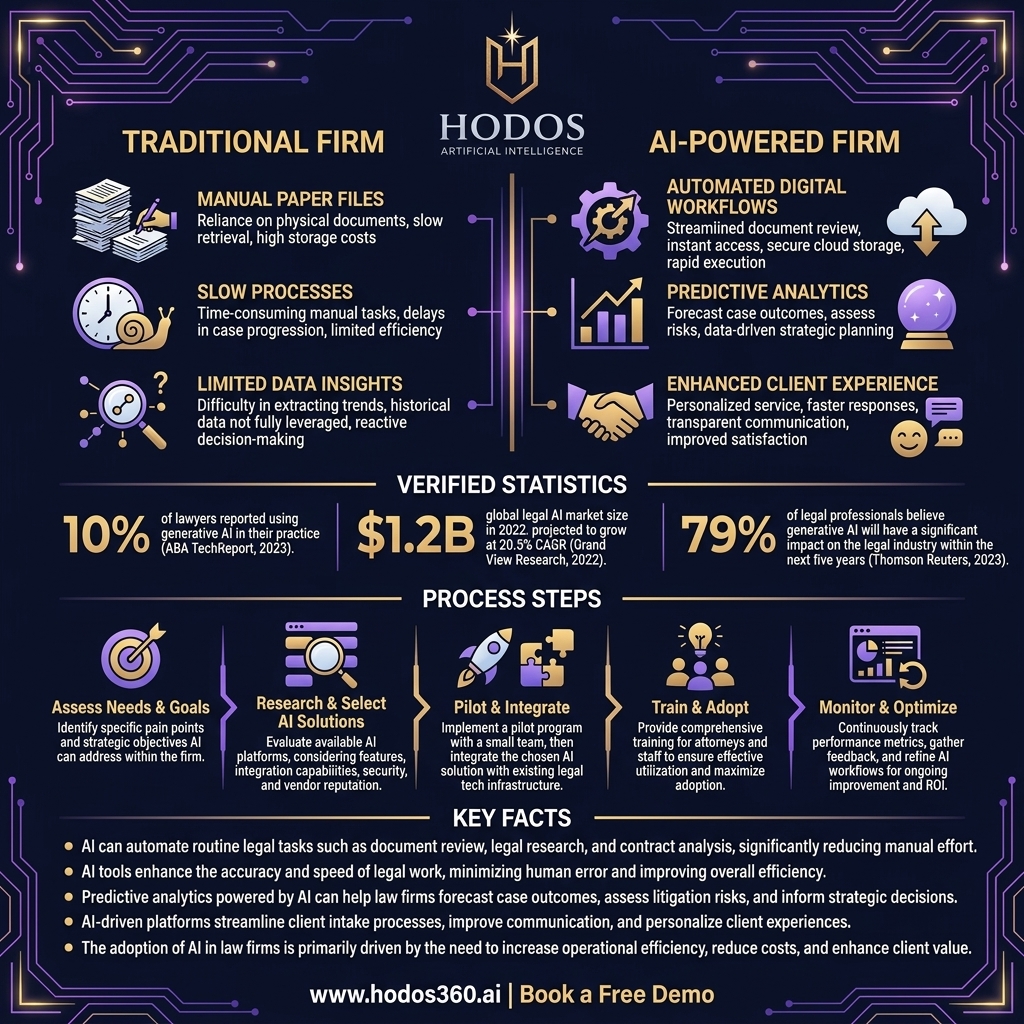
Beyond litigation, AI is revolutionizing contract review and drafting. Firms that regularly deal with complex commercial agreements or mergers and acquisitions are deploying AI platforms to rapidly analyze contracts for inconsistencies, risks, and specific clauses. Companies like LexisNexis and Practical Law (a Thomson Reuters offering) integrate AI into their platforms to assist with document drafting and legal research, providing lawyers with instant access to precedents and statutory analysis. This not only accelerates the transaction process but also enhances the quality and accuracy of legal documents, mitigating future risks for clients. The shift is from manual, error-prone processes to automated, intelligent workflows.
The impact extends to knowledge management and talent development within firms. AI can help organize vast internal knowledge bases, making it easier for new associates to access precedents, firm policies, and expert insights. This facilitates faster onboarding and continuous learning, ensuring that the collective intelligence of the firm is readily available. Firms are also using AI to track attorney performance, identify areas for professional development, and even predict staffing needs for upcoming cases. This intelligent approach to talent management ensures that firms are not just efficient in their legal work but also in cultivating their most valuable asset: their people. This is about building AI-native law firms, as Helen Fan has explored.
Data-Driven Practice Growth with AI
The integration of AI into practice management provides an unparalleled opportunity for data-driven growth. By analyzing billing data, client demographics, and case outcomes, AI can identify a firm's most profitable practice areas, ideal client profiles, and even predict potential client churn. This intelligence enables firms to strategically allocate resources, refine their service offerings, and target marketing efforts with precision. Imagine an AI system that identifies a nascent legal need in the market based on public data and automatically generates a marketing campaign to capture those leads. This predictive capability transforms business development from an art into a science, ensuring sustainable growth and a competitive edge in the legal market.
Building Your AI-Powered Future: A HODOS 360 Approach
The journey to building a smarter legal operating system, much like the one Lexfeeld envisions, requires a comprehensive and integrated approach. It's not about piecing together disparate tools, but about establishing a unified ecosystem where AI seamlessly enhances every aspect of your practice. HODOS 360 understands this imperative, offering a holistic suite of AI-powered services designed to empower law firms for the future. Our AI Law Firm Management System provides the backbone for operational excellence, integrating case management, billing, client intake, document automation, and intelligent legal workflows into a single, cohesive platform. This foundational system ensures that your firm's core operations are not just automated, but intelligently optimized, much like the advanced systems transforming firms today.
Beyond internal operations, HODOS 360 extends AI's reach to client acquisition and engagement. Our AI Marketing Platform leverages AI for everything from video creation and social media automation to content generation, complete with analytics and ROI tracking to maximize your outreach. Complementing this, our AI Voice Assistants offer 24/7 phone answering, lead qualification, and appointment booking, ensuring your firm never misses a potential client. Finally, our Web & Mobile Development services ensure your digital storefront is cutting-edge, with AI-powered website building, responsive design, and SEO optimization. Together, these services provide a 360-degree solution for firms committed to building an AI-powered future, enabling them to compete and thrive in the modern legal landscape. Explore HODOS 360's integrated AI solutions.

Key Takeaways and Next Steps
The emergence of the AI law firm is not a fleeting trend but a fundamental shift in the legal industry. Firms that embrace comprehensive AI law firm management are poised to gain significant advantages in efficiency, client satisfaction, and strategic growth. The narrative is clear: those who view AI as mere automation will fall behind, while those who integrate it as a core operating system will lead. The future of legal practice is intelligent, integrated, and client-centric, powered by sophisticated AI. This transformation requires not just investment in technology but a cultural shift towards innovation and continuous adaptation. The time to act is now, to ensure your firm is at the forefront of this legal revolution.
As you navigate this evolving landscape, consider evaluating your firm's current operational framework and identifying areas where AI can deliver the most impact. Look for integrated solutions that offer not just point solutions but a cohesive platform for growth. Engaging with industry leaders and exploring comprehensive AI platforms will be crucial for building a resilient, future-ready practice. The journey to a smarter legal operating system begins with a strategic vision and the right technological partner. Book a free demo to see HODOS 360 in action.
Frequently Asked Questions
What is an AI Law Firm Management System?+
An AI Law Firm Management System is an integrated platform that leverages artificial intelligence to streamline and optimize all aspects of a law firm's operations. This includes automating tasks like case management, client intake, billing, and document generation, as well as providing AI-powered insights for strategic decision-making and legal workflows. It acts as a central nervous system for the modern law firm, enhancing efficiency and accuracy across the board.
How does AI enhance client intake and marketing for law firms?+
AI significantly enhances client intake by automating lead qualification, scheduling appointments, and gathering initial client information, often through AI Voice Assistants. For marketing, AI Marketing Platforms generate targeted content, automate social media campaigns, and provide analytics to optimize ROI. This allows firms to attract and onboard clients more efficiently, personalize outreach, and track the effectiveness of their marketing efforts in real-time.
What ethical considerations should law firms address when using AI?+
Law firms must address several ethical considerations, including maintaining client confidentiality, ensuring AI algorithms are free from bias, and providing adequate attorney supervision over AI-generated work. Adherence to ABA Model Rules on competence and professional responsibility is crucial. Firms must also be transparent with clients about AI usage and implement robust data security measures to protect sensitive information and comply with privacy regulations.
Can AI truly replace lawyers, or does it augment their work?+
The prevailing view among legal tech experts and practicing attorneys is that AI will augment, rather than replace, lawyers. AI excels at automating repetitive, data-intensive tasks like document review, legal research, and contract analysis. This frees up attorneys to focus on higher-value work requiring human judgment, strategic thinking, client counseling, and complex problem-solving. AI tools enhance lawyers' capabilities, allowing them to deliver more efficient and sophisticated legal services.
What are the key benefits of adopting an AI-powered legal operating system?+
Adopting an AI-powered legal operating system offers numerous benefits, including dramatically increased operational efficiency through automation, improved accuracy in legal tasks, and enhanced client satisfaction due to faster, more responsive service. Firms gain strategic advantages through data-driven insights for better decision-making, optimized resource allocation, and targeted business development. It allows firms to scale operations, reduce costs, and maintain a competitive edge in the evolving legal market.