


AI-Powered Legal Tech: The Essential Guide for Modern Firms
In late 2023, Sarah Chen, a managing partner at a bustling intellectual property firm in Austin, Texas, found her team overwhelmed by the sheer volume of discovery documents. Facing a complex patent infringement case, the impending deadlines and budget constraints loomed large, threatening to derail their efforts.
Traditional manual review methods were simply not scalable. Desperate for a more efficient approach, Chen made a strategic investment in an advanced AI-powered legal technology platform designed for document review. Leveraging its sophisticated machine learning capabilities, her firm was able to sift through millions of pages of technical specifications and legal precedents in a fraction of the time it would have taken human attorneys.
The outcome was transformative: not only did her team uncover crucial evidence that led to a highly favorable settlement, but they did so 60% faster than projected, ultimately saving their client hundreds of thousands in legal fees. Chen’s experience is far from unique; it mirrors a profound, industry-wide shift where AI is transitioning from a futuristic concept to an indispensable operational imperative across the legal sector.
The recent Forbes article, "A Guide To AI-Powered Legal Technology Companies," serves as a timely testament to this pivotal moment, highlighting the burgeoning ecosystem of innovative firms dedicated to empowering legal professionals with cutting-edge artificial intelligence. This transformation extends beyond mere software adoption; it signifies a fundamental re-evaluation of how legal services are delivered, managed, and optimized.
From automating routine administrative tasks to providing sophisticated predictive analytics, AI is now reshaping nearly every facet of legal practice. Law firms that strategically embrace these innovations are not just gaining a significant competitive edge; they are actively redefining client expectations, enhancing service quality, and achieving unprecedented operational efficiency in an increasingly demanding and competitive market.
For many legal professionals, the primary challenge is no longer debating AI's potential, but rather navigating the complex landscape of available legal tech tools to identify solutions that genuinely align with their firm's strategic objectives, ethical obligations, and long-term growth ambitions. This guide aims to demystify that landscape, offering a comprehensive look at the companies and technologies leading the charge.
Ready to revolutionize your practice? Discover how HODOS 360's integrated AI solutions can transform your firm's efficiency and client engagement.
The Transformative Power of AI in Legal Workflows
The initial wave of AI in legal tech, exemplified by early pioneers like ROSS Intelligence, co-founded by Andrew Arruda, promised a future where AI would act as a super-powered legal researcher. While ROSS faced its own challenges, its journey underscored the immense potential and the steep learning curve of integrating complex AI into legal practice.
Today, AI-powered legal technology has matured significantly, moving beyond simple keyword searches to sophisticated natural language processing (NLP) and machine learning (ML) models that understand legal context and nuance. This evolution has led to dramatic improvements in areas previously plagued by inefficiency and human error.
Take e-discovery and document review, for instance. Learn more about AI Virtual Assistant: Essential for Modern Law Firms. Historically a resource-intensive and often tedious process, AI has fundamentally reshaped it. Platforms like those developed by Kira Systems (later acquired by Litera) pioneered the use of AI to analyze vast quantities of unstructured data, identifying relevant documents, extracting key information, and even flagging potential risks.
The American Bar Association's 2023 Legal Technology Survey Report highlighted that firms utilizing AI for document review reported efficiency gains of up to 70-90% compared to manual methods, drastically reducing costs and accelerating case timelines. This not only benefits the firm's bottom line but also allows attorneys to focus on high-value strategic work rather than rote tasks.
Beyond e-discovery, AI is making significant inroads into contract drafting and analysis, an area ripe for automation and precision. Companies like Harvey AI, backed by OpenAI and partnering with global giants like Allen & Overy, are at the forefront, developing large language models specifically trained on legal data.
These tools can review complex contracts in minutes, identifying inconsistencies, missing clauses, and non-standard language with remarkable accuracy. This not only speeds up the review process but also significantly mitigates risk, ensuring compliance and reducing the likelihood of future disputes. For instance, an AI tool can analyze hundreds of non-disclosure agreements (NDAs) to ensure they align with a firm's standard operating procedures or identify problematic indemnification clauses that could expose a client to undue liability.
Learn more about Essential AI for Vibe Coding: Elevating Legal Web Development. Such capabilities elevate the quality of legal work, allowing attorneys to deliver more robust and error-free documents. Furthermore, the ethical implications of using AI in these contexts are increasingly being addressed. The ABA Model Rules of Professional Conduct, particularly Rule 1.1 (Competence), implicitly require lawyers to stay abreast of changes in technology.
Leveraging AI responsibly helps attorneys meet their duty of competence by providing more thorough and efficient legal services, while also adhering to Rule 1.6 (Confidentiality of Information) by ensuring secure and private data handling within these advanced systems.
Enhancing Legal Research and Predictive Analytics
The bedrock of legal practice—research—has also been fundamentally transformed by AI. Gone are the days of exhaustive manual searches through dusty tomes or even keyword-limited digital databases. Modern legal research AI tools, offered by titans like LexisNexis (with products like Lexis+ AI) and Thomson Reuters (with Westlaw Edge), employ sophisticated semantic search and natural language processing to understand the context of legal questions.
This allows attorneys to find highly relevant precedents, statutes, and secondary sources much faster and more comprehensively than ever before. Learn more about AI Voice Assistants Transform Law: HODOS 360's 2026 Impact. These platforms can identify patterns in case law, distinguish between binding and persuasive authority, and even summarize complex legal arguments, giving lawyers a significant advantage in preparing their cases.
The ability to quickly synthesize vast amounts of information enables more informed decision-making and better-articulated arguments, directly impacting litigation outcomes.
Beyond simple retrieval, AI is powering the nascent field of predictive analytics in law. Tools integrated into platforms like LexisNexis Context and Westlaw Edge can analyze historical litigation data to forecast potential case outcomes, predict judicial behavior, and assess the likelihood of success for specific legal strategies.
For example, a firm might use AI to analyze a judge's past rulings on similar motions or a jury's propensity in certain types of cases, providing data-driven insights that refine litigation strategy. Learn more about Voice Assistant Migration: An Essential Guide for Law Firms. While not a crystal ball, these predictive capabilities offer a powerful new dimension to legal strategy, allowing firms to advise clients with greater confidence and make more strategic decisions about whether to litigate, settle, or pursue alternative dispute resolution.
This shift from intuition to data-backed foresight is a hallmark of the modern AI for law firms, empowering legal teams to navigate complex legal challenges with unprecedented strategic clarity.
AI-Driven Efficiency in Law Firm Management
The operational backbone of any successful law firm—management—is undergoing a revolution thanks to AI-powered legal technology. Traditional law firm management systems often struggled with fragmentation, leading to inefficiencies in case management, billing, and client intake. Companies like Clio have been instrumental in pushing the industry towards more integrated solutions, and their strategic acquisitions reflect a broader trend towards comprehensive platforms.
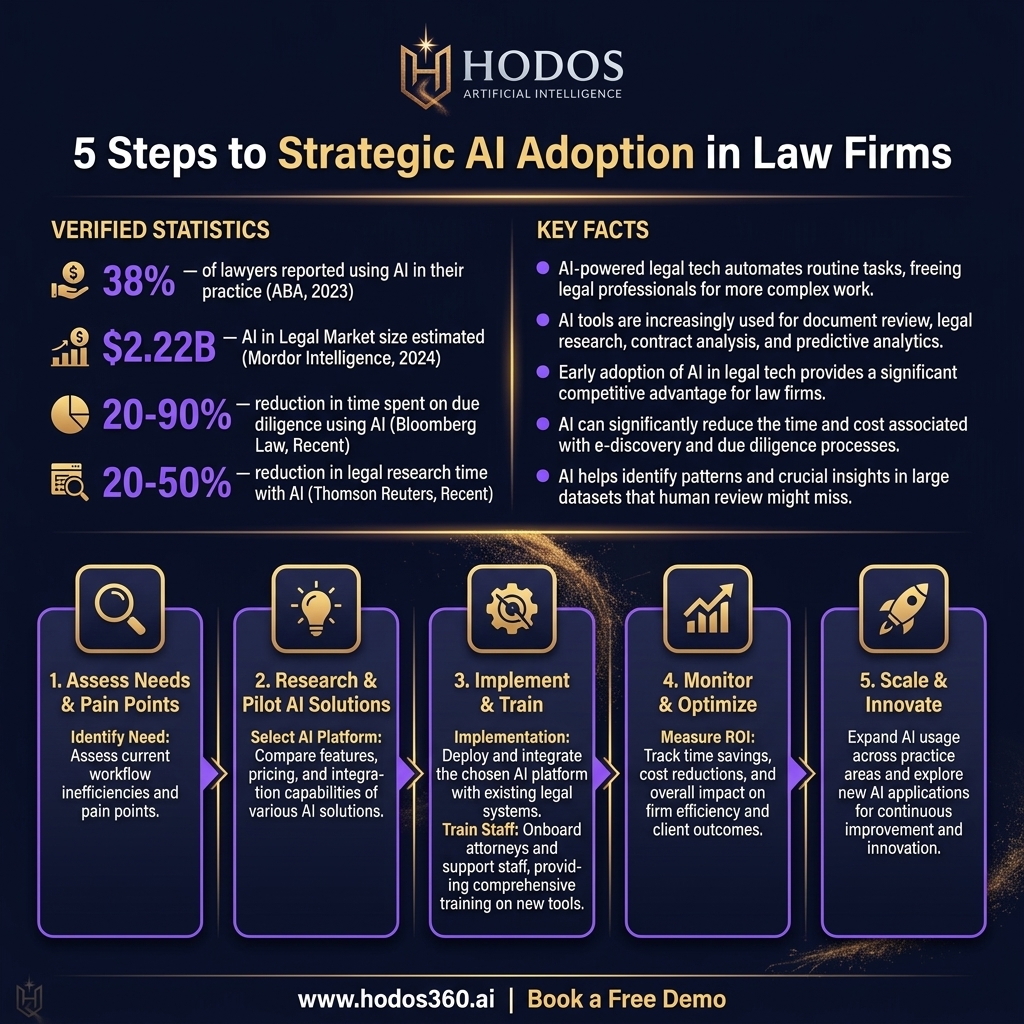
Today, AI supercharges these capabilities, automating many of the time-consuming administrative tasks that drain valuable attorney hours. Learn more about AI Chatbot Builders: Transform Your Law Firm in 2026. Client intake, for instance, can be significantly streamlined through AI-powered legal workflows that automatically collect client information, conduct initial conflict checks, and generate engagement letters.
This not only accelerates the onboarding process but also reduces the potential for human error, ensuring a smooth and professional start to the client relationship. The time saved here translates directly into more billable hours and improved client satisfaction, crucial metrics for any growing firm.
Billing and financial management also benefit immensely from AI integration. AI-powered systems can track time more accurately, automate invoice generation, and even identify patterns in spending or payment delays, providing valuable insights into a firm's financial health. This level of precision minimizes billing disputes, enhances transparency for clients, and optimizes cash flow.
Furthermore, document automation, a core component of modern legal software, allows firms to generate a wide array of legal documents—from standard contracts and pleadings to motions and discovery requests—using intelligent templates. Learn more about AI-Powered Websites: Essential Digital Workforce for Law Firms. AI can populate these templates with case-specific data, ensuring consistency and accuracy while drastically cutting down on drafting time.
This frees up legal professionals to focus on the nuanced legal strategy and client advocacy that truly require human intellect and judgment. The integration of these AI legal workflows into a unified platform represents a significant leap forward, transforming the operational burden into a strategic advantage.
Streamlining Client Engagement and Marketing
Beyond internal operations, AI is profoundly reshaping how law firms interact with clients and attract new business. The advent of AI Voice Assistants offers a revolutionary approach to client service, providing 24/7 phone answering capabilities, intelligent lead qualification, and automated appointment booking. Imagine a potential client calling at 2 AM with an urgent query; an AI voice assistant can gather critical information, qualify the lead based on predefined criteria, and even schedule an initial consultation, ensuring no opportunity is missed.
This multilingual support capability further expands a firm's reach, catering to a diverse client base and providing an immediate, professional point of contact that traditional receptionists cannot match around the clock. This enhanced responsiveness significantly improves client satisfaction and conversion rates, essential for firm growth.
In the realm of business development, AI Marketing Platforms are empowering law firms with unparalleled tools for outreach and engagement. From AI-powered video creation that generates compelling legal content to social media automation that schedules and optimizes posts, these platforms enable firms to maintain a robust and consistent online presence without extensive manual effort.
Content generation tools can assist in drafting blog posts, articles, and website copy, ensuring SEO optimization and thought leadership. Crucially, these platforms provide sophisticated analytics and ROI tracking, allowing firms to precisely measure the effectiveness of their marketing campaigns and refine their strategies for maximum impact.
When coupled with Web & Mobile Development services that utilize AI-powered website building and high-converting templates, firms can establish a powerful digital footprint designed to attract and convert prospective clients. Platforms like HODOS 360 exemplify this holistic approach, offering not just an AI Law Firm Management System but also an AI Marketing Platform, AI Voice Assistants, and Web & Mobile Development services, providing an integrated solution for firms seeking to modernize every aspect of their operation and truly master the digital legal landscape.
Ready to elevate your firm's digital presence and client services? Explore HODOS 360's full suite of AI-powered solutions designed specifically for modern law firms.
Navigating the Ethical and Practical Landscape of AI Adoption
While the benefits of AI-powered legal technology are undeniable, its adoption is not without its complexities, particularly concerning ethics and practical implementation. One of the foremost concerns is the potential for bias in AI algorithms, especially when trained on historical data that may reflect societal inequities.
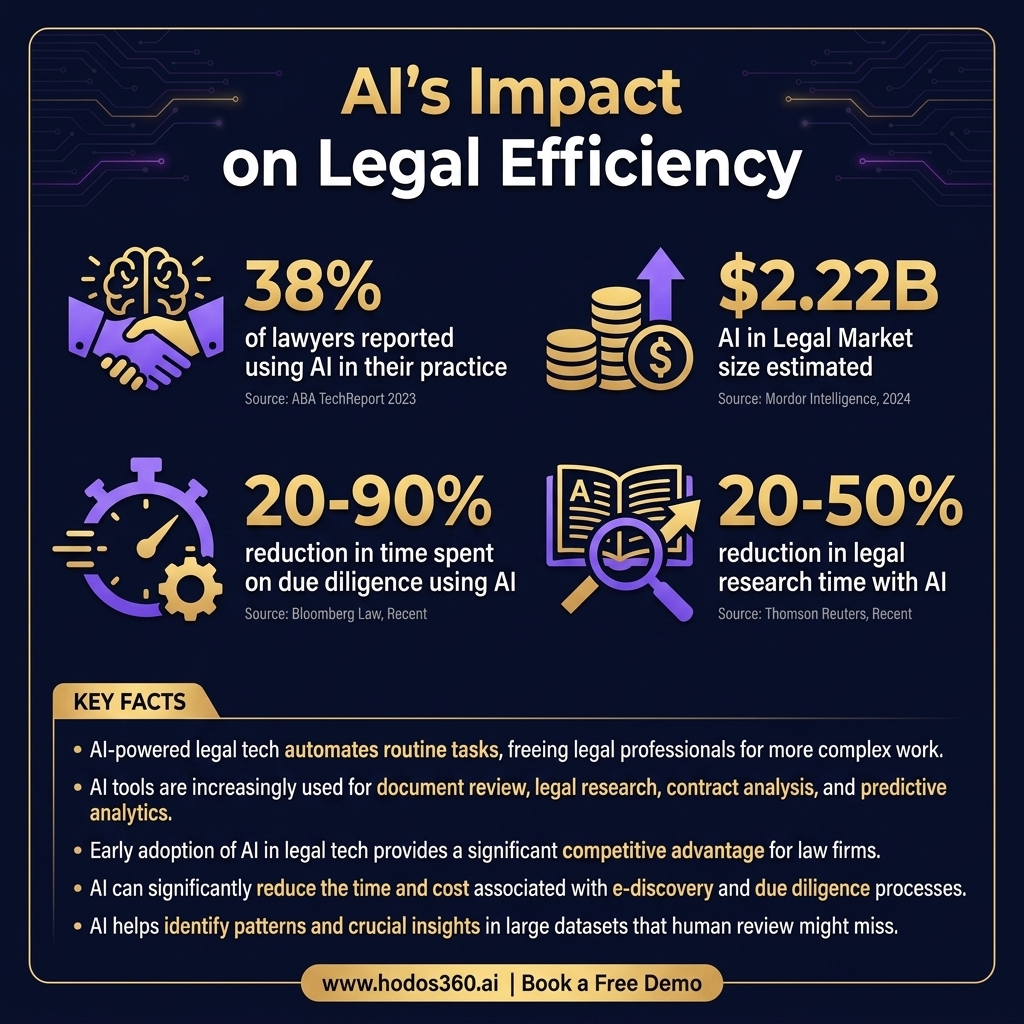
Attorneys must exercise due diligence and maintain human oversight to ensure that AI tools do not perpetuate or amplify biases in legal outcomes. Data privacy and client confidentiality are also paramount; ABA Model Rule 1.6 (Confidentiality of Information) mandates that lawyers protect client data, making robust security protocols and careful vendor selection critical when engaging with cloud-based AI solutions.
The legal profession also grapples with the perception of AI leading to job displacement. However, the prevailing view among industry leaders, including insights from the Thomson Reuters 2024 Report on the State of the Legal Market, suggests that AI will primarily augment, rather than replace, legal professionals.
AI acts as a powerful co-pilot, handling routine tasks and data analysis, thereby freeing lawyers to focus on complex problem-solving, strategic thinking, and the human elements of client relationships that AI cannot replicate. This shift necessitates new skill sets for legal professionals, focusing on prompt engineering, data interpretation, and ethical AI deployment.
From a practical standpoint, implementing AI legal tech presents its own set of challenges. The initial cost of investment, the need for adequate training, and the complexities of integrating new systems with existing legacy infrastructure can be daunting for many firms. A phased approach, starting with pilot programs for specific pain points, often proves more effective than a complete overhaul.
Furthermore, the regulatory landscape surrounding AI is rapidly evolving. The European Union's AI Act, for example, represents a landmark effort to regulate AI systems based on their risk level, and similar legislative efforts are emerging globally. Law firms utilizing AI must remain vigilant regarding these developments, ensuring their practices comply with new regulations and ethical guidelines issued by bar associations.
The Federal Rules of Civil Procedure (Rule 26), which governs discovery, emphasizes proportionality and the efficient management of electronic data. AI tools, when properly implemented, can significantly aid in meeting these obligations responsibly by making discovery processes more targeted and cost-effective, but human oversight remains essential to ensure compliance and ethical data handling.
The Imperative of Data Security and Privacy in AI Legal Tech
In an era of increasing cyber threats and stringent data protection laws, the security and privacy of client data are non-negotiable when adopting AI legal software. Law firms handle highly sensitive information, making robust data security a critical factor in selecting any AI vendor. Encryption, multi-factor authentication, and adherence to industry-best security practices are paramount.
Firms must conduct thorough due diligence on potential AI providers, scrutinizing their data handling policies, security certifications, and incident response plans. Compliance with regulations such as GDPR, CCPA, and HIPAA (where applicable) is not just a legal requirement but a fundamental ethical obligation. A data breach involving an AI tool could lead to severe reputational damage, hefty fines, and a loss of client trust, underscoring the importance of a proactive and vigilant approach to cybersecurity.
The legal profession's duty to protect client information is absolute, and AI tools must serve as enablers of this duty, not potential liabilities.
Moreover, the drive for explainable AI (XAI) is gaining traction within the legal sector. As AI systems become more complex and opaque, understanding how they arrive at their conclusions is crucial, especially in high-stakes legal contexts. Lawyers need to be able to explain the reasoning behind an AI-generated analysis or recommendation to clients, opposing counsel, and potentially even courts.
XAI aims to make AI decisions more transparent and interpretable, fostering trust and accountability. This is particularly relevant when AI is used for tasks like predicting litigation outcomes or assessing case merit, where the "why" behind a prediction is as important as the prediction itself.
Firms must prioritize AI companies that are committed to developing transparent and auditable algorithms, ensuring that the technology enhances, rather than obscures, the legal decision-making process.
The Future of Legal Practice: AI-First Firms and Continuous Innovation
The legal industry is witnessing the emergence of a new breed of practice: the "AI-first" law firm. These firms are not merely integrating AI as an add-on; they are structuring their entire operational model and client offerings around AI capabilities. From client acquisition to case resolution, AI is embedded at every stage, allowing for unprecedented efficiency, accuracy, and strategic insight.
This approach is creating a significant competitive divide, with early adopters gaining substantial advantages in terms of cost-effectiveness, speed of service delivery, and the ability to handle larger volumes of complex work. Firms that lag in adopting AI-powered legal technology risk being outmaneuvered by more agile, tech-forward competitors who can offer superior service at potentially lower costs.
The imperative for firms today is not just to consider AI, but to strategically plan for its continuous integration as a core component of their long-term growth strategy.
The pace of AI innovation is relentless, driven by breakthroughs in large language models (LLMs) and multimodal AI. What is cutting-edge today may be standard practice tomorrow, necessitating a culture of continuous learning and adaptation within law firms. Investment in the legal tech sector reflects this acceleration, with significant funding rounds and acquisitions shaping the competitive landscape.
For instance, the substantial backing received by companies like Harvey AI from major tech investors signals a strong market belief in the transformative potential of specialized AI legal companies. This dynamic environment means that firms must remain agile, regularly evaluating new technologies and updating their strategies to leverage the latest advancements.
The future of legal practice is not static; it is a continually evolving ecosystem where innovation is the key to sustained success and relevance. Proactive engagement with this innovation ensures that firms not only survive but thrive in the digital age, delivering enhanced value to their clients and securing their position at the forefront of the legal profession.

Key Takeaways and Next Steps for Law Firms
- ✓Strategic Integration: View AI not as a mere tool, but as a strategic asset that can redefine your firm's operational efficiency and service delivery.
- ✓Start Small, Scale Smart: Identify specific pain points within your firm (e.g., e-discovery, contract review, client intake) and pilot AI solutions in those areas before scaling up.
- ✓Prioritize Data Security: Conduct thorough due diligence on all AI vendors to ensure robust data privacy and cybersecurity protocols, adhering to ABA Model Rule 1.6 and relevant regulations.
- ✓Foster a Culture of Learning: Encourage attorneys and staff to embrace continuous learning about AI, understanding its capabilities, limitations, and ethical implications.
- ✓Focus on Augmentation: Recognize that AI is designed to augment human capabilities, freeing up legal professionals for higher-value, strategic work, not to replace them.
- ✓Measure ROI: Track key performance indicators (KPIs) to evaluate the return on investment for your AI initiatives, demonstrating tangible benefits in efficiency and client satisfaction.
- ✓Stay Agile: The legal tech landscape is rapidly evolving. Remain flexible and open to new AI-powered legal technology advancements to maintain a competitive edge.
The journey towards an AI-powered future for legal practice is not a sprint, but a marathon requiring strategic vision and continuous adaptation. As firms navigate this evolving landscape, the focus must remain on leveraging AI-powered legal technology to enhance human capabilities, elevate client service, and build a more resilient and efficient practice.
The future belongs to those who embrace this transformation with foresight and a commitment to innovation, ensuring they remain competitive and relevant in an increasingly digital world. By strategically adopting and integrating these advanced tools, law firms can not only overcome current challenges but also unlock unprecedented opportunities for growth and excellence, ultimately delivering superior outcomes for their clients and securing their position at the forefront of the legal profession.
The time to act is now.
Ready to revolutionize your practice? Book a free demo with HODOS 360 today and discover how our comprehensive AI platform can empower your law firm.
Frequently Asked Questions
What is AI-powered legal technology?+
AI-powered legal technology refers to software and platforms that use artificial intelligence, machine learning, and natural language processing to automate, streamline, and enhance various legal tasks. This includes everything from document review and legal research to case management, contract analysis, and client communication, aiming to increase efficiency and accuracy in legal practice.
How can AI benefit my law firm?+
AI can significantly benefit law firms by improving efficiency, reducing operational costs, enhancing accuracy in legal tasks, and freeing up attorneys for higher-value work. It streamlines processes like e-discovery, client intake, and document drafting, provides deeper insights through predictive analytics, and offers 24/7 client engagement through AI assistants, ultimately boosting profitability and client satisfaction.
What are the main types of AI tools for lawyers?+
Key AI tools for lawyers include platforms for document review and e-discovery (e.g., identifying relevant evidence), legal research (e.g., semantic search, case prediction), contract analysis and drafting (e.g., identifying clauses, generating documents), litigation analytics (e.g., predicting case outcomes), and law firm management (e.g., automating billing, client intake). AI voice assistants also enhance client communication.
Are there ethical concerns with using AI in law?+
Yes, ethical concerns include potential biases in AI algorithms, ensuring client confidentiality and data privacy (ABA Model Rule 1.6), maintaining human oversight for AI-generated advice, and adhering to the duty of competence (ABA Model Rule 1.1) in understanding and properly deploying AI tools. Firms must carefully vet vendors and establish clear internal policies for AI use.
How do I choose the right AI legal tech for my firm?+
To choose the right AI legal tech, identify your firm's specific pain points and objectives first. Look for solutions that offer strong data security, seamless integration with existing systems, scalability, and excellent vendor support. Consider user-friendliness, the vendor's commitment to explainable AI, and perform pilot programs to assess effectiveness and ROI before full-scale implementation.
Will AI replace lawyers?+
Most industry experts agree that AI will not replace lawyers but will profoundly transform the legal profession. AI is better suited for automating repetitive, data-intensive tasks, thereby augmenting lawyers' capabilities. This allows legal professionals to focus on complex problem-solving, strategic thinking, client relationships, and ethical judgment—areas where human intellect and empathy remain indispensable.