AI Voice Answering: Essential Security for Law Firms
The headline from TechBullion, "When Artificial Intelligence Answers the Phone: The Global Security Challenge Behind Intelligent Communications," serves as a stark reminder of a rapidly evolving reality—one that legal professionals can no longer afford to overlook. Just as cities like New Orleans have begun to deploy AI to manage critical 911 calls, sparking debates on reliability and transparency, law firms are increasingly integrating AI voice assistants into their operations. This shift, driven by the promise of enhanced efficiency and 24/7 client service, introduces a complex web of security challenges that demand immediate and strategic attention. The legal landscape, inherently bound by strict confidentiality and ethical obligations, finds itself at the forefront of this technological frontier, grappling with how to harness AI's power without compromising the bedrock of client trust and data integrity. The stakes are profoundly high, demanding a nuanced understanding of both the opportunities and the inherent risks of intelligent communications.
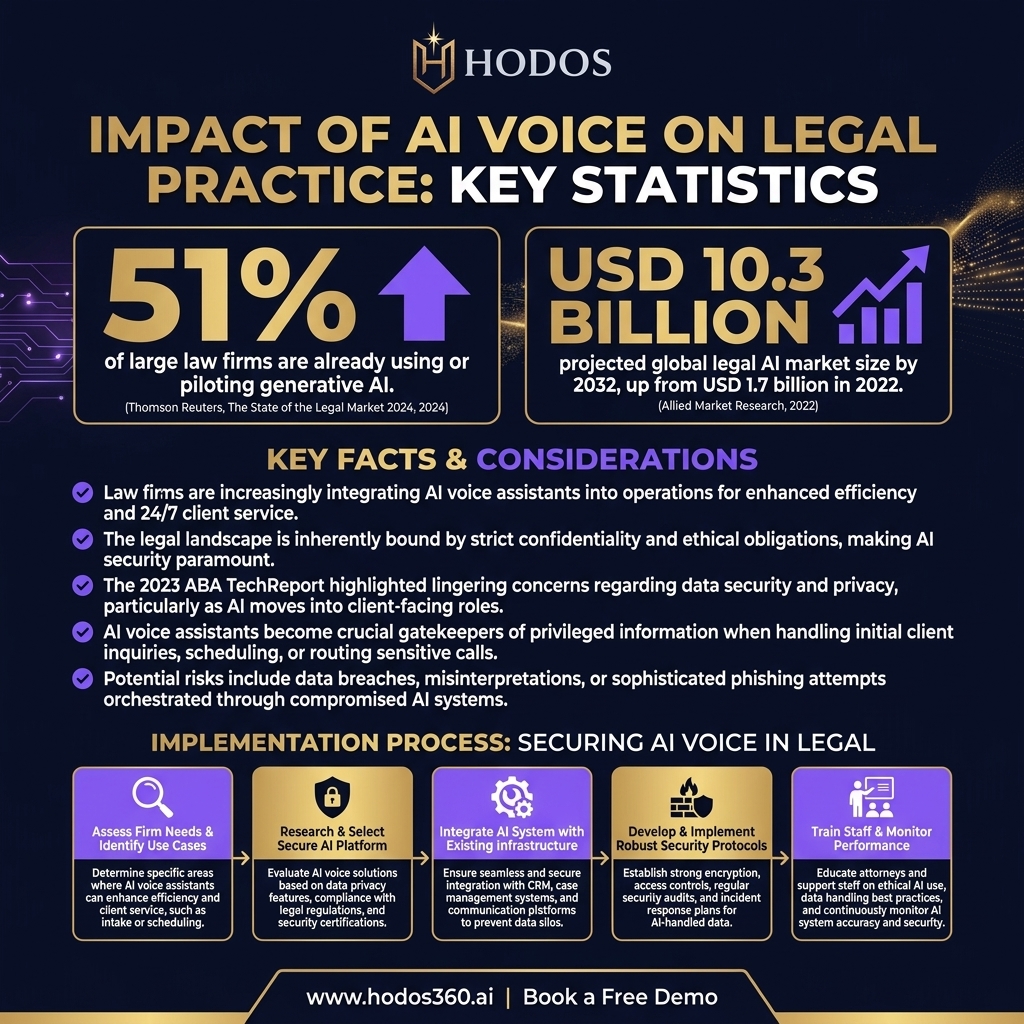
Indeed, the adoption curve for AI in legal is steep and accelerating. According to the 2023 ABA TechReport, a significant percentage of law firms are already exploring or implementing AI solutions, with client intake and case management being primary areas. However, the report also highlighted a lingering concern regarding data security and privacy, particularly as AI moves into more client-facing roles like voice assistants. The conversation isn't merely about automating tasks; it's about fundamentally reshaping the attorney-client interaction, a relationship built on discretion and security. When an AI voice assistant handles initial client inquiries, schedules consultations, or even routes sensitive calls, it becomes a crucial gatekeeper of privileged information. The potential for data breaches, misinterpretations, or even sophisticated phishing attempts orchestrated through compromised AI systems represents a significant threat to a firm's reputation and its very existence. The global security challenge isn't abstract; it's a tangible risk that requires proactive, not reactive, measures.
This article delves into the critical security implications of deploying AI voice assistants in law firms. We will explore the intricate layers of data privacy, regulatory compliance, and ethical considerations that legal professionals must navigate. From ensuring the secure processing of sensitive client information to upholding professional responsibility in AI-driven interactions, the path forward requires diligence, technological acumen, and a deep commitment to legal ethics. As firms like HODOS 360 innovate with platforms offering advanced AI Voice Assistants for 24/7 phone answering, lead qualification, and appointment booking, understanding the underlying security architecture and best practices becomes paramount. The goal is not to shy away from innovation but to embrace it responsibly, ensuring that the benefits of intelligent communications are fully realized while safeguarding the inviolable trust clients place in their legal counsel. The future of legal practice demands nothing less.
Discover how AI can transform your firm's client intake process securely.
The Evolving Landscape of AI Voice in Legal Practice
The integration of AI voice assistants into legal operations is rapidly transforming how law firms manage client interactions and internal workflows. Gone are the days when voice technology was limited to basic IVR systems; today's intelligent communications, powered by sophisticated neural networks and natural language processing (NLP), can handle complex conversations, understand intent, and even discern emotional nuances. For instance, a firm might deploy an AI voice assistant to manage overflow calls, qualify leads based on specific criteria, or provide instant answers to frequently asked questions about their services. This level of automation frees up valuable paralegal and administrative staff, allowing them to focus on higher-value tasks and directly impacting a firm's bottom line. The efficiency gains are undeniable, with firms reporting significant reductions in call wait times and improved client satisfaction scores, as noted by recent reports from legal technology consultancies like Thomson Reuters.
However, this technological leap brings with it a host of considerations beyond mere operational efficiency. The very nature of legal work—dealing with highly sensitive, confidential, and often privileged information—makes the deployment of such advanced AI voice assistants a matter of profound ethical and security concern. When an AI system transcribes and analyzes a client's initial inquiry about a divorce or a corporate merger, that data immediately falls under stringent protection requirements. The challenge intensifies when considering the global reach of legal practice and the diverse regulatory environments firms operate within. For example, a client calling from a European country may invoke GDPR protections, while another from California would rely on the CCPA. Ensuring that an AI voice assistant is programmed and managed to respect these disparate legal frameworks is a complex undertaking, requiring robust technical solutions and continuous oversight. The narrative isn't just about what AI *can* do, but what it *should* do, and how it *must* be governed.
Leading legal tech innovators, such as Jack Newton, CEO of Clio, have consistently emphasized the importance of balancing innovation with responsibility. While Clio has focused on practice management, the underlying principles of secure data handling apply universally across legal tech. The move towards generative AI in voice applications, capable of creating human-like responses, further complicates the security landscape. This capability, while enhancing the user experience, also introduces new vectors for potential misuse or vulnerabilities if not properly secured and audited. The ability of AI to learn and adapt means that its security posture is not static; it requires continuous monitoring and updates to counteract emerging threats. Law firms must view their AI voice assistants not as mere tools, but as active participants in their client relationships, demanding the same level of due diligence and ethical scrutiny as any human member of their team.
Consider the practical implications: A potential client calls a law firm late at night. An AI voice assistant answers, gathers initial details about a complex litigation matter, and schedules an appointment. For this interaction to be secure, the AI must ensure end-to-end encryption, securely store transcribed data, and be incapable of inadvertently disclosing information to unauthorized parties. The system must also be designed to recognize when a query exceeds its capabilities and seamlessly route the call to a human attorney or paralegal without data loss or security compromise. This seamless handover, crucial for maintaining client trust and adherence to professional standards, is a hallmark of truly intelligent and secure communication systems. The design and implementation of these systems are where the rubber meets the road for law firms seeking to leverage AI responsibly.
Navigating the Global Security Challenge: Data Privacy and AI Voice
The global security challenge presented by AI voice assistants in law firms primarily revolves around data privacy. Client information, often highly sensitive and protected by attorney-client privilege, is the lifeblood of legal practice. When an AI transcribes and processes voice interactions, it creates a digital footprint of this data. The question then becomes: Where is this data stored? Who has access to it? And how is it protected from cyber threats, both internal and external? Firms must contend with sophisticated cybercriminals who are constantly developing new tactics, from ransomware attacks targeting entire networks to advanced social engineering techniques designed to trick AI systems or human operators into revealing privileged information. The stakes are immense, as a single data breach can lead to severe financial penalties, irreparable reputational damage, and a profound erosion of client trust, as evidenced by numerous high-profile corporate data incidents in recent years. The global nature of many legal practices means that data may traverse international borders, invoking a patchwork of differing data protection laws.
Regulatory Frameworks and Compliance Imperatives Navigating the labyrinth of international and domestic data privacy regulations is a significant undertaking for any law firm employing AI voice assistants. Regulations like the General Data Protection Regulation (GDPR) in Europe, the California Consumer Privacy Act (CCPA), and various state-specific data breach notification laws impose strict requirements on how personal data is collected, processed, stored, and shared. For instance, GDPR's Article 5 mandates principles relating to processing of personal data, emphasizing lawfulness, fairness, transparency, purpose limitation, data minimization, accuracy, storage limitation, integrity, and confidentiality. When an AI voice assistant records a call, it must do so with explicit consent, process the data only for specified legal purposes, and ensure its security throughout its lifecycle. Failure to comply can result in substantial fines, reaching up to 4% of annual global turnover for GDPR violations, a penalty that could cripple even large law firms. The ABA Model Rules of Professional Conduct also play a critical role, particularly Rule 1.6 on Confidentiality of Information, which obligates attorneys to protect information relating to the representation of a client. This rule extends to the technology used by a firm, requiring competence in its selection and management.
Furthermore, the complexity of compliance is compounded by the evolving nature of AI itself. As AI voice assistants become more sophisticated, potentially utilizing machine learning to identify patterns or predict client needs, the scope of data processing expands. This necessitates a continuous review of AI system capabilities against regulatory requirements. Firms must implement rigorous data mapping processes to understand exactly what data their AI systems are collecting, where it resides, and who has access. This includes ensuring that any third-party AI vendors comply with the same stringent data privacy and security standards. The due diligence process for selecting and vetting AI providers must be as thorough as for any other critical legal vendor. The recent enforcement actions against companies for AI-related data missteps serve as a cautionary tale, underscoring the need for proactive and robust compliance strategies that integrate legal, technical, and ethical considerations from the outset.
The challenge extends beyond mere technical safeguards; it requires a culture of security awareness throughout the firm. Even the most advanced AI voice assistants can be compromised if human elements are exploited. Training staff on phishing awareness, secure password practices, and the firm's data handling protocols, especially concerning AI-processed information, is non-negotiable. Furthermore, incident response plans must specifically address AI-related breaches, detailing steps for containment, investigation, notification, and remediation. The global security challenge is not a single problem to be solved but a continuous commitment to vigilance and adaptation. Firms that integrate AI voice solutions must embrace this reality, making data privacy and security a foundational pillar of their technological strategy, rather than an afterthought. The investment in secure infrastructure and ongoing training is an investment in the firm's future and its enduring reputation for trustworthiness.
Elevate your firm's digital presence with secure, AI-powered web development.
Ethical AI Voice: Transparency, Bias, and Trust
Beyond the technical security protocols, the ethical implications of AI voice assistants in legal practice are profound, centering on transparency, bias, and the fundamental trust between attorney and client. When a client interacts with an AI, do they know it's not a human? Should they? The legal profession's duty of candor and honesty dictates that clients should be fully informed about who or what is handling their sensitive information. The "Robots Reveal Yourself" debate, often sparked by public discussions around AI disclosure, directly impacts the legal field. If an AI voice assistant fails to clearly identify itself, it could create a misleading impression, potentially violating ethical duties related to communication or even the unauthorized practice of law if the AI provides advice beyond its programmed scope. The lack of transparency can erode trust, a cornerstone of the attorney-client relationship, making clients wary of sharing details with a non-human entity whose data handling processes they don't fully understand. Firms must proactively address these concerns through clear disclaimers and transparent communication policies.
The Human-AI Interface: Maintaining Professionalism Maintaining the highest standards of professionalism at the human-AI interface is another critical ethical challenge. AI voice assistants are designed to be efficient, but they must also embody the gravitas and empathy expected of legal professionals. The risk of algorithmic bias is particularly salient here. If the training data used to develop the AI is unrepresentative or contains societal biases, the AI might inadvertently discriminate against certain demographics through its tone, response patterns, or even its ability to understand different accents or speech patterns. This could lead to unequal access to legal services or a perception of unfair treatment, directly conflicting with the legal profession's commitment to justice and equality. Legal tech companies, including developers of sophisticated natural language processing models, are increasingly focusing on bias detection and mitigation, but the ultimate responsibility lies with law firms to audit and ensure their AI tools are equitable and fair. The ABA's Standing Committee on Ethics and Professional Responsibility has issued guidance on the ethical use of technology, underscoring the attorney's duty to remain competent in the face of technological change, including understanding the limitations and potential biases of AI tools.
Furthermore, the very nature of legal advice requires human judgment, empathy, and the ability to navigate complex ethical dilemmas that AI, for all its sophistication, cannot fully replicate. Learn more about California AI Lawyers: Essential Guide to New Regulations. While AI voice assistants can effectively handle routine inquiries and administrative tasks, they should not be positioned or perceived as substitutes for legal counsel. The ethical line between providing information and offering legal advice is a fine one, and firms must ensure their AI is programmed to strictly adhere to this boundary, escalating any matter requiring judgment to a human attorney. This requires careful design of AI workflows, clear scripting, and robust error-handling mechanisms. The narrative arc here is one of augmentation, not replacement; AI should empower attorneys, not diminish the essential human element of legal practice. The tension between the efficiency of automation and the irreplaceable value of human legal expertise defines this ethical frontier.
The ongoing development of AI, particularly in areas like generative AI which can produce highly realistic text and speech, intensifies these ethical considerations. Companies like Anthropic, with their focus on AI safety and constitutional AI, are at the forefront of developing models that are aligned with human values and ethical principles. Law firms must engage with these advancements critically, seeking out AI voice assistants that prioritize ethical design and offer auditable transparency. The goal is to build client trust, not erode it, by demonstrating a clear commitment to ethical AI deployment. This means not only adhering to current regulations but also anticipating future ethical guidelines, actively participating in discussions about AI governance, and ensuring that the technology serves the client's best interests while upholding the integrity of the legal profession. The integration of AI calls for a renewed focus on the core values that define legal practice.
Implementing Secure AI Voice Solutions: Best Practices for Law Firms
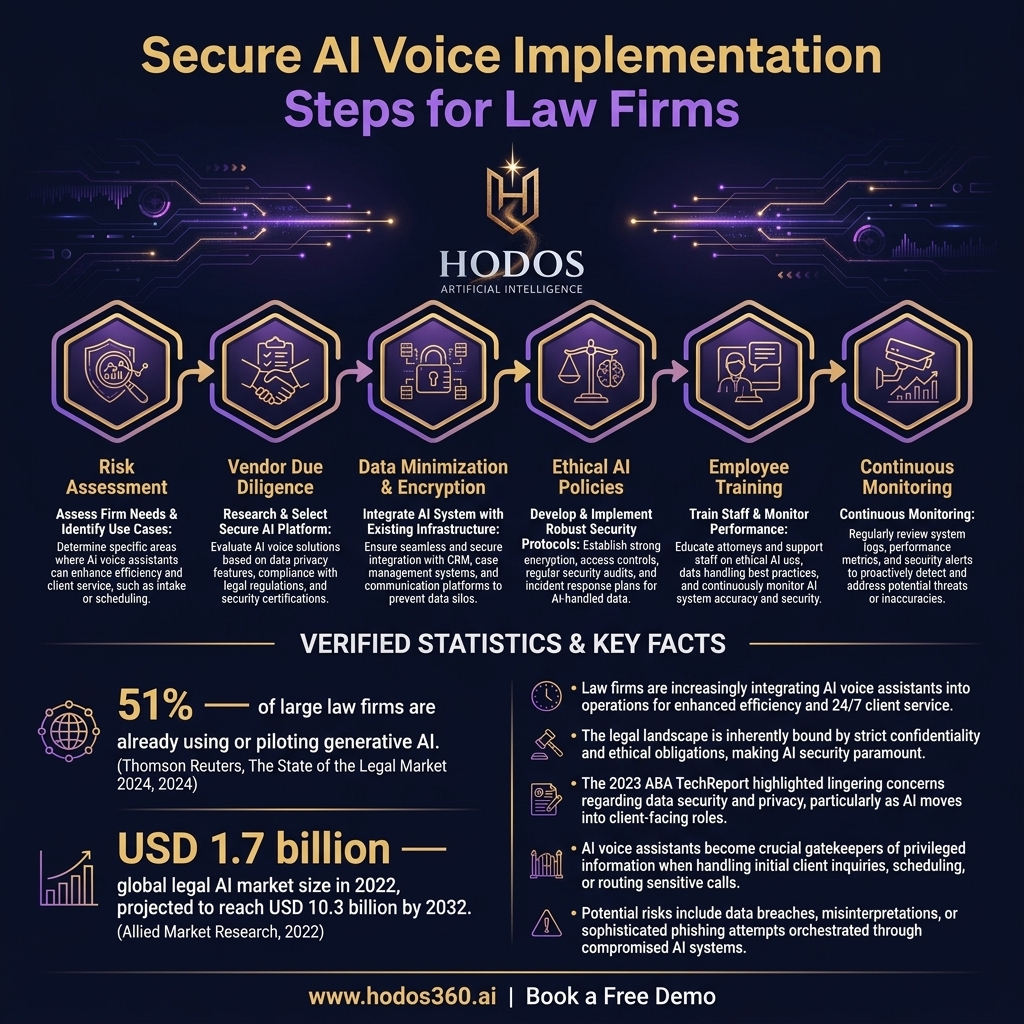
Implementing AI voice assistants securely within a law firm requires a multi-faceted approach that integrates robust technology, stringent policies, and continuous training. The first step involves a comprehensive risk assessment to identify potential vulnerabilities in current communication systems and how AI integration might introduce new ones. This assessment should cover data storage, transmission, access controls, and third-party vendor security protocols. Firms must prioritize solutions that offer end-to-end encryption for all voice and text data, ensuring that client communications remain confidential from the moment they are spoken to the moment they are securely stored or processed. Beyond encryption, robust access controls, including multi-factor authentication for administrators and strict role-based access to AI system data, are non-negotiable. Firms should also consider deploying AI voice solutions that operate within secure, private cloud environments or on-premise, minimizing exposure to public networks and enhancing control over data sovereignty. This proactive stance is crucial for mitigating risks associated with an increasingly sophisticated threat landscape.
The Role of Advanced AI in Call Routing and Lead Qualification Advanced AI voice assistants excel in tasks like call routing and lead qualification, but even these functions demand security vigilance. For instance, an AI-powered lead qualification system must be designed to securely gather initial client information without over-collecting data, adhering to the principle of data minimization. It should also be capable of identifying calls that require immediate human intervention due to their sensitive nature or complexity, securely routing them to the appropriate attorney or department. Learn more about Legal Tech Competition: Essential Insights for Law Firms. This involves sophisticated natural language understanding and real-time decision-making capabilities within the AI. The system must also log all interactions, not just for audit trails and compliance, but also to identify potential security anomalies or attempted breaches. For example, if an AI detects unusual patterns of inquiry or repeated attempts to access restricted information, it should trigger immediate alerts to IT security personnel. Firms like HODOS 360 offer AI Voice Assistants that integrate advanced call routing with secure lead qualification, designed specifically for the rigorous demands of the legal sector.
To ensure comprehensive security, law firms should adopt the following best practices:
* Vendor Due Diligence: Thoroughly vet all AI voice assistant providers for their security certifications (e.g., ISO 27001, SOC 2 Type 2), data handling policies, incident response plans, and compliance with legal industry standards. Ensure contracts include robust data protection clauses. * Data Minimization & Retention: Program AI to collect only essential data and establish strict data retention policies, deleting sensitive information once its legal purpose has been fulfilled, in line with regulations like GDPR and CCPA. * Regular Security Audits: Conduct frequent penetration testing and security audits of AI systems to identify and address vulnerabilities proactively. This includes evaluating the AI's resistance to adversarial attacks and data poisoning attempts. * Employee Training: Provide ongoing training for all staff on AI security protocols, ethical use, data privacy, and how to identify and report potential security incidents related to AI interactions. * Transparency & Disclosure: Implement clear policies for informing clients when they are interacting with an AI voice assistant, outlining data collection practices and offering options for human interaction. * Incident Response Planning: Develop and regularly test a specific incident response plan for AI-related data breaches or security compromises, ensuring rapid containment, investigation, and notification procedures. * Continuous Monitoring & Updates: Treat AI security as an ongoing process. Continuously monitor AI system performance, update software, and adapt security measures to counter emerging threats and technological advancements.
By adhering to these best practices, law firms can confidently deploy AI voice assistants, transforming their operational efficiency and client service while meticulously safeguarding client data and upholding their ethical obligations. The commitment to security is not just a technical requirement but a professional imperative that defines a firm's integrity in the digital age.

Key Takeaways and Next Steps
The integration of AI voice assistants into legal practice represents a pivotal moment for law firms, offering unprecedented opportunities for efficiency and client engagement, yet simultaneously presenting formidable security and ethical challenges. As the TechBullion article rightly points out, the global security implications of intelligent communications are not to be underestimated, especially in a sector where confidentiality is paramount. Firms must recognize that the benefits of AI—from 24/7 client answering to advanced lead qualification—come with a profound responsibility to protect sensitive client data, ensure regulatory compliance, and uphold the highest ethical standards of the profession. The journey towards secure and ethical AI adoption is not a sprint, but a continuous commitment to vigilance, education, and proactive strategy. It requires a deep understanding of evolving technologies, a rigorous approach to data governance, and an unwavering dedication to client trust. Law firms that embrace this challenge thoughtfully will not only thrive in the digital age but will also solidify their reputation as forward-thinking, trustworthy legal partners.
For law firms looking to navigate this complex landscape, the immediate next steps involve a thorough assessment of existing communication systems and a strategic evaluation of AI solutions that are specifically designed with legal industry compliance and security in mind. This includes partnering with legal technology providers who prioritize data protection, ethical AI development, and transparent operational practices. Investing in solutions that offer robust encryption, configurable privacy settings, and clear audit trails is critical. Furthermore, fostering an internal culture of AI literacy and security awareness across all levels of the firm will be essential. This means providing ongoing training, establishing clear internal policies for AI use, and ensuring that all legal professionals understand their role in maintaining data integrity and client confidentiality when interacting with or overseeing AI voice assistants.
Ultimately, the future of legal practice will be shaped by how effectively law firms adapt to and securely integrate advanced technologies like AI voice assistants. Platforms such as HODOS 360, with their comprehensive suite of AI-powered services including AI Voice Assistants, are at the forefront of providing law firms with the tools to enhance efficiency, streamline operations, and improve client service, all while embedding critical security and compliance features. By choosing partners committed to ethical AI and robust data protection, and by proactively addressing the security challenges inherent in intelligent communications, law firms can confidently leverage AI to redefine their practice, ensuring both innovation and unwavering client trust. The time to act is now, to secure the future of legal excellence.
Frequently Asked Questions
What are the primary security risks of using AI voice assistants in law firms?+
Primary risks include data breaches of confidential client information, compliance failures with regulations like GDPR or CCPA, and potential for algorithmic bias leading to unequal treatment. There's also the risk of AI systems being exploited for social engineering or failing to identify themselves, eroding client trust and raising ethical concerns about transparency and the unauthorized practice of law.
How can law firms ensure regulatory compliance when using AI voice assistants?+
Firms must conduct thorough vendor due diligence, implement strict data minimization and retention policies, and ensure explicit client consent for data collection. Regular security audits, adherence to ABA Model Rules (e.g., Rule 1.6 on Confidentiality), and continuous monitoring of AI system capabilities against evolving regulations are crucial for maintaining compliance.
What ethical considerations should law firms prioritize when deploying AI voice assistants?+
Key ethical priorities include transparency (disclosing AI interaction), mitigating algorithmic bias to ensure fair treatment, and maintaining the human element for legal judgment. Firms must ensure AI doesn't offer legal advice, clearly define its scope, and uphold professionalism to preserve the attorney-client trust, which is fundamental to legal practice.
How do AI voice assistants enhance efficiency in law firm operations?+
AI voice assistants significantly boost efficiency by handling routine tasks like 24/7 phone answering, lead qualification, and appointment booking. This frees up human staff for complex legal work, reduces client wait times, and ensures consistent service delivery. Advanced call routing also directs inquiries to the right personnel faster, improving overall operational flow.
What are the best practices for selecting an AI voice assistant vendor for a law firm?+
Select vendors with strong security certifications (e.g., ISO 27001, SOC 2), transparent data handling policies, and a proven track record of legal industry compliance. Prioritize solutions offering end-to-end encryption, robust access controls, and customizable privacy settings. Ensure the vendor provides clear incident response plans and commits to ongoing security updates and ethical AI development.