
California AI Lawyers: Essential Guide to New Regulations
Just a few years ago, the conversation around artificial intelligence in law firms was largely theoretical, confined to ethics opinions and cautious 'best practices.' Today, the landscape has fundamentally shifted, most notably with California's groundbreaking move to explicitly regulate how California AI lawyers use generative AI. This isn't just another set of guidelines; it's a legislative mandate that underscores the profound impact AI is having on legal practice and the urgent need for clear boundaries. The recent passage of California Senate Bill 574, which went into effect on January 1, 2026, marks a watershed moment, moving from aspirational advice to concrete legal obligations for attorneys across the state. This legislation, signed into law by Governor Gavin Newsom, has sent ripples through the legal community, prompting firms nationwide to reassess their AI adoption strategies and risk management protocols. It's a clear signal that the era of 'experiment and see' with AI in law is over, replaced by an imperative for responsible, ethical, and compliant integration.
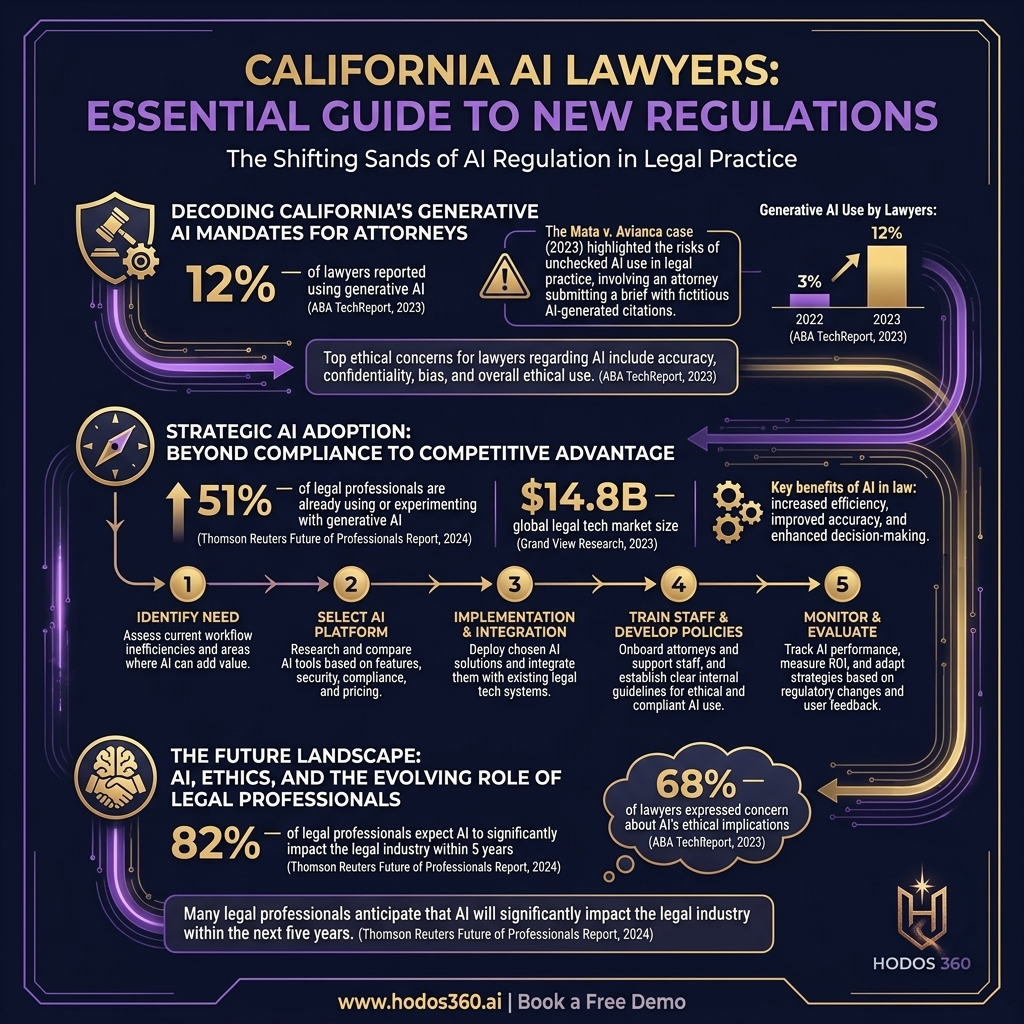
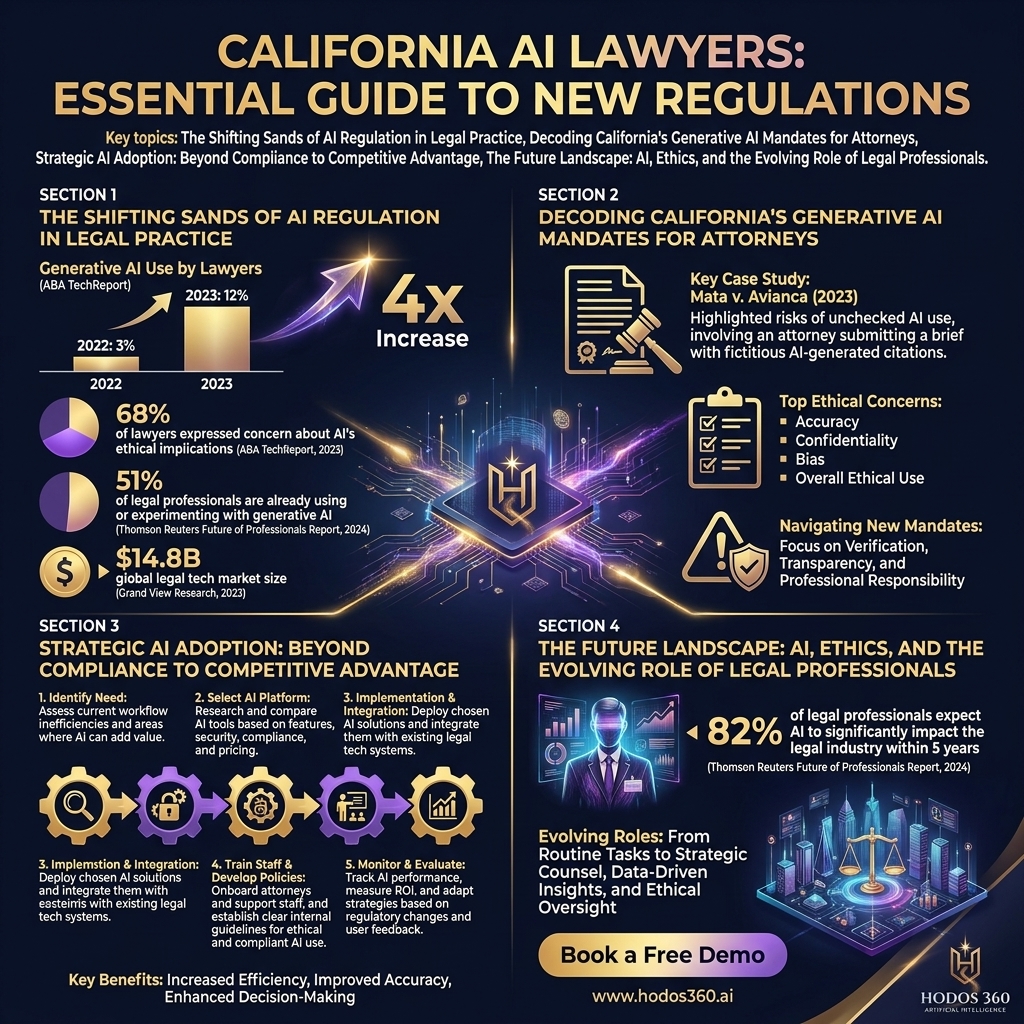
The journey to this point has been swift and marked by both innovation and caution. For instance, the infamous *Mata v. Avianca* case in New York, where an attorney submitted a brief filled with fictitious AI-generated citations, served as a stark warning of the pitfalls of unchecked AI use. While that case didn't occur in California, its echoes undoubtedly influenced the legislative push. The American Bar Association's 2023 TechReport revealed that while only 12% of lawyers reported using generative AI, a significant 68% expressed concern about its ethical implications, particularly regarding accuracy and confidentiality. This tension between potential and peril has been a core driver behind legislative efforts like SB 574. As law firms, from solo practitioners to global giants, navigate this new regulatory terrain, understanding the nuances of these laws becomes paramount. It's about more than just avoiding sanctions; it's about upholding the integrity of the legal profession, protecting client interests, and harnessing AI's transformative power responsibly. This article will delve into the specifics of California's new rules, explore the ethical landscape, and provide actionable insights for firms seeking to thrive in an AI-driven legal future.
For California AI lawyers, this legislation presents both a challenge and an opportunity. The challenge lies in adapting existing workflows and policies to meet strict new disclosure, verification, and data security requirements. The opportunity, however, is to solidify client trust by demonstrating a proactive commitment to ethical AI use, ultimately enhancing firm reputation and operational efficiency. Firms that embrace this regulatory framework not as a burden, but as a blueprint for responsible innovation, will be best positioned to leverage the full potential of AI. Tools like HODOS 360's AI Law Firm Management System offer integrated solutions that can help firms automate compliance checks, secure client data, and streamline workflows, allowing attorneys to focus on high-value legal work while mitigating AI-related risks. As we explore the intricacies of SB 574, remember that compliance is not merely a box to check, but a foundational element of modern legal excellence.
The Shifting Sands of AI Regulation in Legal Practice
The legal profession has always grappled with technology, from typewriters to word processors, but generative AI presents a unique set of challenges due to its autonomous capabilities and potential for 'hallucinations.' Historically, guidance on new technologies came primarily from bar associations and ethics committees, offering advisory opinions rather than statutory mandates. For example, the ABA Model Rules of Professional Conduct, specifically Comment [8] to Rule 1.1 on Competence, has long advised lawyers to 'keep abreast of changes in the law and its practice, including the benefits and risks associated with relevant technology.' This broad directive, while important, left much to interpretation regarding specific AI applications. Firms were largely left to devise their own internal policies, often reacting to incidents rather than proactively establishing robust frameworks. This reactive approach, however, proved insufficient as AI rapidly integrated into core legal functions, from research to document drafting.
The catalyst for more explicit regulation often stems from high-profile missteps. The aforementioned *Mata v. Avianca* case in 2023, where lawyers relied on ChatGPT to generate court filings containing fabricated cases, served as a global wake-up call. While the incident occurred in a New York federal court, its implications resonated deeply within California's legal community and legislative bodies. It highlighted a critical gap: ethical guidelines, while foundational, lacked the enforcement power and granular detail needed to address the novel risks posed by generative AI. This incident, alongside growing concerns from privacy advocates and consumer protection groups, spurred the California State Bar and the California Legislature into action. The result was a concerted effort to move beyond mere advisories, culminating in legislation that directly addresses the use of generative AI in specific legal contexts, setting a new precedent for regulatory oversight in the U.S.
California's legislative journey began with discussions among legal professionals, tech experts, and policymakers, aiming to strike a balance between fostering innovation and protecting the public. Senate Bill 574, championed by Senator Thomas Umberg, a former prosecutor, was a direct response to the escalating integration of AI into legal services and the urgent need for clear rules of engagement. Learn more about AI Legal Partnership: The Ultimate Guide to Enterprise AI. The bill underwent several revisions, reflecting intense debate over the scope of regulation, potential burdens on small firms, and the evolving capabilities of AI itself. The Canadian Lawyer article snippet highlighted how this bill *explicitly regulates attorneys’ generative AI use*, distinguishing it from earlier, more general pronouncements. This explicit nature means that California AI lawyers now operate under a defined legal framework, rather than relying solely on professional judgment guided by broad ethical principles. This shift is not isolated; other jurisdictions, including New York and Florida, have also issued ethics opinions and proposed rules, but California's approach is notable for its legislative enactment, making its provisions legally binding from day one.
This legislative action reflects a broader global trend towards AI governance, exemplified by the European Union's comprehensive AI Act, which aims to regulate AI systems based on their risk level. While California's bill is more narrowly focused on legal practice, it shares the underlying philosophy of ensuring accountability, transparency, and safety in AI deployment. The legal tech industry, including major players like Thomson Reuters and Clio, has largely supported these regulatory efforts, recognizing that clear rules foster trust and encourage responsible adoption. Brad Smith, Vice Chair and President of Microsoft, has been a vocal proponent of responsible AI development and regulation, emphasizing the need for guardrails as technology advances. This consensus between industry and regulators suggests a maturing understanding of AI's societal impact, positioning California at the forefront of defining the future of AI in legal practice. The focus now shifts to implementation and how law firms will adapt to these new, explicit requirements.
Decoding California's Generative AI Mandates for Attorneys
California Senate Bill 574 introduces several critical mandates that directly impact how California AI lawyers can utilize generative AI tools. At its core, the legislation seeks to ensure that the attorney's duty of competence, confidentiality, and supervision remains paramount, even when leveraging advanced technological assistance. The bill explicitly states that lawyers cannot 'delegate the practice of law' to an AI system, unequivocally affirming that the ultimate responsibility for legal work, advice, and client outcomes rests solely with the human attorney. This provision is crucial for maintaining the integrity of the profession and preventing the abdication of professional duties to algorithms. It means that while AI can be a powerful assistant, it cannot replace the lawyer's independent judgment, critical thinking, and ethical obligations. Firms must understand that integrating AI is about augmentation, not substitution, and their internal policies must reflect this foundational principle.
### Transparency and Disclosure Obligations One of the most significant aspects of SB 574 is its emphasis on transparency. California AI lawyers are now required to disclose the use of generative AI to clients when it is used to perform substantive legal work on their behalf. This disclosure must be clear and understandable, allowing clients to make informed decisions about the services they receive. Furthermore, the bill mandates disclosure to courts or other tribunals when generative AI is used to prepare filings or other submissions. This extends beyond mere acknowledgement; it often requires attorneys to affirm that they have personally reviewed and verified the AI-generated content for accuracy and adherence to legal standards. This move is designed to build trust and ensure accountability, preventing scenarios where AI 'hallucinations' or inaccuracies could mislead courts or prejudice client interests. It aligns with the spirit of ABA Model Rule 1.4 (Communication), which requires lawyers to keep clients reasonably informed about their representation.
### Verification, Accuracy, and the Duty of Competence The legislation places a strong emphasis on the attorney's non-delegable duty to verify the accuracy of any information or legal analysis produced by generative AI. This provision directly addresses the risk of AI 'hallucinations,' where systems can confidently present false or misleading information as fact. For example, if an attorney uses AI to research case law, they must independently verify every citation and legal proposition. Learn more about General AI Alone: Essential Reasons It Isn't Enough for Legal Work. This isn't a new concept in legal practice; lawyers have always been responsible for the accuracy of their work, regardless of the tools used. However, the explicit nature of this mandate for generative AI underscores the unique challenges these tools pose. The cost of failing to verify can be substantial, ranging from sanctions and reputational damage to malpractice claims. According to a recent survey by Thomson Reuters, 73% of legal professionals expressed concern about the accuracy of AI-generated content, highlighting the practical challenges of this verification duty. Law firms must implement rigorous internal review processes and provide comprehensive training to ensure that attorneys understand and fulfill this critical obligation.
### Safeguarding Client Data and Confidentiality Protecting client confidentiality is a cornerstone of legal ethics, enshrined in ABA Model Rule 1.6. SB 574 reinforces this by imposing strict requirements on how California AI lawyers handle confidential client information when using generative AI. Attorneys must ensure that any generative AI tool utilized does not compromise client data security or confidentiality. This means carefully scrutinizing the terms of service and data privacy policies of AI providers. Are client data inputs used to train the AI model? Is the data stored securely and encrypted? Could it be accessed by unauthorized third parties? These are critical questions firms must answer before integrating any AI solution. Many off-the-shelf generative AI tools, particularly public-facing ones, are not designed with the stringent data security and privacy requirements of legal practice in mind. This necessitates the adoption of secure, private AI environments or specialized legal tech platforms that offer robust data protection. Firms must establish clear protocols for data input, ensuring that sensitive client information is either anonymized, de-identified, or processed within secure, enterprise-grade AI systems that guarantee data privacy and prevent unauthorized data sharing or model training.
Strategic AI Adoption: Beyond Compliance to Competitive Advantage
While California's new regulations might initially seem like an additional burden, forward-thinking California AI lawyers and law firms are recognizing that compliance is merely the baseline. The true strategic advantage lies in responsibly integrating generative AI to enhance efficiency, reduce costs, and deliver superior client service. Firms that view AI as a tool for innovation, rather than just a compliance hurdle, are poised to gain a significant competitive edge. For instance, AI-powered platforms can automate mundane, time-consuming tasks such as document review, contract analysis, and legal research, freeing up attorneys to focus on complex legal strategy, client counseling, and business development. This shift in workload not only improves attorney satisfaction but also allows firms to offer more competitive billing rates for certain services, attracting a broader client base and increasing profitability. The key is to leverage AI in a way that respects the new regulatory framework while maximizing its transformative potential.
Implementing AI strategically means going beyond simple task automation. It involves re-imagining legal workflows to integrate AI seamlessly and ethically. Consider the client intake process: an AI-powered system can quickly gather initial information, identify potential conflicts, and even draft initial engagement letters, all while ensuring data security and compliance with disclosure requirements. Similarly, in litigation, AI can assist with e-discovery, identifying relevant documents and patterns far more rapidly than human review alone. According to a Gartner report, organizations that effectively integrate AI into their business processes can see up to a 30% increase in operational efficiency. For law firms, this translates directly into higher billable hours for strategic work and improved client satisfaction due to faster, more accurate service. The challenge is not just *if* to use AI, but *how* to use it intelligently and ethically, turning regulatory requirements into a roadmap for best practices.
This is where specialized legal tech platforms become indispensable. HODOS 360’s AI Law Firm Management System, for example, is designed with compliance and ethical AI use at its core. Learn more about AI Marketing Measurement: Essential Strategies for Law Firms. It offers features like AI-powered legal workflows that automate document generation, case management, and billing, all within a secure, private environment. Such systems help firms maintain client confidentiality by preventing data leakage to public AI models and ensure accuracy through built-in verification prompts and attorney oversight layers. By centralizing these functions, firms can streamline operations, reduce human error, and ensure consistent adherence to regulatory standards. Furthermore, HODOS 360's platform can assist with the very disclosure requirements mandated by SB 574, providing audit trails of AI use and simplifying reporting. Firms that invest in such integrated, compliant solutions are not just meeting regulations; they are building a resilient, future-proof practice that leverages technology as a strategic asset. The shift from manual, error-prone processes to AI-augmented, compliant workflows represents a significant leap forward for the legal profession.
The competitive landscape of the legal industry is rapidly evolving. Firms that procrastinate on AI adoption, or fail to implement it compliantly, risk being outpaced by more agile and technologically advanced competitors. Clients are increasingly seeking firms that can deliver efficient, cost-effective, and transparent services. A firm that can demonstrate a clear, ethical AI policy and leverage sophisticated tools to enhance its offerings will naturally attract more business. Moreover, the ability to manage vast amounts of legal data and generate insights quickly through AI can be a decisive factor in complex cases. This isn't just about speed; it's about depth of analysis and the ability to uncover patterns that might be missed by human eyes alone. The proactive adoption of ethical AI, supported by robust platforms and clear internal governance, transforms a regulatory challenge into a powerful differentiator, ensuring that California AI lawyers remain at the forefront of legal innovation and client service.
The Future Landscape: AI, Ethics, and the Evolving Role of Legal Professionals
California's pioneering legislation is likely just the beginning. The trend towards explicit AI regulation in legal practice is expected to spread, with other states and potentially federal bodies considering similar measures. This evolving regulatory landscape will continually shape the ethical considerations surrounding AI. The core tension will remain: how to harness the immense power of AI for efficiency and access to justice, while safeguarding fundamental principles like confidentiality, competence, and fairness. Discussions at events like LegalTech NYC 2026 consistently highlight these dilemmas, with legal professionals and technologists debating the fine line between innovation and ethical responsibility. The legal community must remain vigilant, actively participating in these discussions to ensure that future regulations are both effective and practical, avoiding overly restrictive measures that could stifle beneficial innovation.
The role of the legal professional is undergoing a profound transformation. The traditional image of a lawyer as primarily a knowledge repository is rapidly giving way to that of an 'AI orchestrator' or 'prompt engineer.' Lawyers will increasingly need to understand how to effectively interact with AI systems, formulate precise prompts, interpret AI-generated outputs critically, and integrate these insights into their legal strategy. This requires a new set of skills, blending legal acumen with technological literacy. Educational institutions and bar associations are already adapting, introducing courses and certifications focused on legal AI and ethics. Jack Newton, CEO and founder of Clio, a leading legal practice management software, frequently speaks on how AI will empower lawyers to focus on the 'human element' of law, emphasizing client relationships and strategic advisory roles over rote tasks. Learn more about Voice Assist: Essential AI Scheduling for Law Firms. This shift doesn't diminish the lawyer's importance; rather, it elevates their function, allowing them to leverage AI as a force multiplier for their expertise.
Ethical debates surrounding AI extend beyond disclosure and verification to broader societal impacts. Concerns about algorithmic bias, for example, are particularly pertinent in areas like criminal justice or immigration law, where AI-driven decisions could perpetuate or amplify existing societal inequalities. The legal profession has a critical role to play in advocating for fairness and transparency in AI development and deployment. This includes scrutinizing the data sets used to train AI models, understanding the limitations of AI, and advocating for human oversight in all critical decision-making processes. Furthermore, the increasing sophistication of AI raises questions about access to justice: could AI tools make legal services more affordable and accessible to underserved populations, or will they exacerbate the digital divide? These are complex questions that require ongoing dialogue and collaboration among lawyers, technologists, policymakers, and civil society organizations.
Ultimately, the future of AI in law will be defined by a delicate balance between technological advancement and robust ethical frameworks. The legislation in California is a crucial step in establishing those frameworks, providing a clear mandate for responsible AI use. Firms that proactively engage with these regulations, invest in secure and compliant legal tech solutions, and foster a culture of ethical AI adoption will not only meet their professional obligations but also position themselves as leaders in the evolving legal landscape. The conversation is no longer about *whether* AI will transform the legal profession, but *how* it will be managed and integrated to serve justice and clients effectively in the digital age. The imperative for California AI lawyers is clear: embrace the future with competence, integrity, and foresight.
Navigating the New Era: Actionable Steps for Law Firms
For law firms operating in California, and indeed for those nationwide anticipating similar regulations, proactive measures are essential to navigate this new era of AI governance. The goal is not just to avoid penalties but to build a robust, ethical, and efficient practice that leverages AI safely. The first and most crucial step is to develop a comprehensive internal AI usage policy. This policy should clearly outline permissible AI tools, disclosure requirements, verification protocols, and data security guidelines. It should be mandatory for all staff and regularly updated to reflect changes in technology and regulation. Training is equally vital; attorneys and support staff must receive ongoing education on ethical AI use, the specific mandates of SB 574, and the practical application of AI tools within the firm's established protocols. This includes understanding the limitations of generative AI and the critical importance of human oversight and final review.
Investing in secure and compliant legal technology is another cornerstone of successful adaptation. Generic, public-facing generative AI tools often lack the necessary data privacy and security features required for legal work. Firms should prioritize enterprise-grade legal tech solutions that offer private, secure environments for data processing, guaranteeing client confidentiality and preventing sensitive information from being used for AI model training. This is where platforms like HODOS 360's AI Law Firm Management System become invaluable, providing purpose-built tools for legal professionals that integrate compliance checks and data security into core legal workflows. Such systems not only help meet regulatory requirements but also enhance operational efficiency by automating routine tasks, managing cases, and streamlining client intake processes, all within a secure framework. Learn more about Essential AI Answering Service for Law Firms: A Game Changer. Choosing the right technological partner is paramount to ensuring both compliance and competitive advantage in the AI era.
Finally, fostering a culture of continuous learning and ethical responsibility is non-negotiable. The landscape of AI is dynamic, with new tools and regulations emerging constantly. Law firms must establish mechanisms for monitoring these developments, updating their policies, and providing ongoing education to their teams. This includes subscribing to legal tech news, attending relevant conferences, and engaging with professional organizations like the ABA and state bar associations. The firm's leadership must champion ethical AI use, setting the tone from the top and demonstrating a commitment to professional excellence in the digital age. By proactively embracing these actionable steps, California AI lawyers can transform regulatory challenges into opportunities for growth, innovation, and enhanced client trust, ensuring their practice remains resilient and future-ready. The firms that prioritize ethical AI integration will not only avoid potential pitfalls but will also solidify their position as leaders in a rapidly evolving legal market.
To effectively navigate the complexities introduced by California's new AI regulations and position your firm for future success, consider these actionable steps: * Develop a Robust AI Usage Policy: Create a clear, firm-wide policy detailing authorized AI tools, required disclosures, data privacy protocols, and verification processes for AI-generated content. Make it mandatory for all legal and administrative staff. * Prioritize Secure Legal AI Platforms: Invest in enterprise-grade, purpose-built legal AI solutions that guarantee client data confidentiality and do not use client information for model training. Avoid generic, public-facing generative AI tools for sensitive tasks. * Implement Comprehensive Staff Training: Provide ongoing education for attorneys and support staff on ethical AI use, the specifics of SB 574, and the firm's internal AI policies. Emphasize the critical role of human oversight and final review. * Establish a Verification Protocol: Mandate a rigorous process for verifying all AI-generated legal research, citations, and content for accuracy and relevance before client submission or court filing. * Ensure Transparent Client Communication: Develop clear templates and procedures for disclosing AI use to clients, explaining its role in their legal work and affirming the attorney's ultimate responsibility. * Regularly Review and Update Policies: Given the rapid evolution of AI technology and regulation, commit to periodic reviews and updates of your firm's AI policies and training programs. * Engage with Professional Organizations: Stay informed by participating in discussions, webinars, and publications from bar associations and legal tech organizations regarding AI ethics and best practices.

Key Takeaways and Next Steps
The explicit regulation of generative AI use by California AI lawyers marks a definitive turning point for the legal profession. It signals a maturation of the legal tech landscape, where the promise of AI must be tempered with robust ethical guardrails and clear legislative mandates. The core message from SB 574 is unequivocal: while AI can augment legal practice, it cannot replace the attorney's non-delegable duties of competence, confidentiality, and supervision. Firms must now move beyond informal guidelines to implement concrete policies and technological solutions that ensure compliance, protect client interests, and maintain the integrity of the justice system.
The path forward for law firms involves a multi-faceted approach. It requires a deep understanding of the new regulatory environment, a commitment to continuous professional development in AI literacy, and strategic investment in secure, compliant legal technology. Learn more about EU AI Act: Essential Web Compliance for Law Firms. Firms that embrace these changes proactively will not only mitigate risks but will also unlock significant opportunities for efficiency, innovation, and enhanced client service. The legal tech market is responding with sophisticated solutions designed to meet these evolving needs, offering tools that streamline operations while embedding ethical safeguards. The future of legal practice is undeniably AI-driven, but its success hinges on responsible, ethical, and compliant integration. By taking decisive action now, California AI lawyers can confidently navigate this new era, transforming regulatory challenges into a powerful catalyst for growth and leadership in the legal industry.
Frequently Asked Questions
What is California SB 574 and when did it take effect?+
California Senate Bill 574 is landmark legislation that explicitly regulates the use of generative AI by attorneys in the state. It mandates disclosure to clients and courts, verification of AI-generated content, and safeguards for client confidentiality. The bill was signed into law and took effect on January 1, 2026, making California one of the first jurisdictions to enact such specific statutory requirements for legal professionals.
How does SB 574 impact client confidentiality?+
SB 574 significantly impacts client confidentiality by requiring attorneys to ensure that any generative AI tools used do not compromise sensitive client data. This means firms must scrutinize AI providers' data privacy policies, prioritize secure, private AI environments, and avoid inputting confidential information into public-facing AI models that may use data for training or expose it to third parties. Protection of client data is a non-negotiable duty.
Are lawyers required to disclose AI use to clients and courts?+
Yes, under SB 574, California AI lawyers are explicitly required to disclose their use of generative AI to clients when it's applied to substantive legal work. Furthermore, disclosure to courts or tribunals is mandated when AI is used to prepare filings or other submissions. This ensures transparency, allows clients to make informed decisions, and upholds the integrity of judicial processes by confirming attorney oversight.
What is the attorney's responsibility for AI-generated content accuracy?+
The legislation firmly places the responsibility for the accuracy and veracity of AI-generated content squarely on the attorney. Lawyers have a non-delegable duty of competence, meaning they must independently verify all AI-produced information, including legal research, citations, and analysis, before using it in client matters or court filings. Failure to do so can lead to sanctions, reputational damage, and even malpractice claims.
How can law firms ensure compliance with new AI regulations?+
To ensure compliance, law firms should develop clear internal AI usage policies, provide comprehensive staff training on ethical AI and regulatory mandates, and invest in secure, purpose-built legal AI platforms like HODOS 360’s AI Law Firm Management System. Implementing rigorous verification protocols for AI output, establishing transparent client communication procedures, and continually reviewing policies are also essential steps for navigating the new regulatory landscape effectively.