


EU AI Act: Essential Web Compliance for Law Firms
The Grand Hotel Europa, a fictional yet representative luxury establishment in Brussels, recently unveiled a revamped digital presence. Its website, boasting AI-powered virtual concierges, personalized booking experiences, and dynamic, AI-generated promotional videos, was a marvel of modern hospitality. However, with the staggered enforcement of the EU AI Act, particularly Article 50 concerning AI-generated content disclosures in force since August 2026, the hotel's legal team, led by Senior Counsel Anya Sharma, faced a daunting challenge. Every AI-driven element, from the chatbot's initial greeting to the subtle personalization of room recommendations, now required explicit transparency disclosures, clear explanations of AI involvement, and robust data governance protocols. Sharma's firm quickly realized that their existing web development partners lacked the specialized legal-tech expertise to implement these intricate compliance measures, highlighting a growing tension between rapid AI innovation and the intricate demands of European Union artificial intelligence regulation.
This scenario, echoing real-world dilemmas faced by businesses across Europe, underscores a pivotal moment for law firms. The EU AI Act isn't merely an abstract legal framework; it's a tangible force reshaping how companies, from hospitality giants to niche e-commerce platforms, present themselves online. The core issue, as the Hospitality Net article highlighted, is how AI is used in digital interfaces and the subsequent legal obligations for transparency and accountability. For law firms, this presents both a significant compliance risk and an unparalleled opportunity. As clients grapple with understanding and implementing these new technology standards, they will turn to their legal advisors for clarity and strategic guidance. Firms that can offer expertise in EU AI Act web compliance will not only safeguard their clients but also solidify their position as indispensable partners in the digital age. The challenge lies in translating complex legal mandates into actionable technical requirements for digital platforms, a task that demands a sophisticated blend of legal acumen and cutting-edge web development capabilities. Ready to ensure your clients are prepared for the EU AI Act? Discover HODOS 360's Web & Mobile Development solutions today.
The EU AI Act's Broad Reach: Beyond Hotels to All Digital Presences
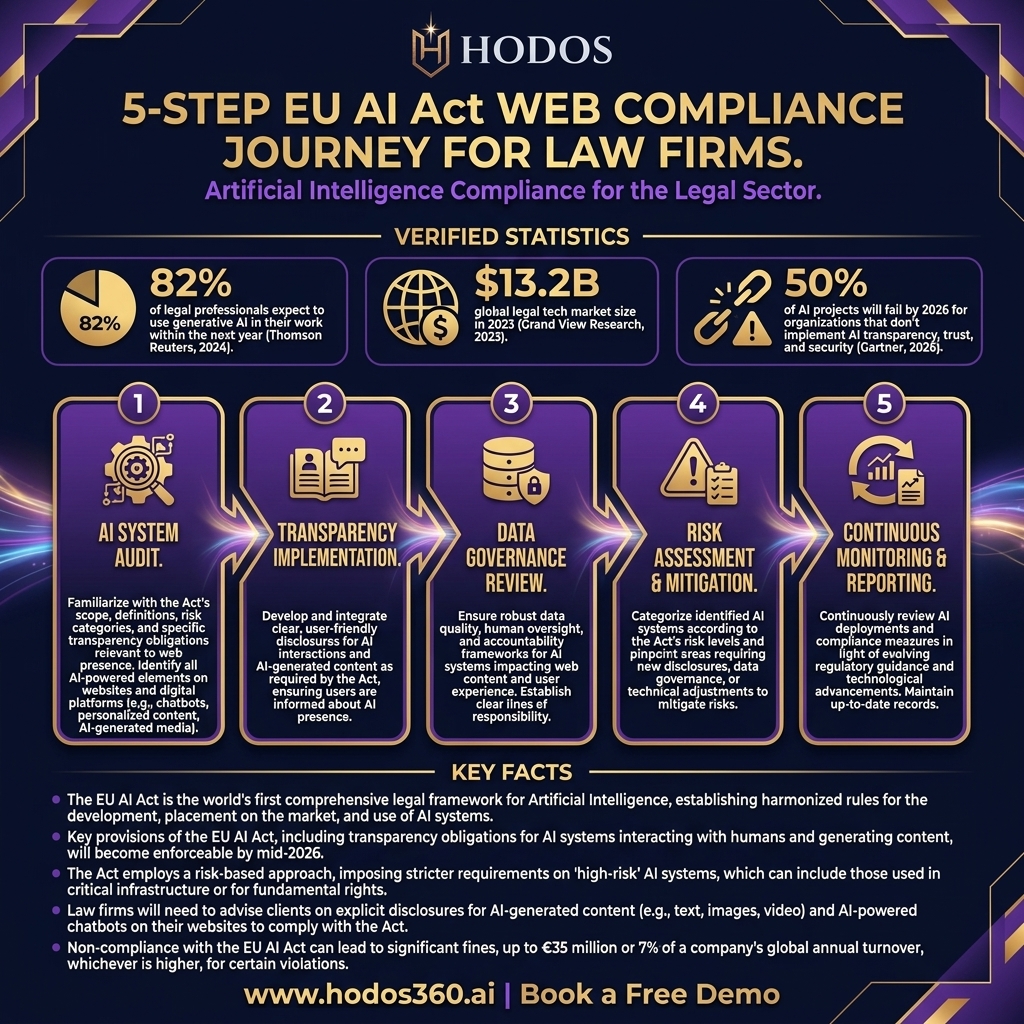
The EU AI Act, a landmark piece of legislation, extends its regulatory tendrils far beyond the hospitality sector. While the initial headlines often focus on high-risk applications like medical devices or autonomous vehicles, its impact on everyday digital interfaces, particularly websites and mobile applications, is profound and often underestimated. The Act classifies AI systems based on their risk level, with 'unacceptable risk' systems banned, 'high-risk' systems subject to stringent requirements, and 'limited risk' systems (such as chatbots or AI-generated content) requiring specific transparency obligations. For businesses, this means a thorough audit of all AI components embedded in their digital presence, a task that many are finding surprisingly complex.
Consider the case of a major European e-commerce retailer, 'FashionForward,' which utilizes AI for personalized product recommendations, dynamic pricing, and even AI-generated copy for product descriptions. Under the EU AI Act, particularly Article 50, if FashionForward uses AI to generate images or text that could be mistaken for human-created content, it must explicitly disclose that the content is AI-generated. This isn't just a minor tweak; it requires fundamental changes to content management systems, user interface design, and internal workflows. As EU Commissioner Margrethe Vestager emphasized in a recent address at the Digital Summit in Berlin, the goal is to build trust in AI by ensuring transparency and accountability, fostering an environment where innovation thrives responsibly. Firms like Atherton & Finch LLP, a leading tech law practice, have been proactive, initiating comprehensive compliance programs for their diverse client base, recognizing that every digital interaction involving AI now carries a legal dimension. Learn more about Agency Renegotiation: Essential Strategies for AI Marketing. Their managing partner, Eleanor Vance, noted, "The Act demands a paradigm shift in digital strategy, moving from 'can we do it?' to 'should we do it, and how do we do it transparently?'"
The Act's phased implementation, with certain provisions like those impacting AI-generated content disclosures coming into force by August 2026, means that the clock is ticking for businesses to adapt their digital strategies. The definition of an AI system under the Act is broad, encompassing software that uses machine learning, logic, or knowledge-based approaches to generate outputs. This includes everything from sophisticated recommendation engines to simpler generative AI tools used for marketing copy. For law firms, this necessitates a deep understanding of not only the legal text but also the underlying technical architectures of their clients' digital platforms. Advising on EU AI Act web compliance requires anticipating how these regulations will manifest in user experience, data flows, and backend processing, a challenge that blurs the lines between legal, technical, and design expertise. The implications are clear: a generic approach to web development and legal counsel will no longer suffice in this new regulatory landscape.
Navigating AI Transparency and Data Governance: Key Legal Obligations
At the heart of the EU AI Act are stringent requirements for transparency and robust data governance. For 'limited risk' AI systems, which include many web-based applications, the primary obligation is transparency. This means users must be informed when they are interacting with an AI system, especially if it generates content or manipulates images, as seen with the hotel example. This isn't just a pop-up notice; it needs to be clear, understandable, and easily accessible. Furthermore, providers of AI systems must design them to ensure human oversight, allowing individuals to intervene and override AI decisions where necessary. This principle of human-centric AI is a cornerstone of the European approach, contrasting with more laissez-faire regulatory attitudes seen elsewhere.
Beyond transparency, the Act significantly reinforces data governance principles, building upon the foundations laid by the GDPR. AI systems, particularly high-risk ones, must be trained on datasets that are relevant, representative, free of errors, and complete. This is critical for mitigating algorithmic bias, a persistent concern in AI development. Imagine an AI recruitment tool embedded in a company's career page; if trained on biased data, it could inadvertently discriminate against certain demographic groups. Learn more about AI Marketing: The Ultimate Guide for Law Firms. The Act mandates that providers implement data governance and management practices, including data acquisition, collection, pre-processing, and annotation, to ensure data quality. According to a 2024 report by Gartner, 68% of organizations are still struggling with data quality issues, a factor that will become a major compliance hurdle under the new AI regulation.
### Defining High-Risk AI Systems and Their Impact The definition of 'high-risk' AI systems carries significant weight, triggering a cascade of additional obligations, including conformity assessments, quality management systems, and post-market monitoring. While many web-based AI applications fall under 'limited risk,' certain uses can elevate them to high-risk status. For instance, AI systems used for biometric identification, critical infrastructure management, or those impacting fundamental rights (like access to education, employment, or credit) are generally high-risk. A law firm's client using an AI-powered system on their website to screen job applicants or assess creditworthiness would likely be deploying a high-risk AI system, subject to the most rigorous requirements. This means not only transparency but also extensive documentation, risk management systems, and human oversight mechanisms. Legal professionals must be adept at identifying these classifications to accurately advise their clients, understanding that misclassification can lead to severe penalties and reputational damage. The complexity demands a comprehensive understanding of both the legal definitions and the practical implications for web and mobile development.
The Technical Imperative: Crafting Compliant Web & Mobile Platforms
Translating the EU AI Act's legal mandates into functional, compliant web and mobile platforms presents a formidable technical challenge. For developers and IT teams, it means a complete re-evaluation of how AI is integrated and presented. Existing AI models embedded in websites, such as recommendation engines, customer service chatbots, or content generation tools, must be audited for compliance. This involves assessing the data sources used for training, the output generation mechanisms, and the user interface for clear disclosure. For example, a chatbot might need a prominent disclaimer stating, "You are interacting with an AI assistant," and a mechanism for users to request human intervention. The technical work extends to creating robust logging and auditing capabilities to demonstrate compliance, a task that requires significant development resources and specialized expertise.
Moreover, the Act's emphasis on data quality and bias mitigation necessitates sophisticated data governance frameworks. Web and mobile applications often collect vast amounts of user data, which can then be used to train AI models. Ensuring that this data is collected ethically, anonymized appropriately, and free from systemic biases becomes a critical development task. This involves implementing secure data pipelines, robust data validation routines, and potentially, explainable AI (XAI) features that can articulate how an AI system arrived at a particular decision. The technical team at a global law firm, Baker McKenzie, for instance, has been working closely with their legal experts to develop internal tools that flag potential AI compliance issues in client web applications, demonstrating the necessity of this interdisciplinary approach. Brad Smith, Microsoft's President and Vice Chair, has repeatedly stressed the importance of a 'responsible AI' approach, which necessitates technical solutions that embed ethical principles from design to deployment.
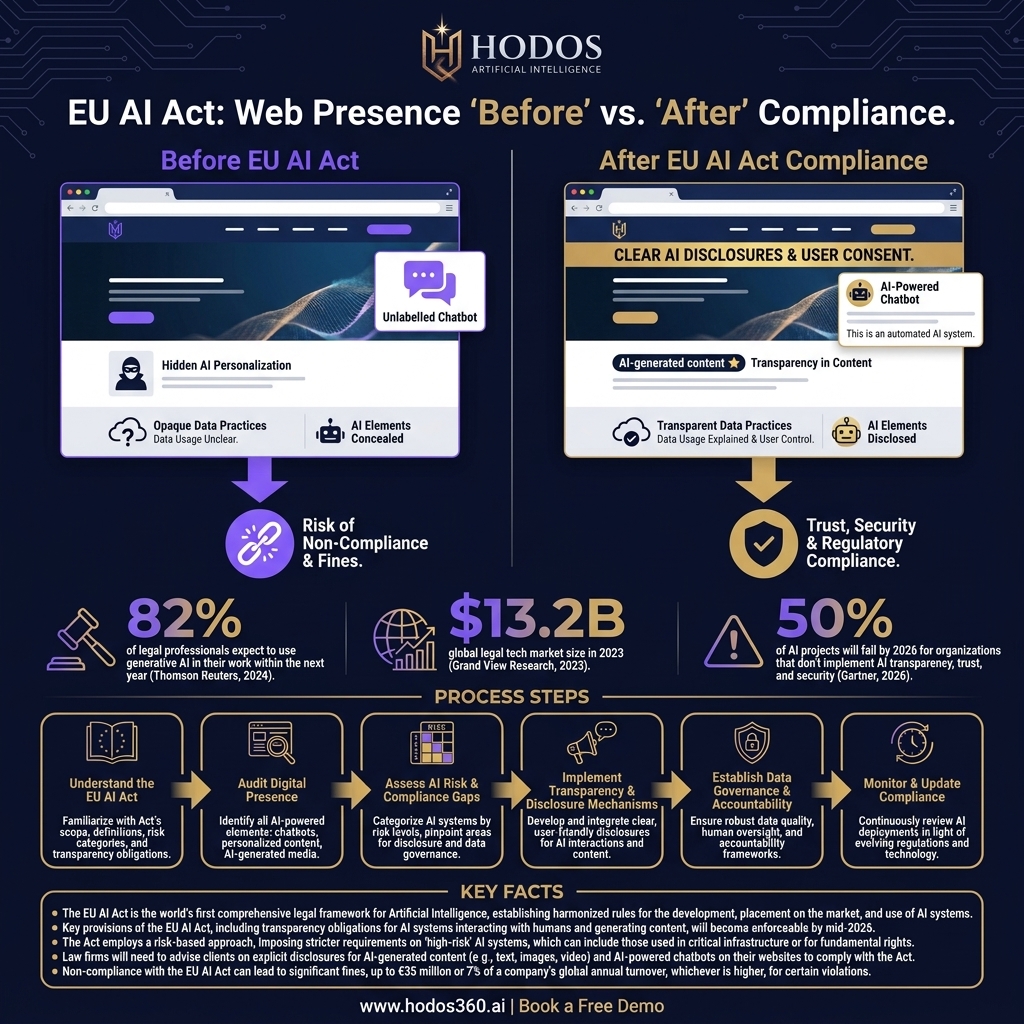
### Leveraging AI-Powered Web Development for Compliance This is where specialized platforms like HODOS 360 become invaluable. Learn more about AI Legal Tools: Essential Guide to Anthropic's Claude Expansion. Our Web & Mobile Development service is specifically engineered to help law firms and their clients navigate the technical complexities of EU AI Act web compliance. We provide AI-powered website building tools and responsive design capabilities that integrate compliance features from the ground up. Imagine a client needing to launch a new digital service with an embedded AI assistant. Our platform can facilitate the creation of a website with built-in modules for explicit AI disclosure, configurable consent mechanisms, and transparent data usage policies, all designed to meet the Act's requirements. This proactive approach ensures that compliance is not an afterthought but an intrinsic part of the digital presence, streamlining the process for law firms advising their clients. As the EU AI Act reshapes digital landscapes, ensuring your firm and your clients are equipped is paramount. Explore how HODOS 360 empowers legal professionals with cutting-edge AI tools.
Furthermore, our high-converting templates are not just aesthetically pleasing; they are designed with a deep understanding of regulatory requirements, making it easier to implement features like human oversight buttons or clear avenues for user feedback on AI interactions. This reduces the burden on law firms to translate abstract legal principles into concrete web functionalities, allowing them to focus on high-level strategic advice. The ability to quickly deploy a compliant digital platform offers a significant competitive advantage in a market where many businesses are still scrambling to understand their obligations. This seamless integration of legal expertise and technical execution is what sets forward-thinking web development apart in the era of pervasive AI regulation.
Strategic Imperatives for Law Firms: Advising on EU AI Act Compliance
For law firms, the EU AI Act is not merely another regulatory hurdle; it's a profound shift in the legal landscape that demands a strategic response. The ethical duty of competence, as outlined in ABA Model Rule 1.1, obligates attorneys to provide competent representation, which includes understanding the risks and benefits associated with relevant technology. In the age of AI, this means attorneys must be conversant with AI systems, their applications, and their regulatory implications, especially concerning digital presence. Firms that proactively develop expertise in EU AI Act web compliance will not only meet their ethical obligations but also unlock significant business opportunities, positioning themselves as indispensable advisors in a rapidly evolving market. Clients are desperate for guidance, and those firms that can offer clear, actionable advice will gain a competitive edge.
Developing this expertise requires a multi-pronged approach. Internally, firms should invest in continuous legal education for their attorneys, focusing on the nuances of AI regulation, data governance, and technology standards. This might involve specialized training programs, internal knowledge-sharing initiatives, and hiring legal tech specialists who can bridge the gap between legal theory and practical implementation. Externally, firms must engage in proactive client education, hosting webinars, publishing whitepapers, and offering workshops to inform clients about their obligations under the EU AI Act. This not only demonstrates leadership but also helps clients identify potential areas of non-compliance before they become critical issues. The tension between firms that embrace this technological shift and those that cling to traditional practices is stark, with the former poised for growth and the latter risking obsolescence.
### Case Study: The Cost of Non-Compliance The financial and reputational costs of non-compliance with the EU AI Act are substantial. While specific fines are still being fully clarified, they are expected to be significant, potentially mirroring the GDPR's penalties of up to €20 million or 4% of global annual turnover, whichever is higher, for severe infringements. Learn more about Web Application Development: Essential AI Workflows Emerge. Consider a hypothetical case where 'GlobalConnect Inc.,' a digital marketing agency, fails to disclose its use of AI-generated personalized ads on its clients' websites, leading to a complaint and subsequent investigation by an EU supervisory authority. The resulting fine, coupled with the irreparable damage to its clients' brands and GlobalConnect’s own reputation, could be catastrophic. Beyond fines, there's the risk of mandatory cessation of operations, injunctions, and civil liability claims. Law firms advising clients on AI must stress these potential ramifications, not as scare tactics, but as a realistic assessment of the stakes involved. The investment in compliance, therefore, is not merely a cost but a critical risk mitigation strategy, safeguarding both financial stability and brand integrity in the increasingly regulated digital sphere. This highlights the urgency for law firms to provide comprehensive guidance and for clients to act decisively.
Furthermore, firms need to consider partnering with specialized legal tech providers. Just as law firms wouldn't build their own server infrastructure, they shouldn't be expected to develop intricate AI compliance features for client websites from scratch. Collaborating with platforms that offer AI-powered web development and robust compliance tools, such as those provided by HODOS 360, allows law firms to extend their service offerings without needing to become full-stack developers. This strategic alliance enables firms to deliver comprehensive solutions, ensuring their clients’ digital presences are not only innovative but also legally sound and future-proof. This proactive approach to EU AI Act web compliance is critical for maintaining client trust and fostering long-term relationships in a rapidly evolving regulatory environment.
Future-Proofing Digital Strategies: A Path to Sustainable Compliance
The EU AI Act represents a foundational shift, but it is unlikely to be the last piece of significant AI regulation. Future-proofing digital strategies means adopting an agile, continuous compliance approach rather than a one-time fix. This involves establishing internal governance structures for AI use, regularly auditing AI systems for evolving risks, and staying abreast of legislative developments. For businesses, this translates into building digital platforms that are inherently adaptable, capable of integrating new transparency features or data governance protocols as regulatory landscapes change. This proactive mindset is what differentiates market leaders from those constantly playing catch-up, and it is a key message law firms must convey to their clients.
Law firms, therefore, have a critical role to play in guiding their clients towards sustainable compliance. This goes beyond simply advising on the letter of the law; it involves helping clients embed ethical AI principles and robust governance into their organizational culture and digital development processes. Learn more about Essential AI Citation Tracking: Boost Your Law Firm's Authority. Firms can assist in developing internal AI ethics guidelines, creating cross-functional compliance teams, and implementing continuous monitoring frameworks for AI systems. The goal is to foster an environment where businesses view AI regulation not as a barrier, but as a catalyst for responsible innovation, ultimately building greater consumer trust and market differentiation. According to a recent Thomson Reuters report, law firms that integrate technology and regulatory foresight into their client services are experiencing a 15% higher client retention rate.
Key Steps for Law Firms to Navigate EU AI Act Web Compliance: * Educate Internally: Provide continuous training for attorneys on AI technologies and the specifics of the EU AI Act, particularly its impact on digital presence. * Conduct Client Audits: Proactively assess client websites and mobile applications for existing AI components and potential compliance gaps. * Develop Compliance Frameworks: Help clients establish internal policies for AI development, deployment, and monitoring, focusing on transparency and data quality. * Advise on Technical Implementation: Guide clients on integrating necessary disclosures, consent mechanisms, and human oversight features into their digital platforms. * Monitor Regulatory Changes: Stay informed about updates to the EU AI Act and other emerging AI regulations to provide timely advice. * Partner with Tech Specialists: Collaborate with legal tech providers like HODOS 360 for robust, compliant web and mobile development solutions. * Emphasize Ethical AI: Promote a culture of responsible AI use among clients, highlighting long-term benefits of trust and reputation.
Ultimately, the EU AI Act is more than just a legal document; it's a blueprint for a more trustworthy and accountable digital future. Law firms are uniquely positioned to be at the forefront of this transformation, guiding their clients through its complexities and helping them harness the power of AI responsibly. By embracing this challenge with a blend of legal expertise, technological acumen, and a forward-thinking approach, firms can transform regulatory burdens into strategic advantages, ensuring their clients' digital presences are not only innovative but also unimpeachably compliant.

Key Takeaways and Next Steps
The EU AI Act is reshaping the digital landscape, demanding unprecedented transparency and accountability from businesses utilizing AI in their web and mobile presences. From hotels leveraging AI-generated visuals to e-commerce platforms using personalized recommendation engines, the imperative for EU AI Act web compliance is universal. Law firms face a critical mandate to not only understand these complex regulations but also to translate them into actionable strategies for their clients.
This new era of AI regulation underscores the vital role of specialized legal tech solutions. Platforms that seamlessly integrate compliance features into web and mobile development are no longer a luxury but a necessity. By partnering with such providers, law firms can equip their clients with the tools to navigate regulatory challenges proactively, ensuring their digital strategies are both innovative and legally sound. Learn more about AI Call Receptionist: Ultimate Guide for Law Firms. The future of digital presence hinges on a delicate balance between technological advancement and robust compliance, a balance that forward-thinking law firms are poised to master.
The regulatory tide of AI is rising. Don't let your firm or your clients be caught unprepared. Contact HODOS 360 for a personalized consultation on AI-powered legal solutions.
Frequently Asked Questions
What is the primary goal of the EU AI Act regarding web presence?+
The primary goal is to ensure transparency and accountability for AI systems used in digital interfaces. This includes informing users when they interact with AI, disclosing AI-generated content, and mitigating risks like bias. It aims to build trust in AI by establishing clear rules for its responsible development and deployment across various sectors, including digital marketing and customer service.
Which specific provisions of the EU AI Act impact website AI features?+
Article 50, which focuses on transparency obligations for AI-generated content (deepfakes, manipulated images, text), is particularly relevant and went into force in August 2026. Other provisions related to data governance, risk assessment, and human oversight also apply to AI systems embedded in websites, especially if classified as 'high-risk' based on their function.
How can law firms help clients achieve EU AI Act web compliance?+
Law firms can assist by conducting AI system audits on client websites, developing internal compliance frameworks, advising on data governance best practices, and guiding the technical implementation of transparency features like disclosures and consent mechanisms. Partnering with specialized legal tech providers for compliant web development is also a strategic approach.
What are the potential consequences of non-compliance for businesses?+
Non-compliance can lead to significant financial penalties, potentially mirroring GDPR fines of up to €20 million or 4% of global annual turnover. Beyond monetary fines, businesses face severe reputational damage, operational disruptions, and legal injunctions, making robust compliance a critical component of risk management and brand integrity.
How does HODOS 360's Web & Mobile Development service support EU AI Act compliance?+
HODOS 360’s Web & Mobile Development service offers AI-powered website building with integrated compliance features. This includes templates designed for explicit AI disclosures, configurable consent mechanisms, robust data governance protocols, and responsive design that meets regulatory standards, helping law firms ensure their clients' digital platforms are compliant from inception.