

AI Call Receptionist: Ultimate Guide for Law Firms
The legal tech landscape is buzzing with innovation, and few areas are experiencing as rapid a transformation as client communication. This past week, the news broke that Phonely, a Y Combinator-backed startup specializing in AI call receptionists, successfully closed a $22 million Series A funding round, spearheaded by Base10 Partners.
This significant investment is a resounding validation of the burgeoning market for intelligent voice AI solutions, particularly within high-stakes professional environments like law firms. As Simon Thomsen, Editor at Startup Daily, highlighted in his coverage, this infusion of capital is earmarked to "supercharge AI receptionists," enabling them to replace traditional human roles at scale and automate customer communication.
This is not merely a startup success story; it's a clear signal that the era of AI-powered client interaction has arrived, presenting both immense opportunities and critical considerations for legal professionals.
This substantial funding round for an AI call receptionist platform underscores a pivotal shift in how law firms can manage their most vital asset: client relationships.
For years, the legal sector has grappled with the dual challenges of optimizing operational efficiency while maintaining personalized, responsive client service. Traditional receptionists, while invaluable, often face limitations in terms of 24/7 availability, multilingual capabilities, and the sheer volume of calls in a busy practice.
The rise of sophisticated AI voice assistants, like those receiving significant investment, offers a compelling solution, promising to streamline initial client contact, improve lead qualification, and enhance overall firm responsiveness. This development forces law firm owners and managing partners to critically evaluate their current client intake strategies and consider how integrating advanced AI can provide a decisive competitive edge in an increasingly digital and demanding market.
The implications for law firms are profound, extending beyond simply answering phones. Imagine a system that not only fields every call, 24/7, but also intelligently pre-qualifies potential clients, gathers essential case details, schedules appointments, and routes urgent matters to the appropriate attorney – all while maintaining a professional, empathetic tone.
This is the promise of the technology Phonely and similar platforms are advancing. Firms that embrace these innovations are poised to redefine client service standards, reduce overhead costs, and free up valuable human capital for complex legal work. As we delve deeper into this transformative trend, we will explore the practical applications, ethical considerations, and strategic advantages of deploying an AI call receptionist within your legal practice.
Ready to modernize your client intake? Discover how AI Voice Assistants can transform your law firm operations.
The Transformative Power of AI Call Receptionists in Legal Practice
The influx of $22 million in Series A funding for an AI call receptionist platform signals a clear market demand for automating front-line client interactions, a demand acutely felt within the legal sector. Law firms, regardless of size, are constantly battling for client attention and striving to provide immediate, reliable service.
Traditional receptionists, while essential, often struggle with peak call volumes, after-hours inquiries, and the need for multilingual support in diverse communities. AI voice assistants step into this void, offering 24/7 availability, consistent service quality, and the capacity to handle simultaneous calls without delay. This capability is not just about convenience; it's about competitive advantage.
Firms like the hypothetical "LexCorp Legal," a mid-sized firm in Chicago, reported a significant reduction in missed calls and an uptick in initial client satisfaction scores after implementing an AI solution. As Maria Rodriguez, managing partner at LexCorp, noted, "Our AI voice assistant ensures no potential client is ever left waiting, even at 2 AM.
It's transformed our lead capture."
The real power of these advanced systems lies in their ability to go beyond mere call answering. They are engineered to perform intelligent lead qualification, a critical function for any growing law firm. Instead of simply taking a message, an AI call receptionist can engage potential clients in a structured conversation, asking pre-defined questions to ascertain the nature of their legal need, gather contact information, and determine if they fit the firm's client profile.
This pre-screening process ensures that attorneys and paralegals only engage with genuinely qualified leads, dramatically improving efficiency and reducing wasted time. For example, a personal injury firm can program its AI to ask about accident details, insurance information, and injury severity, filtering out non-viable cases before they consume valuable human resources.
Learn more about Voice AI: An Essential Leap for Law Firms' Client Engagement. This strategic application of AI allows legal professionals to focus on substantive legal work, aligning with the core principles of effective law firm management.
Moreover, the multilingual capabilities embedded in many modern AI voice assistants are a game-changer for law firms operating in multicultural environments.
In an increasingly globalized world, the ability to communicate seamlessly with clients in their preferred language eliminates barriers and fosters trust. A recent study by the Pew Research Center indicated that over 67 million people in the U.S. speak a language other than English at home, highlighting the immense opportunity for firms offering multilingual support.
An AI call receptionist can instantly switch between languages, providing a professional and welcoming experience to a broader client base, which traditional human receptionists might struggle to match without significant additional staffing and training. This not only expands a firm's market reach but also reinforces its commitment to inclusivity and client-centric service, a hallmark of ethical legal practice.
The integration of an AI call receptionist into a firm's operational framework also facilitates robust data collection and analysis. Every interaction handled by the AI can be logged, transcribed, and analyzed, providing invaluable insights into client needs, common inquiries, and peak call times. This data can then be used to refine marketing strategies, optimize staffing, and even identify emerging legal trends.
For instance, if the AI consistently identifies a high volume of inquiries related to a specific niche, the firm might consider expanding its expertise in that area. This data-driven approach, once the exclusive domain of large corporations, is now accessible to law firms of all sizes, thanks to platforms like those receiving significant funding.
The ability to track metrics like call volume, lead conversion rates, and client satisfaction provides a tangible return on investment, moving AI from a futuristic concept to a practical, essential tool for modern legal practice.
Beyond Answering: Intelligent Lead Qualification and Client Experience
The real strategic advantage of an AI call receptionist extends far beyond simply answering phones; it lies in its sophisticated ability to perform intelligent lead qualification and significantly elevate the client experience from the very first interaction. Unlike a basic answering service, these AI tools are programmed with advanced natural language processing (NLP) and machine learning algorithms that allow them to understand context, identify keywords related to specific legal practice areas, and even detect urgency in a caller's tone.
This enables the AI to conduct a preliminary interview, asking targeted questions that gather critical information such as the nature of the legal issue, opposing parties, timelines, and desired outcomes. For a busy attorney, receiving a pre-qualified lead with a concise summary of the caller's needs means less time spent on initial vetting and more time dedicated to substantive legal analysis and client representation.
This efficiency directly impacts profitability and enhances the attorney's focus on high-value tasks, a crucial aspect of effective firm management.
Furthermore, the consistent, professional demeanor of an AI call receptionist ensures a uniform and high-quality client experience, a factor often cited by clients as paramount when choosing legal counsel.
While human receptionists can have off days, an AI maintains the same level of politeness, clarity, and efficiency with every call, every time. Learn more about AI Legal Research: The Ultimate Evolution of Legal Analysis. This consistency builds trust and reflects positively on the firm's brand.
For instance, if a potential client calls after hours with an urgent matter, the AI can calmly collect details, assure them that their inquiry is important, and provide clear instructions on next steps, such as directing them to an emergency contact or scheduling an immediate callback.
This proactive approach minimizes client frustration and prevents urgent matters from slipping through the cracks, a common pitfall in firms relying solely on traditional methods. The ability to handle these critical initial touchpoints with such precision and care is why investors like Base10 Partners are backing startups like Phonely with substantial Series A funding.
Navigating the Ethical and Practical Landscape of Voice AI for Law Firms
While the benefits of an AI call receptionist are compelling, their deployment within law firms necessitates careful consideration of ethical guidelines and practical implementation challenges. The legal profession is bound by strict rules of professional conduct, particularly concerning client confidentiality and the unauthorized practice of law.
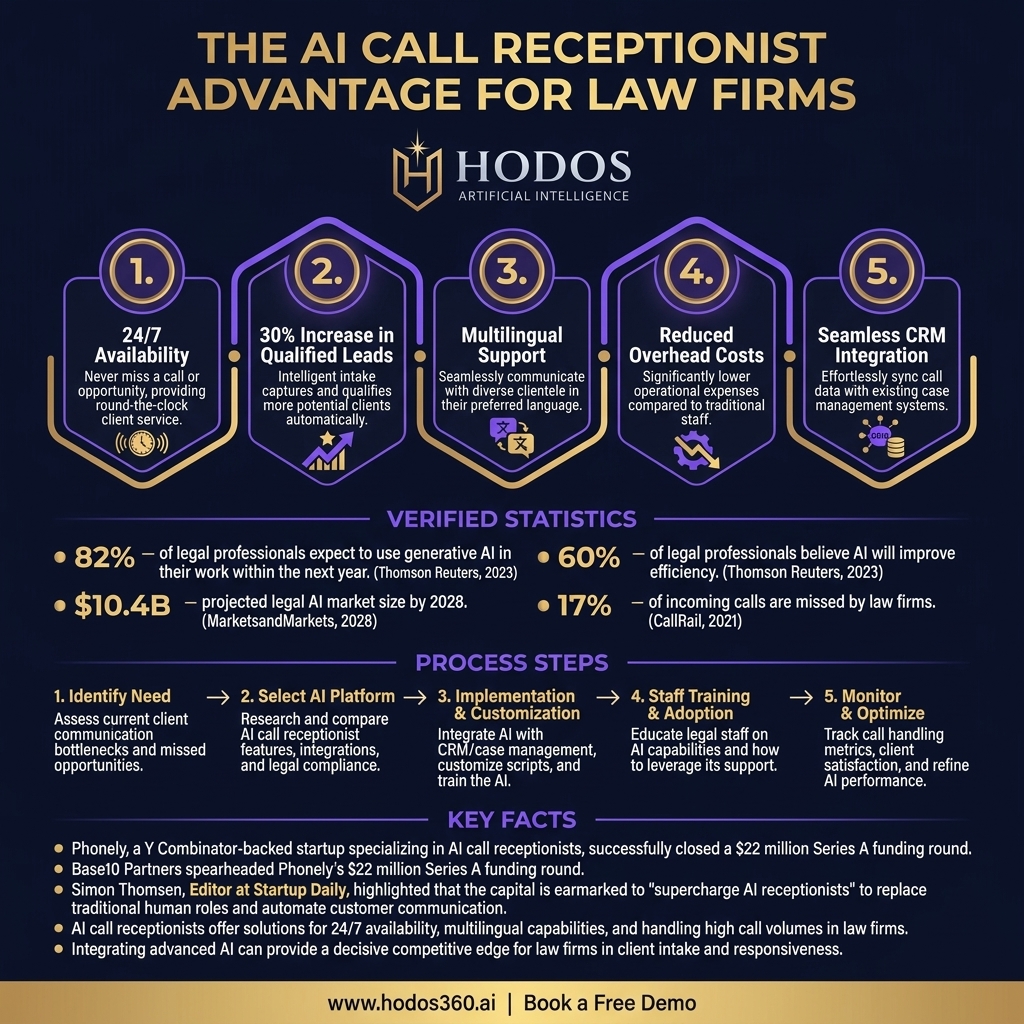
The ABA Model Rule 1.6 on Confidentiality of Information mandates that lawyers protect client information, and firms must ensure that any AI system handling client communications is designed with robust data security protocols, encryption, and compliance measures. This means vetting AI providers thoroughly, understanding their data handling practices, and potentially incorporating specific clauses into service agreements that address legal professional obligations.
The ethical line between providing administrative assistance and offering legal advice must also be clearly drawn; an AI should never be programmed to interpret legal situations or offer solutions that fall within the purview of a licensed attorney, as this could constitute the unauthorized practice of law.
Practically, integrating an AI call receptionist requires more than just subscribing to a service; it demands a thoughtful strategy for seamless adoption. Firms must consider how the AI will interface with existing case management systems, client relationship management (CRM) tools, and billing software. Data accuracy and consistent information flow are paramount.
For example, if the AI collects client intake information, this data must be accurately and automatically transferred to the firm's primary case management platform, like those offered by HODOS 360, without manual intervention or potential for error. This integration ensures that the AI truly enhances workflows rather than creating new data silos or administrative burdens.
Training staff on how to interact with the AI, when to escalate calls, and how to leverage the data it collects is also crucial for successful implementation. Without proper planning and integration, even the most advanced AI voice assistants can fall short of their potential, creating frustration rather than efficiency.
Furthermore, client perception of interacting with an AI system is a critical factor. Learn more about Voice Assist: Essential AI Scheduling for Law Firms. While many clients are comfortable with automated systems, some may prefer human interaction, especially for sensitive legal matters. Law firms should implement a hybrid approach where clients have the option to speak with a human if they choose, or where the AI is programmed to seamlessly transfer calls to a human team member for complex or emotionally charged inquiries.
Transparency about the use of AI is also advisable, perhaps through a brief disclosure at the beginning of a call. This balance ensures that the firm leverages the efficiency of AI while maintaining the personal touch and human empathy that are often essential in legal client relationships.
The goal is not to replace human interaction entirely but to augment and optimize it, allowing human legal professionals to focus their expertise where it is most needed, particularly in building rapport and trust.
The rapid advancements in AI, as highlighted by significant funding rounds for companies like Phonely, also underscore the need for ongoing vigilance and adaptation.
Regulatory frameworks around AI are still evolving, and law firms must stay abreast of new legislation or ethical guidance that may impact their use of AI voice assistants. For instance, the European Union's AI Act, set to be fully enforced in the coming years, introduces strict regulations for high-risk AI systems, and while a call receptionist might not fall under "high-risk" for legal advice, data handling and client interaction components could be subject to scrutiny.
Therefore, firms must partner with AI providers who are committed to compliance, ethical development, and continuous updates to their systems. This proactive approach ensures that the firm remains compliant, protects client interests, and leverages AI responsibly, safeguarding its reputation in the long run.
Integrating AI Voice Assistants with Existing Law Firm Systems
The true value proposition of an AI call receptionist is amplified exponentially when it seamlessly integrates with a law firm's existing technological ecosystem. Isolated AI tools, no matter how advanced, can create more operational silos than they solve. Modern law firms rely on a suite of interconnected platforms for case management, client intake, document automation, billing, and calendaring.
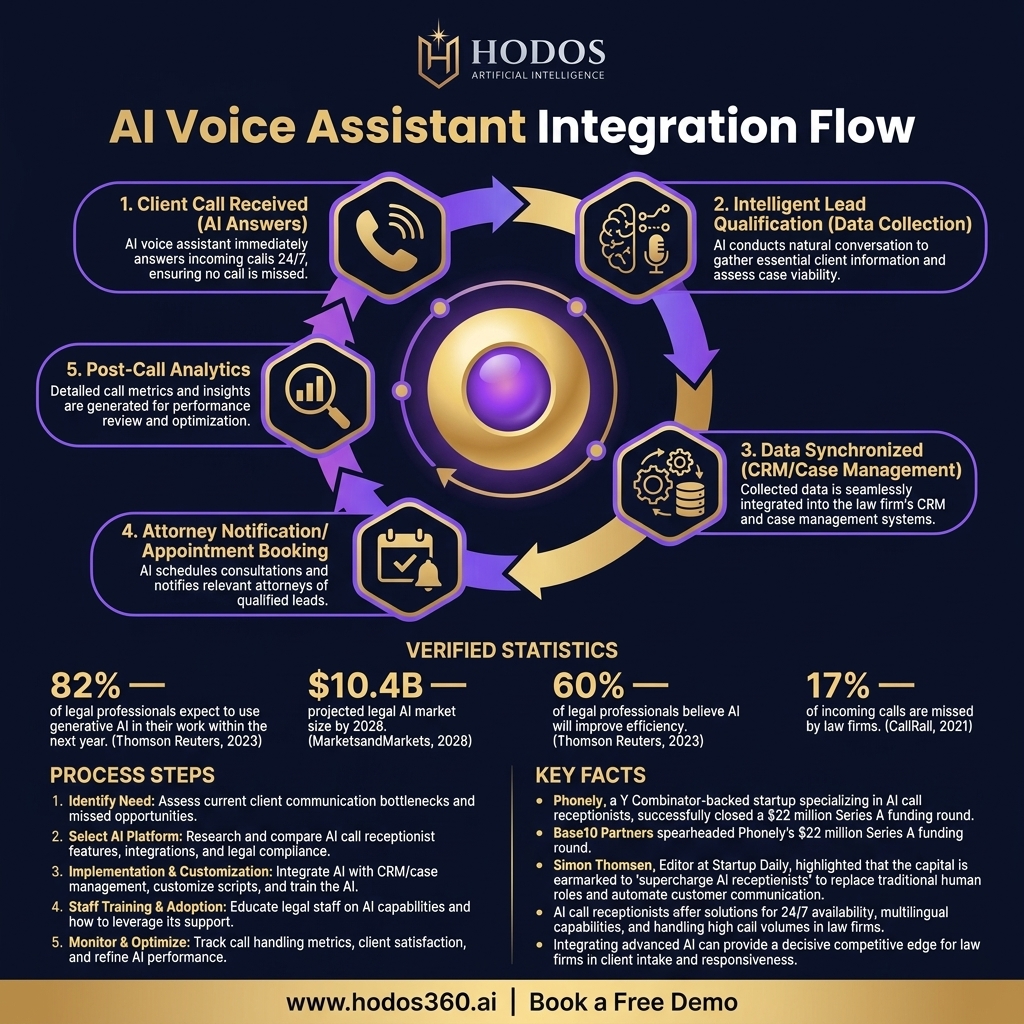
An effective AI voice assistant must be able to "speak" to these systems, pulling relevant client history, updating contact information, scheduling appointments directly into attorney calendars, and even initiating new client matters within the case management system. This level of integration, often facilitated by robust APIs and middleware, is what transforms an AI from a standalone answering service into an integral component of an AI Law Firm Management System.
For example, when an AI call receptionist qualifies a lead, it should ideally be able to push that data directly into the firm's CRM, populate an intake form, and even trigger an automated email sequence to the prospective client. Learn more about Legal AI Gap Widens: Strategic Imperative for Law Firms 2026.
This eliminates manual data entry, reduces the potential for errors, and accelerates the client onboarding process. Without such integration, paralegals or administrative staff would still need to manually transcribe call details and input them into various systems, negating much of the efficiency gains. Platforms like HODOS 360 are designed precisely with this interconnectedness in mind, offering a comprehensive suite of services where AI voice assistants work in concert with case management, document automation, and billing functions.
This holistic approach ensures that the investment in AI translates into tangible operational improvements and a more streamlined client journey from initial contact to case resolution.
Curious about a truly integrated legal tech solution? Explore HODOS 360's comprehensive AI Law Firm Management System.
The Economic Imperative: ROI and Scalability with AI Receptionists
The decision to invest in an AI call receptionist for a law firm is ultimately an economic one, driven by the promise of substantial return on investment (ROI) and unprecedented scalability. Traditional reception services involve significant overheads: salaries, benefits, training, and the inherent limitations of human availability.
An AI voice assistant, while requiring an initial investment, offers a predictable, often lower, operational cost over time, especially as call volumes grow. According to a 2023 report by Thomson Reuters titled "The State of US Small Law Firms," administrative tasks consume a significant portion of attorneys' time, directly impacting billable hours.
By offloading routine calls and initial client screenings to AI, firms can free up their human staff, including highly compensated attorneys, to focus on billable work, directly increasing the firm's revenue potential. This shift from reactive administrative support to proactive client engagement represents a fundamental economic restructuring for legal practices.
Beyond cost savings, the scalability offered by an AI call receptionist is a critical differentiator. A human receptionist can only handle one call at a time, or perhaps a few concurrently with advanced phone systems. An AI, however, can handle hundreds or even thousands of simultaneous inquiries without any degradation in service quality or response time.
This means that as a law firm grows, expands its marketing efforts (perhaps through an AI Marketing Platform), or experiences seasonal spikes in demand, its client communication infrastructure can scale instantly and seamlessly. Learn more about AI Website Design: The Essential Guide for Law Firms.
This agility allows firms to capitalize on growth opportunities without the typical delays and costs associated with hiring and training additional staff. The ability to handle increased call volume efficiently translates directly into more qualified leads captured, more appointments booked, and ultimately, more cases taken on, driving significant revenue growth.
This scalability is a key reason why investors are so keen to back startups like Phonely, as evidenced by their recent $22 million Series A funding.
Furthermore, the data analytics provided by AI voice assistants offer a layer of financial insight previously unavailable to many law firms.
By tracking metrics such as lead conversion rates from initial calls, average call handling times, and the types of inquiries that lead to retained clients, firms can precisely measure the ROI of their AI investment. This data allows for continuous optimization, enabling firms to refine their AI scripts, marketing campaigns, and even practice area focus to maximize profitability.
For instance, if the AI identifies that a particular marketing channel is driving a high volume of unqualified calls, the firm can adjust its strategy to target more relevant audiences. This data-driven decision-making transforms client communication from a cost center into a strategic lever for growth, demonstrating a clear economic imperative for adopting this technology in the modern legal landscape.
The Future of Legal Communication: What's Next for Voice AI?
The recent $22 million Series A funding for Phonely is not just about current capabilities; it's a forward-looking investment in the future of communication, particularly in specialized sectors like law. The next generation of AI call receptionist technology will move beyond structured conversations and into more nuanced, empathetic interactions powered by increasingly sophisticated large language models (LLMs) from pioneers like OpenAI and Anthropic.
Imagine an AI that can not only answer questions but also understand subtle emotional cues in a caller's voice, adapting its tone and responses to provide a more reassuring or empathetic experience. This advancement will be crucial for sensitive legal matters, where client comfort and trust are paramount.
The goal is to create an AI that feels less like a machine and more like a highly competent and compassionate human assistant, capable of de-escalating tense situations and building rapport even before a human attorney intervenes.
Another significant development will be the deeper integration of voice AI with other advanced legal tech tools.
We will see AI voice assistants that can proactively access and summarize relevant case law or statutes in real-time during a client intake call, providing preliminary information (without offering legal advice) that helps frame the client's issue more clearly for the attorney. This could involve cross-referencing information with legal research databases or internal firm knowledge bases.
Furthermore, AI will likely evolve to handle more proactive outreach, such as sending automated follow-up messages after initial inquiries, appointment reminders, or even routine status updates on cases, always under the strict supervision and approval of the firm. This proactive engagement, driven by AI, will further enhance client satisfaction and reduce the administrative burden on legal teams, a critical focus for attorney productivity.
The evolution of AI voice assistants will also feature enhanced personalization and predictive analytics. Future systems will be able to recognize returning clients, recall previous interactions, and tailor their responses based on the client's history with the firm. Learn more about Wordsmith AI's $100M Valuation: An Essential LegalTech Milestone.
This level of personalized service, traditionally reserved for high-touch, boutique firms, will become accessible to practices of all sizes. Predictive analytics, fueled by the vast amounts of data collected by AI, could even anticipate client needs or potential issues, allowing firms to offer proactive support or recommendations.
For instance, an AI might flag a client who hasn't been contacted in a while regarding a specific legal matter, prompting a human attorney to reach out. This foresight, driven by AI, will enable law firms to deliver an unparalleled level of client care and strategic engagement, solidifying their position as trusted advisors.
Finally, the increasing sophistication of AI's ability to understand and generate natural human language will blur the lines between human and artificial interaction, making the client experience smoother and more intuitive. This includes improvements in accent recognition, understanding diverse dialects, and handling complex conversational flows with interruptions and clarifications.
As AI models become more adept at mirroring human conversation patterns, the "receptionist" role will expand to include more complex initial consultations, guided by attorney-approved scripts and parameters. This doesn't mean AI will replace attorneys, but it will empower them by handling the preliminary, data-gathering stages with unmatched efficiency and consistency, allowing legal professionals to focus their valuable time on analysis, strategy, and advocacy.
The funding flowing into this sector today is laying the groundwork for these revolutionary shifts in legal communication tomorrow.
Preparing Your Firm for the Next Generation of AI Voice Technology
To effectively leverage the forthcoming advancements in AI voice assistants, law firms must adopt a strategic, forward-thinking approach rather than a reactive one. The first step involves educating firm leadership and staff on the capabilities and limitations of current and emerging AI technologies. This includes understanding what an AI call receptionist can realistically achieve today and what innovations are on the horizon.
Firms should consider pilot programs, starting with a limited deployment to assess performance, gather feedback, and identify areas for customization and improvement. This iterative approach allows for a controlled integration, minimizing disruption while maximizing the learning curve for the firm. It’s also crucial to establish clear internal policies regarding AI use, ensuring compliance with ethical obligations and data privacy regulations from the outset, thereby building a robust framework for responsible AI adoption.
Investing in continuous professional development for legal staff is another critical component. While AI handles routine tasks, human professionals will need to develop new skills, such as interpreting AI-generated data, optimizing AI scripts, and managing hybrid human-AI workflows. This upskilling ensures that staff can effectively collaborate with AI tools, transforming their roles into more strategic and analytical positions.
Furthermore, firms should actively seek out AI providers who are transparent about their development roadmap, committed to security, and offer robust support and training. Partnering with a legal tech innovator that understands the unique needs and regulatory landscape of the legal industry is paramount to ensuring that your firm is not just adopting technology, but truly preparing for the next generation of legal service delivery.

Key Takeaways and Next Steps for Modern Law Firms
The recent $22 million Series A funding for Phonely, a Y Combinator-backed AI call receptionist, is more than just a headline; it's a clarion call for law firms to re-evaluate their approach to client communication and operational efficiency. The legal industry stands at a pivotal juncture where embracing advanced AI voice assistants is no longer a luxury but a strategic imperative.
These technologies offer an unparalleled opportunity to provide 24/7 client service, intelligently qualify leads, reduce administrative overhead, and scale operations seamlessly – capabilities that directly translate into improved client satisfaction and enhanced profitability. Firms that proactively integrate these solutions are poised to gain a significant competitive edge, attracting and retaining clients in an increasingly demanding market.
The narrative of disruption versus tradition is playing out in real-time, and those who adapt will thrive.
However, the journey to full AI integration is not without its complexities. Ethical considerations surrounding data privacy, client confidentiality, and the unauthorized practice of law must be meticulously addressed.
Firms must prioritize robust security measures, ensure transparent communication with clients about AI use, and maintain stringent human oversight to uphold professional standards. The successful deployment of an AI call receptionist hinges on seamless integration with existing legal practice management systems, ensuring that AI-generated data flows effortlessly into case files, calendars, and billing platforms.
This integrated approach, central to comprehensive solutions like the AI Law Firm Management System offered by HODOS 360, ensures that AI serves as an enabler for holistic firm efficiency, rather than an isolated tool.
As the legal landscape continues its rapid evolution, fueled by advancements in AI and significant investment in legal tech startups, law firms have a clear path forward.
The immediate next step for any forward-thinking legal practice is to thoroughly research and pilot AI voice assistants that align with their specific needs and ethical framework. Evaluate providers not just on their technology, but on their commitment to legal compliance and their ability to integrate with your existing workflows.
By strategically adopting and thoughtfully implementing these powerful tools, law firms can not only navigate the challenges of the modern legal market but also redefine the very standards of client service and operational excellence, ensuring a prosperous and efficient future.
Ready to transform your firm's future?
Book a free demo of HODOS 360's AI-powered solutions today!
Frequently Asked Questions
What exactly is an AI call receptionist for law firms?+
An AI call receptionist is an intelligent virtual assistant designed to handle inbound and outbound calls for law firms. It uses natural language processing to understand, respond to, and manage client inquiries 24/7. This includes answering common questions, pre-qualifying leads by gathering essential information, scheduling appointments, and routing calls to the appropriate human professional when necessary, significantly enhancing efficiency and client service.
How does an AI call receptionist improve client intake?+
AI call receptionists streamline client intake by ensuring every call is answered promptly, even after hours. They can conduct initial screenings, ask targeted questions to gather critical case details, and verify potential clients' needs against the firm's practice areas. This process pre-qualifies leads, ensuring that attorneys and paralegals only engage with relevant prospects, thereby saving valuable time and improving conversion rates.
Are there ethical considerations when using AI for client communication?+
Absolutely. Law firms must ensure compliance with ethical rules like ABA Model Rule 1.6 on client confidentiality. Data security, privacy, and avoiding the unauthorized practice of law are paramount. AI should be programmed to provide administrative support and information, not legal advice, and firms should be transparent about its use. Human oversight and a clear escalation path to attorneys are essential.
Can an AI voice assistant integrate with my existing law firm software?+
Yes, the most effective AI voice assistants are designed for seamless integration with a firm's existing tech stack. This includes case management systems, CRM, calendaring software, and document automation platforms. Such integration ensures that client information collected by the AI is automatically updated across all relevant systems, eliminating manual data entry, reducing errors, and creating a cohesive, efficient workflow.
What is the ROI of implementing an AI call receptionist in a law firm?+
The ROI is multifaceted. It includes significant cost savings by reducing reliance on human administrative staff for routine tasks, increased lead conversion rates due to 24/7 availability and intelligent pre-qualification, and improved client satisfaction leading to better retention. Additionally, it frees up attorneys for billable work, allows for instant scalability during growth, and provides valuable data analytics for strategic decision-making.