

AI Legal Tools: Essential Guide to Anthropic's Claude Expansion
The legal industry is in the midst of an unprecedented technological transformation, a shift underscored by Anthropic's recent expansion of its Claude AI tools specifically tailored for law firms and legal professionals. This announcement, highlighted by outlets like The Economic Times, isn't just another product update; it signals a maturing landscape where sophisticated artificial intelligence is moving beyond experimental applications to become an indispensable component of daily legal practice.
For managing partners like Sarah Chen of Innovate Legal Group, the competitive dynamics are clear: "Staying ahead means not just understanding AI, but strategically integrating AI legal tools that offer real-world advantages in efficiency and insight." The race among AI developers, notably between OpenAI's GPT models and Anthropic's Claude, continues to intensify, pushing the boundaries of what's possible in legal tech.
Anthropic, under the leadership of CEO Dario Amodei, has consistently emphasized the development of 'Constitutional AI' – a framework designed to make AI systems helpful, harmless, and honest. This ethical foundation is particularly critical in the legal sector, where accuracy, confidentiality, and bias mitigation are paramount.
The new suite of plugins for Claude aims to address these core legal needs, promising to streamline complex tasks from document review to litigation support. This strategic move by Anthropic is poised to reshape not just individual workflows, but the very structure of legal service delivery, challenging traditional methodologies and opening doors to innovative client solutions previously unimaginable.
As law firms navigate this evolving technological frontier, understanding the capabilities and implications of these advanced AI legal tools is no longer optional. It's a strategic imperative for maintaining competitiveness, optimizing operational costs, and enhancing client outcomes. The conversation has shifted from *if* AI will impact law to *how* firms can leverage it most effectively.
This comprehensive guide delves into Anthropic's latest offerings, explores the broader impact on law firm management and client engagement, and provides a roadmap for legal professionals looking to harness AI for a more efficient, ethical, and profitable future. Ready to transform your practice? Discover how HODOS 360's integrated AI solutions align with these advancements.
The Evolving Landscape of Legal AI Tools and Anthropic's Strategic Move
The legal AI market has witnessed explosive growth, moving from niche applications to mainstream adoption. Gartner predicts that by 2027, 75% of legal departments will be using generative AI, a significant leap from current figures. This rapid expansion is fueled by an "AI arms race" among tech giants, with Anthropic's Claude emerging as a strong contender alongside OpenAI's GPT-4. Firms are increasingly seeking sophisticated AI legal tools that can handle the nuances of legal language and ethical considerations.
This demand has spurred companies like Thomson Reuters to expand partnerships, as seen in their collaboration with Anthropic, to integrate advanced AI into their established legal research platforms, further embedding AI into daily legal practice.
Anthropic’s recent announcement of 12 new legal practice plug-ins for Claude, as reported by The Economic Times, signifies a focused push into the legal industry.
These plugins are designed to assist with critical functions such as "commercial counsel," "employment counsel," and "litigation support." For instance, the 'litigation support' plugin can rapidly analyze vast quantities of discovery documents, identifying key patterns, anomalies, and potentially exculpatory evidence that might take human lawyers weeks or months to uncover.
This specialized functionality directly addresses common pain points in legal workflows, promising not just speed but also a higher degree of accuracy in information retrieval and synthesis, which is crucial for complex cases.
What sets Claude apart, and particularly resonates within the legal community, is its foundation in Constitutional AI.
Learn more about Essential AI Marketing Tools: Supercharge Your Law Firm's Growth. Dario Amodei and his team at Anthropic developed this approach to imbue AI models with a set of principles, making them less prone to generating harmful or biased outputs. For legal professionals, where ethical obligations are paramount, this focus on safety and alignment is a significant differentiator.
It provides a layer of trust, mitigating concerns about AI hallucination or the inadvertent disclosure of confidential information, thereby making these AI legal tools more palatable for sensitive legal work, from drafting agreements to advising on regulatory compliance.
This strategic expansion by Anthropic is not merely about introducing new features; it's about fundamentally rethinking legal operations.
Law firms are under constant pressure to deliver more with less, and these new tools offer a tangible pathway to achieving significant gains in efficiency. By automating the laborious aspects of legal research, document review, and initial draft generation, lawyers can redirect their valuable time and expertise towards higher-value activities such as strategic client counseling, complex problem-solving, and courtroom advocacy.
This shift promises to enhance client service delivery while also improving the overall work-life balance for legal professionals, a critical factor in today's demanding legal environment.
Specialized Plugins: A New Era for Legal Workflows
The introduction of specialized plugins for Claude marks a significant leap forward in tailoring AI to the specific demands of legal workflows. These aren't generic AI capabilities; they are purpose-built modules designed to seamlessly integrate into existing legal processes and address unique challenges. For example, the 'commercial counsel' plugin can assist in drafting, reviewing, and negotiating contracts by identifying key clauses, potential risks, and compliance issues with remarkable speed.
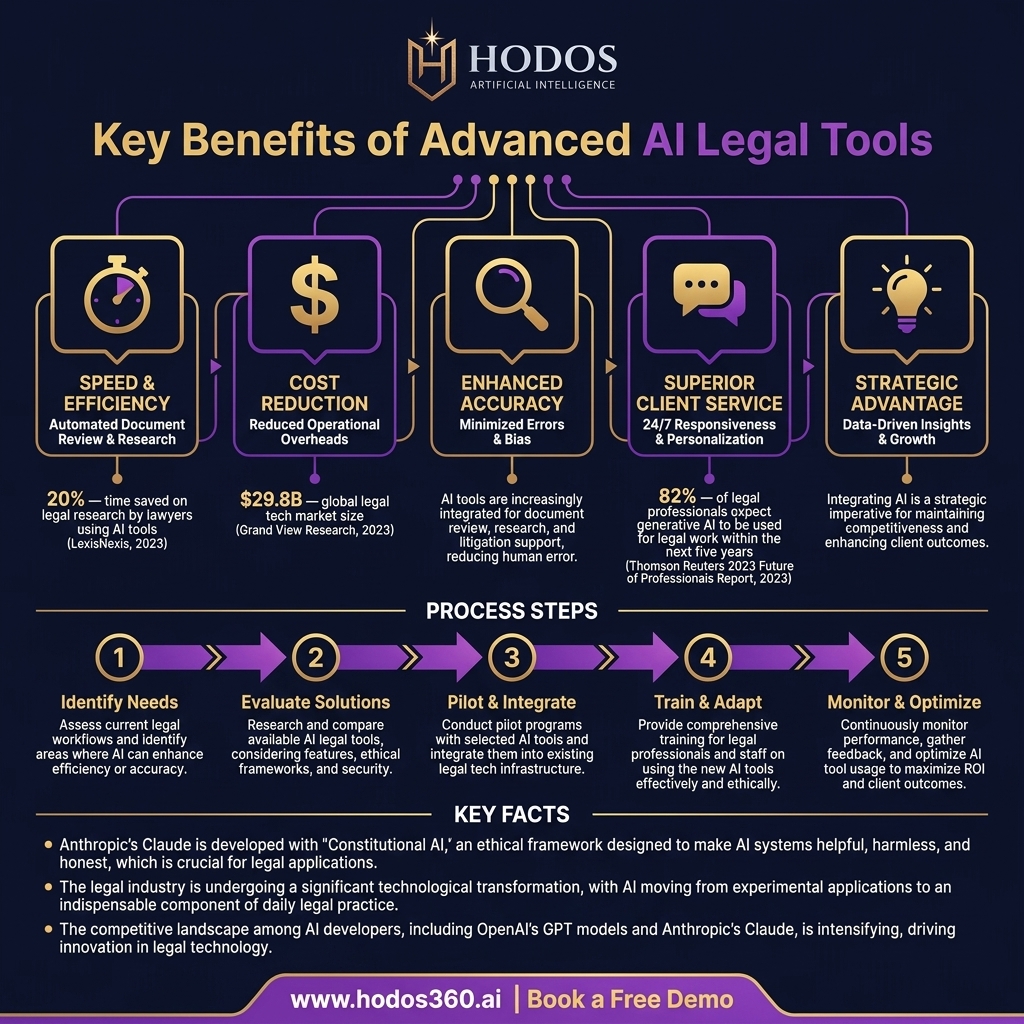
This capability not only accelerates transactional work but also enhances the quality and thoroughness of legal documents, reducing the likelihood of future disputes.
Furthermore, the 'employment counsel' plugin offers invaluable support in navigating the complexities of labor law, from drafting HR policies to analyzing case precedents related to discrimination or wrongful termination.
Learn more about Voice AI Landscape: Essential Strategies for Law Firms. By providing rapid access to relevant statutes and case law, and even suggesting appropriate language for internal communications, these AI legal tools empower legal teams to provide more informed and timely advice. The promise here is not just about efficiency, but about elevating the standard of legal service, ensuring that firms can handle a greater volume of complex work with increased accuracy and consistency, ultimately benefiting both the firm and its clients.
Beyond Research: AI's Impact on Law Firm Management and Client Engagement
The influence of advanced AI legal tools extends far beyond traditional legal research, fundamentally reshaping law firm management and the dynamics of client engagement. Integrated AI platforms can now provide predictive analytics for case management, optimizing resource allocation and forecasting potential outcomes. For instance, a firm might leverage AI to analyze historical case data to better predict litigation timelines or settlement ranges, allowing for more accurate client advisories and more efficient internal planning.
A recent McKinsey report highlighted that firms adopting AI for operational tasks can see efficiency gains of up to 30%, translating directly into improved profitability and competitive advantage.
In terms of client experience, AI-powered tools are enabling a shift towards more proactive and personalized legal services.
AI voice assistants, for example, can provide 24/7 client support, answer FAQs, qualify leads, and even schedule appointments, ensuring that potential and existing clients receive immediate attention. This level of responsiveness, once a luxury, is becoming an expectation. Firms that embrace these innovations can foster stronger client relationships, build greater trust, and differentiate themselves in a crowded market.
The ability to offer instant, multilingual support, as provided by HODOS 360's AI Voice Assistants, can significantly enhance client satisfaction and retention.
The competitive landscape within the legal industry is increasingly defined by technological adoption. Firms like Allen & Overy, with its partnership with Harvey AI, have demonstrated the immense value of early AI integration, setting a precedent for what's possible.
Learn more about AI Marketing Revolution 2026: Autonomous Agents for Law Firms. This creates a clear "disruption vs. tradition" conflict, where firms that hesitate risk falling behind. Early adopters gain a significant edge in operational efficiency, cost reduction, and the ability to offer innovative services.
This competitive pressure encourages a broader embrace of AI legal tools, pushing the entire industry forward.
Furthermore, AI is revolutionizing business development and marketing for law firms. AI Marketing Platforms can analyze market trends, generate targeted content, and automate social media engagement, allowing firms to reach potential clients more effectively.
By tracking ROI, these platforms provide actionable insights into marketing spend, ensuring campaigns are optimized for lead generation and client acquisition. This strategic application of AI ensures that a firm's growth initiatives are data-driven and highly efficient, moving beyond traditional, often costly, marketing efforts to a more precise and impactful approach.
Data Security and Ethical Considerations in AI Adoption
The adoption of AI legal tools in law firms necessitates a rigorous focus on data security and ethical considerations. Client confidentiality, a cornerstone of legal practice, is explicitly addressed by ABA Model Rule 1.6, which mandates lawyers protect confidential client information. When leveraging AI, firms must ensure that vendor platforms meet stringent security standards, including robust encryption, access controls, and compliance with data privacy regulations like GDPR or CCPA.
The potential for data breaches or unauthorized access to sensitive legal documents poses significant risks, making due diligence in AI tool selection paramount.
Beyond security, ethical concerns surrounding AI bias and the need for human oversight are critical. While Anthropic's Constitutional AI strives to mitigate bias, no AI system is infallible.
Learn more about AI Website Coding: An Essential Guide for Law Firms. Lawyers must remain competent in their use of technology, as outlined in ABA Model Rule 1.1, ensuring they understand the limitations of AI legal tools and exercise professional judgment. This means actively reviewing AI-generated outputs, understanding the data sources, and being transparent with clients about the role of AI in their cases.
The human element remains indispensable for ethical reasoning, strategic decision-making, and maintaining the fiduciary relationship with clients.
The Future of Legal Practice: Integration, Innovation, and Adaptation
The future of legal practice is undeniably intertwined with the seamless integration of AI legal tools into comprehensive platforms. The era of standalone AI solutions is giving way to interconnected ecosystems that manage every aspect of a law firm's operations. This includes everything from AI-powered client intake and case management to document automation and advanced analytics.
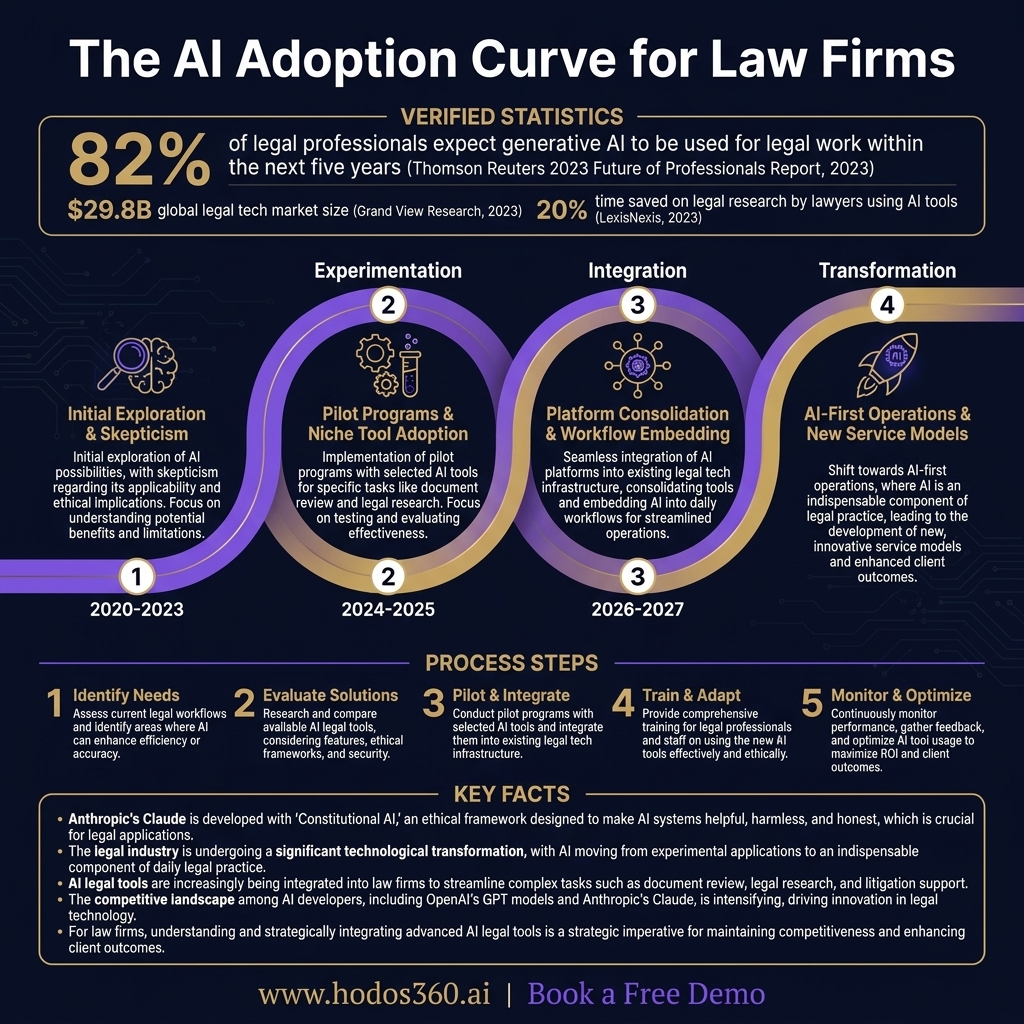
The plugin model, as adopted by Anthropic's Claude, is a clear step in this direction, allowing firms to customize their AI capabilities while ensuring interoperability with their core systems. This holistic approach ensures that AI enhances, rather than complicates, the daily workflow of legal professionals.
Continuous innovation and adaptation are crucial for law firms to thrive in this rapidly evolving environment. Legal professionals must commit to ongoing learning and upskilling, embracing concepts like 'prompt engineering' to effectively interact with AI models. Events like LegalTech NYC 2026 serve as vital forums for showcasing the latest advancements and fostering a culture of technological adoption within the legal community.
Learn more about Voice AI: Ultimate Competitive Landscape for Law Firms. Firms that invest in training their staff not only maximize their AI investments but also empower their lawyers to become more efficient, strategic, and valuable advisors to their clients.
Looking ahead, the economic implications of widespread AI adoption are profound.
Thomson Reuters Institute reports indicate that firms leveraging AI can expect significant cost savings through automation, increased billable hours due to enhanced efficiency, and the potential to develop entirely new service lines. Imagine offering predictive legal analytics as a standard service, or providing real-time compliance monitoring powered by AI.
These innovations can unlock new revenue streams and expand a firm's market reach, fundamentally reshaping its business model and competitive standing. The value proposition of AI legal tools extends beyond mere cost reduction to strategic growth and market differentiation.
Navigating the Regulatory Landscape of AI in Law
As AI legal tools become more sophisticated, the regulatory landscape is rapidly evolving to keep pace. Landmark legislation like the EU AI Act, which is expected to have global implications, sets forth stringent requirements for high-risk AI systems, a category that many legal AI applications could fall into.
This includes mandates for transparency, human oversight, data governance, and risk management. Law firms deploying AI must be acutely aware of these emerging regulations to ensure compliance, protect client data, and avoid potential legal liabilities, making regulatory foresight a critical component of AI strategy.
Furthermore, the ongoing debate about liability and accountability when AI makes errors in legal contexts remains a significant challenge.
Learn more about Legal AI Divide: Bridge the Gap, Thrive in 2026's Digital Era. If an AI system provides incorrect legal advice or misses a critical piece of evidence, who is ultimately responsible? This complex question requires a collaborative effort between legal professionals, tech developers, and policymakers to establish clear guidelines and frameworks.
Until then, the onus remains on the supervising attorney to ensure the accuracy and reliability of all AI-generated work, reinforcing the principle that AI is a tool to assist, not replace, human judgment and responsibility.

Key Takeaways and Next Steps for Forward-Thinking Law Firms
Anthropic's expanded Claude AI legal tools represent a significant milestone, solidifying AI's role as a transformative force in the legal industry. The key takeaway is clear: AI is no longer a futuristic concept but a present-day imperative for law firms seeking to optimize operations, enhance client service, and maintain a competitive edge.
Firms must move beyond mere awareness to active exploration and strategic implementation of these technologies. Identifying specific pain points within your practice – whether it's document review, client intake, or marketing – is the first step towards pinpointing where AI can deliver the most immediate and impactful benefits.
For forward-thinking law firms, the next steps involve a blend of technological investment and cultural adaptation. Start with pilot programs, investing in training for your legal teams, and fostering an environment that embraces innovation. Partnering with experienced legal tech providers is crucial for navigating this complex landscape.
The goal is not to replace the invaluable human element of legal practice but to augment it, freeing lawyers from mundane, repetitive tasks to focus on strategic thinking, complex problem-solving, and building deeper client relationships. The future of legal practice is a hybrid model, where human expertise is powerfully amplified by intelligent automation.
Embrace the future of legal tech with confidence. The integration of advanced AI legal tools into your firm's ecosystem will not only streamline operations but also position you as a leader in an increasingly tech-driven legal market. Schedule a personalized demo with HODOS 360 to see our comprehensive AI Law Firm Management System in action and how it empowers your firm to thrive.
From AI-powered legal workflows and intelligent case management to robust marketing and client communication tools, HODOS 360 provides the integrated solutions you need to leverage the full potential of AI.
Frequently Asked Questions
What are Anthropic's expanded Claude AI legal tools?+
Anthropic has expanded Claude's AI capabilities with 12 new legal practice plug-ins, including specialized tools for commercial counsel, employment counsel, and litigation support. These AI legal tools are designed to automate and enhance tasks like document review, legal research, contract analysis, and case management, making legal workflows more efficient and accurate for law firms.
How can AI legal tools benefit my law firm?+
AI legal tools offer numerous benefits, including significant efficiency gains in tasks like document review and legal research, reduced operational costs, improved accuracy, and enhanced client service through faster responses and personalized interactions. They free up lawyers to focus on higher-value strategic work, fostering greater innovation and competitiveness in the legal market.
What are the main challenges of adopting AI in legal practice?+
Key challenges include ensuring data security and client confidentiality, mitigating potential AI bias, overcoming resistance to change within the firm, and navigating the evolving regulatory landscape. Lawyers must also maintain human oversight and professional judgment, ensuring compliance with ethical obligations like ABA Model Rules 1.1 and 1.6 when using AI legal tools.
How does HODOS 360 align with these advancements?+
HODOS 360 provides an integrated AI Law Firm Management System that aligns perfectly with advancements like Anthropic's Claude. Our platform offers AI-powered legal workflows for case management, document automation, and client intake, alongside AI Marketing, AI Voice Assistants, and Web & Mobile Development. We empower firms to leverage cutting-edge AI legal tools for comprehensive operational and growth solutions.
Will AI replace lawyers?+
No, AI is not expected to replace lawyers. Instead, AI legal tools are designed to augment human capabilities, automating repetitive and time-consuming tasks. This allows lawyers to focus on complex problem-solving, strategic thinking, client relationships, and ethical decision-making, ultimately enhancing their effectiveness and value. The future of law is a hybrid model, combining human expertise with AI efficiency.