

Essential AI Citation Tracking: Boost Your Law Firm's Authority
In the bustling digital corridors of 2026, where generative AI models like OpenAI's ChatGPT, Google's Gemini, and Microsoft's Copilot increasingly serve as the first point of reference for complex inquiries, a new challenge confronts law firms: ensuring their invaluable intellectual property and expert analysis are properly attributed. Imagine a scenario where a boutique litigation firm, renowned for its groundbreaking work in intellectual property law—say, a firm like Susman Godfrey, known for its tenacious courtroom victories—publishes a seminal article on the evolving landscape of patent infringement in quantum computing. Weeks later, a prospective client, using an AI assistant to research the topic, receives a detailed summary that perfectly encapsulates the firm's unique insights, yet fails to mention the source. This isn't a hypothetical fear; it's a rapidly emerging reality that threatens to dilute the digital authority and brand recognition painstakingly built by legal professionals.
The ZDNET article, "How to check if ChatGPT and other AI tools cite your website - and improve your chances in 2026," highlights a critical shift. The traditional battle for search engine rankings is now augmented by the imperative to be recognized and cited by AI. For law firms, whose business relies heavily on reputation, expertise, and trust, this challenge is particularly acute. The content—be it a detailed analysis of a Supreme Court ruling, a guide to navigating complex regulatory changes, or an in-depth white paper on emerging legal tech—represents years of experience and specialized knowledge. When AI models ingest, synthesize, and regurgitate this information without proper citation tracking, the firm risks losing the credit, the lead, and ultimately, the client.
The strategic imperative for law firms is clear: passive content creation is no longer sufficient. It's time for a proactive approach to check AI attribution, ensuring that when these powerful algorithms draw upon your firm's expertise, they point back to your brand. This involves understanding how AI consumes information, optimizing your digital presence for AI visibility, and employing tools and strategies to monitor which AI models are referencing your content. Mastering this new frontier of digital attribution is not just about protecting intellectual property; it's about solidifying your firm's position as an undeniable authority in the legal AI ecosystem.
The Evolving Landscape of Legal Research and AI Attribution
The legal industry has witnessed an unprecedented acceleration in AI adoption. Firms like Allen & Overy made headlines with their partnership with Harvey AI, a generative AI platform designed for legal work, while Thomson Reuters continues to invest billions in integrating AI across its LexisNexis and Westlaw platforms. This integration signifies a profound shift from traditional keyword-based research to conversational, AI-driven knowledge retrieval. Lawyers and clients alike are increasingly turning to tools like ChatGPT, Gemini, and Copilot for quick summaries, initial research, and even drafting assistance. This convenience, however, comes with a significant caveat: the "black box" problem. As Dario Amodei, CEO of Anthropic, a leading AI safety and research company, frequently discusses, the internal workings of large language models (LLMs) can be opaque, making it challenging to trace the exact provenance of their outputs. This lack of transparency directly impacts a law firm's ability to ensure its content is cites correctly.
For law firms, the ethical and professional implications of AI misattribution are substantial. ABA Model Rule 1.1 (Competence) mandates that lawyers provide competent representation, which, in the age of AI, includes understanding the technology's limitations and ensuring the reliability of information derived from it. If an AI tool provides information based on a firm's unique analysis but fails to attribute it, not only does the firm lose credit, but the user might also mistakenly believe the AI itself is the primary source, undermining the firm's expertise. Furthermore, the risk of plagiarism, even if unintentional by the AI, can create reputational damage. A 2025 ABA TechReport survey revealed that while 65% of large law firms were experimenting with generative AI, over 70% expressed significant concerns about data accuracy and the provenance of AI-generated content. Learn more about Legal AI Problem: Mastering Ethical Tech in Law Firms 2026. This highlights a clear need for robust mechanisms to check AI outputs for proper sourcing.
The challenge extends beyond simple quotation. AI models don't just copy-paste; they synthesize, rephrase, and generate new text based on their vast training data. This means a firm's unique legal arguments, innovative strategies, or proprietary research methodologies could be absorbed and presented as general knowledge without any acknowledgment. Consider the intricate legal frameworks surrounding data privacy or emerging technologies, areas where a firm's specific interpretations or litigation strategies might be cutting-edge. If these nuanced insights are consumed by an AI and then regurgitated without attribution, the firm's brand identity as a thought leader in that niche is diminished. The objective is to make your content so authoritative and uniquely structured that AI models are compelled to reference it, and that you have the means to identify when they do.
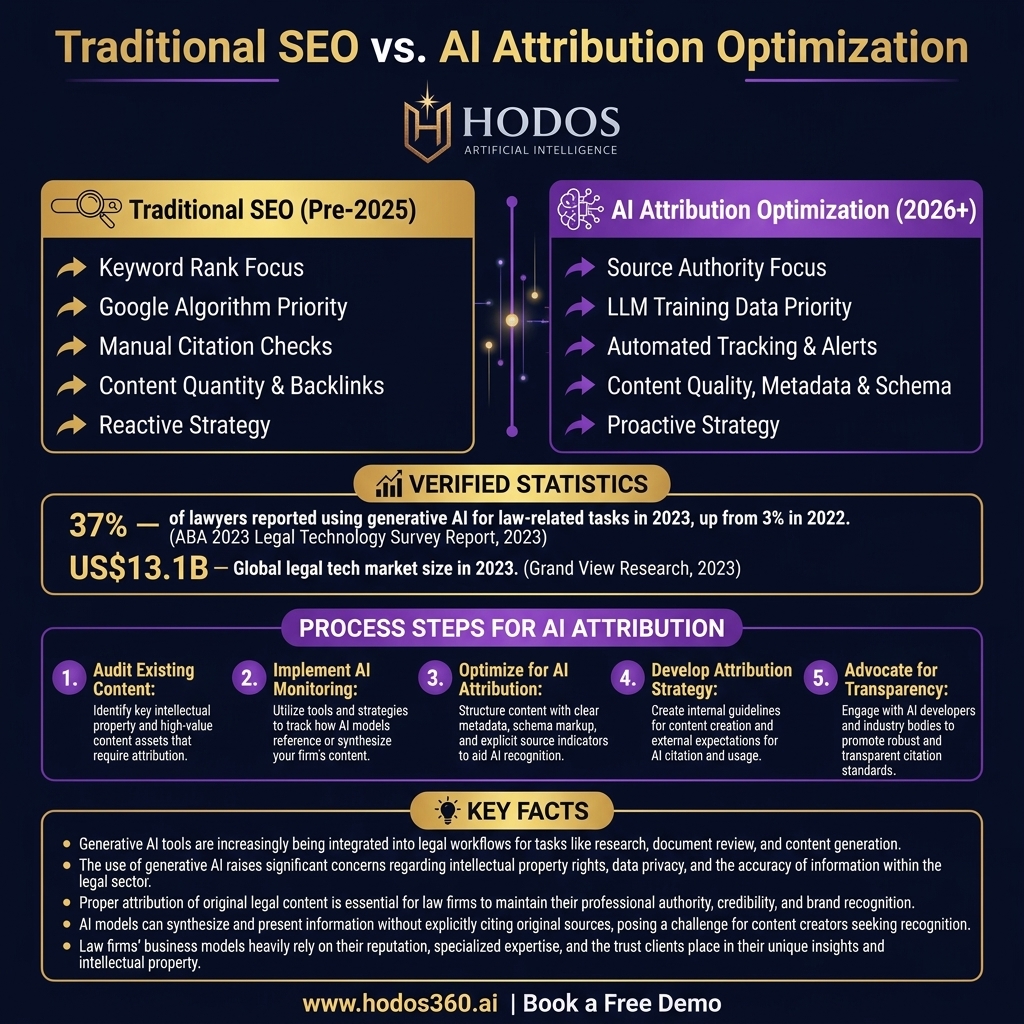
This evolving landscape necessitates a strategic pivot for legal marketing and web development. Law firms must move beyond traditional SEO tactics and adopt an AI-centric approach to content creation and digital presence. The goal is to establish your firm's website and its content as a trusted source that AI models will not only ingest but also explicitly cite. This requires a deeper understanding of how AI crawlers operate, what signals they prioritize for authority, and how to structure content to facilitate clear attribution. Without such a strategy, firms risk their valuable insights becoming mere data points in a vast, undifferentiated AI knowledge base, rather than recognized contributions from a specific, authoritative legal entity.
Why Your Law Firm's Content is Prime for AI Consumption
Legal content—from complex case summaries and expert witness analyses to detailed white papers on regulatory compliance and intellectual property law—is inherently valuable to AI. It's structured, often relies on precedents, and deals with highly specific terminology, making it ideal training data for LLMs aiming to provide authoritative answers. When a firm like Kirkland & Ellis publishes an in-depth analysis of a significant M&A transaction, that content isn't just for human readers; it's a rich dataset for AI to learn from, helping it understand the nuances of corporate law and deal structures.
The competitive edge for law firms lies in producing truly unique, high-quality content that stands out amidst the digital noise. AI models, in their quest for accuracy and authority, will prioritize sources that demonstrate deep expertise and originality. Learn more about AI Voice Agents: Essential Strategies for Law Firm Success. If your firm consistently publishes insightful articles that offer novel interpretations of statutes or provide practical solutions to complex legal problems, your content becomes a magnet for AI. The challenge then shifts to ensuring that when AI leverages these unique insights, it provides proper credit, thereby enhancing your brand's visibility and reinforcing its position as a go-to source in the legal field. It's about making your content indispensable, not just informative.
Proactive AI Citation Tracking: Strategies for Legal Professionals
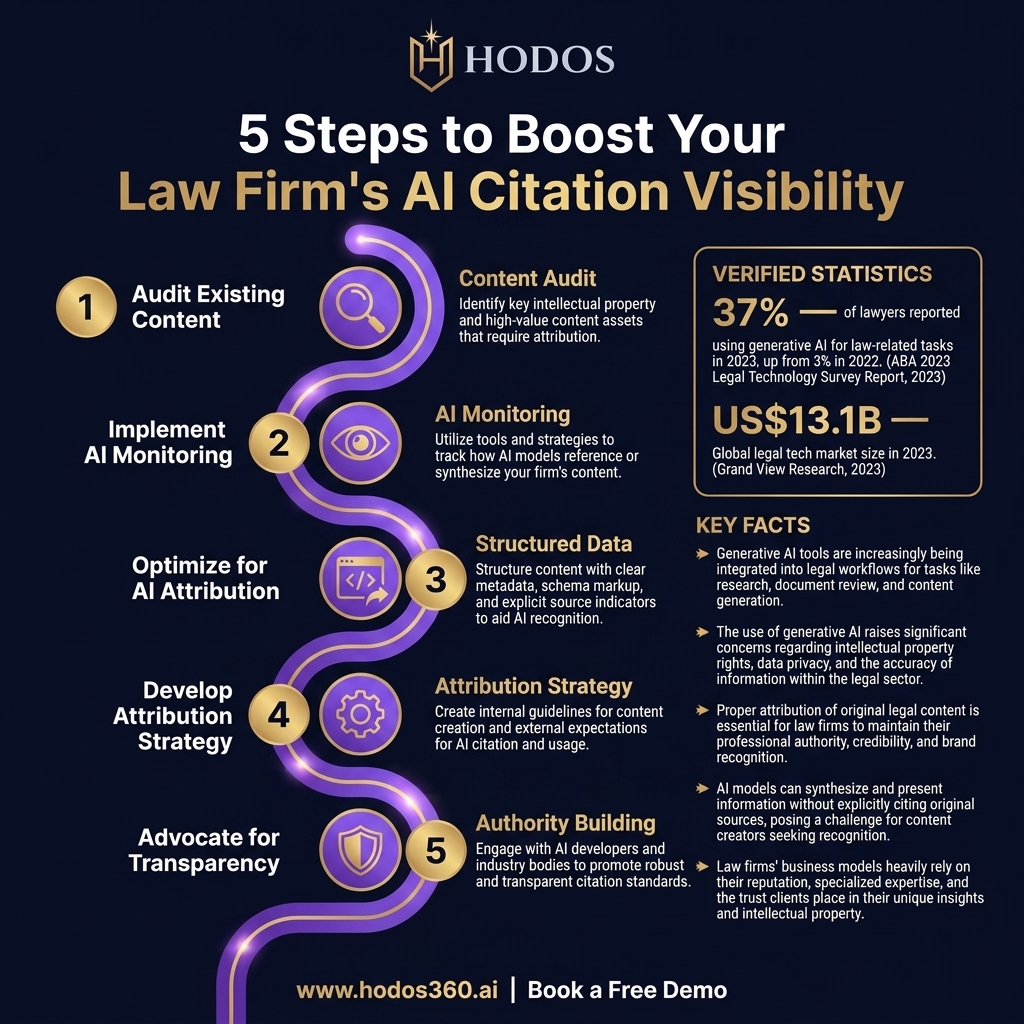
Moving beyond the passive wait-and-see approach, law firms must adopt proactive strategies for AI citation tracking. While manually searching for your firm's content within ChatGPT, Perplexity, Gemini, and Copilot can offer sporadic insights, this approach is neither scalable nor comprehensive. It's like trying to monitor a vast ocean with a single fishing line. Firms need to transition from anecdotal discovery to systematic monitoring. Emerging specialized AI visibility tools, akin to the new generation of SEO analysis platforms, are becoming crucial. These tools act as an AI detector for content attribution, scanning AI outputs and cross-referencing them with your published works to identify potential citations or thematic uses of your intellectual property. Companies are developing real-time tracking solutions that can alert firms when their unique phrases or concepts appear in AI-generated responses, offering a more robust way to check for attribution.
Technical SEO, traditionally focused on Google's algorithms, must now evolve to cater to AI crawlers. Understanding and optimizing your robots.txt file is paramount. AI bots like OpenAI's GPTBot, PerplexityBot, and GoogleOther are distinct from traditional search engine crawlers. Law firms must ensure these bots are granted appropriate access to their sites, allowing them to index and understand the content. Blocking these crawlers inadvertently means your valuable legal insights will not be available for AI consumption, thus missing out on potential attribution. Learn more about Essential AI Voice Agent Transfer: Mastering Warm Handoffs. Conversely, strategically allowing and even guiding these crawlers through well-structured sitemaps can enhance the likelihood of your content being recognized as a trusted source, improving overall visibility within the AI knowledge base.
Structured data markup, specifically Schema.org, plays an increasingly vital role in AI attribution. By implementing rich snippets for legal articles, Q&A sections, firm profiles, and case studies, law firms can provide AI models with explicit contextual clues about their content. For instance, marking up an article with LegalService or Article schema, including author and publisher properties, tells AI exactly who created the content and what its purpose is. This granular information makes it significantly easier for AI models to parse, categorize, and, crucially, cite the original source. Without clear structured data, AI models might struggle to differentiate between primary research, secondary analysis, and general information, leading to generic outputs that lack specific attribution.
Beyond technical adjustments, content strategy itself needs a re-evaluation. Firms must produce content that is not only informative but also inherently attributable. This means developing a unique voice, publishing proprietary research, and framing legal discussions in a way that is distinctly your firm's. When an AI model encounters highly original content, especially if it's consistently updated and linked to by other reputable sources, it increases the probability of explicit citation. This holistic approach, combining technical optimization with superior content strategy, is the cornerstone of effective AI citation tracking for law firms in the current digital climate.
Leveraging AI-Powered Web Development for Attribution
The foundation for strong AI attribution begins with a firm's digital home: its website. This is where HODOS 360's AI-powered Web & Mobile Development services become a strategic asset. Our platform isn't just about building aesthetically pleasing websites; it's about crafting a digital infrastructure optimized for the AI era. By leveraging AI-powered website building, firms can ensure their sites are inherently structured for AI consumption from the ground up. This means implementing responsive designs that are easily parsed by diverse AI crawlers, and utilizing high-converting templates that also embed best practices for AI-friendly content architecture.
Our SEO optimization strategies go beyond traditional keyword stuffing, focusing on semantic relevance and authority signals that AI models prioritize. Learn more about Legal AI Coordination: An Essential Shift for Law Firms. This includes advanced technical SEO configurations that improve your site's discoverability and make it easier for ChatGPT, Gemini, and other AI tools to correctly identify and cite your firm's unique content. By designing websites that are not only user-friendly but also machine-readable, HODOS 360 helps law firms future-proof their online presence, ensuring their expertise is recognized and attributed by the next generation of legal research tools. This proactive approach to web development is fundamental to achieving robust AI citation tracking and maintaining your firm's competitive edge.
Enhancing Your Digital Footprint for Optimal AI Citation
Beyond technical configurations, the intrinsic quality and uniqueness of your content remain paramount for optimal AI citation. In an age where AI can generate vast quantities of text, genuine thought leadership stands out. Law firms must prioritize publishing original legal analysis, deep dives into niche areas, and proprietary research that offers fresh perspectives, rather than generic summaries. As legal writing guru Professor Bryan Garner often emphasizes, clarity, precision, and originality are hallmarks of effective communication; these qualities also make content more digestible and attributable for AI. When AI encounters truly distinctive content, it’s more likely to recognize its value and, consequently, its source, thereby improving AI citation tracking.
Building a strong domain authority through authoritative backlinks and demonstrating E-A-T (Expertise, Authoritativeness, Trustworthiness) signals to AI models, just as it does to human readers and traditional search engines, that your content is reliable and worthy of tracking and citation. When reputable legal journals, academic institutions, or established industry bodies link to your firm's articles or white papers, it creates a powerful endorsement. This network of trust helps AI models ascertain the credibility of your content, increasing the likelihood that they will explicitly cite your firm's brand when referencing the information. This isn't just about SEO; it's about establishing digital credibility in the eyes of intelligent algorithms.
Consistency and freshness of content are also critical factors. Learn more about Essential AI Voice Assistant Strategies for Modern Law Firms. The legal landscape is in constant flux, with new legislation, court rulings, and technological advancements emerging regularly. AI models are programmed to prioritize the most current and relevant information. Law firms that consistently update their articles, publish timely legal guides, and maintain an active blog demonstrating their awareness of the latest developments are more likely to have their content favored by AI. For instance, a firm specializing in cybersecurity law that regularly updates its advice on evolving data breach regulations will be seen as a more authoritative and current source than one with outdated information, making its content more prone to AI citation.
Finally, a robust cross-platform presence amplifies the chances of AI encountering and citing your brand. Distributing your unique insights across various reputable legal platforms, professional social media channels (like LinkedIn), and industry-specific forums not only reaches a wider human audience but also broadens the scope for AI crawlers. Each additional platform where your authoritative content resides increases the data points available to AI models, enhancing the probability of recognition and explicit attribution. This multi-channel strategy ensures that your firm's expertise is pervasive across the digital ecosystem, making it harder for AI to overlook and easier to check for its citation.
Navigating the Ethical and Legal Dimensions of AI Attribution
The conversation around AI citation tracking is inextricably linked to broader ethical and legal challenges surrounding generative AI. One of the most contentious issues is copyright infringement, as evidenced by ongoing litigation such as *Getty Images v. Stability AI* and lawsuits filed by the Authors Guild against OpenAI. These cases highlight the legal community's growing concern over AI models being trained on copyrighted material without proper licensing or attribution. For law firms, this underscores the importance of not only seeking attribution for their own content but also being acutely aware of the sources AI tools use, especially when those tools are deployed for internal legal research or client-facing applications. Firms must ensure that their use of AI aligns with ethical guidelines and avoids inadvertently infringing on others' intellectual property.
The American Bar Association (ABA) has been actively developing guidelines and opinions on the ethical use of AI in legal practice, emphasizing transparency, accuracy, and client confidentiality. While specific rules on AI attribution are still evolving, the spirit of ABA Model Rule 1.6 (Confidentiality of Information) implicitly applies to how AI handles sensitive client data. Lawyers must ensure that any AI tool used does not inadvertently expose confidential client information during its training or operation. This extends to the data a firm provides to AI for analysis and, conversely, the data AI uses to generate responses that might pertain to a firm's expertise. Learn more about Essential Risk Management for Law Firms in the AI Era. The onus is on the firm to exercise due diligence in selecting and deploying AI technologies, including those that influence content visibility and citation.
Furthermore, the legislative landscape is rapidly adapting to the realities of AI. The European Union's AI Act, for example, is set to impose stringent transparency requirements on high-risk AI systems, including obligations related to data governance and potentially source attribution. While initially focused on areas like medical devices and critical infrastructure, the principles of transparency and accountability are likely to permeate into general-purpose AI models like ChatGPT and Gemini, compelling them to provide more explicit information about their training data and sources. Law firms need to stay abreast of these legislative developments, as they will directly impact the tools available for AI citation tracking and the legal frameworks governing content attribution.
Ultimately, navigating these ethical and legal dimensions requires a sophisticated understanding of both technology and jurisprudence. Law firms cannot afford to view AI attribution as a mere technicality; it is a fundamental aspect of maintaining professional integrity, protecting intellectual capital, and adhering to evolving regulatory standards. By actively engaging with these challenges, firms can not only safeguard their own interests but also contribute to the development of a more responsible and transparent AI ecosystem within the legal sector. This proactive engagement is key to ensuring that the benefits of AI are realized without compromising core legal principles.

Key Takeaways and Next Steps for Your Law Firm
The era of generative AI has fundamentally reshaped how information is discovered and consumed, making AI citation tracking an essential component of any forward-thinking law firm's digital strategy. No longer is it sufficient to simply rank high on search engines; your firm must now actively ensure its valuable insights are recognized and attributed by the AI models that are increasingly acting as gatekeepers of knowledge. This isn't just about protecting your firm's intellectual property; it's about reinforcing your brand's authority, enhancing its visibility, and securing future client engagements in a competitive landscape.
Your immediate next steps should involve a multi-pronged approach. First, conduct a thorough audit of your firm's existing digital content to identify its unique value proposition and ensure it's structured for AI readability. Second, implement technical optimizations such as structured data markup and review your robots.txt settings to explicitly allow and guide AI crawlers like GPTBot and PerplexityBot. Third, explore emerging AI visibility tools that can help you proactively check if ChatGPT, Gemini, and Copilot are cites your website. Finally, commit to a content strategy that prioritizes originality, depth, and consistent updates, signaling to AI models that your firm is a trusted and authoritative source.
Don't let your firm's hard-earned expertise become an anonymous data point in the vast ocean of AI-generated content. Partner with HODOS 360 to build an AI-ready digital strategy that ensures your firm's insights are not only discovered but also properly attributed. Our AI-powered Web & Mobile Development services are designed to optimize your online presence for the future, giving you the tools to master AI citation tracking and amplify your influence across the legal tech landscape. Schedule a consultation today to transform your digital footprint into an AI-attributable powerhouse.
Frequently Asked Questions
What is AI citation tracking and why is it important for law firms?+
AI citation tracking involves monitoring and optimizing your online content to ensure that generative AI models like ChatGPT, Gemini, and Copilot correctly attribute information sourced from your law firm's website. It's crucial for law firms to protect their intellectual property, maintain digital authority, enhance brand visibility, and ensure their expertise is recognized in an AI-driven information ecosystem.
How can I check if ChatGPT or other AI tools cite my website?+
While manual searches within AI interfaces offer limited insight, more robust methods include optimizing your website with structured data (Schema.org), ensuring AI crawlers have access via robots.txt, and utilizing specialized AI visibility tools. These emerging platforms are designed to help you identify and check when your content is being referenced or synthesized by various AI models, providing a more systematic AI citation tracking approach.
What technical adjustments improve AI attribution for law firm websites?+
Key technical adjustments include optimizing your robots.txt to permit AI crawlers (e.g., GPTBot, PerplexityBot), implementing comprehensive structured data (Schema.org) for your legal articles and firm profiles, and ensuring a clean, semantically rich website architecture. These steps make it easier for AI models to understand, index, and correctly attribute your content, significantly improving your AI visibility and citation potential.
Are there legal risks if AI doesn't cite my law firm's content?+
Yes, there are potential legal and ethical risks. Lack of attribution can dilute your firm's brand and expertise, potentially leading to lost leads. More broadly, it touches on copyright infringement concerns, as AI models trained on your content without proper licensing or attribution could face legal challenges, as seen in cases like *Getty Images v. Stability AI*. Adhering to ABA guidelines on AI use also emphasizes responsible information handling.
How does HODOS 360 help law firms with AI visibility and citation?+
HODOS 360's AI-powered Web & Mobile Development services are designed to build websites optimized for AI attribution. We focus on AI-friendly site architecture, advanced SEO that caters to AI crawlers, and high-converting templates that also embed structured data best practices. This ensures your firm's content is easily discoverable, understood, and more likely to be accurately cites by ChatGPT, Gemini, and other AI tools, enhancing your digital authority.