


AI Voice Assistant: Essential Legal Practice Game-Changer
The legal industry, often perceived as resistant to rapid technological shifts, is currently witnessing an unprecedented wave of innovation, largely driven by advancements in artificial intelligence. Just recently, PYMNTS.com highlighted a fascinating development: Batteries Plus, a leading national retailer, has deployed an AI named Edison to answer every incoming call, freeing up their staff for in-store customer engagement. This isn't merely a customer service novelty; it's a profound demonstration of how AI Voice Assistants are redefining operational efficiency and client interaction across diverse sectors. For law firms, where every call can represent a critical new client or an urgent existing matter, the implications are nothing short of transformative.
Historically, law firms have grappled with the challenge of managing high call volumes while ensuring personalized, timely responses. Missed calls, long hold times, or the inability to offer multilingual support can translate directly into lost revenue and diminished client satisfaction. The administrative burden of client intake and lead qualification often falls on highly compensated paralegals or receptionists, diverting their focus from more complex legal work. According to the ABA TechReport 2023, only 27% of law firms currently use AI for client communication, indicating a significant untapped potential for growth and competitive advantage. The success seen by companies like Batteries Plus underscores a critical truth: intelligent automation, particularly through AI Voice Assistants, is no longer a futuristic concept but a present-day imperative for businesses aiming to thrive in a demanding, always-on economy.
For law firms, the adoption of an AI Voice Assistant isn't just about answering calls; it's about fundamentally reshaping the client journey, from the initial point of contact to ongoing case management. Imagine a system that never sleeps, speaks multiple languages fluently, and can intelligently pre-qualify leads, schedule appointments, and answer routine questions with precision and empathy. This is the promise of advanced AI Voice Assistants, offering a strategic edge in a competitive legal landscape. Firms that embrace these artificial intelligence tools are not just modernizing; they are future-proofing their practice, ensuring consistent, high-quality service, and optimizing resource allocation. It's time for legal professionals to move beyond traditional answering services and explore the sophisticated capabilities that AI voice technology brings to their practice.
Beyond the Answering Machine: The Rise of AI Voice Assistants in Legal
The evolution of voice technology from rudimentary interactive voice response (IVR) systems to today's sophisticated AI Voice Assistants marks a significant leap. Early IVR systems were often frustrating, rigid menus that offered little real assistance. Modern AI, powered by large language models and advanced natural language processing, can understand context, nuances, and even emotional cues in human speech. This allows for genuinely conversational interactions, capable of handling complex queries and providing tailored responses. Take Edison, the AI answering every Batteries Plus call, as a prime example; such systems are no longer just call routers but intelligent agents capable of meaningful engagement. For law firms, this means moving beyond simple call forwarding to an AI that can truly engage with potential clients, gather critical preliminary information, and represent the firm's professionalism from the very first interaction.
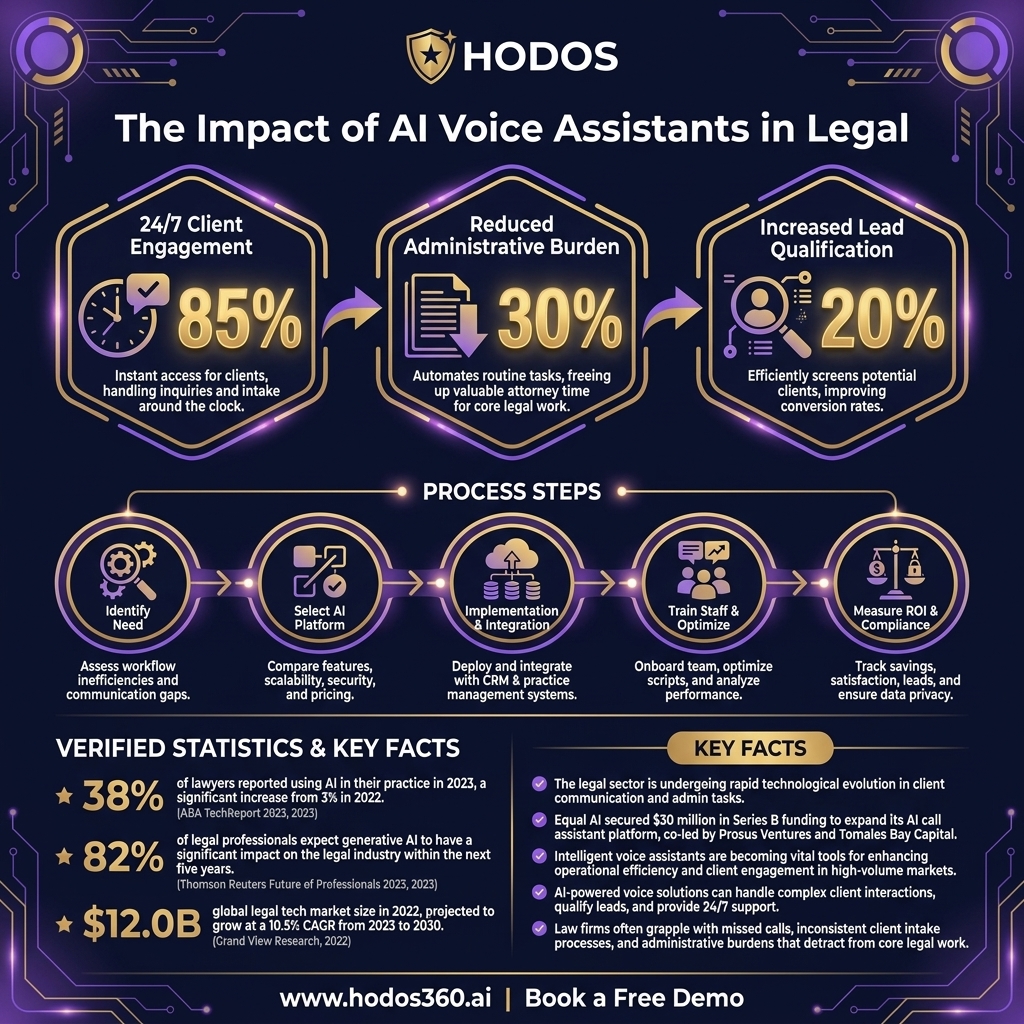
Leading legal tech providers, including platforms like HODOS 360, are now deploying AI Voice Assistants specifically designed for the unique demands of the legal sector. These tools go far beyond basic call answering. They are equipped to perform sophisticated lead qualification, asking targeted questions to ascertain the nature of a potential client's legal issue, their jurisdiction, and their financial capacity. Learn more about AI Website Design: The Essential Guide for Law Firms. They can seamlessly book appointments directly into attorneys' calendars, reducing no-shows and optimizing scheduling. Furthermore, the ability to offer 24/7 multilingual support is a game-changer in diverse communities, ensuring that language barriers never prevent a potential client from accessing legal assistance. This level of comprehensive, always-on support significantly broadens a firm's reach and accessibility, a crucial factor in today's client-centric legal economy.
The strategic advantage of these AI voice assistant tools cannot be overstated. By automating the initial client contact and qualification process, law firms can significantly reduce the administrative burden on their human staff. Paralegals and legal assistants, who often spend a considerable portion of their day on phone calls and scheduling, can be reallocated to higher-value legal tasks, enhancing overall firm productivity and job satisfaction. This shift not only optimizes operational costs but also allows legal professionals to focus on what they do best: providing expert legal counsel. The integration of such advanced artificial intelligence into daily operations is not just about efficiency; it's about strategically positioning a firm for growth and sustained success in an increasingly competitive market.
The Strategic Advantage: How AI Voice Assistants Elevate Client Experience and Firm Operations
The modern legal client expects responsiveness and accessibility, mirroring the instant gratification available in almost every other service industry. AI Voice Assistants directly address this expectation by providing 24/7 availability. A potential client calling at midnight with an urgent matter no longer hits an answering machine or a closed office; they are greeted by an intelligent agent capable of understanding their needs, offering preliminary information, and setting up a consultation. This round-the-clock service significantly enhances the client experience, conveying a message of dedication and readiness. Furthermore, the consistency of an AI Voice Assistant ensures that every client receives the same high standard of initial interaction, regardless of who answers the phone, fostering a sense of reliability and professionalism that can be challenging to maintain with human staff alone.
Beyond client satisfaction, the operational efficiencies gained are profound. Firms can see a significant reduction in missed calls, which translates directly to more qualified leads and a higher client acquisition rate. The AI's ability to pre-qualify leads means attorneys and their teams spend less time on unproductive calls and more time engaging with genuinely promising prospects. This optimization of time is invaluable. For instance, a Gartner report from 2024 indicated that organizations leveraging AI for customer service could reduce customer service costs by up to 40%. Learn more about Voice AI: Essential for Law Firms' Client Engagement. While legal services have unique complexities, similar efficiencies can be realized. This allows firms to scale their operations without necessarily increasing their headcount, making growth more sustainable and profitable in the long run. The implementation of sophisticated AI voice assistant technology is a strategic investment that pays dividends in both client loyalty and bottom-line performance.
Consider the impact on legal marketing and competitive positioning. Firms that can boast 24/7 multilingual support and instant lead qualification capabilities immediately differentiate themselves in a crowded market. Patrick Palace, a prominent legal tech advocate and attorney, has often emphasized the importance of innovation in attracting and retaining clients. Firms embracing AI voice technology are seen as forward-thinking and client-centric, appealing to a new generation of clients who expect seamless digital interactions. This isn't just about efficiency; it's about building a brand that resonates with modern expectations and demonstrates a commitment to leveraging the best tools available to serve clients effectively. This commitment to innovation is a powerful message that can significantly impact a firm's reputation and growth trajectory.
Streamlining Client Intake and Lead Qualification
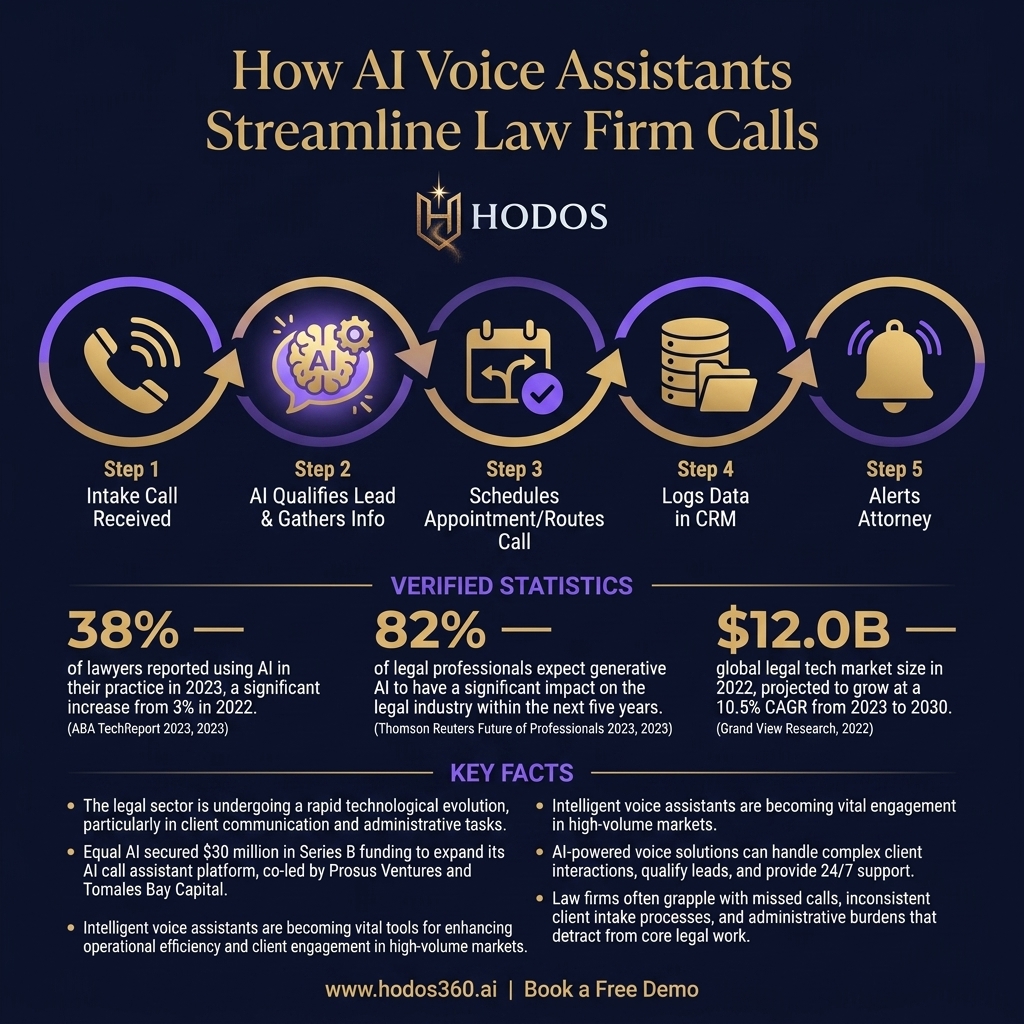
One of the most immediate and impactful applications of AI Voice Assistants in law firms is the streamlining of client intake and lead qualification processes. Traditionally, this involves a series of phone calls, email exchanges, and manual data entry, consuming significant staff time. An AI Voice Assistant can automate much of this initial legwork, acting as a sophisticated digital intake specialist. It can gather essential information such as the prospective client's name, contact details, the nature of their legal issue, relevant dates, and even initial financial information, all through a natural, conversational interface. This data is then accurately logged and, in many cases, directly integrated into the firm's case management system, preparing a comprehensive profile before a human attorney ever engages.
This automated pre-qualification ensures that attorneys and paralegals only spend their valuable time on leads that are genuinely viable and within the firm's practice areas and financial parameters. Learn more about AI Legal Growth: The Ultimate Guide for Modern Law Firms. Imagine the efficiency gains: instead of an attorney fielding numerous exploratory calls, they receive a notification for a scheduled consultation with a pre-vetted client whose basic information is already organized. This not only dramatically shortens the sales cycle but also improves the quality of initial client interactions, as the attorney can approach the meeting with a foundational understanding of the case. The AI's role here is not to replace the human element but to optimize it, allowing legal professionals to focus their expertise where it matters most: on providing legal counsel and building client relationships. This intelligent front-end automation is a cornerstone of a truly modern and efficient law practice.
Navigating Ethical and Practical Considerations in AI Voice Adoption
While the benefits of AI Voice Assistants are clear, their adoption within the legal sector demands careful consideration of ethical and practical implications. The cornerstone of the attorney-client relationship is trust, built on confidentiality, competence, and clear communication. Firms must ensure that their AI solutions comply with stringent legal ethics, particularly regarding data privacy and the unauthorized practice of law. The ABA Model Rule 1.6 (Confidentiality of Information) is paramount; any system handling client data must employ robust encryption and security protocols to prevent breaches. Furthermore, clients must be informed when they are interacting with an AI, maintaining transparency and avoiding any potential misrepresentation. The human oversight of AI interactions remains crucial, as no AI can yet replicate the nuanced judgment and empathy required for complex legal advice, ensuring that the AI acts as an assistant, not a replacement for a licensed attorney.
Concerns regarding data security are legitimate and must be proactively addressed. Implementing AI Voice Assistants requires a secure platform that protects sensitive client information from cyber threats. Firms must partner with legal tech providers who prioritize data governance, compliance, and have a proven track record of safeguarding confidential data. This involves not only technical safeguards but also clear policies on data retention, access, and usage. Learn more about AI Back Office: The Essential Guide to Legal Firm Automation. The legal industry has witnessed numerous high-profile data breaches, making robust security a non-negotiable aspect of any technology adoption. Firms must perform thorough due diligence on any AI vendor, understanding their security architecture and adherence to industry standards, to mitigate risks and uphold their ethical obligations to clients.
Beyond security, the ethical use of AI also touches upon the scope of its capabilities. An AI Voice Assistant should be programmed to identify when a query moves beyond its pre-defined parameters and requires human intervention. It should never offer legal advice or opinions. Its role is to gather information, schedule, and provide factual, non-advisory responses. This distinction is vital to prevent the unauthorized practice of law, a serious ethical breach. Firms must invest in thorough training for their AI models, ensuring they operate strictly within these boundaries and are regularly audited for compliance. The goal is to augment human capabilities, not to replace the critical judgment and ethical responsibilities that define the legal profession, aligning with the spirit of ABA Model Rule 1.1 (Competence), which requires lawyers to understand the benefits and risks of technology.
Data Security and Client Confidentiality in AI Voice Interactions
The integrity of the attorney-client privilege and the duty of confidentiality are cornerstones of legal practice. When integrating AI Voice Assistants, law firms must ensure that these principles are not compromised. This means selecting AI solutions that are built with enterprise-grade security, including end-to-end encryption for all voice data and transcripts, secure cloud storage, and strict access controls. Furthermore, the AI system should be designed to redact or flag highly sensitive information for human review, preventing automated systems from misinterpreting or mishandling confidential details. Firms should also have clear internal policies for how AI-generated data is stored, processed, and ultimately deleted, aligning with data privacy regulations such as GDPR or CCPA, even if not directly applicable, as a best practice.
Transparency with clients about the use of AI is also a critical aspect of maintaining confidentiality and trust. While an AI Voice Assistant can significantly enhance efficiency, clients should be aware that their initial interactions might be with an automated system. Learn more about AI Marketing Law Firm Growth Strategies. This disclosure can be handled gracefully at the outset of the call, ensuring informed consent. Ultimately, the responsibility for safeguarding client confidentiality rests with the law firm. Leveraging AI voice assistant technology demands a proactive, vigilant approach to data security, ensuring that the firm's technological advancements never come at the expense of its ethical obligations or its clients' trust. The focus must always be on enhancing service securely and responsibly, reinforcing the firm's reputation for both innovation and integrity.
Integrating AI Voice with Your Existing Legal Tech Ecosystem
The true power of an AI Voice Assistant is unleashed when it is seamlessly integrated into a law firm's existing legal tech ecosystem. Standalone solutions, while offering some benefits, fall short of the transformative potential of a unified platform. Imagine an AI that not only answers calls and qualifies leads but also automatically populates new client information into your case management system (CMS), updates your billing software, and syncs appointments with your team's shared calendar. This level of integration eliminates manual data entry, reduces errors, and ensures that all departments operate from a single, consistent source of truth. Firms using comprehensive platforms like HODOS 360's AI Law Firm Management System understand that interconnected tools create unparalleled efficiency and strategic oversight.
For example, if a potential client calls and the AI Voice Assistant qualifies them, schedules a consultation, and gathers preliminary case details, this information should instantly flow into the firm's CRM and CMS. This allows attorneys and paralegals to access all relevant data before the first meeting, ensuring a more productive and informed initial consultation. Leading platforms in the legal tech space, such as Clio and MyCase, have demonstrated the power of integrated solutions, and AI Voice Assistants represent the next logical step in this evolution. Learn more about AI Litigation: Essential Guide for Navigating Pro Se AI Use. The goal is to create a frictionless workflow where information moves intelligently and automatically, supporting every stage of the client lifecycle and case progression. This level of integration is not just about convenience; it's about building a robust, resilient, and highly responsive legal practice.
The future of legal practice management lies in intelligent automation that connects every aspect of a firm's operations. An AI Voice Assistant becomes more than just a call handler; it becomes an integral part of the firm's client acquisition, case management, and administrative infrastructure. This synergy allows firms to achieve a level of efficiency and client service that was previously unattainable. When selecting an AI Voice Assistant, firms should prioritize solutions that offer robust API integrations and are designed to work harmoniously with their existing software, creating a cohesive and powerful technological backbone for their practice. This strategic approach ensures that the investment in AI yields maximum returns, transforming fragmented processes into a streamlined, high-performing legal operation.
- ✓Enhanced Data Consistency: Automatically syncs client data across CRM, CMS, and billing, reducing manual errors and ensuring all systems reflect the latest information.
- ✓Streamlined Workflows: Eliminates redundant tasks, such as manual appointment scheduling and initial data entry, freeing up staff for more complex legal work.
- ✓Improved Client Onboarding: Ensures a smooth transition from initial inquiry to active client status, with all necessary information readily available to the legal team.
- ✓Better Resource Allocation: Allows paralegals and legal assistants to focus on high-value tasks, optimizing their time and expertise.
- ✓Comprehensive Analytics: Provides insights into call volumes, lead conversion rates, and client engagement, helping firms make data-driven decisions for growth.
- ✓Scalability and Growth: Enables firms to handle increased client demand without proportional increases in administrative staff, supporting sustainable expansion.
The Future of Legal Communications: AI and Beyond
The journey of AI in legal communications is far from over; it's just beginning. Beyond current capabilities, we can anticipate AI Voice Assistants evolving to offer even more sophisticated services. Imagine AI systems that can proactively identify potential legal needs based on client interactions, suggest relevant legal resources, or even assist in drafting initial communication templates based on call summaries. The integration of voice AI with other artificial intelligence services, such as document automation, legal research platforms, and predictive analytics, will create a truly intelligent and responsive legal ecosystem. This synergistic approach will empower firms to deliver not just efficient service but also proactive, data-driven legal strategies.
The future will likely see AI Voice Assistants becoming personalized digital concierges for clients, capable of handling a broader range of inquiries and providing more tailored support throughout their legal journey. The ongoing advancements in natural language understanding and generation promise to make these interactions virtually indistinguishable from human conversation, further enhancing client satisfaction and trust. As the legal industry continues to navigate the complexities of digital transformation, AI Voice Assistants will remain at the forefront, continually redefining what's possible in legal communications and client service. Firms that embrace this evolution will not only stay competitive but will also shape the very future of legal practice, setting new standards for efficiency, accessibility, and client-centricity in the legal economy.

Key Takeaways and Next Steps for Forward-Thinking Law Firms
The shift towards AI Voice Assistants in the legal sector is not merely a trend; it's a fundamental re-evaluation of how law firms can operate more efficiently, enhance client satisfaction, and remain competitive. The success stories, from retail giants like Batteries Plus to pioneering law firms, underscore the tangible benefits: 24/7 availability, improved lead qualification, reduced administrative burden, and consistent, professional client interactions. For forward-thinking law firms, the question is no longer if to adopt AI, but how and when to strategically integrate these powerful tools into their practice. The legal economy demands innovation, and AI voice assistant technology offers a clear path to meeting those demands while upholding the highest standards of legal service.
To embark on this transformative journey, law firms should begin by assessing their current communication bottlenecks and client intake processes. Identify areas where an AI Voice Assistant could provide the most immediate impact. Next, research and partner with reputable legal tech providers that offer secure, scalable, and ethically compliant AI solutions tailored to the legal industry. Prioritize platforms that offer robust integration capabilities with your existing practice management software, ensuring a seamless workflow. By taking these deliberate steps, law firms can leverage the power of AI Voice Assistants to not only optimize their operations but also elevate their client experience, positioning themselves for sustainable growth and leadership in the evolving legal landscape. HODOS 360 offers comprehensive AI solutions, including advanced AI Voice Assistants, designed to empower law firms to thrive in the digital age.
Frequently Asked Questions
What is an AI Voice Assistant for law firms?+
An AI Voice Assistant for law firms is an intelligent automated system designed to handle phone calls, qualify leads, book appointments, and answer routine client queries using natural language processing. Unlike traditional answering services or IVR, it can understand context and engage in conversational interactions, significantly enhancing client service and operational efficiency for legal practices.
How does an AI Voice Assistant improve client intake?+
AI Voice Assistants streamline client intake by automating the initial information gathering and lead qualification. They can collect essential details from potential clients, assess their needs, and determine if they fit the firm's practice areas, then automatically schedule consultations and populate data into the firm's CRM or case management system, saving significant staff time.
Are AI Voice Assistants ethically compliant for legal use?+
Yes, when implemented responsibly. Ethical compliance requires firms to ensure data security, client confidentiality (e.g., ABA Model Rule 1.6), and transparency about AI interaction. The AI must be programmed not to offer legal advice and should always operate under human oversight, adhering to professional competence standards (e.g., ABA Model Rule 1.1) to avoid the unauthorized practice of law.
Can AI Voice Assistants integrate with existing legal software?+
Absolutely. The most effective AI Voice Assistants are designed for seamless integration with a firm's existing legal tech ecosystem, including case management systems (CMS), client relationship management (CRM) software, and billing platforms. This integration ensures data consistency, automates workflows, and provides a unified view of client interactions and case progress.
What are the key benefits of adopting AI Voice Assistants for law firms?+
Key benefits include 24/7 client availability, improved lead qualification and conversion rates, significant reduction in missed calls, decreased administrative burden on staff, consistent and professional client interactions, and the ability to offer multilingual support. These advantages lead to enhanced client satisfaction, operational efficiency, and a stronger competitive position in the legal market.