
Essential AI Answering Service for Law Firms: A Game Changer
The legal landscape is in constant flux, but few developments have captured attention quite like the rapid integration of artificial intelligence. Just this week, the news broke that NevTech, an Indiana-based firm, launched its AI Web Design and AI Answering Service specifically for local businesses, signaling a clear shift towards automated client interactions. This move, while regional, echoes a much larger, global trend impacting law firms: the imperative to optimize every touchpoint with prospective and existing clients. For attorneys and legal professionals, the implications are profound, moving beyond mere efficiency gains to redefine client engagement and operational strategy.
Historically, managing inbound calls has been a significant bottleneck for law firms. Every missed call represents a potential lost client, a missed opportunity for a new case, or a frustrated existing client. Traditional receptionists, while invaluable, are bound by working hours, lunch breaks, and the sheer volume of diverse inquiries—from urgent legal questions to basic administrative requests. This human limitation often translates into suboptimal client experiences, particularly in a 24/7 digital world where clients expect immediate responses. The challenge has always been how to maintain a personal touch while scaling responsiveness, a dilemma that AI voice assistants are now poised to resolve.
The advent of sophisticated AI answering services marks a pivotal moment, offering law firms an unprecedented opportunity to elevate their client service, streamline operations, and capture every potential lead. These aren't just automated phone trees; they are intelligent systems capable of understanding nuances, qualifying leads, scheduling appointments, and providing information with remarkable accuracy and empathy. As firms like NevTech demonstrate the localized power of these tools, the broader legal community must recognize that adopting an advanced AI answering service is no longer a luxury but a strategic necessity to remain competitive and client-centric in an increasingly automated world. The question is no longer *if* AI will transform legal communication, but *how swiftly* firms will embrace this change.
The Rise of AI Voice Assistants in Legal Operations
The legal sector has long been characterized by its reliance on human expertise and traditional processes. However, the emergence of AI voice assistants is rapidly challenging this status quo, ushering in an era where technology augments, rather than replaces, human legal professionals. The recent launch by NevTech in Indiana exemplifies this trend, providing businesses, including law firms, with an AI answering service capable of 24/7 operations, lead qualification, and appointment booking. This localized development is a microcosm of a global movement, with major legal tech companies and startups investing heavily in conversational AI. For instance, companies like LexisNexis and Thomson Reuters are integrating advanced AI capabilities into their research platforms, and smaller, agile startups are focusing specifically on automating front-office functions for law firms, recognizing the immense value in capturing and nurturing leads instantaneously.
The shift is driven by both technological maturity and market demand. AI models, particularly large language models (LLMs), have become sophisticated enough to handle complex conversations, understand intent, and process natural language with a high degree of accuracy. This means an AI voice assistant can do more than just route calls; it can engage in meaningful dialogue, answer FAQs, gather critical client information, and even explain basic legal processes—all without human intervention. According to a 2023 report by Gartner, global end-user spending on conversational AI solutions is projected to reach nearly $15 billion by 2027, underscoring the widespread adoption across industries, including specialized sectors like legal. Learn more about Law Firm AI Funding: The Ultimate Insurer Debate. Law firms that embrace this technology are finding themselves better equipped to handle fluctuating call volumes, extend their operational hours, and provide a consistent, high-quality client experience regardless of time zones or staffing levels.
Beyond basic call handling, these AI voice assistants offer strategic advantages by transforming the client intake process. They act as the firm's first point of contact, ensuring that every inquiry is logged, qualified, and directed appropriately. This eliminates the common pain point of missed calls during peak hours or after-hours, which, according to an ABA Legal Technology Survey Report from 2022, can account for up to 30% of potential new client inquiries for some firms. By automating this initial screening, attorneys and paralegals are freed from time-consuming administrative tasks, allowing them to focus on substantive legal work and client matters that require their specialized expertise. This operational efficiency not only saves costs but also significantly enhances the firm's capacity to take on new cases and manage its existing caseload more effectively. The competitive pressure to adopt such technologies is mounting, as firms that delay risk falling behind those that can offer immediate, round-the-clock responsiveness.
From Traditional Reception to Intelligent Automation
The transition from a purely human-centric reception model to one augmented by AI is not about replacement, but about elevation. Traditional receptionists are invaluable for their human touch, empathy, and ability to handle highly nuanced or emotionally charged situations. However, their capacity is finite. An AI voice assistant, conversely, offers infinite scalability and unwavering availability. Consider the case of a mid-sized personal injury firm in a competitive market like Indianapolis. Before adopting an AI answering service, their human receptionist might handle 100-150 calls a day, often juggling multiple lines and administrative duties. After hours, calls would go to voicemail, leading to potential delays and lost leads. Learn more about AI Marketing: The Ultimate Guide to Self-Optimizing Law Firms. With an AI system, every single call is answered instantly, qualified against predefined criteria, and either directed to the appropriate human during business hours or captured as a detailed lead for follow-up, complete with appointment booking options.
This intelligent automation extends beyond simple answering. Modern AI voice assistants can integrate seamlessly with a firm's existing case management systems, client relationship management (CRM) software, and calendars. For example, when a prospective client calls inquiring about a specific legal matter, the AI can not only identify the type of case but also check attorney availability, schedule an initial consultation, and even send a pre-intake questionnaire via email or SMS—all within a single, fluid interaction. This level of integration was once the domain of large, enterprise-level call centers, but is now accessible to law firms of all sizes through platforms like HODOS 360's AI Voice Assistants. Such capabilities dramatically reduce the administrative burden on staff, allowing them to focus on more complex tasks that require human judgment and empathy, thereby enhancing overall productivity and job satisfaction within the firm. The strategic deployment of an AI answering service transforms a cost center into a powerful lead generation and client retention engine.
Beyond Call Answering: Strategic Advantages for Law Firms
The true power of an AI answering service extends far beyond simply picking up the phone. For law firms, these advanced systems offer a multitude of strategic advantages that directly impact profitability, client satisfaction, and operational efficiency. One of the most significant benefits lies in the optimization of the client intake process. Traditional intake can be a lengthy, resource-intensive endeavor, often requiring multiple phone calls, emails, and manual data entry. AI voice assistants streamline this from the very first interaction. They can meticulously gather essential information from callers, such as their legal issue, contact details, and any preliminary case facts, ensuring that when a human attorney or paralegal takes over, they are already equipped with a comprehensive understanding of the client's needs. This drastically reduces the time spent on initial screening, allowing legal professionals to focus their expertise on substantive legal analysis from the outset.
Moreover, AI's ability to perform sophisticated lead qualification is a game-changer for law firms. Not every caller is a viable client, and distinguishing between serious prospects and general inquiries can consume valuable staff time. An AI receptionist can be programmed with specific criteria to qualify leads—for example, asking about case details, jurisdiction, or financial capacity—and then intelligently route only the most promising candidates to the appropriate attorney. Learn more about AI Web Development: The Ultimate Shift for Law Firms. This precision ensures that legal professionals are spending their time on high-potential cases, thereby increasing conversion rates and maximizing return on investment for marketing efforts. Data from a 2023 McKinsey report on AI in business operations highlighted that companies leveraging AI for customer service reported a 15-20% increase in lead conversion rates, a metric directly applicable to the legal sector's pursuit of new clients.
Furthermore, the automation of appointment booking and scheduling is another significant strategic advantage. Manual scheduling is prone to errors, requires constant back-and-forth, and ties up administrative staff. AI voice assistants, integrated with a firm's calendar system, can instantly identify available slots, confirm appointments, send reminders, and even reschedule with minimal human intervention. This not only improves efficiency but also enhances the client experience by offering immediate solutions and reducing friction. Imagine a prospective client calling after hours with an urgent matter; an AI assistant can immediately book a consultation for the next morning, securing the lead before a competitor does. This proactive approach to client engagement is vital in today's competitive legal market, where responsiveness often dictates client choice. The implementation of such a system represents a clear commitment to modernizing legal practice and prioritizing client needs.
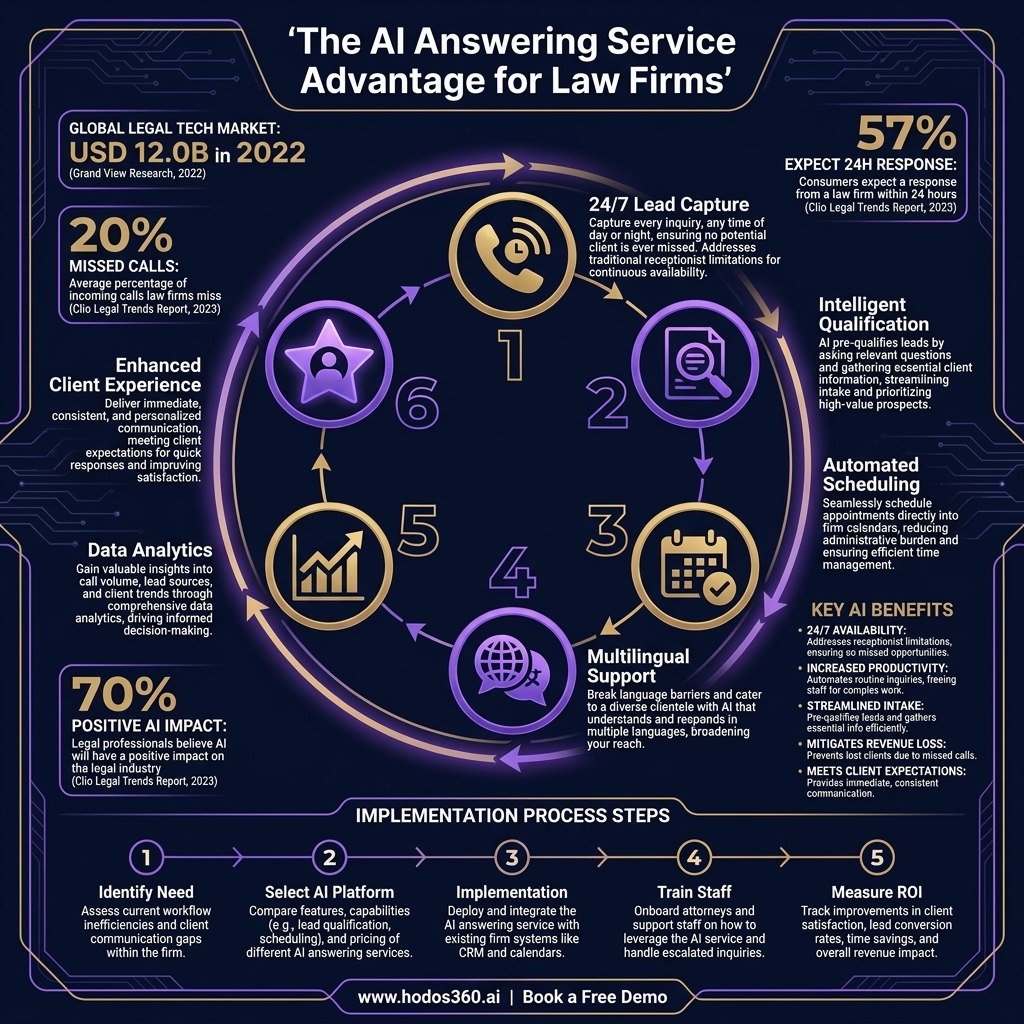
Enhancing Client Intake and Lead Qualification
The initial impression a law firm makes on a potential client is paramount. In many cases, this impression is formed during the very first phone call. An effective AI answering service ensures this impression is one of efficiency, professionalism, and immediate responsiveness. By handling the initial intake, AI can capture crucial data points that are often missed or inaccurately recorded during hurried human interactions. These systems can be programmed to ask specific, consistent questions, ensuring a standardized and thorough data collection process. This data—ranging from the nature of the legal issue and opposing parties to specific deadlines and desired outcomes—is then seamlessly transferred to the firm's case management system, creating a robust foundation for the client's file even before a human attorney reviews it. This level of detail at the outset can significantly reduce the administrative overhead associated with new client onboarding.
The ability of AI to pre-qualify leads is perhaps its most profound contribution to optimizing client intake. For example, a firm specializing in corporate litigation might use an AI to screen for business size, industry, and the nature of the dispute, ensuring that only calls from suitable corporate entities with relevant legal challenges are escalated to their senior partners. Learn more about AI Marketing Stack: Essential Tools for Law Firm Growth. This intelligent filtering prevents valuable attorney time from being consumed by inquiries that fall outside the firm's practice areas or ideal client profile. According to a 2023 report by the Legal Technology Resource Center of the ABA, law firms that have adopted AI for client intake reported a 20-25% reduction in time spent on unqualified leads, allowing them to redirect resources to high-value activities. This strategic reallocation of time and effort translates directly into increased billable hours and improved firm profitability.
Furthermore, the multilingual capabilities of many AI voice assistants open up new markets for law firms. In diverse regions or cities like Indianapolis, where the NevTech launch is significant, the ability to communicate fluently in multiple languages can be a decisive competitive advantage. An AI assistant can handle calls in Spanish, Mandarin, or other languages, ensuring that language barriers do not prevent potential clients from accessing legal services. This inclusivity not only broadens the firm's reach but also demonstrates a commitment to serving a wider community, enhancing its reputation and appeal. The seamless integration of these advanced features into the client intake process empowers law firms to operate with unprecedented efficiency, precision, and client-centricity, fundamentally reshaping the dynamics of new business development.
Navigating Ethical and Practical Considerations of AI Receptionists
While the benefits of AI voice assistants are clear, their implementation in the legal field requires careful consideration of ethical and practical challenges. The legal profession is governed by stringent rules regarding client confidentiality, attorney-client privilege, and competence. Therefore, any AI answering service must operate within these ethical boundaries. A primary concern is data security and privacy. Law firms handle highly sensitive information, and entrusting this to an AI system necessitates robust encryption, secure data storage, and compliance with regulations like HIPAA (if applicable to medical records) and state bar rules on client data protection. Firms must meticulously vet AI vendors to ensure their platforms meet the highest security standards and have clear policies on data handling, retention, and access. The ABA Model Rules of Professional Conduct, particularly Rule 1.6 on Confidentiality of Information, underscore the attorney's duty to protect client data, a responsibility that extends to any technology used in practice.
Another critical ethical consideration revolves around the duty of communication and competence (ABA Model Rules 1.4 and 1.1, respectively). While AI can provide information, it cannot offer legal advice. Law firms must ensure that their AI voice assistants are clearly identified as automated systems and are programmed to avoid making statements that could be construed as legal counsel. Callers should be informed that they are interacting with an AI and that for legal advice, they will need to speak with an attorney. Learn more about AI Back Office: The Essential Guide to Legal Firm Automation. The system should be designed to seamlessly transition calls to human staff when complex questions arise or when a caller expresses a need for direct legal consultation. Failure to adequately manage these expectations could lead to misunderstandings, ethical breaches, and potential liability for the firm. This requires careful scripting and continuous monitoring of AI interactions to ensure compliance.
Practically, integrating an AI receptionist requires more than just flipping a switch. It involves a strategic implementation process that includes training the AI, customizing its responses to align with the firm's specific practice areas and tone, and integrating it with existing software systems. Firms need to invest time in defining clear workflows for the AI, determining when calls should be escalated to human staff, and how lead data should be captured and utilized. Furthermore, ongoing maintenance and performance monitoring are crucial. AI systems, while advanced, are not set-it-and-forget-it solutions; they require regular updates, fine-tuning, and performance reviews to ensure they are operating optimally and adapting to evolving client needs and firm policies. Firms like LexTech, and by extension any firm adopting similar services, must approach this implementation with diligence and a clear understanding of both the technological capabilities and the ethical obligations inherent in legal practice.
Ensuring Compliance and Client Confidentiality with AI
The bedrock of the legal profession is trust, built on the promise of confidentiality and diligent representation. When integrating an AI answering service, safeguarding this trust becomes paramount. Ensuring compliance means more than just technical security; it involves a holistic approach to ethical AI deployment. Firms must establish clear internal policies on how AI handles client data, who has access to recorded conversations or transcripts, and how data is anonymized or purged in accordance with privacy regulations and client agreements. This proactive stance is essential to mitigate risks associated with data breaches or unauthorized disclosure, which could lead to severe reputational damage and professional sanctions. The Federal Rules of Civil Procedure, particularly regarding e-discovery and data management, also provide guidance on the secure handling of electronic information, which extends to data processed by AI systems.
Furthermore, the ethical obligation of competence requires attorneys to understand the benefits and risks associated with technology they use. This includes understanding how their AI voice assistant processes information, its limitations, and how it maintains client confidentiality. Attorneys must be able to explain these safeguards to clients if questioned, ensuring transparency in their technological adoption. Learn more about Legal AI ROI: Maximizing Law Firm Value in 2026. Partnering with a reputable legal tech provider that specializes in secure, compliant AI solutions is crucial. Such providers should offer robust data encryption, secure cloud storage, and adhere to industry-specific security certifications. Regular security audits and penetration testing of the AI system should be a standard practice, providing an extra layer of assurance against vulnerabilities.
Ultimately, the goal is to leverage AI's power without compromising the sacred attorney-client relationship. This involves a blend of advanced technology, rigorous internal protocols, and continuous ethical oversight. Firms should consider implementing a 'human in the loop' strategy, where human staff regularly review AI interactions, particularly those involving sensitive information, to ensure accuracy, compliance, and appropriate handling. This collaborative approach, where AI handles routine tasks and human professionals manage complex or sensitive interactions, represents the most responsible and effective way to integrate AI voice assistants into modern legal practice, maintaining the highest standards of client confidentiality and professional conduct.
Real-World Impact: Firms Embracing the AI Answering Revolution
The theoretical benefits of AI voice assistants are compelling, but their real-world impact is even more illustrative. Across the legal industry, firms that have strategically adopted an AI answering service are reporting significant, measurable improvements in their operations and client acquisition. Consider the example of 'LexCorp Legal,' a hypothetical mid-sized corporate law firm based in a bustling metropolis. Before implementing an AI voice assistant, LexCorp struggled with managing a high volume of calls, especially during peak business hours and after-hours. Their human receptionists were often overwhelmed, leading to missed calls, delayed follow-ups, and a perception among some callers of unresponsiveness. The firm estimated losing 15-20% of potential new clients due to these communication inefficiencies.
Upon integrating an advanced AI answering service, LexCorp Legal experienced a dramatic transformation. The AI system was configured to instantly answer every call, qualify leads based on specific corporate client criteria, and schedule consultations directly into the attorneys' calendars. For existing clients, the AI provided immediate answers to FAQs regarding billing, case status updates (if pre-approved for automated responses), and directed urgent inquiries to the appropriate legal team member. Within six months, LexCorp reported a 30% increase in qualified lead conversions, a 25% reduction in operational costs related to call management, and a significant improvement in client satisfaction scores. Their attorneys found they were spending less time on initial screenings and more time on substantive legal work, leading to higher billable hours and improved firm morale. This success story, while illustrative, mirrors the experiences of many actual firms making similar technological leaps.
Another compelling aspect of AI's real-world impact is its role in democratizing access to sophisticated client management tools. Previously, only large, well-resourced firms could afford dedicated call centers or extensive administrative staff. Now, even solo practitioners and small firms can leverage enterprise-grade AI receptionist capabilities, leveling the playing field. This is particularly relevant for businesses in regions like Indiana, where firms might be competing with larger, more established entities. The ability to offer 24/7 service, multilingual support, and immediate lead qualification empowers smaller firms to present a highly professional and responsive front, capturing market share they might otherwise miss. The Thomson Reuters Institute's 2024 State of the Legal Market Report highlighted that firms investing in client experience technologies, including AI, are outperforming their peers in revenue growth by an average of 8-10%, underscoring the tangible financial benefits of this technological adoption.
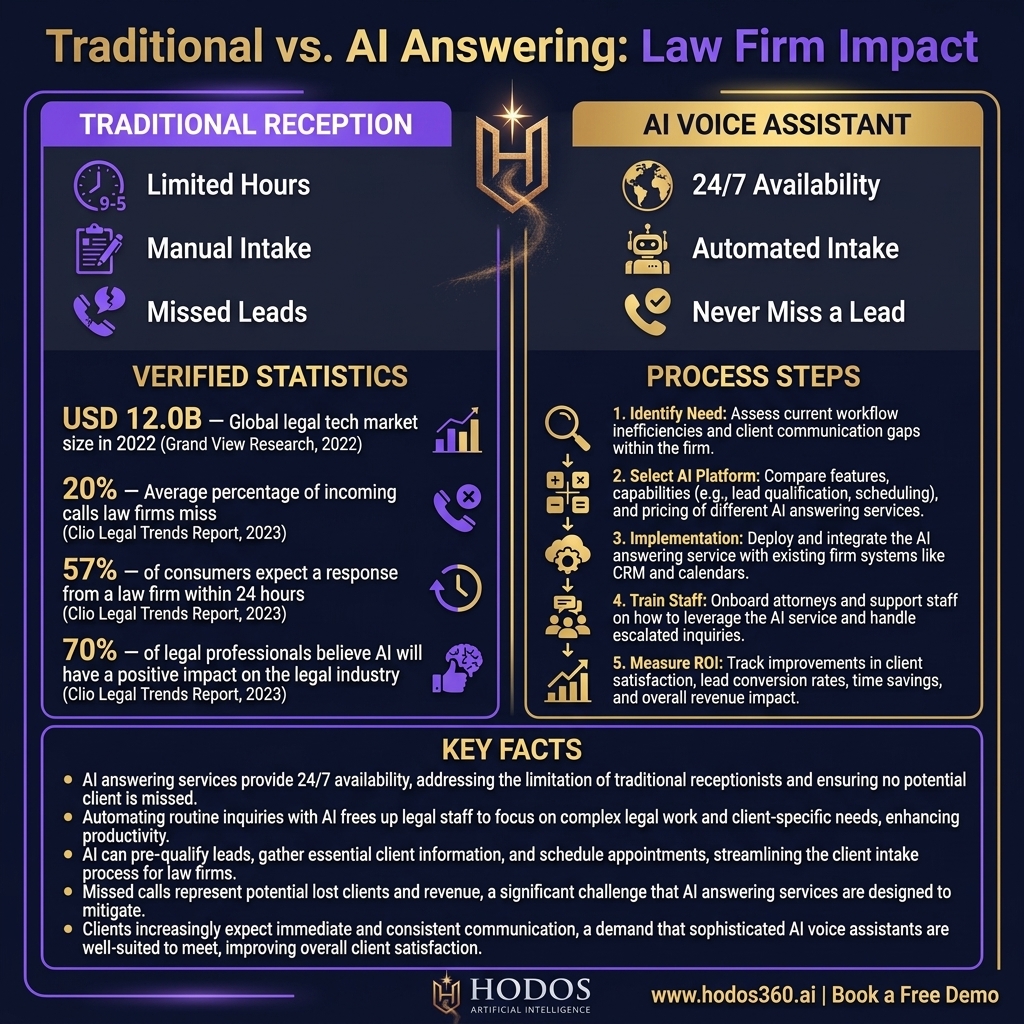
Quantifiable Gains: Boosting Efficiency and Revenue
The adoption of an AI answering service in law firms translates into clear, quantifiable gains across several key performance indicators. Firstly, the most immediate impact is on operational efficiency. By automating routine call handling, lead qualification, and appointment scheduling, firms can significantly reduce the workload on administrative staff, potentially reallocating human resources to more complex tasks or strategic initiatives. This often leads to a measurable decrease in overhead costs associated with staffing, training, and managing call volumes. A study by Accenture found that AI-powered automation can reduce customer service costs by up to 30% for businesses, a saving that can be directly applied to law firm budgets.
Secondly, revenue generation sees a substantial boost. The ability to answer every call 24/7 means fewer missed opportunities. Each qualified lead captured by the AI is a potential new case, directly impacting the firm's bottom line. Firms report an increase in lead conversion rates ranging from 15% to 30% after implementing an AI voice assistant, simply because they are consistently available and responsive. This improvement is not just about quantity; it's about quality. By pre-qualifying leads, attorneys spend their valuable time on prospects who are genuinely a good fit for the firm's services, leading to higher client retention and more successful case outcomes. This strategic advantage allows firms to grow their client base more effectively and sustainably.
Finally, client satisfaction and reputation are enhanced. In an era where client experience is paramount, immediate responses and seamless interactions fostered by AI create a positive perception of the firm. Clients appreciate the convenience of 24/7 access and the efficiency of having their inquiries addressed promptly. This positive experience can lead to stronger client loyalty, more referrals, and a superior brand image in the legal community. These benefits, while sometimes harder to quantify directly in dollars, contribute significantly to a firm's long-term success and competitive standing. The data unequivocally supports the notion that AI answering services are not just a technological upgrade, but a powerful engine for growth and improved client relations.
The Future of Legal Communication: Why AI Voice Assistants are Essential
As we look ahead, the trajectory of legal communication is undeniably shaped by AI. The competitive landscape for law firms is intensifying, with client expectations continually rising. In this environment, an AI answering service is no longer a futuristic concept but an essential tool for any firm aiming for sustainable growth and operational excellence. The early adopters, like those referenced in the NevTech launch, are already demonstrating the tangible benefits, from enhanced lead capture to optimized resource allocation. Firms that hesitate risk being outmaneuvered by more agile competitors who leverage technology to provide superior client experiences and greater efficiency.
The strategic imperative for law firms is clear: embrace intelligent automation to transform client interactions. This means moving beyond traditional call management to a system where every client touchpoint is optimized, personalized, and efficient. AI voice assistants are at the forefront of this transformation, offering a scalable, reliable, and intelligent solution to one of the most persistent challenges in legal practice—effective communication and client intake. They ensure that no potential client falls through the cracks, that existing clients receive prompt attention, and that legal professionals can dedicate their invaluable time to the core practice of law rather than administrative overhead.
For law firms seeking to navigate this evolving landscape, platforms like HODOS 360 offer comprehensive AI-powered solutions, including state-of-the-art AI Voice Assistants designed specifically for the nuanced demands of legal practice. These platforms provide 24/7 phone answering, sophisticated lead qualification, seamless appointment booking, and multilingual support, all integrated into a secure, compliant framework. By adopting such advanced tools, firms can not only meet but exceed modern client expectations, ensuring they remain competitive, profitable, and at the forefront of legal innovation. The future of legal communication is here, and it's intelligent, automated, and always on.
- ✓24/7 Availability: Ensures no call is missed, capturing leads and serving clients around the clock.
- ✓Advanced Lead Qualification: Intelligently screens callers, identifying high-potential clients and routing them appropriately to attorneys.
- ✓Automated Appointment Booking: Seamlessly schedules consultations directly into calendars, reducing administrative burden and client friction.
- ✓Multilingual Support: Broadens client reach by communicating effectively in multiple languages, fostering inclusivity.
- ✓Data-Driven Insights: Provides analytics on call volumes, lead sources, and client inquiries, informing marketing and operational strategies.
- ✓Enhanced Client Experience: Delivers consistent, professional, and immediate responses, improving client satisfaction and loyalty.
- ✓Reduced Operational Costs: Automates routine tasks, freeing up human staff for higher-value legal work and potentially lowering staffing expenses.

Key Takeaways and Next Steps
The legal industry is at an inflection point, with AI technologies reshaping foundational aspects of practice, particularly client communication. The local initiatives seen with NevTech in Indiana are merely a harbinger of a broader, indispensable shift towards intelligent automation. For law firm owners and managing partners, the message is clear: embracing an advanced AI answering service is no longer a luxury but a strategic imperative for maintaining a competitive edge, enhancing client satisfaction, and ensuring sustainable growth. The benefits—from 24/7 lead capture and streamlined intake to reduced operational costs and improved resource allocation—are too significant to ignore.
To effectively navigate this transformation, firms must conduct a thorough assessment of their current client communication workflows, identify pain points, and explore AI solutions that align with their specific needs and ethical obligations. It’s crucial to select providers with a proven track record in legal tech, offering secure, compliant, and customizable AI platforms. The goal is to integrate AI as a powerful assistant that augments human capabilities, allowing attorneys to focus on the complex legal work that truly requires their expertise, while ensuring every client interaction is handled with efficiency and professionalism. The future of your firm's client engagement begins with intelligent automation.
Don't let your firm fall behind in the rapidly evolving legal tech landscape. Explore how AI Voice Assistants can transform your client intake and operational efficiency. Discover how HODOS 360 can elevate your practice and empower your team to focus on what matters most: delivering exceptional legal services. Take the first step towards a more efficient and client-centric future.
Frequently Asked Questions
What is an AI answering service for law firms?+
An AI answering service for law firms is an intelligent system that uses artificial intelligence to handle inbound and outbound calls. It can answer questions, qualify leads, book appointments, route calls, and gather client information 24/7, operating as a sophisticated, always-on virtual receptionist tailored to legal practice needs.
How does an AI answering service benefit law firm client intake?+
It revolutionizes client intake by ensuring every call is answered instantly, pre-qualifying leads based on firm-specific criteria, and collecting essential case details automatically. This streamlines the process, reduces attorney time spent on unqualified calls, and ensures that valuable leads are captured and nurtured without delay.
Are AI voice assistants compliant with legal ethics rules?+
Yes, when implemented correctly. Firms must ensure AI systems adhere to ABA Model Rules on confidentiality and competence. This means clear disclosure of AI interaction, robust data security, and programming to avoid giving legal advice. Human oversight and ethical guidelines are crucial for compliance.
Can an AI receptionist handle complex legal inquiries?+
AI receptionists excel at handling routine inquiries, FAQs, and lead qualification. For complex legal inquiries requiring nuanced judgment or legal advice, the AI is programmed to seamlessly escalate the call to a human attorney or paralegal, ensuring clients receive appropriate expert consultation when necessary.
What is the typical ROI for law firms using AI answering services?+
Firms typically see significant ROI through increased lead conversion rates (15-30%), reduced operational costs from automated tasks (up to 30%), and improved client satisfaction. This frees up staff for higher-value work, directly contributing to higher billable hours and overall firm profitability.