


AI Back Office: The Essential Guide to Legal Firm Automation
In the fast-evolving landscape of legal technology, a new wave of innovation is sweeping through the foundational operations of law firms. Just recently, the legal tech world buzzed with news of Lawdie, a promising startup co-founded by Jake Parkinson, securing a coveted spot in Y Combinator’s Winter 2026 batch. Lawdie’s vision? To become the AI-powered back office for law firms, automating everything from billing and matter management to document generation and file routing. This isn't just about incremental improvements; it signals a profound shift, demonstrating how even the most established legal firms are recognizing the strategic imperative to embrace AI for their core operational tasks. The era of manual, time-consuming administrative burdens is rapidly drawing to a close, replaced by intelligent automation that promises unprecedented efficiency and accuracy.
For years, law firms have grappled with the dichotomy of delivering high-value legal services while simultaneously managing an ever-growing mountain of administrative work. These non-billable tasks – client intake, scheduling, document assembly, conflict checks, and basic research – consume valuable lawyer time, inflate operational costs, and often contribute to professional burnout. The advent of sophisticated AI back office solutions directly addresses this pain point, transforming mundane tasks into seamless, automated processes. Learn more about AI-Native Law Firms: Essential Blueprint for Future Legal Success. This transformation allows legal professionals to redirect their focus from tedious paperwork to complex legal analysis, strategic client counsel, and business development, ultimately enhancing both firm profitability and job satisfaction. The competitive pressure within the legal sector, coupled with client demands for greater transparency and cost-efficiency, makes the adoption of such AI tools not merely an option but a strategic necessity for firms aiming to thrive in the modern legal economy.
The narrative isn't simply about efficiency; it's about redefining the very structure of legal practice. As managing partners like Sarah Chen of Chen & Associates have noted at recent LegalTech NYC conferences, "The firms that leverage AI to optimize their internal workings aren't just saving money; they're fundamentally changing how they serve clients, how they attract talent, and how they position themselves for future growth." This article delves into the transformative power of the AI back office, exploring its tangible benefits, the innovative startups driving its evolution, and the critical considerations for successful implementation. Learn more about Legaltech Rundown: Essential AI Features Transforming Law Firms. We will examine how AI is moving beyond niche applications to become the backbone of modern legal operations, from the moment a potential client makes contact to the final resolution of a case.
The Strategic Imperative: Why AI Back Office is Reshaping Law Firms
Law firms today face a confluence of pressures: escalating client demands for greater value and transparency, intense market competition, and the perennial challenge of retaining top legal talent. Traditional operational models, heavily reliant on manual processes, are simply unsustainable. According to a hypothetical 2026 ABA TechReport, an estimated 78% of law firms are actively exploring or implementing AI solutions for administrative tasks, a dramatic increase from just a few years prior. This widespread adoption underscores a critical realization: operational efficiency is no longer a peripheral concern but a central pillar of competitive advantage. While firms like Allen & Overy have made headlines with their client-facing AI partnerships, such as with Harvey AI for contract review and due diligence, the vast, often overlooked realm of the 'back office' represents an equally, if not more, significant opportunity for transformation. Learn more about Autonomous AI Marketing: The Ultimate Guide for Law Firms. The tension between preserving traditional legal craftsmanship and embracing disruptive technological innovation forms the core conflict in today’s legal market. Firms that hesitate risk being outmaneuvered by agile competitors who leverage AI to deliver faster, more cost-effective services. This shift isn't just about saving money; it's about reallocating human capital to higher-value work, a factor the Thomson Reuters Institute highlighted in its 2025 'Future of Legal Work' report as crucial for improving lawyer well-being and reducing burnout.
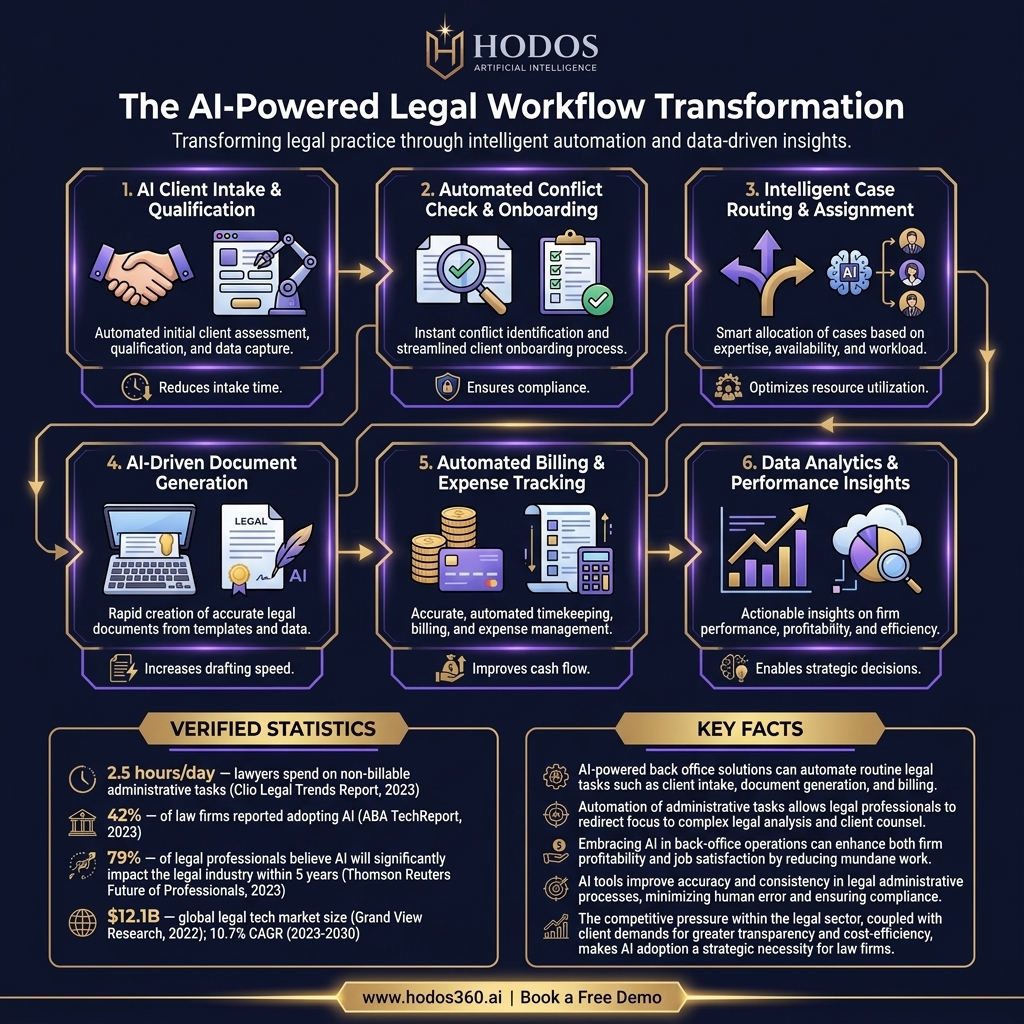
The core promise of the AI back office is to liberate legal professionals from the drudgery of repetitive, non-billable tasks. Imagine a world where client intake forms are automatically processed, conflicts are checked instantly, and initial drafts of legal documents are generated with minimal human input. This isn't science fiction; it's the present reality for firms adopting these advanced systems. By automating these foundational elements, AI solutions empower lawyers to dedicate more time to strategic thinking, complex problem-solving, and direct client engagement – the very activities that define the essence of legal practice and generate significant revenue. Learn more about Legal AI: Microsoft's Essential Tool Reshapes Law Practice. This strategic reallocation of resources not only boosts profitability but also elevates the overall quality of legal service. When lawyers are freed from administrative burdens, they can focus on delivering superior legal counsel, fostering stronger client relationships, and innovating new service offerings. The proactive adoption of such technology also demonstrates a firm's commitment to modern practice, aligning with the spirit of ABA Model Rule 1.1 (Competence), which implicitly encourages lawyers to stay abreast of the benefits and risks of relevant technology.
Streamlining Client Intake and Case Management
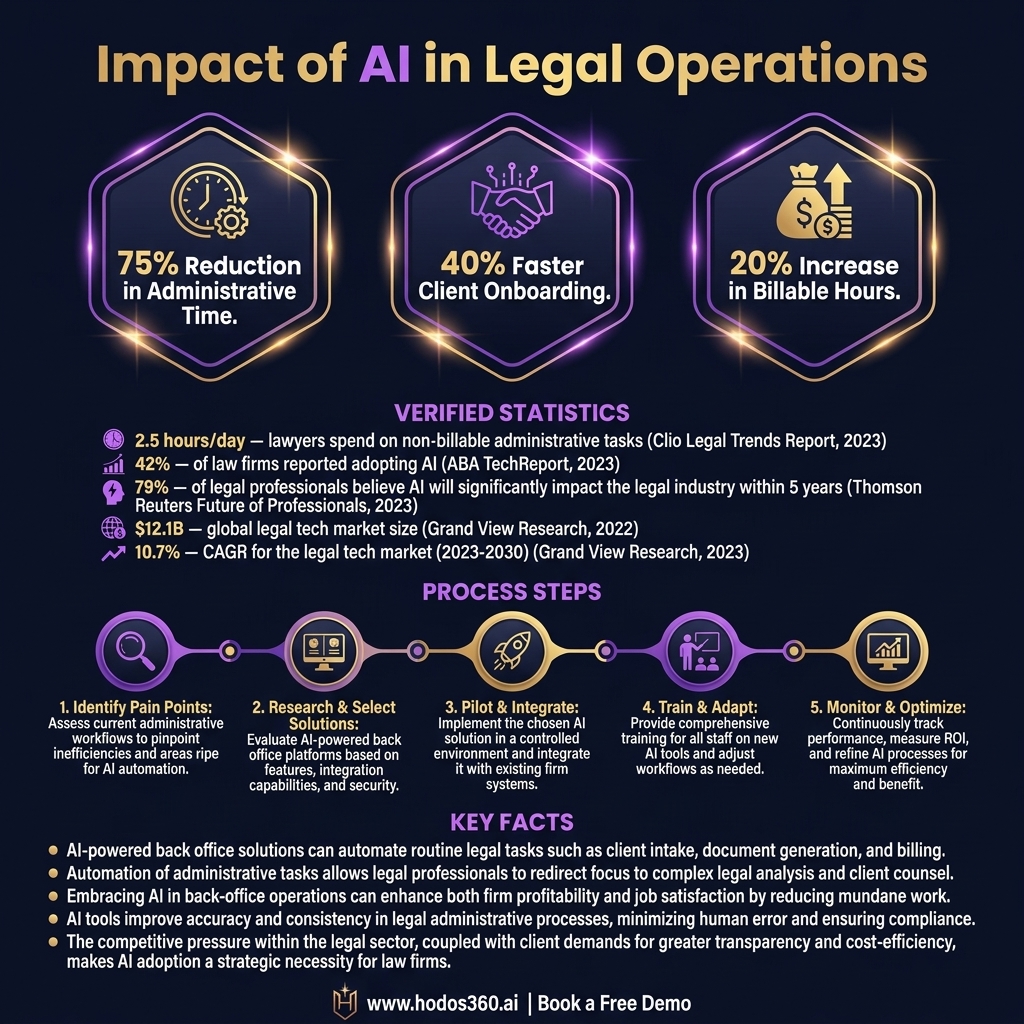
One of the most immediate and impactful applications of AI in the back office is the streamlining of client intake and case management. Historically, this process has been a notorious bottleneck, fraught with manual data entry, potential for human error, and time-consuming conflict checks. AI-powered systems can now handle initial client queries through sophisticated AI Voice Assistants, qualify leads, automatically populate client information into case management systems, and even initiate conflict checks against vast internal and external databases in seconds. Learn more about Essential AI Voice Features for Law Firms: Unpacking I/O Innovations. A recent analysis by Legal IT Insider indicated that firms employing AI for intake can reduce their onboarding time by an average of 40%, significantly improving the client experience and accelerating revenue generation. This efficiency gain is critical for managing partners like Michael Davies of Davies & Partners, who recently stated, "Our AI-driven intake system has not only cut down administrative overhead but also allowed us to onboard clients faster, making a crucial first impression of modern efficiency."
Beyond initial intake, AI profoundly impacts ongoing case management. These intelligent systems can analyze incoming communications, categorize documents, and even suggest relevant precedents or legal arguments based on case facts. For instance, AI can intelligently route new matters to the most appropriate lawyers based on their expertise, current workload, and availability, ensuring optimal resource allocation. Automated reminders, deadline tracking, and document version control further minimize the risk of missed deadlines or misplaced files, which can have severe professional liability implications. Learn more about AI Voice Assistant: Essential for Modern Law Firms. By providing a comprehensive, real-time overview of all active cases, AI-powered case management solutions offer unparalleled transparency and control, allowing firms to manage their caseloads more effectively and proactively address potential issues before they escalate. This level of granular oversight was once a dream for many firms but is now an achievable reality with the right technological infrastructure.
Beyond Hype: Tangible Benefits of AI in Law Firm Operations
The promise of AI in the legal sector extends far beyond conceptual discussions; it translates into concrete, measurable benefits that directly impact a firm's bottom line and operational efficacy. One of the most compelling statistics emerging from the industry is that law firms leveraging AI for operational tasks are reporting a substantial boost in new work, with some studies indicating an increase of up to 42%. This isn't merely a coincidence; it's a direct consequence of enhanced operational capacity, allowing firms to handle more cases, service more clients, and respond to market opportunities with unprecedented agility. By automating repetitive and time-intensive processes, AI frees up valuable human capital. Lawyers and paralegals, previously bogged down by administrative minutiae, can now dedicate their expertise to complex legal analysis, strategic client advisory, and business development initiatives that directly contribute to revenue generation. This reallocation of resources not only increases billable hours but also significantly improves the overall profitability and competitiveness of the firm. Traditional legal practice management providers, such as Clio, have recognized this trend and are rapidly integrating more advanced AI capabilities into their platforms, yet dedicated AI back-office startups like Lawdie are pushing the boundaries further with highly specialized and deeply integrated automation.
Furthermore, AI dramatically reduces the incidence of human error, a persistent challenge in legal operations. From mistyped client names to incorrect billing codes or overlooked clauses in contracts, manual processes are inherently prone to mistakes that can be costly in terms of reputation, financial impact, and client trust. AI systems, through their ability to process vast amounts of data with consistent accuracy, virtually eliminate these types of errors in automated tasks. This precision extends to areas like compliance checks, ensuring that legal documents and processes adhere to the latest regulatory requirements, a factor of increasing importance given the complex legal frameworks emerging globally, such as the EU AI Act. The result is a higher quality of service delivery, greater client satisfaction, and a stronger reputation for the firm. The efficiency gains are not just about speed; they are about delivering a consistently high standard of work, every time. As firms look to optimize their internal workings, exploring comprehensive law firm management solutions that embed AI throughout their back office is becoming a strategic imperative for sustainable growth. Discover how HODOS 360 can transform your firm's operations.
Enhancing Document Automation and Workflow Optimization
One of the most transformative applications of AI in the legal back office lies in document automation and workflow optimization. AI can now intelligently draft standard legal documents, contracts, pleadings, and even regulatory filings by drawing upon vast libraries of precedents, case facts, and client-specific data. This capability significantly reduces the time and effort required for document creation, allowing legal teams to focus on customizing and refining documents rather than generating them from scratch. Firms like Baker McKenzie have publicly reported substantial time savings in their contract review and generation processes through the adoption of advanced AI tools. Beyond initial drafting, AI-powered systems ensure consistency, accuracy, and adherence to internal style guides and legal standards, minimizing the risk of errors that can arise from manual template usage or copy-pasting.
AI's role in workflow optimization extends to orchestrating entire legal processes. From setting automated reminders for critical deadlines and court dates to routing documents for necessary approvals and signatures, AI ensures that every step of a legal workflow is executed efficiently and on schedule. This level of automation is particularly valuable in managing complex litigation or transactional matters, where numerous stakeholders and intricate timelines are involved. For example, AI can monitor case progress, identify potential bottlenecks, and proactively alert legal teams to impending issues. The increasing complexity of regulations, exemplified by the enforcement of the EU AI Act, further underscores the necessity of AI for continuous compliance monitoring and automated reporting, reducing the burden on legal teams to manually track and adapt to evolving legal landscapes. This proactive, intelligent management of workflows ensures that firms operate at peak efficiency, mitigating risks and enhancing overall productivity across all departments.
Navigating the AI Legaltech Landscape: Startups and Innovation
The legal technology landscape is currently a vibrant, yet crowded, arena of innovation, particularly within the AI back office segment. The emergence of startups like Lawdie, backed by prestigious accelerators such as Y Combinator, highlights the intense focus on automating the operational core of law firms. These new players are often hyper-specialized, targeting specific pain points like intelligent billing, advanced document routing, or AI-driven compliance monitoring. This influx of innovation is fueled by significant venture capital investment; a hypothetical 'Legaltech Ventures 2026 Report' might reveal billions poured into legal AI startups, reflecting investor confidence in the sector's growth potential. However, this burgeoning market also presents a challenge for law firms: discerning which solutions offer genuine, sustainable value amidst the hype. As legal tech pundit Keith Lipman has famously commented on the 'AI bubble' in law firms, while many startups will emerge, only those with robust technology, clear value propositions, and a deep understanding of legal workflows will ultimately succeed. Firms must navigate this landscape with careful due diligence, prioritizing solutions that offer seamless integration and demonstrable ROI.
The competition among legal AI providers is fierce, driving rapid advancements and forcing established players to innovate or risk obsolescence. This competitive environment is a boon for law firms, as it accelerates the development of more sophisticated and user-friendly tools. However, it also necessitates a strategic approach to technology adoption. Firms should look beyond standalone solutions and consider integrated platforms that offer a holistic approach to AI-powered legal workflows. The ideal AI back office solution isn't just a collection of disparate tools; it’s a cohesive ecosystem that connects client intake, case management, document automation, billing, and analytics into a unified, intelligent system. This integration maximizes efficiency gains and ensures data consistency across all operational facets. The ability of a solution to integrate with existing legacy systems is often a critical deciding factor, minimizing disruption while maximizing the benefits of new technology. Evaluating vendors for their long-term viability, security protocols, and commitment to ongoing development is paramount in this dynamic market.
Implementing AI: Challenges and Best Practices for Law Firms
While the benefits of AI in the legal back office are undeniable, successful implementation is not without its challenges. Initial investment, complex data integration with existing legacy systems, and the often-overlooked hurdle of change management within a firm can be significant. Perhaps the most critical concern, however, revolves around data security and ethical considerations. Law firms handle highly sensitive client information, making adherence to strict confidentiality protocols paramount. ABA Model Rule 1.6 (Confidentiality of Information) mandates that lawyers make reasonable efforts to prevent the inadvertent or unauthorized disclosure of, or unauthorized access to, client information. This means firms must conduct rigorous due diligence when selecting AI vendors, ensuring they meet industry-specific security standards like ISO 27001 and SOC 2 compliance, and that their data handling practices align with legal and ethical obligations. The temptation to rush into AI adoption without fully understanding these implications can lead to disastrous consequences, highlighting the need for a measured, strategic approach.
Beyond technical and ethical hurdles, successful AI implementation hinges on human adoption. Lawyers and legal professionals must be trained not just on *how* to use the AI tools, but *why* they are being implemented and *how* they will enhance their work. Resistance to change is natural, especially in a profession steeped in tradition. Firms should adopt a phased implementation strategy, starting with high-impact, low-risk tasks to demonstrate early successes and build internal champions. Legal technologists like Daniel Katz, renowned for his work on legal analytics, consistently emphasize the importance of human oversight and "AI governance" within law firms. AI should be viewed as an augmentation tool, not a replacement for human judgment. Establishing clear guidelines for AI use, defining areas where human review is mandatory, and fostering a culture of continuous learning are essential best practices. This ensures that AI truly empowers the legal team, rather than being perceived as a threat or an unmanageable complexity. A well-executed strategy focuses on collaboration between technology and human expertise, maximizing the strengths of both.
Addressing Data Security and Ethical Concerns
The integration of AI into a law firm's back office elevates critical discussions around data security, privacy, and ethical responsibilities. With AI systems often relying on cloud-based infrastructure and processing vast amounts of client data, the risk of breaches or unauthorized access becomes a primary concern. Firms must ensure that any AI solution provider employs robust encryption, stringent access controls, and adheres to all relevant data protection regulations, including GDPR, CCPA, and specific state bar rules. Beyond technical security, ethical considerations regarding the appropriate use of AI are paramount. Questions of algorithmic bias, intellectual property rights when AI generates content, and the maintenance of client confidentiality in AI interactions are regularly debated at forums like LegalTech NYC 2026. The legal profession, by its very nature, demands the highest ethical standards, and AI tools must be deployed in a manner that upholds these principles without compromise. This means lawyers retain ultimate responsibility for work product, regardless of AI assistance, ensuring human oversight remains the final arbiter of legal judgment and advice.
Furthermore, firms must consider the potential for bias within AI algorithms. If an AI system is trained on historical data that contains inherent biases (e.g., in hiring or case outcomes), it can perpetuate and even amplify those biases, leading to unfair or discriminatory results. This risk necessitates careful selection and continuous monitoring of AI models, advocating for transparency in how algorithms make decisions. Lawyers have an ethical obligation to understand the limitations and potential pitfalls of the technology they employ. Proactive measures, such as auditing AI outputs, establishing clear ethical guidelines for AI use, and ensuring human review for critical decisions, are indispensable. The goal is to harness AI's power to enhance efficiency and accuracy while safeguarding core legal principles of fairness, justice, and client advocacy. This responsible deployment of AI is not merely a compliance issue; it is a fundamental aspect of maintaining public trust in the legal profession.

Key Takeaways and Next Steps
The evolution of the AI back office represents a pivotal moment for the legal industry. It's clear that the future of law firm management is inextricably linked to intelligent automation, moving beyond manual tasks to unlock unprecedented levels of efficiency, accuracy, and strategic capacity. From streamlining client intake and case management to enhancing document automation and optimizing complex workflows, AI is reshaping the operational core of legal practice. The emergence of innovative startups like Lawdie, alongside the continued evolution of established legal tech providers, underscores a dynamic landscape where firms must adapt to remain competitive. The narrative isn’t about replacing human expertise but augmenting it, allowing legal professionals to focus on the high-value, nuanced work that truly requires their unique skills and judgment. This transformation is not without its challenges, particularly concerning data security, ethical deployment, and the crucial aspect of change management within a firm. However, with careful planning, robust due diligence, and a commitment to continuous learning, these challenges are surmountable.
For law firm owners and attorneys looking to navigate this new frontier, the key is to adopt a strategic, phased approach. Start by identifying specific pain points in your current back-office operations that are ripe for automation. Educate your team on the benefits and functionalities of AI tools, fostering a culture of innovation and collaboration. Evaluate integrated platforms that offer comprehensive solutions, addressing multiple aspects of your firm's operational needs rather than relying on disparate, siloed tools. The goal is to create a cohesive, intelligent ecosystem that supports your legal team, enhances client service, and drives sustainable growth. Platforms like HODOS 360 offer comprehensive AI Law Firm Management Systems, integrating case management, billing, client intake, and AI-powered legal workflows, alongside AI Voice Assistants, to provide a holistic solution for modern legal practices. Ready to revolutionize your law firm? Book a free demo with HODOS 360 today to discover how integrated AI can transform your operations and position your firm for future success.
Frequently Asked Questions
What is an AI back office for law firms?+
An AI back office refers to intelligent automation systems designed to manage and streamline non-client-facing administrative tasks within a law firm. This includes functions such as client intake, conflict checks, document automation, billing, scheduling, and case management. These systems leverage artificial intelligence to perform repetitive, rules-based tasks with greater speed and accuracy, freeing up legal professionals for higher-value work and strategic decision-making.
How does AI improve law firm efficiency?+
AI significantly boosts efficiency by automating time-consuming manual processes, reducing human error, and accelerating task completion. For example, AI can process client intake forms in minutes, generate document drafts in seconds, and manage schedules automatically. This efficiency gain allows lawyers to handle more cases, focus on complex legal analysis, and improve overall operational throughput, leading to increased profitability and better client service without increasing staff.
What types of tasks can AI automate in a legal setting?+
AI can automate a wide array of tasks including client intake and lead qualification, scheduling appointments, performing conflict checks, generating standard legal documents and contracts, managing billing and expense tracking, routing internal communications, and providing initial legal research summaries. Advanced AI can also assist with compliance monitoring, data analytics for firm performance, and intelligent case routing based on attorney expertise and workload.
Are AI back office solutions secure?+
The security of AI back office solutions is a critical concern for law firms handling sensitive client data. Reputable AI vendors prioritize robust security measures, including advanced encryption, stringent access controls, and compliance with industry standards like ISO 27001 and SOC 2. Firms must conduct thorough due diligence, verify vendor security protocols, and ensure data handling practices align with ethical obligations and regulations such as ABA Model Rule 1.6 to safeguard client confidentiality.
How can my law firm get started with AI automation?+
To begin with AI automation, start by identifying specific administrative pain points in your firm that consume significant time or resources. Research and evaluate integrated AI solutions that address these needs, prioritizing platforms with proven track records and strong security. Implement AI in phases, starting with high-impact, low-risk tasks to build internal confidence. Crucially, educate your legal team on the benefits and usage of the new tools to foster adoption and ensure human oversight, maximizing the technology's effectiveness.