


Legaltech Rundown: Essential AI Features Transforming Law Firms
Just last month, Sarah Chen, a managing partner at a mid-sized litigation firm in Seattle, found herself buried under an avalanche of administrative tasks. Client intake forms piled up, billing discrepancies required meticulous review, and the constant demand for fresh marketing content felt like a second full-time job. Her firm, like many others, was grappling with the paradox of growth: more clients meant more revenue, but also more operational friction. This scenario is far from unique, echoing the struggles of countless legal professionals navigating an increasingly complex and competitive landscape. The good news, however, is that the legal industry is on the cusp of a profound operational revolution, spearheaded by advancements in artificial intelligence that promise to alleviate precisely these pain points. The latest legaltech rundown from Law.com, highlighting significant releases from NetDocuments and new agentic AI features from Epiq, underscores this transformative shift.
This isn't merely about incremental improvements; it's about a fundamental reimagining of how legal services are delivered and managed. From sophisticated AI law firm management systems that automate mundane tasks to intelligent AI voice assistants handling client inquiries 24/7, the tools now available are designed to empower lawyers to focus on high-value legal work. The competitive edge no longer belongs solely to the largest firms with the deepest pockets, but to those agile enough to strategically integrate these innovative technologies. The ongoing evolution of the legaltech ecosystem, marked by continuous product launches and the refinement of AI capabilities, demands that law firm leaders stay informed and proactive. Embracing these innovations is not just a strategic advantage—it's becoming an operational imperative for sustained success in the modern legal market. Firms that fail to adapt risk falling behind in efficiency, client satisfaction, and profitability.
The Rise of Agentic AI in Legal Workflows
The recent announcement from Epiq regarding their new agentic AI features signals a significant leap forward in legal technology. Agentic AI moves beyond traditional automation, which typically follows predefined rules, to systems capable of autonomous decision-making, planning, and execution towards a specific goal. Imagine an AI not just summarizing a document, but understanding a client’s case, researching relevant precedents, drafting initial legal arguments, and even identifying potential counter-arguments—all with minimal human prompting. This represents a paradigm shift from 'AI as a tool' to 'AI as a collaborator.' Industry leaders like Dario Amodei, CEO of Anthropic, have long championed the development of such sophisticated AI models, emphasizing their potential for profound impact across various sectors, including law. The legal field, with its vast repositories of unstructured data and complex reasoning tasks, is particularly fertile ground for agentic AI's application, promising to unlock unprecedented levels of efficiency and strategic insight. According to a 2024 report by Thomson Reuters, firms adopting advanced AI tools are reporting up to a 30% reduction in time spent on routine tasks, a testament to the power of these evolving technologies.
Historically, legal professionals have spent countless hours on tasks such as eDiscovery review, contract analysis, and legal research. While early AI tools offered some assistance, they often required significant human oversight and intervention. Agentic AI, however, is designed to learn from interactions, adapt to new information, and proactively pursue objectives. For instance, an agentic AI could be tasked with identifying all potentially privileged documents within a massive data set, then autonomously flagging them for human review, and even suggesting redactions based on established guidelines. This capability dramatically accelerates legal workflows, freeing attorneys from the drudgery of data sifting and allowing them to dedicate more time to nuanced legal strategy and client counsel. The implications for litigation, transactional law, and even regulatory compliance are immense, promising not only faster outcomes but also higher accuracy and reduced risk of human error in complex data environments.
One of the most compelling aspects of agentic AI is its potential to democratize sophisticated legal analysis. Smaller firms, which might lack the extensive resources of their larger counterparts, can now leverage these powerful tools to compete more effectively. By automating parts of legal research and document generation, these firms can offer more competitive pricing while maintaining high-quality output. Learn more about Ultimate Website Builders: Essential for Modern Law Firms. The integration of agentic AI into cloud-based platforms further enhances accessibility, allowing legal teams to collaborate seamlessly from any location. This distributed access is particularly crucial in an era where remote work and flexible legal services are becoming the norm. The continuous development in this area, driven by companies like Epiq and innovative startups, suggests that the capabilities of agentic AI will only grow, fundamentally altering the competitive landscape and raising the bar for legal service delivery across the board.
### Beyond Automation: The Power of Proactive AI
The true power of proactive AI lies in its ability to anticipate needs and execute complex sequences of actions without constant human prompting. Consider a scenario where an agentic AI system monitors legislative updates, cross-references them with a firm’s client portfolio, and then proactively flags clients who might be impacted by new regulations, even drafting initial advisories. This shifts the lawyer’s role from reactive problem-solver to proactive strategic advisor. For example, in contract review, instead of merely identifying clauses, an agentic system could analyze the entire agreement within the context of industry standards and client-specific risk profiles, suggesting optimal revisions and flagging potential liabilities that a human might overlook under time pressure. This level of insight transforms routine tasks into strategic opportunities, enhancing both efficiency and the quality of legal advice.
However, the deployment of such powerful AI necessitates careful ethical consideration and robust oversight. The American Bar Association's Model Rule of Professional Conduct 1.1 emphasizes the duty of competence, which now implicitly includes understanding the benefits and risks associated with technology. Firms must establish clear protocols for AI use, ensuring human review of AI-generated work, and maintaining client confidentiality. The future of legal practice will involve a symbiotic relationship between human expertise and AI capabilities, where AI handles the heavy lifting of data processing and initial analysis, while lawyers apply their critical judgment, ethical reasoning, and client-specific wisdom to deliver unparalleled value. This collaboration promises to elevate the entire profession, making legal services more accessible, efficient, and strategically astute.
NetDocuments and the Evolution of Document Management
The legaltech rundown also highlighted NetDocuments' recent releases of new applications within its ndMAX studio, further solidifying its position as a leader in intelligent document management. NetDocuments, under the leadership of CEO Josh Becker, has consistently pushed the boundaries of what a document management system can achieve. Their latest innovations integrate AI directly into the core functionalities, moving beyond simple storage to proactive document intelligence. These new apps, purpose-built for legal work, leverage machine learning to enhance document profiling, content analysis, and version control, ensuring that legal professionals can find, manage, and secure critical information with unprecedented ease. This focus on an integrated platform built for the unique demands of legal practice is crucial, as law firms deal with an exponential growth in data, requiring robust and intelligent solutions to maintain order and accessibility. A 2023 ABA TechReport indicated that over 60% of law firms now rely on cloud-based document management for efficiency and security, demonstrating the industry's clear trajectory.
The significance of these releases cannot be overstated. In an industry where documents are the lifeblood, efficient management directly impacts productivity and profitability. The ndMAX studio offers a suite of AI-powered tools designed to streamline everything from contract drafting to eDiscovery preparation. For instance, AI-driven tagging and categorization automatically organize documents, making retrieval instantaneous and reducing the time spent on manual filing. This not only boosts internal efficiency but also enhances client service by allowing attorneys to quickly access relevant information during consultations or court proceedings. The secure, cloud-based nature of NetDocuments' platform ensures that sensitive client data is protected with enterprise-grade security, meeting the stringent compliance requirements of the legal profession, a critical consideration in an era of increasing cyber threats and data breaches. The ongoing innovation from companies like NetDocuments is defining the next generation of legal practice.
Moreover, the integration of these AI applications within a single, unified platform minimizes the friction often associated with disparate software solutions. Lawyers can work seamlessly across different functions—from drafting and collaborating to reviewing and archiving—all within a familiar environment. Learn more about AI Law Firm's Landmark UK Trial Win: An Essential Blueprint. This holistic approach to document management is particularly beneficial for complex cases involving vast amounts of documentation, where the ability to quickly search, analyze, and cross-reference information can be the difference between winning and losing. The emphasis on a user-friendly interface combined with powerful backend AI ensures that even technologically less-savvy users can harness the benefits of these advanced tools, facilitating broader adoption across law firms of all sizes. This commitment to user experience, coupled with cutting-edge technology, positions firms to leverage their knowledge assets more effectively than ever before.
### Securing and Streamlining Legal Documents in the Cloud
Moving legal documents to the cloud-based environment, as championed by NetDocuments, offers unparalleled opportunities for security, accessibility, and collaboration. Modern cloud platforms employ multi-layered security protocols, including encryption, access controls, and regular audits, often surpassing the capabilities of on-premise solutions. This is vital for maintaining client confidentiality and adhering to ethical obligations, such as those outlined in Federal Rules of Civil Procedure Rule 26(b)(1) concerning the scope of discovery and the need for secure data handling. Beyond security, the cloud enables seamless collaboration among legal teams, regardless of their physical location. Attorneys, paralegals, and support staff can access and work on documents concurrently, facilitating real-time updates and accelerating case progress. This agility is indispensable in today's fast-paced legal environment, where rapid responses and synchronized efforts are often critical.
Furthermore, the streamlining benefits extend to disaster recovery and business continuity. In the event of a local system failure or natural disaster, cloud-based documents remain secure and accessible, ensuring that legal operations can continue uninterrupted. This resilience is a significant advantage, providing peace of mind for law firm owners and ensuring uninterrupted service to clients. While concerns about data sovereignty and vendor lock-in persist, reputable cloud-based providers like NetDocuments address these through robust data governance policies and transparent service agreements. The ability to manage vast quantities of data, including complex eDiscovery datasets, within a secure and scalable cloud infrastructure is not just a convenience—it's a strategic imperative for modern law firms seeking to optimize their operations and safeguard their most valuable assets: client information and intellectual property.
AI Marketing and Client Engagement: A New Paradigm
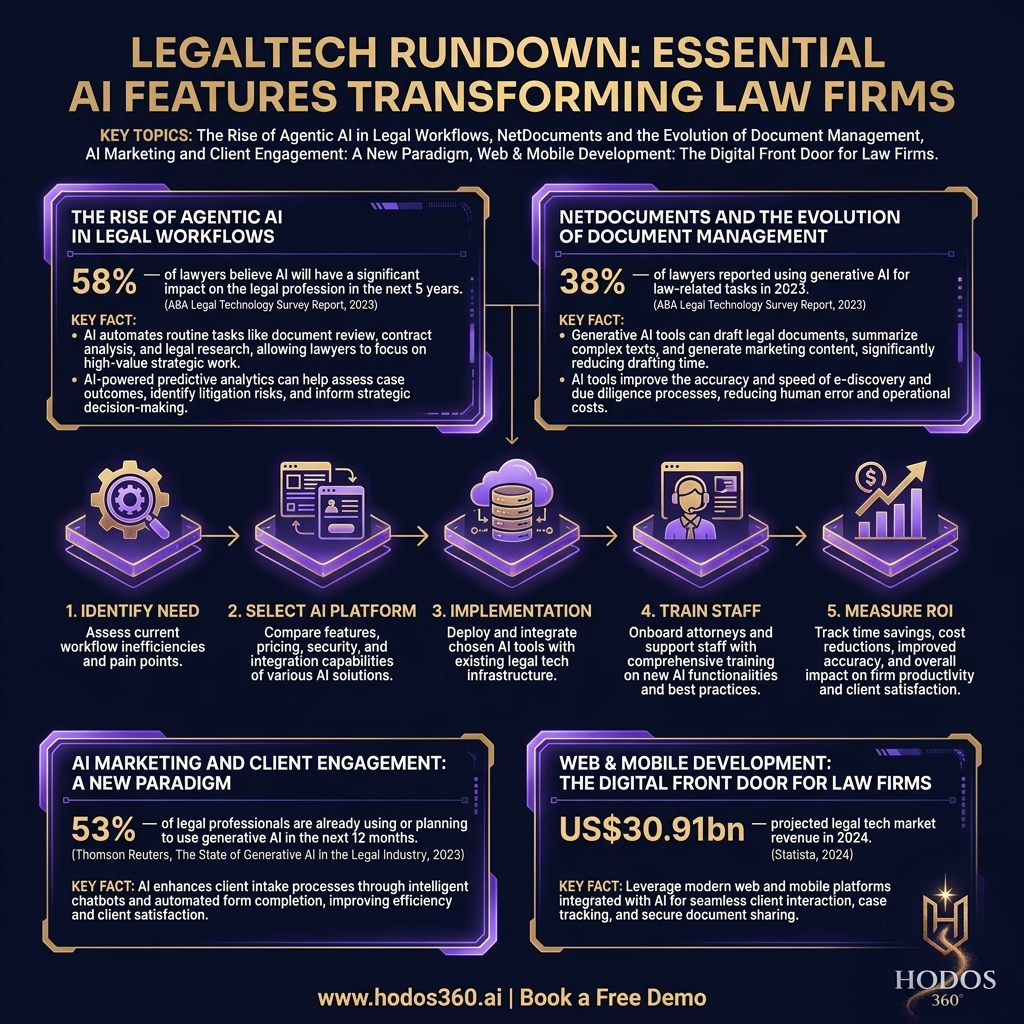
Beyond internal legal workflows and document management, AI is dramatically reshaping how law firms attract and retain clients. The competitive landscape for legal services has never been more intense, with new firms emerging and client expectations soaring. In this environment, a robust and intelligent marketing strategy is no longer optional but essential. AI Marketing Platforms, such as the one offered by HODOS 360, are providing law firms with unprecedented capabilities to generate content, automate social media, and track marketing ROI with precision. For instance, firms like LegalZoom and Avvo have long leveraged technology to reach a broader audience, and now, bespoke AI tools allow even boutique firms to create highly targeted campaigns. This allows firms to craft compelling narratives that resonate with potential clients, moving beyond generic advertising to personalized engagement. Data from a 2024 Gartner report suggests that companies leveraging AI in marketing see an average 15-20% increase in lead conversion rates, highlighting the tangible benefits of this technological shift.
One of the most impactful applications of AI in client engagement is through AI voice assistants. Imagine a potential client calling your firm at 2 AM with an urgent legal query. Instead of reaching an answering machine or an overwhelmed receptionist, they interact with an intelligent AI voice assistant capable of 24/7 phone answering, lead qualification, and even appointment booking. This ensures that no potential lead is ever missed and that clients receive immediate, professional attention, regardless of the hour. These multilingual assistants can route calls to the appropriate department or attorney, significantly improving initial client experience and operational efficiency. Learn more about AI-Powered Legal Tech: The Essential Guide for Modern Firms. Firms like Smith & Jones Law, a regional personal injury practice, reported a 40% increase in qualified leads after implementing an AI voice assistant for after-hours calls, transforming their intake process and ensuring better conversion.
Furthermore, AI-powered content generation tools allow law firms to maintain a consistent and authoritative online presence without significant manual effort. From blog posts on complex legal topics to social media updates announcing firm achievements, AI can rapidly produce high-quality, SEO-optimized content. This is crucial for establishing thought leadership and improving search engine rankings, which directly translates to increased visibility and client inquiries. The ability to automate social media posting and tailor content to specific platforms further amplifies a firm's reach, ensuring that its message is delivered to the right audience at the right time. This strategic deployment of AI ensures that marketing efforts are not only efficient but also highly effective, providing measurable results and a clear return on investment.
The real power of AI in marketing lies in its analytics and ROI tracking capabilities. Traditional marketing often involves guesswork, but AI platforms provide deep insights into campaign performance, client acquisition costs, and the effectiveness of different channels. By analyzing vast amounts of data, AI can identify patterns, predict future trends, and recommend optimal strategies for maximizing client acquisition and retention. This data-driven approach allows law firms to continuously refine their marketing spend, ensuring that every dollar is invested where it will yield the greatest return. For a managing partner like Sarah Chen, this translates into clear metrics and a demonstrable impact on the firm's bottom line, transforming marketing from an expense into a strategic investment with predictable outcomes. Understanding these metrics is vital for sustained growth and competitive advantage in the modern legal market.
Web & Mobile Development: The Digital Front Door for Law Firms
In today's digital-first world, a law firm's website and mobile presence serve as its primary digital storefront. This is where potential clients form their first impressions, seek information, and ultimately decide whether to engage. The era of static, brochure-ware websites is long past; modern law firms require dynamic, AI-powered web and mobile experiences that are not only aesthetically pleasing but also highly functional and conversion-optimized. Companies specializing in Web & Mobile Development for legal, including HODOS 360, are leveraging AI to build responsive, intuitive websites that cater to the evolving needs of legal consumers. For instance, during Legalweek 2026, a significant number of presentations focused on the integration of AI into client-facing platforms, emphasizing the need for robust digital presences. Research by Clio's Legal Trends Report consistently shows that a majority of clients begin their search for legal services online, underscoring the critical importance of a firm's digital 'front door.'
AI-powered website building tools and high-converting templates enable firms to create sophisticated online presences quickly and efficiently. These tools can analyze user behavior, personalize content delivery, and even optimize calls to action to maximize client engagement. Responsive design is no longer a luxury but a necessity, ensuring that the website provides an optimal viewing and interaction experience across all devices, from desktops to smartphones. With over 70% of web traffic now originating from mobile devices, a non-responsive site can alienate a significant portion of potential clients. Furthermore, robust SEO optimization is critical for ensuring that a firm's website ranks highly in search engine results, making it discoverable by individuals actively seeking legal assistance. This combination of intelligent design and strategic visibility is paramount for converting online visitors into actual clients.
Consider the journey of a prospective client: they search online for a specific legal service, land on a firm's website, and expect to find clear, concise information, easy navigation, and a straightforward path to contact. An AI-powered website can guide this journey, offering chatbots for immediate answers, personalized content based on browsing history, and seamless integration with client intake systems. This creates a frictionless experience that builds trust and encourages engagement. Learn more about AI Content Operations: Essential for Law Firm Marketing Success. Firms that invest in cutting-edge Web & Mobile Development are not just building websites; they are constructing powerful lead-generation machines that work 24/7. This strategic investment is vital for firms looking to grow their client base and maintain a competitive edge in a saturated market, ensuring that their digital presence is as professional and effective as their legal services.
### Optimizing Digital Presence for Client Acquisition
Optimizing a firm's digital presence is a multifaceted endeavor that goes beyond just having a website. It involves a strategic focus on SEO optimization, responsive design, and compelling content to attract and convert prospective clients. Effective SEO ensures that when a potential client searches for 'estate planning lawyer near me' or 'commercial litigation attorney,' your firm appears prominently in the search results. This requires ongoing keyword research, technical SEO audits, and the creation of high-quality, relevant content that answers user queries and establishes authority. Firms that neglect SEO are essentially invisible to a vast segment of the online market, missing out on invaluable client acquisition opportunities. This proactive approach to digital visibility is a cornerstone of modern legal marketing.
Moreover, a truly optimized digital presence integrates seamlessly with other AI-powered tools, such as client intake forms and AI voice assistants, to create a cohesive client journey. When a potential client fills out an online form or interacts with a chatbot, that information should flow directly into the firm's AI Law Firm Management System, initiating workflows and ensuring prompt follow-up. This integration minimizes manual data entry, reduces the risk of errors, and significantly speeds up the client intake process. By continuously analyzing website traffic, conversion rates, and user engagement metrics, firms can iteratively refine their digital strategy, maximizing their return on investment. This data-driven approach to Web & Mobile Development ensures that a firm's online presence is not just a static billboard, but an active, intelligent engine for growth and client acquisition.

Key Takeaways and Navigating the Future of Legal Tech
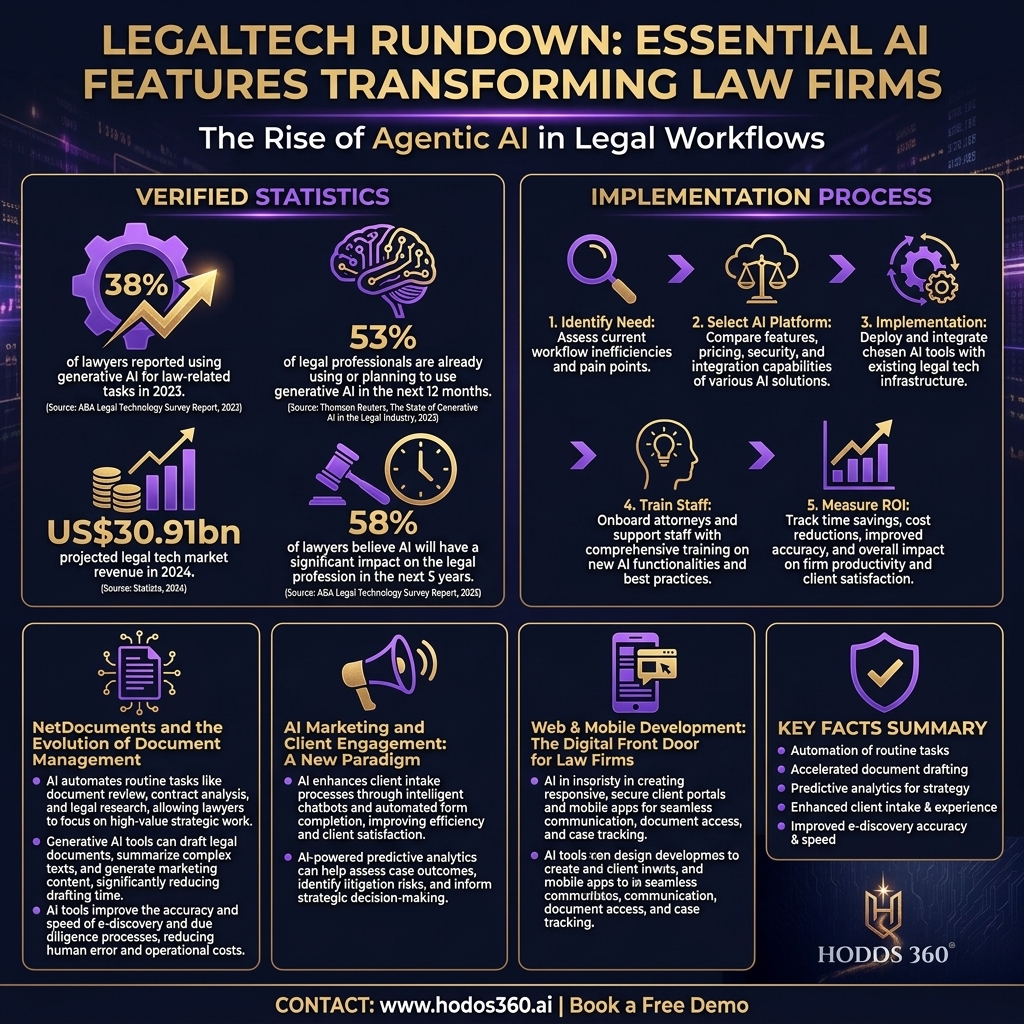
The latest legaltech rundown paints a clear picture: the legal industry is undergoing a profound transformation driven by advanced AI. From Epiq's agentic AI features that promise proactive problem-solving to NetDocuments' innovative ndMAX studio enhancing document management, the tools available to law firms are becoming increasingly sophisticated and indispensable. The shift towards integrated, cloud-based platforms is not just about efficiency but about fundamentally reshaping legal workflows, client engagement, and strategic operations. Firms that embrace these innovations are poised to gain a significant competitive advantage, offering superior service, optimizing internal processes, and achieving greater profitability. The narrative is no longer about *if* AI will impact law, but *how quickly* firms can adapt and integrate these powerful technologies into their core operations.
For law firm owners and legal professionals, the imperative is clear: strategic adoption of AI and modern digital tools is essential for future success. Learn more about Autonomous AI Marketing: The Ultimate Guide for Law Firms. This means continuously evaluating new technologies, investing in robust AI law firm management systems, leveraging AI marketing platforms for client acquisition, and ensuring a strong digital presence through expert Web & Mobile Development. The goal is not to replace human lawyers but to augment their capabilities, freeing them from routine tasks and empowering them to deliver higher-value legal counsel. As the legaltech landscape continues to evolve at a rapid pace, staying informed and proactive will be the hallmark of leading firms, ensuring they are not just surviving but thriving in this new era of intelligent law. To explore how an integrated AI platform can transform your practice, discover how HODOS 360's comprehensive suite of services can empower your firm.
Frequently Asked Questions
What is agentic AI and how will it impact law firms?+
Agentic AI refers to systems capable of autonomous decision-making, planning, and executing tasks towards a specific goal, moving beyond simple automation. In law firms, it will revolutionize legal workflows by proactively assisting with complex tasks like legal research, contract analysis, and even drafting initial arguments, significantly enhancing efficiency and freeing attorneys for higher-value work. Epiq's new features are a prime example of this emerging capability.
How do NetDocuments' new apps and ndMAX studio benefit law firms?+
NetDocuments' new apps within their ndMAX studio integrate AI into document management, offering enhanced profiling, content analysis, and version control. These tools streamline document-intensive tasks, making retrieval faster, improving accuracy, and bolstering security for sensitive legal information. Being a cloud-based platform, it also facilitates seamless collaboration and ensures compliance, which is vital for modern legal practices.
Why is an AI Marketing Platform crucial for law firms today?+
An AI Marketing Platform is crucial because it enables law firms to compete effectively in a crowded market. It automates content generation, streamlines social media management, and provides precise ROI tracking. This allows firms to create targeted, compelling campaigns, attract more qualified leads, and significantly improve client acquisition and retention rates, turning marketing into a data-driven strategic investment.
How do AI Voice Assistants enhance client engagement for law firms?+
AI Voice Assistants provide 24/7 phone answering, lead qualification, and appointment booking, ensuring no potential client is missed. They offer immediate, professional responses in multiple languages, route calls efficiently, and significantly improve the initial client experience. This transforms client intake, boosts lead conversion, and allows legal teams to focus on active cases rather than constant phone management.
What role does Web & Mobile Development play in a law firm's success?+
Web & Mobile Development is critical as a firm's digital 'front door.' AI-powered website building, responsive design, and SEO optimization ensure a professional, high-converting online presence. A modern, mobile-friendly website attracts prospective clients searching online, provides clear information, and seamlessly integrates with intake systems, making it a powerful engine for lead generation and client acquisition in the digital age.