


Ultimate Website Builders: Essential for Modern Law Firms
In late 2025, Sarah Chen, a managing partner at the mid-sized corporate law firm Chen & Associates, faced a stark reality. A long-standing, high-value corporate client, after years of partnership, decided to move their business elsewhere. The feedback wasn't about the firm's legal acumen or results, which were consistently stellar.
Instead, it was a damning indictment of their digital infrastructure: an outdated, non-mobile-friendly website that offered a clunky client intake experience. "They told us our online presence felt like a relic," Chen recounted at a recent legal tech summit. "It wasn't just aesthetics; it actively hindered their ability to engage with us efficiently."
This anecdote, far from isolated, underscores a critical shift: in 2026, a law firm's digital footprint is as vital as its physical address, and the tools used to build it are paramount.
The recent TechRadar report, "The best website builders of 2026," highlights an accelerating trend that extends far beyond e-commerce or small businesses.
For law firms navigating a hyper-competitive legal landscape, the choice of a website builder is no longer a mere technical decision but a strategic imperative. Many firms still view their websites as static digital brochures, failing to grasp the potential of modern website builders to serve as dynamic client acquisition, management, and service delivery platforms.
The shift towards AI-powered solutions is not just an upgrade; it’s a redefinition of digital engagement. Firms that invest in powerful, intuitive website builders are not merely keeping pace, but actively shaping their future, ensuring they remain relevant and competitive in a rapidly digitizing world.
This evolution demands a re-evaluation of how legal practices approach their online presence, moving from passive information providers to active digital hubs that attract, convert, and retain clients.
The Evolving Digital Frontier: Why Law Firms Need Superior Website Builders
The legal profession, traditionally slow to adopt technological advancements, is now experiencing an unprecedented digital transformation. The COVID-19 pandemic accelerated client expectations for seamless digital interactions, a trend that has only intensified. According to the ABA TechReport 2025, over 70% of clients now prefer to initiate contact with a law firm online, and a striking 45% would consider switching firms for a superior digital experience.
This data paints a clear picture: a firm’s online presence is its new front door, and a subpar experience is a direct barrier to client acquisition and retention. Firms like Sarah Chen's, once relying solely on reputation and referrals, are now acutely aware that their digital interface directly impacts their bottom line.
The conflict between traditional practice and modern client demands is creating a chasm between firms that embrace innovation and those that risk obsolescence.
Modern website builders offer a stark contrast to the static, brochure-ware sites of yesteryear. Learn more about AI Legal Website Optimization: Essential Guide for Law Firms.
They are dynamic platforms designed for interaction, engagement, and conversion. Instead of a simple 'About Us' page and a contact form, today's legal websites can host secure client portals, offer AI-driven virtual consultations, provide multilingual support, and integrate directly with practice management systems. Firms leveraging sophisticated platforms, whether it's a highly customized solution or an advanced offering from a provider like Wix Studio, are reporting tangible returns.
For instance, a hypothetical firm, 'Lex Digital,' reported a 30% increase in qualified leads and a 15% reduction in administrative overhead after overhauling their website with an intuitive, AI-enhanced website builder. This shift isn't just about aesthetics; it's about operational efficiency and strategic growth in an increasingly digital-first legal market.
- ✓Enhanced Client Accessibility: Provide 24/7 access to information, contact forms, and self-service options, meeting modern client expectations.
- ✓Streamlined Operations: Integrate client intake, appointment scheduling, and document sharing directly into your site, reducing manual tasks.
- ✓Improved Lead Generation: Utilize SEO-optimized content and clear calls-to-action to attract and convert prospective clients more effectively.
- ✓Professional Brand Image: Project a modern, trustworthy, and technologically forward image that instills confidence in potential clients.
- ✓Competitive Advantage: Outperform competitors still relying on outdated or poorly designed websites, capturing a larger share of the digital legal market.
- ✓Data-Driven Insights: Leverage built-in analytics to understand client behavior, refine marketing strategies, and optimize website performance for continuous growth.
Explore how HODOS 360 can transform your firm's digital presence with cutting-edge website builders. Book a Free Demo today.
AI-Powered Website Builders: A Game Changer for Legal Practices
The integration of Artificial Intelligence into website builders marks a pivotal moment, especially for specialized industries like law. This isn't just about basic templating; it's about intelligent design, content generation, and predictive analytics that dramatically enhance a firm's online capabilities. Visionaries like OpenAI's Sam Altman have championed AI's role in democratizing creation, and this extends directly to web development.
AI-powered website builders can analyze a firm's practice areas, target audience, and competitive landscape to suggest optimal layouts, color schemes, and even generate initial drafts of SEO-optimized legal content. This significantly reduces the time and cost associated with professional web development, making advanced digital presence accessible even to smaller firms.
Beyond initial design, AI enhances the ongoing functionality of a legal website. Learn more about AI Marketing: The Ultimate Playbook for Law Firms. Imagine an AI assistant that personalizes content delivery based on a visitor's browsing history or query, guiding potential clients more effectively through complex legal information.
For instance, if a visitor repeatedly searches for 'divorce law,' the website could dynamically highlight relevant articles, attorney profiles, and contact options. Platforms like Wix and Squarespace have already integrated sophisticated AI design assistants, but specialized legal tech solutions are taking this further, offering features tailored to the unique ethical and operational requirements of law firms.
This includes AI-driven multilingual support for diverse client bases and intelligent forms that adapt to user input, streamlining processes from initial inquiry to case conversion.
Seamless Client Experience: From First Click to Case Conversion
The true power of AI in website builders for law firms lies in creating an effortlessly seamless client experience. Consider the traditionally cumbersome client intake process. AI-driven intake forms can adapt questions based on previous responses, ensuring all necessary information is collected efficiently and accurately, reducing back-and-forth communication.
Integration with AI Voice Assistants, for instance, can book appointments directly from website inquiries, qualify leads, and route calls, all without human intervention. Learn more about AI Voice Assistants: Essential for Modern Law Firm Efficiency. A Thomson Reuters report highlighted that firms with streamlined intake processes convert leads at a rate twice as high as those with manual systems.
This efficiency is not just a convenience; it's a competitive differentiator that allows firms to capture clients who demand immediate and intuitive digital engagement. Firms like Allen & Overy, known for their embrace of legal tech, are exploring similar sophisticated tools to enhance global client interactions.
Beyond Aesthetics: Essential Features for a High-Performing Legal Website
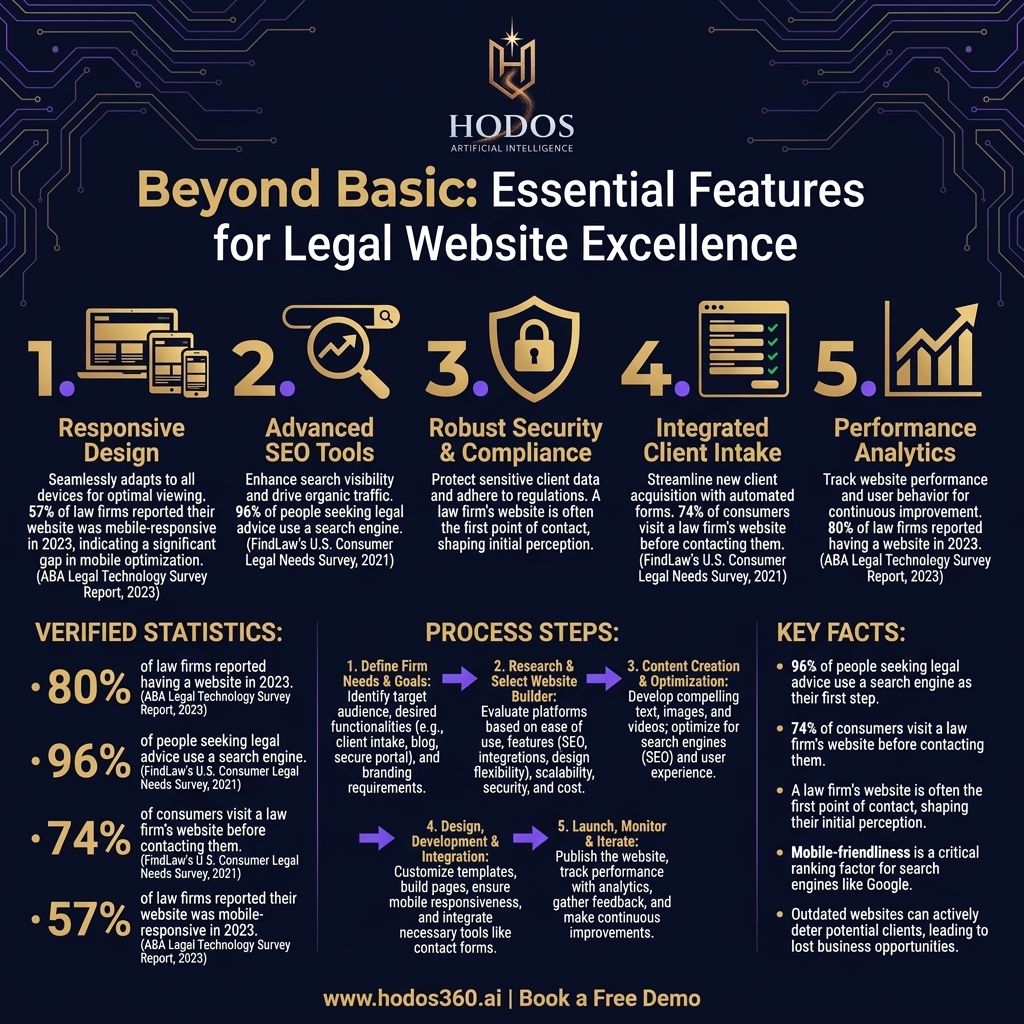
While a visually appealing design is important, a high-performing legal website demands far more than just good looks. The core functionality and underlying architecture are paramount. Responsive design is no longer optional; with Google's mobile-first indexing, a site that doesn't adapt flawlessly to smartphones and tablets will suffer in search rankings.
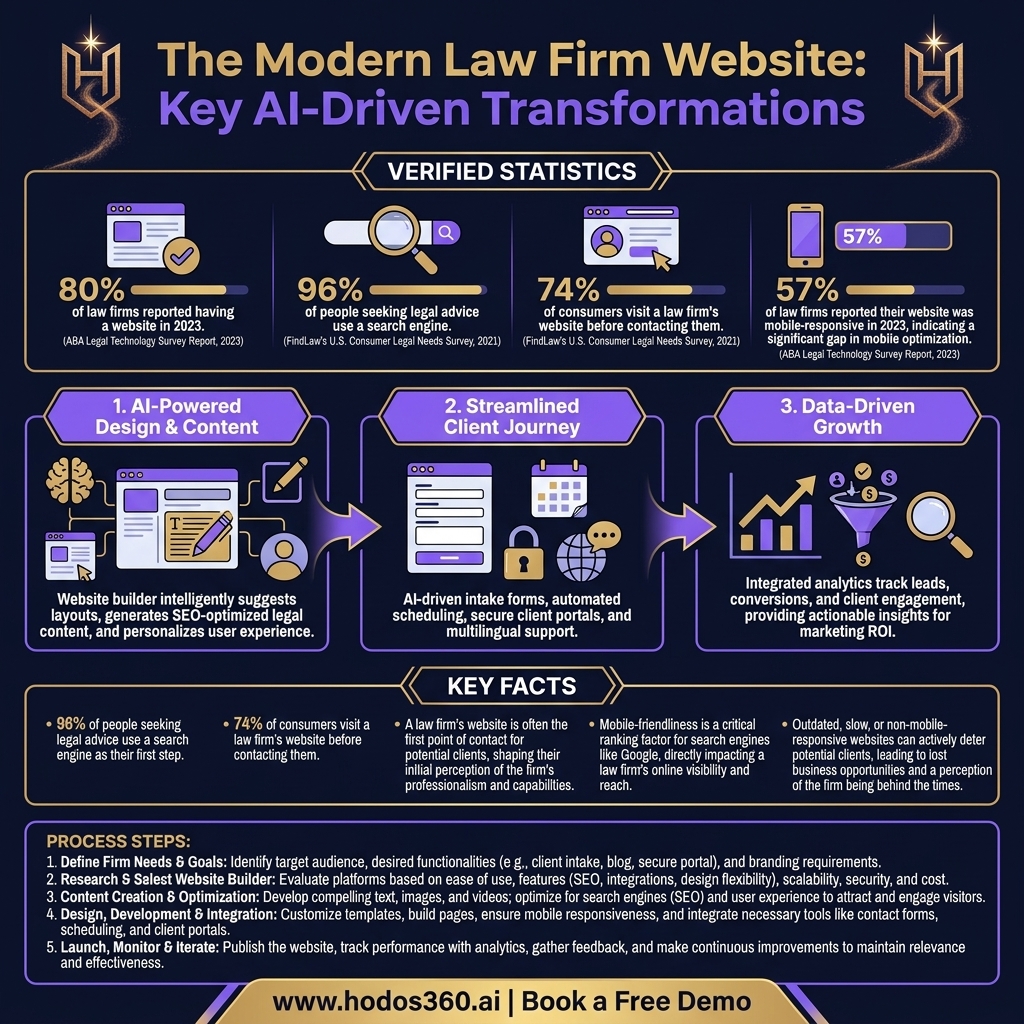
This means ensuring your website builders support dynamic layouts that adjust automatically, providing an optimal viewing and interaction experience across all devices. Furthermore, robust SEO optimization tools are critical. A legal website must be discoverable, utilizing keywords relevant to practice areas and local search terms.
Modern website builders offer built-in SEO features, from meta tag editing to sitemap generation, that empower firms to climb search engine results pages and attract organic traffic. Fast loading speeds, often overlooked, are also crucial for user experience and SEO, with studies showing that even a one-second delay can significantly increase bounce rates.
Security and ethical compliance are non-negotiable for law firms. Learn more about AI Legal Research: The Ultimate Guide to legalgain & Beyond. Your website must be built on a secure hosting infrastructure, utilizing SSL certificates and robust data encryption to protect sensitive client information. This directly ties into an attorney's ethical obligations, such as ABA Model Rule 7.1 (Communications Concerning A Lawyer's Services), which mandates that all communications be truthful and non-misleading.
This extends to the website's content, client testimonials, and claims of expertise. Moreover, the website must comply with various data privacy regulations like GDPR, CCPA, and state bar rules concerning client confidentiality. The choice of website builder must reflect a commitment to these standards, offering features like secure client portals, encrypted communication channels, and clear privacy policies.
Failing to meet these standards not only risks client trust but can also lead to severe professional repercussions.
Compliance and Security: Non-Negotiables for Legal Websites
For law firms, the digital presence is inextricably linked to professional ethics and client trust. Beyond the general requirements of web security, legal websites must adhere to stringent ethical guidelines. California Rule of Professional Conduct 1.6 (Confidentiality of Information), for example, underscores the attorney’s duty to maintain client confidentiality, which extends to digital communications and data storage.
This means ensuring that any client-facing forms, portals, or communication channels on your website are encrypted and compliant with legal industry standards. Learn more about Law Firm Mobile App Development: An Essential Blueprint for Growth. The best website builders for law firms offer features specifically designed to meet these needs, such as secure file sharing, HIPAA-compliant forms (where applicable), and robust access controls.
Ignoring these aspects can lead to data breaches, loss of client confidence, and disciplinary action, highlighting the importance of choosing a platform built with legal compliance in mind.
Navigating the Competitive Landscape: Choosing the Right Platform
The market for website builders is vast and varied, presenting both opportunities and challenges for law firms. On one end, you have general-purpose platforms like Wix and Squarespace, which offer intuitive drag-and-drop interfaces and a wealth of templates. While powerful for many small businesses, they may require significant customization or third-party integrations to meet the specific legal, ethical, and functional requirements of a law firm.
On the other end are legal-specific platforms or custom development agencies. Platforms integrated with legal practice management software, such as Clio's offerings, provide seamless data flow but might be less flexible in design. The "human conflict" here lies in balancing cost-effectiveness, ease of use, deep customization, and specialized legal functionality.
A smaller firm might find an AI-enhanced general builder sufficient initially, while larger or specialized practices might require a bespoke solution that integrates deeply with their unique workflows.
When evaluating website builders, consider not just current needs but also future scalability and integration capabilities. Learn more about Voice Assist: Essential AI Scheduling for Law Firms.
Can the platform grow with your firm, accommodating new practice areas, increased client volume, or the addition of new legal tech tools? Integration with CRM systems, marketing automation platforms, and existing practice management software is crucial for a unified digital ecosystem. Moreover, assess the platform's support for advanced analytics.
Gartner predicts that data-driven marketing will be standard by 2027, and your website should be a primary source of this data. The ability to track visitor behavior, conversion rates, and the ROI of your digital marketing efforts is indispensable for refining strategies and ensuring continuous growth.
A savvy marketing director at a firm, much like a tech startup founder, relies on these insights to pivot and optimize, ensuring every digital interaction contributes to the firm's strategic goals.
Leveraging Analytics for Growth: Data-Driven Legal Marketing
In the modern legal market, intuition is no longer enough; data is king. The most effective legal websites are not static brochures but dynamic engines of insight, fueled by robust analytics. Modern website builders integrate seamlessly with tools like Google Analytics or offer their own comprehensive dashboards, providing crucial data on visitor demographics, traffic sources, bounce rates, and conversion paths.
This allows law firms to move beyond guesswork, understanding precisely which content resonates, which marketing channels are most effective, and where potential clients drop off in the conversion funnel. For example, if analytics show a high bounce rate on a specific practice area page, it signals a need to refine the content or call-to-action.
Conversely, high engagement with a blog post indicates successful content strategy. This data-driven approach transforms a website from a cost center into a measurable investment, enabling firms to optimize their online presence continuously and ensure every marketing dollar contributes to demonstrable growth.
Ready to elevate your firm's online strategy? Discover HODOS 360's Web & Mobile Development solutions, designed specifically for the unique needs of law firms.
Future-Proofing Your Firm: The Strategic Imperative of Digital Excellence
The digital frontier for law firms is constantly expanding, driven by technological innovation and evolving client expectations. What constitutes a 'best-in-class' legal website today will be the baseline tomorrow. Future-proofing your firm means embracing this continuous evolution, viewing your digital presence not as a one-time project, but as an ongoing strategic investment.
The agility to adapt to new AI capabilities, emerging privacy regulations, and shifts in client behavior will define the most successful practices. Firms that proactively invest in superior website builders and robust web and mobile development capabilities are not just staying competitive; they are positioning themselves as leaders, ready to capture new market segments and enhance their service delivery.
The choice of website builders today dictates not just your online look, but your firm's operational efficiency, client relationships, and competitive standing. By embracing advanced web and mobile development, especially AI-powered solutions, law firms can navigate the complexities of the digital age with confidence and foresight.
This strategic investment ensures your firm is not just present online, but truly excels, ready to capture new opportunities and serve clients with unparalleled effectiveness. HODOS 360 provides comprehensive web & mobile development services tailored to legal firms, encompassing AI-powered website building, responsive design, and SEO optimization, directly addressing the needs discussed in this article.
We empower law firms to build a powerful, AI-driven online presence that attracts, engages, and converts clients, securing their place in the future of law.
The digital future of law is here. Don't be left behind. Contact HODOS 360 to build your firm's competitive edge with a powerful, AI-driven online presence.
Frequently Asked Questions
What makes an AI-powered website builder different for law firms?+
AI-powered website builders for law firms offer intelligent design suggestions, generate SEO-optimized legal content, and personalize user experiences. They can streamline client intake with adaptive forms, integrate with AI voice assistants for scheduling, and provide multilingual support, all tailored to the unique ethical and operational needs of legal practices, enhancing efficiency and client engagement significantly.
How important is mobile responsiveness for a legal website?+
Mobile responsiveness is critically important. With Google's mobile-first indexing, websites that do not adapt flawlessly to smartphones and tablets will suffer in search rankings. Moreover, a significant portion of potential clients access legal information on mobile devices. A non-responsive site leads to poor user experience, high bounce rates, and a loss of credibility, directly impacting client acquisition.
Can a custom-built website offer better SEO than a template builder?+
Not necessarily. While custom sites offer unparalleled flexibility, their SEO performance depends heavily on the developer's expertise. Modern template website builders, especially those with AI integration, often come with robust, built-in SEO tools and best practices. The key is consistent optimization and high-quality content, regardless of the platform, though custom solutions can address highly niche SEO needs more precisely.
What ethical considerations should I keep in mind when building a legal website?+
Ethical considerations are paramount. Your website must comply with ABA Model Rule 7.1 regarding truthful communications, avoiding misleading claims. It must also adhere to confidentiality rules (e.g., California Rule of Professional Conduct 1.6) by ensuring secure client portals and encrypted communications. Data privacy regulations (GDPR, CCPA) also dictate how client information is collected and stored. Transparency and security are non-negotiable.
How can I track the ROI of my law firm's website?+
Tracking ROI involves integrating analytics tools like Google Analytics or built-in platform dashboards. Monitor key metrics such as website traffic, lead conversions (e.g., form submissions, calls), bounce rate, and time on page. By attributing new clients and revenue to specific website interactions or marketing campaigns, you can calculate the return on your investment in your website and refine your digital strategy for continuous improvement.
Frequently Asked Questions
Should a law firm use a general-purpose builder like Wix, or a legal-specific platform?
General-purpose builders like Wix and Squarespace work well for firms that mainly need a simple, attractive online presence and are comfortable handling their own SEO, compliance review, and integrations. Legal-specific platforms make more sense once a firm needs built-in compliance-aware content, direct integration with intake and case-management tools, or scalable multi-location pages, since retrofitting those capabilities onto a general-purpose builder usually costs more in the long run than starting with a purpose-built platform.
What features should a law firm actually look for in a website builder?
At minimum: mobile-first responsive design, built-in SEO tools (meta tags, sitemaps, schema markup), secure client-intake forms, fast load times, and clear compliance support for attorney advertising rules. Beyond that, look for integration options with your practice management or CRM software, multilingual support if you serve non-English-speaking clients, and analytics that show which pages actually convert visitors into consultations.

How do I evaluate whether a website builder will scale with my firm?
Ask three questions before committing: can it add new practice-area pages and locations without a full rebuild, does it integrate with the case-management and marketing tools you already use or plan to adopt, and does its pricing model stay reasonable as your traffic and page count grow. A platform that looks cheap for a five-page site but charges steeply per additional page or integration can become the more expensive choice within a year or two.