


AI Legal Research: The Ultimate Guide to legalgain & Beyond
The legal landscape is undergoing a profound transformation, propelled by advancements in artificial intelligence. This shift was starkly highlighted at Legalweek 2026, where, as reported by Robert Ambrogi on LawSites, Benchly and Servient formally announced the formation of legalgain, a groundbreaking joint venture. This initiative introduces what is heralded as the "first AI-native Legal Research Platform," marking a significant milestone not just for the participating companies, but for the entire legal profession.
This isn't merely an incremental update to existing tools; it represents a fundamental rethinking of how legal professionals interact with vast repositories of legal information, promising unprecedented efficiency and insight. The move by Benchly and Servient to pool their strengths reflects a broader trend of collaboration and innovation in legal tech, where specialized expertise converges to address complex industry needs.
Their ambition to deliver an AI-native solution suggests a system built from the ground up with artificial intelligence at its core, rather than simply retrofitting AI capabilities onto legacy platforms. This distinction is crucial, as it implies a deeper integration of machine learning, natural language processing, and predictive analytics, designed to deliver more intuitive, comprehensive, and accurate research outcomes than ever before.
For law firms grappling with the increasing complexity of legal issues and the relentless pressure to optimize costs, legalgain emerges as a compelling proposition. Its introduction ignites a competitive fire in the legal research market, challenging established giants like Thomson Reuters Westlaw and LexisNexis to further innovate.
The success of such ventures will hinge not just on technological prowess, but on their ability to seamlessly integrate into the daily workflows of attorneys, proving their worth by delivering tangible improvements in case strategy, document drafting, and overall practice management. This development underscores a critical message for all legal professionals: the future of legal practice is inextricably linked to sophisticated AI tools, and understanding their capabilities and implications is no longer optional.
As the legal industry embraces this new wave of innovation, firms must proactively engage with these technologies to remain competitive. The integration of advanced AI tools into daily operations is becoming a strategic imperative. From streamlining administrative tasks to enhancing complex legal research, AI offers a pathway to optimized performance. Learn more about AI Legal Assistant 2026: Revolutionizing Law Firm Efficiency. Learn more about how integrated AI solutions can transform your practice.
The Dawn of AI-Native Legal Research: Benchly, Servient, and legalgain
The legalgain joint venture between Benchly and Servient represents a paradigm shift from traditional legal research methodologies. Benchly, known for its expertise in legal data analytics and intelligent document processing, combines forces with Servient, a leader in e-discovery and information governance. This strategic alliance, announced with much anticipation at Legalweek 2026, aims to deliver a platform that doesn't just assist lawyers in finding information, but actively helps them understand, synthesize, and strategize based on legal data.
Robert Ambrogi's article aptly captures the excitement surrounding this development, emphasizing the 'AI-native' aspect, which implies a foundational design where AI algorithms are not merely add-ons but are deeply embedded into the architecture, enabling a more intuitive and predictive research experience. This contrasts sharply with legacy systems that, despite their advancements, often rely on keyword-based searches and human-curated taxonomies, which can be prone to human error or oversight.
The vision, as articulated by the founders, is to move beyond simple information retrieval to a system that comprehends the nuances of legal language and context, offering insights that might otherwise remain buried.
The competitive landscape is undoubtedly heating up. While established players like Thomson Reuters Westlaw and LexisNexis have invested heavily in AI enhancements, the claim of being 'AI-native' positions legalgain as a distinct challenger.
This move mirrors broader trends in the tech industry where startups, unburdened by legacy infrastructure, can innovate rapidly and build from the ground up with cutting-edge technologies. The potential for legalgain lies in its ability to offer a seamless, integrated research experience that anticipates user needs and proactively delivers relevant information.
This could include identifying obscure but highly relevant case law, predicting potential outcomes based on factual patterns, or quickly summarizing complex legal documents. Learn more about AI Web Development: The Ultimate Guide for Law Firms. For firms that have historically dedicated significant billable hours to manual research, this promise of efficiency is transformative, potentially freeing up attorneys to focus on higher-value, strategic work that requires human judgment and client interaction.
The formation of this joint venture underscores a growing recognition that the future of legal practice demands not just more data, but smarter, more accessible insights derived from that data.
The implications of an AI-native platform like legalgain extend beyond mere search capabilities. It suggests a future where legal research is less about querying databases and more about engaging in an intelligent dialogue with a system that understands the law.
Imagine a platform that can not only pull up relevant statutes but also analyze their legislative history, identify related regulatory guidance, and even flag potential conflicts with existing case law across multiple jurisdictions. This level of contextual understanding is what sets AI-native apart from AI-enhanced.
It promises to democratize access to sophisticated legal analysis, potentially leveling the playing field for smaller firms or solo practitioners who might not have the extensive resources of larger organizations. However, adoption will require a shift in mindset and significant training, as lawyers learn to trust and effectively leverage these powerful new tools.
The success of legalgain will be a testament to its ability to deliver on this promise, making complex legal research more accessible, accurate, and ultimately, more strategic for legal professionals everywhere.
Redefining Research: From Keyword to Context
The fundamental shift brought by AI legal research platforms like legalgain is the move from simple keyword matching to deep contextual understanding. Traditional legal research often involves meticulously crafting search queries, sifting through hundreds of results, and manually identifying connections between disparate legal documents. This process is time-consuming and prone to human error, where a slight variation in terminology or an overlooked nuance can lead to missed precedents.
AI-native platforms, however, leverage advanced natural language processing (NLP) and machine learning algorithms to interpret the semantic meaning of a query, understand legal concepts, and identify relationships between cases, statutes, and regulations that might not be explicitly linked by keywords. Learn more about AI Legal Startup Sandstone: Unlocking 2026's Legal Tech Future.
This allows attorneys to pose questions in plain English, and the AI system can then analyze vast datasets, including judicial opinions, legislative texts, and secondary sources, to provide highly relevant and synthesized answers. This capability significantly reduces the 'discovery' phase of research, allowing lawyers to spend more time on analysis and strategy rather than on manual information retrieval.
Beyond the Hype: Tangible Benefits for Law Firm Efficiency
The promise of AI legal research isn't just about futuristic technology; it's about delivering concrete, measurable benefits to law firms. According to the 2023 ABA Legal Technology Survey Report, attorneys spend, on average, 10-20% of their time on legal research. Platforms like legalgain can drastically cut this figure, translating directly into reduced billable hours for research and increased capacity for higher-value, strategic tasks.
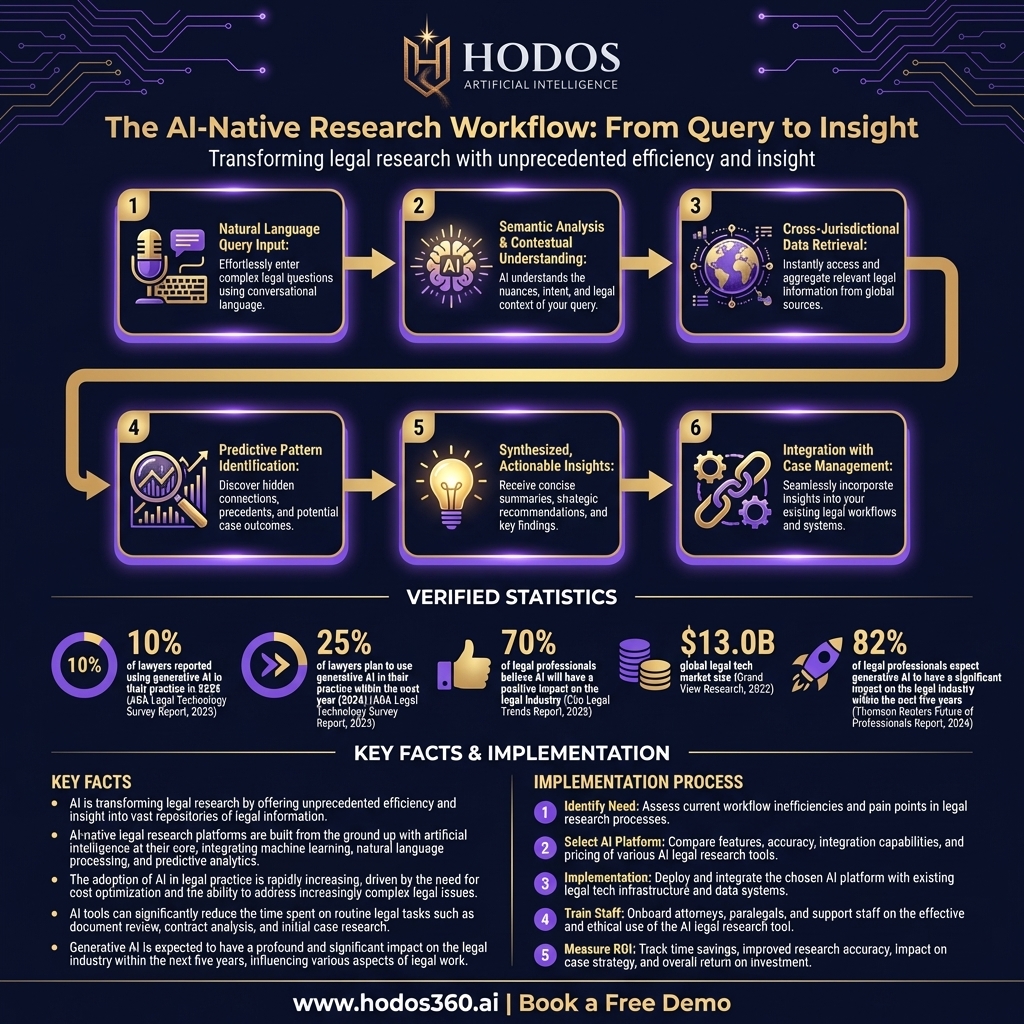
For example, a firm utilizing an AI-native platform can identify critical case law for a complex litigation in minutes rather than hours or days. This efficiency gain isn't just about speed; it's about accuracy. AI can process and cross-reference millions of documents, identifying subtle patterns and connections that a human researcher might miss, thereby reducing the risk of overlooking crucial precedents or conflicting interpretations.
This enhanced accuracy leads to stronger legal arguments, better-prepared briefs, and ultimately, improved client outcomes and satisfaction. Moreover, the ability to quickly synthesize information allows firms to offer more competitive pricing for certain services, making them more attractive to clients in a competitive market.
Beyond just research, the insights generated by AI legal research tools can permeate various aspects of law firm operations.
For instance, in transactional law, AI can accelerate due diligence by rapidly reviewing contracts for specific clauses, risks, or compliance issues. In litigation, predictive analytics can offer insights into potential case outcomes based on historical data, helping attorneys to advise clients more effectively on settlement strategies.
Firms that have embraced AI, such as Allen & Overy with its partnership with Harvey AI, have reported significant time savings in tasks ranging from contract review to regulatory analysis. Learn more about AI Document Workflows: Unleash Efficiency & ROI in 2026. The competitive advantage for early adopters is clear: they can deliver faster, more accurate, and more cost-effective services, positioning themselves as leaders in a rapidly evolving legal landscape.
This technological edge is no longer a luxury but a necessity for firms aiming to thrive in the 2026 legal market and beyond. The return on investment for robust AI legal research tools can be substantial, not just in terms of direct cost savings but also in terms of enhanced reputation and client loyalty.
The integration of sophisticated AI legal research into daily workflows empowers legal professionals to elevate their practice. It shifts the focus from the laborious task of information gathering to the nuanced art of legal interpretation and strategic advice. Imagine a litigator who, instead of spending days sifting through discovery documents, receives an AI-generated summary highlighting key evidence and potential legal arguments.
Or a corporate lawyer who can instantly assess the regulatory implications of a new business venture across multiple jurisdictions. This augmentation of human intelligence by AI allows attorneys to dedicate more time to critical thinking, client counseling, and developing innovative solutions to complex legal problems.
The impact is holistic, touching every facet of a law firm's operations, from client intake and case management to billing and marketing. As firms increasingly recognize these benefits, the adoption of AI legal research will become a defining characteristic of modern, high-performing legal practices, ensuring they remain at the forefront of legal service delivery.
- ✓Accelerated Document Review: AI can process thousands of documents in minutes, identifying relevant information, key clauses, and potential risks far faster than human review.
- ✓Enhanced Case Strategy: Predictive analytics provide data-driven insights into potential case outcomes, informing settlement negotiations and litigation strategies.
- ✓Automated Memo & Brief Drafting: AI tools can generate first drafts of legal memos, briefs, and other documents by synthesizing research findings and legal precedents.
- ✓Risk Identification & Compliance: Quickly flag regulatory compliance issues, contractual risks, and potential liabilities across vast datasets.
- ✓Discovery of Obscure Precedents: AI's ability to identify subtle connections can uncover highly relevant, often overlooked, case law or statutory interpretations.
- ✓Cross-Jurisdictional Analysis: Efficiently compare laws and regulations across different jurisdictions, crucial for international and multi-state practices.
- ✓Time & Cost Savings: Drastically reduce the hours spent on manual research, leading to lower operational costs and more competitive client billing.
To fully capitalize on these advancements, firms need a robust, integrated platform that brings all their AI tools together. Explore how HODOS 360’s AI-powered solutions can unify your firm's operations and maximize efficiency.
Navigating the AI Legal Landscape: Challenges and Ethical Considerations
While the benefits of AI legal research are compelling, the journey to widespread adoption is not without its challenges and ethical considerations. One primary concern revolves around the potential for 'hallucinations' or inaccurate information generated by AI models. As evidenced by recent high-profile cases where attorneys submitted AI-generated citations that were entirely fabricated, the need for human oversight and verification remains paramount.
This underscores the ethical obligation of lawyers to ensure the accuracy of their submissions, a principle reinforced by ABA Model Rule 1.1, Comment 8, which states that lawyers must keep abreast of changes in the law and its practice, including the benefits and risks associated with relevant technology.
Firms must implement rigorous protocols for vetting AI output, integrating AI tools as assistants rather than autonomous decision-makers. Furthermore, data privacy and security are critical, especially when feeding sensitive client information into AI systems. Firms must ensure that any AI platform they adopt adheres to stringent data protection standards, including compliance with regulations like GDPR or the California Consumer Privacy Act (CCPA), and that client confidentiality is never compromised.
Another significant challenge lies in mitigating bias within AI algorithms. If the training data for an AI legal research platform reflects historical biases present in legal documents, the AI could inadvertently perpetuate or even amplify those biases in its analysis or recommendations. This is a complex issue that requires continuous monitoring, auditing, and algorithmic refinement to ensure fairness and equity in legal outcomes.
The European Union's AI Act, set to be fully enforced in the coming years, provides a comprehensive framework for regulating AI, emphasizing transparency, human oversight, and accountability, particularly for high-risk AI systems like those used in legal contexts. Legal professionals must not only understand the technical capabilities of AI but also its inherent limitations and ethical responsibilities.
Learn more about Voice AI: Ultimate Competitive Landscape for Law Firms. The legal community, including bar associations and academic institutions, is actively developing guidance on the responsible use of AI, highlighting the need for continuous professional development in this area. Firms must invest in training their staff not just on how to use AI tools, but how to use them ethically and responsibly, fostering a culture of critical evaluation and informed skepticism.
The integration of AI legal research also presents practical challenges related to cost, integration complexity, and firm culture. While the long-term ROI is clear, the initial investment in cutting-edge AI platforms can be substantial. Firms must carefully evaluate their needs and budget, ensuring that the chosen solution aligns with their strategic objectives.
Furthermore, integrating new AI tools into existing IT infrastructures and workflows can be complex, requiring technical expertise and a well-planned implementation strategy. Resistance to change from attorneys and staff accustomed to traditional methods can also be a significant hurdle. Overcoming this requires clear communication, comprehensive training programs, and demonstrating the tangible benefits of AI to foster buy-in.
Leaders in legal tech, like Jack Newton, CEO of Clio, often emphasize the importance of change management and user adoption, stressing that technology is only as effective as its integration into daily practice. Successfully navigating these challenges requires a holistic approach that combines technological adoption with ethical governance, cultural transformation, and continuous learning, ensuring that AI serves as a powerful enabler rather than a source of new liabilities.
The Evolving Role of the Legal Professional
The rise of AI legal research does not signal the obsolescence of legal professionals; rather, it heralds an evolution of their role. Instead of spending countless hours on repetitive, data-intensive tasks, lawyers are freed to focus on higher-value activities that demand uniquely human skills: strategic thinking, client counseling, negotiation, and nuanced ethical judgment.
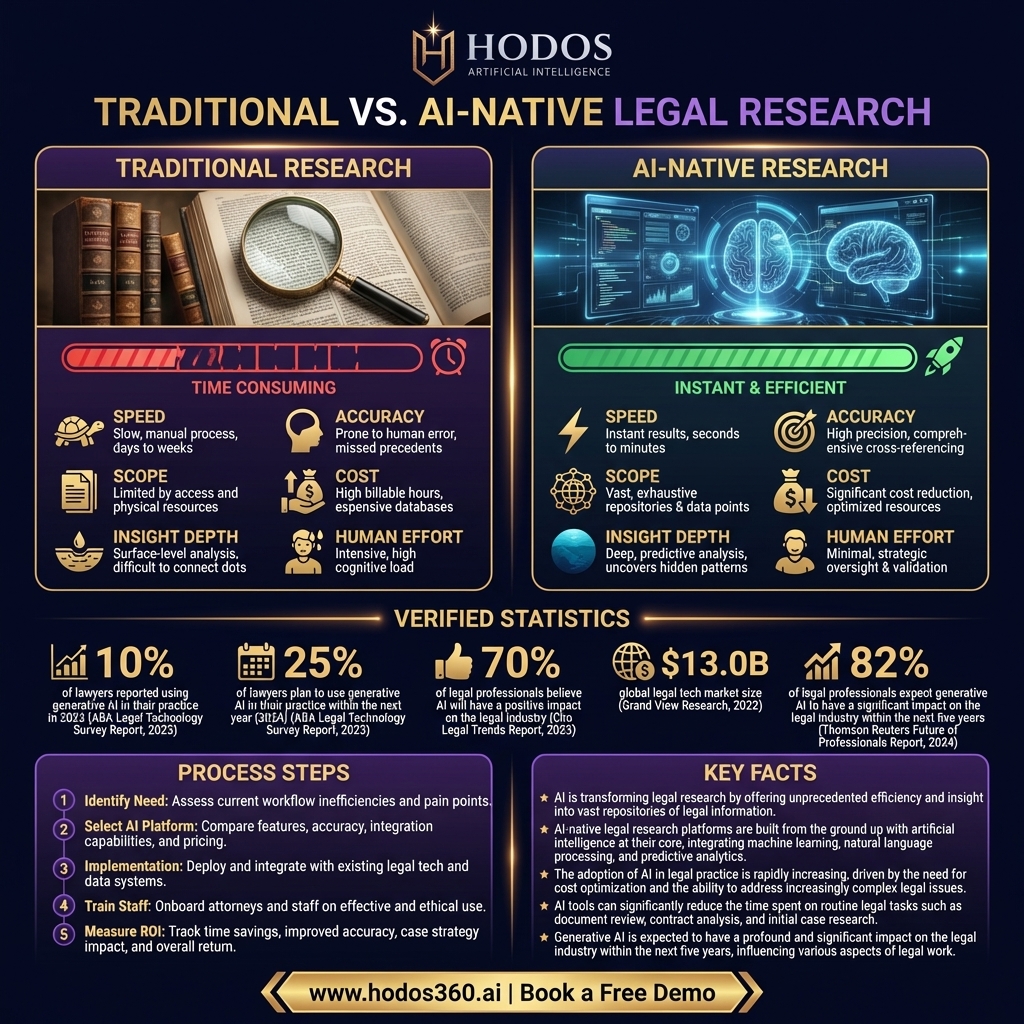
AI becomes an indispensable assistant, augmenting human capabilities rather than replacing them. For instance, while an AI can quickly identify relevant precedents, it is the attorney who must decide how to interpret and apply those precedents to the specific facts of a case, considering client objectives, judicial temperament, and broader societal implications.
Learn more about Voice AI Landscape: Essential Strategies for Law Firms. This shift allows lawyers to become more efficient, more strategic, and ultimately, more valuable to their clients. It encourages a move towards proactive legal advice, where AI-powered insights enable firms to anticipate legal challenges and advise clients on preventive measures, rather than merely reacting to problems after they arise.
The modern legal professional will be a hybrid expert, adept at both legal principles and technological leverage, constantly seeking ways to enhance service delivery through smart tools.
Integrating AI Research with Comprehensive Law Firm Management
The true power of specialized AI legal research platforms like legalgain is fully realized when they are seamlessly integrated into a comprehensive law firm management ecosystem. Standalone AI tools, however powerful, can create data silos and inefficiencies if they don't communicate with other critical systems.
Imagine performing cutting-edge research with legalgain, only to manually copy and paste findings into your case management system, or to re-enter client details into a separate billing platform. This fragmentation undermines the very efficiency AI is designed to deliver. A holistic AI Law Firm Management System acts as the central nervous system for a modern practice, ensuring that insights from AI research flow directly into every relevant workflow.
For example, research findings on a specific legal precedent should automatically populate relevant sections of a brief being drafted through document automation, or inform the risk assessment within a client intake module. This interconnectedness streamlines operations from end-to-end, creating a truly intelligent and responsive law firm.
Consider how an integrated platform handles a new client intake. An AI Law Firm Management System can not only automate the intake forms and conflict checks but also, in conjunction with an AI legal research tool, perform an initial assessment of the client's legal issue against relevant case law and statutes.
This allows attorneys to quickly grasp the legal landscape, identify potential challenges, and develop a preliminary strategy even before the first client meeting. As the case progresses, the research insights feed directly into case management, ensuring that all team members have access to the latest legal arguments and precedents.
Billing becomes more accurate and transparent as time spent on AI-assisted tasks is meticulously tracked, and document automation can leverage research outputs to generate highly customized and legally sound documents with minimal manual input. This synergistic approach eliminates redundant tasks, reduces administrative overhead, and allows legal professionals to focus their expertise where it matters most: delivering exceptional client service and strategic legal counsel.
The goal is to create a unified digital environment where every piece of information and every technological tool works in concert to enhance productivity and decision-making.
The benefits extend beyond internal efficiencies to client experience and firm growth. A firm that can leverage integrated AI to deliver faster, more accurate, and more transparent services will stand out in a competitive market.
Clients today expect not just legal expertise, but also efficiency and responsiveness. An AI Law Firm Management System that incorporates advanced research capabilities allows firms to meet these expectations, building trust and fostering long-term relationships. Moreover, the data generated by such an integrated system can be invaluable for strategic planning, identifying areas for growth, optimizing resource allocation, and even informing marketing efforts by highlighting areas of firm expertise.
The future of legal practice is not just about adopting individual AI tools; it's about building an intelligent, interconnected ecosystem where every component contributes to a firm's overall success. This comprehensive approach is what truly unlocks the transformative potential of AI, allowing firms to adapt, innovate, and thrive in an increasingly complex legal world.
Without this integration, even the most advanced AI legal research platform will only deliver a fraction of its potential value, leaving firms to grapple with fragmented systems and missed opportunities for true operational excellence.
The HODOS 360 Advantage in a Connected AI Ecosystem
In the context of this evolving legal tech landscape, HODOS 360 offers a distinct advantage with its comprehensive suite of AI-powered services. Our AI Law Firm Management System is designed precisely to address the integration challenge, providing a unified platform where specialized AI tools, like the promising legalgain, can seamlessly connect and amplify their impact.
By offering case management, billing, client intake, document automation, and AI-powered legal workflows all under one roof, HODOS 360 ensures that the insights gleaned from advanced AI legal research are not isolated but become actionable intelligence across your entire practice. This integration transforms raw data into strategic assets, streamlining operations, enhancing decision-making, and ultimately driving superior client outcomes.
For firms navigating the complexities of modern legal practice, HODOS 360 provides the foundational infrastructure to leverage the full potential of AI, ensuring that every technological advancement contributes to a cohesive, efficient, and forward-thinking legal enterprise. Our platform is built to empower your firm to not just adapt to the future, but to lead it.

Key Takeaways and Next Steps for Forward-Thinking Firms
The introduction of AI-native legal research platforms like legalgain by Benchly and Servient marks a definitive turning point for the legal profession. It’s no longer a question of *if* AI will impact legal research, but *how deeply* and *how quickly* it will reshape practice. For forward-thinking law firms, the imperative is clear: embrace these technologies or risk being left behind.
The competitive edge will increasingly belong to those who can leverage AI to deliver faster, more accurate, and more insightful legal services. This means moving beyond merely acknowledging AI to actively evaluating, adopting, and integrating these powerful tools into every facet of firm operations. The market is evolving rapidly, and firms must develop a proactive strategy for technology adoption, understanding that the future of legal service delivery is inextricably linked to intelligent automation and data-driven insights.
To effectively navigate this new era, firms should consider several strategic steps. First, conduct a thorough assessment of current research workflows to identify bottlenecks and areas where AI can provide the most immediate impact. Second, invest in continuous legal tech education for all staff, fostering a culture that views AI as an augmentation rather than a threat.
Third, prioritize integrated solutions that can centralize various AI functionalities, ensuring seamless data flow and maximizing overall efficiency. The goal is to build a cohesive technological ecosystem that supports every aspect of your practice, from client acquisition and case management to legal research and document generation.
The firms that will thrive in this new landscape are those that see AI not just as a tool, but as a strategic partner in delivering unparalleled legal excellence. The time to act is now, transforming challenges into opportunities for growth and innovation.
Ready to integrate cutting-edge AI into your practice? Book a free demo of HODOS 360 and discover how our AI-powered platform can elevate your law firm.
Frequently Asked Questions
What does 'AI-native legal research' mean?+
'AI-native legal research' refers to platforms built from the ground up with artificial intelligence at their core, rather than adding AI features to existing legacy systems. This allows for deeper integration of machine learning, natural language processing, and predictive analytics, enabling the system to understand legal context, synthesize information, and provide insights far beyond traditional keyword searches, leading to more accurate and efficient results.
How will legalgain impact existing legal research providers like Westlaw or LexisNexis?+
The introduction of legalgain as an AI-native platform will intensify competition. While Westlaw and LexisNexis have robust AI enhancements, legalgain's 'native' approach could offer distinct advantages in speed, accuracy, and contextual understanding. This will likely push established providers to further accelerate their own AI development and integration efforts, ultimately benefiting legal professionals with more advanced and diverse research tools available in the market.
What are the primary benefits of using AI legal research for law firms?+
AI legal research offers numerous benefits, including significant time and cost savings by automating tedious research tasks. It enhances accuracy by identifying obscure precedents and patterns that human researchers might miss. Firms can develop stronger legal arguments, improve client outcomes, and allocate attorney time to higher-value strategic work. It also aids in risk identification, compliance checks, and faster document review, making firms more competitive and efficient.
What ethical considerations should law firms be aware of when using AI legal research?+
Law firms must be aware of ethical considerations such as ensuring the accuracy and veracity of AI-generated information, as AI models can 'hallucinate' or produce incorrect citations. Adherence to ABA Model Rule 1.1 on competence requires lawyers to understand AI's benefits and risks. Data privacy, client confidentiality, and mitigating algorithmic bias are also crucial, necessitating human oversight and robust verification protocols for all AI outputs.
How does HODOS 360 complement specialized AI legal research platforms?+
HODOS 360's AI Law Firm Management System provides a comprehensive, integrated ecosystem that maximizes the value of specialized AI legal research tools. It connects research insights with case management, document automation, billing, and AI-powered legal workflows. This integration ensures that research findings are actionable across the entire practice, eliminating data silos and streamlining operations from client intake to final billing, thereby amplifying overall firm efficiency and strategic decision-making.