

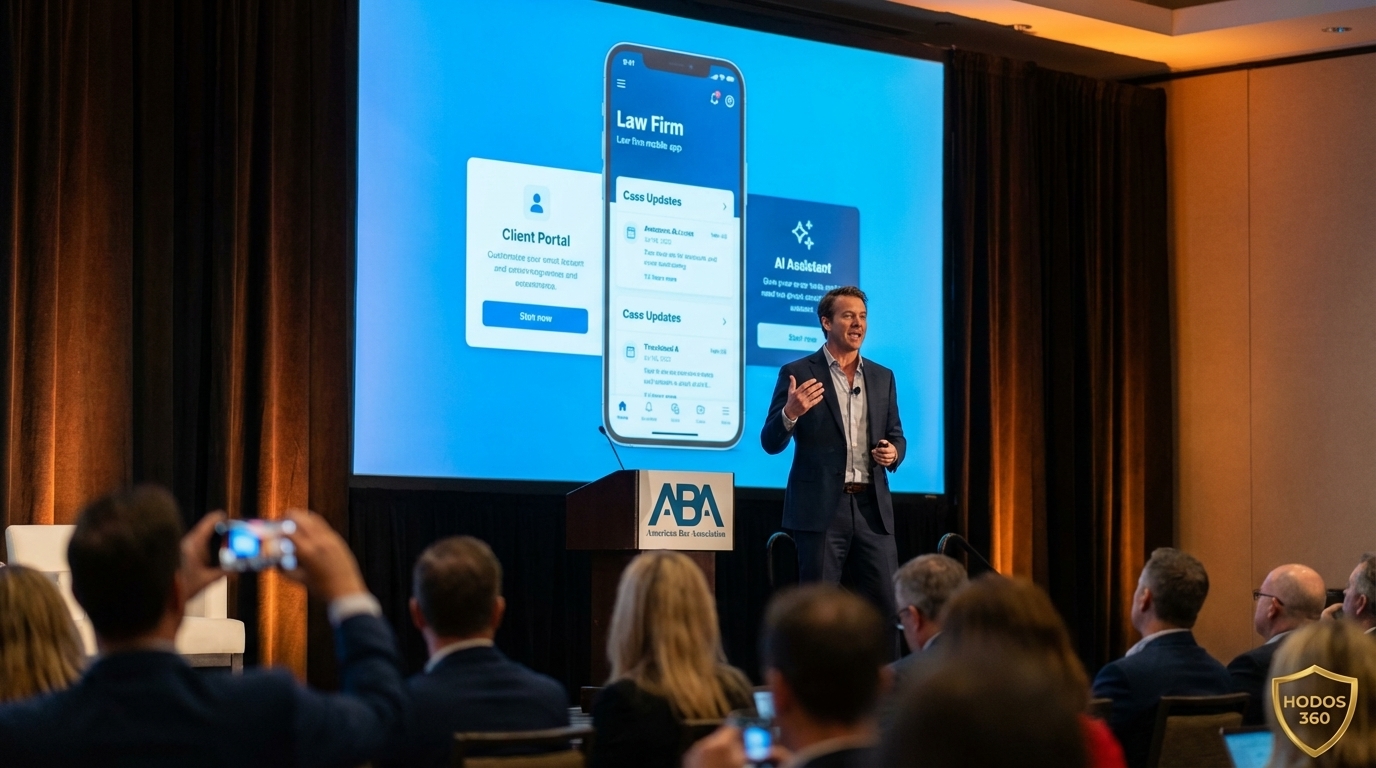
Law Firm Mobile App Development: An Essential Blueprint for Growth
The digital landscape has fundamentally reshaped consumer expectations across every industry, from retail to personal services. Consider the seamless experience offered by leading salon apps, as highlighted in vocal.media's recent "Top Salon App Development Companies in 2026" article. These platforms exemplify convenience, personalization, and instant access—qualities that clients now expect from all service providers, including their legal counsel.
For law firms, this shift isn't just about keeping pace; it's about proactively defining the future of client interaction and operational efficiency. The traditional model of phone calls, emails, and in-person meetings, while still vital, often falls short of the instant, transparent communication channels that modern clients demand.
This evolving dynamic underscores a critical imperative for legal practices: embracing dedicated law firm mobile app development as a strategic cornerstone for sustained growth and competitive differentiation.
Indeed, the gap between client expectations and traditional legal service delivery methods is widening. A 2023 report by the American Bar Association (ABA) TechReport revealed that client communication remains a perennial challenge for many firms, with only 37% of respondents indicating they use client portals or secure messaging systems.
This data point is stark, especially when contrasted with the pervasive adoption of mobile technology in everyday life. Clients are accustomed to managing their finances, scheduling appointments, and communicating with healthcare providers through intuitive apps. When they turn to legal services, they bring these same expectations for accessibility, real-time updates, and secure, on-demand information.
Firms that fail to address this digital expectation risk alienating a generation of tech-savvy clients and falling behind competitors who recognize the power of a custom-built digital presence.
Developing a specialized mobile application provides law firms with an unparalleled opportunity to bridge this gap. It's not merely about having a digital presence; it's about creating a centralized, secure, and user-friendly platform that enhances every touchpoint of the client journey.
From simplifying client intake and streamlining document exchange to providing transparent billing and real-time case updates, a robust legal app transforms the client experience while simultaneously boosting internal operational efficiencies. This strategic investment in law firm mobile app development positions firms not just as legal experts, but as forward-thinking, client-centric organizations ready to thrive in the digital age.
Discover how a dedicated legal app can redefine your firm's client relationships and unlock new levels of productivity. To explore tailored solutions, consider reaching out to HODOS 360's Web & Mobile Development team today.
Beyond the Brochure: Why Law Firms Need Dedicated Mobile Apps
The modern legal client lives in an always-on, interconnected world, where instantaneous access to information and seamless service delivery are the norm. This paradigm shift, often dubbed the "Uber-ification" of services, has profoundly impacted how consumers interact with businesses, including law firms. Clients no longer passively wait for updates; they expect proactive communication, transparency, and the ability to access their case information or communicate with their legal team on their own terms, from any device.
Firms that continue to rely solely on traditional methods like email and phone calls risk being perceived as outdated and unresponsive, potentially leading to client dissatisfaction and attrition. This evolving client expectation is a primary driver behind the growing need for dedicated client engagement apps in the legal sector, transforming how legal services are accessed and experienced.
Data consistently underscores the importance of superior client experience in fostering loyalty and attracting new business. A 2024 report by Thomson Reuters' Legal Executive Institute indicated that client satisfaction is directly correlated with communication frequency and clarity, with firms leveraging digital tools reporting significantly higher retention rates.
For instance, Jack Newton, CEO of Clio, a leading legal practice management software, has frequently emphasized at events like LegalTech NYC 2026 that firms excelling in client communication and digital accessibility are experiencing exponential growth compared to their more traditional counterparts. This competitive advantage is not just about convenience; it's about building deeper trust and demonstrating a commitment to transparency and responsiveness, which are paramount in the attorney-client relationship.
A dedicated app serves as a tangible manifestation of this commitment, offering a secure, branded channel for all interactions.
Moreover, the competitive landscape for legal services is intensifying, with online platforms like LegalZoom and Avvo setting new benchmarks for digital accessibility and self-service options. Learn more about AI Document Workflows: Revolutionize Your Firm in 2026 for Maximum ROI.
While these platforms cater to a different segment, they have nevertheless raised client expectations regarding digital interaction. For small to mid-sized law firms, a custom mobile app offers a powerful tool to differentiate themselves, elevate their brand, and compete effectively against larger firms and online disruptors.
It allows firms to showcase their unique expertise, streamline their intake process, and provide a premium, personalized experience that online platforms often struggle to replicate. This strategic investment in legal tech solutions allows firms to carve out a distinctive niche in a crowded market.
Beyond client satisfaction, a professional legal app significantly bolsters a firm's brand identity and builds credibility.
In an era where digital presence is synonymous with legitimacy, a well-designed, functional app signals modernity, efficiency, and client-centricity. It acts as a powerful marketing tool, reinforcing the firm's reputation and expertise. Imagine a prospective client researching legal options; a firm with a sophisticated, easy-to-use app for consultations, document submissions, and case tracking immediately stands out against those relying solely on static websites or generic contact forms.
This enhanced digital footprint not only attracts new clients but also strengthens the loyalty of existing ones, transforming them into advocates for the firm.
Enhancing Client Experience with Custom Legal Software
The true power of custom legal software manifests in its ability to create a superior client experience by offering features tailored specifically to legal interactions. Imagine a client needing to securely send sensitive documents, schedule a virtual consultation, or simply check the status of their case without playing phone tag or sifting through email chains.
A dedicated app can provide a secure messaging portal, ensuring confidential communications are encrypted and compliant with legal privacy standards. It allows for seamless document sharing, with version control and e-signature capabilities, drastically reducing administrative burdens and accelerating workflows. Furthermore, integrated appointment booking features empower clients to schedule meetings at their convenience, while real-time case status updates provide transparency and peace of mind, minimizing anxious inquiries.
Furthermore, the integration of artificial intelligence (AI) within these applications can usher in an era of hyper-personalized client journeys. Learn more about AI Web Development: Revolutionizing Law Firm Websites in 2026. AI can analyze client preferences and case progress to proactively offer relevant information, suggest next steps, or even anticipate questions.
For example, if a case enters a new phase, the app could automatically push a notification with an explanation of the phase and what to expect, alongside relevant resources. This level of personalized engagement, driven by intelligent legal tech solutions, not only delights clients but also positions the firm as a proactive, innovative partner.
It transforms the often-stressful legal process into a more manageable and transparent experience, fostering deeper trust and satisfaction.
Navigating the Legal Tech Landscape: Key Features for Your Firm's App
When embarking on law firm mobile app development, identifying core functionalities that align with both client needs and firm operations is paramount. A successful legal app should seamlessly integrate with existing practice management systems, providing a centralized hub for all client-related activities. This includes features like secure client portals for encrypted communication and document exchange, transparent billing and payment processing, and comprehensive case management tools that allow clients to view progress, upcoming deadlines, and communicate directly with their legal team.
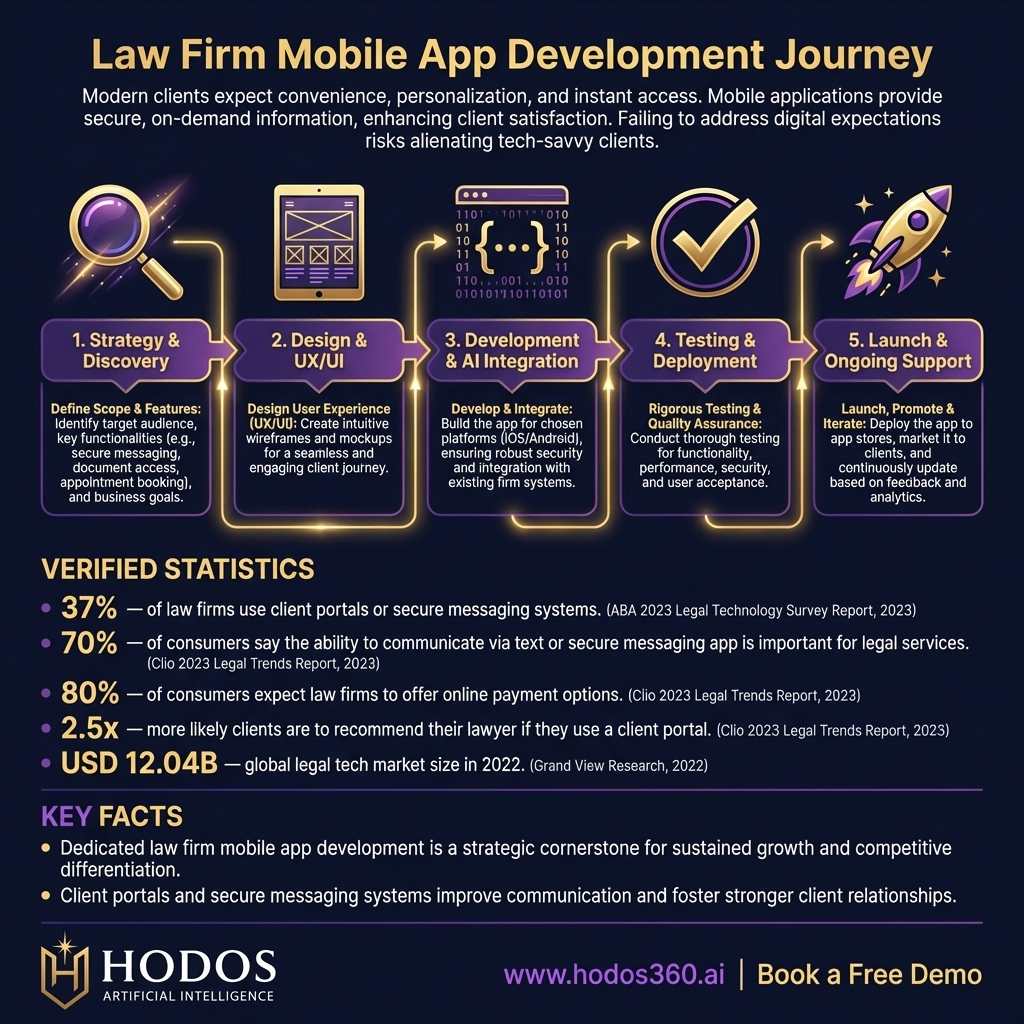
The goal is to eliminate friction points, reduce administrative overhead, and enhance the overall efficiency of legal service delivery. Firms must prioritize features that directly address common client pain points and operational bottlenecks, ensuring the app delivers tangible value from day one.
Integrating AI-powered legal workflows represents the next frontier for legal apps.
Imagine an app that not only stores documents but can also leverage AI for instant document automation, drafting routine correspondence or initial legal documents based on predefined templates and case data. Furthermore, AI can provide snippets of legal research, summarize complex information, or even offer predictive analytics regarding case timelines and potential outcomes, drawing from vast datasets.
While the ethical considerations surrounding AI in legal practice are significant, as outlined in ABA Model Rule 1.1 (Competence) and 1.6 (Confidentiality), responsible integration can free up attorneys from mundane tasks, allowing them to focus on high-value strategic work. This intelligent automation is a game-changer for productivity and client service, offering insights that were previously time-prohibitive.
Beyond direct legal service delivery, a firm's app can also serve as a powerful marketing and business development tool. Features such as simplified client intake forms, referral tracking mechanisms, and a dedicated section for thought leadership content (e.g., blog posts, legal alerts, webinars) can significantly enhance a firm's reach and lead generation capabilities.
Learn more about AI Marketing: Law Firms Slash $225K Tools in 2026. An app can host educational resources, FAQs, and even interactive tools that guide prospective clients through initial legal assessments, qualifying leads before they ever speak to an attorney. This proactive approach to legal marketing tools ensures a steady pipeline of engaged prospects while simultaneously nurturing existing client relationships through ongoing value delivery.
The app becomes a living extension of the firm's brand and expertise.
Critical to any legal app's success is ensuring robust security and compliance. Given the sensitive nature of legal data, firms must adhere to stringent data privacy regulations such as HIPAA for health-related cases, GDPR for European clients, and various state-specific privacy laws.
The app architecture must be built with end-to-end encryption, multi-factor authentication, and regular security audits to protect client confidentiality. Neglecting these aspects can lead to severe reputational damage, legal penalties, and a breach of trust. As per ABA Model Rule 1.6(c), lawyers must make reasonable efforts to prevent the inadvertent or unauthorized disclosure of, or unauthorized access to, information relating to the representation of a client.
Therefore, selecting a development partner with deep expertise in legal data security and compliance is non-negotiable.
- ✓Secure Client Portal: Encrypted messaging, document sharing, and e-signature capabilities to ensure confidentiality and streamline communication.
- ✓Case Status Tracking: Real-time updates on case progress, deadlines, and court dates, providing clients with transparency and peace of mind.
- ✓Integrated Billing & Payments: Transparent invoices, secure payment processing, and payment plan options directly within the app.
- ✓Appointment Scheduling: Self-service booking for consultations, meetings, and virtual appointments, synced with firm calendars.
- ✓AI-Powered Document Automation: Tools for drafting routine legal documents, contracts, and correspondence using intelligent templates.
- ✓Resource Library: Access to FAQs, legal guides, firm publications, and educational content to empower clients with information.
- ✓Client Intake & Onboarding: Streamlined digital forms for new client intake, conflict checks, and secure identity verification.
Integrating AI for Smarter Legal Workflows
The integration of AI into practice management apps is rapidly transforming how legal work is performed, moving beyond mere administrative support to intelligent automation. Leading firms are now leveraging AI to automate routine yet time-consuming tasks such as contract review, due diligence, and legal research synthesis.
For instance, the groundbreaking partnership between Allen & Overy and Harvey AI, an AI-powered legal assistant, demonstrated how large language models (LLMs) can significantly reduce the time spent on initial legal drafting and research, allowing human lawyers to focus on complex analysis and strategic advice.
This kind of AI integration within a firm’s mobile app means clients can benefit from faster turnaround times and more focused attention on their unique legal challenges.
However, the adoption of AI in legal practice is not without its ethical and practical considerations. The legal profession, guided by principles like those in the ABA Model Rules of Professional Conduct, mandates that lawyers maintain competence (Rule 1.1) and supervise non-lawyer assistance (Rule 5.3).
Learn more about Marketing Automation: Powering Law Firm Growth & Efficiency in 2026. This means firms must exercise due diligence in selecting and implementing AI tools, ensuring accuracy, confidentiality, and transparency with clients about AI's role. While AI can significantly enhance efficiency, human oversight remains crucial to maintain the integrity and ethical standards of legal advice.
The future of AI-powered legal workflows lies in a symbiotic relationship between advanced technology and human expertise, where the app serves as a sophisticated tool that augments, rather than replaces, the lawyer's judgment.
The Development Journey: From Concept to Launch
Embarking on legal app development requires a structured approach, beginning with a clear strategic vision. The initial discovery phase is critical: what specific problems will the app solve for your clients and your firm? Who is the target audience, and what are their primary pain points?
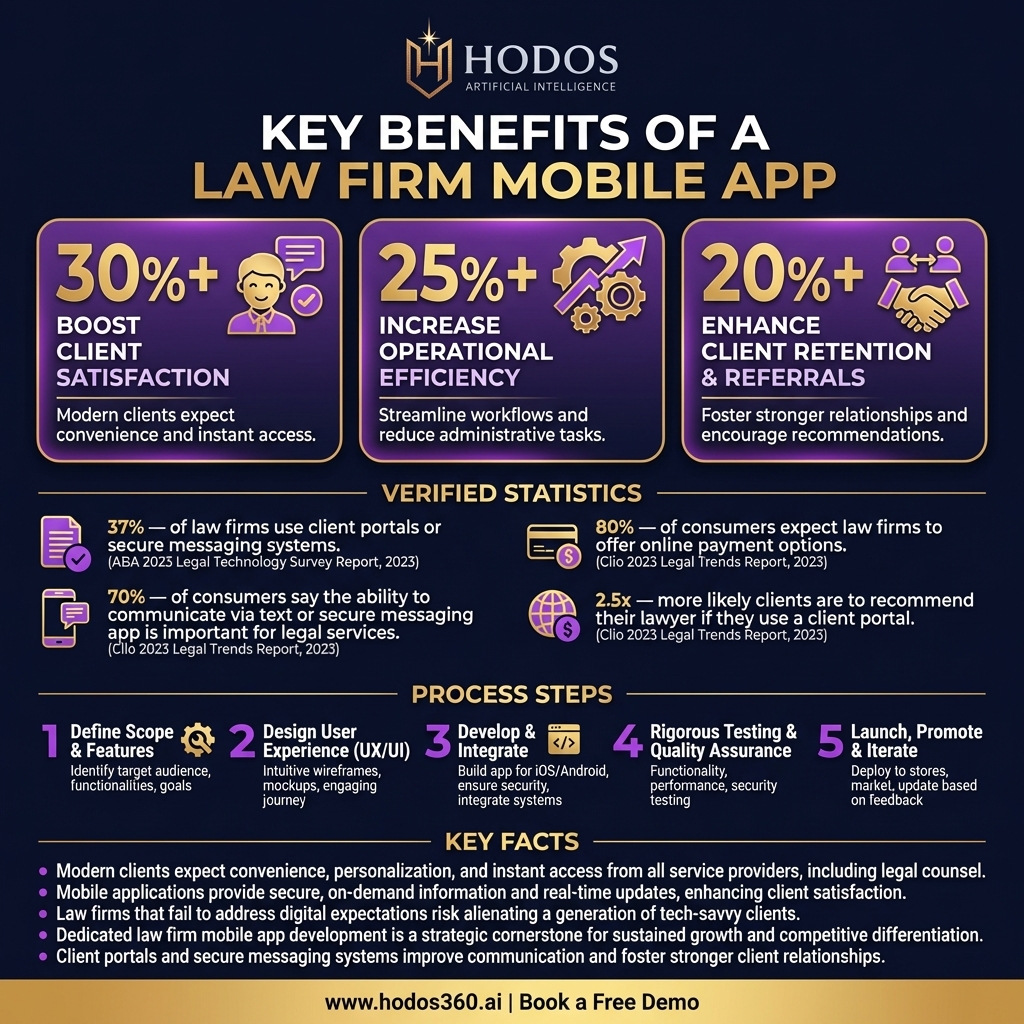
Conducting a thorough competitive analysis, studying successful consumer apps (like those highlighted in the salon app development trends), and defining measurable goals (e.g., reduce client inquiry calls by 30%, increase client retention by 15%) will lay a solid foundation. This is where firms must resist the urge to build a feature-rich but unfocused product, instead concentrating on core functionalities that deliver immediate value and address specific challenges within their practice area.
A clear concept ensures resources are allocated effectively and the final product meets genuine needs.
Choosing the right development partner is perhaps the most crucial decision in this journey. Firms have the option of building an in-house team, which is resource-intensive, or partnering with an external web & mobile development agency.
When evaluating external partners, look for those with demonstrated experience in the legal sector, an understanding of regulatory compliance (e.g., ethical guidelines, data privacy laws), and a robust security framework. A partner like HODOS 360, with its specialized Web & Mobile Development services, brings not only technical prowess but also an appreciation for the unique demands of the legal industry, ensuring the app is not just functional but also compliant and secure.
Their expertise in AI-powered website building and responsive design can translate directly into a high-converting, user-friendly legal app.
Once the strategic blueprint is in place and a development partner secured, the focus shifts to design and user experience (UX/UI). An intuitive, aesthetically pleasing interface is paramount for user adoption.
If an app is clunky or difficult to navigate, clients won't use it, regardless of its features. Learn more about Legal AI Divide: Bridge the Gap, Thrive in 2026's Digital Era. This phase involves creating wireframes, mockups, and prototypes, iteratively testing designs with a small group of users to gather feedback.
The goal is to ensure the app is not only functional but also delightful to use, reflecting the professionalism and client-centricity of the firm. A seamless UX/UI is a key differentiator, transforming a utility into an indispensable tool for clients.
The final stages of the development journey involve rigorous testing, deployment, and ongoing maintenance.
Comprehensive testing ensures the app is bug-free, secure, and performs optimally across various devices and operating systems. Once deployed to app stores, the work doesn't stop. Mobile apps require continuous updates, security patches, and feature enhancements based on user feedback and evolving technological landscapes. This iterative process ensures the app remains relevant, secure, and valuable to both clients and the firm.
Neglecting post-launch support can quickly render even the most innovative app obsolete, underscoring the importance of a long-term partnership with your development provider.
Ensuring Success: User Adoption and ROI
The investment in law firm mobile app development only yields returns if the app is widely adopted by both internal teams and clients. For internal adoption, comprehensive training programs are essential to familiarize attorneys and staff with the app's functionalities and integrate it into their daily workflows.
Emphasizing how the app streamlines tasks and improves client satisfaction can drive buy-in. Externally, a strategic marketing campaign is crucial to encourage client downloads and usage. This can involve promoting the app on the firm's website, social media (leveraging an AI Marketing Platform for automation), email newsletters, and even in-office signage.
Learn more about AI Document Workflows: Unleash Efficiency & ROI in 2026. Highlighting the benefits to clients—such as 24/7 access to case updates or secure communication—will be key to driving engagement.
Measuring the return on investment (ROI) for a legal app involves tracking key performance indicators (KPIs) that align with the firm's strategic goals.
This might include client retention rates, the reduction in client inquiry calls, increased lead generation through the app, time saved on administrative tasks, and ultimately, an increase in revenue. For instance, a firm might track how many new clients are onboarded via the app's intake forms or the average time saved per case due to streamlined document exchange.
By continuously analyzing these metrics, firms can refine their app's features, optimize its marketing, and demonstrate its tangible value, ensuring it remains a powerful asset in their digital transformation legal strategy.
The Future is Now: AI, Legal Apps, and the Evolving Practice
The trajectory of law firm mobile app development is inextricably linked to the rapid advancements in artificial intelligence and other emerging technologies. We are already seeing trends like voice AI integration, allowing clients to interact with their legal app through natural language commands for updates or scheduling, mirroring the capabilities of advanced AI Voice Assistants.
Hyper-personalization, driven by sophisticated AI algorithms, will enable apps to anticipate client needs with even greater precision, delivering highly relevant information and proactive support. Furthermore, the integration of blockchain technology could enhance the security and immutability of legal documents and transactions handled through the app, setting new standards for digital trust and verification.
These innovations are not distant fantasies but are actively being developed and implemented, promising to redefine the capabilities of legal practice management apps.
The imperative for innovation in the legal sector has never been clearer. Firms that embrace these digital tools are not merely adapting; they are actively shaping the future of legal service delivery.
Consider firms like Fenwick & West, which has made significant investments in legal tech and innovation labs, demonstrating a commitment to leveraging technology for competitive advantage. The conflict between traditional, often slow-to-adapt practices and innovative, tech-forward firms is creating a distinct divide in market share and client appeal.
Those that view technology as a cost center rather than a strategic investment risk being outmaneuvered by agile competitors who understand that digital fluency is now a core competency for modern legal professionals.
Ultimately, the choice facing law firms today is not whether to adopt technology, but how strategically and effectively to integrate it.
The rise of sophisticated legal tech solutions and the increasing client demand for digital convenience present both a formidable challenge and an unparalleled opportunity. Firms that proactively engage in law firm mobile app development, informed by consumer trends and powered by cutting-edge AI, will be best positioned to thrive.
They will attract and retain top talent, build stronger client relationships, and operate with unprecedented efficiency, securing their relevance and prosperity in an increasingly digital world.
This is not a theoretical exercise; it is the practical reality of modern legal practice. Firms must start planning their digital transformation journey now, assessing their needs, exploring innovative solutions, and partnering with experts who can bring their vision to life.
The future of legal services is mobile, intelligent, and client-centric, and those who lead the charge in building these digital bridges will be the ones that succeed.

Key Takeaways and Next Steps
The trend observed in consumer app development, from salon booking to ride-sharing, has set a clear precedent: clients expect seamless, on-demand digital experiences. For law firms, this translates into a pressing need for dedicated law firm mobile app development. Such an investment is no longer a luxury but a strategic necessity to meet evolving client expectations, enhance operational efficiency, and secure a competitive edge in a rapidly digitalizing legal market.
By providing a secure, transparent, and accessible platform, firms can significantly improve client satisfaction, streamline communication, and reduce administrative burdens, freeing up valuable attorney time for more complex legal work.
Embracing mobile app technology means unlocking a suite of benefits, from fostering deeper client engagement through personalized interactions and real-time updates to leveraging AI for smarter legal workflows and document automation.
The journey from concept to launch requires careful planning, a focus on robust security and compliance, and a strategic partnership with a development expert. Ultimately, firms that prioritize legal tech solutions like custom mobile apps are positioning themselves for sustained growth and resilience in a dynamic industry.
This proactive approach ensures they remain relevant, responsive, and highly valued by their clientele.
As you consider the future of your practice, reflect on how a dedicated mobile app could transform your client relationships and internal operations. The time to explore these innovative digital solutions is now.
We encourage law firm owners and legal professionals to begin by assessing their current client communication strategies and identifying areas where a mobile app could deliver significant value. Partnering with experienced providers in web & mobile development, such as HODOS 360, can provide the expertise needed to navigate this complex landscape and build a powerful, secure, and client-centric application tailored to your firm's unique needs.
Frequently Asked Questions
Why should a law firm invest in mobile app development?+
Law firms should invest in mobile app development to meet modern client expectations for digital convenience and transparency. A dedicated app enhances client communication, streamlines case management, provides secure document sharing, and offers 24/7 access to information. This not only improves client satisfaction and retention but also boosts operational efficiency and provides a significant competitive advantage in a crowded legal market, positioning the firm as forward-thinking.
What key features are essential for a law firm's mobile app?+
Essential features include a secure client portal for encrypted communication and document exchange, real-time case status updates, integrated billing and payment processing, and appointment scheduling. Additionally, AI-powered tools for document automation and personalized client experiences can further enhance efficiency and engagement. Robust security measures and compliance with legal privacy regulations are paramount for any legal app.
How can AI enhance a law firm's mobile application?+
AI can significantly enhance a law firm's mobile app by automating routine tasks like document drafting and legal research synthesis, freeing up attorneys for higher-value work. It can also enable hyper-personalization, anticipating client needs and proactively providing relevant information or next steps. AI integration can lead to faster turnaround times, improved accuracy, and a more efficient, intelligent legal workflow, all while maintaining human oversight for ethical compliance.
What are the security and compliance considerations for legal app development?+
Security and compliance are critical. Law firm apps must adhere to strict data privacy regulations like HIPAA (where applicable), GDPR, and state-specific laws. The app must feature end-to-end encryption, multi-factor authentication, and regular security audits. Adherence to ABA Model Rules, particularly regarding client confidentiality (Rule 1.6) and competence (Rule 1.1), is essential. Choosing a development partner with deep legal security expertise is vital to protect sensitive client information.
How does a custom legal app impact client retention and acquisition?+
A custom legal app profoundly impacts client retention and acquisition by offering a superior, transparent, and convenient client experience. Satisfied clients are more likely to return and refer others. For acquisition, a professional app differentiates the firm, showcasing its modernity and client-centric approach, attracting tech-savvy prospects. It also provides a streamlined intake process, converting leads more efficiently and establishing trust from the first interaction, leading to sustained growth.