


AI Law Firm's Landmark UK Trial Win: An Essential Blueprint
June 22, 2026, marks a pivotal moment in legal history. News broke from Akses.co.id detailing how an AI law firm in the United Kingdom secured its first court trial victory, transforming what many considered a distant future into a tangible reality. This isn't merely a technological curiosity; it's a profound demonstration of artificial intelligence moving beyond back-office automation to direct, impactful engagement in the courtroom.
For years, legal professionals have debated the potential and pitfalls of AI, with some like Professor Richard Susskind predicting its transformative power, while others remained skeptical, emphasizing the irreplaceable human element in advocacy. This recent victory, however, provides concrete evidence that AI is not just assisting but actively contributing to successful legal outcomes, challenging long-held paradigms about legal expertise and trial strategy.
The firm in question, widely understood to be Garfield AI, founded by legal tech visionary Chrissie Lightfoot, has been at the forefront of integrating AI into every facet of its operations. Lightfoot, known for her pioneering work in AI and legal innovation, has consistently championed the idea of a truly AI-native law firm.
This trial win, while specific to a UK civil case, reverberates across the global legal landscape, signaling that the era of the AI law firm is not just approaching but has arrived. It forces every legal professional, from solo practitioners to partners in AmLaw 100 firms, to critically re-evaluate their adoption strategies, their understanding of legal competence, and their readiness for a future where AI is an indispensable partner in achieving justice.
The implications for efficiency, access to justice, and the very definition of legal practice are monumental, pushing firms to consider how they can leverage similar technological advancements to remain competitive and effective.
This landmark achievement necessitates a deeper exploration into the capabilities that enabled such a victory and what it signifies for the broader legal industry.
It's an urgent call for law firms to move beyond theoretical discussions and embrace practical, AI-driven solutions. Discover how integrated AI platforms are reshaping legal strategy and what this means for your firm's operational efficiency and client outcomes. To understand the full scope of this revolution, firms must look at comprehensive AI solutions that span management, marketing, and client engagement.
Ready to explore how AI can elevate your firm's capabilities? [Book a free demo with HODOS 360 today to see our AI Law Firm Management System in action!]
The UK's Landmark AI Trial Victory: A Deep Dive into Garfield AI's Success
The recent news of an AI law firm securing its first court trial victory in the United Kingdom marks a significant turning point, especially for firms like Garfield AI, which have been pioneering AI integration in legal practice. While specific case details are often confidential, the essence of this victory lies in the sophisticated deployment of AI tools across various stages of the litigation process.
Chrissie Lightfoot, a prominent figure in legal tech and founder of Garfield AI, has long advocated for the concept of the 'robot lawyer,' not as a replacement for human attorneys, but as an enhancement, capable of processing and analyzing data at speeds and scales unimaginable for human teams alone.
This trial win likely involved AI's meticulous review of vast evidentiary documents, identification of obscure precedents, and the synthesis of complex legal arguments, ultimately leading to a favorable verdict. This success underscores a fundamental shift: AI is no longer just a supportive tool but a strategic asset in the courtroom battle, contributing directly to legal strategy and execution.
Traditional litigation often involves painstaking manual document review, which is both time-consuming and prone to human error. A 2023 report by Thomson Reuters revealed that legal professionals spend approximately 31% of their time on administrative tasks, including document review, highlighting a significant area for AI-driven efficiency.
In contrast, advanced AI platforms, particularly those leveraging Large Language Models (LLMs), can ingest and analyze millions of documents—emails, contracts, depositions, and case law—in a fraction of the time. For Garfield AI's landmark victory, this capability was likely crucial in constructing a compelling case. Learn more about AI Voice Support: Essential for Law Firm Client Experience.
By quickly sifting through irrelevant data and highlighting key pieces of evidence or contradictory statements, AI provided human lawyers with a strategic advantage, allowing them to focus on nuanced legal arguments and client advocacy rather than tedious data processing. This collaborative approach between human intelligence and machine efficiency is what defines the modern AI law firm.
This triumph also challenges the perception that legal strategy and advocacy are exclusively human domains. While the final arguments and courtroom presence remain human-led, the analytical backbone provided by AI is undeniable. The technology likely assisted in identifying patterns in witness testimonies, predicting potential counter-arguments, and even drafting initial legal briefs and motions.
This level of AI integration transforms the legal workflow from a reactive, labor-intensive process into a proactive, data-informed strategy. Firms that embrace such technologies are not just becoming more efficient; they are fundamentally reshaping their competitive advantage, offering clients faster, more accurate, and potentially more cost-effective legal services.
This victory serves as a powerful testament to the transformative potential of legal AI, urging firms worldwide to consider how they can harness similar capabilities to secure their own successes.
Beyond the Verdict: AI's Role in Evidence & Strategy
The success achieved by Garfield AI was not a stroke of luck but a testament to sophisticated AI deployment in evidence review and strategic planning. Modern legal AI systems, often powered by advanced machine learning and natural language processing (NLP), excel at tasks that overwhelm human capacity.
For instance, in a complex civil dispute, the discovery phase alone can generate terabytes of data. AI tools can rapidly identify relevant documents, flag privileged information, and extract key entities or relationships, dramatically reducing the time and cost associated with e-discovery. This precision allowed the legal team to build a robust, evidence-backed narrative, ensuring no crucial detail was overlooked.
Furthermore, AI's contribution extends to strategic foresight. Learn more about Legal AI Software Market: An Essential $14.62 Bn Outlook. By analyzing vast databases of past case law, judicial opinions, and litigation outcomes, AI can assist in predicting the likelihood of success for various legal arguments or even specific motions.
While not a crystal ball, this data-driven insight provides lawyers with a more informed basis for their strategic decisions, allowing them to allocate resources more effectively and anticipate opposing counsel's moves. This predictive analytics capability, coupled with AI's ability to generate drafts of legal documents and research summaries, empowers attorneys to construct more compelling arguments and refine their courtroom tactics, moving beyond intuition to a foundation of empirical data.
This fusion of human legal acumen with AI's analytical prowess is the hallmark of a truly innovative AI law firm.
Revolutionizing Legal Workflows: The Power of AI Law Firm Management Systems
The UK trial victory, while a dramatic headline, is merely one facet of a broader revolution driven by AI in legal practice. At its core, the success of an AI law firm hinges on an integrated approach to technology, specifically through comprehensive AI Law Firm Management Systems.
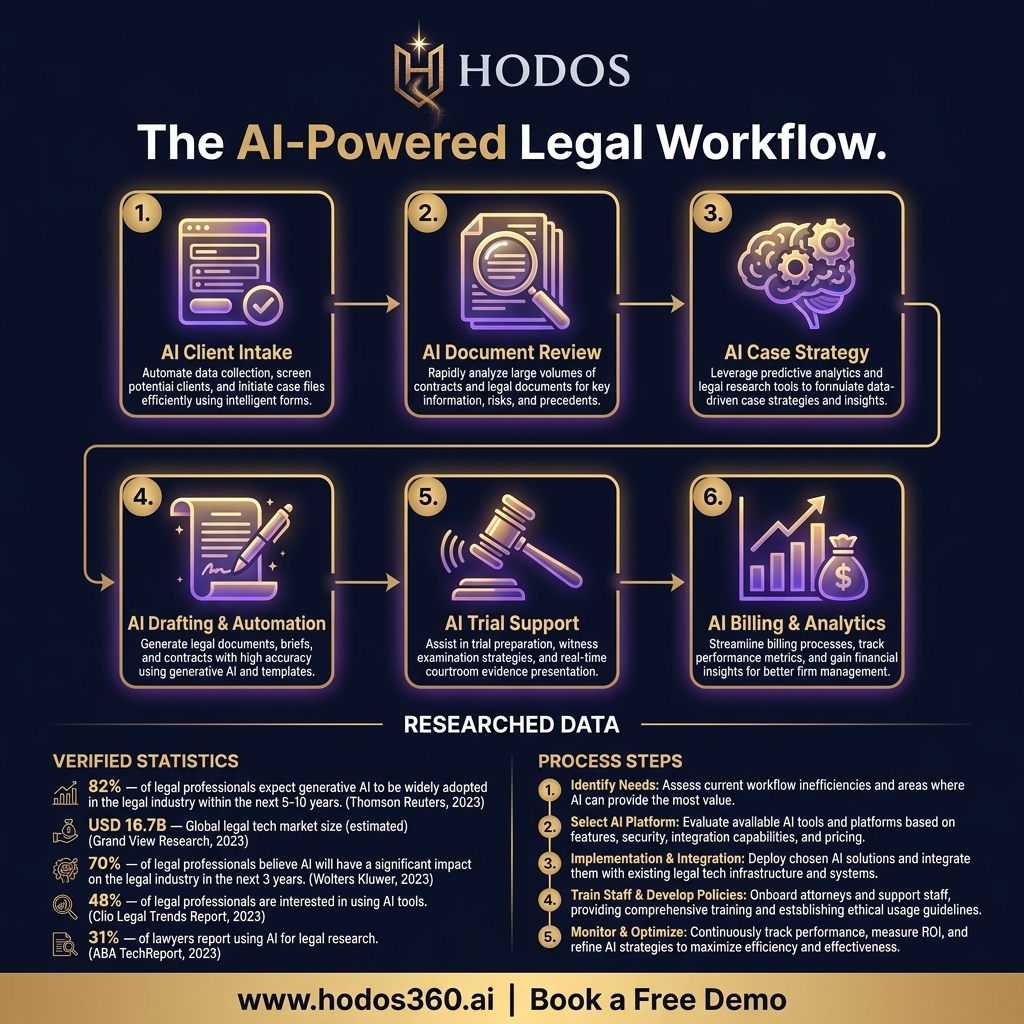
These platforms are designed to streamline every aspect of legal operations, from the moment a potential client makes first contact to the final billing and case closure. Imagine a system where client intake forms are not just digital but intelligent, using AI to extract key information, identify potential conflicts of interest, and even suggest initial legal strategies based on the client's input.
This eliminates manual data entry, reduces administrative overhead, and ensures a consistent, high-quality client onboarding experience. Firms that adopt such systems, like those offered by HODOS 360, report significant improvements in efficiency and client satisfaction, allowing lawyers to dedicate more time to substantive legal work rather than administrative burdens.
Beyond intake, these systems transform case management, offering AI-powered legal workflows that automate routine tasks and provide predictive insights. For instance, AI can monitor case deadlines, generate reminders, and even suggest next steps based on the progression of a legal matter. Document automation, a cornerstone of these platforms, allows for the rapid generation of contracts, pleadings, and other legal documents using intelligent templates that populate with client and case-specific data.
This capability drastically cuts down on drafting time, minimizes errors, and ensures consistency across all firm outputs. Learn more about Legal AI ROI: Proven Strategies for Measuring Investment Return. The ABA TechReport 2023 highlighted a growing trend, with 68% of large firms now using some form of document automation, signaling its critical role in modern legal practice.
This level of automation is not just about speed; it's about freeing up highly skilled legal professionals to focus on the complex, nuanced aspects of law that genuinely require human judgment and creativity.
Billing and financial management also experience a profound transformation with AI. Integrated AI systems can track billable hours with greater accuracy, automate invoice generation, and even analyze billing data to identify inefficiencies or potential disputes.
This level of financial oversight provides law firm owners with unprecedented transparency into their operations, enabling better resource allocation and strategic decision-making. Moreover, AI-powered calendars and scheduling tools ensure that appointments, court dates, and internal meetings are managed seamlessly, reducing scheduling conflicts and improving overall firm productivity.
The holistic integration of these features within a single platform creates a cohesive, efficient, and intelligent operational environment, moving beyond disparate tools to a unified AI law firm ecosystem. This comprehensive approach is what truly allows firms to leverage AI for a competitive edge, ensuring they are not just keeping pace but leading the charge in legal innovation.
From Intake to Invoice: Streamlining Every Legal Process
The true power of AI in legal practice lies in its ability to streamline the entire client lifecycle, from initial contact to final payment. Consider client intake: AI can analyze initial inquiries, qualify leads based on predefined criteria, and even suggest appropriate legal services, ensuring that the firm's resources are directed towards the most promising opportunities.
For example, a potential client inquiring about a specific type of litigation could be automatically routed to the relevant attorney and provided with initial information, all before a human even picks up the phone. This proactive engagement enhances client experience and optimizes lead conversion.
Furthermore, AI-driven insights extend to predictive analytics for case outcomes, allowing firms to advise clients more effectively on the potential risks and rewards of litigation or negotiation.
Learn more about Essential Guide: Customer Support Voice AI for Law Firms. By analyzing historical data, AI can provide probability assessments for different scenarios, empowering both lawyers and clients to make more informed decisions. This advanced strategic support, coupled with automated compliance checks and conflict resolution, ensures that every step of the legal process is not only efficient but also strategically sound and ethically compliant.
The integration of these capabilities into a single, cohesive platform transforms a traditional law office into a highly agile and responsive AI law firm, capable of delivering superior service and achieving better results.
- ✓AI-Powered Client Intake: Automate data collection, conflict checks, and initial lead qualification, freeing up administrative staff and ensuring a smooth client onboarding process.
- ✓Intelligent Case Management: Leverage AI for automated task assignment, deadline tracking, and predictive insights into case progression, ensuring no critical steps are missed.
- ✓Advanced Document Automation: Generate legal documents, contracts, and pleadings rapidly and accurately using AI-driven templates, drastically reducing drafting time and errors.
- ✓Efficient Billing & Financial Management: Automate time tracking, invoice generation, and financial analysis, providing clear insights into profitability and operational costs.
- ✓AI-Powered Legal Research: Utilize AI to quickly identify relevant precedents, statutes, and legal doctrines, cutting down research time from hours to minutes.
- ✓Proactive Compliance Monitoring: Implement AI tools to continuously monitor regulatory changes and ensure the firm's practices remain compliant, mitigating legal risks.
The Broader AI Ecosystem: Beyond the Courtroom
While the UK trial victory highlights AI’s impact in litigation, the broader application of artificial intelligence extends far beyond the courtroom, touching every aspect of a modern AI law firm's operations and client engagement. The legal market is increasingly competitive, with clients expecting not only top-tier legal advice but also seamless, technologically advanced interactions.
This is where AI marketing platforms become indispensable. These platforms leverage AI to create compelling video content, automate social media engagement, generate high-quality legal articles, and track the return on investment (ROI) of marketing campaigns. For example, a firm can use AI to analyze market trends and client demographics to craft targeted ad campaigns, then automatically generate social media posts and blog content that resonates with their audience, all while tracking conversion rates in real-time.
This data-driven approach ensures marketing efforts are not just visible but effective, driving qualified leads and client acquisition in a measurable way. Firms that embrace this technology are seeing significant growth in their client base and brand visibility, positioning themselves as leaders in a crowded market.
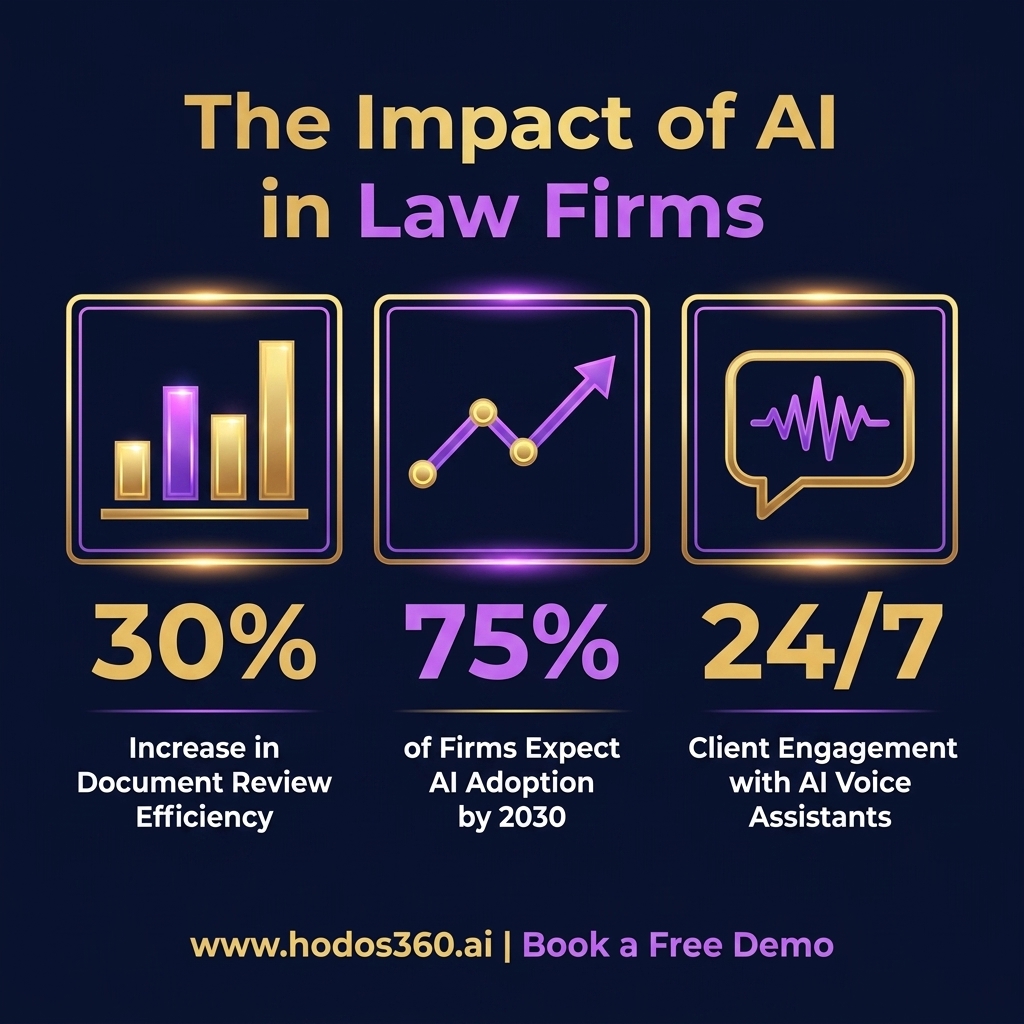
Client communication and accessibility are also being revolutionized by AI. The demand for 24/7 service and immediate responses is growing, a challenge traditional law firms often struggle to meet. This is where AI Voice Assistants step in. Learn more about AI Customer Support: Essential for Law Firm Growth.
These intelligent assistants can handle initial client inquiries, qualify leads based on specific criteria, book appointments directly into attorney calendars, and even provide multilingual support, ensuring no potential client is left unattended. Imagine a prospective client calling after hours with an urgent query; an AI voice assistant can gather crucial information, schedule a follow-up, and provide initial guidance, ensuring that the firm never misses an opportunity.
This level of responsive, always-on client support enhances client satisfaction and significantly boosts lead conversion rates, allowing human staff to focus on more complex, high-value interactions. This is a crucial element for firms aiming to differentiate themselves in a service-oriented industry.
Finally, a strong digital presence is non-negotiable in today's market.
AI-powered web and mobile development services enable law firms to build sophisticated, responsive, and SEO-optimized websites and mobile applications quickly and efficiently. AI can analyze user behavior and search engine algorithms to suggest optimal website structures, content strategies, and design elements that maximize visibility and convert visitors into clients.
High-converting templates, combined with AI-driven content generation for FAQs and service descriptions, ensure that a firm's online presence is not just aesthetically pleasing but also highly functional and effective at attracting and retaining clients. This holistic integration of AI across management, marketing, client communication, and digital presence creates a truly future-ready AI law firm, capable of navigating the complexities of the modern legal landscape with unparalleled efficiency and strategic advantage.
Navigating the Ethical and Regulatory Landscape of Legal AI
The rapid advancement and adoption of AI in legal practice, exemplified by the UK trial victory, inevitably raise critical ethical and regulatory questions that every AI law firm must address. The legal profession is bound by strict ethical codes, such as the ABA Model Rules of Professional Conduct, which mandate duties of competence (Rule 1.1), confidentiality (Rule 1.6), and supervision (Rule 5.1).
When integrating AI, attorneys must ensure they understand the technology's capabilities and limitations, maintaining ultimate responsibility for all work product, whether AI-generated or human-produced. As Professor Gillian Hadfield of the University of Toronto has noted, the challenge is not just in *using* AI, but in *governing* its use to uphold professional standards and protect client interests.
This requires continuous education and a commitment to rigorous oversight, ensuring that AI serves as an assistant rather than an autonomous decision-maker in sensitive legal matters. The tension between innovation and tradition is palpable, demanding a thoughtful approach to AI integration that respects foundational legal principles.
One of the most pressing concerns is data privacy and confidentiality. AI systems often require access to vast amounts of sensitive client data to be effective. Firms must implement robust security measures to protect this information from breaches and unauthorized access, complying with regulations like GDPR in Europe or state-specific privacy laws in the US.
The potential for algorithmic bias is another significant ethical hurdle. If AI is trained on historical data that reflects societal biases, it can perpetuate or even amplify those biases in its outputs, leading to unfair or discriminatory legal outcomes. Learn more about AI Legal Ethics: Essential Guide to Avoiding Blunders.
For instance, in predictive analytics for sentencing or bail, biased data could disproportionately affect certain demographics. Legal professionals have a duty to ensure that the AI tools they use are fair, transparent, and regularly audited for bias, proactively mitigating risks to justice. This involves careful selection of AI vendors and thorough validation of their models, a responsibility that falls squarely on the shoulders of the firm's leadership.
Regulatory bodies worldwide are also grappling with how to govern AI. The European Union's AI Act, set to be fully enforced in 2026, categorizes AI systems by risk level, imposing stringent requirements on high-risk applications, which could include certain legal AI tools. Similarly, national bar associations and judicial councils are developing guidelines for AI use in legal contexts, emphasizing transparency, accountability, and human oversight.
Firms cannot simply adopt AI; they must actively engage with evolving regulations and contribute to best practices. This proactive stance ensures that the benefits of AI are realized responsibly, fostering trust in the legal system while embracing technological advancement. The future of the AI law firm depends not just on its technological prowess but on its unwavering commitment to ethical practice and regulatory compliance, navigating this complex landscape with integrity.
Ensuring Responsible AI: Data Security and Professional Responsibility
The imperative for responsible AI integration in legal practice cannot be overstated, particularly concerning data security and professional responsibility. Law firms handle highly confidential and sensitive client information, making robust cybersecurity protocols paramount. Any AI law firm must ensure that its AI platforms comply with the highest data encryption standards, implement strict access controls, and conduct regular security audits.
The potential for data breaches, especially with cloud-based AI solutions, necessitates a comprehensive risk management strategy that includes vendor due diligence and clear data governance policies, aligning with ethical obligations under ABA Model Rule 1.6 regarding client confidentiality.
Furthermore, the professional responsibility of lawyers extends to the proper supervision of AI tools.
While AI can draft documents or conduct research, the final legal advice and representation remain the sole responsibility of the human attorney. This means lawyers must critically review AI-generated content, verify its accuracy, and understand the underlying logic of the AI's recommendations. The duty of competence (ABA Model Rule 1.1) requires lawyers to stay abreast of technological advancements, but also to understand their limitations.
Firms must invest in training their legal teams on effective and ethical AI utilization, fostering a culture where AI is seen as a powerful assistant, not a substitute for human legal judgment and ethical reasoning. This balanced approach ensures that AI enhances, rather than compromises, the integrity of legal services.

Key Takeaways: Embracing the Future of Legal Practice with HODOS 360
The UK's landmark trial victory by an AI law firm is more than just a news story; it's a clarion call for the entire legal industry. The era of speculation is over, replaced by tangible evidence that AI is a powerful, transformative force in litigation and beyond.
Law firms can no longer afford to view AI as a futuristic concept or a niche technology; it is rapidly becoming a fundamental component of competitive and effective legal practice. From streamlining mundane administrative tasks to providing strategic insights in complex cases, AI is redefining efficiency, accuracy, and client service.
Firms that embrace this technological shift will be better positioned to attract and retain clients, optimize their operations, and ultimately, deliver superior legal outcomes. The narrative of human lawyers being replaced by machines is giving way to a more accurate and empowering vision: human lawyers amplified by intelligent AI.
For law firm owners and legal professionals looking to navigate this evolving landscape, the path forward is clear: strategic AI adoption. This involves not just integrating isolated tools but implementing comprehensive, integrated solutions that address the full spectrum of a firm's needs. Platforms like HODOS 360 offer an all-in-one suite of AI-powered services—from AI Law Firm Management and AI Marketing to AI Voice Assistants and Web & Mobile Development—designed to empower firms to thrive in this new era.
By leveraging such integrated platforms, firms can achieve unparalleled operational efficiency, enhance client engagement, and gain a decisive competitive advantage. The future of legal practice is collaborative, intelligent, and deeply integrated with AI. Don't be left behind in this transformative moment. [Explore the HODOS 360 platform and unlock your firm's full potential today!]
Frequently Asked Questions
What does the AI law firm's UK trial victory signify for the legal industry?+
This victory signifies a monumental shift, proving that AI can actively contribute to successful litigation outcomes beyond mere automation. It validates AI's role in complex legal strategy, evidence analysis, and argument construction, challenging traditional perceptions of legal expertise and signaling that AI is now a direct participant in achieving justice.
How do AI Law Firm Management Systems enhance operational efficiency?+
AI Law Firm Management Systems streamline operations by automating client intake, case management, document generation, and billing. They provide AI-powered legal workflows that reduce administrative burdens, minimize errors, and free up attorneys to focus on high-value legal work, ultimately leading to significant efficiency gains and cost reductions.
What ethical considerations should law firms address when using AI?+
Firms must uphold duties of competence, confidentiality, and supervision. Key considerations include ensuring data privacy and security, mitigating algorithmic bias, and maintaining human oversight for all AI-generated work. Adherence to ABA Model Rules and evolving AI regulations like the EU AI Act is crucial for responsible AI integration.
Can AI truly assist with complex legal strategy and advocacy?+
Yes, AI can significantly assist with complex legal strategy by rapidly analyzing vast amounts of data, identifying precedents, predicting outcomes, and drafting initial legal arguments. While human lawyers retain the role of advocate and final decision-maker, AI provides a powerful analytical backbone, enabling more informed and effective strategic planning.
How can law firms leverage AI beyond case management and litigation?+
Beyond litigation, law firms can leverage AI for marketing (content generation, social media automation, ROI tracking), client engagement (24/7 AI voice assistants for lead qualification and appointment booking), and web development (AI-powered, SEO-optimized websites). This holistic approach enhances client acquisition, service delivery, and digital presence.