


AI Customer Support: Essential for Law Firm Growth
For too long, the rhythm of many law firms has been dictated by the incessant ring of the phone, a constant battle against missed calls, repetitive inquiries, and the administrative burden of client communication. Imagine a bustling Monday morning at a mid-sized litigation firm, where Partner Sarah Chen is deluged with calls: a client inquiring about a document submission, another seeking a routine case update, and a potential new lead trying to book an initial consultation.
Each call, while important, pulls her and her team away from complex legal analysis and strategic planning. This scenario, a common point of friction across the legal sector, highlights a critical challenge: how to scale client support without escalating overhead. The answer, increasingly, lies in the revolutionary capabilities of AI customer support, specifically advanced AI Voice Assistants.
Indeed, the promise of AI in transforming customer interactions is no longer futuristic speculation but a present-day reality. Brian Schiff, a prominent voice in the SaaS industry, recently articulated this shift, noting how AI is "revolutionizing customer support" and can dramatically "reduce call volumes by 90%."
His insights, shared in a recent SaaS Interviews with Crypto Briefing, underscore a pivotal moment for businesses, including law firms, grappling with service delivery. This isn't merely about automating a few tasks; it's about fundamentally rethinking the client journey, from initial contact to ongoing case management.
For law firms, this means moving beyond traditional receptionists and call centers to intelligent systems that provide 24/7, accurate, and empathetic assistance, ultimately freeing up highly skilled legal professionals to focus on what they do best: practicing law. The firms that embrace this paradigm shift are not just adopting new technology; they are securing a competitive edge in an increasingly crowded legal market, ensuring superior client service and unparalleled operational efficiency.
The tension between maintaining traditional client relationships and leveraging cutting-edge technology defines the current legal landscape, and AI voice solutions are emerging as the bridge.
This transformation isn't happening in a vacuum. The legal tech landscape is vibrant, with companies like Clio consistently innovating and larger firms like Allen & Overy partnering with generative AI pioneers like Harvey AI to redefine legal research and document analysis.
However, the client-facing aspect—the very first point of contact—remains a frontier ripe for disruption. The imperative for law firms is clear: adapt or risk falling behind. The average law firm, according to the ABA TechReport, still grapples with basic technology adoption, yet client expectations for instant, digital communication continue to rise.
This creates a significant gap that sophisticated AI Voice Assistants are perfectly positioned to fill, offering a scalable, multilingual solution that can handle myriad client inquiries with precision and professionalism. It’s an opportunity to not only meet but exceed client expectations, transforming what was once a bottleneck into a seamless, efficient, and highly responsive client experience.
The Transformative Power of AI Customer Support in Legal Practice
Historically, law firms have struggled with the inherent inefficiencies of traditional client communication. The daily grind often involves a dedicated administrative team managing an avalanche of phone calls, emails, and walk-ins, many of which are routine inquiries about case status, billing, or appointment scheduling. This not only consumes valuable staff time but also creates bottlenecks, leading to client frustration and potential lead loss.
Brian Schiff's assertion that AI can reduce call volumes by 90% holds particular resonance here. Imagine a firm where nine out of ten routine client calls are handled instantaneously and accurately by an AI, without human intervention. This isn't an exaggeration; it's the operational reality for firms leveraging advanced AI customer support systems.
For example, a client calling for a status update on their personal injury claim could receive an immediate, personalized response based on real-time data from their case management system, eliminating the need for a paralegal to pull up files and make a return call.
The implications for legal operations are profound.
A 2023 report by Gartner predicted that by 2026, 80% of customer service organizations will have deployed generative AI chatbots or virtual agents. While the legal sector often adopts technology at a slower pace, the competitive pressures are mounting. Firms that implement AI solutions are not just saving costs; they are reallocating human capital.
Learn more about AI Value Measurement: Essential Frameworks for Law Firms. Instead of junior associates or paralegals spending hours on administrative tasks, they can dedicate their expertise to complex legal research, drafting, and client strategy. This strategic shift not only enhances productivity but also improves job satisfaction for legal professionals, allowing them to engage in more substantive work.
Consider the scenario of a busy corporate law firm handling multiple mergers and acquisitions. An AI Voice Assistant could manage the influx of due diligence inquiries, scheduling meetings, and directing specific questions to the appropriate legal team members, ensuring that high-stakes transactions proceed without administrative delays.
The adoption of sophisticated AI customer support represents a critical evolution, moving legal practices from reactive administrative models to proactive, client-centric service delivery. This shift is particularly vital given the findings from the 2023 Thomson Reuters State of the Legal Market report, which highlighted increasing client demands for efficiency and transparency.
Firms that can offer 24/7 access to information and immediate responses to common queries are inherently more attractive to modern clients. This technological leap allows firms to scale their client service capabilities without proportionally increasing headcount, offering a sustainable model for growth. It’s a clear differentiator in a crowded market, signaling a commitment to innovation and client satisfaction.
The firms that recognize this early are poised to capture market share and build stronger, more resilient practices, demonstrating a clear path forward for competitive advantage.
Elevating Client Engagement with Advanced AI Voice Assistants
The notion of a "chatbot" often conjures images of frustrating, rudimentary text-based interactions. However, modern AI Voice Assistants are a world apart, powered by sophisticated Natural Language Processing (NLP) and generative AI models from leaders like OpenAI and Anthropic. These advanced systems can understand complex queries, interpret nuances in human speech, and respond with contextually relevant information, making the interaction feel remarkably human-like.
Unlike basic chatbots, which often follow rigid scripts, AI Voice Assistants can engage in dynamic conversations, learning and adapting to client needs over time. This capability is particularly crucial in the legal field, where client inquiries can be highly specific and often emotionally charged. Imagine a client calling about a family law matter; an AI Voice Assistant can not only provide basic information about the process but also understand the urgency and route the call appropriately if human intervention is required, all while maintaining a reassuring tone.
The evolution of generative AI, exemplified by models like GPT-4 and Claude 3, has fundamentally elevated the intelligence and conversational fluency of these assistants. This means they can do more than just answer FAQs; they can qualify leads, book appointments, collect necessary intake information, and even offer multilingual support, addressing a diverse client base effectively.
For instance, a potential client calling a firm specializing in immigration law, speaking only Spanish, can be seamlessly assisted by an AI Voice Assistant without any language barrier, capturing crucial details and scheduling a consultation with the appropriate attorney. Learn more about AI Marketing Transforms Legal Web: Webflow's Vidoso Acquisition 2026.
This level of accessibility and efficiency was previously only achievable with a large, dedicated human team, which is often cost-prohibitive for many law firms. The competitive tension here is palpable: firms investing in these advanced solutions are outperforming those relying on traditional, often less responsive, communication channels.
While major firms like Linklaters and Allen & Overy have made headlines with their adoption of AI for internal legal research and document review, the true frontier for many small to mid-sized firms lies in client-facing AI Voice Assistants. These tools bridge the gap between back-office efficiency and front-office client satisfaction.
They ensure that no client call goes unanswered, no lead is missed due to after-hours inquiries, and every client feels heard and supported. This technology empowers firms to provide a premium service experience that rivals larger, more resource-rich competitors, democratizing access to cutting-edge client communication.
It's a strategic investment in the firm's reputation and long-term growth, moving beyond mere automation to truly enhanced client engagement. The ability to connect with clients on their terms, 24/7, is becoming a non-negotiable aspect of modern legal service delivery.
Streamlining Client Intake and Lead Qualification with AI
One of the most significant pain points for law firms is the client intake process, which is often manual, time-consuming, and prone to errors. AI Voice Assistants revolutionize this by acting as a highly efficient, 24/7 first point of contact. They can guide prospective clients through a structured series of questions, gathering essential information such as the nature of their legal issue, contact details, and initial eligibility criteria.
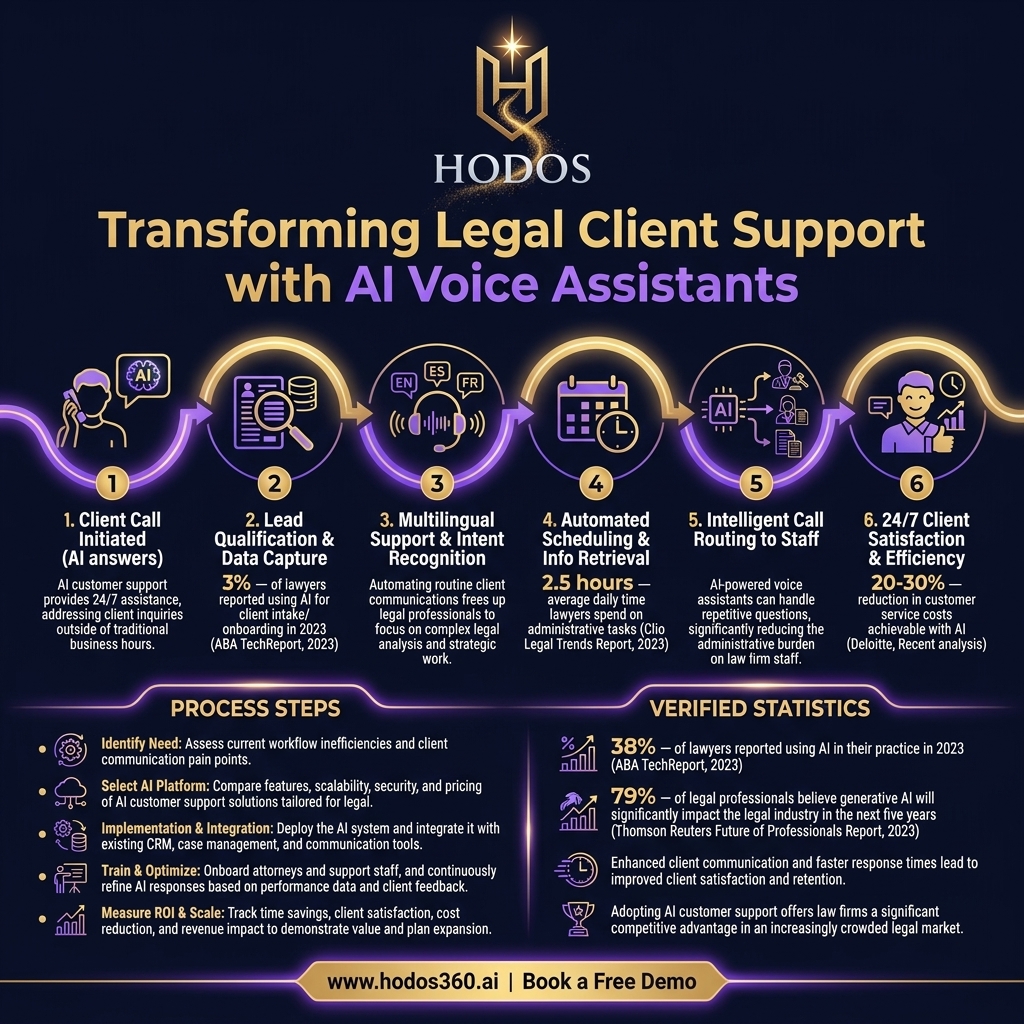
This intelligent pre-qualification ensures that when a call is routed to a human attorney, the lead is already vetted and relevant, saving valuable time for legal professionals. For example, a firm specializing in personal injury might deploy an AI to ask about the date of injury, responsible parties, and insurance details before connecting the caller to an intake specialist.
This means attorneys can focus their energy on high-value consultations rather than initial data collection.
Furthermore, the ability of AI Voice Assistants to book appointments directly into the firm’s calendar system eliminates the back-and-forth scheduling struggles. Imagine a scenario where a potential client calls at 10 PM, outside of business hours.
Learn more about Essential AI Web Development: Build Legal Apps with Ease. Instead of reaching an answering machine, an AI Voice Assistant engages them, qualifies their need, and schedules an appointment for the next morning, securing a lead that might otherwise have gone to a competitor.
This immediate responsiveness significantly improves lead conversion rates and enhances the firm's reputation for accessibility. The data collected by the AI can also be seamlessly integrated into the firm's client management system, creating a comprehensive client profile even before the first human interaction. This not only streamlines operations but also provides attorneys with a richer context, allowing for more productive initial meetings and a smoother onboarding experience for new clients.
This proactive approach to client intake transforms a traditionally cumbersome process into a competitive advantage.
Driving Operational Efficiency and Cost Savings Through Legal AI Automation
The financial benefits of integrating legal AI automation are substantial, extending far beyond simply reducing call volumes. By automating routine client interactions, law firms can significantly reduce administrative overhead associated with receptionists, call center staff, and even junior paralegals dedicated to client communication. This translates into tangible cost savings, allowing firms to reallocate budgets towards strategic growth initiatives, advanced legal research tools, or talent development.
A McKinsey report on AI's impact across industries suggests that AI automation could deliver economic value ranging from $3.5 trillion to $5.8 trillion annually. For a law firm, this might mean a 20-30% reduction in operational costs related to client services, freeing up resources that can be reinvested into marketing, business development, or even offering more competitive pricing to clients.
This efficiency gain is not about replacing human talent but empowering it, allowing legal professionals to engage in more complex, high-value work that directly impacts case outcomes and client satisfaction.
Moreover, the 24/7 availability of AI Voice Assistants means that firms can effectively extend their operating hours without incurring overtime costs.
A client with an urgent question at 2 AM no longer has to wait until morning; they can get an immediate, accurate response. This level of continuous service significantly enhances client satisfaction and loyalty, crucial metrics for any service-based industry. The operational efficiency also extends to internal workflows.
When AI handles the deluge of routine inquiries, human staff are less distracted and can maintain focus on their core responsibilities, leading to higher productivity and fewer errors. Learn more about AI Voice Assistant: Essential for Modern Law Firm Success. This shift creates a more streamlined, less stressful work environment, which in turn can reduce employee turnover and improve overall firm morale.
The evolving pricing models for AI solutions, as Brian Schiff alluded to, are making these sophisticated tools more accessible to a broader range of firms, from solo practitioners to mid-sized practices, democratizing efficiency.
The strategic deployment of legal AI automation also provides a significant competitive advantage.
Firms that can offer faster, more responsive, and more consistent client service are inherently more attractive in a competitive market. This differentiation is not just about technology; it's about the superior client experience it enables. A 2024 survey by the ABA Journal indicated that clients increasingly prioritize responsiveness and transparency from their legal counsel.
AI Voice Assistants directly address these priorities by providing instant access to information and automated updates. This proactive approach not only satisfies existing clients but also serves as a powerful magnet for new business, demonstrating a firm's commitment to innovation and client-centricity. The firms that embrace this will not only survive but thrive in the rapidly evolving legal landscape, setting new benchmarks for service delivery and operational excellence.
Automated Client Updates and Case Management
Beyond initial intake, AI Voice Assistants play a crucial role in ongoing client communication and case management. One of the most common client complaints in legal services is the perceived lack of communication regarding case progress. AI can mitigate this by providing automated, real-time updates on case statuses, upcoming court dates, document deadlines, and billing inquiries.
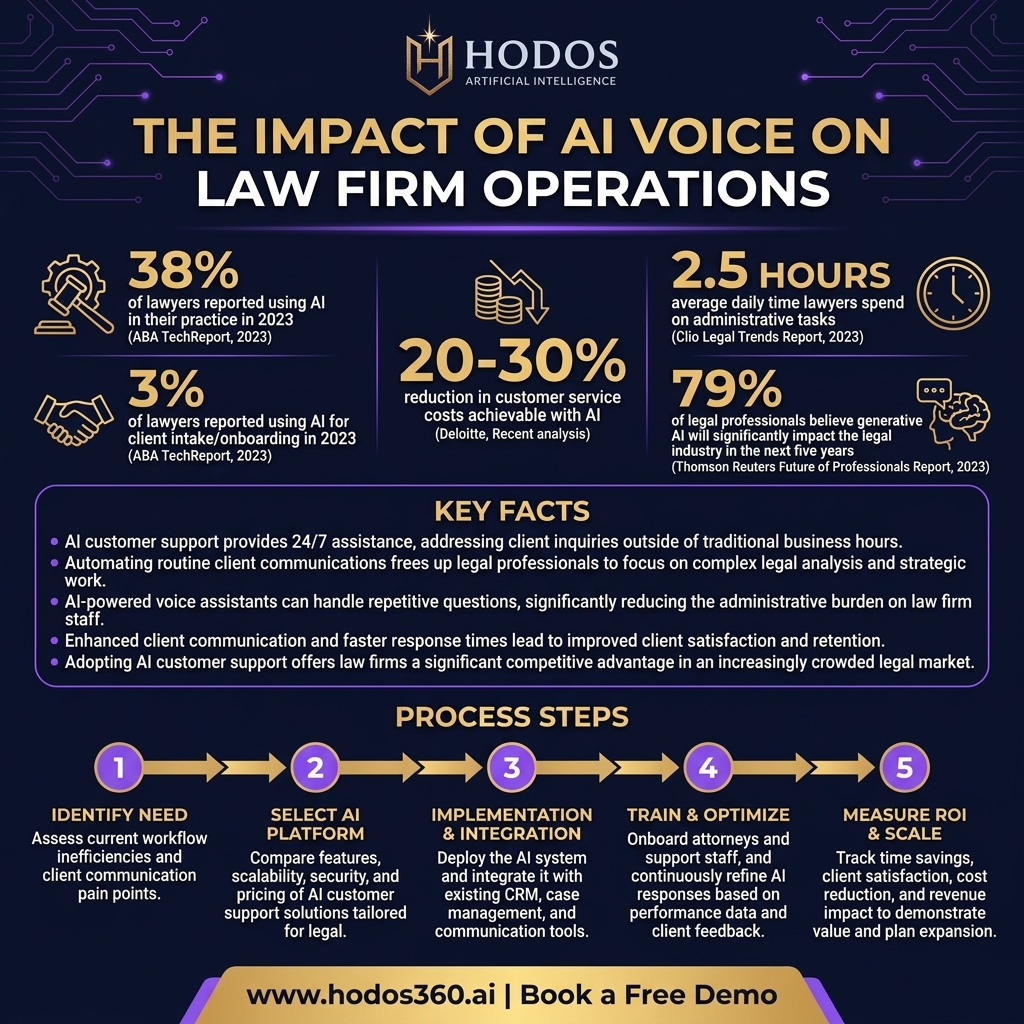
Integrated with the firm's case management system, these assistants can pull specific client data and deliver personalized, accurate information, reducing the need for clients to call and inquire. For example, a client involved in a real estate transaction could receive an automated call or message confirming the next escrow milestone, complete with relevant details, without any manual intervention from the legal team.
This proactive communication fosters trust and transparency, key pillars of strong attorney-client relationships.
Furthermore, AI can manage routine document requests, guiding clients on how to submit necessary paperwork or providing links to secure portals. Learn more about AI Marketing Platform Elevates Law Firms in 2026.
This streamlines the information exchange process, ensuring that critical documents are collected efficiently and accurately, reducing delays in legal proceedings. The consistent and immediate nature of these automated updates significantly enhances the client experience, making them feel informed and valued throughout their legal journey. This level of automated support allows attorneys and paralegals to dedicate their time to complex legal strategy, court appearances, and direct client interactions that require human empathy and judgment, rather than spending hours on repetitive administrative tasks.
The result is not just greater efficiency but a higher quality of legal service, where technology augments human expertise rather than replacing it. This synergy optimizes both the firm's resources and the client's peace of mind.
Ethical Imperatives and the Future Landscape of Voice AI in Law
The integration of Voice AI in law brings with it a host of ethical considerations that legal professionals must proactively address. As noted in discussions surrounding "Ethical Gaps and Power Dynamics in Decision-Making," the deployment of AI, particularly in sensitive fields like law, demands careful attention to issues of data privacy, confidentiality, and bias.
Law firms have a fundamental ethical obligation to protect client information, as enshrined in rules like ABA Model Rule 1.6 on Confidentiality of Information. AI systems handling client data must employ robust encryption, secure storage, and strict access controls. Firms must also be transparent with clients about the use of AI in their communications, ensuring informed consent.
The potential for algorithmic bias, stemming from the data used to train AI models, is another critical concern. If an AI is trained on biased historical data, it could inadvertently perpetuate or amplify inequalities in service delivery or advice, a risk that legal professionals must actively mitigate through careful system design and ongoing auditing.
Further ethical considerations revolve around the nature of legal advice. While Voice AI in law can provide information, it cannot offer legal advice or form an attorney-client relationship. Firms must clearly delineate the boundaries of AI capabilities to clients, ensuring they understand when they are interacting with an automated system versus a human attorney.
This distinction is vital for maintaining professional responsibility and avoiding the unauthorized practice of law. Learn more about Voice Assist: Essential AI Scheduling for Law Firms. Events like LegalTech NYC 2026 consistently feature panels discussing these precise ethical challenges, emphasizing the need for regulatory frameworks and best practices.
The EU AI Act, for instance, is a landmark piece of legislation aiming to regulate AI systems based on their risk level, providing a glimpse into the future of responsible AI governance that legal tech must adhere to. Firms must stay abreast of these evolving legal and ethical landscapes, ensuring their AI implementations are compliant and client-centric.
The future landscape of Voice AI in law promises even deeper integration and sophistication. We can anticipate hyper-personalized client experiences where AI proactively anticipates client needs, offering relevant information or scheduling check-ins based on case progress and predictive analytics. Imagine an AI that not only answers questions but also identifies potential legal issues a client might face based on their current situation and suggests preventative measures.
However, this future also necessitates a continuous commitment to ethical oversight and human-in-the-loop systems. The role of the attorney will evolve, shifting from handling routine inquiries to focusing on complex problem-solving, strategic counsel, and the invaluable human connection that AI cannot replicate. This evolving dynamic highlights the enduring importance of human judgment and empathy in legal practice, even as technology continues to advance.
Striking this balance will be key to successful and ethical AI adoption in the legal sector, ensuring that technology serves justice and client welfare.
Ensuring Data Privacy and Professional Responsibility with AI
The bedrock of the attorney-client relationship is trust, which is inextricably linked to the strict adherence to data privacy and confidentiality. Deploying AI Voice Assistants requires law firms to implement rigorous safeguards that comply with both professional ethics and data protection regulations. This includes ensuring that all client data processed by AI systems is encrypted both in transit and at rest, stored on secure servers, and accessible only to authorized personnel.
Firms must conduct thorough due diligence on their AI vendors to ensure they meet stringent security standards, such as ISO 27001 certification or SOC 2 compliance. Furthermore, robust data governance policies must be established, outlining how data is collected, used, retained, and eventually purged by AI systems.
Adherence to regulations like the California Consumer Privacy Act (CCPA) or the General Data Protection Regulation (GDPR) in certain jurisdictions is paramount, even for domestic firms handling data from clients residing in those areas.
Professional responsibility extends beyond mere technical compliance; it encompasses the duty of competence.
Lawyers must understand the capabilities and limitations of the AI tools they employ, ensuring that their use does not compromise the quality of legal services or violate ethical duties. ABA Model Rule 1.4 on Communication emphasizes the importance of keeping clients reasonably informed. This includes transparently disclosing the role of AI in client interactions and obtaining informed consent where appropriate, especially when sensitive information is involved.
Firms should also have a clear escalation path for when an AI encounters a query it cannot handle or one that requires human legal judgment. This 'human-in-the-loop' approach is crucial for maintaining ethical oversight and ensuring that clients always have access to a qualified attorney when needed.
Ultimately, the successful integration of AI relies on a firm's unwavering commitment to its ethical obligations, leveraging technology to enhance service without compromising the foundational principles of legal practice.

Charting the Path Forward: Strategic Adoption of AI Voice for Law Firms
The evidence is compelling: AI Voice Assistants are not a luxury but an essential component for law firms aiming for sustainable growth, enhanced client satisfaction, and operational excellence in the modern legal landscape. Firms that embrace this technology will gain a significant competitive advantage, differentiating themselves through superior client service, reduced operational costs, and the ability to scale efficiently.
The narrative of firms that adopted early legal tech solutions, like cloud-based practice management software, versus those that resisted, offers a clear parallel. Those who innovated thrived, while others struggled to keep pace. Today, the stakes are even higher, as AI promises a more profound transformation of client interaction and internal workflows.
The time for deliberation is over; the time for strategic action is now, especially as client expectations continue to evolve rapidly towards digital-first, instant communication channels. The firms that prioritize this will be the ones defining the future of legal service delivery.
For law firms considering implementing AI Voice Assistants, the journey begins with a clear understanding of their specific needs and client pain points.
Start by identifying areas where routine inquiries consume significant staff time or where client communication gaps exist. Pilot programs can be invaluable, allowing firms to test the technology on specific tasks, such as after-hours lead qualification or FAQ answering, before a broader rollout. Training staff on how to effectively integrate AI into their workflows and understanding its capabilities and limitations is also crucial.
This ensures a seamless transition and maximizes the benefits of the technology. Partnering with a legal tech provider that understands the unique complexities of the legal industry is paramount, ensuring that the AI solution is tailored to ethical considerations, data security needs, and the specific demands of legal practice.
Providers like HODOS 360 offer comprehensive AI Voice Assistants designed specifically for law firms, integrating seamlessly with existing systems to deliver measurable improvements.
Ultimately, the adoption of AI Voice Assistants is more than just a technological upgrade; it's a strategic investment in the future of the firm.
It’s about building a more resilient, responsive, and client-centric practice that can thrive amidst the rapid changes defining the legal industry. By embracing the power of AI to automate routine tasks, enhance communication, and streamline operations, law firms can free up their most valuable asset – their human legal talent – to focus on what truly matters: delivering exceptional legal counsel and building lasting client relationships.
The future of legal practice is one where technology and human expertise converge, creating a more efficient, equitable, and accessible legal system for all. The firms that lead this charge will be remembered as the true innovators of their generation.
Frequently Asked Questions
How can AI Voice Assistants specifically benefit law firms?+
AI Voice Assistants can significantly benefit law firms by automating routine client inquiries, managing lead qualification 24/7, booking appointments, and providing instant case updates. This reduces call volumes by up to 90%, frees up legal staff for complex work, improves client satisfaction through constant availability, and ensures no potential client is missed due to after-hours calls or limited staff capacity. They enhance operational efficiency and reduce administrative overhead.
Are AI Voice Assistants secure enough for sensitive legal client information?+
Yes, reputable AI Voice Assistant platforms designed for the legal industry employ robust security measures. These include end-to-end encryption for all data, secure cloud storage, compliance with data protection regulations (like GDPR or CCPA), and strict access controls. Firms must ensure their AI vendor meets these high standards and conduct due diligence to maintain client confidentiality and adhere to ethical obligations like ABA Model Rule 1.6.
Can AI Voice Assistants provide legal advice?+
No, AI Voice Assistants are designed to provide information, automate tasks, and facilitate communication, but they cannot provide legal advice or establish an attorney-client relationship. Law firms must clearly communicate the AI's role to clients and ensure that any queries requiring legal judgment are escalated to a qualified human attorney. The AI acts as a sophisticated assistant, not a substitute for legal counsel.
What is the typical implementation process for AI Voice Assistants in a law firm?+
Implementation typically involves an initial assessment of the firm's specific needs and integration points (e.g., with case management or CRM systems). This is followed by configuration and training of the AI with firm-specific FAQs and workflows. A pilot program with specific use cases is often recommended, followed by a broader rollout. Ongoing monitoring and optimization are crucial to ensure the AI continuously improves and meets the firm's evolving needs.
How do AI Voice Assistants handle multilingual client support?+
Advanced AI Voice Assistants are built with sophisticated natural language processing (NLP) capabilities that include multilingual support. They can detect the language spoken by the client and respond in that language, providing seamless communication across diverse linguistic backgrounds. This feature is particularly beneficial for law firms serving international clients or diverse communities, expanding their reach and improving accessibility without requiring additional human language specialists.