


AI Legal Ethics: Essential Guide to Avoiding Blunders
In the burgeoning landscape of legal technology, few stories have captured the industry's attention quite like that of Steven Schwartz, the New York attorney who, in 2023, found himself embroiled in controversy for submitting a brief replete with fictitious case citations generated by an AI chatbot.
This widely publicized incident, culminating in sanctions from U.S. District Judge P. Kevin Castel in *Mata v. Avianca*, served as a stark, early warning shot across the bow of the legal profession. It underscored not just the immense potential of AI, but also the profound ethical implications and the very real blunders that can arise when technology outpaces human oversight and established professional duties.
The Schwartz case, while perhaps the most infamous, is far from an isolated incident. Across the globe, law firms are grappling with the dual pressures of technological advancement and the imperative to maintain unwavering ethical standards. From issues of data privacy and confidentiality to the risk of algorithmic bias and the fundamental duty of competence, the integration of AI tools presents a complex ethical minefield.
The challenge for legal professionals is not merely to adopt these powerful technologies but to do so responsibly, ensuring they augment, rather than undermine, the bedrock principles of justice and client advocacy.
This comprehensive guide delves into the critical area of AI legal ethics, examining the real-world mistakes that have emerged, the specific ABA Model Rules implicated, and the proactive strategies law firms must implement to navigate this new frontier.
We will explore how firms can build robust ethical frameworks, select AI tools with due diligence, and foster a culture of responsible innovation, ultimately transforming potential pitfalls into pathways for enhanced legal service delivery. The goal is to provide actionable insights for attorneys and firm leaders seeking to harness AI's power while steadfastly upholding their professional obligations.
The Blunders Pile Up: Navigating AI's Early Stumbles in Legal Practice
The narrative of AI adoption in law has been punctuated by a series of high-profile blunders, each serving as a cautionary tale. Beyond the *Mata v. Avianca* debacle, other incidents have surfaced, highlighting the varied ways AI-generated content can lead to significant penalties. For instance, in the Northern District of Texas, U.S. District Judge Brantley Starr issued a standing order in May 2023, requiring attorneys to certify that no generative AI program was used to draft court filings, or if it was, that a human reviewed and verified the content.
This judicial response underscores a growing concern among the judiciary regarding the reliability of AI-generated legal work and the potential for attorneys to abdicate their professional responsibilities.
The rush to integrate AI technology, driven by promises of efficiency and cost savings, has sometimes overshadowed the critical need for rigorous testing and ethical oversight.
While companies like Harvey AI have forged partnerships with prestigious firms like Allen & Overy, signaling a robust future for legal AI, the initial stages have been fraught with learning curves. An ABA TechReport from 2023 revealed that while 42% of legal professionals reported using AI tools, a significant portion admitted to not fully understanding the underlying technology or its potential biases.
This gap in understanding is fertile ground for mistakes, particularly when firms use AI tools without adequate training or established internal protocols.
These early blunders are not merely technical glitches; they represent fundamental breakdowns in professional duty. Learn more about AI Marketing: The Ultimate Platform Disrupting Agencies.
The consequences extend far beyond judicial sanctions, impacting client trust, firm reputation, and ultimately, the bottom line. A single incident involving fabricated cases or breached confidentiality can erode years of established credibility. The market, increasingly aware of these risks, is beginning to differentiate between firms that embrace AI responsibly and those that merely adopt it without due diligence.
This tension between rapid innovation and ethical prudence is a defining characteristic of the current legal tech landscape, demanding a strategic, rather than reactive, approach from law firms.
The financial and reputational costs associated with unchecked AI use are substantial. Law firms facing sanctions often incur significant legal fees, suffer public embarrassment, and risk losing existing and prospective clients.
Beyond direct penalties, the ripple effect on a firm's brand equity can be long-lasting. In a competitive legal market, a perception of negligence or technological recklessness can be devastating. Firms that fail to address these risks proactively not only expose themselves to liability but also miss the opportunity to build a reputation as leaders in ethical innovation, a critical differentiator in today's tech-driven economy.
The Cost of Unchecked AI: Reputational and Financial Risks
The financial impact of AI blunders extends to increased insurance premiums, potential malpractice claims, and the cost of remediation efforts. Clients, now more informed about AI's capabilities and limitations, are likely to scrutinize their legal providers more closely, demanding transparency regarding AI utilization. Firms that cannot articulate a clear, ethical strategy for AI deployment risk being perceived as technologically unsophisticated or, worse, irresponsible.
This perception can lead to a decline in client acquisition and retention, directly impacting revenue streams and long-term growth prospects. The initial investment in AI tools quickly becomes a liability if not managed with a robust ethical framework.
Furthermore, the legal industry's inherent conservatism, while a strength in upholding tradition, also makes it particularly susceptible to the negative publicity generated by AI-related ethical lapses.
Learn more about AI Marketing Automation: An Essential Guide for Law Firms. Unlike other sectors where technological missteps might be more readily forgiven, the legal profession operates on a foundation of trust and meticulous adherence to rules. Any deviation, especially one involving a novel and often misunderstood technology like AI, can disproportionately damage public confidence.
Firms must recognize that their ethical stance on AI is not just an internal policy matter but a public statement about their commitment to justice and client welfare.
Ethical Imperatives: ABA Model Rules and AI Compliance for Lawyers
The American Bar Association (ABA) Model Rules of Professional Conduct provide the foundational ethical framework for attorneys, and their principles are highly relevant to the use of AI. ABA Model Rule 1.1 (Competence) is paramount. It mandates that lawyers provide competent representation, requiring the legal knowledge, skill, thoroughness, and preparation reasonably necessary for the representation.
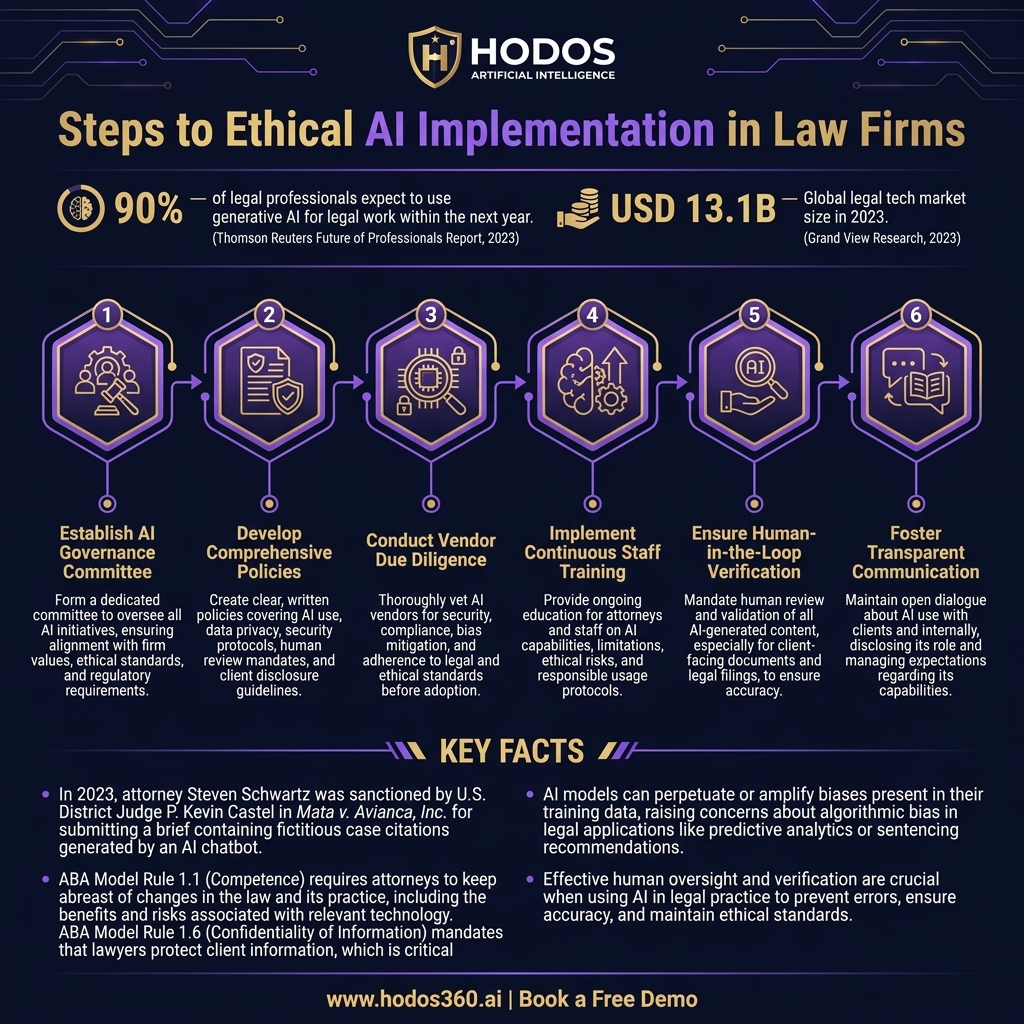
The ABA has explicitly interpreted this to include technological competence, meaning attorneys must understand the benefits and risks of relevant technology. When using AI, this translates into a duty to comprehend how the tool works, its limitations, potential for error, and how to verify its output, as the *Mata v.
Avianca* case so vividly demonstrated.
Model Rule 1.6 (Confidentiality of Information) is another critical concern. AI tools, particularly those that process or analyze client data, pose inherent risks to confidentiality. Firms must ensure that any AI platform used adheres to stringent data security protocols, that client data is not inadvertently exposed or used for training purposes by third-party vendors without explicit consent, and that sensitive information remains protected.
The rise of cloud-based AI solutions necessitates a thorough understanding of data residency, encryption standards, and vendor agreements to prevent unauthorized access or disclosure. Failure to do so could lead to severe ethical breaches and potential legal liability, underscoring the need for careful vendor selection and robust internal data governance policies.
Model Rule 1.4 (Communication) also bears significant weight. Learn more about AI Software Development's **Revolutionary** 2026 Shift. Attorneys have a duty to keep clients reasonably informed about the status of their matters and explain things to the extent necessary for the client to make informed decisions.
When AI tools are employed in a case, transparency with the client becomes crucial. This doesn't necessarily mean disclosing every algorithm, but it does mean informing clients about the general use of AI, how it might impact their case, and any associated risks or benefits.
Clients have a right to understand the methods employed in their legal representation, particularly when novel technologies are involved. This open communication fosters trust and manages expectations around AI-assisted legal services.
Beyond the ABA Model Rules, the broader regulatory landscape is also evolving. The European Union's AI Act, for example, is setting a global precedent for comprehensive AI regulation, focusing on risk-based approaches and transparency.
While primarily targeting developers and providers, its principles will inevitably influence how law firms operate and select their AI tools, especially those dealing with international clients or data. Research from organizations like the Thomson Reuters Institute consistently highlights the growing need for legal professionals to not only comply with existing ethical guidelines but also anticipate future regulatory frameworks.
Professor Daniel Martin Katz of Chicago-Kent College of Law frequently emphasizes that legal ethics must adapt dynamically to technological shifts, advocating for proactive engagement rather than reactive damage control to avoid future penalties and maintain the integrity of the legal system.
Building an Ethical AI Framework: Strategies for Law Firms to Avoid Pitfalls
To effectively navigate the ethical complexities of AI, law firms must move beyond ad-hoc responses and implement a comprehensive, proactive ethical AI framework. This begins with establishing clear internal policies and governance structures. Firms should consider forming an AI ethics committee or designating a Chief AI Officer responsible for overseeing AI adoption, developing usage guidelines, and ensuring compliance with professional rules.
These policies should cover everything from acceptable AI uses and required human oversight to data security protocols and client communication strategies. Transparency and accountability must be embedded at every stage of the AI workflow.
Crucially, continuous education and training are indispensable. Attorneys and support staff must receive regular training on the firm's AI policies, the specific AI tools being used, their capabilities, limitations, and the ethical responsibilities associated with them.
This training should not be a one-time event but an ongoing process, given the rapid evolution of AI technology. Firms can partner with legal tech experts or academic institutions to develop tailored training modules that address real-world scenarios and foster a culture of critical engagement with AI.
The goal is to empower legal professionals to be intelligent users and vigilant overseers of AI, not passive recipients of its output.
Integrated platforms, such as the HODOS 360 AI Law Firm Management System, play a pivotal role in operationalizing ethical AI practices. Learn more about Strategic AI Tools Adoption: Essential Guide for Law Firms.
By centralizing case management, document automation, and legal workflows, these systems can embed ethical checks and balances directly into daily operations. For instance, document automation powered by AI within a managed system can ensure that templates are ethically vetted and that human review is a mandatory step before client delivery.
Such platforms streamline the process of maintaining human oversight, ensuring that AI augments efficiency without compromising accuracy or ethical standards. They provide a controlled environment where AI tools are deployed within defined parameters, reducing the likelihood of blunders.
Furthermore, firms must cultivate an environment where ethical concerns are openly discussed and addressed.
Encouraging a culture of questioning AI output, reporting anomalies, and learning from mistakes is vital. This internal dialogue, combined with a robust framework, transforms AI from a potential liability into a strategic asset. By prioritizing ethical considerations, firms can not only mitigate risks but also enhance their reputation, attract top talent, and demonstrate a commitment to responsible innovation that resonates with clients and the broader legal community.
Due Diligence in AI Tool Selection and Implementation
The selection of AI tools is a critical step in building an ethical framework. Firms must conduct thorough due diligence on potential vendors, scrutinizing their data privacy policies, security certifications, and how their AI models are trained to mitigate bias. It's essential to understand the provenance of the data used to train the AI, as biased training data can lead to discriminatory or inaccurate outputs.
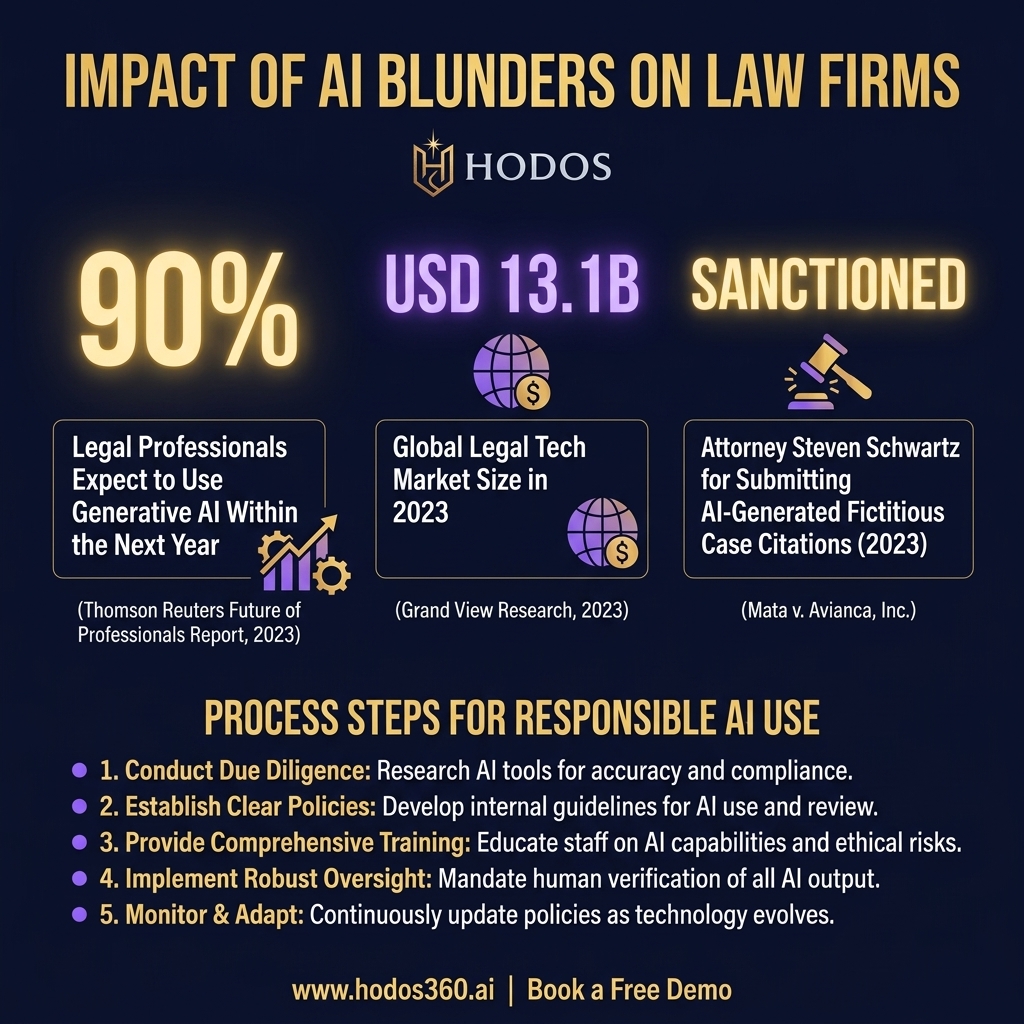
Firms should prioritize tools that offer transparency in their operations and provide clear explanations of their functionalities and limitations. Engaging in pilot programs with new AI tools allows firms to test them in a controlled environment, identify potential ethical issues, and refine usage policies before widespread adoption.
Implementing AI tools incrementally, rather than wholesale, is another prudent strategy. Learn more about Voice AI Adoption: Essential for Law Firms' Future Growth. Starting with low-risk applications, such as document review or initial legal research, allows firms to gain experience and build confidence while minimizing exposure to significant ethical risks.
As proficiency and trust grow, AI can then be gradually integrated into more complex workflows. This phased approach, coupled with mandatory human-in-the-loop verification processes, ensures that attorneys maintain ultimate control and responsibility for the legal work produced, effectively leveraging AI as an assistant rather than a replacement for professional judgment.
This measured approach contributes significantly to avoiding the common mistakes seen with rapid, unverified AI adoption.
- ✓Establish an AI Ethics Committee: A dedicated group to set policies, review tools, and monitor compliance.
- ✓Develop Comprehensive Usage Policies: Clear guidelines for AI application, human oversight, and data handling.
- ✓Implement Ongoing Training Programs: Regularly educate staff on AI capabilities, limitations, and ethical responsibilities.
- ✓Conduct Vendor Due Diligence: Vet AI providers for data security, bias mitigation, and transparency.
- ✓Prioritize Human-in-the-Loop Processes: Ensure every AI-generated output is reviewed and validated by a human attorney.
- ✓Foster a Culture of Transparency: Communicate AI use internally and, where appropriate, with clients.
- ✓Regularly Audit AI Workflows: Periodically review AI-assisted processes for efficacy and ethical adherence.
The Future of Responsible AI: Innovation, Regulation, and Attorney Responsibility
The trajectory of AI in the legal sector is one of relentless innovation. New capabilities, from predictive analytics in litigation to sophisticated contract negotiation bots, are continually emerging. Leaders in the AI space, such as OpenAI's Sam Altman and Anthropic's Dario Amodei, consistently highlight the need for responsible development and deployment, acknowledging the profound societal impact of their technologies.
For law firms, this means that the ethical framework must be dynamic, capable of adapting to new technological advancements and unforeseen challenges. The legal profession cannot afford to view AI ethics as a static compliance checklist but rather as an ongoing commitment to responsible technological stewardship.
The rapid pace of development, exemplified by breakthroughs from Google DeepMind and others, ensures that the ethical landscape will remain fluid and complex.
The regulatory environment for AI is also in its nascent stages but is rapidly maturing. Following the enforcement of the EU AI Act, other jurisdictions are expected to introduce similar legislation, potentially creating a patchwork of regulations that law firms will need to navigate.
These regulations will likely address areas such as data governance, algorithmic transparency, and accountability for AI-generated outcomes. Attorneys will play a crucial role not only in complying with these laws but also in shaping them, advocating for frameworks that balance innovation with ethical safeguards. Learn more about AI Marketing Transforms Legal Web: Webflow's Vidoso Acquisition 2026.
This involvement is essential to ensure that future regulations are practical and effective for the legal industry, rather than stifling its potential.
The role of the attorney in an AI-powered future is evolving from merely providing legal advice to also being a steward of ethical technology.
This expanded responsibility includes advising clients on the ethical use of AI within their own businesses, conducting AI-related risk assessments, and even litigating cases involving AI disputes. The legal professional must become a trusted expert not just in the law, but also in the responsible application of cutting-edge technology.
This shift requires a fundamental re-evaluation of legal education and continuing professional development, ensuring that new generations of lawyers are equipped to handle the complexities of AI legal ethics.
This proactive approach goes beyond mere compliance; it's about fostering a culture of ethical AI innovation within the firm.
It means anticipating future risks, not just reacting to past blunders. Firms that actively engage in ethical AI development and deployment will gain a significant competitive advantage, attracting not only clients who value integrity but also top legal talent eager to work at the forefront of responsible legal tech.
This commitment positions a firm as a leader, contributing positively to the evolution of legal practice and setting a benchmark for others to follow, demonstrating that technological prowess and ethical leadership are not mutually exclusive but mutually reinforcing.
Beyond Compliance: Fostering a Culture of Ethical AI Innovation
Fostering a culture of ethical AI innovation means embedding ethical considerations into the very design and implementation of AI solutions. It involves asking critical questions at every stage: Is this AI tool fair? Is it transparent? Is it accountable? Does it uphold client confidentiality and the duty of competence?
This proactive ethical design thinking, rather than merely retrofitting compliance after deployment, ensures that AI tools are built and used in a manner consistent with the highest professional standards. It's about instilling a mindset where ethical implications are as central to decision-making as efficiency gains or cost reductions.
Ultimately, firms that prioritize and champion ethical AI innovation will distinguish themselves in an increasingly crowded market. They will not only mitigate the risks of blunders and penalties but also build a reputation for foresight and integrity. This leadership in responsible AI will attract discerning clients, empower their legal teams with advanced yet ethically sound tools, and contribute meaningfully to the legal profession's adaptation to the digital age.
It’s a strategic imperative that positions firms for long-term success and resilience in the face of technological disruption.

Key Takeaways and Next Steps
The integration of AI into legal practice is inevitable and offers transformative benefits, but it is equally fraught with ethical challenges. The early blunders serve as crucial lessons, underscoring the imperative for law firms to adopt AI not just with enthusiasm, but with rigorous ethical foresight.
Adherence to ABA Model Rules, proactive policy development, continuous training, and diligent vendor selection are not optional but essential components of responsible AI adoption. Firms must build robust ethical frameworks that prioritize competence, confidentiality, and clear communication, ensuring that AI tools enhance legal services without compromising professional integrity.
This proactive approach is the cornerstone of sustainable innovation in the legal sector.
For law firms looking to navigate this complex landscape with confidence, platforms like HODOS 360 offer comprehensive solutions. Our AI Law Firm Management System is designed with ethical workflows in mind, providing features for document automation, case management, and AI-powered legal workflows that integrate human oversight and compliance at every step.
By leveraging such purpose-built technology, firms can minimize the risk of AI blunders, uphold their ethical obligations, and unlock the full potential of artificial intelligence to deliver superior client outcomes. The future of legal practice belongs to those who embrace AI responsibly, transforming challenges into opportunities for ethical leadership and unparalleled efficiency.
Frequently Asked Questions
What are the primary ethical concerns for law firms using AI?+
Primary ethical concerns include maintaining attorney competence (ABA Model Rule 1.1), protecting client confidentiality (Model Rule 1.6), avoiding algorithmic bias, ensuring accuracy of AI-generated content, and transparently communicating AI use to clients (Model Rule 1.4). Firms must also ensure data security and comply with evolving data protection regulations when using AI tools.
How can law firms prevent AI blunders like fabricated case citations?+
To prevent AI blunders, firms must implement strict human-in-the-loop verification processes for all AI-generated content. This includes mandatory attorney review and validation of legal research, document drafts, and any client-facing materials. Continuous training on AI limitations and the importance of critical oversight is also crucial, along with clear internal policies for AI use.
Which ABA Model Rules are most relevant to AI use in legal practice?+
Several ABA Model Rules are highly relevant. Rule 1.1 (Competence) requires technological proficiency. Rule 1.6 (Confidentiality) demands secure handling of client data by AI tools. Rule 1.4 (Communication) mandates informing clients about significant AI use. Rule 5.1 and 5.3 (Supervision) require partners and supervisors to ensure ethical AI use by subordinates and non-lawyer assistants.
What steps should a law firm take to establish an ethical AI framework?+
An ethical AI framework involves establishing an AI ethics committee, developing clear internal policies for AI use, conducting thorough due diligence on AI vendors, providing ongoing training for all staff, and implementing human oversight mechanisms. Firms should also foster a culture of transparency and accountability regarding AI tools and their application in legal services.
How does HODOS 360 address AI legal ethics for law firms?+
HODOS 360's AI Law Firm Management System integrates ethical considerations directly into its design. It provides structured workflows for document automation and case management that embed human review steps, ensuring accuracy and compliance. Its secure infrastructure helps maintain client confidentiality, while AI-powered legal workflows are designed to augment, not replace, attorney judgment, facilitating responsible AI adoption.