


AI Marketing: The Ultimate Platform Disrupting Agencies
The legal industry, often perceived as an bastion of tradition, is no stranger to the seismic shifts brought about by technological innovation. However, the latest wave, spearheaded by Artificial Intelligence in marketing, promises a disruption so profound it's being dubbed the 'agency killer.' This isn't mere hyperbole; it's a direct challenge to the $150 billion marketing agency model, originating from the very veterans who once thrived within it.
The recent news of a marketing veteran building an AI platform specifically designed to render traditional agencies obsolete, as highlighted by newswire.com, signals a pivotal moment for every law firm owner and legal professional navigating the complexities of client acquisition and brand building in the digital age.
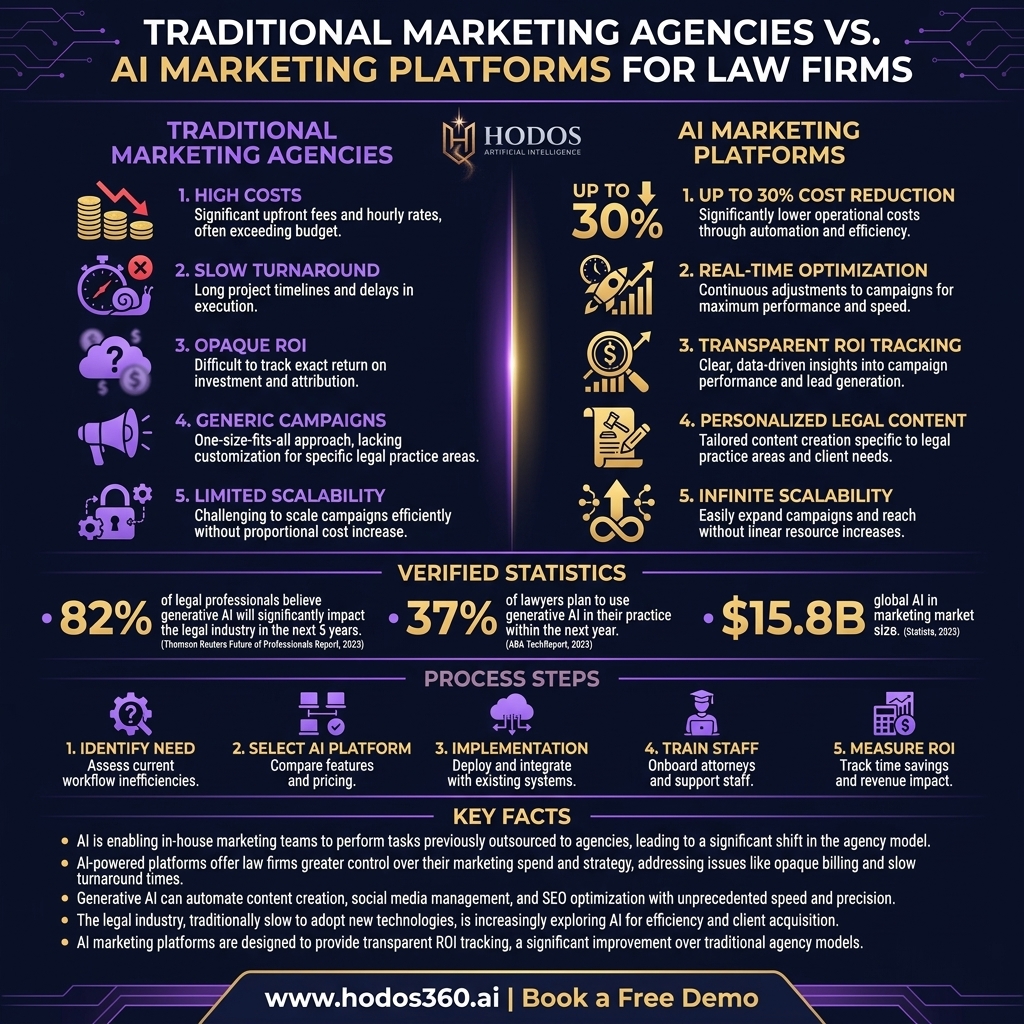
This revolutionary shift isn't just about automation; it's about empowerment. For decades, law firms have relied on external marketing agencies, often grappling with opaque billing, slow turnaround times, and a lack of specialized legal industry insight. These pain points are precisely what the new generation of AI-powered platforms aims to resolve.
Imagine a system that not only understands the nuances of legal compliance but also generates compelling content, manages social media campaigns, and optimizes SEO with unprecedented speed and precision, all while providing transparent ROI tracking. This is the promise of AI Marketing, and it's compelling law firms to rethink their entire approach to growth and client engagement.
The visionary behind MarkBase AI, a platform central to the 'agency killer' narrative, understood the inherent inefficiencies plaguing the traditional model. By leveraging advanced machine learning, natural language processing, and predictive analytics, these platforms are not just automating tasks; they are creating intelligent, self-optimizing marketing ecosystems.
For law firms, this translates into a powerful opportunity to reclaim control over their marketing spend, achieve superior results, and adapt with agility to market changes. As we delve deeper into this transformation, it becomes clear that embracing AI Marketing isn't just an option—it's an imperative for sustainable success in a fiercely competitive legal landscape.
The Rise of the AI Marketing Platform: A New Era for Legal Firms
The concept of an 'agency killer' isn't born from malice but from the relentless pursuit of efficiency and effectiveness that AI enables. Traditional marketing agencies, while offering expertise, often come with significant overheads, project management complexities, and a 'one-size-fits-all' approach that rarely suits the specialized needs of law firms.
The inherent friction in these relationships—from lengthy briefing processes to frustrating revision cycles—has long been a source of exasperation for legal professionals. A 2023 report by the American Bar Association (ABA) highlighted that nearly 60% of small to mid-sized law firms expressed dissatisfaction with their marketing efforts, citing high costs and unclear ROI as primary concerns.
This dissatisfaction created a fertile ground for disruption, and AI has stepped in to fill that void, offering a scalable, data-driven alternative.
The visionary marketing veteran behind MarkBase AI, whose disruptive platform has garnered significant attention, recognized this market failure. Instead of incrementally improving existing agency models, the approach was to build a fundamentally new architecture.
This architecture integrates advanced algorithms capable of analyzing vast datasets of legal trends, client demographics, and competitive landscapes. For instance, an AI platform can identify emerging practice area demands, pinpoint optimal client acquisition channels, and even predict the most effective messaging for specific legal services, all in real-time.
This level of insight, previously requiring extensive market research and human analysis, is now delivered instantly, allowing law firms to pivot their strategies with unprecedented agility.
This new era of AI Marketing platforms is fundamentally about democratizing sophisticated marketing capabilities. Learn more about Voice AI Assistant: The Ultimate Guide for Law Firms.
Large law firms could always afford top-tier agencies; however, smaller and solo practices often struggled to compete effectively. Now, with AI-powered tools, even boutique firms can access the same caliber of strategic planning, content creation, and campaign management that was once exclusive to those with multi-million dollar budgets.
This shift levels the playing field, fostering a more competitive and innovative legal services market. It also allows law firms to streamline operations with an AI Law Firm Management System, creating a seamless ecosystem from client intake to marketing outreach.
The core of this disruption lies in the platform's ability to learn and adapt.
Unlike static marketing campaigns, AI-driven strategies continuously optimize based on performance data. If a particular ad creative isn't resonating with a target audience, the AI can automatically generate variations, test them, and deploy the most effective version without human intervention. This iterative process, fueled by machine learning, ensures that marketing spend is always maximized, delivering superior ROI.
For law firms, this means less guesswork, more data-backed decisions, and ultimately, a more predictable and scalable path to client growth and brand visibility.
Beyond the Hype: Core Capabilities of AI-Powered Legal Marketing
The true power of AI Marketing platforms for law firms lies in their comprehensive suite of capabilities, meticulously designed to cover every facet of the digital marketing funnel. These aren't just isolated tools; they are integrated systems that work in concert to deliver cohesive and impactful campaigns.
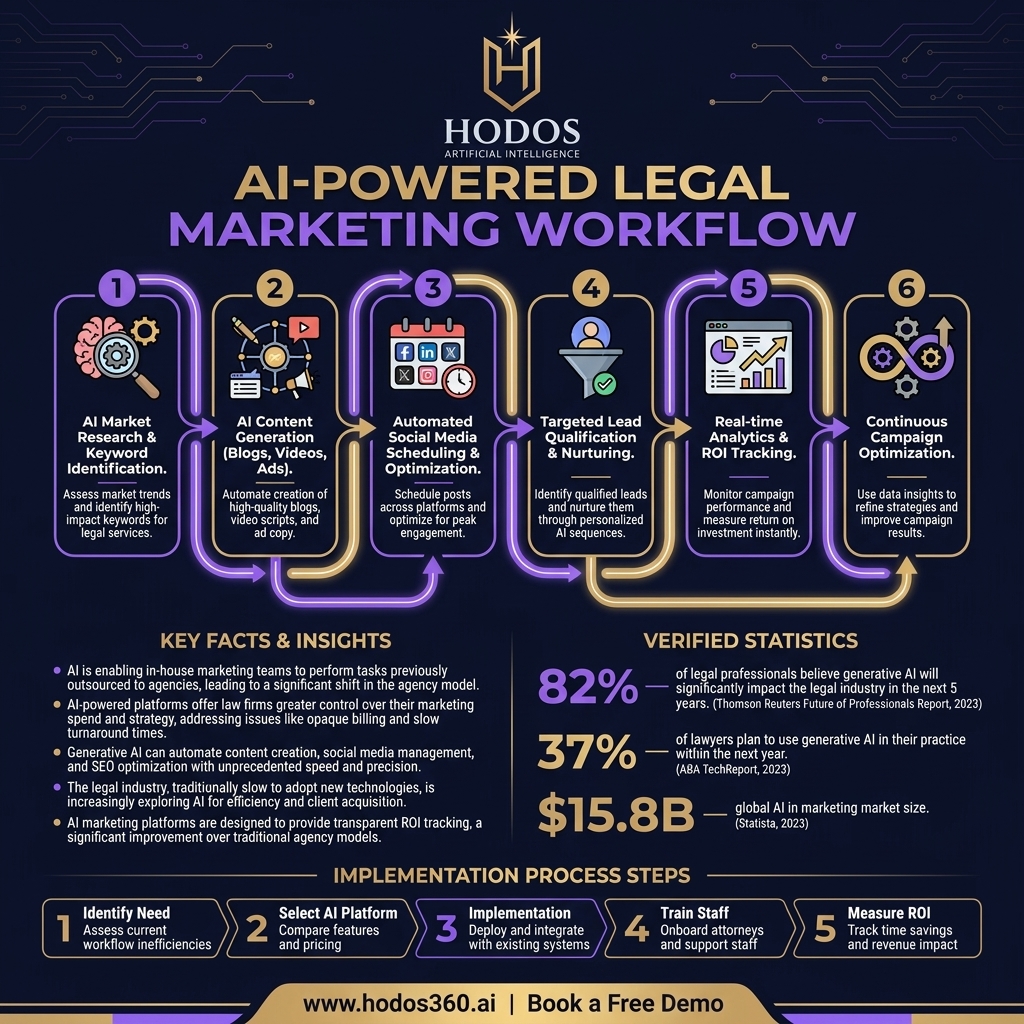
One of the most compelling features is AI video creation, allowing firms to produce high-quality, engaging visual content—from client testimonials to legal explainers—without the need for expensive production teams. Leveraging advanced AI models like those seen in OpenAI's latest iterations, these platforms can generate scripts, select visuals, and even animate avatars, transforming complex legal concepts into accessible and shareable video assets.
This capability is crucial for capturing attention in a visually-driven digital landscape and explaining intricate legal services effectively.
Beyond video, social media automation stands as another cornerstone, freeing up valuable attorney time. Instead of manually scheduling posts or crafting individual updates across multiple platforms, AI can analyze trending topics, identify optimal posting times, and even generate compliant and engaging captions for platforms like LinkedIn, Facebook, and Instagram.
This ensures a consistent and professional online presence, vital for reputation management and lead generation. Furthermore, AI-powered content generation is revolutionizing how law firms produce thought leadership. From drafting detailed blog posts on recent regulatory changes to creating compelling ad copy for specific practice areas, AI engines, trained on vast legal corpora, can produce high-quality, SEO-optimized content at scale.
Learn more about Voice AI Adoption: Essential for Law Firms' Future Growth. This capability alone can drastically reduce the reliance on external copywriters and content agencies, further cementing the 'agency killer' narrative.
Crucially, these platforms excel in analytics and ROI tracking, addressing a perennial challenge for law firms: proving the tangible return on their marketing investment.
AI algorithms meticulously track every touchpoint, from initial ad impression to final client conversion, providing granular insights into campaign performance. This data-driven approach allows firms to identify which channels, messages, and demographics yield the highest value, enabling precise allocation of resources. For instance, a firm can see exactly how many qualified leads originated from a specific AI-generated video campaign on YouTube versus a LinkedIn article, and calculate the cost per acquisition with unprecedented accuracy.
This transparency stands in stark contrast to the often vague reports provided by traditional agencies, empowering law firms to make informed strategic decisions.
Platforms like HODOS 360’s AI Marketing Platform exemplify this shift, offering robust tools for AI video creation, social media automation, content generation, analytics, and ROI tracking.
These integrated solutions provide law firms with a competitive edge, ensuring their marketing efforts are not only efficient but also highly effective and measurable. The ability to monitor and optimize campaigns in real-time, coupled with the speed of content production, means that law firms can react swiftly to market changes and seize new opportunities, a feat that would be prohibitively expensive and time-consuming with traditional marketing approaches.
- ✓Cost Efficiency & Transparency: Significantly reduces marketing spend by automating tasks and eliminating agency overheads, providing clear cost-per-acquisition data.
- ✓Speed & Scalability: Generates content, campaigns, and optimizations at speeds impossible for human teams, allowing for rapid scaling of marketing efforts.
- ✓Data-Driven Precision: Utilizes advanced analytics to target specific client demographics with tailored messages, maximizing conversion rates and minimizing wasted ad spend.
- ✓Enhanced Compliance: Can be trained on legal ethics guidelines (e.g., ABA Model Rule 7.1) to ensure generated content and campaigns adhere to professional conduct rules.
- ✓Improved ROI Tracking: Provides granular, real-time insights into campaign performance, enabling law firms to accurately measure and optimize their return on investment.
- ✓Consistent Brand Voice: Ensures all marketing output maintains a consistent tone, style, and legal accuracy across diverse channels, strengthening brand identity.
- ✓Competitive Advantage: Equips law firms with cutting-edge tools to outmaneuver competitors who rely on slower, less efficient traditional marketing methods.
Navigating the Disruption: Challenges and Opportunities for Law Firms
While the promise of AI Marketing is immense, navigating this disruption presents both challenges and unparalleled opportunities for law firms. The primary hurdle often lies in the initial resistance to change, a common human tendency, especially in professions deeply rooted in precedent and established practices.
Some partners may view AI with skepticism, fearing job displacement or a dilution of the human element in client relationships. However, the reality is that AI tools are designed to augment, not replace, human expertise. They free up attorneys and marketing staff from repetitive, time-consuming tasks, allowing them to focus on high-value activities like strategic client engagement, complex legal analysis, and building genuine relationships.
This shift requires a cultural adaptation within firms, emphasizing continuous learning and embracing technological literacy.
Another significant challenge involves data privacy and ethical considerations. As AI platforms ingest vast amounts of data—from client interactions to market analytics—law firms must ensure strict adherence to professional obligations.
ABA Model Rule 1.6 on Confidentiality of Information is paramount here, requiring lawyers to protect client data diligently. Firms must scrutinize AI vendors' data security protocols, ensure data anonymization where necessary, and understand how their data is used to train AI models. The California Bar, for example, has issued guidelines on attorney competence in technology, underscoring the professional responsibility to understand the risks and benefits of AI.
Firms that prioritize ethical implementation will not only mitigate risks but also build greater trust with their clients, reinforcing their commitment to data stewardship.
Despite these challenges, the opportunities for early adopters are transformative. Learn more about AI Legal Guidance: Your Essential Compass for Regulatory Complexity.
Consider the case of 'Sterling & Partners,' a mid-sized litigation firm that, in late 2025, fully integrated an AI Marketing platform. Within six months, they reported a 30% increase in qualified leads for their new environmental law practice, a direct result of AI-generated content targeting specific industry sectors and automated social media campaigns.
Their client acquisition cost decreased by 20%, allowing them to reinvest savings into talent development and further technological upgrades. This competitive advantage is not merely incremental; it's exponential. Firms that hesitate risk being outmaneuvered by more agile competitors who are leveraging AI to dominate search rankings, capture market share, and cultivate stronger digital brands.
Furthermore, AI Marketing allows law firms to personalize their outreach like never before. Instead of generic email blasts, AI can segment client lists based on practice area interest, geographic location, or even specific legal challenges, and then generate highly personalized communications. This level of customization fosters deeper engagement and demonstrates a proactive understanding of client needs, leading to higher conversion rates and stronger client loyalty.
For instance, an AI can identify a potential client who recently searched for 'estate planning for small business owners' and automatically send them a tailored article, generated by AI, addressing their specific concerns. This intelligent nurturing of leads is a game-changer for client relationship management and for enhancing client communication with AI Voice Assistants.
The Cost-Benefit Equation: ROI in AI Marketing
The transition to AI Marketing platforms often involves an initial investment in technology and training, a factor that can deter some firms. However, the long-term cost-benefit equation overwhelmingly favors AI. Traditional marketing agencies typically operate on retainers or project-based fees that can quickly escalate, often without a clear line of sight to tangible returns.
A 2024 Gartner report indicated that companies leveraging AI in marketing saw an average of 15% reduction in marketing operational costs within the first year, alongside a 25% increase in lead quality. For law firms, this translates into significant savings that can be redirected to core legal services or strategic growth initiatives.
The transparency of AI platforms, which provide real-time metrics on everything from click-through rates to conversion funnels, allows firms to precisely measure ROI, a capability often elusive with traditional agency models.
The true value proposition extends beyond mere cost savings to enhanced efficiency and strategic advantage.
Learn more about AI Marketing Automation: Essential Lead Flow for Law Firms. By automating repetitive tasks like content scheduling, email marketing, and basic analytics reporting, AI frees up legal professionals to focus on higher-value work. This internal reallocation of resources means that firms can achieve more with their existing staff, or even reduce the need for additional marketing hires.
Moreover, the predictive capabilities of AI allow firms to anticipate market shifts and client needs, enabling proactive rather than reactive marketing strategies. This foresight can lead to securing new clients before competitors even identify the opportunity, cementing a firm's market position. The agility provided by AI in adapting campaigns based on real-time performance data ensures that every dollar spent is optimized for maximum impact, making the initial investment a strategic imperative rather than a mere expense.
Crafting Your Digital Presence: AI for Web & Mobile Development Synergy
A robust AI Marketing strategy is intrinsically linked to a strong digital presence, making AI-powered web and mobile development an indispensable partner. For law firms, their website and mobile accessibility are often the first points of contact for potential clients, serving as digital storefronts and vital information hubs.
The synergy between AI Marketing and AI-driven web development is profound: marketing efforts drive traffic, while an intelligently designed website converts that traffic into leads. AI-powered website builders can dynamically generate responsive designs that adapt seamlessly across devices, ensuring an optimal user experience whether a client is browsing on a desktop, tablet, or smartphone.
This responsiveness is not just about aesthetics; Google's search algorithms heavily penalize non-mobile-friendly sites, directly impacting a firm's visibility and organic search rankings.
Beyond basic responsiveness, AI plays a crucial role in SEO optimization, a cornerstone of any successful legal marketing strategy. AI algorithms can analyze vast amounts of search data, identify high-volume legal keywords, and even predict changes in search intent, allowing law firms to optimize their website content and structure proactively.
For example, an AI can suggest specific blog topics that are trending in legal queries, ensuring that a firm's content directly addresses the questions potential clients are asking. This level of granular SEO insight, which goes far beyond what manual keyword research can achieve, is critical for outranking competitors in search results and attracting qualified organic traffic.
It also ensures that the high-converting templates provided by AI-powered builders are fully optimized from the ground up.
AI also enhances the user experience by personalizing website content based on visitor behavior. Learn more about Essential AI Web Development: Build Legal Apps with Ease. Imagine a potential client visiting a law firm's website.
An AI can analyze their browsing patterns, the pages they view, and even the time they spend on specific sections to dynamically suggest relevant articles, case studies, or contact forms. This intelligent personalization creates a more engaging and relevant experience, guiding visitors towards the information they need and ultimately, towards becoming a client.
This is a significant leap from static websites, transforming a passive digital presence into an active, client-attracting engine. This sophisticated interaction is vital for converting interest into action, and it demonstrates how AI can truly elevate a firm's online strategy.
The integration of AI across web and mobile development means law firms can build highly optimized, user-friendly, and conversion-focused digital platforms with unprecedented speed and efficiency.
From initial design to ongoing SEO adjustments, AI streamlines the entire process, ensuring that a firm's online presence is not just visually appealing but also strategically effective. This holistic approach, where AI marketing efforts are amplified by an AI-optimized website, creates a powerful digital ecosystem that consistently attracts, engages, and converts potential clients.
It allows law firms to truly discover the power of document automation as well, by integrating these processes with client intake forms on their dynamic websites.
SEO Optimization and High-Converting Templates
In the highly competitive legal market, visibility is paramount. AI-powered SEO optimization moves beyond traditional keyword stuffing, focusing on semantic search, user intent, and technical SEO elements that can make or break a firm's online presence. AI tools can crawl competitor websites, identify content gaps, and even predict algorithm updates from search engines like Google, allowing law firms to stay ahead of the curve.
This proactive approach ensures that a firm's website ranks prominently for relevant legal queries, driving organic traffic comprised of individuals actively seeking legal services. The precision of AI in tailoring content to specific search intent means that the traffic generated is not just high in volume but also high in quality, leading to better conversion rates.
Complementing robust SEO, AI-powered website builders offer high-converting templates specifically designed for the legal sector. Learn more about Legal AI Problem: Mastering Ethical Tech in Law Firms 2026. These templates are not merely aesthetically pleasing; they are engineered with conversion psychology in mind, incorporating clear calls-to-action, intuitive navigation, and compelling visuals.
AI can A/B test different layouts, button placements, and content arrangements to identify the optimal configuration that maximizes lead generation. For example, an AI might determine that a specific shade of blue for a 'Contact Us' button or a particular placement of a client testimonial leads to a statistically significant increase in form submissions.
This continuous optimization, driven by real user data, ensures that a law firm's website is a finely tuned machine for client acquisition, directly supporting the broader AI Marketing strategy.
The Future is Now: Integrating AI Marketing for Sustainable Growth
The narrative of the 'agency killer' is not about the demise of human creativity or strategic thinking in marketing; rather, it heralds a future where these uniquely human attributes are amplified by intelligent automation. For law firms, integrating AI Marketing is no longer a futuristic concept but a present-day imperative for sustainable growth.
The legal landscape is evolving rapidly, with clients increasingly expecting digital accessibility, personalized experiences, and transparent communication. Firms that embrace AI are better positioned to meet these demands, offering superior service delivery from the initial client touchpoint through the entire legal process. This proactive adoption creates a virtuous cycle: improved marketing leads to more clients, which in turn fuels growth and allows for further investment in innovative technologies.
The strategic roadmap for law firms involves a phased approach to AI integration, starting with an assessment of current marketing inefficiencies and identifying areas where AI can deliver the most immediate impact. This might begin with automating social media posting or leveraging AI for initial content drafts, gradually expanding to more complex applications like predictive analytics for client acquisition.
It's crucial for firms to view AI not as a magic bullet but as a powerful partner that requires ongoing management and strategic oversight. The human element remains vital in defining goals, interpreting AI-generated insights, and ensuring ethical compliance. The successful integration of AI is less about replacing people and more about empowering them with tools that unlock new levels of productivity and strategic insight.
As AI technology continues to advance, its capabilities will only become more sophisticated, offering even greater potential for law firms. We can anticipate AI platforms that not only manage marketing but also seamlessly integrate with other aspects of legal practice, such as AI-powered legal research, contract analysis, and even predictive outcomes for litigation.
The firms that position themselves at the forefront of this technological revolution will not only thrive but will also redefine what it means to be a modern legal practice. This forward-thinking approach ensures not just survival, but leadership in an increasingly competitive market, allowing firms to explore AI-powered legal workflows and other advanced solutions.
HODOS 360 provides a unified ecosystem that addresses these very needs, offering not just an AI Marketing Platform but also comprehensive solutions for AI Law Firm Management, AI Voice Assistants, and Web & Mobile Development. This integrated approach ensures that law firms can leverage the full spectrum of AI's capabilities, from automating daily operations to revolutionizing client acquisition and engagement.
By embracing a holistic AI strategy, law firms can navigate the current disruption, capitalize on emerging opportunities, and secure a resilient, prosperous future.
Strategic Adoption: A Phased Approach
For law firms looking to integrate AI marketing, a strategic, phased approach is essential for successful adoption and to mitigate potential disruption. The first phase involves a thorough audit of existing marketing efforts, identifying manual, repetitive tasks that are ripe for automation and areas where data insights are lacking.
This baseline assessment helps prioritize AI tools that will deliver the most immediate and measurable impact, such as content generation for blog posts or social media scheduling. Training staff on the basics of AI functionality and ethical guidelines for its use (e.g., proper attribution for AI-generated content) is also crucial at this stage.
The second phase focuses on integration and optimization. Once initial AI tools are deployed, firms should meticulously track performance metrics and use AI's analytical capabilities to refine campaigns. This iterative process allows for continuous improvement and demonstrates tangible ROI, building internal confidence in the technology.
This phase might involve integrating AI marketing with existing CRM systems or exploring more advanced features like AI-driven video creation. The final phase is about scaling and strategic expansion, where AI becomes an integral part of the firm's overall growth strategy, informing decisions from practice area development to long-term client retention.
This structured adoption minimizes risk and maximizes the transformative potential of AI marketing.

Key Takeaways and Next Steps
The emergence of AI Marketing platforms, heralded as the 'agency killer,' marks a profound paradigm shift in how law firms can approach client acquisition and brand development. This isn't just about technological advancement; it's about a fundamental rebalancing of power, empowering law firms with unprecedented control, efficiency, and transparency over their marketing efforts.
By leveraging AI for everything from content generation and social media automation to sophisticated analytics and ROI tracking, legal practices can move beyond the limitations of traditional agencies and build more robust, data-driven growth strategies.
For law firm owners and legal professionals, the message is clear: the future of legal marketing is intrinsically linked to AI.
Embracing these advanced platforms is not merely an advantage; it is rapidly becoming a necessity for maintaining competitiveness, attracting top-tier clients, and ensuring sustainable growth in a dynamic legal market. The firms that proactively integrate AI Marketing will not only optimize their operational efficiencies but also forge stronger, more personalized connections with their clientele, ultimately shaping the future of legal service delivery.
Frequently Asked Questions
What is an 'AI Marketing Platform' and how does it differ from traditional agencies?+
An AI Marketing Platform is a software solution that leverages artificial intelligence to automate, optimize, and personalize marketing tasks. Unlike traditional agencies that rely heavily on human labor, AI platforms use algorithms for content generation, social media management, SEO, and analytics. This results in greater efficiency, lower costs, real-time optimization, and transparent ROI tracking, often providing a more data-driven and scalable approach than conventional agency models.
How can AI Marketing platforms specifically benefit law firms?+
For law firms, AI Marketing platforms offer tailored benefits such as generating legally compliant content for blogs and social media, automating targeted lead generation campaigns, and optimizing SEO for specific practice areas. They reduce the need for expensive external agencies, provide clear ROI metrics, and free up attorneys to focus on legal work, while ensuring a consistent, professional online presence and personalized client outreach.
Is AI Marketing suitable for small and solo law firms?+
Absolutely. AI Marketing platforms are particularly beneficial for small and solo law firms. They democratize access to sophisticated marketing tools that were once exclusive to larger firms with bigger budgets. By automating routine tasks and providing advanced analytics at a fraction of the cost of a traditional agency, AI enables smaller firms to compete more effectively, expand their reach, and acquire clients efficiently without needing an in-house marketing department.
What are the ethical considerations for using AI in legal marketing?+
Ethical considerations include ensuring data privacy and confidentiality (ABA Model Rule 1.6), maintaining truthful and non-misleading communications (ABA Model Rule 7.1), and understanding the limitations of AI-generated content. Law firms must vet AI vendors' security protocols, ensure proper oversight of AI outputs, and retain ultimate responsibility for all marketing materials. Transparency about AI use, where appropriate, also builds client trust and maintains professional integrity.
How can law firms measure the ROI of AI Marketing investments?+
Law firms can measure ROI by tracking key performance indicators (KPIs) such as lead generation volume, client acquisition costs, conversion rates from specific campaigns, website traffic, and engagement metrics. AI Marketing platforms provide real-time dashboards and detailed reports that break down these metrics, allowing firms to attribute revenue directly to marketing efforts and continuously optimize their spend for maximum return. This transparency is a significant advantage over traditional marketing.