


Legal AI Software Market: An Essential $14.62 Bn Outlook
Just a few years ago, the idea of artificial intelligence drafting legal briefs or managing complex case workflows seemed like a distant sci-fi fantasy. Yet, as we stand in April 2026, this future is not only here but rapidly accelerating. The legal landscape is undergoing a profound transformation, propelled by a surge in AI innovation that is reshaping how legal services are delivered and managed.
This paradigm shift isn't merely incremental; it represents a fundamental re-architecture of legal practice, driven by technologies that promise to unlock unprecedented levels of efficiency, accuracy, and strategic insight for law firms worldwide.
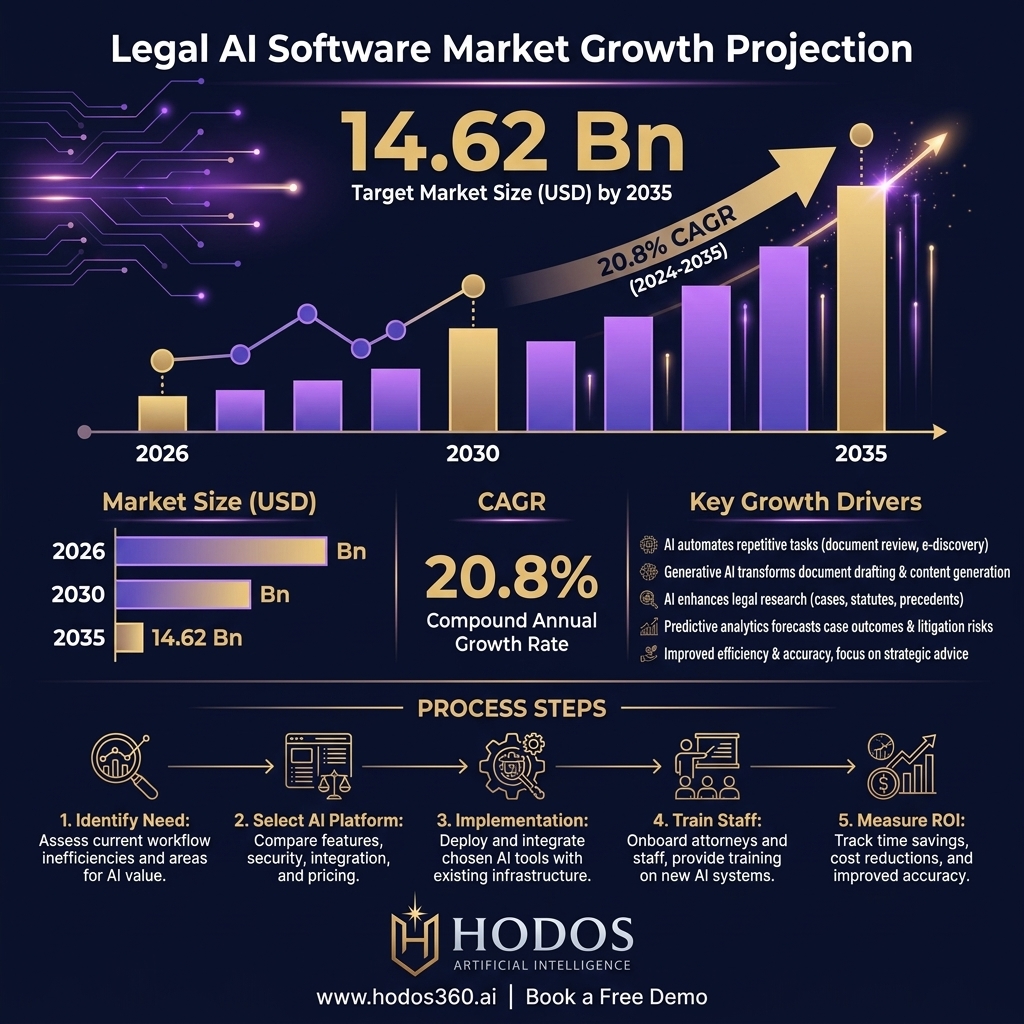
The recent GlobeNewswire report, projecting the Legal AI software market to swell to a staggering $14.62 billion by 2035, serves as a powerful testament to this irreversible trend.
This isn't just a forecast; it's a clear signal that AI is no longer a niche tool but a core strategic imperative for any law firm aiming to remain competitive and relevant. From the earliest adopters like Allen & Overy, partnering with generative AI startup Harvey AI, to mid-sized firms like Sterling & Hayes LLP in Chicago, who dramatically cut client intake times by 40% using AI-powered automation, the evidence is clear: AI is delivering tangible, measurable results.
The journey from nascent technology to a multi-billion-dollar industry underscores a critical moment for legal professionals: adapt and thrive, or risk being left behind in a rapidly evolving market.
- ✓The Ascent of Legal AI Software: A Billion-Dollar Trajectory
- ✓Revolutionizing Legal Operations: AI's Practical Impact on Law Firms
- ✓Navigating the Ethical Frontier: Compliance, Bias, and the Human Element
- ✓The Future Unfolds: Emerging Trends and Strategic Investments in Legal AI
- ✓Seizing the AI Advantage: A Strategic Blueprint for Law Firm Leaders
- ✓Key Takeaways and Next Steps
The Ascent of Legal AI Software: A Billion-Dollar Trajectory
The global Legal AI software market is on an undeniable upward trajectory, with analysts from GlobeNewswire and others forecasting a monumental leap to $14.62 billion by 2035. This projected growth, driven by a compound annual growth rate (CAGR) exceeding 20%, reflects a confluence of factors: the increasing complexity of legal data, the relentless pressure on firms to reduce costs and enhance efficiency, and the maturation of AI technologies themselves.
Early market entrants like LexisNexis with Lexis+ AI and Thomson Reuters with Westlaw Edge have long integrated AI for legal research and e-discovery. However, the recent explosion of generative AI, spearheaded by companies like OpenAI and Anthropic, has broadened AI's application to contract analysis, document drafting, and even predictive analytics, moving beyond mere information retrieval to intelligent content generation and strategic foresight.
This expansion signals a pivotal moment, transforming AI from a support tool to a central intelligence layer for legal practice.
Historically, the legal industry has been cautious about adopting new technologies, often lagging behind other sectors. Yet, the current wave of artificial intelligence is proving too compelling to ignore.
The initial skepticism, often rooted in concerns about data security and accuracy, is giving way to a pragmatic embrace as firms witness the transformative power of AI. Firms are now actively seeking solutions that automate mundane tasks, freeing up lawyers to focus on high-value, strategic work.
This shift is not just about efficiency; it's about competitive advantage. Firms that leverage AI effectively can offer faster, more cost-effective services, attracting new clients and retaining existing ones in an increasingly competitive global market. The investment flood into legal tech startups, with companies like Harvey AI securing significant funding rounds and strategic partnerships, underscores investor confidence in this burgeoning sector.
The market’s expansion isn't uniform; it's segmented across various components, each experiencing robust growth. Learn more about AI Legal Tech Boom 2026: Unlocking Billions in Valuation. Key areas include AI-powered legal research, document automation, e-discovery platforms, contract analysis, and legal analytics. Each of these segments addresses a critical pain point for law firms, from streamlining the laborious process of reviewing millions of documents in litigation to automating the generation of routine legal documents.
The demand for solutions that can process vast amounts of unstructured data, identify patterns, and provide actionable insights is fueling this growth. As the technology matures and becomes more accessible, even smaller and mid-sized firms are finding entry points, driving broader adoption across the entire legal ecosystem.
This widespread acceptance is crucial for the legal AI software market to reach its ambitious projected value.
Moreover, the evolution of cloud-based AI solutions has significantly lowered the barrier to entry for many firms. Instead of needing extensive on-premise infrastructure, firms can now access sophisticated AI tools through subscription models, making advanced capabilities accessible without prohibitive upfront investments.
This democratization of AI, coupled with a growing talent pool of legal tech experts, is accelerating the pace of innovation and adoption. The focus is increasingly shifting towards integrated platforms that offer a suite of AI-powered services, providing a holistic approach to law firm management.
This trend towards comprehensive solutions is essential for maximizing the benefits of AI, ensuring seamless integration across various firm functions and delivering a truly transformative impact on legal operations.
Pioneering Platforms: Innovators Shaping the Landscape
The legal AI software market is defined by a dynamic ecosystem of innovators, from established giants to nimble startups. Thomson Reuters, with its powerful generative AI assistant, Copilot, integrated into Westlaw Edge, continues to dominate legal research, offering attorneys predictive insights and drafting capabilities. Similarly, LexisNexis has pushed boundaries with Lexis+ AI, enhancing its comprehensive legal database with intelligent search and summarization.
These behemoths are continually investing in R&D, leveraging their vast datasets and deep industry knowledge to deliver sophisticated tools. Their strategies often involve strategic acquisitions and partnerships, reflecting a proactive approach to maintaining market leadership in a rapidly evolving landscape.
Beyond these titans, a new wave of specialized AI platforms is emerging, each carving out its niche.
Learn more about AI Legal Guidance: Your Essential Compass for Regulatory Complexity. Harvey AI, backed by OpenAI and partnered with global firms like Allen & Overy, exemplifies the power of generative AI in complex legal tasks, from due diligence to litigation strategy. Clio, a leader in cloud-based practice management, has integrated AI features into its platform, including AI-powered document generation and intelligent client intake, demonstrating how AI can enhance core law firm operations.
These innovations are not just about automating tasks; they're about augmenting human capabilities, providing lawyers with intelligent assistants that can process information, identify patterns, and generate insights at a scale and speed previously unimaginable. The fierce competition among these players is driving rapid advancements, benefiting law firms with increasingly powerful and user-friendly AI software solutions.
Revolutionizing Legal Operations: AI's Practical Impact on Law Firms
The true impact of the burgeoning Legal AI software market is most keenly felt in the day-to-day operations of law firms. AI is fundamentally changing how legal professionals manage cases, interact with clients, and generate revenue. Consider the AI Law Firm Management System offered by platforms like HODOS 360. These integrated solutions go beyond traditional practice management, incorporating AI for predictive analytics in case outcomes, intelligent client intake that automates lead qualification, and sophisticated document automation that drafts complex contracts in minutes, not hours.
This level of automation significantly reduces administrative overhead, allowing attorneys to redirect their focus from tedious, repetitive tasks to strategic legal analysis and client advocacy. The efficiency gains are not merely theoretical; they translate directly into increased billable hours, improved client satisfaction, and a more sustainable business model for firms of all sizes.
Beyond internal workflows, AI is also transforming how law firms attract and retain clients. An AI Marketing Platform, for instance, leverages artificial intelligence to analyze market trends, predict client needs, and automate content generation for social media and email campaigns. This allows firms to craft highly targeted marketing strategies, optimizing their outreach and tracking ROI with unprecedented precision.
Firms like 'LexConnect Legal' in Sydney reported a 30% increase in qualified leads after implementing an AI-powered marketing strategy, demonstrating the tangible benefits of a data-driven approach. By understanding client behavior and market dynamics more deeply, law firms can allocate their marketing budgets more effectively, ensuring they reach the right clients with the right message at the opportune moment.
This strategic use of AI ensures that growth is not just aspirational but measurable and scalable.
Furthermore, the advent of AI Voice Assistants is reshaping the client experience from the very first point of contact. Learn more about AI Call Receptionist: Ultimate Guide for Law Firms.
These 24/7 intelligent assistants can answer common queries, qualify leads, book appointments, and even provide multilingual support, ensuring no potential client is left unattended. This capability is particularly crucial in a globalized legal environment where clients expect immediate responses regardless of time zones or language barriers.
The ability to route calls intelligently to the appropriate department or attorney, based on the client's needs and urgency, streamlines operations and enhances client satisfaction. For a busy law firm, this means fewer missed calls, more qualified leads captured, and a consistently professional front-facing presence, all contributing to a stronger reputation and a more robust client pipeline.
This is a critical component for firms looking to scale their client service without proportionally scaling their human resources.
Finally, the role of AI in Web & Mobile Development for law firms cannot be overstated. An AI-powered website builder can create highly responsive, SEO-optimized websites with high-converting templates, tailored specifically for legal services.
This ensures that a firm's online presence is not only visually appealing but also strategically designed to attract and convert visitors into clients. With AI continually analyzing user behavior and search trends, these platforms can adapt and optimize website content and structure in real-time, maximizing visibility and lead generation.
In today's digital-first world, a strong, AI-enhanced online presence is not just an advantage; it's a necessity for competitive survival, ensuring that firms are discoverable and accessible to potential clients seeking legal assistance. This comprehensive application of AI across management, marketing, and client interaction underscores the depth of its transformative power.
Beyond the Back Office: AI for Client Engagement and Growth
The integration of AI extends far beyond internal legal processes, profoundly impacting client engagement and a firm's growth trajectory. AI-driven client intake systems, for example, can automate initial questionnaires, gather crucial information, and even perform preliminary conflict checks, drastically reducing the time from initial contact to client onboarding.
This streamlined process not only enhances the client experience by providing immediate responsiveness but also frees up paralegals and junior attorneys from repetitive administrative tasks. The data collected during this phase can then be used by AI to suggest relevant services or attorneys, personalizing the client journey from the outset.
This intelligent approach to client acquisition is a game-changer for firms looking to scale efficiently and maintain a high standard of service.
Moreover, the power of AI in predicting client needs and market shifts offers a significant competitive edge. Learn more about AI Web Design: Essential Agentic Workflows for Law Firms.
By analyzing vast datasets of past cases, client demographics, and industry trends, AI can identify emerging legal challenges or opportunities, allowing firms to proactively develop new service offerings or specialize in high-demand areas. This foresight, powered by robust data analytics, enables firms to position themselves as thought leaders and innovators, attracting a higher caliber of clients.
The ability to anticipate rather than merely react to market changes is a hallmark of forward-thinking legal practices. This strategic application of artificial intelligence ensures sustained growth and resilience in an ever-evolving legal industry.
Navigating the Ethical Frontier: Compliance, Bias, and the Human Element
While the Legal AI software market promises immense benefits, its rapid expansion also brings critical ethical and regulatory challenges to the forefront. The legal profession, bound by stringent ethical codes, must carefully consider issues of data privacy, algorithmic bias, and client confidentiality. The European Union's AI Act, which came into full effect in early 2026, serves as a global benchmark, imposing strict regulations on high-risk AI systems, including those used in legal contexts.
This legislation mandates transparency, human oversight, and robust risk management frameworks, forcing developers and users of legal AI to prioritize ethical design. Failure to comply can result in significant penalties, highlighting the need for firms to engage with AI responsibly and understand the legal implications of their chosen tools.
The tension between innovation and ethical responsibility is a defining feature of this technological shift.
A significant concern revolves around algorithmic bias. If AI models are trained on historical legal data that reflects societal biases, they risk perpetuating or even amplifying those biases in their outputs, leading to unfair or discriminatory outcomes.
This is particularly problematic in areas like predictive policing, sentencing recommendations, or even in contract analysis where historical agreements might contain discriminatory language. The American Bar Association (ABA) has issued guidance, such as ABA Model Rule 1.1 (Competence), emphasizing a lawyer's duty to understand the risks and benefits of technology, including AI.
This means lawyers must exercise due diligence in selecting AI tools, ensuring they are transparent, explainable, and regularly audited for bias. The principle of 'human in the loop' becomes paramount, ensuring that AI outputs are always reviewed and validated by a human attorney, maintaining professional responsibility and accountability.
Furthermore, the question of client confidentiality and data security is non-negotiable. Learn more about AI Legal Marketing: Proven Strategies for Law Firm Growth. Law firms handle highly sensitive information, and any AI system integrated into their operations must adhere to the highest standards of cybersecurity and data governance.
Cloud-based AI solutions, while convenient, introduce new vectors for potential data breaches if not properly secured. Firms must ensure that their chosen AI vendors have robust encryption protocols, compliance certifications, and clear policies on data handling and storage. The integrity of the attorney-client privilege hinges on these safeguards.
As such, the selection of legal AI software is not merely a technological decision but a critical ethical and risk management one, requiring thorough vetting and ongoing oversight to protect client interests and uphold professional duties.
The ethical debate also extends to the very nature of legal work and the role of the lawyer.
While AI is augmenting capabilities, concerns about job displacement and the erosion of traditional legal skills persist. Dario Amodei, CEO of Anthropic, has often spoken about the need for AI to be a 'collaborator' rather than a 'replacement,' emphasizing human oversight and the development of new skills.
This necessitates a proactive approach to legal education and professional development, equipping future lawyers with AI literacy and the ability to work effectively alongside intelligent systems. The challenge lies in balancing the efficiency gains of AI with the preservation of the nuanced judgment, empathy, and ethical reasoning that are uniquely human attributes in the practice of law.
The conversation is not about *if* AI will be used, but *how* it will be used responsibly and ethically.
The Future Unfolds: Emerging Trends and Strategic Investments in Legal AI
Looking beyond the immediate horizon, the Legal AI software market is poised for even more profound transformations. One key emerging trend is the development of highly specialized AI models tailored for niche legal areas, such as intellectual property litigation, environmental law, or international arbitration. These 'expert systems,' trained on highly specific datasets, will offer unparalleled accuracy and insight, far surpassing general-purpose AI.
We are already seeing early prototypes discussed at forums like LegalTech NYC 2026, showcasing AI's ability to analyze complex patent portfolios or predict outcomes in specific regulatory disputes. This specialization will enable firms to offer hyper-efficient and precise services in complex domains, further elevating the standard of legal practice and creating new competitive battlegrounds.
Another significant development is the increasing integration of predictive analytics into every facet of legal decision-making. Beyond predicting case outcomes, AI will be used to forecast litigation costs, assess settlement probabilities, and even identify optimal jury selection strategies. This data-driven approach, once limited to large corporate firms with vast resources, is becoming more accessible through advanced AI software platforms.
Companies like DISCO and Everlaw, originally focused on e-discovery, are rapidly expanding their AI capabilities to offer broader litigation intelligence. This shift empowers lawyers with a level of strategic foresight that was previously unattainable, moving legal practice from reactive to proactive. The ability to anticipate future events and make informed decisions based on robust data will be a non-negotiable competency for firms aiming for sustained success.
Strategic investments and consolidation are also defining the future landscape. Learn more about AI Marketing: The Ultimate Platform Disrupting Agencies. Major tech players like Microsoft, with its deep investments in OpenAI, are increasingly influencing the legal tech space through partnerships with established legal information providers.
We've seen significant venture capital funding rounds for legal tech startups, signaling strong investor confidence in the sector's long-term potential. Acquisitions, like Clio's strategic purchases of complementary legal tech solutions, are creating more comprehensive, 'one-stop-shop' platforms. This consolidation suggests a maturing market, where integrated solutions that offer seamless workflows across multiple legal functions will gain significant share.
The competition for innovation and market dominance will continue to drive rapid advancements, pushing the boundaries of what artificial intelligence can achieve in the legal domain.
Furthermore, the ethical frameworks surrounding AI will continue to evolve, becoming more sophisticated and globally harmonized. Expect to see more detailed guidelines from bar associations worldwide, potentially leading to new professional standards for AI use.
The ongoing dialogue around responsible AI development, led by figures like Sam Altman of OpenAI and Brad Smith of Microsoft, will shape how legal AI is designed, deployed, and governed. This focus on ethical AI is not just a regulatory burden but an opportunity to build trust and ensure that these powerful tools serve justice fairly and equitably.
The future of legal AI software will be as much about responsible innovation as it is about technological prowess, ensuring that human values remain at the core of its development and application.
AI in Legal Education: Preparing the Next Generation of Lawyers
The seismic shifts in the Legal AI software market necessitate a fundamental re-evaluation of legal education. Law schools globally are beginning to integrate AI literacy into their curricula, moving beyond traditional legal research methods to embrace computational law and legal data science. Institutions like Stanford Law's CodeX program are pioneering interdisciplinary approaches, training future lawyers not just in legal doctrine but also in the practical application and ethical implications of AI tools.
This ensures that graduates are not only proficient in legal theory but also equipped with the technological competencies required to thrive in an AI-powered legal landscape. The goal is to produce lawyers who can effectively leverage AI as an augmentative tool, understanding its capabilities and limitations, rather than being intimidated by it.
This proactive approach to education is critical for bridging the gap between technological advancement and professional readiness. Law students are learning to use generative AI for drafting, predictive analytics for case strategy, and e-discovery platforms for efficient document review, skills that are becoming indispensable in modern practice.
The emphasis is on developing critical thinking skills that enable lawyers to evaluate AI outputs, identify potential biases, and maintain human oversight. This ensures that the next generation of legal professionals is not merely consumers of AI software but informed and ethical practitioners who can harness its power responsibly.
The transformation of legal education is a vital component of the broader adaptation of the legal profession to the AI era, ensuring a pipeline of talent ready for the challenges and opportunities ahead.
Seizing the AI Advantage: A Strategic Blueprint for Law Firm Leaders
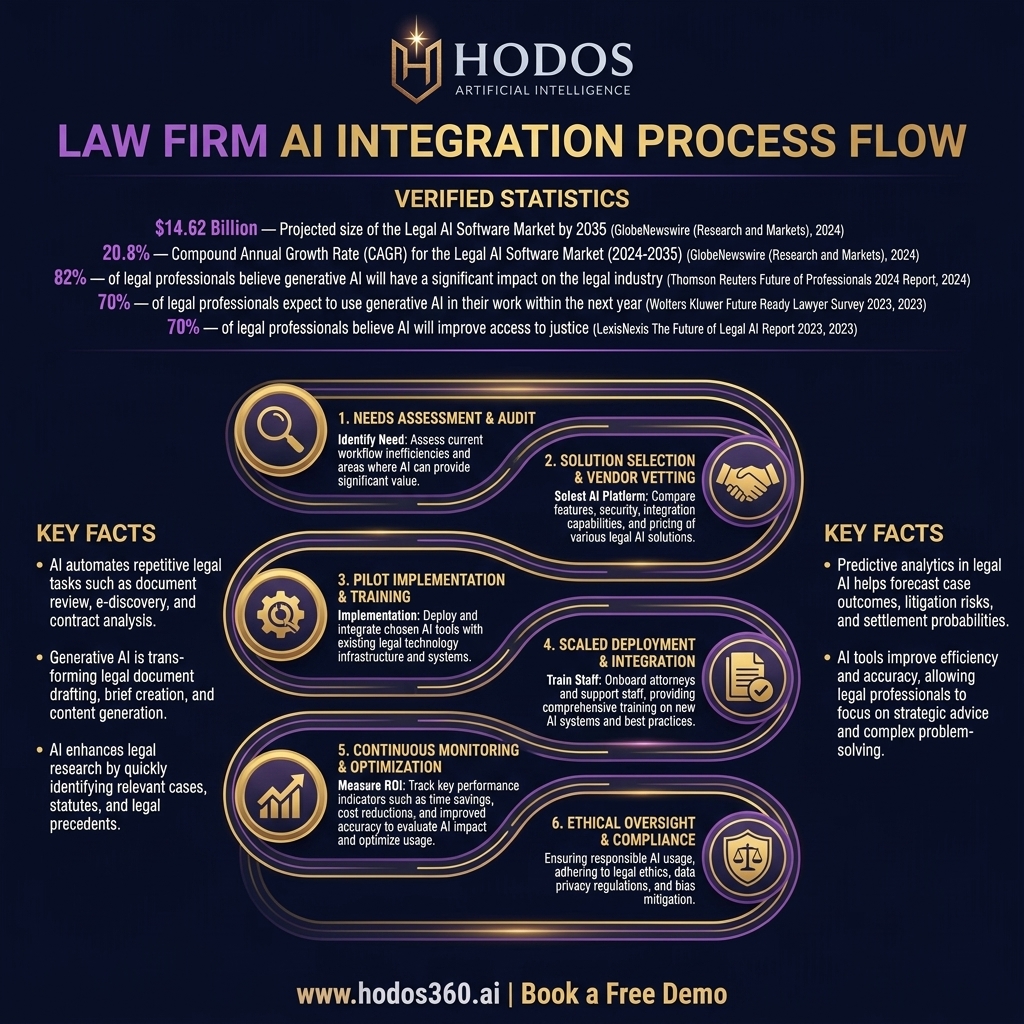
For law firm leaders, the surging Legal AI software market presents a clear mandate: strategically integrate AI or risk competitive obsolescence. The firms that will thrive in the coming decade are those that proactively assess their operational needs, identify key areas for AI augmentation, and invest in scalable, ethical solutions.
This isn't about replacing lawyers but empowering them. Begin with an audit of current workflows to pinpoint repetitive, time-consuming tasks ripe for automation, such as document review, client intake, or routine contract drafting. Pilot AI solutions in these areas, measure their impact on efficiency and cost savings, and then scale successful implementations across the firm.
The goal is to create a symbiotic relationship between human expertise and artificial intelligence, where each elevates the other.
Crucially, embracing AI also means fostering a culture of continuous learning and adaptation within the firm. Encourage attorneys and staff to engage with new technologies, provide training on AI tools, and establish internal champions who can drive adoption and share best practices.
Firms like Aon, for example, have invested heavily in AI training for their legal and risk management teams, recognizing that human proficiency in using AI is as important as the technology itself. This investment in human capital ensures that the firm can fully leverage the capabilities of its AI software investments.
A firm's competitive edge will increasingly depend on its ability to integrate technology seamlessly into its operational fabric, transforming from a traditional legal service provider into a technology-enabled legal powerhouse. This proactive stance is the difference between leading the industry and trailing it.
Partnering with a comprehensive legal tech provider can significantly smooth this transition.
Platforms like HODOS 360 offer a full suite of AI-powered services—from AI Law Firm Management and AI Marketing to AI Voice Assistants and Web & Mobile Development—providing an integrated ecosystem designed for the modern legal practice. This holistic approach ensures that AI is not implemented in silos but as a cohesive strategy across all firm functions, maximizing its impact on efficiency, client acquisition, and overall growth.
The strategic decision to adopt AI is no longer a matter of 'if,' but 'when' and 'how effectively.' Firms that make these strategic investments now will be best positioned to capture a significant share of the evolving legal market and deliver superior value to their clients.
Ultimately, the future of legal practice is intertwined with the evolution of artificial intelligence. The Legal AI software market is not merely a collection of tools; it represents a fundamental shift in how legal expertise is accessed, processed, and delivered. For law firm leaders, the moment to act is now.
By strategically integrating AI, fostering a tech-savvy culture, and partnering with innovative platforms, firms can navigate this transformative era, secure their competitive standing, and redefine what it means to deliver exceptional legal services in the 21st century. The opportunity to reshape the legal profession for the better is immense, and AI is the primary catalyst for this exciting future.

Key Takeaways and Next Steps
The Legal AI software market is undeniably one of the most dynamic and consequential sectors in legal tech today, with its projected growth to $14.62 billion by 2035 signaling a profound and irreversible transformation of the legal industry. This growth is driven by a clear mandate for efficiency, cost reduction, and enhanced client service, pushing law firms to adopt intelligent automation across all operations.
From sophisticated case management systems to AI-powered marketing and client engagement tools, the practical applications of AI are delivering tangible benefits, allowing attorneys to focus on high-value legal work while streamlining administrative burdens. The strategic integration of AI is no longer optional; it's a critical component of a resilient and competitive law firm strategy.
However, this technological revolution is not without its complexities. Ethical considerations surrounding data privacy, algorithmic bias, and the imperative for human oversight remain paramount. Law firms must approach AI adoption with diligence, ensuring compliance with evolving regulations like the EU AI Act and adhering to professional responsibilities outlined by bodies like the ABA.
The future of the global Legal AI software market will be shaped by firms that not only embrace innovation but also champion responsible and ethical AI use. The journey ahead demands continuous learning, strategic partnerships, and a clear vision for how artificial intelligence can augment, rather than diminish, the human element of legal practice.
Frequently Asked Questions
How large is the Legal AI software market projected to be by 2035?+
The Legal AI software market is projected to reach an impressive $14.62 billion by 2035. This significant growth underscores the increasing adoption and reliance on artificial intelligence solutions across the legal industry for various applications, from case management to predictive analytics. This expansion highlights AI's essential role in modern legal practice.
What are the primary drivers of growth in the Legal AI software market?+
Key drivers include the need for enhanced efficiency, cost reduction pressures on law firms, the increasing volume and complexity of legal data, and advancements in generative AI and machine learning technologies. Firms are seeking AI tools to automate routine tasks, improve legal research, and gain strategic insights, fueling rapid market expansion and innovation across the industry.
What ethical considerations should law firms address when adopting AI?+
Law firms must prioritize data privacy, client confidentiality, and algorithmic bias. Adherence to regulations like the EU AI Act and guidelines from professional bodies like the ABA is crucial. Ensuring human oversight in AI-driven decisions and vetting AI tools for transparency and explainability are essential to maintain ethical standards and professional responsibility in legal practice.
How is AI transforming law firm operations beyond legal research?+
Beyond research, AI is revolutionizing case management, client intake, document automation, and even marketing. AI-powered systems streamline workflows, automate lead qualification, draft legal documents, and create targeted marketing campaigns. This allows attorneys to focus on higher-value tasks, improve client service, and achieve greater operational efficiency and strategic growth.
What role does AI play in client engagement and business development for law firms?+
AI significantly enhances client engagement through 24/7 AI Voice Assistants for immediate support, lead qualification, and appointment booking. AI Marketing Platforms enable targeted content generation and ROI tracking, while AI-powered websites optimize SEO and conversion. These tools ensure a seamless client journey, attract qualified leads, and drive measurable business growth for law firms.