


Legal AI: Microsoft's Essential Tool Reshapes Law Practice
The legal industry often moves with cautious deliberation, a stark contrast to the rapid-fire innovations defining the broader technology landscape. Yet, even this venerable profession finds itself at the precipice of a profound transformation, driven by advancements in artificial intelligence. When a titan like Microsoft, under the visionary leadership of CEO Satya Nadella, makes a targeted entry into a specialized field, the tremors are felt across the globe.
The recent announcement, highlighted by the ABA Journal, of Microsoft introducing a new legal artificial intelligence tool isn't just another product launch; it's a strategic declaration, signaling a new era where general-purpose AI gives way to highly specialized, context-aware solutions designed specifically for the nuanced demands of legal practice.
This move represents a significant inflection point, compelling law firms worldwide to re-evaluate their operational frameworks and strategic investments in legal tech.
For years, legal professionals have grappled with the promise and peril of AI, often navigating a fragmented market of niche solutions. Microsoft's entry, particularly with a tool designed to integrate seamlessly into existing workflows like Word, carries immense weight.
It legitimizes the widespread adoption of AI in legal operations and accelerates the pace of innovation. This isn't merely an incremental upgrade; it's a foundational shift. As Jensen Huang, CEO of NVIDIA, often emphasizes regarding AI's pervasive impact, every industry will be transformed, and law is no exception.
The question for law firm leaders is no longer *if* AI will impact their practice, but *how* deeply and *how quickly* they can harness its power to gain a competitive edge. This new legal artificial intelligence offering from Microsoft promises to address critical pain points, from automating mundane tasks to enhancing the precision of legal research, ultimately freeing up attorneys to focus on high-value, strategic work.
The implications for productivity, client service, and profitability are immense, setting the stage for a dramatic evolution in how legal services are delivered.
This development underscores a broader trend: the convergence of powerful general AI models with deep industry expertise. Firms that embrace this evolution stand to redefine their competitive position.
To truly thrive, law firms need more than just individual tools; they require an integrated ecosystem that can adapt to rapid technological shifts. This is where comprehensive platforms, designed to centralize and optimize various aspects of firm management, become indispensable. Firms must now consider how this new wave of legal artificial intelligence tools integrates with their entire operational stack, from client intake to billing, and how it impacts their strategic growth.
The imperative is clear: adapt, innovate, or risk being left behind in an increasingly AI-driven legal landscape. This moment calls for strategic foresight and proactive engagement with the technologies shaping the future of law.
The Rise of Specialized Legal AI: Microsoft's Strategic Entry
Microsoft's introduction of a specialized legal artificial intelligence tool marks a significant evolution from the general-purpose AI agents that have permeated the market. Unlike tools such as Microsoft Copilot, which are designed to assist across a broad spectrum of tasks, this new 'Legal Agent' is tailored specifically for the intricate, often high-stakes, workflows of legal professionals.
This strategic move by a tech behemoth like Microsoft validates the burgeoning legal tech sector, which has seen considerable investment and innovation from startups like Harvey AI, which famously partnered with Allen & Overy. The distinction is crucial: while general intelligence tools can offer rudimentary assistance, a legal intelligence agent is built with an understanding of legal nuances, terminology, and procedural requirements, aiming for accuracy and compliance, which are paramount in law.
Learn more about AI Legal Research: The Ultimate Guide for Law Firms. This specialization is what truly unlocks transformative potential, moving beyond mere augmentation to genuine enhancement of legal work. The competitive landscape is intensifying, with established players like Thomson Reuters (with CoCounsel) and LexisNexis also heavily investing in similar specialized AI solutions, creating a dynamic environment where law firms have increasingly sophisticated options at their disposal.
The development of such a specialized tool by Microsoft comes at a time when law firms are under immense pressure to increase efficiency and reduce costs while maintaining high standards of service. According to a 2023 report by Thomson Reuters, nearly 82% of law firms believe AI will be critical to their future success, yet only a fraction have fully integrated it.
This gap highlights a significant opportunity for tools that are not only powerful but also user-friendly and seamlessly integrated into existing platforms. Microsoft's approach, leveraging its ubiquitous Word ecosystem, addresses a major adoption barrier, making advanced legal artificial intelligence accessible to a broader base of legal professionals.
Learn more about Generative AI Marketing: Law Firms' 2026 Growth Engine. This move also reflects a broader industry trend where general AI models, often powered by large language models (LLMs) from companies like OpenAI (which Microsoft heavily invests in), are being fine-tuned and specialized for specific vertical markets.
The race to develop the most robust, reliable, and ethically sound legal AI is on, and Microsoft’s entry signals a new level of competition and capability, pushing the boundaries of what these intelligence tools can achieve for lawyers and their clients. The focus is no longer just on automating tasks but on intelligent assistance that understands the context and implications of legal work.
A New Era for Contract Analysis and Document Automation
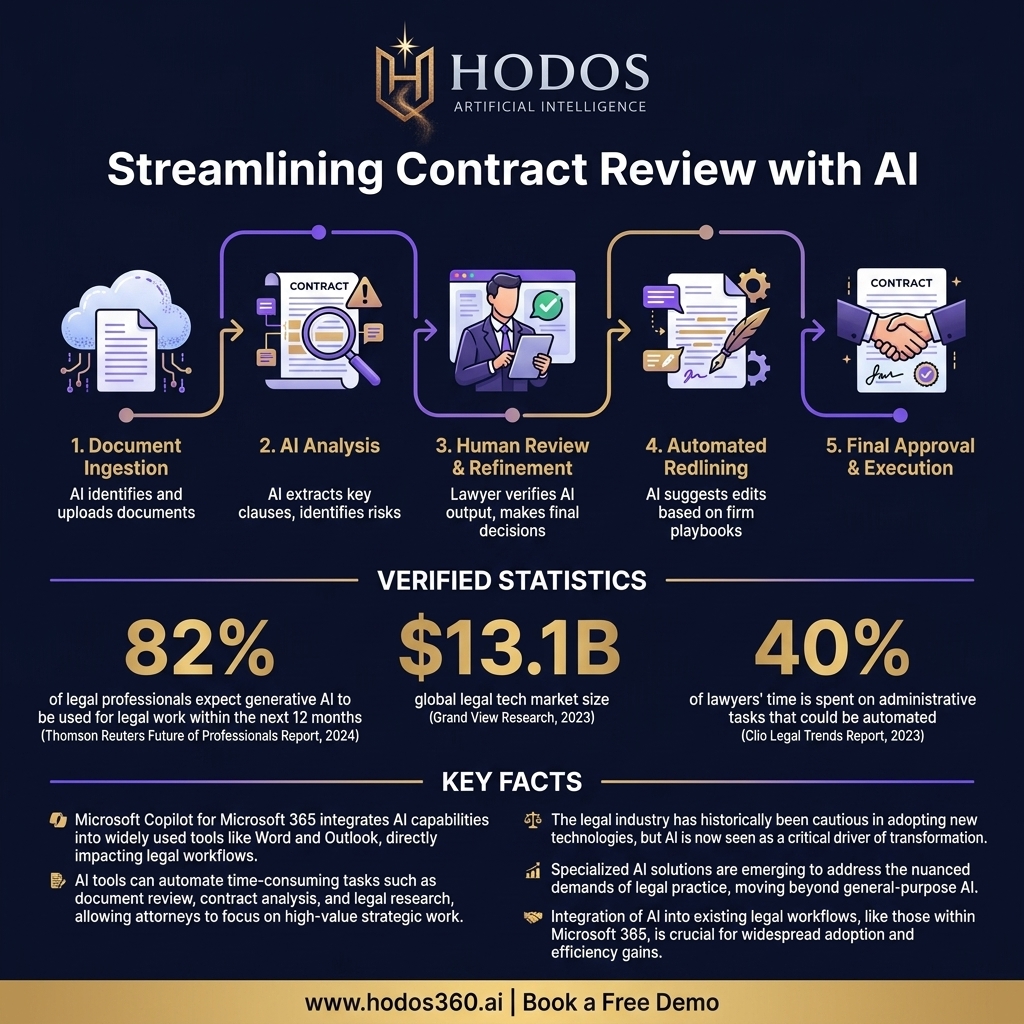
One of the most immediate and impactful applications of this new legal artificial intelligence tool lies in contract analysis and document automation. Historically, these tasks have been labor-intensive, time-consuming, and prone to human error, consuming countless billable hours. Partner Sarah Chen at Veritas Law Group, speaking at a recent legal tech summit, highlighted the immense potential: “Imagine reducing the time spent on initial contract review by 70% without sacrificing accuracy.
That’s not just efficiency; that’s a strategic advantage.” Indeed, studies by McKinsey & Company suggest that AI can automate 30-50% of legal work activities, with contract review and due diligence being prime candidates. Microsoft’s Legal Agent is designed to analyze complex legal documents, identify key clauses, flag inconsistencies, and even suggest revisions based on pre-defined legal standards or a firm’s internal playbooks.
Learn more about AI Website Coding: An Essential Guide for Law Firms. This capability moves beyond simple keyword searches, offering contextual understanding that can significantly accelerate the drafting, review, and negotiation processes. For example, during a merger and acquisition deal, a firm could leverage the tool to quickly review hundreds of contracts for change-of-control clauses, indemnification provisions, or critical termination rights, a task that traditionally would require a team of junior associates weeks to complete.
This efficiency not only streamlines operations but also allows firms to take on more work, deliver faster results, and potentially offer more competitive pricing.
Navigating the Ethical Minefield: Responsible AI Adoption for Law Firms
The integration of advanced legal artificial intelligence tools, while promising immense benefits, also introduces a complex ethical landscape that law firms must meticulously navigate. The specter of AI 'hallucinations' – where models generate plausible but incorrect information – remains a significant concern, especially in a profession where accuracy is paramount.
This was a focal point of discussion at LegalTech NYC 2026, where prominent legal ethicists and tech leaders debated the responsibilities of attorneys utilizing AI. The American Bar Association (ABA) has already begun issuing guidance, emphasizing that lawyers retain ultimate responsibility for all work product, regardless of AI assistance.
ABA Model Rule 1.1 (Competence) and 1.6 (Confidentiality of Information) are particularly relevant, compelling attorneys to understand the limitations of AI tools, verify their output, and protect client data. This means that while tools like Microsoft’s Legal Agent can accelerate workflows, they cannot replace human judgment or the ethical obligations of a licensed attorney.
Learn more about AI Marketing Tools: Essential Guide for Law Firm Growth. Firms must implement robust internal protocols for AI use, including training, oversight, and a clear understanding of data security measures employed by AI vendors. The ethical imperative extends to ensuring fairness, avoiding bias in AI-driven analyses, and maintaining transparency with clients about the role of AI in their cases.
This human oversight is not merely a formality; it is a critical safeguard against potential legal and reputational risks. The Florida Bar, for instance, has issued specific guidance on AI, underscoring the need for careful review of AI-generated content.
Beyond the immediate concerns of accuracy and professional responsibility, the broader implications of AI on data privacy and client confidentiality are non-negotiable considerations. When utilizing cloud-based legal artificial intelligence services, law firms must conduct thorough due diligence on the vendor's security infrastructure, data handling policies, and compliance with regulations such as GDPR or CCPA.
The potential for inadvertent data leakage or unauthorized access to sensitive client information is a risk that cannot be overstated. This necessitates clear contractual agreements with AI providers, ensuring that client data is not used to train models or shared with third parties without explicit consent.
Furthermore, firms must educate their staff on the responsible use of AI, emphasizing that confidential information should never be inputted into public or unsecured AI tools. Learn more about Agentic Marketing: The Ultimate Guide for Law Firms. The tension between leveraging cutting-edge technology and upholding the sacred trust of client confidentiality represents a significant challenge.
Firms that prioritize ethical AI adoption will not only mitigate risks but also build stronger client trust, establishing themselves as leaders in responsible innovation. This involves not just technical solutions but a firm-wide culture of ethical awareness and continuous education regarding emerging technologies and their implications for legal practice.
Beyond the Tool: Building an Integrated AI Ecosystem for Law Firms
The arrival of sophisticated legal artificial intelligence tools like Microsoft's Legal Agent underscores a critical truth for modern law firms: isolated tools, however powerful, are insufficient. True transformation requires an integrated AI ecosystem that seamlessly connects various aspects of a firm's operations. Think of it as building a digital nervous system for your practice.
A comprehensive approach means integrating AI across the entire client lifecycle – from initial intake and lead qualification to case management, document generation, billing, and even marketing. This holistic strategy allows data and insights to flow freely, creating efficiencies that far exceed what individual tools can offer.
Learn more about AI Legal Research: The Ultimate Evolution of Legal Analysis. For instance, an AI-powered client intake system could automatically qualify leads, populate client information into case management software, and even initiate the drafting of initial retainer agreements, all while ensuring compliance and data security.
The competitive advantage for firms that adopt such an integrated strategy is substantial, allowing them to deliver faster, more cost-effective services, and enhance client satisfaction. The market is evolving rapidly, and firms that embrace a fragmented approach risk falling behind those leveraging comprehensive platforms designed for end-to-end AI integration.
This is where platforms like HODOS 360 become instrumental. Rather than simply offering a single legal artificial intelligence solution, HODOS 360 provides a complete suite of AI-powered services designed to create this integrated ecosystem. From an AI Law Firm Management System that centralizes case management, billing, and document automation, to an AI Marketing Platform that handles content generation and social media automation, and even AI Voice Assistants for 24/7 client engagement, such comprehensive platforms offer a unified approach.
This integration ensures that the benefits of a tool like Microsoft’s Legal Agent are amplified, not siloed. For example, insights gained from AI-driven contract analysis could feed directly into case strategy within the management system, or inform targeted marketing campaigns about a firm's expertise in specific legal areas.
According to a Gartner survey, companies that integrate AI across multiple functions see a 20% higher return on investment compared to those using AI in isolated applications. Building an AI-powered law firm isn't just about adopting the latest gadget; it's about strategically re-engineering operations to maximize the synergistic effects of interconnected AI tools.
This allows law firms to not only keep pace with technological advancements but to proactively shape their future, ensuring they remain agile, efficient, and competitive in a rapidly changing legal landscape.
Streamlining Case Management and Client Intake with Integrated AI
The impact of legal artificial intelligence extends far beyond document review, profoundly transforming fundamental aspects of law firm operations such as case management and client intake. Historically, these processes have been bottlenecks, consuming valuable administrative and attorney time. With integrated AI, client intake can become an intelligent, automated process.
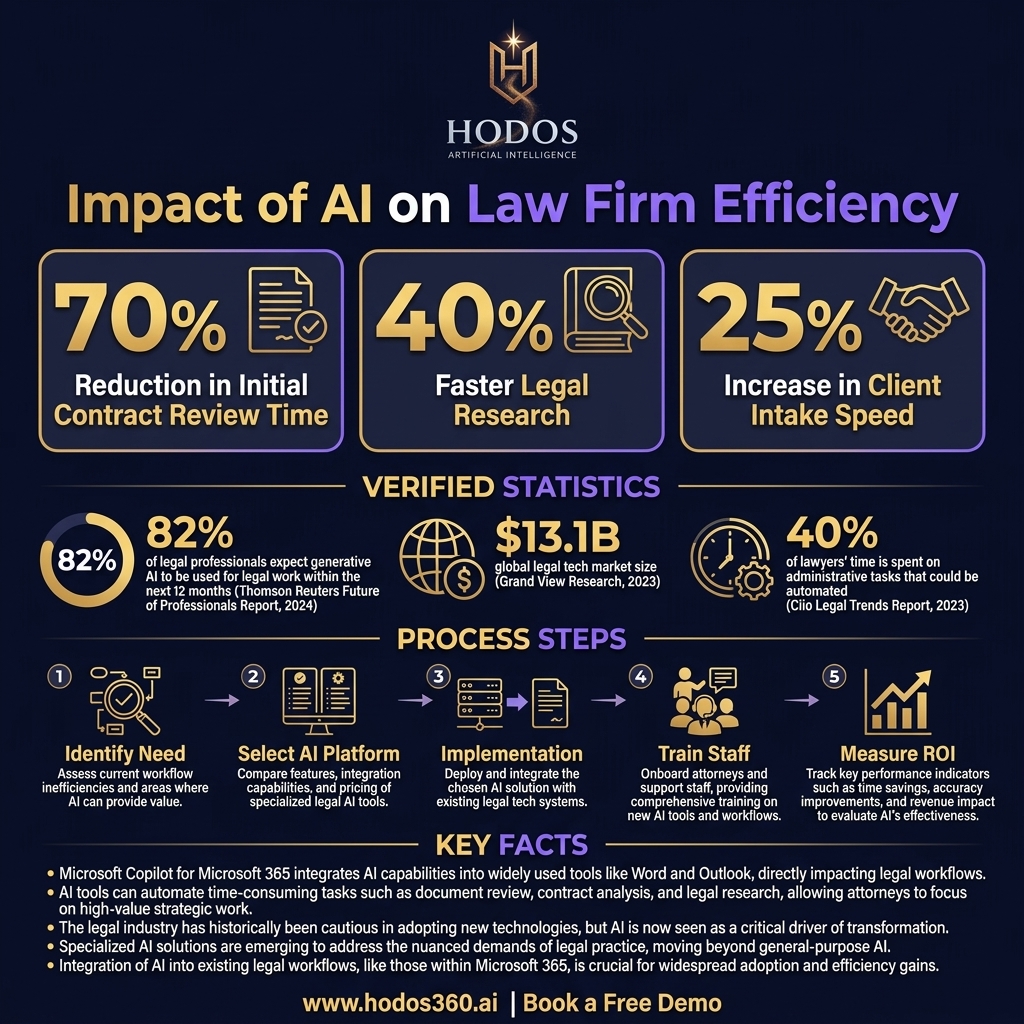
AI voice assistants can handle initial inquiries, pre-qualify leads based on custom criteria, schedule appointments directly into attorney calendars, and even provide multilingual support 24/7. This dramatically improves client experience, reduces response times, and ensures that attorneys receive only pre-vetted, relevant leads. Similarly, in case management, AI-powered workflows can automate task assignment, track deadlines, generate status reports, and even predict potential case outcomes based on historical data.
Imagine an AI system flagging a critical statute of limitations automatically or suggesting relevant precedents based on case facts. The ABA’s 2023 TechReport indicated a growing interest in AI for case prediction and legal research, with firms recognizing the potential to enhance strategic decision-making and operational efficiency.
This level of automation and predictive analytics allows law firms to optimize resource allocation, reduce administrative burdens, and ultimately focus more on substantive legal work, delivering better outcomes for clients. The integration of these capabilities into a single, cohesive management system offers an unparalleled advantage, transforming what were once cumbersome manual processes into streamlined, intelligent workflows.
The Future-Proof Law Firm: Embracing AI as a Competitive Imperative
The emergence of sophisticated legal artificial intelligence tools, exemplified by Microsoft's latest offering, signals a clear imperative for law firms: embrace AI not as an option, but as a strategic necessity for future-proofing their practice. The legal landscape is no longer static; it is a dynamic environment where technological agility dictates competitive advantage.
Firms that hesitate to integrate AI risk being outmaneuvered by more forward-thinking competitors who can offer faster, more cost-effective, and more innovative legal solutions. This isn't merely about adopting new software; it's about fostering a culture of continuous learning and adaptation within the firm. The regulatory environment is also evolving rapidly, with jurisdictions globally developing guidelines for AI use in legal contexts, such as the EU AI Act's focus on high-risk AI systems.
Staying abreast of these developments and proactively incorporating ethical AI practices will be crucial for maintaining compliance and client trust. The future-proof law firm will be one that not only leverages AI for efficiency but also understands its ethical dimensions, invests in continuous attorney training, and strategically integrates AI into its long-term growth strategy.
This proactive stance ensures resilience and sustained relevance in an increasingly AI-driven world, allowing firms to attract top talent and discerning clients.
The shift towards AI-powered legal practices is not merely about automation; it’s about elevating the human element of law. By offloading routine tasks to legal artificial intelligence, attorneys are liberated to engage in more complex problem-solving, strategic thinking, and empathetic client interaction—the very aspects that define exceptional legal service.
This transformation will redefine roles within law firms, fostering new specializations in legal prompt engineering, AI ethics, and data governance. Firms must invest in upskilling their workforce, equipping them with the knowledge and tools to effectively collaborate with AI. As Sam Altman, CEO of OpenAI, frequently articulates, AI will augment human capabilities, not replace them wholesale, especially in professions requiring nuanced judgment.
The firms that strategically integrate AI into their operations will not only achieve unparalleled efficiency but will also cultivate a more intellectually stimulating and client-centric practice. This forward-thinking approach is what distinguishes market leaders from those merely reacting to change, ensuring long-term success and a robust competitive posture in the evolving legal market.
The time to build this future is now, by making informed decisions about AI adoption and integration.
Building an AI-Powered Law Firm Ecosystem
Building an AI-powered law firm ecosystem means moving beyond fragmented tools to a cohesive, interconnected system where every component enhances the others. This involves selecting a platform that can house and integrate various AI functionalities—from sophisticated legal artificial intelligence for document analysis to AI-driven marketing and administrative support.
A truly integrated ecosystem ensures that data captured during client intake can inform case strategy, that insights from legal research can be leveraged in content generation for marketing, and that administrative tasks are automated, freeing up human capital for higher-value work. This approach not only maximizes efficiency but also creates a richer, more intelligent operational environment.
For instance, an AI-powered website builder with SEO optimization can ensure that a firm’s online presence effectively captures new leads, which are then seamlessly fed into an AI-managed client intake process. The synergy between these components creates a virtuous cycle of efficiency and growth. Firms that invest in developing such an ecosystem will not only streamline their current operations but also build a scalable and adaptable foundation for future innovations, ensuring they remain at the forefront of the legal profession.

Key Takeaways and Next Steps
The introduction of Microsoft's specialized legal artificial intelligence tool is a watershed moment, underscoring that AI is no longer a futuristic concept but a present-day imperative for law firms. Its potential to revolutionize contract analysis, streamline case management, and enhance overall operational efficiency is undeniable.
However, successful adoption hinges not just on acquiring new tools, but on a strategic, ethical, and integrated approach. Firms must prioritize understanding AI's capabilities and limitations, establishing robust ethical guidelines, and fostering a culture of continuous learning. The key takeaway is clear: the future belongs to law firms that proactively build an integrated AI ecosystem, moving beyond isolated solutions to a cohesive, intelligent operational framework.
This proactive engagement will not only drive efficiency and profitability but also elevate the quality of legal services and solidify a firm's competitive standing. The time for deliberation has passed; the era of strategic legal AI implementation is here.
To effectively navigate this transformative landscape and harness the full power of legal artificial intelligence, law firms require more than just individual point solutions.
They need a comprehensive, integrated platform that centralizes management, marketing, client communication, and development. HODOS 360 offers precisely this, providing an AI-powered ecosystem designed to empower law firms to thrive in the modern legal era. Discover how an integrated approach can redefine your firm's efficiency and growth.
We invite you to explore the possibilities and take the next step towards an AI-optimized practice.
Frequently Asked Questions
What is Microsoft's new legal artificial intelligence tool?+
Microsoft's new legal AI tool, often referred to as a 'Legal Agent,' is a specialized artificial intelligence solution designed to assist legal professionals with specific workflows. Unlike general-purpose AI like Copilot, this tool is tailored to understand legal nuances, terminology, and procedural requirements, enhancing tasks such as contract analysis, document review, and potentially legal research within the Microsoft ecosystem, particularly Word. It aims to boost accuracy and efficiency in legal operations.
How does specialized legal AI differ from general AI like Copilot?+
Specialized legal artificial intelligence, like Microsoft's new tool, is specifically trained on legal datasets and designed for legal workflows. It understands the unique context and complexities of legal documents and processes. General AI tools like Copilot, while powerful, are built for a broad range of applications and may lack the precision, compliance features, and specific legal knowledge required for high-stakes legal work, making specialized tools more reliable for attorneys.
What are the primary benefits for law firms using legal AI?+
Law firms leveraging legal artificial intelligence can expect significant benefits, including enhanced efficiency through automation of repetitive tasks like document review and contract analysis, leading to substantial time and cost savings. It also improves accuracy by reducing human error, provides deeper insights for legal research and strategy, and frees up attorneys to focus on higher-value client work. Ultimately, it can lead to improved client satisfaction and increased profitability.
What ethical considerations should law firms address when adopting AI?+
Adopting legal artificial intelligence requires careful consideration of several ethical issues. Firms must ensure competence (ABA Model Rule 1.1) by understanding AI limitations and verifying outputs to avoid 'hallucinations.' Confidentiality (ABA Model Rule 1.6) is paramount, necessitating robust data security and clear policies on client data usage. Firms must also address potential biases in AI, maintain human oversight, and be transparent with clients about AI's role in their cases, ensuring accountability remains with the attorney.
How can law firms build an integrated AI ecosystem?+
Building an integrated AI ecosystem involves more than just acquiring individual tools; it means adopting a comprehensive platform that unifies various AI-powered services across the firm's operations. This includes AI for case management, client intake, document automation, marketing, and communication. The goal is to create seamless data flow and synergistic efficiencies, ensuring that AI enhances every aspect of the practice rather than operating in silos. Platforms like HODOS 360 offer such integrated solutions.