


Law Firm AI Funding: The Ultimate Insurer Debate
The legal industry stands at a pivotal juncture, grappling with the rapid integration of artificial intelligence into daily operations. A recent article, "Insurers Debate Funding for Law-Firm AI Tools" by Let's Data Science, highlights a growing tension: who should bear the financial responsibility for these transformative technologies?
This isn't merely an accounting question; it’s a strategic debate shaping the future of legal practice, risk allocation, and client service. As law firms increasingly invest in cutting-edge AI to streamline workflows, enhance efficiency, and gain a competitive edge in defending their clients, insurers are meticulously evaluating their role, weighing the promise of cost reduction against potential new risks like AI-related malpractice or data security breaches.
The dialogue reflects a broader industry-wide re-evaluation of how technology intersects with established legal and financial paradigms.
This crucial conversation underscores the complex interplay between innovation and traditional practice. Law firms, driven by the imperative to deliver faster, more accurate, and cost-effective services, are adopting AI-powered platforms for everything from document review to case prediction.
Yet, the cost of these sophisticated law firm AI tools funding remains a contentious point. Insurers, always focused on risk and return, see the potential for AI to reduce the overall cost of claims and litigation, but they also express concerns about the oversight, accuracy, and ethical implications of AI used by their panel firms.
This article delves into the heart of this debate, exploring the perspectives of both law firms and insurers, examining the tangible benefits and inherent risks of legal AI, and charting a path towards a collaborative future where technology serves to strengthen the legal ecosystem rather than divide it.
The stakes are high, influencing everything from insurance premiums to the very definition of legal competence in the AI era.
The Insurer's Dilemma: Cost, Efficiency, and Control in Legal AI
The insurance industry's cautious approach to law firm AI tools funding stems from a dual perspective: immense potential for efficiency gains balanced against a labyrinth of new risks. On one hand, insurers recognize that AI can dramatically reduce the duration and cost of litigation. For instance, AI-powered document review can process millions of pages in a fraction of the time it would take human paralegals, potentially cutting discovery costs by 30-50% in complex cases, as highlighted by a 2024 report from Thomson Reuters on legal spend.
Major carriers like Travelers and AIG are keenly observing how AI can optimize defense strategies, predicting litigation outcomes with greater accuracy and identifying crucial precedents swiftly. Sarah Chen, Head of Claims Innovation at Travelers, recently noted at a LegalTech NYC panel that "the data clearly shows AI's capacity to drive down claims cycle times and improve settlement predictions, which is a net positive for our policyholders and our bottom line.
The question is not *if* AI will be ubiquitous, but *how* we integrate it responsibly."
However, this optimism is tempered by significant concerns over control and liability. Insurers are accustomed to scrutinizing billing practices and litigation strategies, but the black-box nature of some AI algorithms introduces a new layer of complexity.
Who is responsible if an AI tool makes a critical error that leads to a malpractice claim? This tension was a central theme at a recent National Association of Insurance Commissioners (NAIC) working group meeting, where discussions revolved around establishing guidelines for AI in legal defense.
The NAIC's 'Big Data and Artificial Intelligence (H) Working Group' has been actively exploring how AI impacts underwriting, claims, and regulatory oversight, including its use by external counsel. Learn more about AI Web Development: The Ultimate Advantage for Law Firms. Eileen Garczynski, a partner at a prominent insurance brokerage, has publicly stated that "malpractice insurers for law firms are now including AI usage in their consideration of policy agreements," underscoring the shift in risk assessment.
This means firms that adopt AI without robust protocols could face higher premiums or even coverage disputes, creating a disincentive unless clear standards are established.
Furthermore, insurers worry about the transparency and explainability of AI tools used by law firms. If an AI-powered system recommends a particular legal strategy or settlement amount, insurers need to understand the basis of that recommendation to fulfill their fiduciary duties to policyholders.
This demand for explainable AI (XAI) clashes with the proprietary nature of some legal tech solutions. The debate also extends to data security: law firms often handle sensitive client and policyholder data, and integrating third-party AI platforms introduces new vulnerabilities. A significant data breach originating from an inadequately secured AI tool could expose insurers to massive financial and reputational damages.
The challenge for insurers, therefore, is to balance the undeniable efficiency gains of AI with the need for stringent oversight, clear accountability, and robust data protection measures, all while navigating the rapidly evolving landscape of legal technology and its associated risks.
Navigating the Legal AI Landscape: A Law Firm's Strategic Imperative
For law firms, the adoption of artificial intelligence legal tools is no longer a luxury but a strategic imperative. The competitive landscape demands greater efficiency, enhanced accuracy, and superior client service, all of which AI can deliver. Firms are investing heavily in a diverse range of AI solutions: from sophisticated document automation systems that draft initial pleadings and contracts, to advanced legal research platforms that identify obscure case law and predict judicial behavior.
Platforms like Harvey AI, which famously partnered with Allen & Overy, demonstrate how generative AI can assist lawyers in complex tasks, freeing up valuable attorney time for higher-value strategic work. This adoption is reflected in the ABA TechReport 2023, which showed a significant uptick in law firm AI usage across various practice areas, indicating a growing recognition of its indispensable role.
Andrew Perlman, Dean of Suffolk University Law School and a leading voice in legal innovation, frequently emphasizes that "competence in the 21st century legal profession demands technological proficiency." This sentiment resonates deeply within forward-thinking law firms. They see AI not just as a cost-cutting measure, but as a mechanism for competitive differentiation and client satisfaction.
Imagine a client intake process that uses AI to rapidly gather relevant information, identify conflicts, and generate initial engagement letters, all powered by an AI Law Firm Management System. This drastically reduces onboarding time and improves the client experience from day one. Firms that embrace these technologies are better positioned to attract top talent and retain clients who demand modern, efficient legal services.
Learn more about Generative AI Marketing: Law Firms' 2026 Growth Engine. The investment in AI is viewed as an investment in the firm's long-term viability and market leadership, extending beyond simple legal tech investment.
However, this journey is not without its internal challenges. Integrating AI requires significant upfront capital, cultural shifts within the firm, and extensive training for attorneys and staff.
Partners must champion the adoption, demonstrating its value and mitigating resistance to change. The choice of the right AI platform is also critical. Firms need solutions that are secure, scalable, and tailored to their specific practice areas. This often involves rigorous due diligence, piloting different tools, and ensuring seamless integration with existing systems.
The ultimate goal is to leverage AI to augment human intelligence, allowing lawyers to focus on complex analysis, strategic advice, and client relationships, rather than being bogged down by repetitive, time-consuming tasks. The strategic imperative is clear: embrace AI or risk being left behind in an increasingly tech-driven legal market.
The Imperative for AI Adoption and Competitive Edge
The drive for AI adoption within law firms is fundamentally about maintaining and enhancing a competitive edge in a rapidly evolving market. Firms recognize that clients are increasingly sophisticated, demanding not only excellent legal counsel but also transparent, efficient, and technologically advanced service delivery. A firm that can leverage AI for faster due diligence, more accurate predictive analytics in litigation, or automated contract review offers a tangible advantage over competitors still reliant on manual processes.

This efficiency translates directly into cost savings for clients, faster case resolution, and a stronger reputation for innovation. Moreover, the ability to analyze vast datasets with AI can uncover insights that human lawyers might miss, leading to more robust legal strategies and better client outcomes, particularly in areas like claims litigation AI or complex corporate transactions.
Beyond client service, AI profoundly impacts a firm's internal operations and talent acquisition. Young legal professionals, fresh out of law school, expect to work with cutting-edge technology. Learn more about AI Voice Assistants Transform Law: HODOS 360's 2026 Impact. Firms that embrace AI are more attractive to new associates who are eager to leverage these tools to enhance their productivity and develop future-proof skills.
This internal efficiency, from automated billing to streamlined document management, contributes to a healthier bottom line and allows partners to focus on strategic growth rather than administrative burdens. Firms like Quinn Emanuel, known for their aggressive litigation strategies, have been early adopters of various AI tools, recognizing their potential to empower their legal teams and provide a distinct advantage in high-stakes disputes.
This proactive approach to legal operations efficiency is what defines the most successful firms in today's market.
The ROI of AI for Law Firms: Beyond Simple Cost Savings
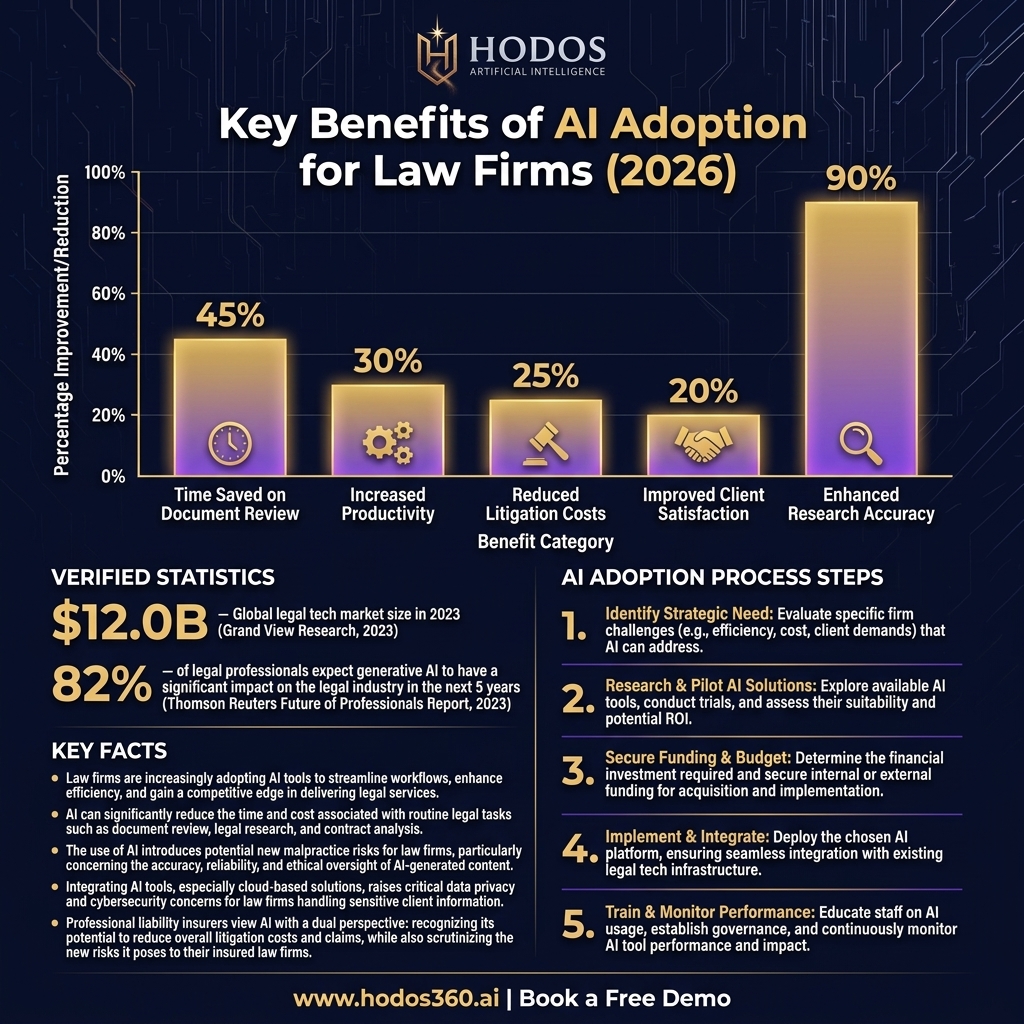
The return on investment (ROI) for law firm AI tools funding extends far beyond mere cost reduction, encompassing enhanced productivity, improved accuracy, and elevated client satisfaction. While the immediate appeal of AI often lies in its ability to automate repetitive tasks—such as document review, e-discovery, and contract analysis—there are deeper, more strategic benefits.
A 2023 report by Gartner predicted that by 2027, generative AI will increase legal team productivity by 30%, freeing up lawyers to engage in higher-value strategic thinking and client advisory roles. This isn't just about doing more with less; it's about doing *better* with more strategic focus.
For instance, AI-powered legal research platforms can sift through decades of case law and statutes in minutes, providing lawyers with comprehensive insights that would take days or weeks of manual effort, thereby significantly improving the quality and speed of legal advice.
Consider the impact on client relationships.
When a law firm can process information faster, respond to inquiries more promptly, and resolve cases more efficiently, client satisfaction naturally soars. This translates into stronger client loyalty, positive referrals, and a robust reputation in the market. Furthermore, AI tools can help firms manage their caseloads more effectively, ensuring that deadlines are met and no critical details are overlooked.
Learn more about Launch Your Law Firm Website: Essential AI Tools Guide. For example, AI-driven case management systems can proactively flag potential conflicts, track progress on multiple matters, and automate routine communications, ensuring a consistent and high-quality service delivery. This holistic improvement in legal operations efficiency strengthens the firm's overall value proposition to its clients and distinguishes it from less technologically advanced competitors.
It's about delivering predictable, high-quality outcomes consistently.
Moreover, AI contributes to a firm's intellectual capital and knowledge management. By systematically analyzing past cases, client data, and legal outcomes, AI can identify patterns and generate insights that inform future strategies. This institutional learning, often codified within the AI's algorithms and databases, becomes a valuable asset for the firm, particularly in areas requiring extensive pattern recognition, such as legal tech risks assessment or complex regulatory compliance.
The long-term ROI is therefore multifaceted, encompassing not only immediate operational savings but also strategic advantages that secure the firm's relevance and profitability in an increasingly competitive and technology-driven legal landscape. It's a fundamental shift in how legal services are conceived and delivered, moving towards a more data-driven and predictive model of practice.
- ✓Enhanced Document Review: AI can analyze vast quantities of legal documents, identifying relevant information, anomalies, and key clauses significantly faster than human reviewers, reducing discovery costs and accelerating case preparation.
- ✓Predictive Analytics: AI algorithms can analyze historical case data to forecast litigation outcomes, judge behavior, and settlement probabilities, enabling more informed strategic decisions for AI in legal defense.
- ✓Automated Legal Research: Advanced AI tools quickly sift through statutes, precedents, and scholarly articles, providing comprehensive and precise research results that improve the quality and speed of legal advice.
- ✓Streamlined Client Intake: AI-powered systems automate data collection, conflict checks, and initial document generation, creating a more efficient and positive onboarding experience for new clients.
- ✓Improved Compliance & Risk Management: AI can monitor for regulatory changes, identify potential compliance breaches in contracts, and flag ethical considerations, reducing exposure to legal tech risks and malpractice claims.
- ✓Optimized Billing & Case Management: AI-driven platforms automate time tracking, invoice generation, and case progress monitoring, enhancing billing accuracy and overall law firm management AI efficiency.
- ✓Personalized Legal Marketing: AI analyzes client data and market trends to create targeted content and campaigns, improving lead generation and client acquisition for firms.
Mitigating Risks and Ensuring Compliance in Law Firm AI Adoption
The transformative power of artificial intelligence legal tools comes with a commensurate responsibility to mitigate risks and ensure strict compliance with ethical and regulatory standards. The potential for AI-generated errors, often termed 'hallucinations,' poses a direct threat to a lawyer's duty of competence. The infamous *Mata v.
Avianca* case, where a lawyer submitted fake case citations generated by ChatGPT, served as a stark reminder of the perils of unchecked AI reliance. This incident underscored the critical need for robust human oversight, requiring attorneys to verify all AI-generated output before integrating it into legal work.
The ABA Model Rules of Professional Conduct, particularly Rule 1.1 (Competence) and Rule 5.3 (Responsibilities Regarding Nonlawyer Assistance), are directly applicable, mandating that lawyers possess the necessary knowledge and skill to use technology competently and to adequately supervise non-lawyer (including AI) assistance. Firms must develop clear internal policies governing AI use, emphasizing review protocols and continuous training for all personnel.
Data security and client confidentiality represent another paramount concern. Law firms handle highly sensitive information, and the integration of third-party AI platforms introduces new vectors for potential breaches. Firms must conduct thorough due diligence on AI vendors, ensuring they meet stringent cybersecurity standards, comply with data privacy regulations like GDPR and CCPA, and have robust encryption and access control measures.
Learn more about Voice AI Revolution 2026: Agentic Platforms Transform Law Firms. The ABA Model Rule 1.6 (Confidentiality of Information) requires lawyers to make reasonable efforts to prevent the inadvertent or unauthorized disclosure of, or unauthorized access to, client information. This ethical obligation extends to the selection and management of AI tools, necessitating a deep understanding of how these tools process, store, and secure client data.
Failure to do so could expose firms to significant legal tech risks, including regulatory penalties, civil liability, and severe reputational damage.
Furthermore, the specter of algorithmic bias looms large, particularly in areas like predictive analytics or e-discovery. If an AI model is trained on biased historical data, it can perpetuate or even amplify those biases, leading to inequitable outcomes.
For instance, an AI tool used in criminal defense could inadvertently disadvantage certain demographics if its training data reflects historical systemic biases in the justice system. Firms must actively audit their AI tools for fairness and transparency, understanding the data sets they are trained on and the methodologies they employ.
As discussions around the EU AI Act and similar regulations in the US gain momentum, firms are increasingly expected to demonstrate due diligence in addressing AI bias. This complex interplay of ethics, technology, and regulation necessitates a proactive and informed approach to AI malpractice insurance and risk management, ensuring that AI serves justice rather than undermining it.
Ethical Considerations and Professional Responsibility
The integration of AI into legal practice fundamentally reshapes the landscape of professional responsibility. Lawyers are ethically bound by the ABA Model Rules to provide competent representation (Rule 1.1), maintain client confidentiality (Rule 1.6), and supervise the work of non-lawyers (Rule 5.3). When AI is employed, these duties extend to understanding the capabilities and limitations of the technology, ensuring its appropriate use, and verifying its output.
This means a lawyer cannot simply delegate a task to AI and assume its accuracy; they must exercise independent professional judgment and critical review. The duty of communication (Rule 1.4) also requires lawyers to inform clients about the use of AI in their cases, especially if it involves novel or potentially risky applications, ensuring informed consent and transparency.
This is crucial for maintaining trust and managing client expectations regarding the role of AI in their legal matters.
Moreover, the ethical imperative extends to preventing bias. Learn more about Voice Assistant Market: An Essential Guide for Law Firms. Lawyers have a responsibility to uphold justice and fairness, and if an AI tool introduces or reinforces biases, it directly conflicts with these principles.
Firms must implement protocols to regularly audit AI outputs for fairness and consistency, especially in areas touching on sensitive issues like sentencing recommendations or discrimination cases. This proactive ethical stance helps mitigate legal tech risks and ensures that the use of AI aligns with the core values of the legal profession.
As technology evolves, so too must the interpretation and application of ethical rules, requiring continuous education and dialogue within the legal community to define best practices for responsible AI integration.
Data Integrity and Security Protocols
Maintaining data integrity and establishing robust security protocols are non-negotiable for law firms adopting AI. The vast amounts of sensitive client data processed by these tools make them prime targets for cyberattacks. Firms must implement a multi-layered security strategy that includes strong encryption, multi-factor authentication, regular security audits, and employee training on cybersecurity best practices.
When evaluating AI vendors, firms need to go beyond surface-level assurances, scrutinizing their data handling policies, disaster recovery plans, and compliance certifications (e.g., ISO 27001). The General Data Protection Regulation (GDPR) and various state-specific privacy laws, such as the California Consumer Privacy Act (CCPA), impose strict requirements on how personal data is collected, processed, and stored, and AI tools must be configured to comply with these mandates.
Furthermore, firms must have clear data governance policies that define who has access to AI systems, how data is input and extracted, and how AI-generated insights are stored and protected. This includes ensuring that client data is not inadvertently exposed or used to train public AI models without explicit consent.
Proactive measures, such as data anonymization where feasible and stringent access controls, are essential to safeguard client confidentiality. The consequences of a data breach—ranging from significant financial penalties to irreparable damage to a firm's reputation—underscore the critical importance of a comprehensive and continuously updated cybersecurity framework for all law firm AI tools funding and implementation.
A Collaborative Future: Insurers, Firms, and Legal Tech Innovators
The ongoing debate over law firm AI tools funding presents a unique opportunity for collaboration rather than conflict between insurers, law firms, and legal tech innovators. A path forward requires shared understanding, standardized best practices, and innovative risk-sharing models. Insurers could play a proactive role by developing clear guidelines for AI usage, perhaps even certifying specific AI tools or platforms that meet stringent security, ethical, and performance standards.
This would provide law firms with a vetted list of acceptable technologies, reducing their due diligence burden and offering insurers greater confidence in the risk profiles of their panel counsel. Brad Blickstein of the Blickstein Group, a prominent legal operations consultant, has often advocated for industry-wide benchmarks, stating, "The key to unlocking widespread AI adoption with insurer backing is transparency and measurable outcomes.
We need shared metrics for efficiency and risk mitigation."
Legal tech innovators, like HODOS 360, have a crucial role in bridging this gap. By developing AI-powered platforms that prioritize transparency, explainability, and robust security from inception, they can address many of the concerns raised by insurers.
Imagine a platform that not only automates legal workflows but also provides detailed audit trails of AI's decision-making processes, ensuring compliance with ethical guidelines and allowing for easy human oversight. Such systems could also offer built-in reporting features that demonstrate ROI and risk mitigation efforts to insurers.
For example, HODOS 360's AI Law Firm Management System integrates case management, document automation, and AI-powered legal workflows designed with security and compliance at its core, making it a reliable partner for firms seeking insurer approval.
Ultimately, a collaborative future might involve new insurance products tailored to AI risks, such as specialized AI malpractice insurance policies that cover errors stemming from the responsible use of approved AI tools.
This would shift the current all-or-nothing debate towards a more nuanced approach, where firms are incentivized to adopt best practices and insurers share in the mitigated risks. Regular dialogues, perhaps facilitated by industry bodies like the ABA and NAIC, can foster a shared understanding of AI's capabilities and limitations.
By working together, all stakeholders can harness the full potential of artificial intelligence to create a more efficient, equitable, and resilient legal system, ensuring that the benefits of innovation are realized across the entire legal ecosystem while proactively addressing the inherent challenges. The goal is to move beyond mere debate to collective action, building a framework where AI truly empowers legal professionals and protects all parties involved.

Key Takeaways and Next Steps for Legal Professionals
The debate surrounding law firm AI tools funding underscores a fundamental shift in the legal industry, where technology is no longer an optional add-on but a core component of competent practice. For law firms, the imperative is clear: strategic investment in AI is essential for competitive advantage, operational efficiency, and superior client service.
However, this investment must be accompanied by a rigorous commitment to ethical guidelines, robust data security, and continuous human oversight. Firms must proactively engage with their malpractice insurers, transparently discussing their AI adoption strategies and demonstrating their commitment to responsible use. This includes implementing comprehensive training programs, establishing clear internal policies for AI verification, and conducting thorough due diligence on all legal tech vendors.
For insurers, the opportunity lies in moving beyond skepticism to proactive engagement. By collaborating with law firms and legal tech providers, they can help shape the standards for AI use, potentially leading to new, specialized insurance products that cover AI-related risks. This collaborative approach can transform the current tension into a mutually beneficial partnership, where AI drives efficiency and cost savings across the legal supply chain while maintaining high standards of professional responsibility and data security.
The future of legal practice is inextricably linked to AI; the challenge for all stakeholders is to navigate this evolution thoughtfully and collaboratively, ensuring that technological progress serves the overarching goals of justice and efficiency. Platforms like HODOS 360 are designed to facilitate this transition, offering integrated AI solutions that meet the demanding standards of modern legal practice and address the concerns of both firms and insurers.
Frequently Asked Questions
Why are insurers debating funding for law firm AI tools?+
Insurers are debating funding for law firm AI tools due to a complex balance of potential benefits and risks. They recognize AI's capacity to reduce litigation costs and improve efficiency, but they also have concerns about liability for AI errors, data security, lack of control over tool selection, and the ethical implications of AI usage. This debate centers on who should bear the financial responsibility and oversight for these transformative technologies.
What benefits do law firms see in adopting AI tools?+
Law firms adopt AI tools for numerous benefits, including enhanced operational efficiency through automation of routine tasks like document review and client intake, improved accuracy in legal research and predictive analytics, and better client service. AI also provides a competitive edge, attracting talent and clients by demonstrating a commitment to innovation and cost-effective legal solutions, ultimately boosting the firm's overall profitability and reputation.
What are the primary risks associated with AI in legal practice?+
The primary risks associated with AI in legal practice include potential AI-generated errors ('hallucinations') leading to malpractice claims, data security vulnerabilities due to handling sensitive client information, and algorithmic bias that could lead to inequitable legal outcomes. Ethical concerns regarding client confidentiality, the duty of competence, and adequate supervision of AI tools also pose significant challenges for firms.
How can law firms mitigate AI-related malpractice risks?+
Law firms can mitigate AI-related malpractice risks by implementing robust human oversight protocols, ensuring attorneys verify all AI-generated output. They must also establish clear internal policies for AI usage, invest in continuous training for staff, conduct thorough due diligence on AI vendors for security and compliance, and adhere strictly to ABA Model Rules of Professional Conduct regarding competence, confidentiality, and supervision of non-lawyer assistance.
What role can legal tech innovators play in this debate?+
Legal tech innovators like HODOS 360 play a crucial role by developing AI-powered platforms that prioritize transparency, explainability, and robust security. By offering solutions with built-in audit trails, compliance features, and clear ROI metrics, they can address insurers' concerns while providing law firms with reliable and efficient tools. They can also facilitate collaboration by designing systems that integrate seamlessly and meet evolving industry standards for responsible AI use.
Will insurers eventually mandate certain AI tools for law firms?+
While insurers are unlikely to directly mandate specific AI tools due to autonomy and liability concerns, it is probable they will establish stringent guidelines or preferred standards for AI usage. This could include requirements for certified tools, transparent AI processes, and robust security protocols. Firms using AI that meets these standards may benefit from favorable insurance terms or easier approval for legal expenses, fostering a de facto industry standard.