
Legal Tech Competition: Essential Insights for Law Firms
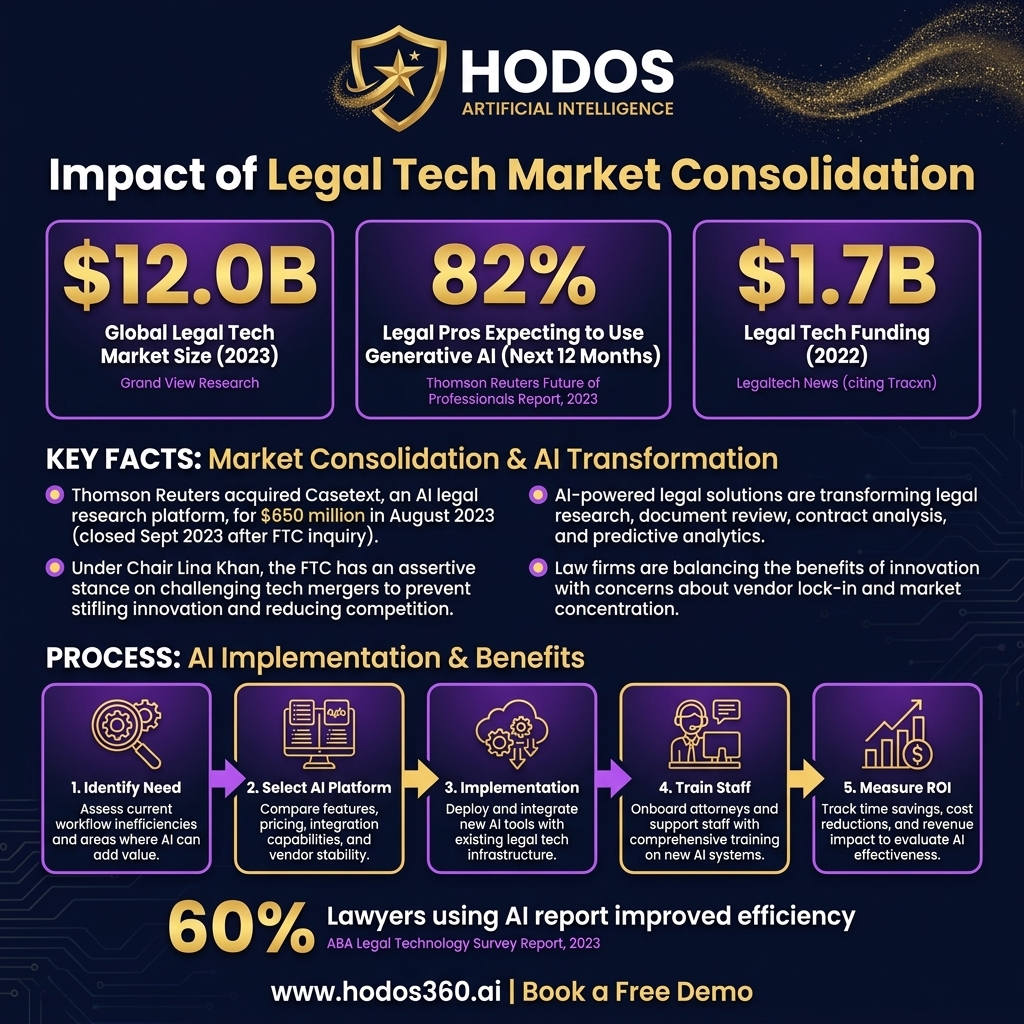
The legal tech world was set ablaze in August 2023 when industry behemoth Thomson Reuters announced its intent to acquire Casetext, a pioneering AI legal research platform, for a staggering $650 million. This was not merely another high-profile merger; it was a seismic event that immediately drew the attention of regulators, particularly the Federal Trade Commission (FTC). Fast forward to October 2026, and the acquisition remains under intense antitrust scrutiny, casting a long shadow over the future of legal tech competition and innovation. This ongoing saga is more than a corporate battle; it's a bellwether for how AI's transformative power will be balanced against market dominance in the legal sector, directly impacting how law firms access and utilize cutting-edge tools.
The FTC, under the assertive leadership of Chair Lina Khan, has signaled a clear intent to challenge mergers that could stifle innovation or reduce competition, especially in burgeoning tech markets. The Casetext deal, with its focus on AI-powered legal solutions, falls squarely within this intensified regulatory lens. For law firm owners and managing partners, this scenario presents both challenges and opportunities. On one hand, the prospect of fewer independent vendors could limit choice and potentially drive up costs. On the other, it compels firms to critically assess their technology strategies, prioritize robust, integrated solutions, and ensure they are not overly reliant on any single provider. The outcome of this antitrust suit will undoubtedly shape the vendor landscape for AI Law Firm Management systems and beyond.
Understanding the nuances of this regulatory environment is paramount for any firm looking to leverage AI effectively. This post delves into the implications of the Thomson Reuters-Casetext acquisition, explores the broader trends in legal tech competition, and offers strategic insights for law firms navigating this evolving digital frontier. From assessing vendor viability to ensuring ethical AI deployment, we'll unpack how firms can maintain their competitive edge and continue to innovate. Learn how your firm can thrive amidst these changes and secure its technological future.
The Shifting Sands of Legal Tech: A New Era of Scrutiny
The proposed acquisition of Casetext by Thomson Reuters sent ripples throughout the legal tech community, not just for its significant valuation but for the precedent it sets for legal tech competition. Casetext, co-founded by Pablo Arredondo, had carved a niche with its innovative AI-powered legal research and brief drafting tools, particularly CoCounsel, which quickly gained traction for its generative AI capabilities. Thomson Reuters, a long-standing titan with products like Westlaw, commands a substantial share of the legal information and software market. Learn more about AI Marketing: The Ultimate Shift for Law Firms. The FTC's concern, as articulated in various statements by its leadership, centers on whether this merger would eliminate a significant competitor, potentially leading to higher prices, reduced innovation, and fewer choices for legal professionals seeking advanced AI solutions. This scrutiny reflects a broader trend of regulatory bodies globally, like the European Commission, examining how large technology companies acquire smaller, innovative startups, particularly in the AI space.
This isn't an isolated incident; the FTC and the Department of Justice (DOJ) have intensified their oversight of mergers across all sectors, but especially in technology. Under Chair Khan, the FTC has adopted a more aggressive stance, often questioning deals that might have previously sailed through. The core argument often hinges on the 'potential competition' theory – that the acquired company, even if small today, could become a major disruptor tomorrow if left independent. For the legal market, where a few dominant players have historically controlled vast swaths of information, the Casetext acquisition represented a direct challenge to this status quo, making it a prime target for regulatory intervention. The legal industry, traditionally slow to adopt new technologies, is now at the forefront of these complex legal AI antitrust debates.
The implications extend beyond just research tools. Casetext's CoCounsel, with its ability to automate legal workflows and generate first drafts, directly competes with or offers alternatives to functionalities found in traditional AI Law Firm Management systems. If the acquisition proceeds, Thomson Reuters would consolidate significant market power in both foundational legal research and advanced AI-driven legal workflows. This could make it harder for smaller, nascent legal AI startups to gain market share, or for existing competitors like LexisNexis to innovate at the same pace, potentially stifling the dynamic innovation that has characterized the legal tech boom over the past decade. The tension between robust innovation and unchecked market concentration is at the heart of this unfolding drama, forcing law firms to critically evaluate their long-term tech strategy.
Antitrust Enforcement in the Digital Age
Antitrust law, primarily enforced through statutes like the Sherman Antitrust Act (15 U.S. Code § 1 et seq.) and the Clayton Act, aims to prevent monopolies and anti-competitive practices that harm consumers. In the digital age, defining a 'relevant market' for software-as-a-service (SaaS) products like legal AI tools becomes incredibly complex. Regulators must determine whether Casetext and Westlaw truly operate in the same competitive market, or if their offerings are distinct enough to avoid direct overlap. The FTC's challenge suggests they view these platforms as direct or strong potential competitors, especially given the rapid convergence of AI capabilities across different legal tech segments. This interpretation is crucial, as it dictates whether the merger is deemed substantially likely to lessen legal tech competition.
The outcome will depend on the FTC's ability to demonstrate that the merger would reduce incentives for innovation, lead to higher prices, or diminish service quality for law firms. This often involves analyzing market shares, barriers to entry for new competitors, and the unique features offered by each company. For example, if Casetext offered a distinctly more affordable or innovative AI solution than what Thomson Reuters was developing internally, its acquisition could be seen as an elimination of future competition. Learn more about AI Marketing: The Ultimate Guide for Law Firms. The legal community is watching closely, as this case will likely set a precedent for how future AI and tech mergers are evaluated, particularly regarding their impact on niche, professional services markets like law.
The Impact on Law Firms: Choice, Cost, and Innovation
For law firms, the consolidation of legal technology market players carries significant implications across several dimensions. The most immediate concern is often the reduction of choice. A vibrant ecosystem of independent vendors fosters diverse solutions, tailored functionalities, and competitive pricing. If a major innovator like Casetext is absorbed by an incumbent, it could mean fewer specialized tools, less room for niche solutions, and a general homogenization of offerings. Learn more about AI Agents Search: The Essential API for Real-Time Legal Web Data. This could be particularly challenging for boutique firms or those with unique practice areas that rely on specialized software that might not be prioritized by larger, consolidated entities. The ability to select the best-fit technology for specific needs is crucial for modern legal practice efficiency.

Another critical factor is cost. Reduced legal tech competition often translates to less pressure on vendors to keep prices low. If law firms face fewer alternatives, they may have less leverage in negotiating contracts, potentially leading to increased subscription fees for essential AI legal research and AI Law Firm Management tools. According to the 2023 ABA Tech Report, law firms are consistently increasing their spending on technology, highlighting the growing reliance on these tools. Any upward pressure on pricing due to market concentration could significantly impact a firm's operational budget and ultimately, its profitability. Firms must proactively assess their current tech expenditures and anticipate potential shifts in pricing models.
Perhaps the most profound impact lies in innovation. While large companies have the resources to invest heavily in R&D, acquisitions can sometimes stifle the entrepreneurial spirit and rapid iteration that characterize startups. The 'innovator's dilemma' suggests that established companies may struggle to integrate truly disruptive technologies from acquired firms without diluting their original vision. Conversely, some argue that acquisitions provide startups with the capital and distribution channels to scale their innovations more rapidly. The challenge for law firms is to discern whether consolidation will truly accelerate the development of superior AI tools or merely absorb potential disruptors, slowing the overall pace of legal innovation in the long run. This dynamic tension is a key consideration for strategic technology planning.
Navigating the AI Law Firm Management Landscape
In an environment marked by heightened regulatory scrutiny and market consolidation, law firms must adopt a strategic and proactive approach to their AI Law Firm Management solutions. This means moving beyond reactive software purchases to a comprehensive evaluation of vendors, understanding their long-term viability, and assessing their commitment to open ecosystems. Firms should prioritize platforms that offer not just individual features, but a holistic suite of tools that can integrate seamlessly into existing workflows, from client intake and case management to billing and document automation. The goal is to build a resilient technology stack that can adapt to future market shifts and regulatory changes, ensuring continuous operational efficiency and client satisfaction.
Due diligence extends to understanding a vendor's data security protocols, ethical AI guidelines, and compliance with legal professional obligations, such as ABA Model Rule 1.6 (Confidentiality of Information). With AI tools handling sensitive client data, robust security measures are non-negotiable. Furthermore, firms should look for AI-powered legal workflows that are customizable and explainable, allowing attorneys to understand the AI's reasoning and maintain professional oversight. The focus should be on augmentation, where AI enhances human expertise rather than replacing it entirely, thereby improving productivity while mitigating risks. This careful selection process is vital for ensuring the responsible and effective integration of AI into legal practice, especially amidst evolving legal tech competition.
Platforms offering comprehensive, integrated services are becoming increasingly attractive. Instead of piecing together disparate solutions from multiple vendors, a unified platform streamlines operations, reduces integration headaches, and provides a single source of truth for all firm data. This approach not only enhances efficiency but also offers greater control and visibility over the entire legal workflow. For example, an integrated system that combines case management with AI-powered document automation and client intake can transform a firm's operational backbone, allowing attorneys to focus more on high-value legal work. This kind of strategic investment helps firms future-proof their operations against market volatility and maintain a competitive edge. Explore comprehensive AI solutions for your firm.
- ✓Evaluate vendor long-term viability and independence, considering potential future acquisitions or market shifts.
- ✓Prioritize platforms with open APIs and strong integration capabilities to ensure flexibility and avoid vendor lock-in.
- ✓Demand transparent pricing models and clear service level agreements (SLAs) to manage costs and expectations.
- ✓Invest in comprehensive training for staff to maximize AI tool utilization and ensure successful adoption.
- ✓Consider multi-vendor strategies for critical functions to mitigate single-vendor risk and maintain choice.
- ✓Focus on solutions that enhance rather than replace human expertise, fostering collaboration between AI and attorneys.
- ✓Ensure any adopted technology adheres strictly to data security standards and ethical guidelines for legal practice.
The Promise of Integrated AI Platforms
The fragmented nature of early legal tech often meant firms had to juggle multiple disparate systems, leading to inefficiencies and data silos. The rise of integrated AI platforms, like HODOS 360, directly addresses this challenge by consolidating essential services into a single, cohesive ecosystem. Such platforms offer a powerful counter-narrative to the risks of market consolidation, providing law firms with a holistic solution that covers everything from case management and billing to AI-powered legal workflows and client intake. This approach not only simplifies IT management but also unlocks synergistic benefits, where data and insights flow seamlessly across different functions, driving unparalleled efficiency and strategic decision-making.
By unifying core operations, integrated platforms enable firms to achieve a level of automation and insight that standalone tools cannot match. Imagine AI generating first drafts of documents based on case data, automatically updating client records, and scheduling follow-ups – all within one system. This level of integration reduces manual errors, frees up valuable attorney time, and provides a comprehensive view of firm performance. In a competitive landscape shaped by ongoing legal tech competition and regulatory shifts, choosing an integrated platform is not just about convenience; it's about building a robust, future-proof infrastructure that empowers a firm to innovate and grow without being constrained by vendor dependencies or compatibility issues.
Beyond Management: AI's Broader Impact on Legal Practice
While AI Law Firm Management systems form the operational backbone, AI's transformative influence extends far beyond internal workflows, reshaping how law firms engage with clients, market their services, and build their digital presence. In an increasingly competitive legal market, a firm's ability to attract and retain clients is as crucial as its operational efficiency. This is where AI-powered marketing and client engagement tools become indispensable. Firms are now leveraging AI for everything from generating compelling content for social media and blogs to creating personalized video messages for prospective clients. These tools provide granular analytics, allowing firms to track ROI on marketing spend and refine strategies in real-time, ensuring a consistent pipeline of qualified leads.
Furthermore, the advent of AI Voice Assistants is revolutionizing client communication. Imagine a 24/7 virtual assistant capable of answering phone calls, qualifying leads, booking appointments, and even providing multilingual support. This not only enhances client experience by offering immediate assistance but also frees up administrative staff to focus on more complex tasks. Firms that adopt these technologies are seeing significant improvements in lead conversion rates and client satisfaction, giving them a distinct advantage in a crowded market. The ability to route calls intelligently and provide consistent, high-quality interactions around the clock is a game-changer for client acquisition and retention, redefining the standards of client service in the legal industry.
Finally, a strong digital presence is no longer optional but essential. AI-powered website building and responsive design tools allow law firms to create high-converting, SEO-optimized websites and mobile applications without extensive technical expertise. These platforms leverage AI to analyze user behavior, personalize content, and ensure optimal performance across all devices. In a world where most clients begin their legal search online, having a professional, accessible, and high-ranking digital storefront is paramount. By embracing these broader applications of AI, from marketing and client interaction to digital presence, law firms can cultivate a holistic strategy that ensures both internal efficiency and external market dominance, navigating the complex currents of legal tech competition with agility.
Preparing for the Next Wave of Legal Tech Innovation
The legal tech landscape is far from static. Beyond the current generation of AI tools, firms must prepare for the next wave of innovation, including more sophisticated generative AI models, advanced predictive analytics, and ethically-aligned AI frameworks. The ongoing discussions around legislation like the EU AI Act highlight the increasing importance of responsible AI development and deployment. Firms should invest in continuous learning and experimentation, fostering a culture of adaptability. This might involve exploring emerging technologies in a sandbox environment or collaborating with legal tech incubators to stay at the forefront of what's possible, ensuring their strategies remain resilient amidst rapid technological change and intensifying legal tech competition.
Future-proofing a law firm's operations means building flexibility into its technology infrastructure. This includes not just the choice of software but also the underlying data architecture, ensuring it can accommodate new data types and integration points. As AI becomes more embedded in legal processes, the ability to customize solutions to a firm's specific needs will be a key differentiator. Firms that embrace a modular, scalable approach to technology will be better positioned to integrate future innovations without costly overhauls, allowing them to capitalize on advancements while mitigating the risks associated with rapid technological shifts and maintaining their competitive edge in a dynamic market.

Key Takeaways and Next Steps
The Thomson Reuters-Casetext antitrust challenge is more than a legal battle; it’s a defining moment for legal tech competition and innovation. It underscores the critical need for law firms to be strategic, informed, and proactive in their adoption of AI. As the market consolidates and regulatory scrutiny intensifies, firms must prioritize integrated, flexible, and ethically sound AI solutions that enhance efficiency, improve client experience, and provide a competitive advantage. Diversification of vendors, rigorous due diligence, and a commitment to continuous learning are no longer optional but essential for navigating this complex landscape. The future belongs to firms that can intelligently leverage technology while remaining agile and adaptable.
For law firm owners and attorneys, this means taking a holistic view of technology – from robust AI Law Firm Management systems that streamline operations to innovative AI marketing and client engagement tools that drive growth. It's about building an ecosystem that supports every facet of legal practice, ensuring that your firm is not just surviving but thriving in the digital age. By making informed choices today, you can future-proof your firm against market shifts and position it for sustained success. Request a demo to see HODOS 360 in action and discover how our integrated platform can empower your firm.
Frequently Asked Questions
What is the Thomson Reuters-Casetext antitrust suit about?+
The suit concerns Thomson Reuters' $650 million acquisition of Casetext, an AI legal research platform. Regulators, particularly the FTC, are scrutinizing the deal over concerns it could reduce competition, stifle innovation, and lead to higher prices in the legal technology market for AI-powered legal research and workflow tools, impacting choices for law firms.
How does legal tech consolidation affect small to medium-sized law firms?+
Consolidation can limit software choices, potentially leading to fewer specialized tools and increased pricing due to reduced legal tech competition. Smaller firms might find it harder to access innovative, affordable solutions or to negotiate favorable terms, making strategic vendor selection and integrated platforms crucial for their sustained growth and efficiency.
What should law firms prioritize when choosing AI legal management software?+
Firms should prioritize platforms offering comprehensive features like case management, document automation, and AI-powered workflows. Key considerations include vendor viability, open APIs for integration, transparent pricing, robust data security, ethical AI compliance, and solutions that augment human expertise to ensure long-term value and adaptability.
Can AI truly improve law firm profitability and efficiency?+
Absolutely. AI can significantly enhance profitability and efficiency by automating repetitive tasks, streamlining workflows, improving legal research accuracy, and optimizing client intake and marketing efforts. By freeing up attorney time for high-value work and providing data-driven insights, AI Law Firm Management tools can lead to reduced operational costs and increased revenue generation.
What are the ethical considerations when adopting AI in legal practice?+
Ethical considerations include client confidentiality (ABA Model Rule 1.6), data security, avoiding bias in AI outputs, ensuring attorney oversight of AI-generated work, and transparently informing clients about AI usage. Firms must implement robust policies and training to ensure AI tools are used responsibly and in compliance with professional rules of conduct.