
AI Legal Platform: Essential Acquisitions Reshape Legal Tech
The legal technology landscape is in the midst of a seismic shift, characterized by rapid innovation and strategic consolidation. On October 27, 2026, the industry watched as Clio, a leading legal practice management provider, announced its acquisition of Page, an AI-powered regulatory intelligence platform. This move, following Clio's landmark $1 billion acquisition of global legal intelligence platform vLex in late 2023, signals a clear trend: the race to build comprehensive, integrated AI legal platforms is accelerating, and law firms stand at the precipice of unprecedented transformation.
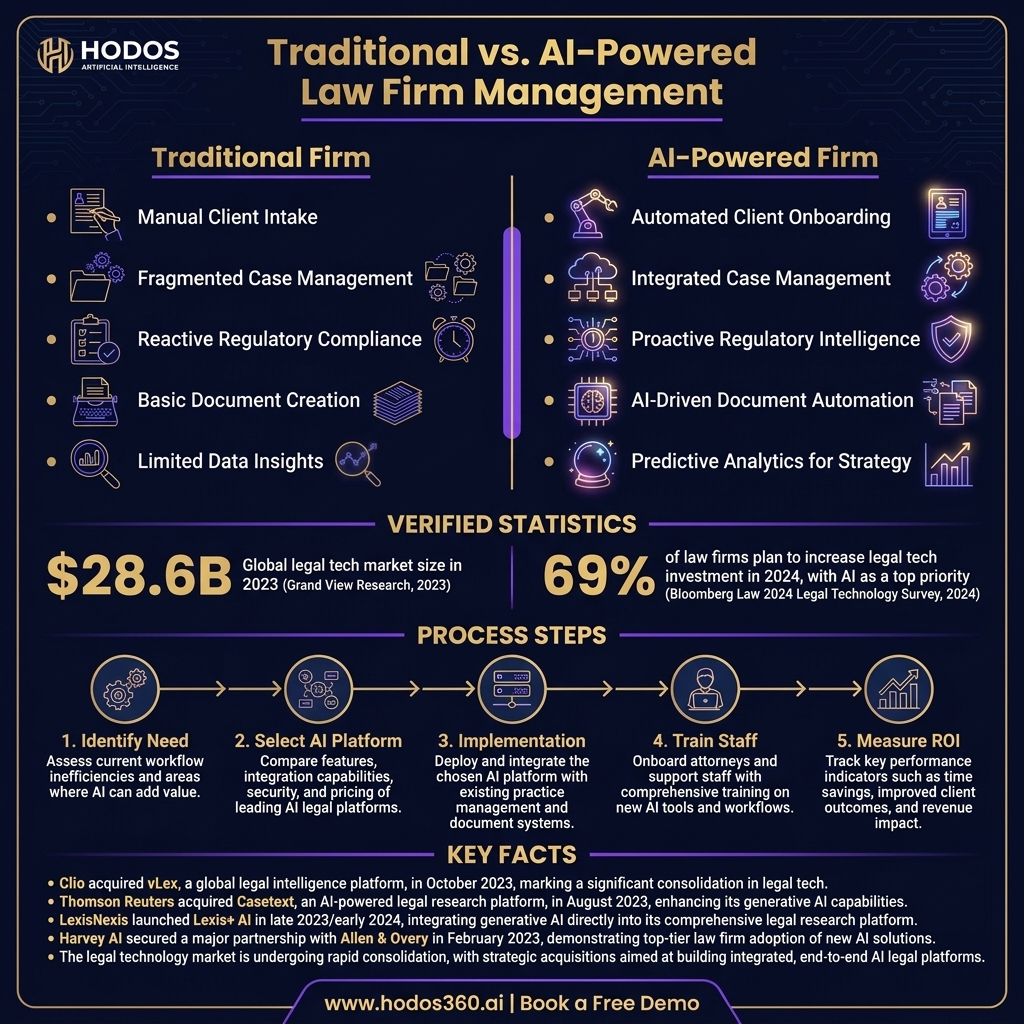
Clio CEO Jack Newton, a prominent voice in legal tech, has consistently articulated a vision for a future where technology empowers legal professionals to deliver better client outcomes and run more efficient practices. His strategy, evident in these significant acquisitions, is to weave advanced AI capabilities directly into the fabric of daily law firm operations, extending far beyond traditional legal research. This isn't just about adding new features; it's about fundamentally reshaping the *AI legal platform* itself, moving towards a unified ecosystem where every aspect of legal practice, from client intake to compliance, is intelligently supported. The market is witnessing a fierce competition for data, talent, and market share, with established giants like Thomson Reuters (with Westlaw Edge and recent acquisition of Casetext) and LexisNexis (with Lexis+ AI) battling agile newcomers like Harvey AI, which recently secured a major partnership with Allen & Overy. The stakes are immense, promising both immense opportunity and potential disruption for law firms worldwide.
This trend of strategic acquisitions underscores a critical message for law firm owners and attorneys: the era of fragmented point solutions is waning. The future belongs to integrated AI legal platforms that offer seamless, end-to-end solutions for legal practice management. Firms that embrace this shift are not just adopting new tools; they are strategically positioning themselves for sustainable growth, enhanced client service, and a competitive edge in an increasingly complex legal market. The question is no longer *if* AI will transform legal practice, but *how quickly* firms can adapt and integrate these powerful new capabilities into their daily operations to truly harness their potential.
The Strategic Imperative: Why Legal AI Platforms are Consolidating
The wave of acquisitions sweeping through the legal tech sector is driven by a confluence of powerful forces, primarily the strategic imperative to build comprehensive AI legal platforms. Firms like Clio are not merely buying companies; they are acquiring critical data sets, cutting-edge AI talent, and expanding their market footprint to offer a truly holistic solution. This consolidation reflects a maturing market where standalone tools are giving way to integrated ecosystems capable of handling diverse aspects of law firm operations, from intricate regulatory intelligence to streamlined billing and client management. A 2024 report by McKinsey & Company highlighted that professional services firms leveraging advanced AI could see efficiency gains of 20-30% across various tasks, underscoring the immense value proposition driving these investment decisions.
This strategic arms race is also a battle for data supremacy. Each acquisition brings a wealth of structured and unstructured legal data, which is indispensable for training and refining sophisticated AI models. Learn more about No-Code Review: The Ultimate Website Builder Guide for Law Firms. For instance, the integration of regulatory intelligence platforms like Page into broader AI legal platform offerings allows for unparalleled predictive analytics and compliance capabilities, a critical need for firms operating in increasingly complex regulatory environments. As legal tech analyst Mark A. Cohen of LegalMosaic often remarks, "The future of legal services isn't just about automation; it's about intelligent automation fueled by vast, proprietary data lakes." This data advantage creates significant barriers to entry for new competitors and solidifies the market positions of early movers, pushing the industry towards a few dominant, feature-rich platforms.
Data Moats and Specialized Intelligence
Acquisitions like Page, focusing on regulatory intelligence, are particularly valuable because they create deep "data moats" for the acquiring company. Page's specialized algorithms and curated databases offer real-time insights into evolving legal and compliance frameworks, a capability that is incredibly difficult and expensive to build from scratch. For law firms, this means access to unparalleled foresight, enabling proactive advice to clients on everything from privacy regulations like GDPR and CCPA to industry-specific compliance standards. Learn more about AI Web Design: Essential Agentic Workflows for Law Firms. This level of specialized intelligence, integrated within a broader AI legal platform, empowers firms to offer higher-value services, mitigate client risks more effectively, and differentiate themselves in a crowded market. The synergy between practice management and regulatory foresight is becoming a non-negotiable for modern legal practice.
Beyond Research: AI's Transformative Impact on Law Firm Management
While legal research has long been a prime target for AI innovation, the true transformative power of these integrated AI legal platforms lies in their ability to revolutionize comprehensive law firm management. Modern AI legal platform solutions are moving beyond mere information retrieval to actively enhance every operational facet of a legal practice. This includes intelligent case management systems that predict litigation outcomes, automated billing solutions that reduce administrative overhead, and AI-powered client intake processes that streamline onboarding and improve the client experience. For example, a recent case study by the American Bar Association (ABA) highlighted how LexCorp LLP, a mid-sized firm in Chicago, reduced its client intake time by 40% and improved client satisfaction scores by 25% within six months of implementing an AI-driven intake workflow. These platforms are designed to integrate seamlessly, offering a unified dashboard for attorneys and staff.
The shift is towards AI-powered legal workflows that automate mundane, repetitive tasks, freeing up attorneys to focus on strategic thinking and client interaction. Learn more about AI Voice Assistant: Essential Legal Practice Game-Changer. Imagine an AI that not only drafts initial legal documents but also flags potential compliance issues based on real-time regulatory changes, or one that intelligently manages court deadlines and client communications. This level of integration fundamentally changes how legal professionals work, enhancing efficiency and accuracy across the board. HODOS 360's AI Law Firm Management System embodies this vision, providing an integrated suite of tools for case management, billing, client intake, document automation, and AI-powered legal workflows, demonstrating the full potential of a comprehensive AI legal platform.

Automating Routine Tasks for Strategic Advantage
The strategic advantage derived from automating routine tasks cannot be overstated. From generating first-pass drafts of contracts and legal briefs to summarizing lengthy depositions and managing intricate calendaring, AI is taking over the heavy lifting. This allows attorneys to dedicate more time to complex legal analysis, client counseling, and business development—activities that directly contribute to revenue and client satisfaction. Learn more about AI Legal Teams: Essential Strategies for Document Complexity. The ABA's 2023 TechReport indicated that firms leveraging AI for tasks like document automation reported a significant increase in attorney productivity, with some seeing up to a 30% reduction in time spent on administrative tasks. This efficiency gain is not just about saving time; it's about reallocating human capital to higher-value work, fundamentally redefining the economics of legal service delivery and ensuring firms remain competitive in a rapidly evolving market.
Navigating the Ethical Frontier: Compliance and Responsible AI in Legal Practice
As AI legal platforms become more sophisticated and integrated, law firms must rigorously navigate the complex ethical landscape that accompanies these powerful tools. Critical considerations include data privacy, client confidentiality, potential algorithmic bias, and the overarching duty of attorney competence. ABA Model Rule 1.1 on Competence now implicitly requires attorneys to understand the benefits and risks associated with relevant technology, while Rule 1.6 on Confidentiality mandates safeguarding client information, particularly when engaging with third-party AI vendors. The European Union's AI Act, slated for full enforcement in 2027, provides a glimpse into future regulatory frameworks, classifying AI systems by risk level and imposing strict transparency and accountability requirements. Legal ethicists like Professor Kate Crawford from USC Gould School of Law emphasize that "while AI offers immense promise, its deployment in legal contexts demands unwavering vigilance to ensure fairness, accuracy, and adherence to foundational legal principles."
Beyond regulations, the specter of 'AI hallucinations'—where models generate plausible but incorrect information—underscores the indispensable need for human oversight. Learn more about AI Marketing: The Ultimate Shift for Law Firms. A recent instance saw a prominent attorney facing sanctions for submitting a brief containing fabricated case citations generated by an AI tool, highlighting the critical importance of verifying AI-generated content. Law firms leveraging AI legal platform solutions must implement robust internal protocols for review and validation, ensuring that AI augments, rather than replaces, human judgment. This commitment to responsible AI is not just an ethical obligation; it's a cornerstone of maintaining client trust and professional integrity in the digital age. Firms must prioritize vendors who demonstrate a clear commitment to ethical AI development, transparency, and data security, ensuring their technology adheres to the highest standards of legal and ethical compliance.
Ensuring Data Security and Client Trust
The integrity of client data is paramount, making robust cybersecurity a non-negotiable feature for any AI legal platform. Law firms must conduct thorough due diligence on potential AI vendors, scrutinizing their data encryption protocols, compliance certifications (e.g., ISO 27001, SOC 2), and incident response plans. A data breach involving sensitive client information can have catastrophic consequences, ranging from severe financial penalties to irreversible damage to a firm's reputation. Learn more about B2B Marketing: Proven Strategies for AI Content Scale. Therefore, prioritizing platforms that offer advanced security features, including multi-factor authentication, regular security audits, and clear data governance policies, is essential. Building and maintaining client trust in an AI-driven legal environment hinges on a firm's unwavering commitment to safeguarding their most confidential information, ensuring that technological advancement never compromises ethical obligations.
Future-Proofing Your Firm: Strategic Adoption of Integrated AI Solutions
For law firm leaders, the current wave of AI acquisitions and the rapid evolution of AI legal platform solutions present a critical juncture. Future-proofing your firm is no longer an option but an imperative. The firms that strategically adopt integrated AI tools will not only gain a significant competitive advantage but will also be better equipped to meet the evolving demands of clients who increasingly expect efficiency, transparency, and innovation. This means moving beyond piecemeal technology adoption and embracing a holistic strategy that views AI as a foundational element of the firm's operational and client service framework. Firms that resist this transformation risk being outpaced by more agile competitors, falling victim to what industry experts term the 'digital divide' in legal practice.
Evaluating and implementing these advanced AI legal platform solutions requires careful planning. Firms should start by identifying specific pain points in their current operations—whether it's inefficient client intake automation, slow document review, or cumbersome billing processes. Then, seek out comprehensive platforms that offer integrated solutions to these challenges, rather than disparate tools that require complex integrations. Platforms like HODOS 360, which offer a unified suite encompassing AI Law Firm Management, AI Marketing, AI Voice Assistants, and Web & Mobile Development, provide an excellent model for this integrated approach. By adopting such a comprehensive AI legal platform, firms can ensure scalability, reduce vendor management complexity, and build a cohesive technological infrastructure that supports long-term growth and innovation.
- ✓Enhanced Operational Efficiency: Streamline workflows, automate routine tasks, and reduce administrative overhead, allowing legal professionals to focus on high-value work.
- ✓Superior Regulatory Compliance: Leverage AI-powered regulatory intelligence to stay abreast of evolving laws, minimize risk, and provide proactive client advice.
- ✓Streamlined Client Experience: Improve client intake, communication, and overall service delivery through intelligent automation and personalized interactions.
- ✓Data-Driven Strategic Insights: Gain actionable insights from vast legal data to inform case strategy, predict outcomes, and optimize business development efforts.
- ✓Cost Reduction and Resource Optimization: Minimize operational costs through automation, better resource allocation, and reduced manual labor, improving profitability.
- ✓Competitive Market Advantage: Position your firm at the forefront of legal innovation, attracting top talent and discerning clients who value efficiency and advanced technological capabilities.

Key Takeaways and Next Steps
The legal industry is undeniably at an inflection point, with strategic acquisitions like Clio's of Page accelerating the shift towards integrated AI legal platform solutions. This consolidation is not just a market phenomenon; it's a clarion call for law firms to reassess their technological strategies and embrace a future where AI is central to their operations. The benefits—from enhanced efficiency and superior compliance to improved client experiences and a decisive competitive edge—are too significant to ignore. Firms that proactively invest in comprehensive, ethical, and secure AI platforms will be the ones that thrive in this new era.
Don't let your firm be left behind in this transformative period. The time to explore and adopt next-generation AI legal platform solutions is now. By strategically integrating advanced AI capabilities, you can unlock new levels of productivity, deliver unparalleled client value, and secure your firm's position as a leader in the evolving legal landscape. [Learn more about HODOS 360's comprehensive AI solutions today and schedule a demo] to see how our unified platform can empower your firm to navigate and excel in this new era of legal technology.
Frequently Asked Questions
What is driving the recent AI acquisitions in legal tech?+
Recent AI acquisitions are driven by a quest for comprehensive AI legal platforms, access to proprietary data, acquisition of specialized AI talent, and expanding market share. Companies aim to offer integrated, end-to-end solutions that cover all aspects of law firm management, from regulatory intelligence to client intake, creating a competitive advantage through consolidation.
How do AI legal platforms benefit law firm management?+
AI legal platforms significantly benefit law firm management by automating routine tasks like document drafting, billing, and calendaring. They enhance case management, streamline client intake, and provide data-driven insights for strategic decision-making. This leads to increased operational efficiency, reduced costs, and improved client satisfaction, allowing attorneys to focus on high-value legal work.
What are the key ethical considerations for AI in legal practice?+
Key ethical considerations include ensuring data privacy and client confidentiality, mitigating algorithmic bias, and upholding the duty of attorney competence. Firms must implement robust human oversight to verify AI-generated content and prevent 'hallucinations.' Adherence to ABA Model Rules and emerging regulations like the EU AI Act is crucial to maintain professional integrity and client trust.
How can small to mid-sized firms leverage AI acquisitions in the legal tech market?+
Small to mid-sized firms can leverage these trends by focusing on integrated, accessible AI legal platforms that offer comprehensive solutions without requiring extensive in-house development. Prioritizing platforms with strong security, ethical compliance, and scalability allows them to gain similar efficiencies and competitive advantages as larger firms, by tackling specific operational pain points first.
What should law firms prioritize when evaluating AI legal platforms?+
When evaluating AI legal platforms, firms should prioritize integration capabilities, robust data security and privacy features, ethical compliance with AI governance standards, and reliable vendor support. Scalability, ease of use, and demonstrable ROI for specific operational challenges should also be key considerations. A comprehensive platform that unifies multiple AI services is often more beneficial than disparate point solutions.