AI Agents: Ultimate Shift in Legal Marketing Strategy
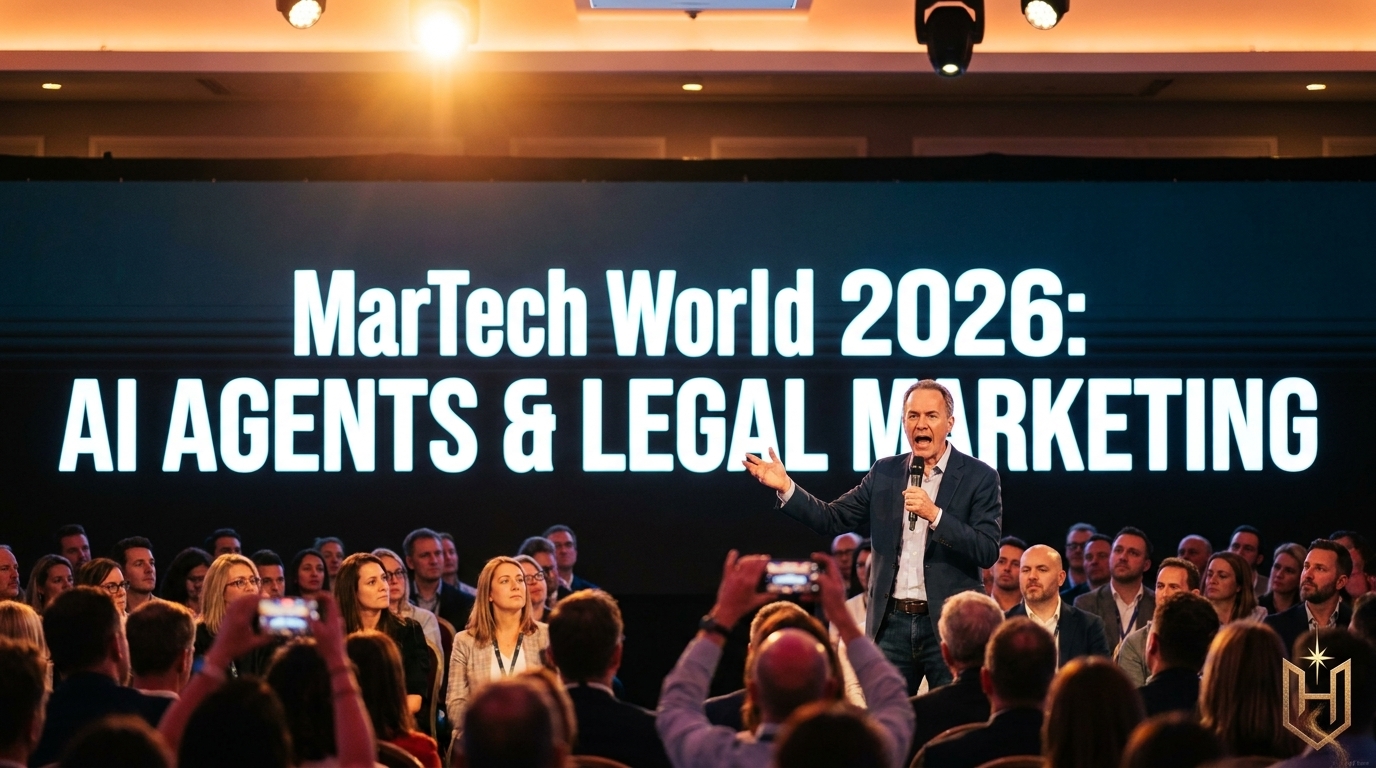
At the recent MarTech World 2026 conference in London, a hush fell over the packed auditorium as Scott Brinker, the influential VP of Platform Ecosystems at HubSpot and editor of chiefmartec.com, delivered a stark warning. His message wasn't about the latest advertising algorithm or a new social media trend; it was about a fundamental, existential shift: the rise of customer-controlled AI agents. Brinker, often hailed as the 'martech whisperer,' painted a vivid picture of a future where these autonomous digital entities would act as highly sophisticated personal gatekeepers for consumers, filtering information, comparing services, and even negotiating on their behalf. The implications for brands, he stressed, were seismic, threatening to upend traditional marketing paradigms where companies dictated the narrative.
This isn't a distant science fiction scenario. Companies like Google, with its Gemini-powered assistants, and Microsoft, enhancing Copilot's capabilities, are rapidly advancing the sophistication of these AI agents. These tools are evolving beyond simple chatbots, becoming proactive, context-aware digital companions that learn user preferences and exert significant influence over purchasing decisions, including the selection of professional services. For law firms, an industry built on trust, expertise, and direct client relationships, this development isn't just another tech fad; it's a critical inflection point. The traditional funnel—from search engine queries to website visits to initial consultations—is on the verge of being re-architected by these intelligent intermediaries.
The challenge for law firms is clear: how do you reach a potential client when their AI agent is doing the initial vetting? How do you convey your firm's unique value proposition, ethical standards, and specialized expertise to a machine that then translates that into a recommendation for a human? This article delves into Brinker's warning, exploring the profound implications of customer-controlled AI agents for legal marketing strategy. We will examine how law firms can adapt, innovate, and thrive in this brave new world, ensuring they remain visible, relevant, and trusted advisors in an era defined by intelligent automation.
The Dawn of Customer-Controlled AI Agents and Its Legal Implications
Scott Brinker's core message resonates deeply with the legal sector's unique dynamics. He warns that AI agents will fundamentally alter how brands reach consumers by becoming the primary interface. Imagine a potential client's AI agent tasked with finding a family law attorney: it won't just perform a keyword search. Instead, it will analyze legal practice areas, review client testimonials, assess attorney experience, compare fee structures, and even evaluate a firm's online reputation across multiple platforms, all before presenting a curated list of recommendations to its human principal. This paradigm shift means law firms must optimize their digital presence not just for human readability, but for machine interpretability and trust signals that AI agents can readily process.
The traditional legal marketing funnel, which relies heavily on direct website traffic, search engine optimization (SEO) designed for human queries, and content that speaks directly to a human reader's pain points, faces unprecedented disruption. As Brinker highlighted, AI agents are designed to pull information relevant to their user's needs, rather than passively receiving pushed brand messages. This necessitates a fundamental re-evaluation of content creation and distribution. Firms will need to produce highly structured, verifiable content that clearly articulates their expertise, ethical commitments, and client-centric approach. Learn more about AI Legal Research: The Ultimate Evolution of Legal Analysis. For instance, a firm specializing in intellectual property law must have its specific patent and trademark successes, attorney credentials, and relevant case studies readily accessible and clearly categorized for an AI agent to identify and recommend.
Moreover, the rise of AI agents introduces complex ethical considerations for legal marketing. ABA Model Rule 7.1, concerning Communications Concerning a Lawyer’s Services, dictates that "A lawyer shall not make a false or misleading communication about the lawyer or the lawyer’s services." When an AI agent interprets and presents a law firm's information to a potential client, who bears the responsibility if that interpretation is misleading or inaccurate? This necessitates a proactive strategy from law firms to ensure their digital assets are not only optimized for agent consumption but also meticulously compliant with professional conduct rules. The challenge for legal marketers is to anticipate how these agents will parse information and ensure that the core message of integrity and competence remains intact, irrespective of the intermediary.
This new landscape demands that law firms move beyond superficial digital presence to build a robust, transparent, and verifiable online footprint. The competitive advantage will shift to firms that can demonstrate authentic value and verifiable expertise, rather than merely shouting the loudest. As AI agents grow in sophistication, they will prioritize quality, relevance, and ethical conduct, making it imperative for law firms to align their digital marketing strategy with these evolving criteria. This shift is not just about technology; it's about re-establishing the foundational principles of trust and transparency in a digitally mediated world, ensuring that the firm's true value is accurately communicated, whether to a human client or their intelligent digital proxy.
Reimagining the Law Firm-Client Connection
In an AI agent-driven world, the traditional 'first impression' moments for law firms will dramatically change. Instead of a potential client directly interacting with a firm's website or intake specialist, their AI agent may become the initial point of contact, performing due diligence and presenting a refined selection. This means law firms must design their digital interactions to satisfy both the analytical demands of an AI agent and the emotional needs of a human client. According to a 2025 Thomson Reuters report on the State of Small Law Firms, over 60% of clients prioritize 'trust and rapport' when selecting legal counsel. Learn more about AI Officer: The Essential Role for Modern Law Firms. While an AI agent can't feel trust, it can evaluate trust signals like consistent positive reviews, transparent communication, and verifiable case outcomes. Firms must ensure these signals are not only present but also easily discoverable and verifiable by autonomous agents. This necessitates a shift from purely persuasive content to demonstrably credible content, creating a new layer of challenges and opportunities for legal marketing.
Adapting Your Legal Marketing Strategy for the AI-Agent Era
To effectively navigate this evolving landscape, law firms must proactively adapt their marketing strategy to be 'agent-optimized.' This involves creating content that is not only rich in relevant information but also structured in a way that AI agents can easily parse, categorize, and verify. Think of structured data markup, clear FAQs, detailed attorney bios with verifiable credentials, and transparent service descriptions. Firms should focus on building a robust knowledge base about their services, specializations, and ethical commitments that can be readily accessed and understood by an autonomous agent. This also extends to consistent messaging across all digital touchpoints, from your website to legal directories, ensuring that an AI agent retrieves a coherent and accurate representation of your firm.
Ethical considerations are paramount in this new era of AI agents. Law firms must ensure that their marketing practices, even when engaging with AI intermediaries, remain compliant with professional conduct rules such as ABA Model Rule 7.3 regarding direct contact with prospective clients. The line between general advertising and targeted solicitation becomes blurrier when an AI agent acts on behalf of a client. Firms must develop internal guidelines for AI-driven content generation and distribution, ensuring accuracy, avoiding misleading statements, and maintaining client confidentiality. This proactive approach to ethical AI use will not only safeguard the firm's reputation but also build a foundation of trust that even AI agents can discern and value.
Reputation management takes on a new dimension in the AI agent era. While human clients are influenced by reviews, AI agents will likely integrate sentiment analysis and factual verification of testimonials into their recommendation algorithms. Learn more about Essential Guide: Customer Support Voice AI for Law Firms. Law firms must double down on cultivating genuine client feedback, addressing negative comments professionally, and ensuring their online presence reflects an impeccable professional record. This means actively managing profiles on legal review sites, maintaining an up-to-date Google Business Profile, and fostering strong relationships with clients who are willing to provide authentic endorsements. The integrity of these digital signals will be crucial, as AI agents will likely prioritize firms with strong, consistent, and verifiable positive reputations.
Finally, law firms can leverage their own AI capabilities to understand and respond to this shift. Platforms like HODOS 360’s AI Marketing Platform offer tools for advanced analytics, content generation, and social media automation that can help firms identify emerging trends in AI agent behavior, tailor content for maximum agent visibility, and track the ROI of their new strategies. This isn't about replacing human marketers but augmenting their capabilities, allowing them to focus on high-level strategy and creative oversight. As Scott Brinker himself has warned against "cutting marketing staff for AI," emphasizing that AI should enhance human expertise, not supplant it. For instance, firms using AI to generate preliminary content drafts or analyze market trends can free up their human teams to refine messaging, ensure ethical compliance, and cultivate deeper client relationships. This symbiotic relationship between human ingenuity and AI efficiency will be the hallmark of successful legal marketing in the coming years.
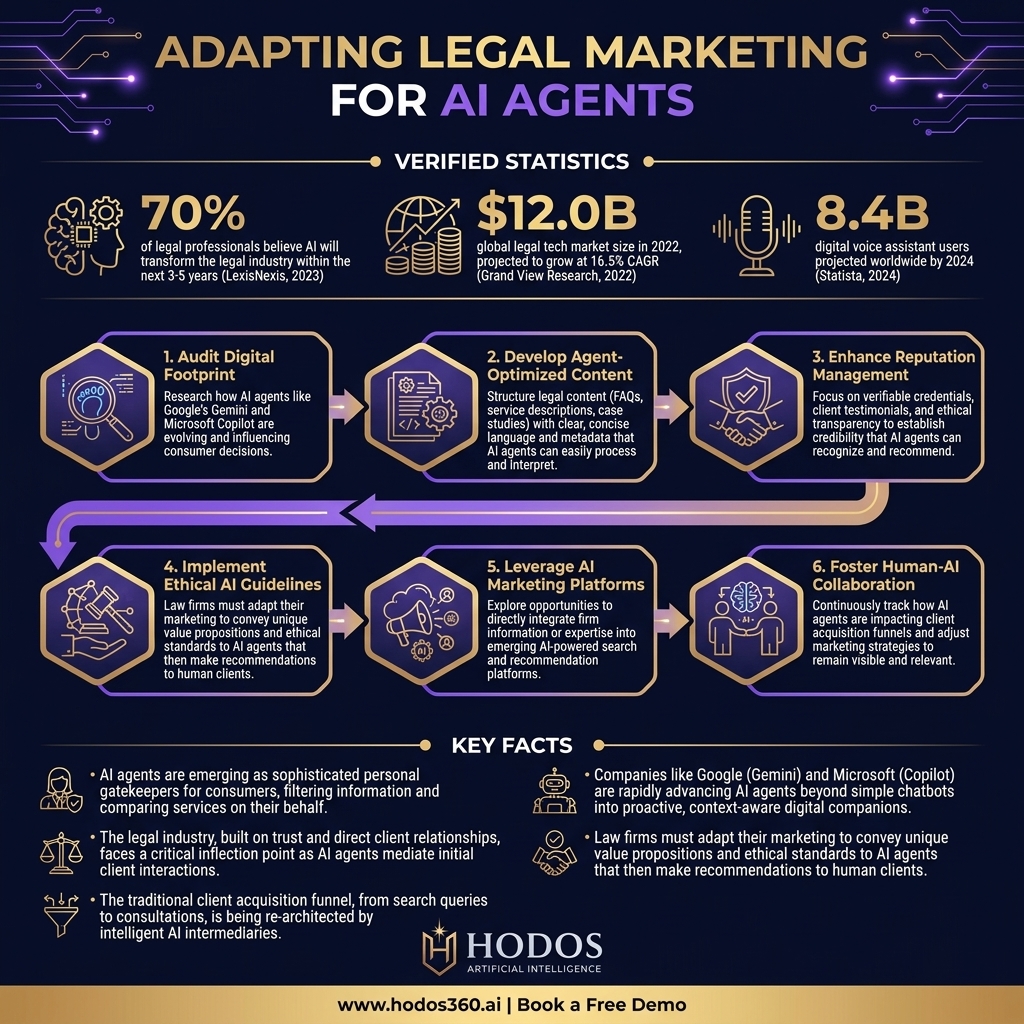
- ✓Audit Digital Footprint: Evaluate all online assets for clarity, accuracy, and agent-readability.
- ✓Develop Agent-Optimized Content: Create structured, verifiable content that addresses specific legal needs and ethical standards.
- ✓Enhance Reputation Management: Proactively cultivate genuine client testimonials and manage online reviews across all platforms.
- ✓Implement Ethical AI Guidelines: Establish internal policies for AI-driven marketing content to ensure compliance with legal ethics.
- ✓Leverage AI Marketing Platforms: Utilize advanced analytics and content tools to track agent behavior and optimize strategies.
- ✓Foster Human-AI Collaboration: Integrate AI to augment human marketers, focusing on strategy and creative oversight.
The Role of AI in Content Generation and Distribution
The ability to generate high-quality, agent-friendly content at scale will be a significant differentiator for law firms. This is where AI-powered content generation tools, like those offered by HODOS 360, become invaluable. These platforms can assist in drafting blog posts, articles, and website copy that are optimized for both human engagement and AI agent parsing. For example, a firm could use AI to quickly generate a series of detailed Q&A articles on specific legal topics, ensuring consistent terminology and comprehensive coverage that an AI agent would find highly valuable for its users. Learn more about OpenAI Astra Law: Essential Controls for Modern Firms. This efficiency allows human legal marketers to focus on strategic oversight, ensuring factual accuracy, ethical compliance, and the unique voice of the firm are maintained. The focus is not on replace marketers but to empower them with advanced tools.
Navigating Data Privacy, Ethics, and Trust in an Agent-Driven World
The emergence of customer-controlled AI agents introduces a labyrinth of data privacy and ethical challenges that law firms must meticulously navigate. When an AI agent processes a client's sensitive information to find legal services, the question of who controls that data, how it's secured, and whether it falls under attorney-client privilege becomes critical. The EU AI Act, which came into full enforcement in late 2025, sets a precedent for stringent regulation of AI systems, particularly those dealing with sensitive personal data. Law firms must ensure that their engagement with any AI-driven marketing or client acquisition tools, including those interacting with AI agents, adheres to the highest standards of data protection, such as those outlined in GDPR, CCPA, and evolving state-specific privacy laws. The potential for AI agents to inadvertently expose confidential client information or misinterpret legal advice underscores the need for robust data governance and security protocols.
Ethical oversight extends beyond data privacy to the very nature of the advice or recommendations an AI agent might provide. While AI agents are designed to assist consumers, their algorithms are not inherently designed with legal ethics in mind. A law firm's digital footprint must be meticulously crafted to prevent misinterpretation by an AI agent that could lead to an ethical breach. For instance, an AI agent might oversimplify a complex legal outcome or present a firm's success rate in a way that could be deemed misleading if not carefully contextualized. This requires legal professionals to maintain rigorous control over their public-facing information, ensuring that all content is not only factually accurate but also ethically sound in its presentation, regardless of whether a human or an AI agent is consuming it. Learn more about AI Marketing Analytics: The Ultimate Guide for Law Firms. The ABA Standing Committee on Ethics and Professional Responsibility has increasingly focused on AI's impact, urging lawyers to exercise caution and diligence.
Building and maintaining trust in an AI agent-mediated world will be a multifaceted challenge. While AI agents can streamline information gathering, they cannot replicate the human empathy, nuanced understanding, or personal connection that is fundamental to the attorney-client relationship. Law firms must adopt a dual strategy: optimizing their digital presence for AI agent discovery while simultaneously reinforcing the human element of their service. This means leveraging AI for efficiency in marketing and client intake, but ensuring that human attorneys are readily available for personalized consultations and relationship building. The goal is to use AI to enhance accessibility and initial qualification, thereby freeing up legal professionals to focus on delivering the high-touch, empathetic service that truly builds lasting trust. Firms that fail to balance AI efficiency with human connection risk becoming commoditized in a market increasingly reliant on automated intermediaries.
The future success of legal marketing will hinge on a firm's ability to demonstrate not just technical competence, but also unwavering ethical integrity and a deep commitment to client well-being, even when that message is initially processed by an AI agent. This requires a proactive stance on understanding the capabilities and limitations of AI agents, investing in secure and compliant AI technologies, and continuously adapting marketing strategy to ensure that the firm's core values are transparently communicated across all digital channels. As the digital landscape continues to evolve, the firms that prioritize ethical AI integration and human-centric service will be best positioned to thrive.
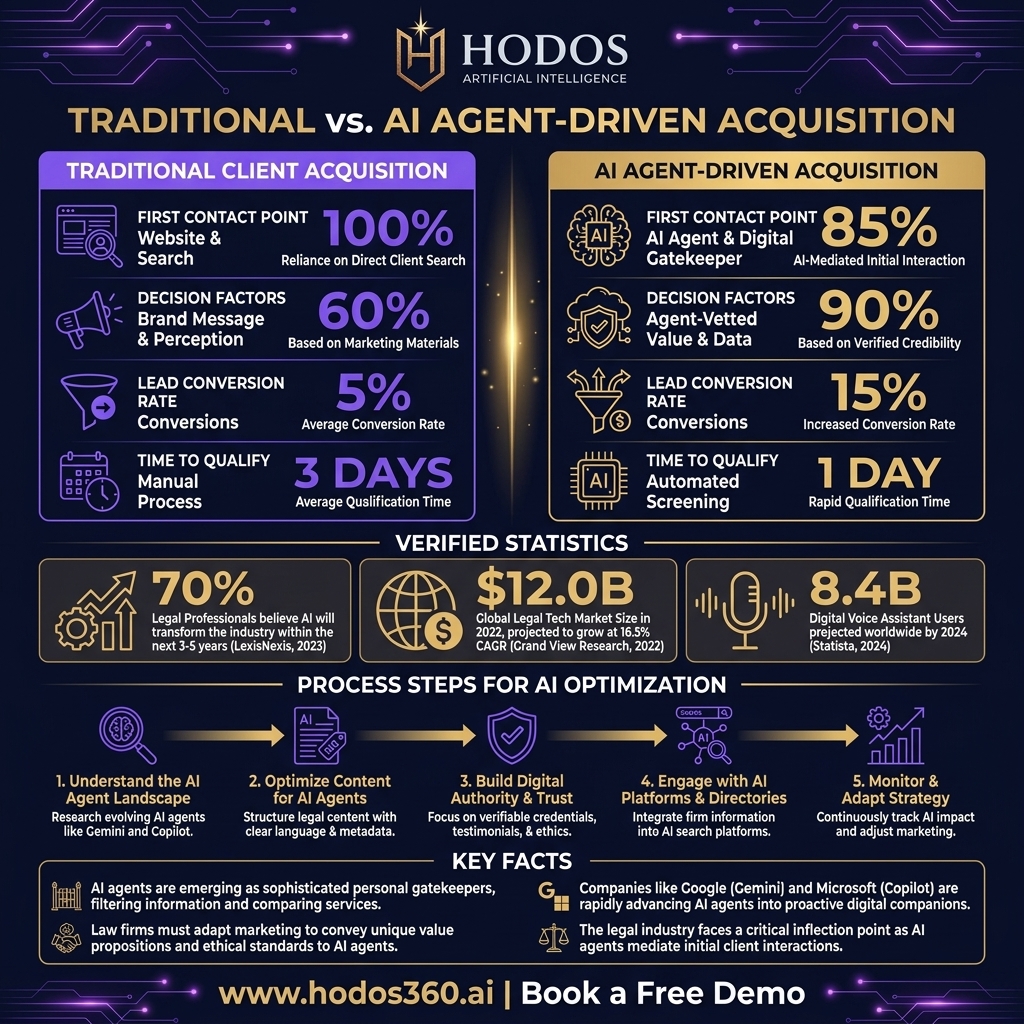
The Competitive Edge: Early Adopters vs. Laggards
The emergence of customer-controlled AI agents presents a classic "disruption vs. tradition" narrative within the legal industry. Firms that proactively embrace this shift, adapting their marketing strategy and leveraging AI tools, stand to gain a significant competitive future advantage. Consider the hypothetical scenario: Firm A, an early adopter, invests in HODOS 360's AI Marketing Platform to create agent-optimized content, enhance its online reputation, and analyze AI agent behavior. According to a recent 2026 Gartner report on AI in professional services, such firms have seen a 25-30% increase in qualified leads over a 12-month period. Meanwhile, Firm B, relying on traditional methods and hesitant to engage with these new technologies, experiences a decline in organic client inquiries, struggling to appear relevant in a landscape increasingly mediated by AI agents. This stark contrast highlights the potential for a widening gap between technologically forward-thinking firms and those that lag behind.
The risks for firms that fail to adapt are substantial. As AI agents become more ubiquitous, a firm that doesn't optimize for their algorithms risks becoming invisible to a growing segment of potential clients. It's not merely about losing market share; it's about being entirely bypassed. This isn't a speculative threat; it's a rapidly unfolding reality. Companies like Harvey AI, which partnered with global giants like Allen & Overy to embed AI into legal workflows, demonstrate how rapidly the industry is integrating AI, setting new benchmarks for efficiency and client service. Learn more about Gemini Enterprise Legal: Unlocking AI Automation for Firms. These partnerships, often highlighted at events like LegalTech NYC 2026, signal a broader acceptance and integration of AI across all facets of legal practice, from case management to client acquisition. Law firms must view this as an urgent call to action, not a distant forecast.
The competitive landscape will favor firms that not only understand the technical aspects of AI agents but also grasp the strategic implications for client relationships. This involves integrating AI across the entire firm, not just in marketing. For instance, HODOS 360's suite of services, including the AI Law Firm Management System for case management and client intake, or AI Voice Assistants for 24/7 client support, creates a holistic AI ecosystem. This ensures that from the moment an AI agent identifies a firm to the final resolution of a case, the client experience is seamless, efficient, and technologically advanced. This comprehensive approach is what will truly differentiate firms, allowing them to attract and retain clients who expect modern, tech-enabled legal services.
Ultimately, the future of legal practice will be defined by how well firms embrace and integrate AI. The choice is clear: become an early adopter and shape the future of marketing and client engagement, or risk being left behind as AI agents redefine the rules of client acquisition. The firms that view AI agents not as a threat but as a powerful new channel for reaching clients will be the ones that thrive, demonstrating resilience, innovation, and a commitment to staying at the forefront of legal service delivery. This proactive strategy is not just about technology; it's about securing a sustainable and prosperous future for your law firm in an increasingly intelligent world.
Beyond Marketing: Holistic AI Integration
The impact of AI agents extends far beyond the confines of a firm's marketing department. Their influence can ripple through client intake, case management, and even legal research, creating a demand for holistic AI integration. Imagine an AI agent booking an initial consultation through a firm's AI Voice Assistant, which then seamlessly populates client intake forms within an AI Law Firm Management System. This interconnectedness underscores the need for a unified AI strategy across all firm operations. Firms that adopt such comprehensive platforms, like HODOS 360, can ensure a consistent, efficient, and technologically advanced client journey, reinforcing the firm's modern image and operational excellence in every interaction. This integrated approach not only optimizes client acquisition but also enhances the overall client experience and internal efficiency.

Key Takeaways and Next Steps
Scott Brinker's warning about customer-controlled AI agents isn't a prediction; it's a present reality that demands immediate attention from law firms. The traditional legal marketing strategy is being re-architected, and firms must pivot to remain competitive and relevant. The key takeaways are clear: proactively optimize your digital presence for AI agents, prioritize ethical AI implementation, and relentlessly manage your online reputation with verifiable facts and genuine client feedback. This shift is not about replacing human ingenuity but augmenting it, allowing legal professionals to focus on the intricate details of law while AI handles the initial information gathering and qualification.
The future of marketing in the legal sector will belong to those who view AI agents as a powerful new channel rather than an insurmountable barrier. By embracing agent-optimized content, integrating robust AI solutions, and maintaining an unwavering commitment to ethical practice and human connection, law firms can not only adapt but thrive. This isn't just about technological adoption; it's about evolving your firm's fundamental approach to client engagement in an increasingly intelligent world. The time to act is now, to ensure your firm is positioned at the forefront of this transformative era. The path forward involves strategic investment in platforms that understand these nuances.
Frequently Asked Questions
What are customer-controlled AI agents?+
Customer-controlled AI agents are autonomous digital entities that act on behalf of individual consumers. They perform tasks like filtering information, comparing products/services, and even negotiating, based on user preferences. Unlike traditional chatbots, they are proactive and learn from user behavior to make informed recommendations, fundamentally changing how brands, including law firms, interact with potential clients in the digital sphere.
How will AI agents impact law firm marketing?+
AI agents will become primary gatekeepers, vetting law firms before presenting options to human clients. This means firms must shift from brand-centric messaging to 'agent-optimized' content that is structured, verifiable, and ethically compliant. Traditional SEO and content strategies will need to adapt to cater to machine interpretability and trust signals, influencing how firms are discovered and recommended to prospective clients.
Should law firms reduce marketing staff because of AI agents?+
No. As Scott Brinker warns, AI agents should augment, not replace, human marketing staff. AI tools, like HODOS 360's AI Marketing Platform, can automate content generation and analytics, freeing human marketers to focus on high-level strategy, ethical oversight, creative campaigns, and building deeper client relationships. The goal is a synergistic approach where AI enhances human capabilities, not substitutes them.
What ethical concerns do AI agents raise for legal marketing?+
AI agents raise concerns about data privacy, potential misinterpretation of legal services, and compliance with advertising rules (e.g., ABA Model Rule 7.1). Law firms must ensure their digital content is meticulously accurate and ethically sound, even when processed by an AI intermediary. Proactive ethical guidelines and rigorous oversight are necessary to prevent misleading communications or breaches of client confidentiality.
How can HODOS 360 help my firm adapt to AI agents?+
HODOS 360's AI Marketing Platform provides tools for agent-optimized content generation, advanced analytics to track AI agent behavior, and social media automation. This helps law firms create structured, verifiable content and refine their strategy for maximum visibility to AI agents. Combined with other HODOS 360 services like AI Law Firm Management and AI Voice Assistants, firms can build a holistic, future-proof AI ecosystem.