

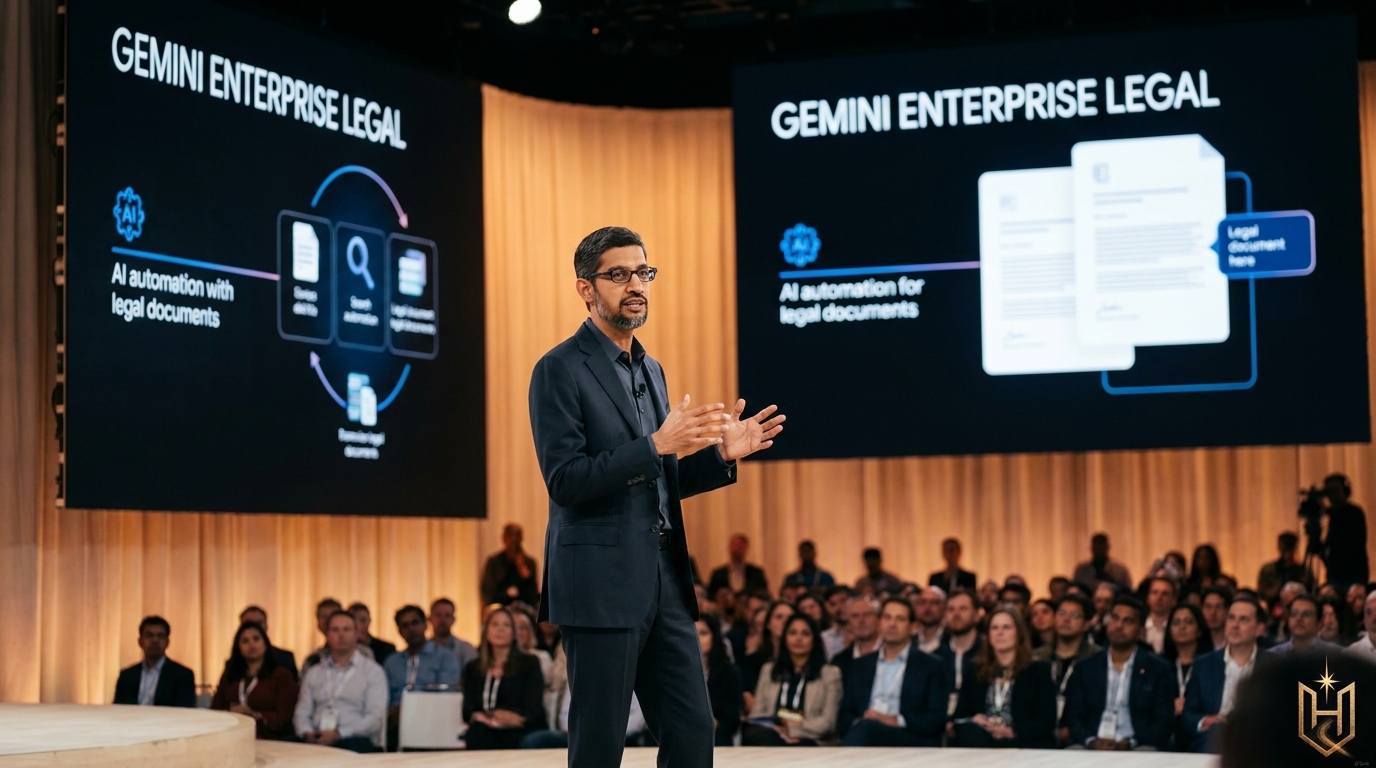
Gemini Enterprise Legal: Unlocking AI Automation for Firms
The legal landscape is undergoing an unprecedented transformation, fueled by rapid advancements in artificial intelligence. For years, the promise of AI in law has hovered on the horizon, but recent developments have brought it firmly into the realm of practical application. A pivotal moment arrived with Google's announcement of Gemini Enterprise for Legal, a specialized platform designed to deploy sophisticated AI agents capable of automating intricate law firm operations. This isn't merely an incremental update; it represents a fundamental shift in how legal work is conceived and executed. The launch, detailed by sources like Firstpost, signals Google's serious intent to carve out a significant presence in the legal tech sector, bringing its formidable AI research and infrastructure to bear on the unique challenges faced by attorneys and legal professionals worldwide. The implications are vast, promising to redefine everything from client intake to complex litigation support, and presenting both immense opportunities and critical considerations for firms looking to stay competitive.
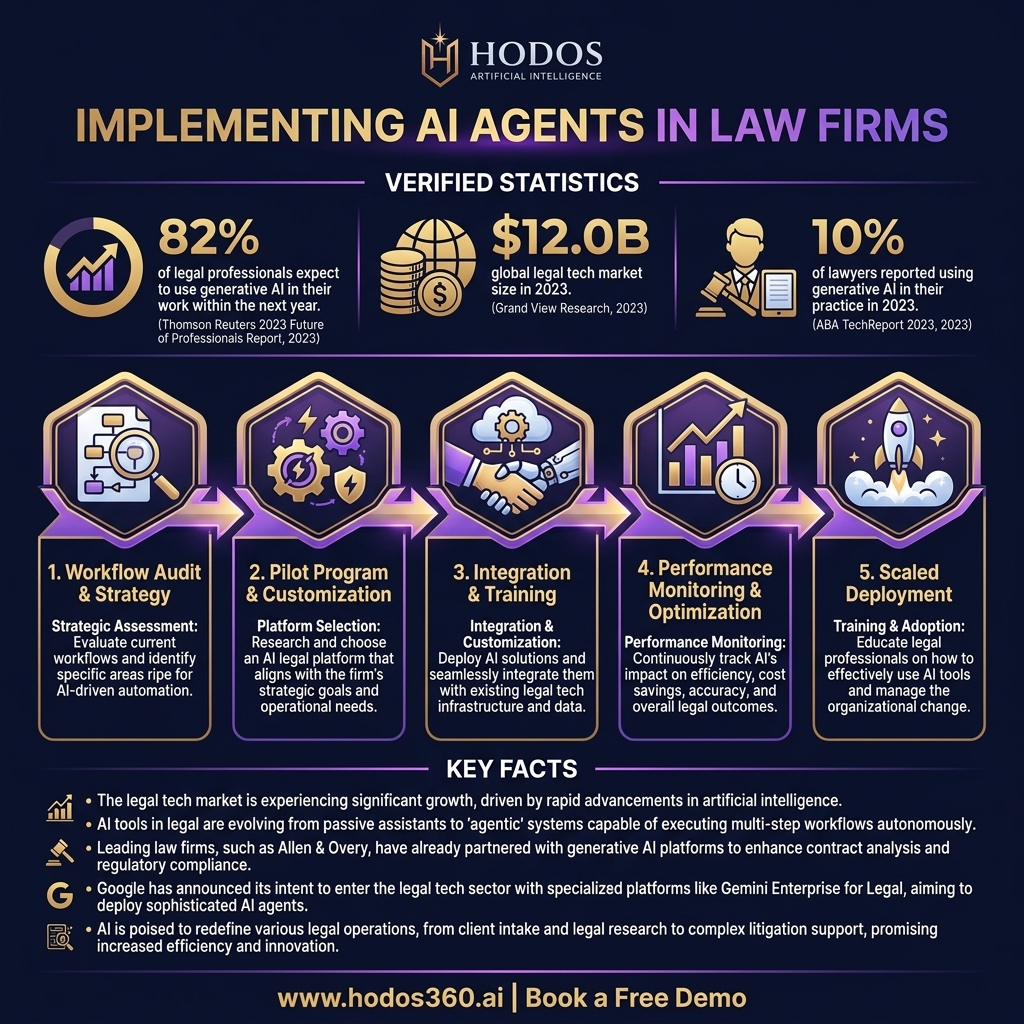
The excitement surrounding Gemini Enterprise for Legal isn't just hype; it's rooted in the platform's potential to move beyond passive AI tools to active, "agentic" systems. Unlike earlier generations of AI that primarily assisted with information retrieval or basic document analysis, these new AI agents are designed to execute multi-step workflows autonomously, making decisions and adapting to new information within defined parameters. This evolution was a key theme at recent industry gatherings, including LegalTech NYC 2026, where discussions often centered on the transition from AI as a co-pilot to AI as an autonomous operator for routine tasks. Firms like Allen & Overy, which famously partnered with Harvey AI to leverage generative AI for contract analysis and regulatory compliance, have already demonstrated the power of specialized legal AI. Learn more about AI Marketing Strategy: Essential Lessons from 25 Years of Evolution. Google's entry with an enterprise-grade platform, however, offers a scalable solution backed by one of the world's largest tech companies, promising a robust, secure, and continuously evolving ecosystem. As Thomas Kurian, CEO of Google Cloud, articulated at a recent press briefing, "Our goal is to empower enterprises with AI solutions that are not just intelligent, but truly transformative, allowing them to focus on high-value work." This vision directly addresses the long-standing challenge of efficiency and resource allocation within law firms, offering a compelling solution to automate the mundane and elevate the strategic.
The competitive landscape for enterprise AI in legal is intensifying, with tech giants like Microsoft, Amazon, and now Google vying for market share against established legal tech players and innovative startups. This competition is a boon for law firms, driving rapid innovation and refinement of AI tools tailored specifically for legal practice. However, it also presents a complex decision-making process for firm leaders regarding vendor selection, integration, and data governance. The core value proposition of Gemini Enterprise for Legal lies in its ability to deploy purpose-built AI agents capable of handling tasks ranging from initial lead qualification and client onboarding to contract review and even early-stage case strategy. Learn more about AI Agents Marketing: Your Essential Guide for Law Firms. These agents are trained on vast legal datasets, ensuring accuracy and compliance, and are designed to integrate seamlessly into existing law firm management systems. As Sundar Pichai, CEO of Google, has often emphasized, the future of AI is about making it universally helpful, and the legal sector, with its high-volume, data-intensive operations, is a prime candidate for this level of disruption. The question for law firms is no longer *if* AI will transform their practice, but *how swiftly* they will adopt and leverage these powerful new capabilities to gain a decisive competitive advantage in a rapidly evolving market.
Ready to explore the future of legal practice? Discover how HODOS 360's AI Law Firm Management System integrates cutting-edge AI to streamline your operations. Book a free demo today!
The Dawn of Agentic AI in Legal
The concept of "agentic AI" represents a significant leap from the assistive large language models (LLMs) that dominated early legal tech discussions. While previous AI tools primarily aided in tasks like document review or legal research by processing user queries, agentic AI systems are designed to autonomously plan, execute, and monitor multi-step workflows. This paradigm shift was eloquently highlighted by Dario Amodei, CEO of Anthropic, who emphasized the importance of AI systems moving beyond mere prediction to proactive problem-solving. Learn more about Legal AI: Microsoft's Essential Tool Reshapes Law Practice. Google’s Gemini Enterprise for Legal embodies this vision, offering a platform where firms can deploy purpose-built AI agents. These agents are not just answering questions; they are performing actions, coordinating with other systems, and adapting to dynamic legal contexts, drastically reducing manual intervention and accelerating key operational processes within a law firm.
Google's entry into the legal enterprise AI market with Gemini is a strategic move, leveraging its vast computational resources and deep learning expertise. Unlike some startup-led solutions, Gemini Enterprise offers an infrastructure built for scale, security, and global deployment, critical factors for risk-averse legal institutions. This platform directly competes with offerings like Microsoft's Copilot for Microsoft 365, which also aims to integrate AI into enterprise workflows, and specialized legal AI platforms such as Harvey AI, which has seen significant adoption among elite firms. Learn more about AI Intake: The Essential Guide for Modern Law Firms. However, Google's approach with Gemini Enterprise for Legal focuses on a broader suite of customizable agents, allowing firms to tailor automation to their specific practice areas and operational needs, from initial client touchpoints to complex legal document generation, as underscored by the platform's detailed documentation released at Google Cloud Next 2026.
Redefining Law Firm Operations with Gemini Enterprise
The practical applications of Gemini enterprise legal agents span the entire spectrum of law firm operations, promising unprecedented efficiencies. Consider the often-laborious process of client intake: an AI agent can now handle initial inquiries, qualify leads, gather preliminary information, and even schedule consultations, all autonomously. This transforms the front office, freeing up paralegals and administrative staff for more complex tasks. Learn more about AI Patent Tools: The Ultimate Guide for IP Lawyers. For instance, a recent Thomson Reuters Institute report indicated that firms spending less time on administrative tasks showed a 15% increase in billable hours. Gemini agents can automate the generation of engagement letters, conflict checks, and initial case summaries, integrating seamlessly with existing AI Law Firm Management Systems to create a streamlined, error-reduced onboarding experience that enhances client satisfaction from the very first interaction.
Beyond intake, these AI agents are poised to revolutionize core legal workflows. In litigation, an agent could monitor court dockets for relevant filings, summarize discovery documents, and even flag potential evidentiary issues, significantly accelerating the preparatory phase. For transactional practices, AI agents can perform initial contract reviews, identify key clauses, and highlight discrepancies against predefined templates, a task that traditionally consumes hundreds of attorney hours. Learn more about Essential Legal AI Tools for Modern Law Firms & Counsel. This capability, powered by advanced natural language processing within the Gemini platform, allows legal professionals to focus on strategic negotiation and complex legal analysis, rather than the tedious, repetitive aspects of document examination, a shift that aligns with the ethical duty of competence under ABA Model Rule 1.1 by enabling attorneys to leverage technology for efficient service delivery.
Beyond Basic Automation: Specialized Legal Agents
The true power of Gemini Enterprise for Legal lies in its capacity for specialized agent development. Law firms can configure agents for niche practice areas, such as intellectual property, mergers and acquisitions, or environmental law, training them on specific precedents, regulations, and client preferences. Imagine an M&A agent that not only reviews due diligence documents but also cross-references them with specific industry regulations and identifies potential antitrust concerns, drawing upon vast databases and real-time news feeds. This level of bespoke automation allows firms to offer highly specialized, yet incredibly efficient, services. The ability to customize and deploy these AI agents rapidly provides a significant competitive edge, enabling firms to scale their expertise without proportionally increasing headcount, a crucial factor in today's cost-conscious legal market.
As law firms embrace AI, efficient management of these new capabilities is crucial. Explore how HODOS 360's platform can support your transition and maximize AI's potential in your firm. Learn more.
Navigating the Ethical and Practical Implications
While the potential for efficiency is immense, the deployment of AI agents in legal practice introduces critical ethical and practical considerations. Paramount among these is data security and client confidentiality. Law firms handle highly sensitive information, and any AI system integrated into their operations must adhere to the strictest security protocols. Google Cloud's enterprise-grade security features are designed to meet these demands, but firms bear the ultimate responsibility for ensuring compliance with regulations like HIPAA or GDPR, depending on their jurisdiction and client base. The ABA Model Rule 1.6 on Confidentiality of Information mandates that lawyers protect client information, extending this duty to ensure technology vendors maintain adequate safeguards and that the firm properly configures AI agents to prevent data breaches.
Another significant concern revolves around the potential for bias in AI systems. AI models are trained on historical data, and if that data contains inherent biases, the AI agents may perpetuate or even amplify them, leading to unfair or discriminatory outcomes. This is particularly critical in areas such as predictive policing, sentencing recommendations, or even in screening job applicants. Legal professionals must exercise vigilant oversight, understanding the limitations and potential pitfalls of their AI tools. As Brad Smith, President of Microsoft, has frequently highlighted, responsible AI development requires a human-centric approach, prioritizing fairness, accountability, and transparency. Firms must implement robust auditing mechanisms and maintain human oversight to review AI-generated outputs, ensuring that ethical principles always guide the application of technology.
Attorney Supervision and Accountability
The role of attorney supervision over AI agents cannot be overstated. ABA Model Rule 5.3 on Responsibilities Regarding Nonlawyer Assistants is directly applicable here, extending the lawyer's duty of supervision to technological assistants. Attorneys must ensure that AI agents are used competently, ethically, and in a manner that upholds the professional standards of the legal profession. This means lawyers are ultimately accountable for the work product of their AI agents, just as they are for their human staff. Firms must invest in comprehensive training for their legal teams on how to effectively interact with, validate, and oversee AI-generated work, fostering a culture of informed adoption where AI is a tool to augment human expertise, not replace it entirely. This careful balance ensures that innovation serves justice, rather than compromising it.
Strategic Implementation: Integrating AI Agents Successfully
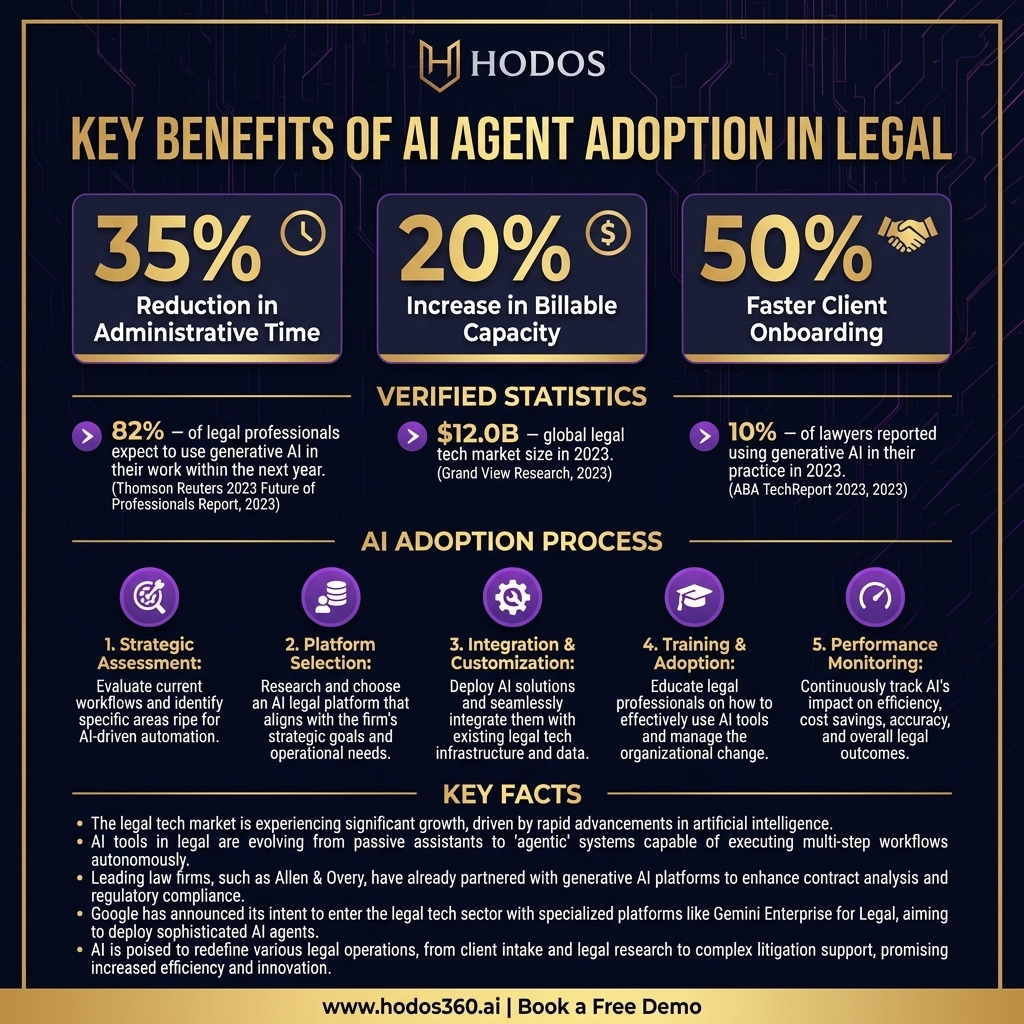
Successful integration of Gemini enterprise legal agents requires a well-thought-out strategic approach, not just a technological deployment. Firms must begin with a thorough audit of their existing workflows to identify pain points and high-volume, repetitive tasks ripe for automation. This assessment should involve key stakeholders from across the firm to ensure buy-in and pinpoint the most impactful areas for AI intervention. Pioneering firms, like those discussed at the recent Legal Innovation & Technology Conference, often start with pilot programs in specific departments or practice areas. This allows for controlled testing, iterative refinement of AI agents, and the accumulation of internal best practices before a broader rollout, minimizing disruption and maximizing the chances of successful adoption.
Crucial to this strategy is investing in robust training and change management. Attorneys and staff need to understand not only how to use the new AI tools but also how these tools fit into their redefined roles. This involves a cultural shift, moving from skepticism or fear to embracing AI as a powerful collaborator. Firms should also establish clear metrics for success, tracking key performance indicators such as time savings, error reduction, and client satisfaction. For example, tracking the reduction in document review cycles or the increase in successful client conversions can demonstrate tangible ROI. This data-driven approach, similar to the analytics offered by the HODOS 360 AI Marketing Platform, validates the investment and provides insights for continuous optimization of AI agent performance, ensuring ongoing value and adaptation to evolving legal needs.
Measuring ROI and Future-Proofing Your Firm
Beyond immediate efficiency gains, the strategic deployment of AI agents is about future-proofing the law firm. By automating routine tasks, firms can reallocate human talent to higher-value, more complex legal work that requires uniquely human skills like empathy, strategic thinking, and nuanced judgment. This not only enhances job satisfaction for legal professionals but also positions the firm to attract and retain top talent. Furthermore, the data generated by AI agents can provide invaluable insights into firm performance, client trends, and operational bottlenecks, fueling continuous improvement. Firms that proactively embrace and integrate these advanced AI capabilities, like those offered by the Gemini enterprise legal platform, will be better equipped to adapt to future market demands, remain competitive, and deliver superior service in an increasingly technology-driven world.

Key Takeaways and Next Steps
Google's Gemini Enterprise for Legal represents a significant milestone in the journey towards an AI-powered legal future. Its introduction of sophisticated AI agents capable of automating complex workflows promises to free legal professionals from mundane tasks, allowing them to focus on strategic counsel and client relationships. The shift from assistive AI to agentic AI is not merely about doing things faster; it's about fundamentally rethinking the structure and delivery of legal services. Law firm leaders must recognize that this is no longer a distant possibility but a present reality demanding immediate strategic attention. Embracing these innovations, while carefully navigating the ethical and practical challenges, is paramount for maintaining relevance and competitiveness in the evolving legal market.
For firms ready to harness the power of agentic AI, the next steps involve careful evaluation, strategic planning, and a commitment to continuous learning. Begin by identifying specific operational bottlenecks where AI agents can deliver the most immediate impact. Explore platforms like Google's Gemini Enterprise for Legal and consider how they can integrate with your existing technology stack. Solutions like HODOS 360's comprehensive AI Law Firm Management System are designed to facilitate this integration, offering not just case management and billing, but also AI-powered legal workflows and document automation that complement advanced AI agent capabilities. The future of legal practice is collaborative, with human expertise augmented by intelligent automation, creating a more efficient, client-focused, and profitable firm. Speak with a HODOS 360 expert today to chart your AI roadmap.
- ✓Enhanced Client Intake: Automate lead qualification, information gathering, and initial document generation, reducing administrative burden and improving client experience.
- ✓Accelerated Document Review: Deploy AI agents to quickly identify, summarize, and flag key information in large volumes of legal documents, significantly cutting down review time.
- ✓Streamlined Case Management: Automate task assignment, deadline tracking, and document organization within case files, ensuring smoother progression and fewer missed steps.
- ✓Precision Legal Research: Utilize agents to sift through vast legal databases, identify relevant precedents, and summarize complex statutes, providing rapid, accurate research support.
- ✓Optimized Billing & Financials: Automate time tracking, invoice generation, and expense categorization, improving billing accuracy and financial transparency.
- ✓Customizable AI Workflows: Configure AI agents to perform multi-step, practice-area-specific tasks, adapting to unique firm processes and client needs for bespoke automation.
Frequently Asked Questions
What exactly are "AI agents" in the context of Gemini Enterprise for Legal?+
AI agents are advanced AI programs designed to perform specific, multi-step tasks autonomously within a law firm's operations. Unlike simple chatbots, these agents can plan, execute, and monitor complex workflows, making decisions based on legal data and predefined rules. They automate routine yet critical functions, such as client intake, document generation, and initial case analysis, significantly enhancing efficiency and reducing the need for constant human oversight on repetitive tasks.
How does Gemini Enterprise for Legal differ from other legal AI tools?+
Gemini Enterprise for Legal stands out by offering an enterprise-grade platform from Google, focused on deployable, customizable AI agents rather than just assistive LLMs. While many tools offer document review or research assistance, Gemini aims for end-to-end automation of workflows, allowing firms to build and manage specialized agents for unique practice areas. Its robust infrastructure emphasizes scalability, security, and deep integration capabilities, differentiating it from smaller, point-solution providers.
What are the primary benefits for law firms adopting Gemini Enterprise legal agents?+
Law firms adopting Gemini enterprise legal agents can expect significant benefits, including dramatically increased operational efficiency, reduced administrative costs, and improved accuracy in routine tasks. This frees up attorneys and paralegals to focus on higher-value legal work, strategic thinking, and client relations. It also enhances client service through faster response times and streamlined processes, ultimately leading to greater profitability and a stronger competitive position in the market.
What ethical considerations should law firms keep in mind when using AI agents?+
Ethical considerations are paramount. Firms must ensure client confidentiality and data security, adhering to rules like ABA Model Rule 1.6. Vigilant oversight is required to mitigate AI bias and ensure fairness in outcomes. Attorneys maintain ultimate accountability for the AI agents' work product, necessitating proper supervision and training, as guided by ABA Model Rule 5.3. Transparency with clients about AI usage is also crucial for maintaining trust and professional integrity.
How can law firms effectively integrate Gemini Enterprise into their existing systems?+
Effective integration begins with a thorough workflow audit to identify automation opportunities. Firms should then plan a phased rollout, starting with pilot programs in specific areas. Training for all staff is essential to ensure proper usage and foster a culture of adoption. Integrating AI agents with existing AI Law Firm Management Systems and other legal tech platforms is key. Measuring ROI and continuously optimizing agent performance will ensure long-term success and adaptation to evolving needs.