AI Marketing Analytics: The Ultimate Guide for Law Firms
Just two years ago, Sarah Chen, managing partner at the boutique corporate law firm Innovate Legal, faced a familiar challenge: how to stand out in an increasingly crowded market. Her firm’s marketing efforts, while diligent, felt like shots in the dark – expensive, time-consuming, and notoriously difficult to measure. They relied on traditional networking events, print ads, and a basic website, yielding inconsistent results. "We knew we needed to grow, but the path forward felt obscured by a fog of fragmented data and anecdotal evidence," Chen remarked during a panel discussion at LegalTech NYC 2026, where the conversation was dominated by the revolutionary impact of artificial intelligence. Her frustration echoed that of countless legal professionals grappling with the evolving demands of client acquisition and retention in the digital age.
Today, that fog has lifted, largely thanks to the strategic integration of AI Marketing Analytics. The legal landscape, once slow to adopt technological innovation, is now witnessing a seismic shift. Firms are moving beyond reactive strategies, embracing proactive, data-driven approaches that offer unprecedented clarity into client behavior, market trends, and competitive dynamics. This isn't merely an upgrade; it's a fundamental redefinition of how law firms identify, engage, and retain clients, transforming raw data into a powerful strategic asset. As the legal profession accelerates its digital transformation, platforms like HODOS 360 are at the forefront, empowering firms with comprehensive AI-powered solutions to navigate this new era.
This transformation is not without its complexities, but the rewards for early adopters are substantial. From understanding granular client preferences to predicting future legal service demands, AI Marketing Analytics provides the intelligence necessary to make informed decisions, optimize resource allocation, and foster deeper client relationships. It’s about moving from guesswork to precision, from broad strokes to hyper-targeted campaigns. The firms that master this shift will not only survive but thrive, carving out significant competitive advantages by truly understanding and serving their clients in ways previously unimaginable. The question is no longer *if* AI will transform legal marketing, but *how* quickly firms will leverage its full potential.
Ready to transform your law firm's client acquisition? Discover how AI Marketing Analytics can revolutionize your strategy. Explore HODOS 360's AI Marketing Platform Today!
The Shifting Sands of Legal Marketing: Why AI is Indispensable
The legal market is more competitive than ever, characterized by increasing client sophistication, alternative legal service providers, and a relentless digital noise. Law firms, particularly those in specialized fields, are grappling with a data deluge from various digital touchpoints – website visits, social media interactions, email engagements, and online reviews. Without the right tools, this data remains an untapped resource, overwhelming marketing teams rather than empowering them. A recent McKinsey & Company report on AI in professional services highlighted that firms leveraging advanced analytics can achieve up to a 15% increase in market share by making more informed strategic decisions, a stark contrast to those relying on intuition alone.
This environment creates a clear conflict between tradition and disruption. Many established law firms, accustomed to referral networks and word-of-mouth, find themselves struggling to adapt to the speed and complexity of digital marketing. Learn more about AI Web Apps: Ultimate Legal Firms' Guide to Next-Gen Development. Meanwhile, agile, tech-forward firms are rapidly gaining ground. Consider the widely publicized partnership between global giant Allen & Overy and legal AI startup Harvey AI, which demonstrated the immediate operational benefits of AI in legal research and contract review. This move wasn't just about internal efficiency; it signaled a broader embrace of AI as a competitive differentiator, extending into client-facing functions like marketing. Firms that hesitate risk being left behind, unable to effectively capture new customers or even understand their existing ones.
Predictive Analytics: Anticipating Client Needs
One of the most powerful applications of AI Marketing Analytics is its ability to forecast future trends and client behaviors. By analyzing historical data – including past case types, client demographics, industry news, and even macroeconomic indicators – AI algorithms can identify patterns that predict future legal needs. For instance, an AI system might flag a surge in regulatory changes affecting a specific industry, allowing a corporate law firm to proactively reach out to potential clients with relevant advisory services before they even realize they need them. This foresight transforms marketing from a reactive expense into a strategic growth engine.
This predictive capability offers an unparalleled competitive edge. Learn more about Voice AI: Essential for Law Firms, Touting Twilio's Success. Instead of waiting for clients to come to them, law firms can anticipate demand, tailor their outreach, and position themselves as indispensable partners. Legal tech innovators, such as the teams behind platforms like Premonition or Lex Machina (acquired by LexisNexis), have long explored predictive analytics for litigation outcomes, but the application to client acquisition and service forecasting is a newer, equally impactful frontier. This proactive approach ensures that marketing efforts are not only efficient but also precisely aligned with emerging opportunities, driving sustained growth.
Harnessing AI for Superior Customer Insights and Engagement
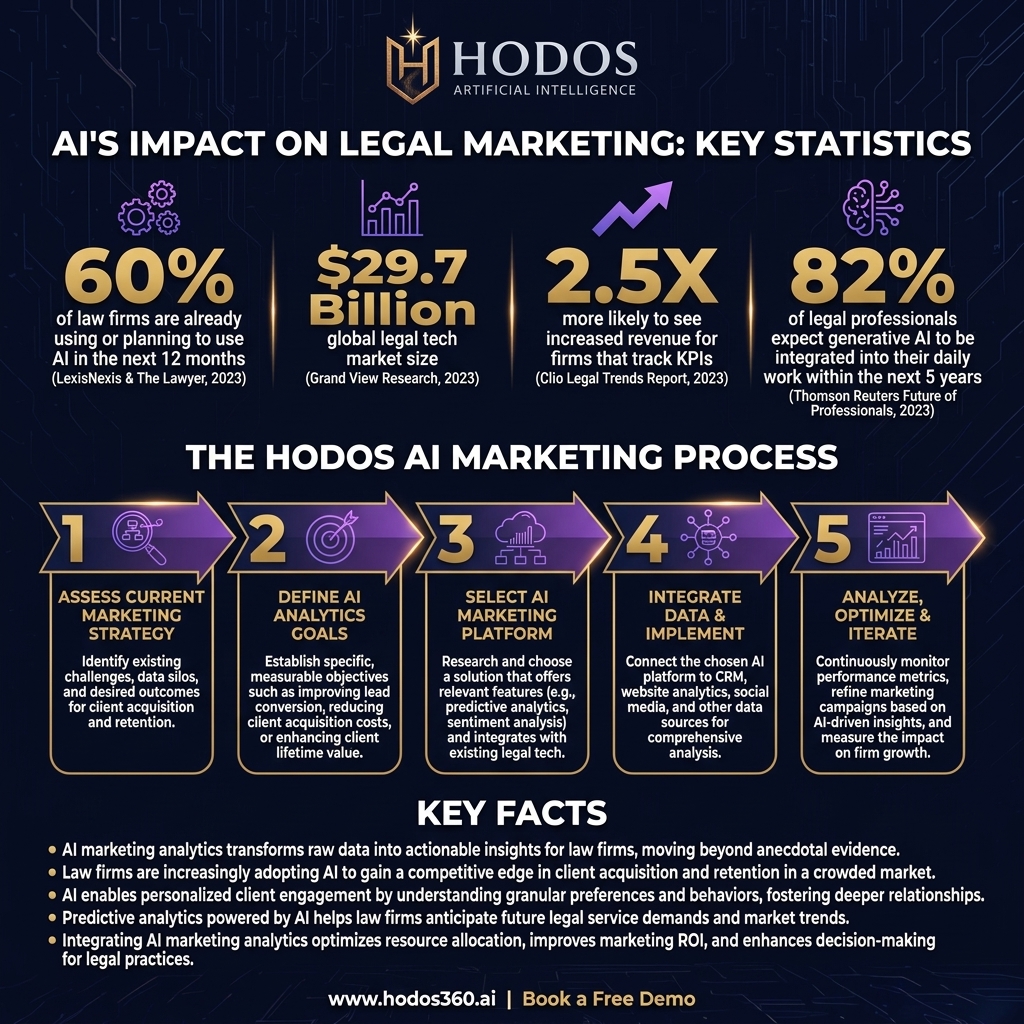
At its core, effective marketing hinges on a deep understanding of the customer. AI Marketing Analytics excels at transforming raw, disparate data into profound insights into client preferences, pain points, and behaviors. Through sentiment analysis of online reviews and social media mentions, AI can gauge public perception of a firm or even specific legal topics, allowing for nuanced adjustments to communication strategies. It identifies key client segments based on demographics, legal needs, and engagement patterns, ensuring that marketing messages resonate with the right audience. This granular understanding moves beyond superficial demographics to reveal the underlying motivations and needs that drive legal service consumption.
The client journey in the legal sector is often complex and lengthy, involving multiple touchpoints. Learn more about Legal AI Adoption: An Essential Roadmap for Law Firms. AI helps map this entire journey, from the initial Google search to the final invoice, identifying critical moments of engagement and potential points of friction. By understanding how customers interact with a firm's website, content, and personnel, AI can pinpoint areas for improvement, personalize outreach, and ensure a seamless experience. For example, if a potential client frequently visits pages on intellectual property law but hasn't yet contacted the firm, AI can trigger a personalized email offering a relevant whitepaper or a free consultation, nurturing the lead proactively.
Hyper-Personalization: Tailoring the Legal Journey
Gone are the days of one-size-fits-all marketing. AI enables hyper-personalization, tailoring every aspect of the client journey to individual needs and preferences. This goes far beyond basic segmentation, creating unique profiles for each potential and existing client. Imagine a prospective client receiving an AI-generated video message from a firm partner, addressing their specific legal concern gleaned from their website browsing history, or a newsletter curated with articles directly relevant to their industry and past legal inquiries. This level of personalized engagement fosters trust and demonstrates a profound understanding of the client's unique situation, significantly increasing conversion rates.
However, hyper-personalization must be approached with ethical considerations firmly in mind. Learn more about Voice AI: Essential Guide to Scaling Safely for Law Firms. Law firms operate under strict confidentiality and privacy rules, such as those outlined in ABA Model Rule 7.1 (Communications Concerning a Lawyer's Services) which requires that communications not be false or misleading. The use of client data for personalized marketing must comply with regulations like the GDPR and CCPA, ensuring data privacy and transparency. Firms must be clear about how client data is collected and utilized, maintaining trust while leveraging AI's power. Tools that generate content must also be carefully managed to ensure accuracy and avoid misrepresentation.
- ✓Client Segmentation & Profiling: AI analyzes vast datasets to identify distinct client groups based on demographics, behavior, and needs, enabling highly targeted marketing campaigns.
- ✓Predictive Lead Scoring: Algorithms assess the likelihood of a prospect converting into a client, prioritizing leads for sales teams and optimizing resource allocation.
- ✓Content Performance Analysis: AI evaluates which articles, videos, and social media posts resonate most with specific audiences, informing future content strategy and maximizing engagement.
- ✓Social Media Listening & Trend Identification: AI monitors online conversations, identifies emerging legal trends, and tracks public sentiment, allowing firms to engage proactively and manage reputation.
- ✓Automated Campaign Optimization: AI continuously analyzes campaign performance across channels, making real-time adjustments to bids, targeting, and ad copy to maximize ROI.
- ✓Competitive Intelligence: AI tracks competitor activities, marketing strategies, and client acquisitions, providing a clear picture of the market landscape and identifying strategic opportunities.
- ✓ROI Tracking & Attribution: AI provides granular analytics on the effectiveness of every marketing dollar spent, attributing conversions to specific touchpoints and proving marketing value.
From Data Overload to Actionable Intelligence: AI's Analytical Prowess
The sheer volume of data available to law firms today can be paralyzing. Website analytics, CRM records, email campaign metrics, social media engagement, and case management notes all contribute to a complex mosaic. Without AI, extracting meaningful insights from these vast amounts of information is a monumental, if not impossible, task. AI acts as a powerful orchestrator, ingesting, processing, and synthesizing data points that human analysts would miss, thereby transforming raw numbers into clear, actionable intelligence. This capability is crucial for identifying subtle trends in client behavior or market shifts that might otherwise go unnoticed, providing a significant competitive advantage.
AI employs sophisticated techniques like machine learning for pattern recognition and Natural Language Processing (NLP) to understand unstructured data from client reviews, legal documents, and even recorded client calls. Learn more about Autonomous AI Marketing: The Ultimate Guide for Law Firms. This allows firms to not only quantify engagement but also understand the *qualitative* aspects of client feedback. For instance, NLP can quickly identify recurring themes in client testimonials, highlighting areas of strength or weakness in service delivery. This powerful analytical framework empowers law firms to optimize everything from their website's user experience to the precise language used in their marketing copy, ensuring every effort is backed by robust data.
ROI Tracking and Optimization: Proving Marketing Value
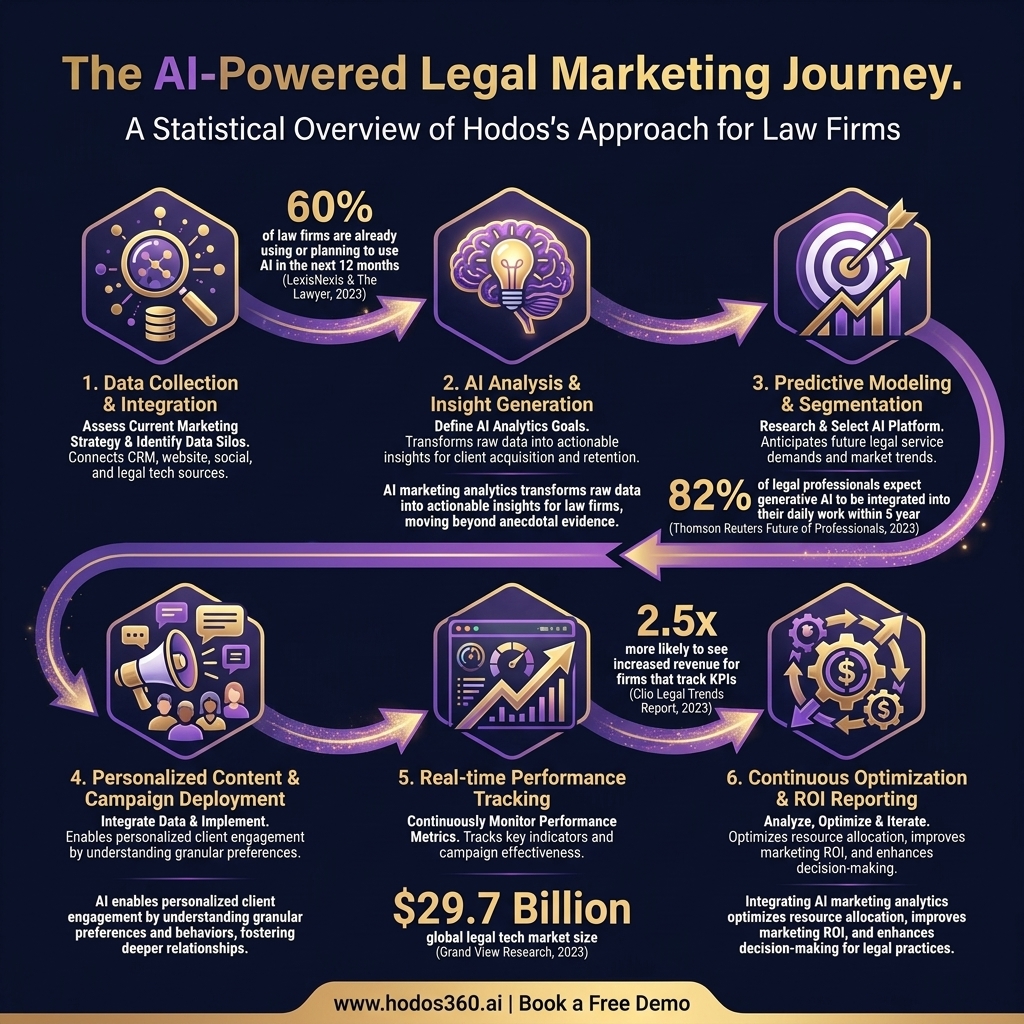
For many law firms, proving the direct return on investment (ROI) for marketing expenditures has historically been a challenge. AI Marketing Analytics changes this by providing granular, real-time tracking and attribution. It can precisely link specific marketing activities – a social media ad, a blog post, an email campaign – to client inquiries, new case openings, and ultimately, revenue. This level of transparency allows firms to move beyond vanity metrics and clearly demonstrate the financial impact of their marketing strategies. A Thomson Reuters report on legal marketing spend revealed that firms that actively track ROI through advanced analytics consistently outperform their peers in terms of client acquisition costs and revenue growth.
Furthermore, AI facilitates continuous campaign optimization. Learn more about AI Defence: The Ultimate Guide to Next-Gen Litigation Tools. Instead of launching a campaign and waiting weeks or months for results, AI can analyze performance in real-time, identifying underperforming elements and suggesting immediate adjustments. This might involve reallocating budget to more effective channels, tweaking ad copy, or refining target audiences. This iterative optimization process ensures that marketing spend is always working at peak efficiency, maximizing the drive towards client acquisition and retention. Integrating these analytics with broader AI-powered legal workflows allows for a holistic view of the client journey, from initial contact to profitable case resolution.
Is your law firm leveraging its marketing data effectively? Discover how AI can turn insights into revenue. Request a Demo of HODOS 360's AI Marketing Platform
Navigating the Ethical Frontier: Responsible AI in Legal Marketing
While the promise of AI Marketing Analytics is immense, its implementation within the legal sector demands a rigorous focus on ethics and compliance. Law firms are custodians of sensitive client information, and the use of AI in marketing must uphold the highest standards of data privacy, confidentiality, and professional responsibility. Concerns about algorithmic bias, where AI systems might inadvertently discriminate against certain client demographics based on historical data, are paramount. The European Union's AI Act, enforced in early 2026, sets a global precedent for regulating AI, categorizing systems by risk level and imposing strict transparency and accountability requirements. Law firms must ensure their AI tools are not only effective but also ethically sound and legally compliant.
Transparency and explainability are crucial. Legal professionals need to understand *how* AI makes its recommendations and *why* certain marketing strategies are proposed. This concept, known as explainable AI (XAI), is vital for maintaining professional oversight and ensuring that AI-driven decisions align with legal ethics. For example, if an AI suggests targeting certain demographics, lawyers must be able to verify that this targeting is not discriminatory or misleading, adhering to principles like ABA Model Rule 7.3 (Solicitation of Clients). Firms should establish robust data governance frameworks, conduct regular audits of their AI systems, and ensure human oversight remains an integral part of the marketing process, particularly when dealing with customer data.

The HODOS 360 Advantage: Driving Law Firm Growth with AI Marketing
Adopting sophisticated AI Marketing Analytics might seem daunting for many law firms, requiring specialized technical expertise and significant investment. This is where integrated platforms like HODOS 360 offer a distinct advantage. HODOS 360 is purpose-built for the legal industry, providing an all-encompassing AI Marketing Platform that simplifies the complexities of advanced analytics and automation. It allows law firms to harness the power of AI without needing to build an in-house data science team, democratizing access to cutting-edge marketing capabilities. From AI-powered website building to AI Voice Assistants for lead qualification, HODOS 360 provides a cohesive ecosystem.
The HODOS 360 AI Marketing Platform empowers law firms with a suite of tools designed to transform their marketing efforts. This includes AI video creation for compelling client narratives, social media automation for consistent online presence, sophisticated content generation that resonates with target audiences, and robust analytics with ROI tracking to measure every aspect of campaign performance. By integrating these services, HODOS 360 provides actionable insights that convert prospects into clients, optimize marketing spend, and ultimately, drive sustainable growth. It streamlines operations, allowing legal professionals to focus on what they do best: practicing law, while the platform ensures their marketing is intelligent, efficient, and highly effective.
The era of guesswork in legal marketing is over. AI Marketing Analytics is no longer a luxury but a fundamental requirement for law firms seeking to compete and flourish in the modern legal landscape. By embracing AI, firms can gain a deeper understanding of their customers, optimize their strategies, and achieve unparalleled efficiency and effectiveness. The insights gleaned from AI-powered tools provide a clear roadmap for growth, ensuring that every marketing dollar is spent strategically. As the legal industry continues its rapid evolution, leveraging the power of AI isn't just about staying relevant; it's about defining the future of legal service delivery and client engagement. The time to act is now, to ensure your firm is at the forefront of this transformative wave.
Ready to revolutionize your law firm's marketing? Get started with HODOS 360 today. Book Your Free HODOS 360 Demo!
Frequently Asked Questions
What is AI Marketing Analytics for law firms?+
AI Marketing Analytics for law firms involves using artificial intelligence technologies to collect, analyze, and interpret vast amounts of marketing data. This includes client demographics, online behavior, engagement metrics, and market trends. The goal is to provide actionable insights that optimize marketing strategies, personalize client outreach, and improve client acquisition and retention, moving beyond traditional, less efficient methods to data-driven decision-making.
How does AI improve customer insights in legal marketing?+
AI significantly enhances customer insights by performing sophisticated analyses that human marketers cannot. It can identify subtle patterns in client behavior, predict future legal needs, segment audiences with high precision, and conduct sentiment analysis on client feedback. This allows law firms to understand their clients on a deeper level, tailor services and communications, and anticipate demands, leading to more effective engagement and stronger client relationships.
Are there ethical concerns with using AI in legal marketing?+
Yes, ethical considerations are paramount. Law firms must navigate issues like data privacy (e.g., GDPR, CCPA), potential algorithmic bias in targeting, and maintaining transparency in AI-driven communications. Adherence to professional conduct rules, such as ABA Model Rule 7.1 concerning truthful advertising, is crucial. Firms must ensure their AI tools are used responsibly, with robust data governance, regular audits, and human oversight to prevent discrimination or misleading practices.
What specific marketing tasks can AI automate for law firms?+
AI can automate numerous marketing tasks, freeing up valuable time for legal professionals. These include content generation for blogs and social media, personalized email campaign deployment, social media scheduling and monitoring, lead scoring and qualification (often via AI Voice Assistants), website optimization, and comprehensive performance reporting. Automation allows for campaigns to run efficiently 24/7, ensuring consistent engagement and optimized resource allocation.
How can law firms measure the ROI of AI marketing investments?+
AI Marketing Analytics provides granular, real-time data to measure ROI. It tracks key performance indicators (KPIs) like lead conversion rates, client acquisition costs, website traffic, engagement metrics, and revenue generated from specific campaigns. AI can attribute conversions to individual marketing touchpoints, offering a clear picture of which strategies are most effective. This data-driven approach allows firms to optimize their marketing spend and demonstrate tangible financial returns.
Is AI marketing suitable for small and medium-sized law firms?+
Absolutely. While often associated with larger enterprises, AI marketing is increasingly accessible and beneficial for small and medium-sized law firms. Platforms like HODOS 360 are designed to provide sophisticated AI tools in an integrated, user-friendly format, leveling the playing field. SMB firms can leverage AI to compete more effectively, optimize limited resources, gain powerful insights into their local markets, and deliver highly personalized services without needing a large marketing department.