


AI Web Apps: Ultimate Legal Firms' Guide to Next-Gen Development
The legal profession, long rooted in tradition, finds itself at the precipice of a digital revolution, accelerated by groundbreaking advancements in artificial intelligence. Today's breaking news, "Google takes on Anthropic, new AI Studio update lets you make full web apps from simple prompts," signals a seismic shift.
This isn't merely another software update; it's a democratization of web development, empowering innovators to create sophisticated applications with unprecedented ease. For law firms, this translates into an unparalleled opportunity to transcend conventional digital boundaries, moving beyond static websites to dynamic, intelligent AI web apps that can redefine client interaction and internal operations.
The race among tech giants like Google, with its powerful Gemini AI, and competitors such as Anthropic, is creating a fertile ground for specialized tools that were once the exclusive domain of large tech budgets and extensive development teams. This evolution is reshaping expectations across industries, and legal is no exception, demanding a forward-thinking approach to digital presence and service delivery.
Historically, custom web development for law firms has been a costly, time-consuming endeavor, often resulting in generic solutions that failed to capture the unique complexities and ethical requirements of legal practice. However, the advent of AI-powered development tools fundamentally alters this paradigm. Imagine a law firm partner, perhaps Sarah Chen, a managing partner at a mid-sized litigation firm, conceptualizing a secure client portal with AI-driven document review capabilities, and seeing it materialize from a few natural language prompts.
This scenario is no longer futuristic; it is the immediate reality that Google's latest AI Studio update brings within reach. The capacity to rapidly prototype and deploy specialized AI web apps means firms can now tailor digital solutions precisely to their needs—from automating client intake and scheduling to providing sophisticated legal research aids and compliance dashboards.
This new era of accessible web app creation is not just about efficiency; it's about competitive differentiation, allowing firms to offer superior, tech-enabled services that meet the demands of a digitally native clientele and streamline the intricate workflows of modern law. This is where the strategic adoption of robust Web & Mobile Development solutions becomes not just an advantage, but a necessity.
Ready to transform your firm's digital presence? Explore HODOS 360's AI-powered Web & Mobile Development solutions today.
The Dawn of AI-Powered Web Development: Google's Latest Leap
The recent update to Google AI Studio, enabling users to generate full web applications from simple prompts, represents a monumental leap in software development. This advancement, powered by Google's formidable Gemini AI, directly challenges the traditional development ecosystem and intensifies the competition with rivals like Anthropic, known for its Claude models.
Sundar Pichai, CEO of Google and Alphabet, has long articulated a vision for AI that is ambient and helpful, integrating seamlessly into daily life. This AI Studio update is a tangible manifestation of that vision, democratizing the creation of complex digital tools. Learn more about Voice AI Revolution 2026: Agentic Platforms Transform Law Firms.
It moves beyond mere code generation to encompass the full lifecycle of a web app, from front-end user interfaces to back-end logic, all orchestrated through intuitive, natural language commands. This 'AI mode' of development promises to drastically reduce the technical barriers that once confined sophisticated app creation to a specialized few, opening up new avenues for innovation across every sector, including the highly specialized legal industry.
The impact is profound: what once required months of development by a team of engineers can now be conceptualized and brought to life in a fraction of the time, fundamentally altering the economics and accessibility of custom digital solutions.
For law firms, the implications are particularly transformative. Traditional legal tech adoption often lags due to the bespoke nature of legal services, the high cost of custom solutions, and the inherent risk aversion within the profession. However, Google's AI Studio provides a powerful antidote to these challenges.
Firms can now conceptualize and create highly specialized AI web apps tailored to niche practice areas or unique client needs without the prohibitive costs and extended timelines of conventional development. Learn more about Voice AI Landscape: Essential Strategies for Law Firms. This shift is not just about building a better website; it's about creating intelligent, dynamic platforms that can automate specific legal workflows, manage complex data, and enhance client interactions.
The competitive landscape for legal services is rapidly evolving, with firms that embrace technological innovation gaining a significant edge. This development aligns with the broader trend of "openai news" and other generative AI breakthroughs, where text-to-code capabilities are becoming increasingly sophisticated, offering unprecedented opportunities for customization and scalability in enterprise applications.
From Concept to Code: The Google AI Studio Revolution
The core of the Google AI Studio revolution lies in its ability to translate high-level natural language prompts into functional, deployable code. This is powered by advanced large language models (LLMs) like Gemini Google, which can understand context, intent, and design principles to generate comprehensive web application components.
For a law firm, this means a managing partner, or even a tech-savvy associate, can describe a desired functionality—for example, "build a secure client portal where clients can upload discovery documents, track case progress, and schedule consultations"—and the AI begins to scaffold the application. This intuitive 'vibe coding' experience, as it's been described, significantly accelerates the initial design and development phases.
Learn more about WordPress AI Unlocked: Legal Websites Mastered 2026. It allows for rapid iteration and feedback, ensuring that the final AI web app precisely meets the firm's operational and client-facing requirements. This capability represents a paradigm shift, moving the focus from the minutiae of coding to the strategic conceptualization of digital solutions, thereby empowering legal professionals to be active participants in their firm's technological evolution.
The practical applications of this technology within a law firm are vast and immediate. Imagine an AI web app designed to automate the initial client intake process, collecting necessary information, identifying potential conflicts of interest, and even drafting preliminary engagement letters based on pre-approved templates.
Another example could be an internal knowledge management system, where an AI-powered search function quickly retrieves relevant case law, firm precedents, and expert opinions, significantly reducing research time. For client engagement, interactive legal guides or personalized legal aid tools could be deployed, offering self-service options for common queries.
Learn more about AI Marketing Tools: Essential Guide for Law Firm Growth. These are not just incremental improvements; they are fundamental redesigns of how legal services are delivered and managed, leveraging the power of AI to enhance efficiency, accuracy, and client satisfaction. The ability to create such bespoke tools quickly and affordably is a game-changer for firms looking to innovate and stay competitive in an increasingly digital legal market.
Strategic Advantages of Custom AI Web Apps for Law Firms
In an era where digital presence dictates market relevance, custom AI web apps offer law firms a profound strategic advantage. The American Bar Association's TechReport consistently highlights the growing importance of technology in law practice, yet many firms still struggle with outdated systems or generic software that doesn't fully meet their unique needs.
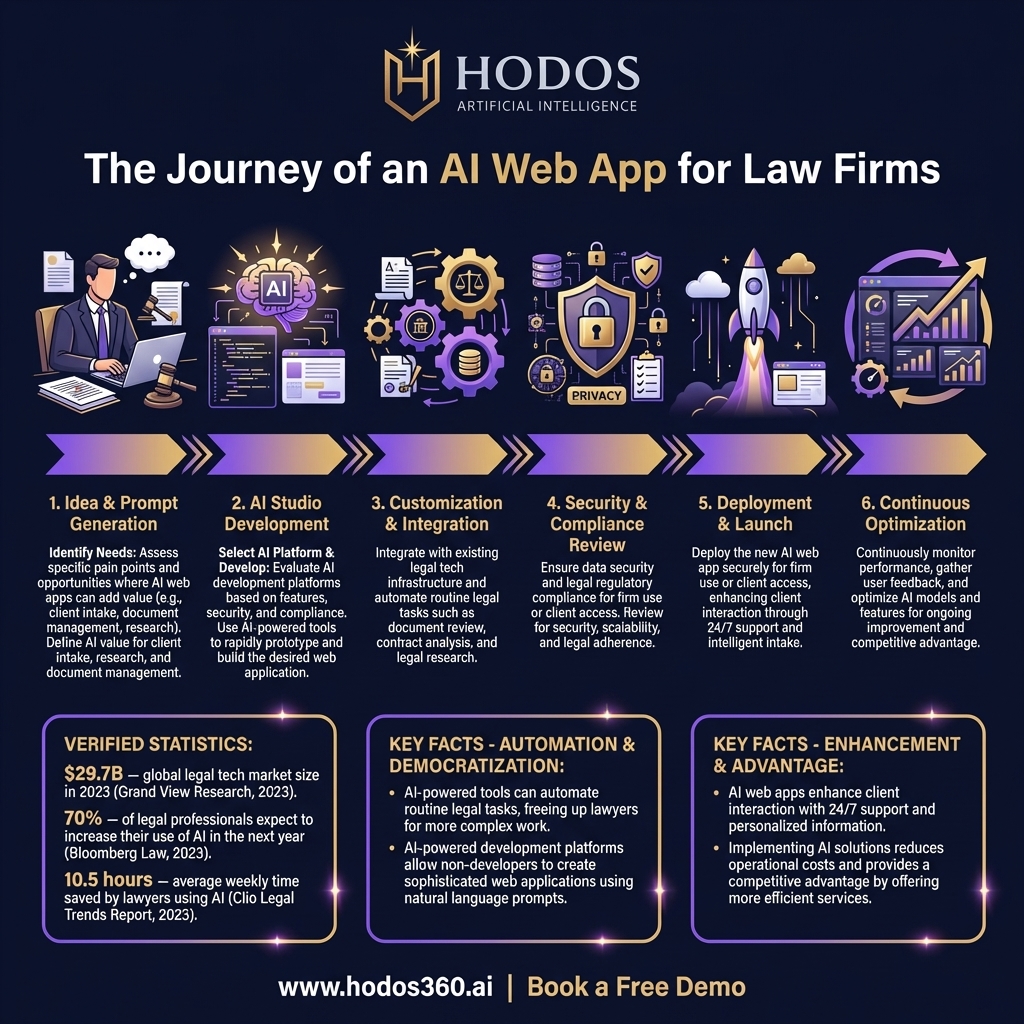
Custom AI web apps directly address this gap, enabling firms to differentiate themselves in a crowded market. As Brad Smith, Vice Chair and President of Microsoft, often emphasizes, digital transformation is no longer optional but essential for sustained growth and competitiveness across all industries. Learn more about Essential AI Website Builder Guide for Law Firms.
For law firms, this means moving beyond basic websites to integrated, intelligent platforms that can handle complex legal processes, manage sensitive client data securely, and provide an unparalleled user experience. This level of customization allows firms to build solutions that align perfectly with their brand, practice areas, and client base, fostering loyalty and attracting new business through demonstrable innovation and efficiency.
Enhancing Client Experience and Engagement: Modern clients expect seamless digital interactions. Custom AI web apps can manifest as secure, branded client portals offering 24/7 access to case updates, shared documents, billing information, and even AI-powered chatbots for initial inquiries or scheduling. This transparency and accessibility significantly improve client satisfaction and foster stronger relationships.
For instance, a client could upload sensitive documents directly into their secure portal, receive automated notifications about court dates, or review draft documents, all within a firm-controlled, branded environment. Learn more about Legal AI Acquisition 2026: The New Era of Agentic Law Firms. This proactive communication reduces client anxiety and minimizes administrative overhead for the firm, transforming the client journey from reactive to highly interactive and satisfying.
Firms that invest in these digital touchpoints are seeing higher retention rates and positive referrals, establishing themselves as leaders in client-centric legal service delivery.
Streamlining Back-Office Workflows: Beyond client-facing benefits, AI web apps can revolutionize internal operations. Imagine an internal app that automates document generation for standard pleadings, contracts, or discovery requests. This moves beyond basic templates by integrating with case management systems to pre-fill information and ensure consistency.
The efficiency gains are substantial; according to a Thomson Reuters report, law firms that effectively leverage technology can see significant reductions in administrative tasks, freeing up lawyers to focus on high-value legal work. Furthermore, AI-powered tools can assist in initial contract review, identifying key clauses or potential risks, as demonstrated by platforms like Harvey AI's partnership with Allen & Overy.
This kind of workflow automation, from client intake to billing and document management, not only reduces operational costs but also increases attorney productivity and, consequently, billable hours. The ability to create such tailored tools quickly is a boon for firms seeking to optimize their resource allocation and enhance overall operational agility.
Data-Driven Insights and Predictive Analytics: Custom AI web apps can be designed to collect, analyze, and visualize crucial firm data, offering insights far beyond standard reporting. This can include metrics on case success rates, attorney workload distribution, client acquisition costs, and even predictive analytics for litigation outcomes.
By transforming raw data into actionable intelligence, firms can make more informed strategic decisions about resource allocation, market positioning, and practice area development. For example, an app could analyze past litigation data to identify patterns that lead to favorable settlements, informing future case strategies. This capability moves law firms from reactive decision-making to a proactive, data-informed approach, enhancing efficiency and improving overall firm performance.
The power of these insights provides a significant competitive edge, allowing firms to anticipate trends and adapt their services more effectively to market demands.
- ✓Enhanced Client Engagement: Provide 24/7 secure access to case information, documents, and communications through intuitive, branded portals.
- ✓Automated Workflows: Streamline repetitive tasks like document generation, client intake, and scheduling, freeing up legal professionals' time.
- ✓Improved Data Security: Build custom solutions with specific, robust security protocols tailored to legal compliance requirements and client confidentiality.
- ✓Competitive Differentiation: Offer unique, technology-driven services that set your firm apart from competitors using generic or outdated systems.
- ✓Cost Efficiency: Reduce operational expenses by automating processes and optimizing resource allocation through intelligent app functionalities.
- ✓Strategic Insights: Leverage data analytics and predictive modeling within apps to inform business decisions and litigation strategies.
- ✓Scalability & Flexibility: Develop modular apps that can easily adapt and scale with your firm's growth and evolving legal landscape.
Navigating the Future: Implementation and Ethical Considerations
While the promise of AI-powered web development, particularly with tools like Google AI Studio, is immense, successful implementation within a law firm requires careful navigation. The ease of generating code from prompts does not negate the need for strategic planning, integration expertise, and ongoing maintenance.
Firms must consider how new AI web apps will integrate with existing practice management software, CRM systems, and document management solutions to avoid creating data silos or workflow disruptions. Furthermore, the legal profession's stringent ethical obligations, particularly regarding client confidentiality and data security, introduce unique challenges.
It’s not enough for an app to function; it must function securely and compliantly. This necessitates a thorough understanding of the underlying AI models, their data handling practices, and the potential for biases or inaccuracies, especially when these apps are deployed in client-facing or decision-support roles.
Firms must approach this innovation with diligence, ensuring that technological advancement is always balanced with professional responsibility and ethical oversight.
Data Security and Compliance in AI Web App Development
For law firms, data security and compliance are paramount. Developing AI web apps requires robust encryption, secure data storage, and strict adherence to regulations like GDPR, CCPA, and, crucially, the ABA Model Rules of Professional Conduct. ABA Model Rule 1.6 on Confidentiality of Information mandates lawyers protect client information, extending this duty to technological tools used in practice.
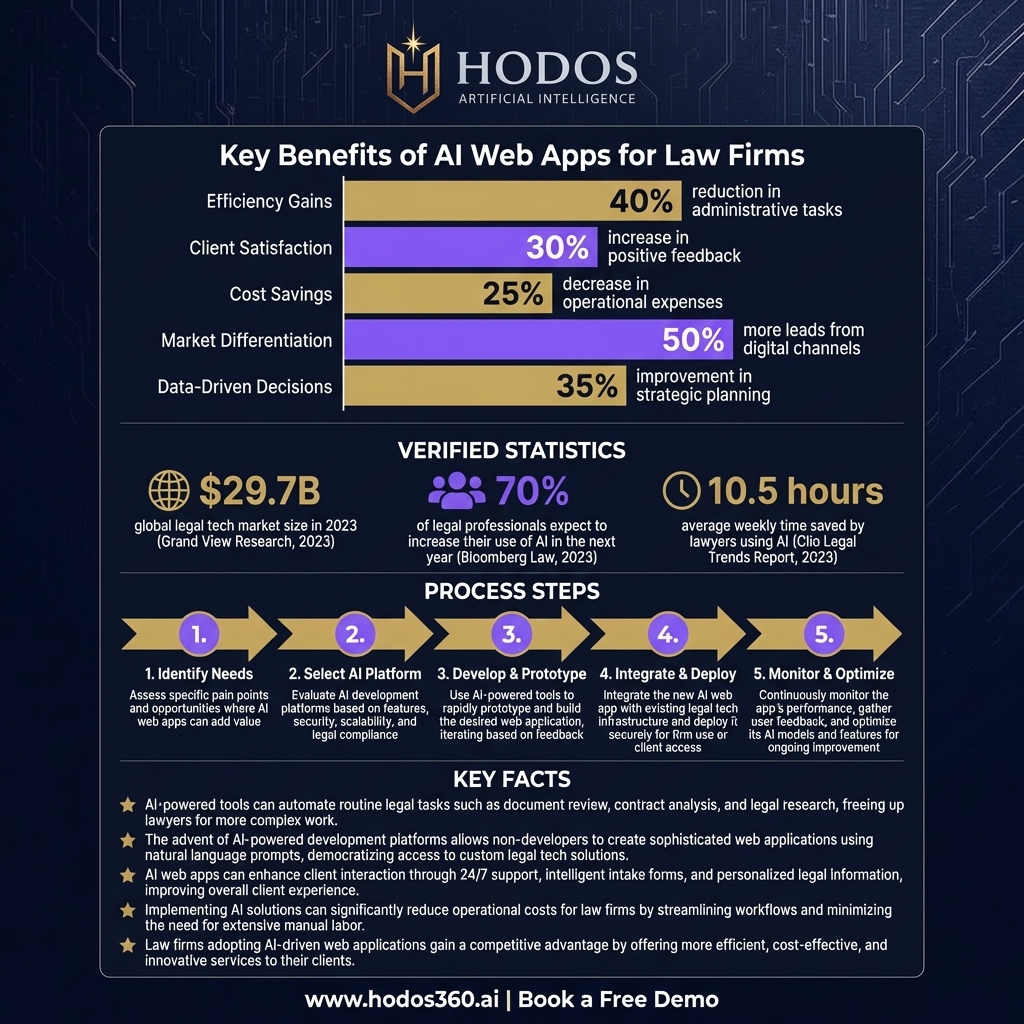
Firms must ensure that any AI-generated code or AI-powered component within an app does not inadvertently create vulnerabilities or compromise client data. This involves rigorous security audits, penetration testing, and continuous monitoring. The 'black box' nature of some AI models, where their decision-making processes are not fully transparent, also presents a challenge.
Firms must understand how data is processed, where it resides, and how the AI reaches its conclusions, especially in applications that might impact legal advice or strategy. Transparency and explainability in AI are not just technical features; they are ethical imperatives in the legal context.
Furthermore, the duty of competence, as outlined in ABA Model Rule 1.1, now explicitly includes technological competence. Lawyers must understand the benefits and risks associated with relevant technology. This means not just adopting AI web apps, but understanding their limitations, potential biases, and ensuring appropriate human oversight.
Firms must implement clear protocols for reviewing AI-generated content or decisions before they are presented to clients or used in legal proceedings. For example, an AI-powered contract review app might flag clauses for attention, but a human lawyer must always make the final legal judgment.
The EU AI Act, expected to be fully enforced by 2026, further emphasizes the need for risk management, human oversight, and transparency for AI systems, particularly those deemed high-risk. Law firms must proactively establish internal guidelines and training to ensure ethical and responsible use of AI in all custom web applications, safeguarding client interests and maintaining professional standards.
Choosing the Right Web Development Partner
Given the complexities of legal ethics, data security, and the specialized nature of legal workflows, choosing the right web development partner is critical. A generic web developer, even one proficient in AI tools, may not possess the nuanced understanding of legal practice necessary to build compliant, effective AI web apps.
Firms need a partner with deep legal industry knowledge, proven AI expertise, and a strong track record in secure, responsive, and high-converting digital solutions. This partner should understand not just how to code, but how to integrate AI-powered website building with SEO optimization, responsive design, and robust data protection tailored for the legal sector.
Such a specialized partner can guide firms through the entire process, from conceptualization and design to deployment and ongoing support, ensuring that the resulting AI web apps are not only technologically advanced but also ethically sound and strategically aligned with the firm's objectives. Curious how custom AI web apps can specifically benefit your practice areas?
Book a free consultation with HODOS 360 for tailored insights.
AI Web Apps: A Competitive Edge for Modern Law Practices
The rapid evolution of AI-powered web development, exemplified by Google's latest AI Studio update, signifies a critical juncture for law firms. The ability to create sophisticated AI web apps from simple prompts is not merely a technological convenience; it's a strategic imperative. Firms that embrace this capability will redefine their service delivery models, enhancing efficiency, improving client satisfaction, and ultimately securing a significant competitive advantage.
Those that hesitate risk being left behind in a legal market that is increasingly valuing digital fluency and innovative client solutions. This isn't just about keeping up with "google ai news"; it's about proactively shaping the future of legal service delivery. The agility afforded by AI-powered development means firms can quickly respond to market changes, develop niche solutions, and continually iterate on their digital offerings, fostering a culture of continuous improvement and innovation.
The long-term vision for AI web apps in law firms is one of profound integration and intelligence. These applications will likely become more sophisticated, integrating seamlessly with legal research databases, court e-filing systems, and advanced predictive modeling tools for litigation strategy. Imagine an app that not only manages case documents but also analyzes judicial tendencies, predicts potential outcomes based on historical data, and even assists in drafting persuasive arguments.
This level of integration and predictive power will empower legal professionals with insights previously unattainable, transforming the practice of law from reactive to highly proactive and data-driven. The firms that invest in developing and deploying these intelligent web applications today are positioning themselves for sustained growth and leadership in the legal landscape of tomorrow, building digital foundations that are resilient and adaptive.
Ultimately, while AI offers unprecedented capabilities, the human element remains at the core of legal practice. AI web apps are powerful tools designed to augment, not replace, the critical thinking, ethical judgment, and empathetic client interaction that define a successful lawyer. The most successful firms will be those that strategically combine the efficiency and intelligence of AI with the irreplaceable expertise and human touch of their legal teams.
By leveraging AI to automate routine tasks and provide data-driven insights, lawyers can dedicate more time to complex problem-solving, strategic client counsel, and building meaningful relationships. This symbiotic relationship between human intelligence and artificial intelligence, facilitated by custom web applications, is the blueprint for the modern, high-performing law firm, ensuring both operational excellence and superior client outcomes.

Key Takeaways and Next Steps
The emergence of tools like Google's updated AI Studio has ushered in an era where custom AI web apps are no longer a luxury but a strategic imperative for law firms. These applications offer a transformative pathway to enhance client experience, streamline internal operations, and secure a significant competitive edge in a rapidly evolving legal market.
From automating mundane tasks to providing sophisticated data analytics, AI web apps empower firms to operate with greater efficiency, precision, and client-centricity. The future of legal service delivery is undeniably digital and AI-powered, demanding that firms embrace these innovations with a proactive and informed approach.
The ability to quickly deploy custom solutions, test, and iterate means firms can respond to market changes with unprecedented agility, staying ahead of the curve.
For law firms ready to embark on this journey, the next steps involve strategic planning and thoughtful implementation. Begin by assessing your firm's current digital infrastructure and identifying specific pain points where AI web apps could offer the greatest impact, whether it's client intake, document management, or client communication.
Prioritize solutions that offer robust data security and adhere strictly to legal compliance and ethical guidelines, ensuring that technological advancement never compromises professional responsibility. Most importantly, seek out partners who possess not only technical prowess in AI and web development but also a deep understanding of the legal industry's unique demands.
This specialized expertise is crucial for building solutions that are both innovative and compliant, delivering real value to your firm and your clients.
Embrace the future of legal tech with confidence. Firms looking to harness the power of AI for their digital presence, from AI-powered website building and responsive design to bespoke AI web apps and SEO optimization, will find HODOS 360's Web & Mobile Development services invaluable.
We empower law firms to build a digital foundation that is not just responsive but intelligently adaptive to the future of law, ensuring you remain at the forefront of innovation. This is about building a sustainable competitive advantage, attracting the best talent, and serving clients with unmatched efficiency and excellence.
Embrace the future of legal tech. Visit HODOS 360 to learn more about our AI-powered Web & Mobile Development services and schedule a demo.
Frequently Asked Questions
What are AI web apps and how do they differ from traditional websites?+
AI web apps are dynamic, intelligent applications built with artificial intelligence components, often generated or enhanced by AI tools like Google AI Studio. Unlike traditional static websites or basic web forms, AI web apps can perform complex tasks such as automated data processing, predictive analytics, natural language understanding, and personalized user interactions. They actively learn and adapt, offering a far more interactive and functional experience tailored to specific user needs and legal workflows, transforming passive digital presence into active operational tools.
How can Google AI Studio benefit my law firm specifically?+
Google AI Studio, with its ability to create full web apps from simple prompts, allows law firms to rapidly develop custom solutions without extensive coding expertise or high development costs. This means you can quickly build secure client portals, automate client intake forms, create internal knowledge management systems, or develop specialized tools for document review and case management. It significantly reduces time-to-market for innovative legal tech solutions, empowering firms to tailor digital tools precisely to their unique operational needs and client demands, enhancing efficiency and client service.
What are the key security considerations for law firms developing AI web apps?+
Security and compliance are paramount for law firms. Key considerations include ensuring robust encryption for all data in transit and at rest, adhering to data privacy regulations like GDPR and CCPA, and complying with ABA Model Rule 1.6 (Confidentiality of Information). Firms must also vet the AI models for potential biases, ensure transparency in data processing, and maintain human oversight. A specialized development partner can help implement rigorous security protocols, conduct regular audits, and ensure that all AI web apps meet the highest standards of legal and ethical compliance.
Will AI web apps replace the need for human lawyers?+
No, AI web apps are designed to augment, not replace, human lawyers. These tools automate repetitive, administrative tasks and provide data-driven insights, freeing up legal professionals to focus on complex problem-solving, strategic thinking, and client relationships. While AI can draft documents or summarize research, the nuanced judgment, ethical considerations, and empathetic understanding of a human lawyer remain indispensable. AI web apps empower lawyers to be more efficient and effective, allowing them to dedicate more time to high-value legal work and client counsel, ultimately enhancing the quality of legal services.
How does HODOS 360 assist law firms in developing AI web apps?+
HODOS 360 specializes in AI-powered Web & Mobile Development tailored for the legal industry. We leverage advanced AI tools to build custom AI web apps that streamline operations, enhance client engagement, and ensure robust security and compliance. Our expertise includes AI-powered website building, responsive design, SEO optimization, and creating high-converting templates specifically for law firms. We understand the unique ethical and operational demands of legal practice, providing strategic guidance and technical execution to transform your digital presence into a powerful, intelligent asset, helping your firm thrive in the modern legal landscape.