


Legal AI Adoption: An Essential Roadmap for Law Firms
The legal industry is at a pivotal juncture, where the integration of artificial intelligence is rapidly shifting from a futuristic concept to an immediate strategic necessity. This transformation is not just about incremental improvements; it’s about fundamentally rethinking how legal services are delivered, managed, and expanded.
The recent pronouncement by ELTEMATE CEO Sebastian Lach, highlighted by Law.com, that legal departments are “leading the way” with AI adoption, serves as a powerful testament to this accelerating trend. Lach's insights, stemming from ELTEMATE's deep collaboration with legal powerhouses like Hogan Lovells, underscore a critical reality: firms that embrace AI are not merely gaining an edge; they are defining the future of legal practice.
This isn't a speculative venture; it's a strategic imperative born from tangible demands for efficiency, innovation, and client-centricity.
The narrative surrounding AI in law has matured beyond initial skepticism, evolving into a sophisticated discussion about implementation, ethical considerations, and competitive advantage. For law firm owners, managing partners, and legal professionals, understanding this shift is paramount.
The current landscape is characterized by a palpable tension between traditional methodologies and the disruptive, yet immensely promising, capabilities of AI. Firms that have hesitated are now witnessing their more agile counterparts, like those leveraging platforms such as ELTEMATE, achieve unprecedented levels of operational efficiency and client satisfaction.
This isn't just about automating mundane tasks; it's about empowering legal teams to focus on high-value work, strategic thinking, and complex problem-solving, areas where human expertise is irreplaceable. The challenge now lies in navigating this complex technological terrain responsibly, ensuring that AI tools enhance, rather than compromise, the core principles of justice and client advocacy.
Indeed, the proactive stance of legal departments, as observed by Sebastian Lach, signals a broader industry awakening. This isn't a passive adoption; it's a deliberate and strategic integration driven by a clear understanding of AI's potential to streamline processes, enhance decision-making, and unlock new avenues for growth.
From sophisticated document automation to predictive analytics in litigation, the applications are vast and growing. The firms that are truly leading are those that view AI not as a threat, but as a powerful co-pilot, augmenting human intelligence and expanding the reach of legal services.
This comprehensive guide will delve into the multifaceted dimensions of Legal AI Adoption, providing a clear roadmap for law firms to harness these transformative technologies effectively, ensuring they remain competitive and relevant in an increasingly AI-driven world.
The Shifting Landscape: Why Legal Departments Lead AI Adoption
The assertion by ELTEMATE CEO Sebastian Lach that legal departments are at the forefront of AI adoption isn't just an observation; it's a reflection of a fundamental shift in how legal services are perceived and delivered. Historically, the legal sector has been slow to embrace technological disruption, often prioritizing tradition and established practices.
However, the sheer volume of data, the increasing pressure for cost-efficiency, and the demand for faster, more accurate legal outcomes have created an undeniable impetus for change. Lach's perspective, informed by ELTEMATE's work with major firms like Hogan Lovells, highlights that in-house legal teams and forward-thinking law firms are proactively seeking AI solutions to manage complex litigation, streamline contract review, and enhance regulatory compliance.
This proactive stance is driven by a clear return on investment: AI tools can analyze vast datasets in minutes, identify patterns that human eyes might miss, and automate repetitive tasks, freeing up legal professionals for more strategic, client-facing work.
Consider the operational pressures faced by legal departments today.
They are often asked to do more with less, manage an ever-growing portfolio of cases, and navigate increasingly complex regulatory environments. This environment makes solutions for Legal AI Adoption not just attractive, but essential. According to the ABA TechReport 2023, the adoption of AI tools in law firms, while still nascent in some areas, saw a significant uptick, particularly in document review and legal research.
Firms utilizing AI for document automation reported up to a 30% reduction in time spent on initial drafts, and a 20% improvement in accuracy for contract analysis, as per a 2024 Thomson Reuters Institute report. Learn more about AI Web Apps: Ultimate Legal Firms' Guide to Next-Gen Development.
These aren't marginal gains; they are substantial improvements that directly impact profitability and client satisfaction. The drama unfolds as firms realize that neglecting AI is no longer a sustainable option, with early adopters like Hogan Lovells leveraging platforms such as ELTEMATE to gain a competitive edge in managing large-scale legal operations and delivering superior client outcomes.
The strategic advantage derived from early and effective Legal AI Adoption is becoming increasingly evident. Firms that integrate AI into their core operations are not only achieving greater efficiencies but are also positioning themselves as innovators, attracting top talent and high-value clients. For instance, the use of machine learning algorithms in eDiscovery can drastically reduce the time and cost associated with identifying relevant documents, a process that historically consumed immense resources.
Moreover, AI-powered predictive analytics can offer insights into case outcomes, settlement probabilities, and judicial tendencies, providing lawyers with a powerful tool for strategic planning. This shift is creating a divide: firms embracing AI are agile, data-driven, and client-focused, while those resisting are at risk of being outmaneuvered.
The message from leaders like Sebastian Lach is clear: the future of legal practice is intertwined with intelligent automation, and proactive engagement is no longer a choice, but a necessity for survival and growth.
Streamlining Workflows with Intelligent Automation
The core promise of AI in legal practice lies in its ability to streamline workflows, reducing the burden of administrative and repetitive tasks, and thereby enhancing operational efficiency. This is where comprehensive AI Law Firm Management Systems, like the one offered by HODOS 360, become indispensable.
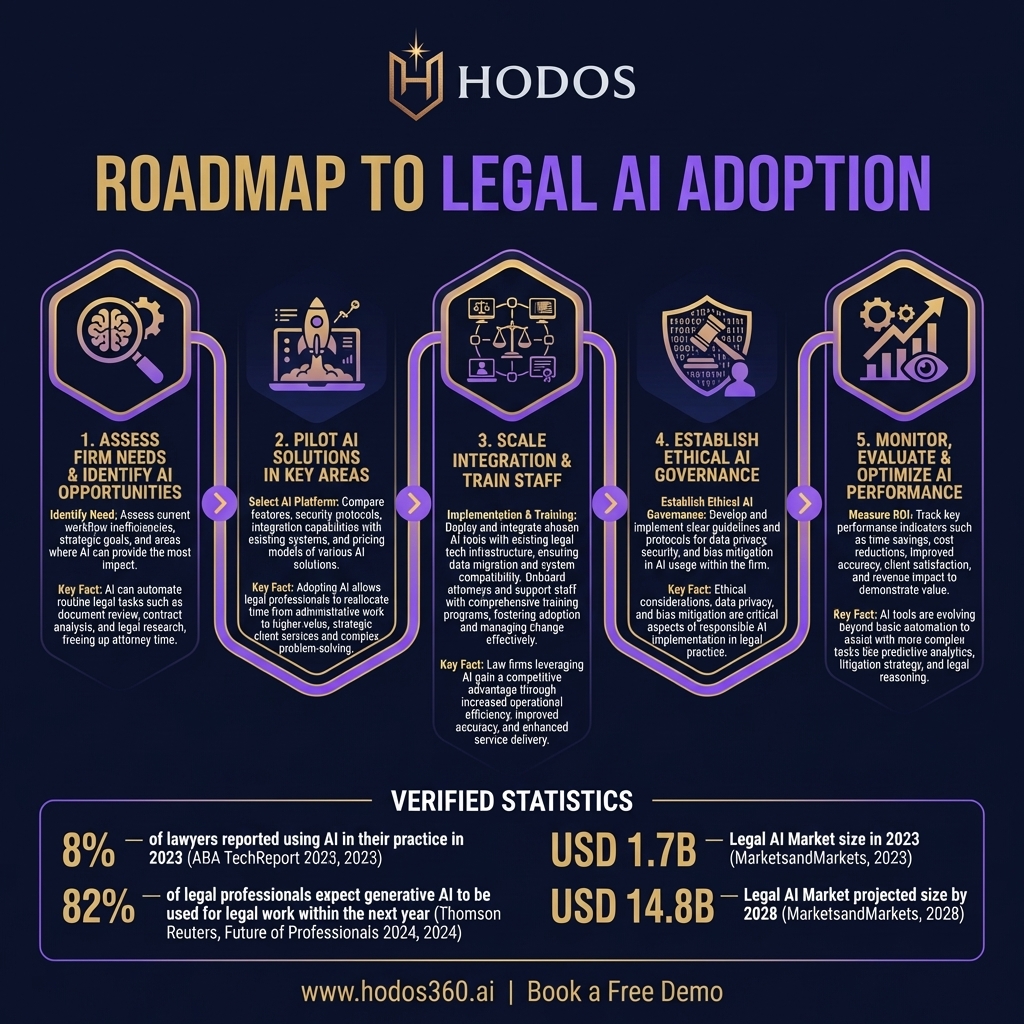
These platforms integrate various critical functions, from case management and billing to client intake and document automation, all powered by AI-driven legal workflows. Imagine a system where new client information is automatically extracted from intake forms, populating relevant fields across case files, billing systems, and communication platforms.
This eliminates manual data entry errors, saves countless hours, and ensures consistency across all client interactions. The shift from manual processes to intelligent automation is a game-changer, allowing legal professionals to reallocate their time to more complex analytical tasks and direct client engagement. The impact extends beyond mere time-saving; it fundamentally redefines how a law firm operates, making it more agile, responsive, and ultimately, more profitable.
The implementation of AI-powered legal workflows can transform virtually every aspect of a law firm's daily operations. For instance, document automation, a key feature in modern AI management systems, allows firms to generate complex legal documents—contracts, pleadings, and agreements—with unprecedented speed and accuracy. Learn more about Legal AI Adoption: An Essential Guide for Discerning Firms.
By leveraging templates and pre-approved clauses, AI can draft documents that meet specific client needs while ensuring compliance with relevant legal standards. This capability significantly reduces the time spent on drafting, proofreading, and revising, allowing attorneys to focus on the substantive legal strategy. Furthermore, AI-driven case management systems can provide real-time updates on case progress, automate reminders for deadlines, and organize vast amounts of case-related data, making it easily accessible and searchable.
This level of organizational efficiency, once considered aspirational, is now a tangible reality for firms embracing advanced legaltech solutions. The competitive landscape demands that firms not only adopt these tools but integrate them seamlessly into their operational fabric to truly unlock their potential. Ready to explore how AI can transform your practice?
Discover the HODOS 360 platform and book a free demo today.
Beyond Operations: AI's Impact on Client Engagement and Growth
While operational efficiency is a significant driver for Legal AI Adoption, the true transformative power of AI extends far beyond internal processes, profoundly impacting client engagement, marketing, and ultimately, firm growth. In today's competitive legal market, client experience is paramount. Firms are no longer just selling legal expertise; they are selling convenience, responsiveness, and a seamless journey.
This is where AI Marketing Platforms and AI Voice Assistants, such as those offered by HODOS 360, play a crucial role. An AI Marketing Platform can revolutionize how firms attract and retain clients, automating content generation for blogs and social media, creating AI-powered video content, and providing detailed analytics to track ROI.
This allows firms to craft highly targeted campaigns, reach potential clients more effectively, and measure the impact of their marketing efforts with precision, moving beyond traditional, often inefficient, marketing tactics to data-driven strategies.
The integration of AI Voice Assistants offers a paradigm shift in client communication and lead qualification.
Imagine a 24/7 virtual receptionist capable of answering phone calls, qualifying leads based on predefined criteria, booking appointments directly into attorneys' calendars, and even providing multilingual support. This not only ensures that no potential client inquiry goes unanswered but also frees up administrative staff to handle more complex tasks.
For example, a small firm struggling with call volume can leverage an AI voice assistant to manage initial inquiries, route calls to the appropriate department, and capture crucial lead information, ensuring that valuable prospects are never missed. Learn more about Legal AI Gap: Bridging the Divide for Law Firms in 2026.
This level of responsiveness significantly enhances the client experience, projecting an image of a modern, highly efficient, and client-centric firm. The ability to engage clients effectively, from the very first touchpoint, is a critical differentiator in a crowded market, directly contributing to lead conversion and long-term client loyalty.
Furthermore, AI-powered web and mobile development capabilities are essential for creating a strong digital presence that resonates with modern clients. An AI-powered website builder can ensure responsive design, SEO optimization, and high-converting templates, making a firm's online presence both professional and effective. In an era where a firm's website is often the first point of contact, ensuring it is user-friendly, informative, and optimized for search engines is critical.
The combination of an intelligent online presence, proactive AI marketing, and responsive AI voice assistants creates a holistic client engagement strategy that not only attracts new business but also deepens relationships with existing clients. This comprehensive approach to Legal AI Adoption for client-facing functions is not merely about convenience; it's about building a future-proof practice that consistently delivers exceptional value and service, ensuring sustainable growth in a rapidly evolving market.
To truly lead the way in legal innovation, strategic AI integration is paramount. Learn how HODOS 360's comprehensive suite can empower your firm.
Enhancing Client Experience with AI-Powered Communication
The modern client expects instantaneous communication, personalized interactions, and transparent processes. AI-powered communication tools are uniquely positioned to meet these expectations, transforming the client experience from transactional to truly collaborative. Beyond the initial lead qualification, AI can facilitate ongoing communication, providing clients with automated updates on their case status, answering frequently asked questions through chatbots on a firm's website, and even personalizing legal content based on their specific needs.
This proactive communication strategy reduces client anxiety, builds trust, and fosters a sense of being well-informed and cared for. For example, an AI system can send automated reminders for upcoming court dates or document submission deadlines, ensuring clients are always prepared and reducing the administrative burden on paralegals.
This level of attentive service, powered by intelligent automation, significantly elevates the overall client journey, distinguishing firms that embrace these technologies.
The ability to offer multilingual support through AI Voice Assistants also opens up new markets and ensures inclusivity. In a globalized world, law firms often serve diverse client bases.
Learn more about AI Studio Update: Essential Web App Creation for Law Firms. An AI assistant capable of communicating effectively in multiple languages removes communication barriers, making legal services more accessible and client interactions smoother. This is not just a convenience; it's a strategic advantage that allows firms to expand their reach and cater to a broader demographic.
Moreover, the data collected from these AI-powered interactions can provide invaluable insights into client needs, preferences, and pain points, allowing firms to continually refine their services and communication strategies. By leveraging AI to enhance every touchpoint of the client journey, firms can build stronger relationships, increase client satisfaction, and cultivate a reputation for innovation and exceptional service.
This strategic application of AI ensures that firms remain client-centric while achieving unprecedented levels of operational efficiency.
Navigating the Ethical and Practical Challenges of AI Integration
While the benefits of Legal AI Adoption are compelling, the journey is not without its complexities, particularly concerning ethical considerations and practical implementation challenges. Attorneys are bound by strict ethical duties, including competence, confidentiality, and supervision of non-lawyers, as outlined in the ABA Model Rules of Professional Conduct (e.g., Rule 1.1 on Competence and Rule 1.6 on Confidentiality of Information).
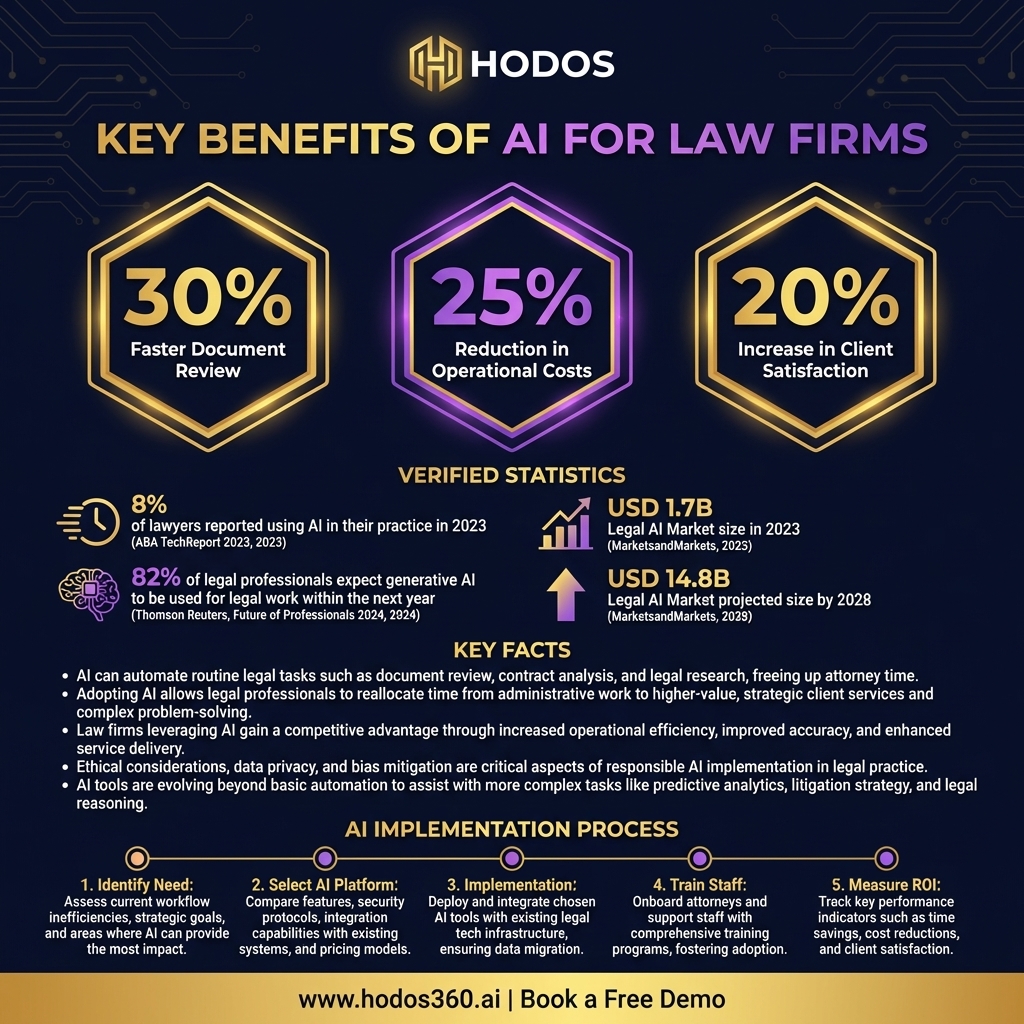
Integrating AI requires careful navigation to ensure these duties are upheld. For instance, lawyers must understand the limitations and potential biases of AI tools to maintain their duty of competence. The use of AI in tasks involving client data necessitates robust data privacy protocols to prevent breaches and maintain confidentiality, especially in light of evolving regulations like the EU AI Act, which imposes strict requirements on high-risk AI systems.
The drama here lies in striking a balance between leveraging cutting-edge technology and adhering to the foundational principles of legal ethics, ensuring that AI augments, rather than compromises, the integrity of legal practice.
One significant practical challenge is data quality. AI systems are only as good as the data they are trained on.
Firms must invest in cleaning and structuring their existing data to ensure that AI tools can operate effectively and produce reliable results. This often requires a significant upfront investment in data governance and infrastructure. Another hurdle is user adoption. Even the most sophisticated AI tools will fail if attorneys and staff are reluctant to use them.
Learn more about AI Chatbot Builders: Transform Your Law Firm in 2026. This underscores the need for comprehensive training programs that not only teach the mechanics of the software but also articulate the 'why' behind the adoption, demonstrating how AI can enhance their professional lives and client outcomes.
The resistance to change, a common human conflict, must be addressed through clear communication, visible leadership buy-in, and ongoing support. Law firms must recognize that technology implementation is as much about people and processes as it is about the technology itself, demanding a phased and thoughtful rollout strategy.
Furthermore, the legal industry is grappling with the implications of AI on the very nature of legal work. While AI excels at pattern recognition and automation, human judgment, empathy, and strategic thinking remain irreplaceable. The challenge is not to replace lawyers with AI, but to empower lawyers with AI.
This requires a shift in mindset, viewing AI as a co-pilot rather than a competitor. Firms must develop clear policies on the responsible use of AI, defining what tasks can be delegated to AI, how AI outputs should be reviewed and verified, and how to address potential errors or biases.
The long-term success of Legal AI Adoption hinges on this nuanced approach, fostering a culture where technology is embraced as a tool to enhance legal professionalism and client service, rather than a threat to traditional roles. This delicate balance requires continuous evaluation and adaptation, ensuring that the ethical responsibilities of the legal profession remain paramount.
Best Practices for a Successful AI Implementation Roadmap
Implementing an AI roadmap successfully requires a structured, strategic approach that accounts for both technological and human elements. Firms embarking on Legal AI Adoption should begin with a thorough assessment of their current workflows and identify specific pain points where AI can deliver the most significant impact.
This might involve piloting AI tools in specific departments or for particular case types to demonstrate tangible benefits and build internal champions. A key best practice is to start small, learn fast, and then scale. For example, a firm might first implement AI for document review in a specific practice area before rolling it out firm-wide.
Critical to success is the establishment of a dedicated AI governance committee, comprising legal, IT, and administrative leaders, to oversee strategy, ethical guidelines, and vendor selection. This committee would be responsible for evaluating different legaltech solutions, ensuring they align with the firm’s strategic objectives and ethical obligations.
Learn more about Voice AI: Ultimate Competitive Landscape for Law Firms. Training and continuous education are also non-negotiable. Lawyers and staff need hands-on training, not just on how to use the software, but also on understanding AI's capabilities and limitations, fostering a culture of informed adoption.
Finally, firms must commit to continuous monitoring and evaluation of their AI systems. This includes tracking key performance indicators (KPIs) like efficiency gains, cost savings, and client satisfaction, and using this data to refine and optimize their AI strategy. By following these best practices, law firms can navigate the complexities of AI integration, mitigate risks, and unlock the full potential of these transformative technologies, ensuring a sustainable and competitive future.

Key Takeaways and Next Steps
The insights from ELTEMATE CEO Sebastian Lach and the broader industry trends unequivocally point to a future where Legal AI Adoption is not merely an option but a strategic imperative for law firms seeking to thrive. The narrative is clear: firms that embrace AI are poised for unparalleled efficiency, enhanced client engagement, and sustainable growth.
From streamlining internal operations with AI-powered case management and document automation to revolutionizing client acquisition through AI marketing and 24/7 AI voice assistants, the potential for transformation is immense. The challenge lies in thoughtful, ethical implementation, ensuring that technology serves to augment human expertise and uphold the core values of the legal profession.
As firms like Hogan Lovells demonstrate, strategic partnerships and a commitment to innovation are key to navigating this new landscape.
For law firm owners and legal professionals looking to embark on or accelerate their AI journey, the time for decisive action is now. The market rewards agility and foresight.
This means not only investing in the right technologies but also fostering a culture of innovation and continuous learning within your firm. Consider evaluating comprehensive platforms that offer integrated solutions across management, marketing, and client communication, reducing the complexity of managing disparate systems. The goal is to create a cohesive ecosystem where AI empowers every facet of your practice, from the back office to client-facing interactions.
Don't get left behind in the AI revolution. Explore HODOS 360's integrated AI solutions to future-proof your firm. Book a free demo now.
- ✓Strategic Imperative: Legal AI adoption is no longer optional; it's essential for competitive advantage and operational excellence, as evidenced by leading firms.
- ✓Operational Efficiency: AI Law Firm Management Systems automate tasks like case management, billing, and document generation, freeing lawyers for high-value work.
- ✓Enhanced Client Engagement: AI Marketing Platforms and AI Voice Assistants revolutionize client acquisition, communication, and overall experience, ensuring 24/7 responsiveness.
- ✓Ethical Integration: Firms must prioritize ethical considerations, data privacy, and responsible AI use, guided by principles like the ABA Model Rules.
- ✓Data-Driven Decisions: AI leverages data for better insights in legal research, eDiscovery, and predictive analytics, leading to more informed strategic decisions.
- ✓Continuous Learning: Successful AI implementation requires ongoing training, a culture of innovation, and regular evaluation of AI tools and strategies.
- ✓Integrated Solutions: Opting for comprehensive, integrated AI platforms can simplify adoption and maximize benefits across all firm operations and client services.
Frequently Asked Questions
What is the primary benefit of AI adoption in legal departments?+
The primary benefit of AI adoption in legal departments is enhanced efficiency and cost reduction across various operations. AI automates repetitive tasks such as document review, contract analysis, and data entry, allowing legal professionals to focus on complex legal strategy and client-centric work. This leads to faster case resolutions, improved accuracy, and ultimately, greater profitability for the firm.
How does AI help with ethical considerations in law?+
AI assists with ethical considerations by helping firms manage vast amounts of data, ensuring compliance with privacy regulations, and identifying potential conflicts of interest more efficiently. While AI tools provide powerful support, lawyers maintain the ultimate ethical responsibility, requiring them to understand AI's limitations and biases, and to supervise its use diligently to uphold professional conduct standards like competence and confidentiality.
What are common challenges firms face when adopting AI?+
Common challenges include the initial investment cost, ensuring data quality for AI training, resistance to change from staff, and navigating the ethical implications of AI use. Firms often struggle with integrating new AI systems with existing legacy software and developing clear policies for responsible AI implementation. Overcoming these requires strategic planning, comprehensive training, and strong leadership buy-in.
Can small law firms benefit from AI as much as large ones?+
Absolutely. Small law firms can benefit immensely from AI, often even more proportionately due to limited resources. AI tools can level the playing field by providing small firms with capabilities previously exclusive to larger firms, such as advanced document automation, efficient client intake, and sophisticated marketing strategies, allowing them to compete effectively and scale their operations without significantly increasing headcount.
What role does data play in successful AI implementation?+
Data plays a foundational role in successful AI implementation. AI systems learn and perform based on the quality and quantity of data they are trained on. High-quality, well-structured data ensures accurate outputs and reliable insights. Firms must prioritize data governance, cleaning, and organization to maximize the effectiveness of their AI tools, as poor data can lead to biased or incorrect results.