


Legal AI Adoption: An Essential Guide for Discerning Firms
The legal technology landscape, once a wild west of nascent solutions and bold promises, is rapidly maturing. Jeffrey Chivers, CEO of Syllo, a company that recently secured significant funding to bolster its product innovation, articulated this shift profoundly to Law.com: firms are becoming “more selective and discerning” in their AI tool adoption.
This isn't just an observation; it’s a seismic shift signaling the end of the 'shiny new toy' era and the dawn of strategic integration. We've moved from a frantic rush to acquire any AI, to a calculated consideration of *which* AI, and *how* it genuinely elevates practice, client service, and ultimately, profitability.
This evolution demands a deeper understanding from law firm leaders, challenging them to look beyond surface-level features and delve into the true operational and ethical implications of artificial intelligence.
Historically, the initial wave of AI enthusiasm, particularly around generative AI (GenAI) models, led many firms to experiment without a clear long-term strategy.
Early adopters, eager to gain a competitive edge, sometimes invested in solutions that didn't fully integrate with their existing workflows or lacked the specialized legal context required for high-stakes work. This period, roughly spanning from late 2023 through much of 2024, saw a rapid proliferation of vendors, often with overlapping capabilities.
Now, in early 2026, the market has settled somewhat, and firms are wiser, having learned from both successes and missteps. The conversation has shifted from 'Can AI do this?' to 'Should AI do this, and how can it do it *better* and *more securely* than current methods?'
This discerning approach is not merely about cost-cutting; it's about strategic growth, risk mitigation, and enhancing the very core of legal service delivery.
This newfound discernment isn't limited to large Am Law 100 firms; it's permeating the entire legal ecosystem. Small and mid-sized firms, often with tighter budgets and fewer IT resources, are approaching legal AI adoption with even greater caution and strategic intent.
They cannot afford to make costly mistakes or invest in tools that don't deliver demonstrable value. The stakes are higher, and the need for purpose-built, secure, and seamlessly integrated solutions is paramount. This environment fosters a demand for platforms that not only promise efficiency but deliver it with robust support and a clear path to return on investment.
As firms navigate this complex terrain, the ability to identify truly transformative AI, rather than mere technological novelties, becomes a critical differentiator in a highly competitive market. Explore how strategic AI can transform your firm's operations and client outcomes.
The Shifting Sands of Legal Tech Adoption: From Hype to Strategic Imperative
The initial excitement surrounding AI, particularly GenAI, led to a land grab among legal tech vendors and a reactive adoption strategy by many law firms. Firms, fearing obsolescence, often jumped into pilot programs with an array of tools, sometimes without fully understanding the long-term implications for data security, ethical compliance, or workflow integration.
This early phase, characterized by curiosity and rapid experimentation, was a necessary precursor to the current era of thoughtful evaluation. For instance, the buzz around large language models (LLMs) from companies like OpenAI and Anthropic, while groundbreaking, initially lacked the specific training and security protocols required for sensitive legal work.
Firms quickly realized that generic AI, while powerful, needed to be adapted and secured for the unique demands of the legal profession.
Jeffrey Chivers' insights from Syllo, a company focused on leveraging AI for document review and legal workflows, underscore this maturation. His statement reflects a market where firms are no longer satisfied with broad promises but demand tangible, measurable improvements.
This discernment is driven by a combination of factors: the increasing cost of tech stacks, the need for seamless integration with existing practice management systems, and a growing understanding of the ethical responsibilities associated with AI use. Consider the experience of firms that partnered with early GenAI providers; while some saw significant efficiency gains, others grappled with issues of hallucination, data privacy, and the sheer volume of data required for effective training.
This period of learning has forged a more astute buyer.
This strategic imperative is further shaped by the evolving regulatory landscape. Learn more about Voice AI Unleashed: Transforming Law Firms in 2026 with HODOS 360. The enforcement of the EU AI Act, for example, is setting global precedents for responsible AI development and deployment, particularly for high-risk applications like those in the legal sector.
Firms are now scrutinizing vendors not just on features, but on their commitment to ethical AI principles and compliance frameworks. The American Bar Association (ABA) has also issued guidance, such as ABA Model Rule 1.1 on Competence, which implicitly requires lawyers to understand the risks and benefits of technology, including AI.
This means attorneys must exercise due diligence in selecting and overseeing AI tools, ensuring they enhance, rather than compromise, professional obligations.
Furthermore, the competitive landscape demands this discernment. Firms like Allen & Overy, with their high-profile partnership with Harvey AI, demonstrated an early, strategic commitment to deeply integrating AI into their core operations, setting a benchmark for others.
This kind of investment isn't just about adopting a tool; it’s about a fundamental re-engineering of legal service delivery. Firms that fail to adopt AI strategically risk falling behind not only in efficiency but also in their ability to attract and retain top talent, who increasingly expect cutting-edge tools to support their work.
The market is effectively bifurcating into those who strategically leverage AI for sustained innovation and those who remain tethered to outdated methodologies.
Beyond the Buzz: Evaluating True ROI in Legal AI
For law firms today, the investment in AI is no longer a speculative venture; it's a calculated business decision demanding clear return on investment (ROI). The initial wave of adoption was often driven by fear of missing out or the allure of innovation. Now, firms are asking tougher questions: How much time will this save?
What specific tasks will it automate? How will it impact client satisfaction and billing? A 2024 report by the Thomson Reuters Institute highlighted that while many firms experimented with AI, a significant portion struggled to quantify its direct financial impact, pointing to a gap between adoption and strategic value realization.
This data underscores the current market's demand for vendors to provide clearer metrics and case studies demonstrating ROI.
Measuring ROI in legal AI extends beyond mere cost savings. It encompasses improvements in accuracy, reductions in human error, enhanced client communication, and the ability to take on more complex work or a higher volume of cases without proportional increases in staffing.
For instance, AI-powered document review tools, like those offered by Syllo, can drastically cut down the hours spent on discovery, directly impacting billable hours and case timelines. Learn more about Website Design Cost 2026: Strategic Investment for Law Firms. However, firms must look at the total cost of ownership, including integration expenses, training, and ongoing maintenance, to truly assess ROI.
The goal is to identify solutions that don't just digitize existing processes but fundamentally transform them for greater efficiency and strategic advantage. Law firm leaders at LegalTech NYC 2026 emphasized the need for AI solutions that offer clear, quantifiable benefits, moving beyond generic claims of 'efficiency' to specific data points on time saved per case or increased client intake conversion rates.
Explore AI Law Firm Management to enhance your firm's efficiency.
Navigating the Complexities of AI Integration: A Firm's Blueprint for Success
Integrating AI into a law firm's existing infrastructure is rarely a plug-and-play operation. It involves overcoming significant technical, cultural, and ethical hurdles. Technologically, firms often grapple with legacy systems that don't easily communicate with modern AI platforms. Data silos, disparate software, and outdated hardware can create friction, hindering the seamless flow of information necessary for AI to function optimally.
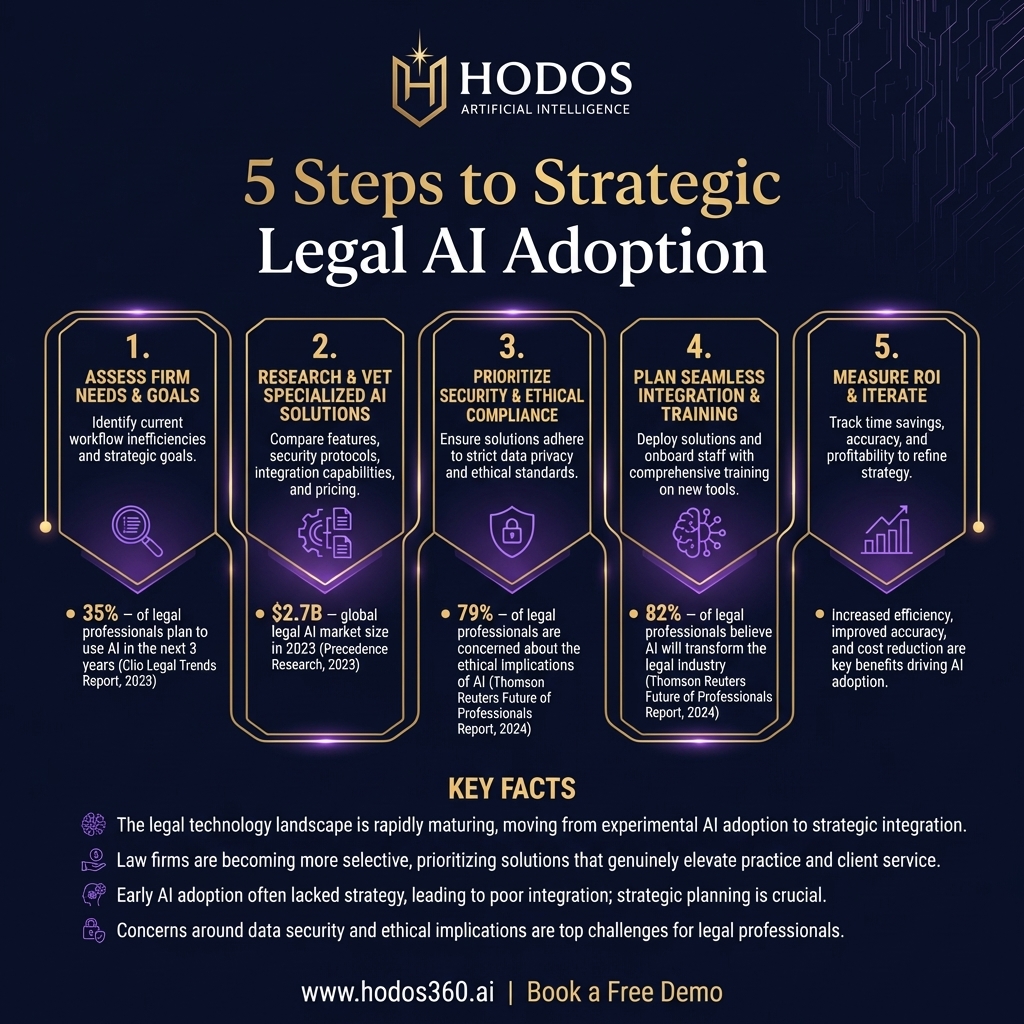
This is where the discerning firm evaluates a vendor's integration capabilities, demanding open APIs and robust compatibility with industry-standard practice management and document management systems. The cost and complexity of custom integrations can quickly erode potential ROI if not carefully managed during the selection process.
Culturally, introducing AI requires careful change management within the firm. Attorneys and staff may express skepticism, fear of job displacement, or reluctance to adopt new workflows. Successful integration necessitates thorough training, clear communication about AI's role as an assistant rather than a replacement, and demonstrating tangible benefits to daily tasks.
Firms that have successfully implemented AI, such as those showcased at the ABA Techshow, often emphasize bottom-up adoption, where individual attorneys champion the technology after experiencing its positive impact firsthand. This human element is critical; even the most advanced AI will fail if its users are not engaged and empowered.
Ethical considerations form another crucial pillar of successful AI integration. Learn more about Voice AI Adoption: Essential for Law Firms' Future Growth. The ABA Model Rules of Professional Conduct, particularly Rule 1.1 (Competence) and Rule 1.6 (Confidentiality), place a significant burden on lawyers to understand the technology they use and protect client data.
This means ensuring AI tools maintain client confidentiality, avoid biases in their outputs, and provide transparent explanations for their recommendations. The recent discussions around the ethical implications of GenAI for tasks like legal research and document drafting highlight the need for continuous human oversight and critical evaluation of AI-generated content.
Firms must establish clear internal policies for AI use, including review protocols and data governance strategies, to mitigate risks and maintain professional responsibility.
Furthermore, firms must consider the scalability and security of AI solutions. As client demands grow and regulatory requirements evolve, the chosen AI platform must be capable of adapting and expanding.
Cloud-based AI solutions offer flexibility, but they also necessitate stringent data security protocols to protect sensitive legal information from cyber threats. The General Data Protection Regulation (GDPR) and various state-level privacy laws like the California Consumer Privacy Act (CCPA) mandate robust data protection measures, making a vendor's security certifications and compliance frameworks a non-negotiable aspect of the selection process.
A secure, scalable, and ethically sound integration plan is the blueprint for long-term success in the AI-driven legal landscape. Streamline your client intake with AI for a more efficient practice.
The Power of Purpose-Built AI: Specialization Over Generalization
In the discerning era of legal AI adoption, the market is increasingly favoring purpose-built, specialized AI solutions over generic, broad-stroke applications. While general AI models can perform a wide range of tasks, they often lack the nuanced understanding, domain-specific training, and robust security features required for complex legal work.
Specialized AI, on the other hand, is designed with the unique needs of the legal profession in mind, incorporating legal ontologies, terminology, and ethical considerations from its core. This distinction is crucial for tasks like contract analysis, e-discovery, legal research, and case prediction, where precision and contextual understanding are paramount.
Companies like Harvey AI, by focusing specifically on legal applications and partnering with firms like Allen & Overy, exemplify this trend towards deep specialization.
Consider the difference in capabilities: a general-purpose GenAI might summarize a document, but a specialized legal AI can identify specific clauses, highlight potential risks, flag non-compliance with particular regulations, and even suggest alternative language based on a vast corpus of legal precedents.
This level of granular detail and contextual awareness is what empowers attorneys to work more efficiently and accurately. For example, in document review, a specialized AI can be trained to recognize specific legal concepts, privilege indicators, or responsiveness criteria, significantly reducing the manual effort and time required compared to a general AI that might misinterpret legal jargon or overlook critical details.
This focus on domain-specific intelligence is a key differentiator for firms seeking to maximize the value of their AI investments.
Moreover, purpose-built AI solutions are typically developed with the legal industry's stringent security and compliance requirements embedded from the outset. Learn more about AI Marketing Automation: Law Firms' 2026 Growth Catalyst.
This often includes features like robust data encryption, secure cloud infrastructure, role-based access controls, and audit trails—elements that are critical for protecting sensitive client information and adhering to professional responsibility guidelines. A generic AI tool, while powerful, might not offer the same level of legal-specific data governance or ethical safeguards, potentially exposing firms to significant risks.
The acquisition strategies of major legal tech players, such as Clio's strategic purchases to expand its ecosystem, also reflect a drive towards integrated, specialized solutions that cater to the comprehensive needs of law firms.
This shift towards specialization also allows for deeper integration into a firm's existing legal workflows.
Rather than forcing attorneys to adapt their processes to a generic tool, purpose-built AI can be seamlessly embedded into existing case management, billing, and document automation systems. This reduces friction, minimizes the learning curve, and maximizes user adoption. The result is not just efficiency, but a transformation of legal practice, enabling attorneys to focus on higher-value, strategic work that requires human judgment, empathy, and creativity.
The future of legal tech clearly lies in intelligent solutions that understand the law, not just language, and that can integrate flawlessly into the demanding rhythm of legal practice.
Key considerations for selecting specialized AI tools: * Legal Domain Expertise: Does the AI understand legal nuances, terminology, and precedents?
* Security & Compliance: Are robust data privacy, encryption, and regulatory compliance features built-in? * Integration Capabilities: Can it seamlessly connect with existing practice management and document systems? * Accuracy & Reliability: Does it minimize hallucinations and provide verifiable, explainable outputs? * Scalability & Support: Can it grow with your firm and offer responsive technical assistance?
* Ethical Framework: Does the vendor adhere to principles of responsible AI development and deployment? * User Experience: Is the interface intuitive and designed for legal professionals to maximize adoption?
The Ethical Imperative: AI, Bias, and Professional Responsibility
As law firms increasingly embrace AI, the ethical considerations become paramount. The legal profession is founded on principles of fairness, justice, and client advocacy, all of which can be impacted by the capabilities and limitations of AI. A critical concern is algorithmic bias, where AI systems, trained on historical data, may perpetuate or even amplify existing societal biases, leading to discriminatory outcomes in areas like bail decisions, sentencing recommendations, or even client intake processes.
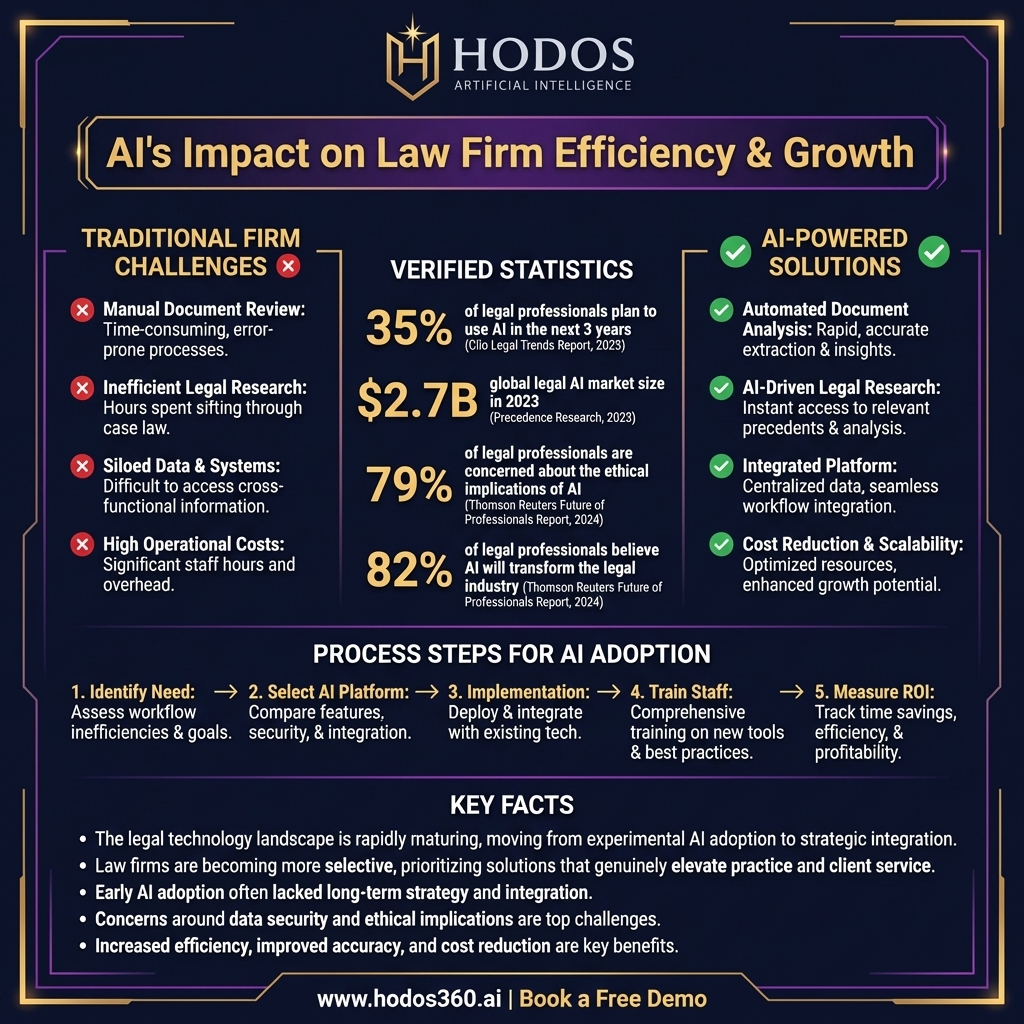
The use of biased AI not only undermines the principles of justice but also exposes firms to significant reputational and legal risks. Firms must exercise extreme diligence in vetting AI tools for potential biases and implement safeguards to ensure fair and equitable application, aligning with the spirit of the ABA Model Rules of Professional Conduct.
Professional responsibility extends to maintaining client confidentiality, as stipulated by ABA Model Rule 1.6. Deploying AI tools, especially those that process sensitive client data, requires robust data governance and security protocols. Learn more about Voice AI: Essential for Law Firms' Future Client Engagement. Firms must understand how their data is used, stored, and protected by AI vendors, and ensure that client information is not inadvertently exposed or used for training models without explicit consent.
Furthermore, the duty of competence (ABA Model Rule 1.1) requires lawyers to understand the technology they use, including its limitations and potential for error. This means attorneys cannot blindly rely on AI-generated outputs but must critically review and verify them, ensuring that the final work product meets professional standards.
The emerging EU AI Act, with its focus on transparency, accountability, and human oversight for high-risk AI systems, provides a valuable framework for firms to consider when establishing their internal AI governance policies. Discover HODOS 360's AI Marketing Platform to elevate your firm's reach.
Driving Growth Beyond the Billable Hour: The Strategic Advantage of AI-Powered Marketing and Operations
While much of the discussion around legal AI adoption centers on core legal work, its transformative power extends far beyond the courtroom and document review. AI is fundamentally reshaping the operational and business development aspects of law firms, offering unprecedented opportunities for growth, efficiency, and client engagement.
Many firms still rely on outdated marketing strategies and inefficient administrative processes, missing out on potential leads and wasting valuable resources. AI-powered marketing platforms, for example, can analyze market trends, predict client needs, automate content creation for blogs and social media, and optimize ad spend for maximum ROI.
This allows firms to reach their target audience more effectively and convert leads into clients with greater precision, moving beyond the traditional reliance on word-of-mouth or generic advertising.
Beyond marketing, AI is revolutionizing firm operations from the ground up. AI voice assistants provide 24/7 client support, handling routine inquiries, qualifying leads, and even booking appointments, freeing up administrative staff to focus on more complex tasks.
This not only enhances client satisfaction by providing immediate responses but also ensures that no potential lead is missed, regardless of time zone or availability. Multilingual support further expands a firm's reach, allowing them to serve a more diverse clientele without significant overhead. Call routing and intelligent lead qualification ensure that inquiries are directed to the right attorney, optimizing internal resource allocation and improving responsiveness.
Furthermore, AI-powered web and mobile development tools enable firms to create highly professional, responsive, and SEO-optimized websites with high-converting templates. Learn more about Legal AI Gap Widens: Strategic Imperative for Law Firms 2026. In today's digital-first world, a firm's online presence is its virtual storefront.
An AI-driven website builder can dynamically adapt to user behavior, personalize content, and provide analytics that offer deep insights into client engagement. This proactive approach to digital presence ensures firms remain competitive, visible, and accessible to prospective clients who increasingly rely on online research to find legal representation.
The synergy between AI-powered marketing, client communication, and digital infrastructure creates a holistic ecosystem for sustained growth.
Ultimately, the strategic advantage of AI in operations and marketing is about creating a more agile, responsive, and client-centric firm. By automating repetitive tasks, optimizing outreach, and enhancing digital touchpoints, attorneys can dedicate more time to complex legal analysis, client strategy, and professional development.
This shift not only improves internal efficiency but also elevates the client experience, building stronger relationships and fostering long-term loyalty. Firms that embrace AI across their entire operational spectrum are better positioned to navigate market fluctuations, attract top talent, and secure a competitive edge in an increasingly dynamic legal landscape, demonstrating a truly discerning approach to technology investment.
The future of law firm success lies in leveraging AI to empower every facet of the practice.
The Future of Legal Workflow: AI-Powered Automation and Predictive Insights
The evolution of legal AI adoption is leading towards a future where AI-powered automation and predictive insights are seamlessly integrated into every stage of the legal workflow. This isn't about replacing lawyers but augmenting their capabilities, allowing them to operate at an unprecedented level of efficiency and strategic foresight.
From the initial client intake, where AI can automate data collection and conflict checks, to the final resolution of a case, AI tools are streamlining processes that were once labor-intensive and time-consuming. Document automation, for instance, can generate complex legal documents, contracts, and filings in minutes, significantly reducing drafting time and minimizing errors.
This frees up paralegals and junior associates to focus on more substantive legal analysis, rather than repetitive clerical work.
Beyond automation, AI's predictive capabilities are offering law firms a strategic advantage in litigation and case management. By analyzing vast datasets of past cases, court rulings, and legal precedents, AI can provide insights into potential case outcomes, identify key arguments, and even predict the behavior of judges or opposing counsel.
This data-driven approach allows attorneys to develop more robust legal strategies, allocate resources more effectively, and advise clients with greater confidence. The ability to anticipate challenges and opportunities based on empirical data moves legal practice from reactive to proactive, providing a significant edge in complex legal disputes.
Such predictive insights are transforming how firms approach risk assessment, settlement negotiations, and overall case strategy, making legal services more precise and outcome-oriented.

Key Takeaways and Next Steps: Embracing the Future with HODOS 360
The legal industry stands at a critical juncture, moving from a reactive, experimental phase of AI adoption to a highly strategic and discerning one. As Jeffrey Chivers of Syllo aptly noted, firms are now demanding proven value, seamless integration, and ethical assurances from their AI tools.
The days of adopting technology for technology's sake are over; the focus has shifted to leveraging AI as a fundamental driver of efficiency, growth, and superior client service. Firms that embrace this discerning approach will not only survive but thrive, positioning themselves as leaders in a rapidly evolving legal landscape.
This requires a holistic view of AI, recognizing its potential impact across every facet of the firm, from core legal work to client acquisition and operational management.
For law firm owners and attorneys, the next steps are clear: conduct thorough due diligence, prioritize purpose-built and specialized AI solutions, and invest in robust integration and training.
Look for platforms that offer comprehensive support for your firm's specific needs, ensuring that AI enhances rather than complicates your practice. This strategic approach will mitigate risks, maximize your return on investment, and empower your team to deliver exceptional legal services. The future belongs to firms that can intelligently harness the power of AI to refine workflows, engage clients more effectively, and make data-driven decisions that propel their practice forward.
Embracing this future requires a partner with a deep understanding of the legal industry's unique demands. HODOS 360 offers a comprehensive suite of AI-powered services designed to meet these exact needs, from an AI Law Firm Management System that streamlines operations and workflows, to an AI Marketing Platform that drives growth, and AI Voice Assistants that enhance client engagement.
By providing integrated solutions for every aspect of your firm, HODOS 360 empowers you to make discerning choices, ensuring your investment in AI translates into tangible success and a competitive advantage in today's dynamic legal market. Book a Free Demo with HODOS 360 to see how our platform can transform your firm.
Frequently Asked Questions
Why are law firms becoming more selective in AI adoption?+
Law firms are becoming more selective due to past experiences with generic AI, the need for clear ROI, and growing awareness of ethical and data security implications. They seek purpose-built solutions that seamlessly integrate, offer demonstrable value, and comply with professional responsibility standards, moving beyond initial hype to strategic, informed investment.
What are the key benefits of AI in law firm management?+
AI in law firm management offers significant benefits, including enhanced efficiency through automated case management, billing, and document generation. It streamlines client intake, improves calendar management, and provides AI-powered legal workflows, reducing administrative burden and allowing attorneys to focus on higher-value legal work while ensuring accuracy.
How can AI marketing platforms help law firms?+
AI marketing platforms empower law firms by automating content creation, optimizing social media presence, and generating AI-powered video. They provide advanced analytics and ROI tracking, enabling firms to reach target audiences more effectively, qualify leads efficiently, and convert prospective clients with greater precision, driving sustained growth and visibility.
What ethical considerations should firms address when adopting AI?+
Firms must address algorithmic bias, ensuring AI tools don't perpetuate discrimination. Client confidentiality (ABA Model Rule 1.6) and competence (ABA Model Rule 1.1) are paramount, requiring robust data security, human oversight, and critical review of AI outputs. Adhering to evolving regulations like the EU AI Act is also crucial for responsible deployment.
How does HODOS 360 address the need for specialized legal AI?+
HODOS 360 addresses this need by offering a comprehensive suite of AI-powered, purpose-built legal solutions. From an AI Law Firm Management System with specialized workflows and document automation, to AI Marketing and Voice Assistants, our platform is designed specifically for law firms, ensuring secure, integrated, and ethically sound tools that deliver measurable value.