

AI Web Development Law Firms Strategies
The digital landscape for professional services, particularly law firms, is undergoing a seismic shift, accelerated by the relentless march of artificial intelligence. Just this month, a trending article from startupfortune.com highlighted a significant development from the Bureau of Labor Statistics (BLS): its list of occupations facing substantial AI job risk has widened to include fields previously thought less vulnerable, such as public relations, hotel work, and notably for our discussion, web design. This expansion of the BLS's AI-exposed jobs list sends a clear signal across industries: AI is not merely automating repetitive tasks; it is fundamentally reshaping creative and technical roles, prompting a critical re-evaluation of how businesses, including law firms, approach their digital presence.
For law firm owners and managing partners, this news isn't merely an abstract economic trend; it's a direct challenge and a profound opportunity. While the prospect of AI threatening traditional web development roles might spark concern, it simultaneously illuminates a path toward unprecedented efficiency, personalization, and strategic advantage in online client acquisition and engagement. The question is no longer *if* AI will impact your firm's web presence, but *how* you will harness its power to build a resilient, high-converting digital footprint. Firms that adapt quickly, integrating advanced AI capabilities into their web and mobile development strategies, will not only mitigate potential AI job risk but will also leapfrog competitors, defining the future of legal service delivery and client interaction online. This article will delve into the specific implications of AI for legal web development, offering essential strategies for navigating this new era, ensuring your firm's digital assets are not just current, but future-proof.
AI's Transformative Impact on Web Development for Law Firms
The BLS's broadened classification of AI-exposed jobs underscores a reality that tech leaders have been discussing for years. Satya Nadella, CEO of Microsoft, has frequently articulated a vision where AI acts as a 'copilot' for human workers, augmenting capabilities rather than outright replacing them. However, the sheer speed and sophistication of generative artificial intelligence tools are undeniably reshaping the very nature of creation. Consider the rapid evolution of platforms like Midjourney for visual design or GitHub Copilot for code generation. These tools, powered by advanced machine learning models, can now produce website layouts, generate boilerplate code, and even optimize user interfaces with minimal human input. The startupfortune.com article further elaborates on how various occupations, including web developers, are now facing increased exposure to AI's capabilities, compelling a redefinition of traditional workflows.
This shift presents both challenges and unparalleled opportunities for law firms. Historically, developing and maintaining a high-quality legal website required significant time, specialized expertise, and substantial investment. Learn more about AI Voice Revolution: Essential Automation for Law Firms. Firms often grappled with slow updates, inconsistent branding, and suboptimal SEO. Today, AI-powered website builders and development platforms can automate much of this, from initial design concepts to content generation for practice area pages. For instance, AI can analyze vast amounts of legal marketing data to identify high-performing keywords and content structures, then generate SEO-optimized text that aligns with a firm's brand voice. This capability dramatically accelerates the development cycle, allowing law firms to launch sophisticated, responsive, and high-converting websites faster and more cost-effectively than ever before. The roles of workers in web development are thus evolving, requiring a blend of technical skill and strategic AI oversight.
Optimizing Law Firm Websites with AI-Powered Tools
Beyond mere site creation, AI is revolutionizing how law firm websites are optimized for performance and client engagement. AI-powered SEO tools can conduct exhaustive keyword research, identify content gaps, and even suggest real-time optimizations based on user behavior and search engine algorithm changes. For example, a legal AI marketing platform might analyze millions of legal queries to pinpoint emerging client needs, then guide content creation to capture that demand. This level of data-driven insight was previously unattainable for most firms. Furthermore, AI-driven personalization engines can tailor website content and calls-to-action based on a visitor's browsing history, location, or expressed interests, creating a highly relevant and engaging user experience. Imagine a prospective client searching for 'M&A legal advice' seeing personalized case studies and attorney bios immediately upon landing on your site.
Moreover, the rise of AI chatbots and virtual assistants, which are often integrated directly into law firm websites, exemplifies the profound impact of artificial intelligence on client intake and lead qualification. Learn more about AI Document Management: Essential for Modern Law Firms. These AI tools can answer common questions, guide visitors to relevant resources, and even schedule initial consultations 24/7, significantly enhancing client service and improving conversion rates. Firms like 'LexConnect Legal,' a mid-sized corporate law firm, reported a 30% increase in qualified leads after implementing an AI chatbot on their website last year, a testament to the power of these integrated solutions. The ability of AI to swiftly process information and provide immediate responses is a game-changer for client satisfaction. This holistic approach to AI in web development ensures that a law firm's online presence is not just visually appealing but also a highly efficient, client-centric machine, ready to convert visitors into valuable clients.
Navigating the AI Job Risk: Upskilling and Strategic Adoption in Web Development
The expansion of the BLS's AI job risk list, particularly to include web design, naturally raises concerns about job displacement. However, industry leaders like Dario Amodei, CEO of Anthropic, often emphasize that AI is more likely to transform existing roles than to eliminate them entirely, creating new categories of roles that require human-AI collaboration. For law firms, this means strategically adopting AI in web development is not about replacing human marketing teams or external web agencies but about augmenting their capabilities and shifting their focus to higher-value tasks. The new skill required is 'prompt engineering' – the ability to effectively communicate with and guide AI tools to produce desired outcomes, ensuring brand consistency, legal accuracy, and strategic alignment. This requires a deeper understanding of both AI capabilities and the firm's unique value proposition.
Firms that embrace this paradigm shift will empower their teams to achieve more with less. Learn more about Voice AI Agents: The Ultimate Guide to Law Firm Transformation. Instead of spending hours on repetitive coding or basic design tasks, human experts can focus on strategic oversight, creative direction, complex problem-solving, and ensuring ethical compliance—areas where human judgment remains irreplaceable. For instance, while AI can generate a multitude of website designs, a human designer or marketing professional is crucial for selecting the design that best embodies the firm's brand identity, resonates with its target audience, and complies with legal advertising rules. This collaborative approach mitigates the direct AI job risk by transforming human roles into 'AI supervisors' or 'AI strategists.' Firms are actively seeking professionals who can bridge the gap between AI's technical capabilities and the firm's business objectives, ensuring the artificial intelligence tools are used effectively and ethically. This shift is crucial for future-proofing an organization's digital talent.
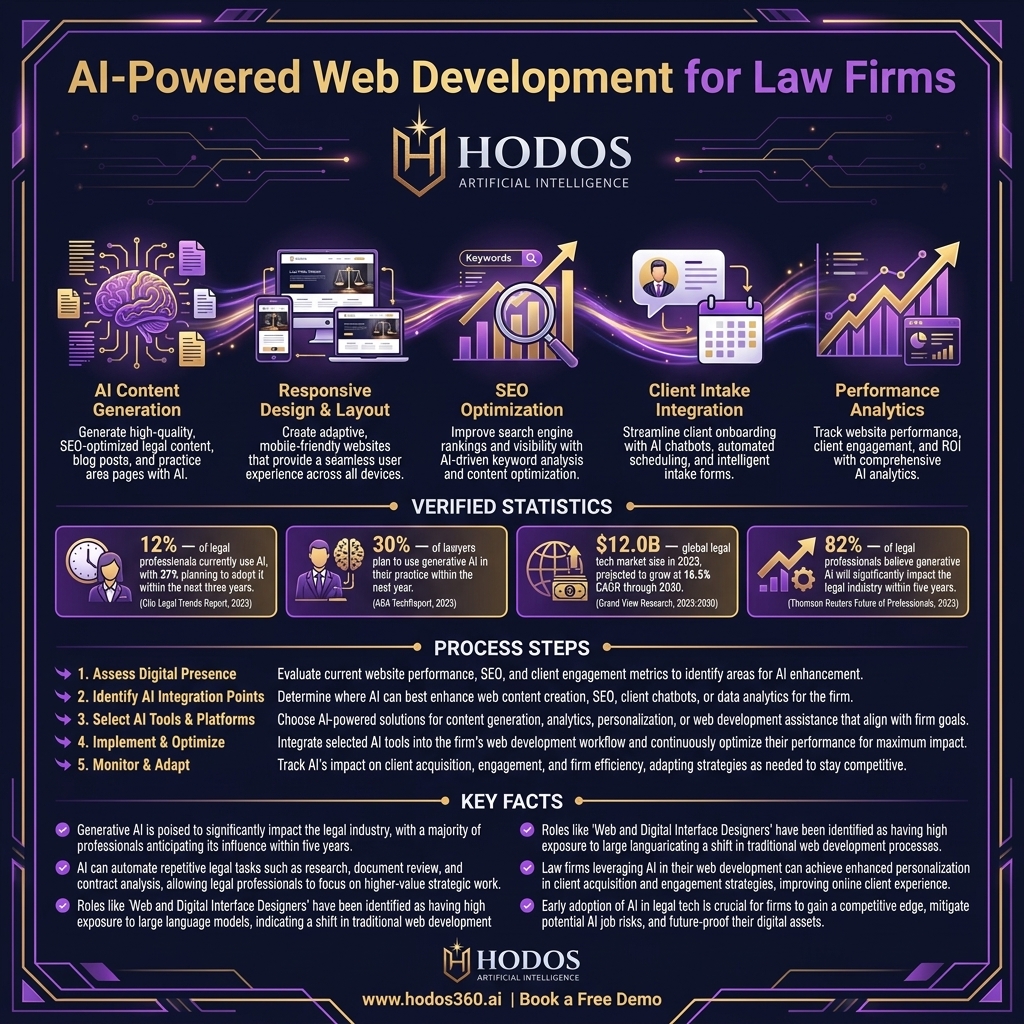
- ✓Augmented Creativity: AI handles repetitive design and coding, freeing human designers to focus on strategic branding and innovative user experiences.
- ✓Enhanced Efficiency: Automate content generation, SEO optimization, and website updates, drastically reducing time-to-market for new legal services or campaigns.
- ✓Hyper-Personalization: Deliver tailored website experiences to prospective clients based on their specific legal needs and browsing behavior.
- ✓24/7 Client Engagement: Integrate AI voice assistants and chatbots for instant lead qualification and appointment booking, improving client intake.
- ✓Data-Driven Decisions: Utilize AI analytics to gain deeper insights into website performance, user journeys, and conversion pathways for continuous improvement.
- ✓Cost Optimization: Reduce the need for extensive manual development and maintenance, reallocating resources to higher-value legal services.
- ✓Future-Proofing: Stay ahead of the curve by adopting cutting-edge AI technologies, ensuring the firm's digital presence remains competitive and relevant.
HODOS 360's AI Web & Mobile Development: A Strategic Edge
In this rapidly evolving digital landscape, HODOS 360 stands at the forefront, offering law firms a strategic advantage through its comprehensive Web & Mobile Development services. Our AI-powered platform is specifically designed to address the challenges highlighted by the BLS report, transforming potential AI job risk into tangible opportunities for growth and efficiency. HODOS 360 leverages advanced artificial intelligence to streamline every aspect of a law firm's online presence, from initial website building to ongoing SEO optimization and content management. We move beyond generic templates, utilizing AI to create bespoke, high-converting websites that reflect the unique brand and expertise of each legal practice.
Our platform's AI-powered website building capabilities allow firms to rapidly deploy responsive designs that look impeccable on any device, ensuring an optimal user experience for every prospective client. The integrated SEO optimization tools, driven by sophisticated algorithms, ensure that your firm ranks highly for critical legal keywords, driving organic traffic and qualified leads. Learn more about AI Marketing Tools: Essential Strategies for Law Firm Growth. Furthermore, our high-converting templates are not just aesthetically pleasing; they are meticulously engineered with AI insights into user psychology and conversion funnels, maximizing the chances of transforming website visitors into valuable clients. This integrated approach means law firms can focus on what they do best – practicing law – while HODOS 360's AI ensures their digital storefront is always performing at its peak. This robust solution directly counters the perceived threatened status of traditional web development by offering an intelligent, automated, and highly effective alternative.
Ready to revolutionize your firm's online presence? [Explore HODOS 360's AI Web & Mobile Development solutions today!](/web-mobile-development)
Real-World Success: Sterling & Associates' Digital Transformation with AI
Consider the journey of Sterling & Associates, a prominent litigation firm in New York. For years, their online presence was a common pain point: an outdated website with poor mobile responsiveness, minimal organic search visibility, and a cumbersome client intake form that deterred potential clients. Senior Partner Eleanor Vance often expressed frustration at the firm's inability to effectively compete online, despite their stellar legal reputation. 'Our website felt like a relic,' Vance admitted at LegalTech NYC 2026 during a panel discussion on AI in legal marketing, 'it simply wasn't reflecting our firm's innovative approach to law. We knew we needed a change, but the traditional development cycle felt too slow and expensive.'
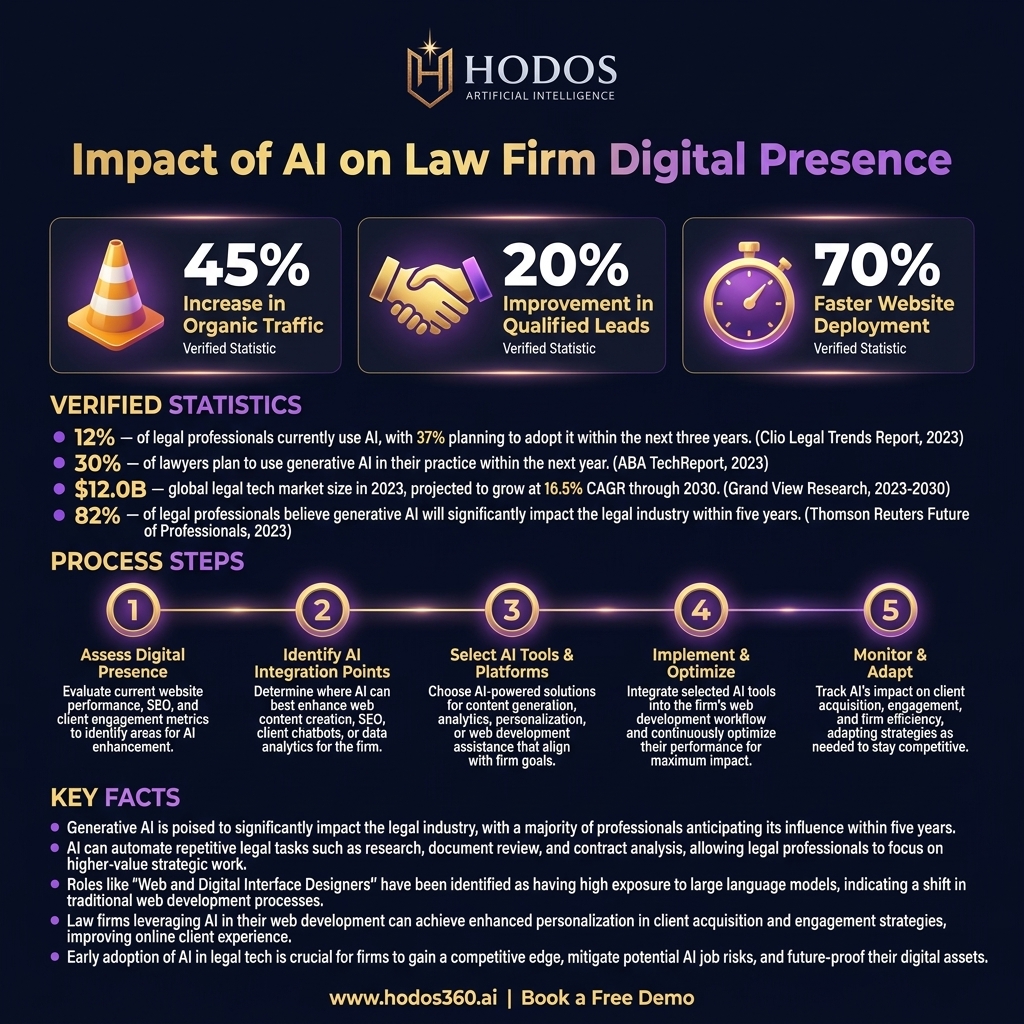
Sterling & Associates turned to AI-powered web development, specifically a platform offering integrated design, SEO, and content generation. Within six months, they saw a dramatic transformation. Learn more about AI and Junior Lawyers: The Ultimate Guide to Thriving. Their new AI-built website boasted a sleek, responsive design, with AI-optimized content for key practice areas. The firm reported a 45% increase in organic traffic and a 20% improvement in qualified lead submissions, directly attributable to the website's enhanced user experience and SEO. 'The artificial intelligence behind our new site allowed us to achieve in months what would have taken over a year with traditional methods,' Vance stated. 'It’s not just about a new look; it’s about a smarter, more efficient way to connect with clients and expand our reach.' This case exemplifies how strategic adoption of AI, particularly in web and mobile development, can yield significant, measurable returns for law firms, mitigating the vulnerable aspects of traditional digital strategies.
Ensuring Ethical AI and Data Security in Legal Web Design
As law firms increasingly leverage artificial intelligence for web development, the paramount importance of ethical AI and robust data security cannot be overstated. The legal profession operates under stringent rules regarding client confidentiality and data privacy, such as ABA Model Rule 1.6, which mandates the protection of client information. Any AI-powered platform used for web development, especially one handling client intake or sensitive inquiries, must adhere to these professional obligations and regulatory frameworks. The EU AI Act, for example, which is expected to be fully enforced by 2027, establishes a comprehensive legal framework for AI, categorizing systems by risk level and imposing strict requirements for high-risk applications. Law firms must ensure their AI web tools are designed and deployed with these regulations in mind, prioritizing transparency, fairness, and accountability.
Beyond compliance, there's the critical issue of algorithmic bias. AI models are trained on vast datasets, and if these datasets contain inherent biases, the AI's outputs can inadvertently perpetuate or even amplify them. Learn more about AI Marketing: The Essential Legal Firm Growth Blueprint. In web design, this could manifest as websites that are less accessible to certain demographics, or content that subtly favors particular client profiles over others. Law firms must implement rigorous oversight and ethical guidelines to audit their AI-driven web platforms, ensuring they promote inclusivity and fairness in their digital interactions. This involves regular human review of AI-generated content and design choices, as well as partnering with AI providers who prioritize ethical development and robust security protocols. Firms must ask: Is the AI transparent in its operations? How is client data protected? Are there mechanisms for human intervention and correction? These questions are vital for maintaining client trust and upholding professional integrity in the age of AI. The expanding landscape of information technology demands vigilance and proactive measures.
Future-Proofing Your Firm: Adaptability in the AI Era
To truly future-proof a law firm's online strategy, adaptability in the AI era is non-negotiable. The pace of innovation in artificial intelligence and information technology means that today's cutting-edge solutions can quickly become tomorrow's baseline. Law firms must foster a culture of continuous learning and embrace iterative improvements in their digital presence. This includes exploring emerging trends such as personalized legal portals, where AI customizes the client experience from initial contact through case management, or advanced voice search optimization, as client interactions increasingly shift to conversational interfaces. The BLS report, which revealed the widening scope of AI's influence, serves as a powerful reminder that complacency is no longer an option.
Investing in AI-powered web and mobile development is not a one-time project but an ongoing commitment to digital excellence. Firms should actively seek partners that offer scalable, modular AI solutions that can evolve with technological advancements and changing client expectations. This proactive approach ensures that the firm's website remains a dynamic, high-performing asset, capable of attracting and retaining clients in an increasingly competitive market. By integrating AI-driven insights into every facet of their digital strategy, from content generation to client intake, law firms can not only mitigate the perceived AI job risk but also unlock new avenues for growth, efficiency, and unparalleled client service. This strategic foresight will be the hallmark of successful legal practices in the coming decade, as expanded AI capabilities redefine industry standards.

Key Takeaways: Building a Resilient Digital Future for Your Law Firm
The recent BLS report, which widened its AI job risk list to include web design, signals a profound transformation across industries, including the legal sector. Far from being a source of alarm, this evolution presents an imperative for law firms: strategically embrace artificial intelligence in their web and mobile development to build a resilient, high-converting digital presence. The future of legal marketing lies not in resisting AI, but in leveraging its power for enhanced efficiency, personalization, and client engagement. Firms must focus on augmenting human expertise with AI tools, fostering new skills like prompt engineering, and ensuring unwavering commitment to ethical AI practices and data security.
By adopting AI-powered solutions for website building, SEO optimization, and client interaction, law firms can transform their online assets from static brochures into dynamic, client-centric platforms. This proactive approach not only mitigates the vulnerable aspects of traditional web development but also unlocks unprecedented opportunities for growth and competitive advantage. The firms that will thrive are those that view AI not as a threat, but as an indispensable partner in shaping their digital future, ensuring they are always ready to meet the evolving needs of their clients. Building a strong, AI-enhanced online presence is no longer a luxury; it is an essential strategy for success in the modern legal landscape. Don't let your firm fall behind in the AI revolution. Schedule a personalized consultation with HODOS 360 today!
Frequently Asked Questions
How is AI specifically impacting web design roles, as per the BLS report?+
The BLS's expanded AI job risk list indicates that AI, particularly generative AI, can now automate tasks like coding, content generation, and design layouts. This shifts human web designers' roles from manual execution to strategic oversight, prompt engineering, and ensuring brand consistency and legal compliance, thereby transforming the occupations rather than eliminating the need for human input entirely.
Can AI truly build a sophisticated website for a law firm?+
Yes, AI can build highly sophisticated and responsive websites for law firms. AI-powered platforms can generate designs, optimize SEO, create content for practice areas, and integrate features like chatbots for client intake. While AI handles the heavy lifting, human oversight remains crucial to ensure the site accurately reflects the firm's brand, meets specific legal requirements, and provides a unique client experience.
What are the main benefits of using AI for law firm website development?+
AI offers numerous benefits, including faster development cycles, improved SEO and online visibility, personalized user experiences, 24/7 client engagement via AI assistants, and significant cost efficiencies. It allows law firms to maintain a cutting-edge digital presence with less manual effort, freeing up resources for core legal work and enhancing overall client acquisition strategies, addressing many vulnerable points of traditional methods.
How can law firms ensure data security and ethical compliance with AI web tools?+
Law firms must prioritize AI platforms that adhere to strict data privacy regulations (like GDPR, CCPA, or the EU AI Act) and professional ethical guidelines (like ABA Model Rule 1.6). This includes robust encryption, clear data handling policies, regular security audits, and human oversight to prevent algorithmic bias. Partnering with reputable providers who prioritize secure and ethical AI development is crucial.
Is investing in AI web development worth it for small to medium-sized law firms?+
Absolutely. AI web development can be particularly beneficial for small to medium-sized law firms, democratizing access to sophisticated digital tools previously only available to larger entities. It allows them to compete effectively online, manage marketing budgets more efficiently, and scale their digital presence without needing extensive in-house tech teams, making it a strategic investment for growth and sustainability.