

Voice AI Agents: The Ultimate Guide to Law Firm Transformation
The phone rang relentlessly at Sterling & Partners, a mid-sized litigation firm in Dallas. It was 3 AM, and a potential new client, shaken after a late-night incident, was seeking urgent legal advice. The call went to voicemail, a common occurrence during off-hours, potentially losing a critical lead. This scenario, repeated in countless law firms nationwide, highlights a persistent challenge: providing immediate, intelligent client support around the clock without scaling human resources exponentially. Fast forward to early 2026, and a seismic shift began to ripple through the legal tech landscape. OpenAI, a pioneer in artificial intelligence, unveiled its 'Presence' platform, designed to empower enterprises to launch voice AI agents with unprecedented speed and sophistication. This launch, as reported by IntraMind LLC, isn't merely an incremental upgrade; it represents a fundamental re-evaluation of how law firms interact with the outside world, manage internal operations, and deliver legal services.
The promise of conversational AI has long captivated the legal sector, but the practical application often fell short due to latency, lack of contextual understanding, and limited integration capabilities. OpenAI’s Presence aims to bridge this gap, offering a robust framework for deploying sophisticated voice agents capable of handling complex interactions in real-time. For law firms, this translates into a tangible opportunity to automate routine inquiries, streamline client intake, schedule appointments, and even provide multilingual support—all while maintaining the professional demeanor and accuracy essential to the legal profession. As firms grapple with mounting operational costs and the ever-present demand for faster, more accessible legal services, the strategic adoption of advanced voice AI agents moves from a futuristic concept to an immediate imperative.
The legal profession, often characterized by its adherence to tradition, is now at a critical juncture where technological innovation is no longer optional but essential for competitive survival and growth. Firms that embrace these powerful AI voice agents are not just adopting new tools; they are fundamentally reshaping their service delivery models, enhancing client satisfaction, and freeing up highly skilled legal professionals to focus on complex, high-value work. This article will delve into the transformative potential of voice AI agents, exploring how platforms like OpenAI's Presence are setting new standards for efficiency and client engagement, and what this means for the future of legal practice.
Ready to explore how voice AI can revolutionize your firm? Discover HODOS 360's AI Voice Assistants today!
The Dawn of Conversational AI in Legal Practice: A Paradigm Shift
The legal industry's relationship with technology has historically been one of cautious adoption, often lagging behind other sectors. However, the rapid advancements in artificial intelligence, particularly in natural language processing (NLP) and speech synthesis, are forcing a fundamental re-evaluation. The launch of platforms like OpenAI's Presence marks a pivotal moment, signaling a new era where sophisticated voice AI agents can seamlessly integrate into law firm operations. This isn't about replacing human lawyers but augmenting their capabilities, extending their reach, and democratizing access to legal support. Firms that once struggled to manage high call volumes or after-hours inquiries now have the tools to provide 24/7 intelligent assistance, a capability that was once the exclusive domain of large, well-resourced enterprises. A 2024 Thomson Reuters report indicated that over 60% of small to mid-sized law firms cited 'client communication and intake efficiency' as a top operational challenge, which voice AI agents directly address.
Early iterations of conversational AI in legal tech struggled with the nuances of legal terminology and client emotional states. However, the latest generation of voice AI agents, powered by large language models (LLMs), offers a level of contextual understanding and conversational fluency previously unimaginable. Sam Altman, CEO of OpenAI, has consistently emphasized the goal of creating 'generally intelligent systems.' His vision, now manifesting in tools like Presence, provides a foundation for voice agents that can not only answer factual questions but also guide users through complex decision trees, explain legal concepts, and even identify urgent matters requiring immediate human intervention. Learn more about AI Marketing: The Ultimate Guide to Law Firm Growth & Automation. This leap in capability means firms can deploy AI voice assistants that sound natural, understand complex queries, and are trained on specific firm protocols and legal specializations.
The competitive landscape for legal services is more intense than ever. Firms that fail to innovate risk being outmaneuvered by agile competitors leveraging cutting-edge technology. Richard Susskind, a renowned legal futurist, has long predicted the 'more-for-less' challenge. Voice AI agents are a direct answer, enabling firms to offer enhanced services without proportional increases in overhead. For example, a personal injury firm can use an AI voice agent to pre-qualify leads, gathering details about accidents, injuries, and insurance, then automatically schedule consultations for qualified cases. This dramatically improves lead conversion and ensures attorneys spend time on billable work. The integration also extends to internal operations, where agents assist with scheduling, knowledge retrieval, and basic HR inquiries, freeing up administrative staff for more strategic roles.
The Role of Realtime Voice Agents in Client Engagement
The ability of voice AI agents to operate in 'realtime' is a game-changer for client engagement. Unlike asynchronous communication channels, realtime voice interaction provides immediate responses, mimicking human conversation and reducing client frustration. This is particularly critical in legal emergencies or time-sensitive matters where quick information retrieval and guidance can make a significant difference. Learn more about AI in Legal Practice: Ultimate Guide to What Comes Next. For instance, a client seeking immediate advice on a domestic violence injunction could interact with an AI voice agent that rapidly assesses the situation, provides relevant information on local resources, and schedules an urgent call with a human attorney, all within minutes.
The 'latency problem' that plagued earlier voice AI systems—where delays in processing and responding made conversations feel unnatural and frustrating—has largely been overcome by advancements in AI architecture and processing power. Companies like IntraMind LLC, recognizing this, are now focusing on helping enterprises, including law firms, rapidly deploy these low-latency voice AI agents, ensuring smooth, natural interactions that build client confidence and provide crucial support precisely when it’s needed most.
Navigating the OpenAI Presence and Enterprise Agent Landscape
OpenAI's Presence platform represents a significant leap in the development and deployment of enterprise-grade AI voice agents. Unlike generic consumer-facing AI, Presence is 'designed' with the specific needs of businesses in mind, offering a governed foundation for launching and managing sophisticated voice agents. This means that law firms are not simply integrating an off-the-shelf chatbot but rather deploying a powerful, customizable AI agent that can be tailored to the firm's unique practice areas, ethical guidelines, and client service standards. The platform allows for the creation of 'workflows' that automate complex sequences of tasks, from initial lead qualification to document gathering and appointment setting.
The strategic implications of Presence extend beyond mere automation; they touch upon the very definition of 'customer support' in the legal context. Historically, client support in law firms has been resource-intensive. With enterprise AI agents, firms can offload a substantial portion of this workload to intelligent systems that operate 24/7 without fatigue. Dario Amodei, CEO of Anthropic, has often spoken about the need for AI systems to be 'helpful, harmless, and honest.' Firms must ensure their AI voice agents are trained on accurate, up-to-date legal information and are programmed to recognize when human intervention is necessary, especially for complex legal advice or sensitive ethical dilemmas. Learn more about Siri AI Revolution: Essential Legal Voice Assistant Strategies. The platform's capabilities for monitoring and analytics are vital here.
Furthermore, the 'build' aspect of these advanced voice agents is now more accessible than ever. While custom AI development was once the exclusive domain of tech giants, platforms like Presence provide user-friendly interfaces and developer tools that enable law firms, or their tech partners, to create highly specialized agents without requiring an army of AI engineers. This democratization of AI development means that even mid-sized firms can leverage the same cutting-edge technology as large corporate entities. The focus shifts from coding AI from scratch to configuring, training, and optimizing pre-built AI models for specific legal applications. This ease of deployment accelerates the return on investment (ROI) and reduces the barriers to entry for firms looking to modernize their operations. The ability to quickly 'launch' these agents means firms can respond dynamically to market demands, test new client engagement strategies, and iterate on their AI-powered services with agility.
Best Practices for Deploying AI Voice Assistants
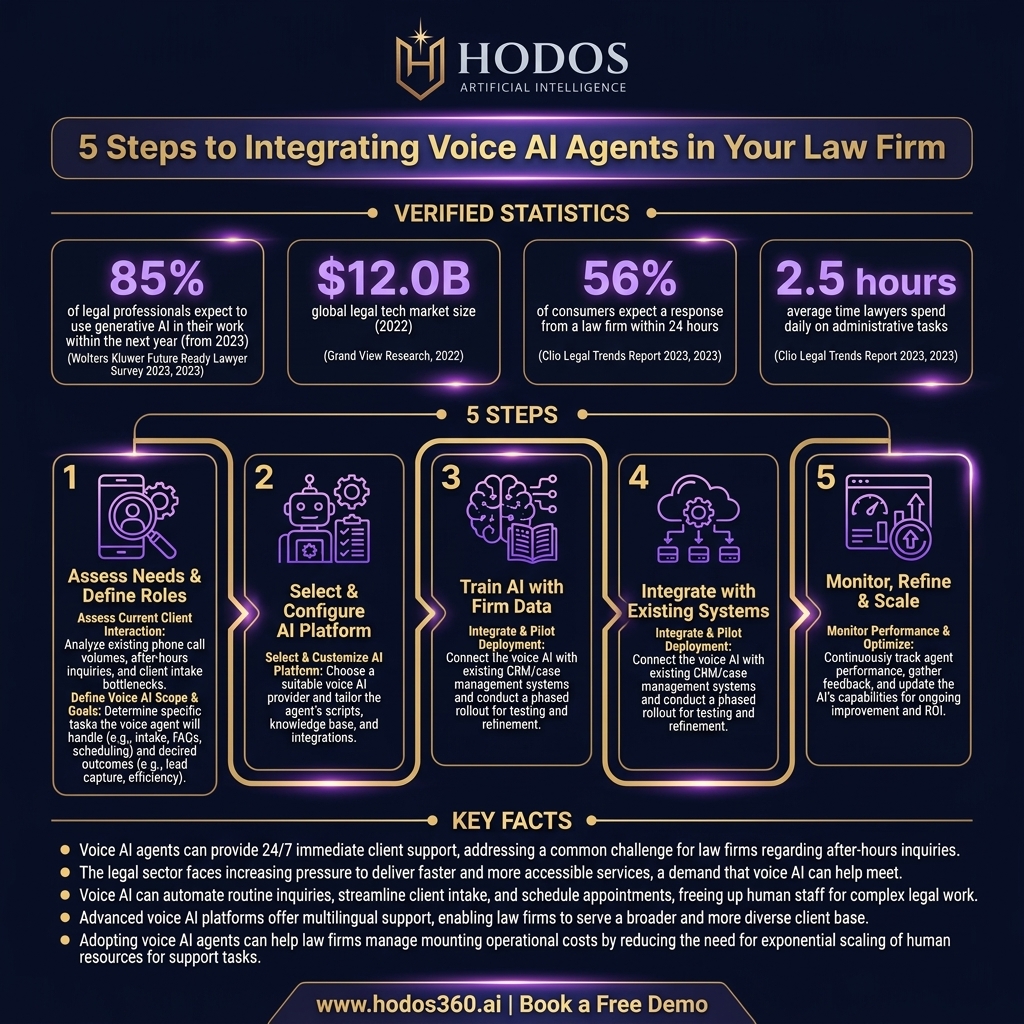
Successful deployment of AI voice assistants requires more than just technical integration; it demands a strategic approach centered on clarity, training, and continuous monitoring. Firms should start by clearly defining the specific roles and responsibilities of their AI agents. Are they handling initial client screening, appointment scheduling, FAQ responses, or a combination? Clearly delineated tasks prevent confusion and ensure the AI operates within its programmed scope.
Robust training on firm-specific data, legal terminology, and ethical guidelines is paramount. This includes feeding the AI transcripts of actual client interactions (anonymized for privacy), firm policies, and relevant legal precedents. Learn more about AI Legal Tech: The Essential Guide to Funding and Growth. Furthermore, regular monitoring of AI performance, including reviewing transcripts of conversations and client feedback, is essential for continuous improvement. Firms should establish clear escalation protocols, ensuring that complex or sensitive inquiries are promptly handed off to human professionals, upholding the ethical obligation to provide competent legal representation.
Transform your firm's operations and client experience with HODOS 360's integrated AI solutions. Schedule a demo today!
Strategic Implementation: Integrating Voice AI Agents into Law Firm Workflows
The true power of voice AI agents lies in their strategic integration into the existing fabric of a law firm's daily operations. This isn't just about answering calls; it's about creating intelligent, automated legal workflows that enhance efficiency at every touchpoint. Consider the client intake process, often a bottleneck for many firms. An AI voice agent can manage the initial screening, asking structured questions to gather essential information, verify conflicts of interest, and even explain fee structures. This not only speeds up the process but also ensures consistency and thoroughness, preventing human error. For instance, a firm could deploy an AI agent to handle all new client inquiries for personal injury cases, collecting details on the accident, injuries sustained, and insurance information, then automatically feeding this into the firm's case management system. This frees up paralegals to focus on more complex tasks, like drafting demand letters or preparing for discovery, significantly improving the firm's capacity to handle a higher volume of cases without increasing headcount.
Beyond intake, voice AI agents can transform client communication and status updates. Clients often call seeking updates on their cases, a time-consuming task for legal staff. An AI agent, integrated with the firm's case management system, can provide secure, personalized updates on case progress, upcoming deadlines, or document requests. This proactive communication enhances client satisfaction and reduces the burden on administrative staff. Learn more about AI Web Development: Ultimate Guide to Law Firm Lead Generation. Imagine a scenario where a client calls to inquire about the status of their divorce proceedings. The AI voice assistant, after verifying the client's identity, can access the case file and provide real-time updates on court dates, document filings, or negotiations, all without human intervention. This level of responsiveness cultivates trust and transparency, key components of a strong attorney-client relationship.
Another crucial area for AI integration is internal firm management and knowledge retrieval. Law firms are repositories of vast amounts of information—precedent documents, research memos, internal policies, and client histories. Voice AI agents can be configured as intelligent knowledge bases, allowing attorneys and staff to quickly access information through natural language queries. Instead of sifting through databases or asking colleagues, a lawyer could simply ask an AI voice assistant for a summary of relevant case law on a specific topic or the firm's protocol for handling a particular type of client inquiry. This significantly reduces research time and enhances internal collaboration. This immediate access to institutional knowledge, powered by AI, fosters a more efficient and knowledgeable workforce, ultimately leading to better client outcomes and a more competitive firm.
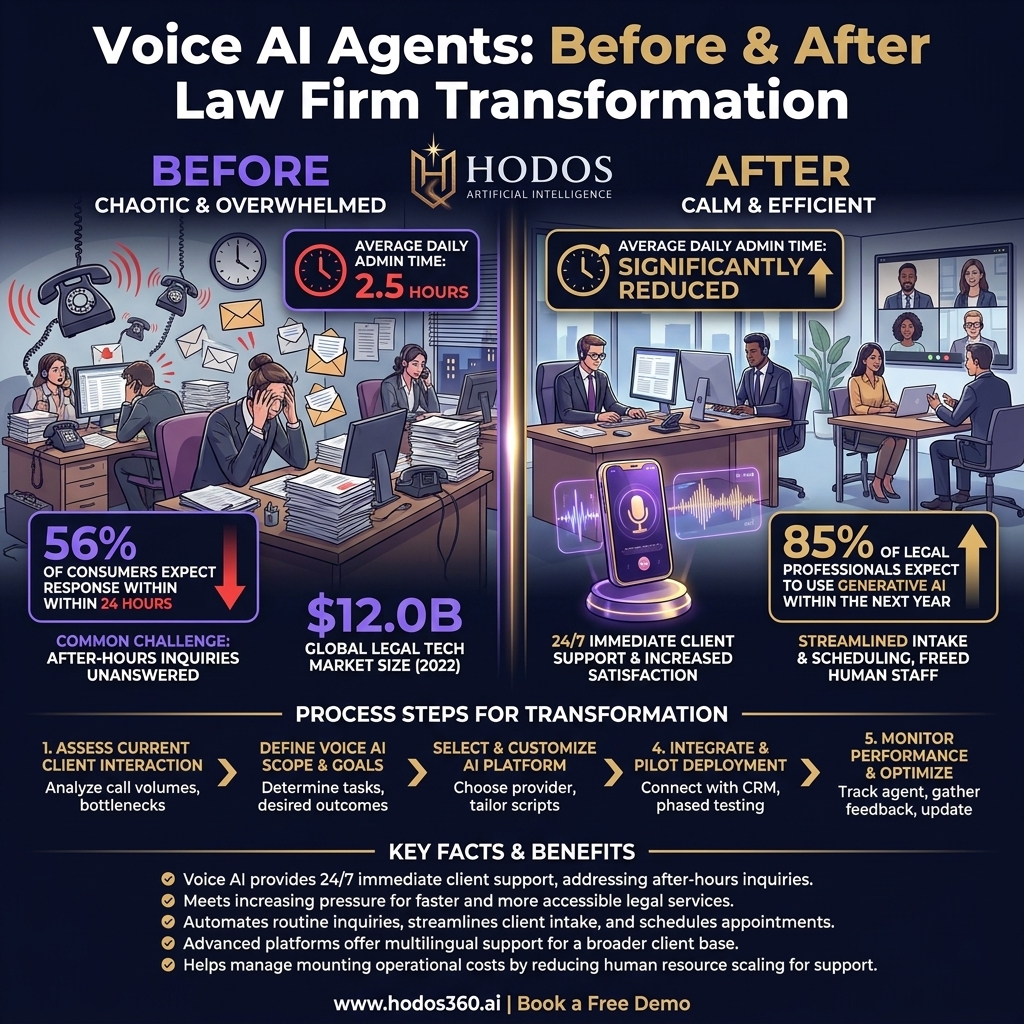
- ✓Enhanced Client Accessibility: Provide 24/7 service, ensuring no potential client is turned away due to off-hours or high call volumes.
- ✓Streamlined Client Intake: Automate initial screenings, gather essential client information, and qualify leads efficiently, reducing administrative burden.
- ✓Improved Operational Efficiency: Free up legal staff from repetitive tasks, allowing them to focus on complex legal work and billable hours.
- ✓Multilingual Support: Break down language barriers, enabling firms to serve a broader, more diverse client base without additional human resources.
- ✓Consistent Communication: Ensure uniform and accurate information delivery to clients, enhancing professionalism and reducing misinformation.
- ✓Data-Driven Insights: Collect valuable data on client inquiries and pain points, informing strategic decisions for service improvement and marketing.
- ✓Reduced Overhead Costs: Optimize resource allocation by automating routine tasks, leading to significant long-term cost savings for the firm.
Ensuring Compliance and Data Security with AI
The deployment of AI voice agents in legal practice necessitates a rigorous focus on compliance and data security. Law firms handle highly sensitive and confidential information, making adherence to regulations like HIPAA, GDPR, and state bar rules on client confidentiality (e.g., ABA Model Rule 1.6: Confidentiality of Information) non-negotiable. Firms must select AI platforms that offer enterprise-grade security features, including end-to-end encryption, access controls, and robust data governance policies.
Training AI models on anonymized data where possible, and ensuring that any client data processed by the AI is handled in accordance with strict privacy protocols, is paramount. Furthermore, firms must establish clear audit trails for all AI interactions, maintaining records that demonstrate compliance and accountability. Learn more about Proven Strategy: AI-Built Websites Can Convert for Law Firms. The responsibility for ethical AI use ultimately rests with the firm, requiring vigilant oversight and a commitment to protecting client interests above all else. This proactive approach not only mitigates risks but also builds client trust in the firm's innovative yet secure practices.
Beyond the Hype: Real-World Impact and Ethical Considerations
While the transformative potential of voice AI agents is immense, law firms must navigate their adoption with a clear understanding of both their capabilities and their limitations. The 'hype' surrounding AI often overshadows the practical realities of implementation and the critical ethical considerations inherent in legal practice. As Justice Robert H. Jackson famously stated, 'We are not final because we are infallible, but we are infallible only because we are final.' This ethos of human judgment and responsibility remains central to the legal profession, even as AI tools become more sophisticated. The goal of voice AI in law is not to replace human judgment but to enhance it, providing lawyers with better tools and freeing them to focus on the inherently human aspects of legal work: empathy, strategic thinking, and complex problem-solving. A 2024 survey by the American Bar Association (ABA) on technology in legal practice revealed that while 78% of attorneys expressed interest in AI, only 22% felt confident in its ethical deployment.
The ethical deployment of AI voice agents demands careful attention to several key areas, particularly concerning the attorney-client relationship and the duty of competence. ABA Model Rule 1.1: Competence requires lawyers to provide competent representation, which includes understanding the benefits and risks associated with relevant technology. This means firms must thoroughly vet any AI system, understand its limitations, and ensure it does not inadvertently provide legal advice beyond its programmed scope. Transparency with clients is also crucial; clients should be aware when they are interacting with an AI agent rather than a human. For instance, a firm might include a brief disclosure at the beginning of an AI-powered call: 'You are speaking with an AI assistant. For legal advice, you will be connected with an attorney.' This ensures informed consent and maintains the integrity of the attorney-client relationship.
Moreover, the issue of bias in AI systems is a persistent concern that legal professionals must address head-on. AI models are trained on vast datasets, and if these datasets reflect societal biases, the AI can perpetuate or even amplify them. In the legal context, this could lead to discriminatory outcomes in client screening, information provision, or even predictive analytics. Firms deploying voice AI agents must implement rigorous testing and auditing procedures to identify and mitigate potential biases, ensuring fairness and equity in their operations. This proactive approach aligns with the legal profession's commitment to justice and equality. For example, if an AI agent is trained predominantly on data from a specific demographic, it might inadvertently struggle to understand accents or nuances from other groups, leading to unequal service. Continuous refinement of training data and algorithms, coupled with human oversight, is essential to prevent such unintended consequences and uphold the principles of fair legal access, a core tenet of the justice system as outlined in various state codes of professional conduct, such as California Rule of Professional Conduct 1.1: Competence.
Finally, the competitive advantage gained by early adopters of voice AI agents cannot be overstated. Firms that strategically integrate these technologies now will build robust, efficient, and client-centric operations that will be difficult for late adopters to replicate. This isn't just about saving money; it's about redefining what a modern law firm looks like and how it delivers value. Firms like Allen & Overy, known for their innovative use of AI platforms like Harvey AI, demonstrate that large, established firms are already embracing these tools to enhance their legal services. For smaller and mid-sized firms, leveraging advanced AI Voice Assistants can level the playing field, allowing them to compete more effectively with larger entities by offering superior client experiences and operational efficiencies. The future of legal practice is conversational, automated, and intelligently augmented, and firms that embrace this vision will be the ones that thrive in the evolving legal landscape.

Key Takeaways and Next Steps for Law Firms
The rapid ascent of voice AI agents, spearheaded by innovations like OpenAI's Presence, offers law firms an unparalleled opportunity to redefine their operational efficiency and client engagement strategies. The days of missed calls and administrative bottlenecks can be largely mitigated by intelligently deployed AI voice assistants. For law firm owners and managing partners, the immediate takeaway is clear: the time to explore and integrate these technologies is now. The market is moving quickly, and firms that delay risk falling behind in a competitive landscape where client expectations for responsiveness and accessibility are continuously rising. This isn't about a wholesale replacement of human talent but rather a strategic augmentation that frees up lawyers to focus on the high-value, nuanced legal work that truly requires human intellect and empathy.
To effectively harness this potential, firms should begin with a thorough assessment of their current client communication channels and internal workflows, identifying areas where automation can yield the greatest impact. Pilot programs focusing on specific functions, such as initial client intake or FAQ management, can provide valuable insights and allow for iterative refinement. Partnering with legal tech providers that specialize in AI solutions, such as HODOS 360, can provide the expertise and integrated platforms necessary for seamless implementation. HODOS 360’s AI Voice Assistants, alongside its comprehensive AI Law Firm Management System, are designed to integrate seamlessly, offering 24/7 phone answering, lead qualification, appointment booking, and multilingual support, thereby transforming client service and operational efficiency. The firms that lead this charge will be the ones that define the next generation of legal service delivery.
Frequently Asked Questions
What exactly are voice AI agents, and how do they differ from traditional chatbots?+
Voice AI agents are advanced conversational AI systems that interact with users through spoken language, utilizing natural language processing and speech synthesis. Unlike traditional chatbots, which are text-based and often follow rigid scripts, modern voice AI agents are powered by large language models, allowing for more natural, nuanced, and context-aware conversations. They can understand complex queries, maintain conversational flow, and perform tasks in real-time, making interactions feel more human-like and efficient.
How can voice AI agents specifically benefit a small to mid-sized law firm?+
For small to mid-sized law firms, voice AI agents offer a significant competitive advantage by providing 24/7 client support without the need for additional staff. They can efficiently handle initial client intake, qualify leads, answer common questions, and schedule appointments, freeing up valuable attorney and paralegal time. This automation reduces operational costs, improves client accessibility, and allows smaller firms to compete with larger entities by offering superior responsiveness and efficiency.
What are the key ethical considerations when deploying voice AI agents in a legal setting?+
Ethical considerations include maintaining client confidentiality (ABA Model Rule 1.6), ensuring competence (ABA Model Rule 1.1) by understanding AI limitations, and being transparent with clients about AI interaction. Firms must ensure data security, prevent AI bias, and establish clear escalation paths for complex legal advice that requires human judgment. The ultimate responsibility for legal advice and client welfare remains with the human attorney.
How do firms ensure data privacy and security when using AI voice assistants?+
Firms must select AI platforms with enterprise-grade security features, including end-to-end encryption, robust access controls, and compliance with data protection regulations (e.g., HIPAA, GDPR). Training AI models on anonymized data where possible and implementing strict data governance policies are crucial. Regular security audits and ensuring that AI interactions create clear audit trails are also essential for maintaining privacy and accountability.
What kind of integration is possible between voice AI agents and existing law firm software?+
Advanced voice AI agents, especially those designed for enterprise use, offer robust API capabilities for seamless integration with existing law firm software. This includes case management systems, billing software, document automation platforms, and client relationship management (CRM) tools. Such integration allows AI agents to not only interact with clients but also update case files, generate invoices, and trigger workflows across the firm's entire digital ecosystem, creating a truly unified operation.