

Voice AI Assistants: The Ultimate Law Firm Advantage
The digital transformation sweeping across industries has reached a pivotal moment in the legal sector, with Voice AI assistants emerging as a game-changer. Just recently, the financial world buzzed with the news of Finvasia's launch of jAI, a voice-based AI finance assistant on its jUMPP platform, designed to help users manage expenses, budgets, and savings through intuitive conversation.
This development isn't just a headline for fintech; it's a powerful signal to every professional service industry, including law, that the era of conversational AI is not merely on the horizon—it's here, fundamentally reshaping how businesses interact with their clients and operate internally. For law firms, where client communication, efficient intake, and responsive service are paramount, the implications are profound.
The capabilities demonstrated by jAI, from real-time data retrieval to personalized guidance, translate directly into a blueprint for legal practices seeking to elevate their client experience and streamline their often-complex administrative burdens.
The evolution of artificial intelligence, particularly in natural language processing (NLP) and speech recognition, has propelled Voice AI assistants from futuristic concepts to practical, indispensable tools.
This leap is powered by advancements from companies like OpenAI, led by CEO Sam Altman, and Anthropic, co-founded by Dario Amodei, whose large language models (LLMs) form the backbone of these sophisticated conversational agents. These technologies are not just about automating rote tasks; they are about creating more intelligent, personalized, and scalable interactions.
For law firms, this means an opportunity to address critical pain points: the constant demand for 24/7 client availability, the challenge of efficiently qualifying leads, and the administrative overhead associated with initial client consultations and scheduling. A 2023 report by Grand View Research projected the global conversational AI market to reach $32.6 billion by 2030, underscoring the immense growth and adoption across diverse sectors.
Firms embracing this wave are positioning themselves at the forefront of a competitive landscape, ready to meet the rising expectations of a digitally-native client base.
Elevate your practice with intelligent automation. Learn more about HODOS 360's AI solutions for law firms.
The Dawn of Conversational AI in Legal Practice
The legal landscape is experiencing a paradigm shift, driven by the emergence of sophisticated conversational AI. This isn't just a technological upgrade; it's a fundamental redefinition of how law firms interact with the outside world. The financial sector's rapid adoption, exemplified by Finvasia's jAI, provides a compelling blueprint.
jAI's ability to interpret complex financial queries, track budgets, and offer personalized advice via voice commands demonstrates the power of specialized AI to handle sensitive, data-rich interactions. For law firms, the parallels are striking. Clients often approach legal services during periods of stress or urgency, requiring immediate and accurate information.
A Voice AI assistant can provide that crucial first point of contact, offering empathetic responses, gathering essential case details, and setting realistic expectations, all while maintaining a professional demeanor 24/7. This capability addresses a long-standing challenge for firms: balancing the need for constant availability with the practical limitations of human staff.
As noted by Jack Newton, CEO of Clio, "The future of legal is client-centered, and technology is the key to delivering that experience at scale."
The integration of Voice AI assistants into legal practice signifies a move beyond mere automation towards intelligent augmentation. Learn more about Essential AI Website Builder Guide for Law Firms.
Consider the traditional pain points of client intake: missed calls, inconsistent information gathering, and the time-consuming process of qualifying leads. A well-designed legal Voice AI can eliminate these inefficiencies. It can engage potential clients in natural language conversations, asking targeted questions to ascertain the nature of their legal issue, their jurisdiction, and their immediate needs.
This initial screening process, often handled by administrative staff, can be fully automated, freeing up valuable human resources. Moreover, the AI can be programmed to identify urgent matters, routing them to an available attorney immediately, while standard inquiries can be scheduled for follow-up. This not only improves operational efficiency but also significantly enhances the prospective client's experience by providing immediate engagement rather than voicemail queues.
The data gathered by the Voice AI can be instantly transcribed and integrated into the firm's case management system, creating a seamless transition from initial contact to client onboarding, reducing data entry errors and accelerating the entire process.
Beyond Basic Answering: Intelligent Lead Qualification
The true power of Voice AI assistants in a legal context extends far beyond simply answering calls; it lies in their ability to perform intelligent lead qualification. Imagine a scenario where a potential client calls a law firm. Instead of a generic "hello," they are greeted by an AI assistant capable of engaging them in a nuanced conversation.
This assistant can identify the caller's legal need (e.g., personal injury, family law, real estate), assess the urgency, and even pre-screen for potential conflicts of interest based on a pre-defined script and integrated firm data. Learn more about AI SaaS Builders: The Ultimate Blueprint for Law Firms.
For instance, if a caller inquires about a divorce, the AI can ask about the jurisdiction, whether children are involved, and if the client has existing legal representation, all before a human attorney ever picks up the phone. This sophisticated filtering ensures that when a call is finally routed to a human, it's a truly qualified lead, saving attorneys and paralegals countless hours that would otherwise be spent on initial fact-finding or unqualified inquiries.
This level of automation allows firms to maximize their marketing ROI by ensuring that every human interaction is with a prospect who is genuinely aligned with the firm's services and capacity.
Revolutionizing Client Intake and Communication
The client intake process is often the first, and most critical, touchpoint between a law firm and a potential client. It's an area ripe for innovation, and Voice AI assistants are proving to be revolutionary. The traditional model, fraught with manual data entry, scheduling conflicts, and the potential for human error, often creates bottlenecks that delay client onboarding and can even lead to lost opportunities.
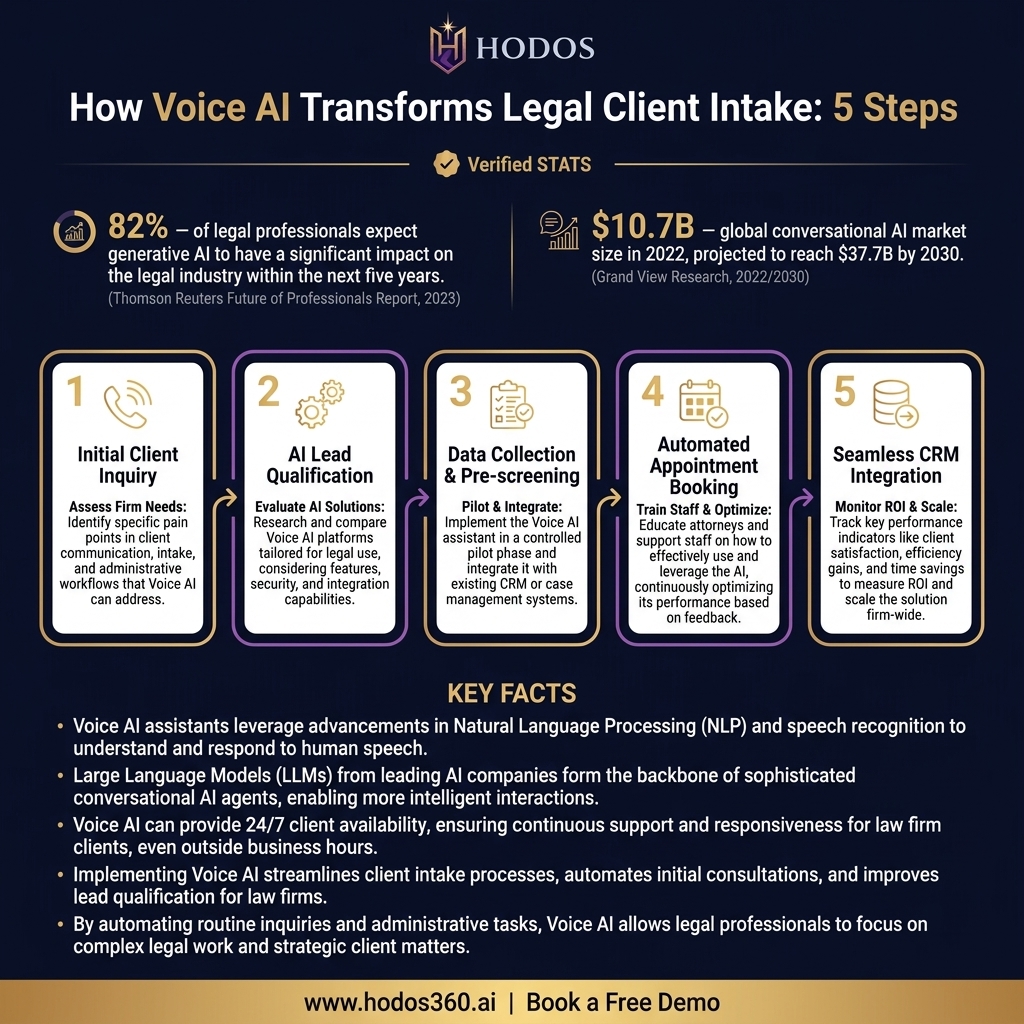
By deploying a Voice AI, law firms can offer a seamless, 24/7 intake experience. Prospective clients can call at their convenience, day or night, and engage in a guided conversation that systematically collects all necessary initial information—name, contact details, nature of the legal issue, relevant dates, and any immediate concerns.
This not only provides immediate gratification for the client but also ensures that comprehensive, standardized data is captured consistently for every inquiry. This structured data can then be automatically funneled into the firm's case management system, pre-populating client files and significantly reducing the administrative burden on support staff.
The result is a faster, more efficient, and less error-prone intake process, setting a positive tone for the entire client relationship.
Beyond initial intake, Voice AI assistants fundamentally transform ongoing client communication. Learn more about AI Legal Startup Sandstone: Unlocking 2026's Legal Tech Future. In a legal world where clients demand constant updates and responsive service, a Voice AI can act as an invaluable extension of the firm's communication capabilities.
It can handle routine inquiries such as "What's the status of my case?" or "When is my next court date?" by accessing and relaying information directly from the firm's secure database. This frees up attorneys and paralegals from answering repetitive questions, allowing them to dedicate more time to complex legal work.
Furthermore, the multilingual support offered by advanced Voice AI systems breaks down significant barriers, making legal services accessible to a broader demographic. A client who speaks only Spanish, for example, can receive the same high-quality, immediate assistance as an English-speaking client, fostering inclusivity and expanding the firm's potential client base.
This capability aligns with the American Bar Association's emphasis on access to justice, making legal services more approachable for diverse communities. Firms leveraging this technology are not just improving efficiency; they are enhancing their social impact.
Streamlining Appointment Booking and Follow-ups
One of the most time-consuming administrative tasks for law firms is managing appointments and follow-ups. Voice AI assistants excel in this domain, providing an automated solution that significantly reduces manual effort and minimizes scheduling errors. Integrated with the firm's calendar system, an AI assistant can intelligently identify available slots for attorneys or paralegals, offer these options to clients, and confirm bookings—all through natural language conversation.
For example, a client calling to schedule an initial consultation can be guided by the AI to select a date and time that works for both parties, receiving an immediate confirmation and calendar invitation. Learn more about Essential Risk Management for Law Firms in the AI Era.
This capability is particularly impactful for firms with multiple attorneys or various practice areas, where coordinating schedules can be a complex logistical challenge. Furthermore, the AI can automatically send appointment reminders via voice, SMS, or email, drastically reducing no-show rates, which can be a significant drain on a firm's billable hours.
This proactive approach to scheduling ensures that attorneys' time is utilized efficiently, translating directly into increased productivity and revenue.
Ready to transform your law firm's client engagement and operational efficiency? Explore HODOS 360's AI Voice Assistants today!
Operational Efficiency and Cost Reduction
The economic pressures on law firms are constant, making operational efficiency and cost reduction paramount. Voice AI assistants offer a compelling solution by automating a multitude of administrative tasks that traditionally consume significant human resources and budget. Consider the salary and overhead associated with maintaining a team of receptionists or administrative assistants who spend a substantial portion of their day answering phones, routing calls, and scheduling appointments.
A single Voice AI system can perform these functions with greater speed and consistency, 24/7, at a fraction of the cost. A study by McKinsey & Company on AI adoption across industries indicated that automation technologies could lead to annual productivity gains of 0.8% to 1.4% globally, with significant cost savings in customer service and administrative functions.
For law firms, this translates to tangible savings that can be reinvested into growth initiatives, technology upgrades, or competitive compensation for legal professionals. This shift allows paralegals and legal assistants to pivot from repetitive administrative duties to more substantive, billable work, thereby increasing the firm's overall revenue-generating capacity.
Beyond direct salary savings, Voice AI assistants contribute to efficiency through error reduction and data standardization. Human error in transcribing client details, scheduling appointments, or routing calls can lead to significant downstream costs, including missed deadlines, client dissatisfaction, and even potential malpractice claims. Learn more about Claude's Visual Coding: An Essential Guide for Law Firms.
AI systems, when properly configured, operate with meticulous accuracy. They capture information precisely, transcribe conversations reliably, and integrate data seamlessly into existing platforms. This standardization of data input ensures that all client information is consistent and readily accessible, improving the quality of service delivery and reducing the time attorneys spend searching for or correcting information.
Furthermore, the analytics derived from Voice AI interactions provide invaluable insights into call volumes, peak times, common queries, and lead conversion rates. This data empowers firm management to make informed decisions about staffing, marketing strategies, and service offerings, optimizing resource allocation and driving continuous improvement across the firm.
This strategic advantage, often overlooked, is a critical component of long-term operational excellence.
Integrating Voice AI with Existing Legal Workflows
A common concern for law firms considering new technology is integration with their existing systems. Modern Voice AI assistants are designed with this in mind, offering robust APIs and connectors to seamlessly integrate with popular legal practice management software, CRM systems, and document automation platforms.
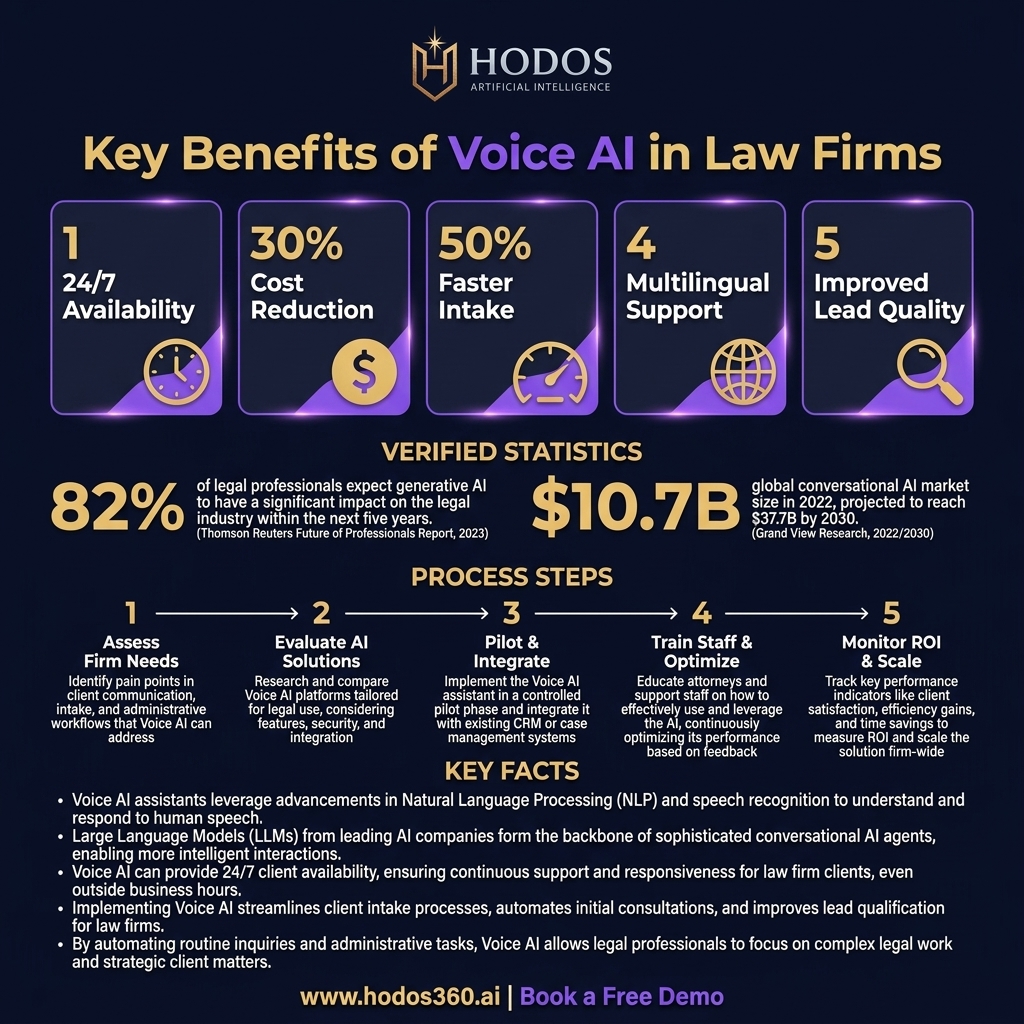
For instance, a Voice AI can directly update a client's profile in Clio, MyCase, or PracticePanther after a call, add an event to Outlook or Google Calendar, or even trigger the creation of initial client engagement letters through a document automation module. This level of integration ensures that the AI isn't an isolated tool but a fully embedded component of the firm's digital ecosystem.
Learn more about AI for Small Law Firms: The Essential Hub for Growth. This holistic approach means that data flows freely and accurately across all systems, eliminating data silos and the need for manual data transfer. The result is a unified workflow where the Voice AI acts as an intelligent front-end, gathering and disseminating information that powers the firm's entire operational backend, from case management to billing.
HODOS 360, for example, offers an AI Law Firm Management System that integrates seamlessly with its AI Voice Assistants, providing a truly unified platform for legal operations.
Navigating the Ethical and Practical Landscape of Legal Voice AI
While the benefits of Voice AI assistants are substantial, their adoption in the legal sector is not without ethical and practical considerations. The legal profession is bound by strict rules of confidentiality, client privilege, and professional competence, as outlined in frameworks like the ABA Model Rules of Professional Conduct (e.g., Rule 1.6 on Confidentiality of Information and Rule 1.1 on Competence).
Law firms must ensure that any AI system handling client communications is designed with robust data security protocols, end-to-end encryption, and compliance with relevant data privacy regulations such as GDPR or state-specific laws like the California Consumer Privacy Act (CCPA). This means thoroughly vetting vendors, understanding how data is stored, processed, and secured, and ensuring that AI interactions are auditable and transparent.
The potential for AI to inadvertently disclose sensitive information or provide inaccurate legal advice is a serious concern that necessitates careful implementation, clear disclaimers, and continuous human oversight. Firms must establish clear policies on what information the AI can collect and disseminate, and when a call must be escalated to a human attorney.
Beyond confidentiality, the ethical implications of AI accuracy and bias are critical. Voice AI assistants are trained on vast datasets, and if these datasets contain biases, the AI can perpetuate or even amplify them. In a legal context, this could manifest as biased responses based on demographic cues in a caller's voice or language, leading to inequitable treatment or advice.
Law firms have a fundamental duty to provide fair and unbiased representation, making the responsible deployment of AI paramount. This requires firms to work with AI developers who prioritize ethical AI design, regularly audit their systems for bias, and ensure that the AI's "knowledge base" is continuously updated and refined with accurate, unbiased legal information.
Furthermore, clients must be informed when they are interacting with an AI, maintaining transparency and trust. The EU AI Act, a pioneering piece of legislation, emphasizes human oversight and risk assessment for high-risk AI systems, providing a regulatory framework that legal tech developers and law firms should closely study and adhere to.
This ongoing vigilance is essential to harness the power of AI responsibly.
Ensuring Compliance and Data Security with Voice AI
Ensuring compliance and robust data security are non-negotiable for law firms deploying Voice AI assistants. The very nature of legal practice involves handling highly sensitive and confidential client information, making any technological integration subject to rigorous scrutiny. Firms must implement AI solutions that adhere to industry-leading security standards, including encryption of data at rest and in transit, multi-factor authentication, and strict access controls.
Furthermore, legal professionals have an ethical obligation to protect client data, as stipulated by various professional conduct rules. This means understanding the vendor's data handling policies, server locations, and disaster recovery protocols. Regular security audits and penetration testing of the AI system are crucial to identify and mitigate vulnerabilities.
Firms should also establish clear internal policies for AI usage, including guidelines for what information can be discussed with the AI, how conversations are logged, and who has access to these records, ensuring that every interaction upholds the firm's ethical duties and legal obligations.

The Future is Conversational: Key Takeaways and Next Steps
The journey into conversational AI, as evidenced by developments like Finvasia's jAI, is rapidly redefining industry standards for client engagement and operational efficiency. For law firms, the message is clear: Voice AI assistants are no longer a luxury but an increasingly essential component of a competitive, client-centric practice.
By embracing this technology, firms can unlock unprecedented levels of responsiveness, streamline their client intake processes, and significantly reduce administrative overhead. The ability to offer 24/7 multilingual support, intelligent lead qualification, and automated appointment booking provides a distinct advantage in attracting and retaining clients in a demanding market.
As the legal tech landscape continues to evolve, the firms that strategically integrate Voice AI will be those best positioned to thrive, delivering superior service while optimizing their internal resources. This transformation is not about replacing human expertise, but about empowering legal professionals to focus on the complex, nuanced work that truly requires their unique skills and judgment.
For law firm owners and managing partners considering this transformative step, the path forward involves a strategic approach. Begin by identifying key pain points in your current client communication and administrative processes. Research reputable legal tech providers that offer integrated Voice AI assistant solutions, paying close attention to their security protocols, customization options, and integration capabilities with your existing systems.
Pilot programs can be invaluable for understanding the specific impact on your firm and gathering feedback from both staff and clients. Crucially, foster a culture of innovation within your firm, educating your team on the benefits of AI and how it will augment their roles, rather than diminish them.
The future of legal service is conversational, efficient, and deeply client-focused. Embracing Voice AI now is not just about keeping pace; it's about leading the way. HODOS 360 stands as a comprehensive partner for law firms seeking to navigate this new frontier, offering AI-powered solutions that integrate seamlessly to elevate every aspect of legal operations, from client intake to firm management.
Discover how HODOS 360's integrated AI solutions can elevate your law firm. Schedule a free consultation today!
Frequently Asked Questions
What exactly is a Voice AI assistant in the context of a law firm?+
A Voice AI assistant for law firms is an intelligent conversational agent that uses natural language processing to interact with clients and prospects over the phone. It can answer questions, qualify leads, book appointments, and provide information 24/7, automating tasks typically handled by human receptionists or administrative staff.
How does a Voice AI assistant improve client intake?+
Voice AI streamlines client intake by providing immediate, consistent responses to inquiries, gathering essential information systematically, and pre-qualifying leads. This automation reduces wait times, ensures data accuracy, and frees up human staff to focus on more complex aspects of client onboarding, enhancing the overall client experience.
Is Voice AI secure enough to handle sensitive legal client data?+
Yes, when properly implemented from reputable vendors, Voice AI systems employ robust security measures like encryption, access controls, and compliance with data privacy regulations (e.g., GDPR, CCPA). Firms must vet vendors carefully and establish internal policies to ensure client confidentiality and data integrity are maintained at all times.
What are the key ethical considerations when using Voice AI in a legal practice?+
Ethical considerations include ensuring client confidentiality, preventing algorithmic bias in interactions, maintaining transparency with clients about AI interaction, and providing adequate human oversight. Firms must adhere to professional conduct rules, such as those from the ABA, and implement AI responsibly to avoid potential missteps or misrepresentation.
How difficult is it to integrate Voice AI assistants with existing law firm software?+
Modern Voice AI assistants are designed for seamless integration. They typically offer APIs and connectors that link with popular legal practice management systems, CRMs, and calendaring software. While initial setup requires customization, the goal is to create a unified workflow where the AI complements and enhances your existing digital ecosystem without disruption.