
Essential AI Search for Law Firms: Beyond Hosting Limits
Just two years ago, Sarah Chen, managing partner at LexCorp Legal, faced a common dilemma. Her firm’s website, a meticulously crafted repository of legal insights and service offerings, suffered from a critical flaw: its search function was rudimentary at best. Prospective clients, often grappling with complex legal issues, would abandon their searches in frustration, unable to quickly locate relevant articles or attorney profiles. Chen recalls a particularly telling incident from early 2024, where a high-net-worth individual researching estate planning options left her site after just 30 seconds, later telling a colleague that the information was 'impossible to find.' This narrative of lost opportunities, driven by inadequate digital infrastructure, echoes across countless law firms striving for a competitive edge in a rapidly evolving digital landscape. The prevailing sentiment was that advanced, intuitive search capabilities, especially those powered by artificial intelligence, were often locked behind proprietary hosting or complex, expensive integrations, putting them out of reach for many.
However, the recent announcement from WP Engine, a prominent WordPress hosting provider, has sent ripples of change through the legal tech community. By dropping the hosting requirement for its Smart Search AI plugin, WP Engine has effectively democratized access to sophisticated AI search for law firms and other businesses, making it available to any site built with WordPress, irrespective of its hosting provider. This strategic pivot, reported extensively by outlets like PPC Land, signals a significant shift towards more open and accessible AI tools, challenging the traditional gatekeeping of advanced web functionalities. For legal professionals, this isn't just a technical update; it's an invitation to fundamentally rethink their digital client engagement strategies and enhance their online presence with intelligent, user-centric tools that were once considered premium luxuries.
This development is particularly timely, as industry data consistently highlights the growing importance of digital experience. A 2025 report by Thomson Reuters revealed that 78% of legal clients expect law firms to offer digital self-service options, with efficient website navigation being a top priority. The ability for a potential client to type a natural language query like "What are the legal implications of remote work for my startup in California?" and receive precise, relevant results, rather than a jumble of keyword-matched documents, is no longer a luxury but a necessity. This shift towards intelligent AI search for law firms represents a powerful opportunity to not only meet but exceed these expectations, transforming frustrating digital encounters into seamless pathways to legal assistance. It's a clear signal that the era of basic website search is over, and the future demands an AI-powered approach to client discovery and information access.
The Shifting Landscape of Legal Web Presence and AI Search Accessibility
The legal industry, often characterized by its cautious approach to technology, is now at an inflection point. The WP Engine announcement regarding its Smart Search AI plugin is a powerful testament to the broader trend of AI democratization. Historically, sophisticated smart search AI capabilities, which leverage natural language processing (NLP) and machine learning to understand user intent rather than just keywords, were often proprietary and deeply integrated into specific platforms or required significant custom development. This created a barrier to entry, especially for small and mid-sized law firms that lacked the extensive IT resources or budget of larger enterprises. The decision to make this powerful plugin available to everyone, regardless of their hosting environment, directly addresses this disparity, leveling the playing field and accelerating the adoption of advanced web technologies within the legal sector. It reflects a growing understanding among tech providers like WP Engine's CEO, Heather Brunner, that the future of digital experience lies in widespread accessibility, not exclusivity, enabling more businesses to build smarter, more responsive online presences.
This move has profound implications for how law firms construct and manage their digital storefronts. For years, the focus of legal website SEO was primarily on external factors: backlinks, meta descriptions, and keyword stuffing. While these remain important, the internal user experience, particularly the ability to find information quickly and intuitively, is increasingly becoming a critical ranking factor and a driver of client conversion. Learn more about Essential AI Legal Adoption: Akin's Firmwide Success Blueprint. A website with a robust AI search for law firms effectively transforms a static digital brochure into an interactive legal knowledge base. Imagine a client searching for "divorce laws for military personnel in Texas." A traditional search might return hundreds of documents containing 'divorce,' 'military,' and 'Texas,' requiring the user to sift through irrelevant content. An AI-powered search, however, understands the nuanced intent behind the query, prioritizing and presenting the most relevant legal articles, FAQs, and attorney profiles specializing in military family law in Texas, thereby drastically improving the user journey and reflecting positively on the firm's perceived expertise and client-centric approach.
This accessibility also fuels innovation. With a powerful smart search AI tool readily available for WordPress, law firms can now experiment with more dynamic content strategies, confident that their valuable insights will be discoverable. Firms can publish detailed whitepapers, host webinars, or create extensive legal guides, knowing that potential clients can easily navigate this wealth of information. This newfound freedom from hosting constraints means that legal tech startups and independent developers can also build complementary tools and services around these open AI search platforms, fostering a more vibrant ecosystem. It's a win-win: users get better experiences, and law firms gain powerful tools to showcase their expertise and attract new clients, marking a significant step forward in the digital evolution of the legal profession.
From Niche Tool to Universal Standard: Smart Search AI's Evolution
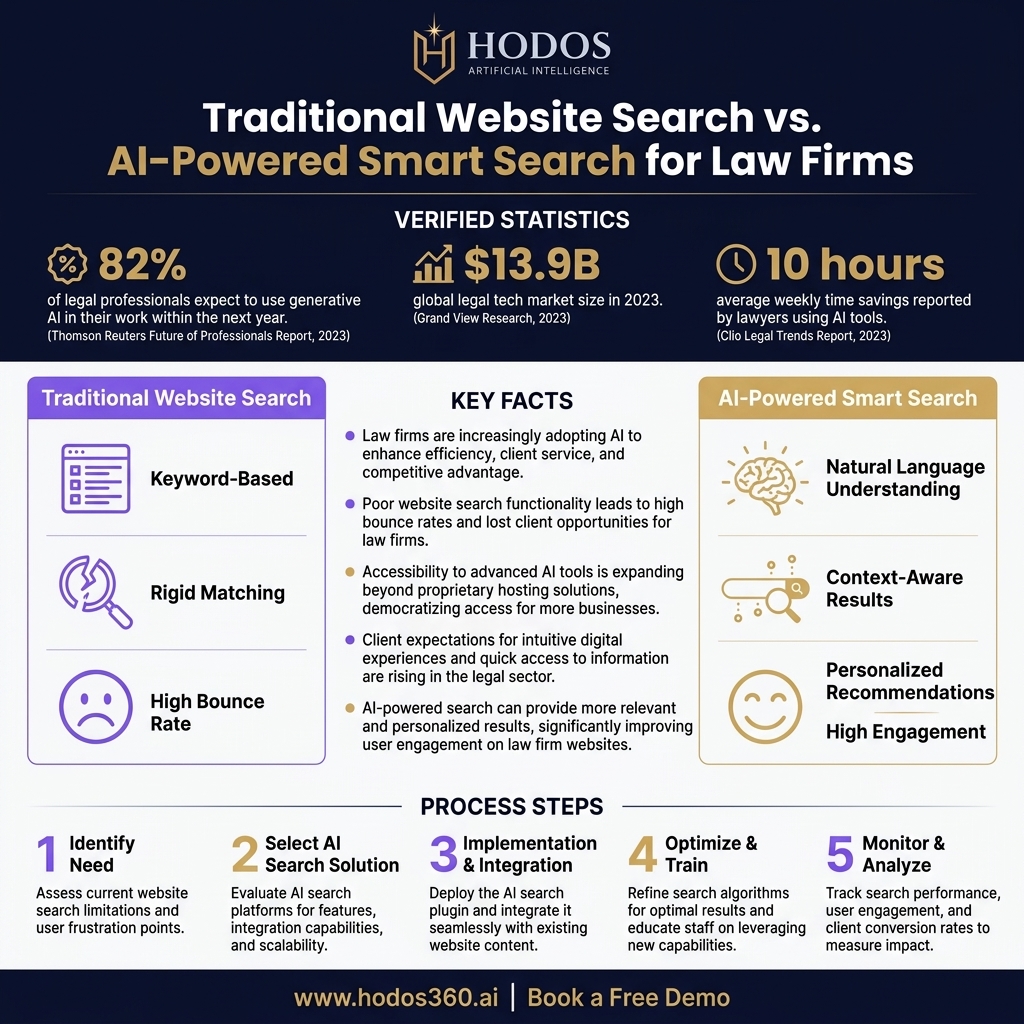
The evolution of smart search AI from a niche, enterprise-level solution to a universally accessible WordPress plugin highlights a broader trend in artificial intelligence: its rapid commoditization and integration into everyday applications. Earlier iterations of website search were primarily keyword-matching algorithms, often leading to frustrating 'zero results' pages or an overwhelming flood of tangentially related content. The advent of AI, particularly advancements in natural language understanding (NLU) and machine learning, has fundamentally changed this paradigm. Modern AI search engines can interpret context, correct typos, understand synonyms, and even learn from user behavior to provide increasingly accurate and personalized results. This transformative capability, once the exclusive domain of tech giants, is now available to any law firm utilizing WordPress, democratizing the power of sophisticated data retrieval.
For law firms, this means moving beyond simple keyword queries to a system that anticipates client needs. Consider a scenario where a prospective client misspells a legal term or uses colloquial language to describe their problem. Learn more about Legal AI Trust: An Essential Guide for Law Firms. A traditional search would likely fail, but smart search AI can decipher the intent, guiding the user to the correct legal resources. Moreover, these systems are often equipped with AI-powered recommendations, suggesting related content that users might find helpful, creating a more comprehensive and engaging experience. This not only keeps visitors on the site longer but also positions the law firm as a truly helpful and resourceful entity. As outlined in the Federal Rules of Civil Procedure, particularly Rule 26, the duty to provide relevant information is paramount in legal practice; extending this principle to a firm's digital presence through intelligent search reinforces transparency and client service. This evolution underscores a critical shift: the website is no longer just a digital billboard, but an intelligent, interactive service portal.
Elevating Client Experience: The Core Benefit of Intelligent Website Search
In today's competitive legal market, client experience is paramount. A study by the American Bar Association (ABA) in 2024 indicated that client satisfaction with a law firm's digital offerings significantly influences their decision to retain services. This includes everything from the initial website visit to ongoing case management. The implementation of a robust AI search for law firms directly addresses a critical pain point in the client journey: information access. When potential clients arrive at a law firm's website, they are often in distress, seeking urgent answers to complex questions. A clunky, inefficient search function only compounds their frustration, potentially driving them to competitors whose digital platforms offer a smoother, more intuitive experience. With AI-powered search, firms can ensure that every query, no matter how phrased, leads to the most relevant legal insights or service pages, fostering trust and demonstrating a commitment to client needs from the very first interaction.
Beyond just finding information, intelligent search also plays a crucial role in lead qualification and conversion. Imagine a system that not only directs a user to an article on 'employment discrimination' but also, based on their search patterns and engagement with related content, suggests booking a free consultation with an employment law attorney. This is the power of AI-powered recommendations integrated into a smart search. Learn more about AI Web Apps: Ultimate Legal Firms' Guide to Next-Gen Development. It transforms a passive search tool into an active engagement engine, guiding potential clients through a curated journey that anticipates their next steps. This proactive approach to client engagement is a stark contrast to traditional methods and represents a significant competitive advantage. Firms like 'LegalZoom' and 'Rocket Lawyer' have long leveraged sophisticated digital pathways to streamline client intake; now, individual law firms can deploy similar intelligence at a fraction of the previous cost and complexity, all thanks to accessible AI plugins for platforms like WordPress.
Furthermore, the data generated by advanced smart search AI provides invaluable insights into client needs and content gaps. Law firms can analyze search queries to understand what legal topics are most frequently searched, what terminology clients use, and where their current website content might be falling short. This feedback loop is crucial for refining content strategies, optimizing service offerings, and even identifying emerging legal trends that the firm might want to specialize in. For example, if a firm consistently sees searches for 'AI ethics in healthcare,' it might indicate a nascent demand for legal services in that area. This data-driven approach, powered by accessible AI search for law firms, moves firms beyond guesswork, enabling them to make informed decisions that align with actual client demand and market trends, ultimately leading to more effective marketing and service delivery.
Beyond Keywords: AI-Powered Recommendations and Predictive Insights
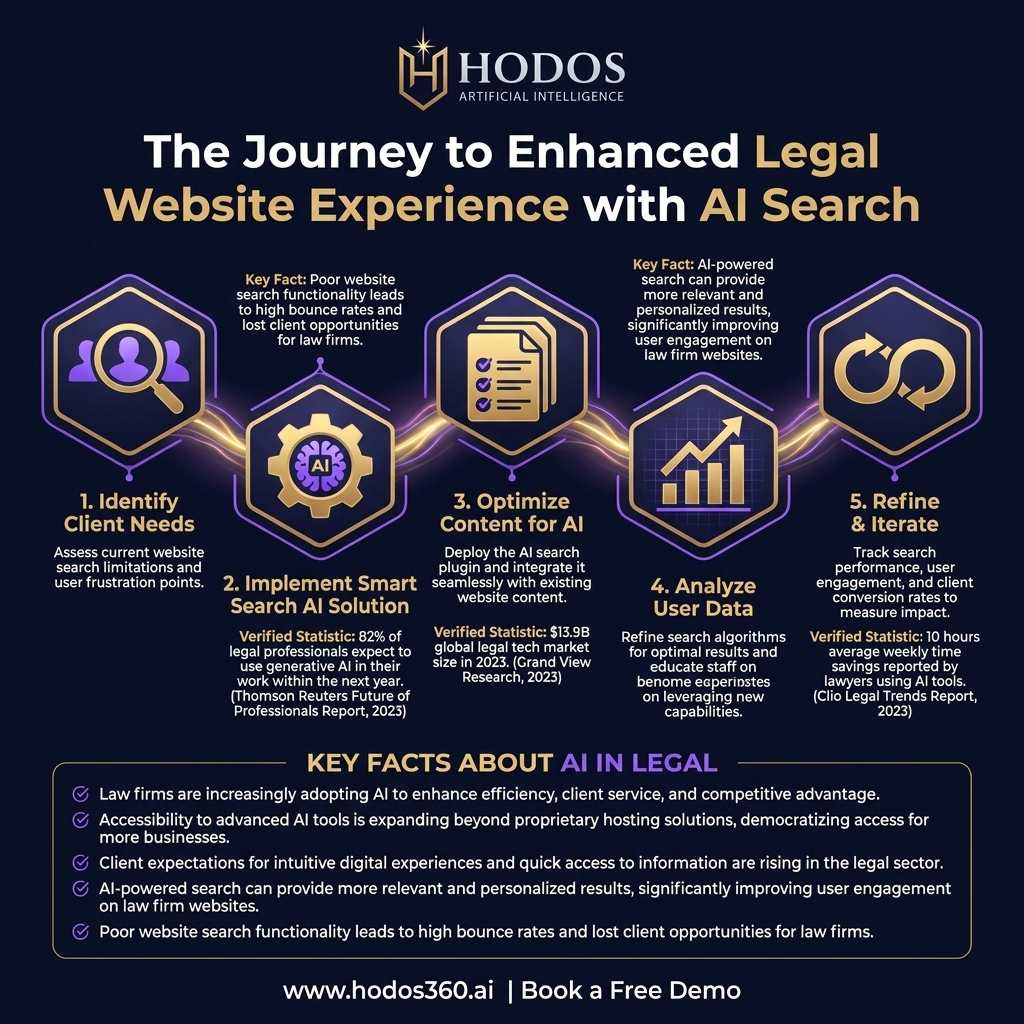
The true prowess of modern AI search extends far beyond simple keyword matching; it lies in its ability to offer AI-powered recommendations and predictive insights that enrich the user experience and drive engagement. Unlike traditional search engines that often present a flat list of results, sophisticated AI systems can analyze a user's current query, their browsing history on the site, and even demographic data (if available and consented to) to suggest related articles, relevant case studies, or even specific legal services that align with their inferred needs. This personalized approach mirrors the recommendation engines found on e-commerce sites like Amazon or streaming platforms like Netflix, which have set a high bar for digital user experience. For a law firm, this means a client researching 'intellectual property protection' might automatically be shown links to articles on 'trademark registration,' 'patent law basics,' and 'licensing agreements,' guiding them deeper into the firm's expertise and demonstrating a holistic understanding of their potential legal challenges.
This capability for AI-powered recommendations is particularly impactful in the legal sector, where client journeys are often complex and multi-faceted. A client might start with a broad query about 'business disputes' but, through a series of recommended articles on 'contract breaches' and 'mediation strategies,' refine their understanding and identify a specific need. This guided discovery process not only enhances the client's educational journey but also positions the law firm as a trusted advisor, proactively addressing potential concerns before they are explicitly voiced. The data collected from these recommendation pathways can also provide invaluable predictive insights. Learn more about AI Legal Tech Boom 2026: Unlocking Billions in Valuation. For instance, if a high volume of users who view 'startup legal advice' articles then proceed to 'venture capital funding' pages, the firm can infer a strong correlation and tailor future content or marketing campaigns to target this specific client segment more effectively. This level of data-driven strategy was once the exclusive domain of large tech companies but is now becoming increasingly accessible to law firms through robust AI search for law firms integrations.
Furthermore, the integration of smart search AI with other legal tech tools can create a seamless ecosystem. Imagine a scenario where a client, after engaging with recommended content, can directly schedule an appointment with a relevant attorney through an integrated AI voice assistant or fill out an AI-powered client intake form, with their initial search queries pre-populating certain fields. This holistic approach, which is at the heart of platforms like HODOS 360's comprehensive suite of services, transforms a website from a static information hub into a dynamic, interactive client acquisition and service delivery platform. The ability to leverage these advanced capabilities, now made more accessible by developments like WP Engine's open Smart Search AI, means law firms can build truly intelligent digital experiences that anticipate, educate, and convert, setting a new standard for legal service delivery in the digital age.
- ✓Enhanced Client Discovery: Clients quickly find relevant legal information, services, and attorney profiles, reducing frustration and improving satisfaction.
- ✓Improved Lead Qualification: AI-powered recommendations guide prospects through a curated journey, helping them self-identify specific needs and connect with the right legal expert.
- ✓Reduced Bounce Rates: Engaging and relevant search results keep visitors on your site longer, exploring more content and increasing the likelihood of conversion.
- ✓Valuable Data Insights: Analyze search queries and user behavior to identify client pain points, content gaps, and emerging legal trends, informing content and marketing strategies.
- ✓Competitive Advantage: Differentiate your firm by offering a superior digital experience that outpaces competitors relying on outdated, keyword-based search functions.
- ✓Operational Efficiency: Automate the initial information-gathering process, allowing your legal team to focus on higher-value tasks rather than answering basic informational inquiries.
- ✓Future-Proofing Your Digital Presence: Stay ahead of the curve by adopting advanced AI technologies that are becoming standard in client-centric digital platforms.
Implementing AI Search: Strategic Considerations for Law Firms
While the availability of AI search for law firms is becoming more widespread, successful implementation requires strategic planning, not just a simple plugin installation. Law firms must first assess their existing website infrastructure and content. A robust content strategy is the backbone of any effective AI search; the AI can only be as intelligent as the data it processes. This means ensuring legal articles, blog posts, FAQs, and service descriptions are well-organized, accurately tagged, and regularly updated. Firms should consider a content audit to identify gaps or areas where information is outdated or unclear. Furthermore, integration with a firm's existing client relationship management (CRM) system or case management software can unlock even greater potential, allowing for personalized search results based on a client's history with the firm. This holistic approach to digital infrastructure is crucial for maximizing the benefits of smart search AI and ensuring it seamlessly enhances the firm's overall digital ecosystem.
Choosing the right WordPress AI plugins or AI search solution involves evaluating several factors. Beyond basic functionality, firms should look for features such as natural language understanding (NLU), typo tolerance, semantic search capabilities, and customizable result rankings. The ability to integrate with analytics tools to track search performance and user behavior is also vital for continuous optimization. Learn more about AI Website Coding: An Essential Guide for Law Firms. Firms should also consider the ease of setup and maintenance, ensuring that the chosen solution doesn't add undue burden to their administrative staff. A key consideration, especially for legal professionals, is data privacy and security. Any AI solution must comply with stringent data protection regulations, such as the ABA Model Rules of Professional Conduct regarding client confidentiality, ensuring that client data is handled securely and ethically. This due diligence is paramount to maintaining client trust and avoiding potential legal pitfalls associated with inadequate data governance.
Finally, the implementation process should involve a phased approach, starting with a clear definition of objectives and key performance indicators (KPIs). What does success look like? Is it reduced bounce rates, increased lead conversions, or improved client satisfaction scores? Regular monitoring and iterative adjustments based on user feedback and performance data are essential. Training staff on how to leverage the new search capabilities, both internally for content management and externally for client support, can also ensure a smoother transition. The investment in legal website SEO and user experience through advanced AI search is not a one-time project but an ongoing commitment to digital excellence. Firms that approach this strategically will not only enhance their online presence but also build a more resilient and client-centric practice for the future.
SEO Synergy: How AI Search Enhances Your Digital Footprint
The benefits of AI search for law firms extend beyond direct user experience; they also create a powerful synergy with legal website SEO. While AI search primarily operates within your website, improving on-site engagement, its positive effects ripple outwards to external search engine rankings. When users find what they're looking for quickly and efficiently, they spend more time on your site, explore more pages, and interact more deeply with your content. This increased engagement signals to external search engines like Google that your website provides valuable and relevant information, which can lead to higher organic search rankings. Reduced bounce rates, longer dwell times, and increased page views are all positive metrics that contribute to a stronger overall SEO profile, proving that a superior internal search experience is a potent, albeit indirect, SEO tool.
Moreover, the ability of smart search AI to understand nuanced queries and deliver precise results means that your website effectively answers a wider range of user questions. This broadens your potential long-tail keyword reach without explicitly optimizing for every single variation. Learn more about AI Legal Research: The Ultimate Guide to legalgain & Beyond. For example, if your AI search can correctly interpret a complex legal question, it reinforces the relevance of your content for similar queries, which search engines may pick up on. It also helps in identifying new content opportunities. By analyzing what users are searching for on your site, you can create new articles or services that directly address those needs, further enhancing your legal website SEO and establishing your firm as an authoritative source of legal information. In essence, an intelligent internal search engine acts as a continuous feedback loop, refining your content strategy and amplifying your firm's digital footprint in a way that traditional SEO alone cannot achieve.
The Future is Now: HODOS 360's Vision for AI-Powered Legal Websites
The paradigm shift initiated by advancements like WP Engine's open Smart Search AI plugin underscores a larger truth: the future of legal practice is inextricably linked to advanced digital infrastructure. Law firms that embrace these technologies are not just modernizing; they are actively shaping their competitive advantage. The ability to offer an intuitive, AI-powered online experience is no longer a luxury but a fundamental expectation of today's digitally native clients. Firms that hesitate risk being left behind, struggling with outdated websites that fail to convert leads and adequately serve their client base. The narrative of 'disruption vs. tradition' in legal tech is not just about internal operations but profoundly impacts how firms present themselves to the world and engage with prospective clients online.
For law firms ready to seize this opportunity, HODOS 360 stands at the forefront of this digital transformation. Our Web & Mobile Development service is specifically designed to empower legal practices with cutting-edge, AI-powered website building capabilities that integrate seamlessly with advanced functionalities like smart search AI. We understand that a law firm's website is its most crucial digital asset, and it must be more than just visually appealing; it must be intelligent, responsive, and highly efficient at converting visitors into clients. Our platform ensures that your firm's online presence leverages the latest in AI to deliver exceptional client experiences, from intuitive navigation and rapid information retrieval to personalized content recommendations and streamlined client intake processes, all optimized for superior legal website SEO and mobile responsiveness.
Embracing accessible AI search is just one facet of a comprehensive digital strategy. Law firms must look beyond singular tools and consider an integrated approach that harmonizes all aspects of their online presence. This means not only a powerful website but also robust AI Marketing, efficient AI Law Firm Management, and responsive AI Voice Assistants. The firms that will thrive are those that view their digital ecosystem as a unified, AI-enhanced entity. This holistic vision is precisely what HODOS 360 offers, providing a complete suite of AI-powered solutions designed to elevate every aspect of your legal practice's digital footprint and client engagement. It’s about building a future-ready firm that excels in both legal expertise and digital innovation.

Navigating the Digital Frontier: Actionable Steps for Law Firms
To effectively navigate this digital frontier and capitalize on the accessibility of AI search for law firms, legal practices should take several actionable steps. First, conduct a thorough audit of your current website's performance, paying close attention to user engagement metrics, bounce rates, and existing search functionality. Identify pain points in the client journey and content gaps that an AI-powered search could address. Second, explore available WordPress AI plugins and solutions, prioritizing those that offer robust natural language processing, customization options, and strong data security features. Consider a pilot program on a section of your site before a full rollout. Third, invest in a strategic content plan that focuses on creating high-quality, relevant, and well-organized legal content that AI search engines can effectively index and present. Finally, partner with a legal tech expert like HODOS 360, whose Web & Mobile Development services can provide the expertise and integrated solutions necessary to transform your website into an intelligent, client-converting powerhouse. The time to act is now; the firms that proactively adopt these advancements will be the ones that redefine legal service delivery for the next decade. Discover how HODOS 360 can build your firm's next-generation AI-powered website today.
Frequently Asked Questions
What is Smart Search AI and why is its accessibility important for law firms?+
Smart Search AI uses artificial intelligence, including natural language processing, to understand user intent rather than just matching keywords. Its increased accessibility, as demonstrated by WP Engine dropping hosting requirements, is crucial for law firms as it allows them to offer a more intuitive, efficient, and client-centric website experience, improving information discovery and lead generation without proprietary hosting lock-ins.
How does AI search improve client experience on a law firm's website?+
AI search elevates client experience by providing highly relevant and personalized results, even with typos or colloquial language. It reduces frustration, helps clients quickly find specific legal information or attorney profiles, and often includes AI-powered recommendations for related content, guiding them through complex legal topics and demonstrating the firm's expertise and client focus.
Can AI-powered search help with my law firm's SEO?+
Yes, AI-powered search significantly enhances legal website SEO indirectly. By improving on-site user experience—leading to longer dwell times, lower bounce rates, and more page views—it signals to external search engines that your site is valuable and relevant. This increased engagement can contribute to higher organic search rankings and a stronger overall digital footprint for your law firm.
What should law firms consider when implementing an AI search solution?+
When implementing an AI search solution, law firms should consider their content strategy, ensuring it's well-organized and current. They should evaluate solutions for NLU capabilities, customization, and analytics integration. Crucially, compliance with data privacy regulations (e.g., ABA Model Rules on confidentiality) and robust data security are paramount to maintain client trust and avoid legal risks.
How can HODOS 360 assist law firms in leveraging AI for their websites?+
HODOS 360's Web & Mobile Development service specializes in building AI-powered websites for law firms. We integrate advanced AI search for law firms, responsive design, and SEO optimization to create high-converting digital platforms. Our solutions ensure intuitive navigation, personalized content delivery, and streamlined client intake, helping firms attract and retain clients effectively through cutting-edge digital infrastructure.