


Legal Technology: Essential Steps to Reset Your AI Strategy
The legal profession, long characterized by its adherence to tradition, now stands at a pivotal crossroads, confronted by the unprecedented acceleration of artificial intelligence. Just two years ago, the legal tech landscape was burgeoning, but the advancements witnessed in 2025 and 2026 have redefined what's possible, pushing firms to critically re-evaluate their entire legal technology strategy. Consider the trajectory of firms like 'Lex Innovate,' which, under the leadership of Managing Partner Eleanor Vance, began investing heavily in AI-powered document review and case prediction systems in late 2024. While many peers hesitated, Vance's foresight, fueled by insights from industry leaders like Sam Altman of OpenAI who consistently emphasized AI's transformative potential across all sectors, allowed Lex Innovate to dramatically reduce research time and improve litigation outcomes, securing a significant competitive advantage by mid-2026. Their success story isn't an anomaly; it's a blueprint for firms ready to embrace the future.
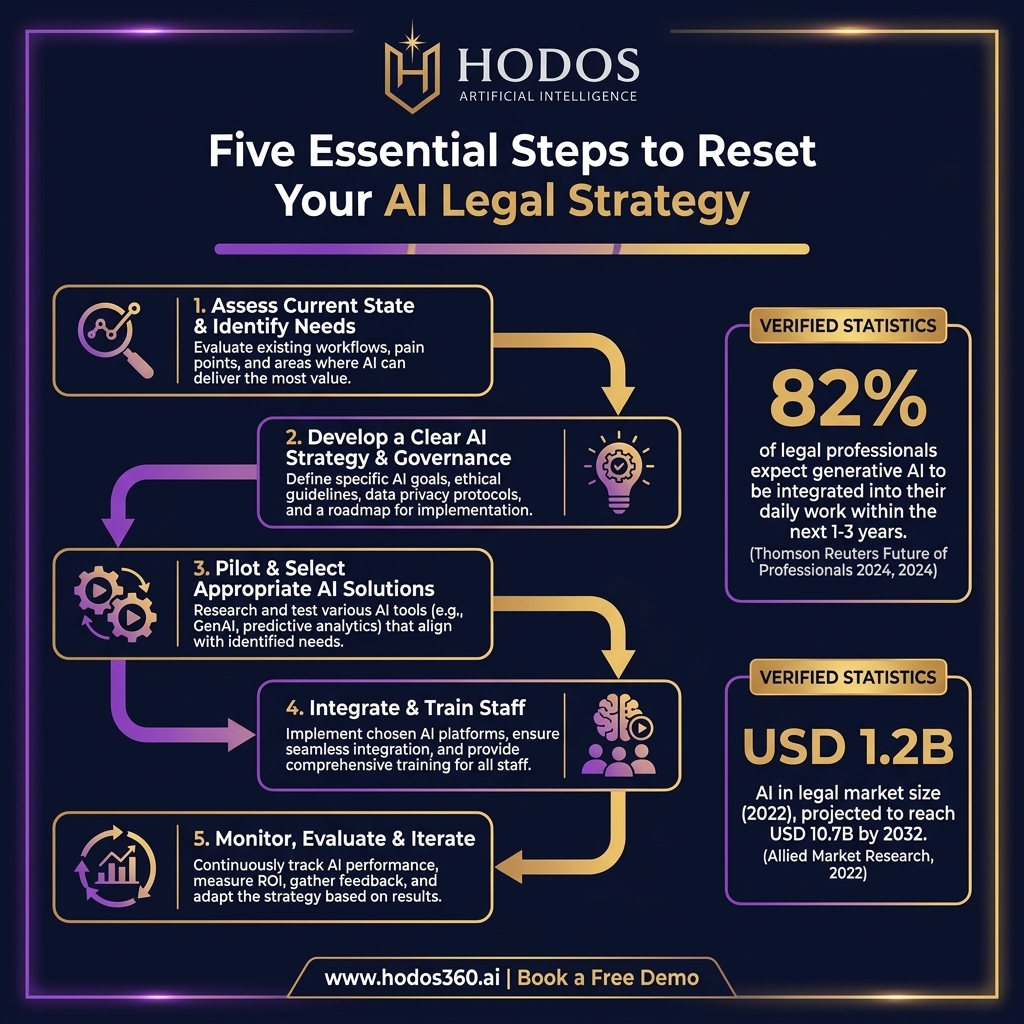
Yet, for every Lex Innovate, there are countless firms grappling with legacy systems, fragmented data, and a palpable anxiety about where to begin their AI journey. The recent eBook from Wolters Kluwer, "Five steps to reset your approach to legal technology in an AI world," underscores this urgent need for a strategic overhaul. It’s no longer about merely adopting new tools; it’s about fundamentally resetting the firm’s operational paradigm, integrating AI into the very fabric of legal service delivery and business management. This requires a calculated, multi-step approach, moving beyond superficial upgrades to a deep, structural transformation that prioritizes efficiency, client value, and future resilience. The firms that succeed will be those that view AI not as a threat, but as an indispensable partner in navigating the complexities of modern law.
This comprehensive guide will delve into the essential steps law firms must undertake to strategically reset their legal technology infrastructure in an AI-dominated world. We'll explore how to audit existing systems, craft a forward-looking vision, implement solutions effectively, and foster a culture of continuous learning and ethical governance. The goal is to provide a practical roadmap that empowers legal professionals to harness AI's full potential, ensuring their firms remain competitive, client-centric, and profitable. From optimizing internal workflows to enhancing external client engagement, the journey towards an AI-powered legal practice is not just a technological upgrade, but a strategic imperative. The following table of contents outlines our actionable framework:
Table of Contents: 1. The Imperative of an AI-Driven Legal Technology Strategy 2. Step 1: Auditing Your Current Legal Technology Landscape 3. Step 2: Crafting a Vision for AI-Powered Legal Workflows 4. Step 3: Implementing and Integrating AI Solutions Strategically 5. Step 4: Continuous Learning, Adaptation, and Ethical AI Governance 6. Key Takeaways and Next Steps
Ready to transform your firm? Discover how HODOS 360's AI Law Firm Management System can streamline your operations.
The Imperative of an AI-Driven Legal Technology Strategy
The legal industry is experiencing a seismic shift, driven by advancements in artificial intelligence that are far more profound than previous waves of technological innovation. This isn't merely an incremental improvement; it's a fundamental redefinition of legal work, as highlighted by Brad Smith, Vice Chair and President of Microsoft, who has consistently articulated AI's potential to augment human capabilities across all professional domains. Firms that cling to outdated legal technology models risk not just falling behind, but becoming obsolete. The competitive landscape is being redrawn by firms like Allen & Overy, which famously partnered with Harvey AI, demonstrating how large-scale integration of generative AI can revolutionize tasks from contract analysis to litigation prediction. This move wasn't just about efficiency; it was a strategic declaration of intent, signaling a new era where AI proficiency is synonymous with legal excellence and client value.
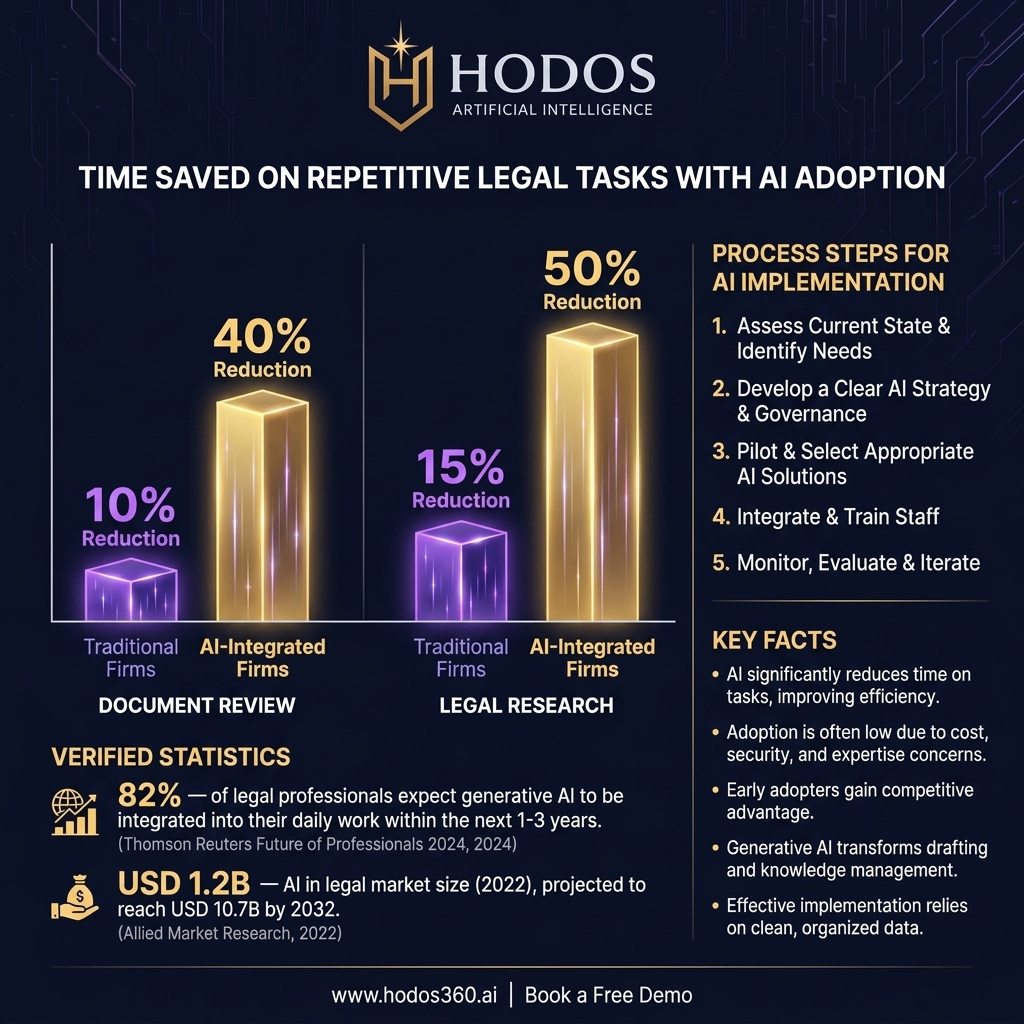
Data from the American Bar Association's 2025 Legal Technology Survey Report revealed that while 60% of firms had experimented with some form of AI, only 15% had a comprehensive, firm-wide AI strategy in place. This disparity creates a significant divide: firms with a proactive AI strategy are already reporting up to a 30% reduction in time spent on repetitive tasks, according to a recent McKinsey report on professional services. Conversely, firms without a clear roadmap are struggling with mounting operational costs, slower response times, and an inability to meet the evolving demands of tech-savvy clients. The tension between tradition and disruption is palpable, with many managing partners facing difficult decisions about significant investments in new platforms versus the perceived stability of existing, albeit less efficient, systems.
This strategic imperative extends beyond mere efficiency gains. AI-powered legal technology enhances the quality of legal services, offering deeper insights, more precise risk assessments, and personalized client experiences previously unattainable. Learn more about AI-Powered Legal Tech: The Essential Guide for Modern Firms. Consider the ethical implications, too; the EU AI Act, enforced starting in 2026, sets a new global standard for responsible AI deployment, forcing legal departments to not only adopt AI but to do so ethically and transparently. Firms must navigate these complex regulatory waters, ensuring their AI tools comply with data privacy, fairness, and accountability principles. This requires a sophisticated understanding of both the technological capabilities and the legal and ethical guardrails, underscoring the need for a truly reset approach to legal technology that is both innovative and responsible.
Furthermore, the talent war in legal is increasingly tied to a firm's tech stack. Younger attorneys and legal professionals are drawn to firms that offer cutting-edge tools, seeing them as opportunities for professional growth and more engaging work. A firm’s legal technology infrastructure is no longer just a cost center but a critical differentiator in attracting and retaining top talent. Firms that invest in comprehensive AI solutions, like those offered by HODOS 360, signal a commitment to innovation and employee empowerment, creating a more attractive and productive work environment. The narrative isn't about replacing lawyers but empowering them to focus on higher-value, strategic tasks, moving away from the drudgery of manual processes. This shift is crucial for long-term firm sustainability and competitive advantage.
Step 1: Auditing Your Current Legal Technology Landscape
Before any meaningful legal technology reset can occur, firms must conduct a thorough audit of their existing systems, workflows, and data infrastructure. This isn't a superficial checklist; it's a deep dive into every aspect of the firm's operations, from client intake to case closure. Many firms operate with a patchwork of disparate tools – a standalone billing system, a separate document management solution, and perhaps an outdated case management platform. This fragmentation often leads to inefficiencies, data silos, and significant security vulnerabilities. A comprehensive audit, led by an internal tech committee or an external consultant, should identify every piece of software, hardware, and manual process currently in use, assessing its efficacy, cost, and integration capabilities. The goal is to uncover hidden pain points and inefficiencies that AI can address, laying the groundwork for a more streamlined and intelligent operational framework.
Beyond basic inventory, the audit must evaluate the firm's data ecosystem. In an AI world, data is the new oil, and its quality, accessibility, and structure are paramount. Many firms store critical information in unstructured formats, across various platforms, making it difficult for AI tools to ingest and analyze effectively. This audit should assess data governance policies, data integrity, and compliance with privacy regulations like GDPR and CCPA, which are becoming increasingly stringent. Firms like 'Legacy & Partners,' a mid-sized litigation firm, discovered during their 2025 tech audit that critical client communication data was scattered across three different platforms, severely hindering their ability to leverage AI for client relationship management or predictive analytics. This realization catalyzed their decision to invest in a unified firm management system capable of consolidating and structuring their data, recognizing that a solid data foundation is indispensable for any successful AI integration.
### Beyond Basic Case Management: Identifying AI Opportunities The audit should specifically look beyond traditional legal tech functions to identify areas ripe for AI intervention. Learn more about Legal AI Revolution: Unlocking 2026 Firm Growth with HODOS. While basic case management and billing systems are foundational, the real transformative power of AI lies in automating complex, knowledge-intensive tasks. This includes document review, legal research, contract analysis, e-discovery, and even predictive analytics for litigation outcomes. For example, a firm might find that junior associates spend 40% of their time on initial document review, a task perfectly suited for AI automation. Identifying these specific, time-consuming processes allows firms to target their AI investments strategically, ensuring maximum return on investment. The audit should also survey attorneys and staff about their daily frustrations and areas where they believe technology could provide the most relief, fostering internal buy-in and pinpointing actionable improvements.
Finally, the audit must critically assess the firm's internal capabilities and culture around legal technology. Is there resistance to change? Do attorneys possess basic digital literacy? Are there designated tech champions within the firm? A successful AI implementation isn't just about software; it's about people and processes. If the firm's culture is resistant to innovation, even the most advanced AI tools will fail to deliver their promised benefits. This internal assessment should include training needs, existing tech policies, and the overall readiness of the workforce to embrace new ways of working. Understanding these human elements is as crucial as understanding the technological components, as they often dictate the pace and success of any legal technology transformation journey.
Step 2: Crafting a Vision for AI-Powered Legal Workflows
Once a thorough audit has been completed, the next critical step is to articulate a clear, compelling vision for what AI-powered legal technology will look like within the firm. This isn't just about selecting a new software; it's about reimagining the firm's operational model and service delivery. The vision should be ambitious yet realistic, aligned with the firm's strategic business goals, and informed by the insights gleaned from the audit. For example, a vision might center on achieving a 'zero-manual-intake' process, where AI handles initial client interactions, lead qualification, and document collection, freeing up paralegals for more complex tasks. This vision needs to be championed by firm leadership, from the managing partner down, to ensure widespread adoption and commitment. Without a clear North Star, firms risk making piecemeal investments that fail to deliver cohesive value.
Developing this vision involves identifying specific use cases for AI across different practice areas and administrative functions. For a corporate law firm, the vision might involve AI-powered contract drafting and review, enabling faster M&A deals and reducing human error. For a litigation firm, it could be predictive analytics to forecast case outcomes and optimize settlement strategies. This requires leadership to engage with attorneys and staff to brainstorm possibilities, leveraging their practical insights into daily challenges. The goal is to move beyond generic aspirations to concrete, measurable objectives. Learn more about AI Legal Research: The Ultimate Guide to legalgain & Beyond. For instance, 'Innovate Legal Group,' following their audit, set a vision to reduce the average time spent on due diligence for real estate transactions by 50% within 18 months using AI-driven document analysis, a clear and quantifiable target for their workflow optimization.
### From Vision to Blueprint: Designing Your AI Legal Journey With a clear vision in place, the firm must then translate this into a detailed blueprint for its AI strategy. This involves defining specific AI-powered legal workflows, outlining the necessary technological infrastructure, and identifying the skills and training required for successful implementation. It's crucial to think about the entire client journey and internal processes end-to-end. How will AI interact with existing systems? What new data points will be collected? How will attorneys interface with AI tools? This blueprint should also consider the ethical implications of each AI application, ensuring compliance with regulations like the EU AI Act and upholding professional responsibilities outlined in the ABA Model Rules of Professional Conduct (Rule 1.1 Competence, Rule 1.6 Confidentiality). The blueprint serves as a living document, guiding the firm's phased approach to AI adoption.
Furthermore, the vision and blueprint must incorporate a robust change management strategy. Introducing new legal technology, especially AI, can be met with resistance from attorneys accustomed to traditional methods. The vision must communicate the benefits clearly, addressing fears about job displacement by emphasizing AI's role as an augmentation tool, not a replacement. Providing early training, involving key stakeholders in the planning process, and celebrating early successes are vital components of this strategy. A firm's commitment to continuous learning and adaptation will be a defining factor in its ability to successfully reset its legal technology strategy and truly embed AI into its operations, ultimately leading to significant improvements in efficiency and service delivery.
Step 3: Implementing and Integrating AI Solutions Strategically
Translating the AI vision into reality requires a strategic approach to implementation and integration. This is where many firms stumble, either by rushing into unproven solutions or by failing to integrate new tools seamlessly into their existing ecosystem. The key is a phased rollout, starting with pilot projects in areas identified as high-impact and low-risk. For instance, a firm might begin by implementing an AI-powered legal research tool in a specific practice group, gathering feedback, and refining its usage before broader deployment. This iterative approach allows for learning and adaptation, minimizing disruption and building confidence within the firm. The choice of AI solutions is paramount; firms must look for platforms that offer comprehensive capabilities rather than piecemeal tools that exacerbate fragmentation. This is where a holistic platform like HODOS 360, with its AI Law Firm Management System, AI Marketing Platform, AI Voice Assistants, and Web & Mobile Development services, offers a significant advantage, providing integrated solutions for case management, billing, client intake, and document automation all powered by AI.
### Navigating the Vendor Landscape: Choosing the Right AI Partner Selecting the right vendor is a critical decision in this legal technology journey. The market is flooded with AI tools, from specialized e-discovery platforms to comprehensive practice management suites. Firms must conduct thorough due diligence, evaluating vendors not just on features, but on their security protocols, data privacy policies, integration capabilities, and customer support. It’s also crucial to consider the vendor’s long-term vision and commitment to the legal sector. For instance, when 'Global Counsel Group' sought to enhance its contract review capabilities, they evaluated several AI platforms, ultimately choosing one known for its robust natural language processing and its commitment to legal-specific training data, ensuring accuracy and compliance. This careful selection process prevents costly mistakes and ensures the chosen solution aligns perfectly with the firm's strategic objectives and ethical obligations.
Successful integration also requires a focus on data migration and interoperability. Learn more about AI Browser Disruption: Essential Web Strategies for Law Firms. New AI systems must be able to communicate effectively with existing platforms, from CRM tools to accounting software, to avoid creating new data silos. This often involves API integrations or custom development, ensuring a seamless flow of information across the firm's digital infrastructure. A Gartner report from 2025 indicated that poor integration is a leading cause of failure for enterprise software implementations, underscoring the importance of planning for technical compatibility from the outset. Firms should also allocate resources for ongoing maintenance and updates, as AI models are continuously evolving, requiring regular tuning and retraining to maintain optimal performance and deliver consistent efficiency gains.
Finally, effective implementation involves robust training programs. Even the most intuitive AI tools require users to understand their capabilities and limitations. Training should be tailored to different user groups – attorneys, paralegals, administrative staff – focusing on practical application and real-world scenarios. Firms that invest in comprehensive training see higher adoption rates and greater returns on their legal technology investments. This proactive approach to learning ensures that the firm's entire team is empowered to leverage the new AI solutions to their fullest potential, fostering a culture of innovation and driving measurable improvements in productivity and client service. Don't get left behind. Explore HODOS 360's comprehensive AI solutions to build a future-ready firm.
Step 4: Continuous Learning, Adaptation, and Ethical AI Governance
The legal technology landscape, particularly with AI, is not static; it's a rapidly evolving domain. Therefore, the fourth essential step in resetting your firm's strategy is to cultivate a culture of continuous learning and adaptation, coupled with robust ethical AI governance. The AI models that are groundbreaking today may be superseded by more advanced iterations tomorrow. Firms must establish mechanisms for monitoring new developments, evaluating emerging tools, and regularly updating their AI strategy. This involves subscribing to industry publications, attending legal tech conferences like LegalTech NYC 2026, and fostering internal discussion groups dedicated to AI trends and applications. Without this commitment to ongoing vigilance, even the most cutting-edge initial investment can quickly become outdated, negating the benefits of the entire reset.
Adaptation extends to internal processes and skill sets. As AI automates more tasks, attorneys and staff will need to develop new competencies, focusing on higher-order thinking, strategic analysis, and creative problem-solving. This shift requires ongoing professional development, including specialized training in prompt engineering for generative AI, data interpretation, and AI ethics. Dario Amodei, CEO of Anthropic, has often spoken about the importance of aligning AI development with human values, a principle that resonates deeply within the legal profession. Firms must invest in upskilling their workforce, transforming them from users of technology to strategic partners with AI, capable of leveraging its power while understanding its limitations and potential biases. This proactive approach to skill development is vital for long-term success in an AI-driven legal world.
Ethical AI governance is non-negotiable. Learn more about Agentic AI Unleashed: 2026's Power in Legal Work. As AI becomes more integrated into critical legal functions, firms bear a heightened responsibility to ensure these tools are used ethically, fairly, and transparently. This involves developing clear internal policies for AI usage, addressing issues such as data privacy, algorithmic bias, client confidentiality (consistent with ABA Model Rule 1.6), and the ultimate oversight of human attorneys. For example, a firm using AI for predictive analytics must understand how the model arrives at its conclusions and be able to explain it to clients and courts, avoiding the 'black box' problem. The EU AI Act, with its stringent requirements for high-risk AI systems, serves as a stark reminder of the global move towards regulated AI, making ethical considerations a legal as well as a moral imperative. Firms must proactively embed these considerations into their legal technology framework, ensuring that innovation never compromises justice or client trust.
Maintaining a dynamic feedback loop is also crucial. Regularly solicit input from attorneys and staff on their experiences with AI tools, identify areas for improvement, and iteratively refine workflows. This continuous feedback not only optimizes the performance of the legal technology but also fosters a sense of ownership and collaboration within the firm. Furthermore, firms should regularly review their vendor relationships, ensuring that chosen partners continue to meet the firm's evolving needs and adhere to the highest standards of security and ethical practice. The journey of AI integration is not a destination but a continuous process of refinement and responsible innovation, ensuring the firm's AI strategy remains robust, ethical, and aligned with its mission to deliver exceptional legal services.

Key Takeaways and Next Steps
The era of AI demands a fundamental reset of how law firms approach legal technology. This isn't a luxury but a strategic imperative for survival and growth in an increasingly competitive and tech-driven legal market. The firms that will thrive are those that move beyond incremental upgrades to embrace a holistic, AI-first mindset, systematically auditing their current landscape, crafting a bold vision for future workflows, strategically implementing integrated solutions, and committing to continuous learning and ethical governance. This journey is characterized by a blend of technological adoption and cultural transformation, ensuring that AI augments, rather than replaces, the invaluable human element of legal practice. The insights from industry thought leaders and real-world success stories underscore that proactive engagement with AI is no longer optional.
For law firm owners and legal professionals, the time to act is now. Begin by initiating an internal audit to identify your firm's unique pain points and opportunities for AI integration. Follow this with a collaborative vision-setting exercise, engaging your team to imagine a future where AI streamlines operations and elevates client service. Learn more about Legal AI Workflows: Essential Shifts Beyond Microsoft Word for Firms. When it comes to implementation, prioritize integrated solutions that offer comprehensive firm management capabilities. Platforms that unify case management, billing, client intake, and document automation under one AI-powered roof can significantly accelerate your transformation. Remember, the ultimate goal is not just to adopt technology, but to leverage it to deliver superior legal outcomes, enhance client satisfaction, and secure a sustainable, prosperous future for your firm. Take the first step towards an AI-powered future. Book a free demo of HODOS 360 today and reshape your legal practice.
Frequently Asked Questions
Why is resetting my legal technology strategy crucial now?+
The rapid advancement of AI in 2025-2026 has fundamentally changed legal operations. Firms that don't proactively integrate AI risk falling behind competitors in efficiency, client service, and talent acquisition. A strategic reset ensures your firm leverages AI to optimize workflows, reduce costs, and enhance the quality of legal services, securing a competitive edge in the evolving legal landscape.
What are the first steps to auditing my firm's legal technology?+
Begin by inventorying all existing software, hardware, and manual processes. Assess their efficacy, cost, and integration capabilities. Critically evaluate your data infrastructure for quality, accessibility, and compliance. Most importantly, identify specific, time-consuming tasks ripe for AI automation and gather feedback from attorneys and staff on daily pain points and tech needs.
How can AI improve client intake and case management?+
AI can revolutionize client intake through 24/7 AI voice assistants that qualify leads, book appointments, and provide multilingual support. For case management, AI automates document review, predicts litigation outcomes, streamlines billing, and generates documents, freeing up legal professionals for more strategic tasks, leading to faster, more accurate, and more cost-effective service delivery.
What are the ethical considerations when adopting AI in legal practice?+
Ethical AI adoption requires adherence to principles of data privacy, algorithmic fairness, and transparency. Firms must ensure AI tools comply with regulations like the EU AI Act and ABA Model Rules of Professional Conduct (e.g., competence, confidentiality). It's crucial to understand how AI models reach conclusions, mitigate bias, and maintain ultimate human oversight to uphold justice and client trust.
How can HODOS 360 support my firm's AI strategy reset?+
HODOS 360 offers an integrated suite of AI-powered services designed for law firms. Our AI Law Firm Management System unifies case management, billing, and document automation. The AI Voice Assistants handle client interactions, while our AI Marketing Platform boosts outreach. This comprehensive approach provides a seamless, efficient, and ethical foundation for your firm's AI strategy reset.