


Legal AI Workflows: Essential Shifts Beyond Microsoft Word for Firms
A seismic shift is underway in the legal technology landscape, epitomized by Relativity's recent strategic move to acquire Gavel, a leading AI-powered document automation platform. This acquisition, making headlines across legal news outlets like LawFuel, isn't merely a corporate transaction; it signals a decisive pivot by one of the industry's giants to embed sophisticated AI directly into the fabric of legal work that has, for decades, revolved around the ubiquitous Microsoft Word.
For law firm owners and attorneys, this development is a clarion call: the era of static, manual document processing is rapidly giving way to dynamic, intelligent Legal AI workflows that promise unprecedented efficiency and precision. This transformation fundamentally challenges the status quo, pushing firms to re-evaluate their entire technology stack and embrace integrated AI solutions that go far beyond simple word processing.
For generations, Microsoft Word has been the undisputed bedrock of legal document creation, from contracts and briefs to discovery responses. Its familiarity and widespread adoption made it an indispensable tool. However, as the volume and complexity of legal data continue to explode, the inherent limitations of Word – its lack of integrated automation, intelligent data extraction, and seamless workflow management – have become glaringly apparent.
Firms are struggling under the weight of manual tasks, repetitive drafting, and inefficient review processes, directly impacting profitability and client satisfaction. The demand for solutions that can intelligently automate these processes, reducing human error and freeing up valuable attorney time, has never been more urgent.
Relativity’s acquisition of Gavel, spearheaded by CEO Mike Gamson's vision to extend RelativityOne's powerful AI platform into the everyday work product environment, marks a critical inflection point. It underscores a broader industry trend: the move towards holistic, AI-powered legal platforms that integrate document automation, case management, billing, and client intake into a unified system.
This strategic alignment aims to empower legal professionals not just to draft documents faster, but to manage their entire practice with a level of intelligence and automation previously unimaginable. As law firms navigate this evolving landscape, understanding the implications of these advanced Legal AI workflows and how to effectively integrate them will be paramount for sustained success and competitive advantage.
The future of legal practice demands a proactive embrace of these transformative technologies.
The Strategic Imperative: Why Legal AI Workflows Are Evolving Beyond Traditional Tools
The legal sector has long been characterized by its reliance on established practices and technologies, with Microsoft Word serving as a prime example of a tool deeply embedded in daily operations. However, the escalating pressures of client demands for efficiency, cost-effectiveness, and faster turnaround times are forcing a re-evaluation of these traditional approaches.
Data from the American Bar Association’s (ABA) annual Legal Technology Survey Reports consistently highlight that attorneys spend significant portions of their day on administrative tasks and non-billable work, often due to fragmented systems and manual processes. A 2023 Thomson Reuters report indicated that law firms could save up to 30% of their time on routine tasks by adopting automation, directly impacting profitability margins and resource allocation.
This economic and operational pressure is the core driver behind the rapid evolution of Legal AI workflows. Firms are no longer simply looking for tools that assist; they demand platforms that intelligently automate, predict, and optimize. The market is witnessing fierce competition among legal tech innovators, from established players like Thomson Reuters and LexisNexis to agile startups like Harvey AI, which recently secured a significant funding round and forged partnerships with global firms like Allen & Overy.
These companies are pushing the boundaries of what AI can do, moving beyond basic e-discovery to comprehensive solutions that span the entire legal practice lifecycle. The shift is not just about doing things faster, but doing them smarter, with greater accuracy and strategic insight.
The strategic imperative for adopting advanced Legal AI workflows stems from the undeniable inefficiencies inherent in legacy systems.
Consider the painstaking process of drafting a complex contract, which typically involves manually inserting clauses, cross-referencing definitions, and ensuring compliance with regulatory frameworks. Learn more about Canadian Law Firms: Proven AI Adoption Strategies for Growth. This often leads to errors, version control nightmares, and substantial time sinks.
A report by McKinsey & Company highlighted that generative AI could automate up to 70% of legal document drafting and review tasks, representing a colossal opportunity for firms to reallocate highly skilled legal talent to more strategic, client-facing activities. This isn't just about cost savings; it's about unlocking the latent potential within a firm's human capital.
The competitive landscape further intensifies this imperative. Firms that embrace these advanced AI tools gain a distinct advantage in service delivery, client acquisition, and talent retention. Clients, increasingly tech-savvy, expect their legal providers to leverage the best available technology to deliver efficient and cost-effective services.
Firms that lag in technology adoption risk falling behind, seen as less innovative and potentially less capable of handling complex matters efficiently. The race is on to build the most robust and integrated AI platforms, and the Relativity-Gavel acquisition is a clear signal of this accelerating arms race in legal tech.
Unpacking the Relativity-Gavel Acquisition
Relativity's acquisition of Gavel is a strategic masterstroke designed to extend its formidable AI capabilities directly into the daily work product of legal professionals, particularly within the familiar environment of Microsoft Word. Gavel, founded by CEO Drew Winship, has carved a niche for itself by empowering lawyers to automate document drafting and create powerful legal applications without needing to write code.
Its platform allows firms to transform frequently used templates and documents into intelligent, interactive workflows, drastically reducing the time spent on repetitive tasks and minimizing human error in document generation. This is a direct answer to the inefficiencies that have plagued legal drafting for decades.
Mike Gamson, CEO of Relativity, articulated the vision behind this acquisition, stating that it aims to provide a seamless experience where legal professionals can leverage advanced AI not just for e-discovery, but for the entire lifecycle of legal work, from initial drafting to final review.
Learn more about Voice AI: The Ultimate Shift in Legal Client Service. By integrating Gavel’s expertise in AI-powered drafting, document automation, and Microsoft Word-based Legal AI workflows into RelativityOne, the company is creating an end-to-end platform that promises to keep work product within a secure, governed, and intelligent ecosystem.
This move addresses a critical gap: while many AI tools exist for specific legal tasks, the integration of these tools into a cohesive, user-friendly environment that lawyers use daily is often lacking. The combined entity aims to bridge this gap, offering a powerful, integrated solution.
Redefining Document Automation and Drafting with AI
The true transformative power of Legal AI workflows lies in their ability to redefine document automation and drafting, moving far beyond simple mail merges or basic templates. Modern AI platforms leverage natural language processing (NLP) and machine learning (ML) to understand the context, intent, and nuances of legal language.
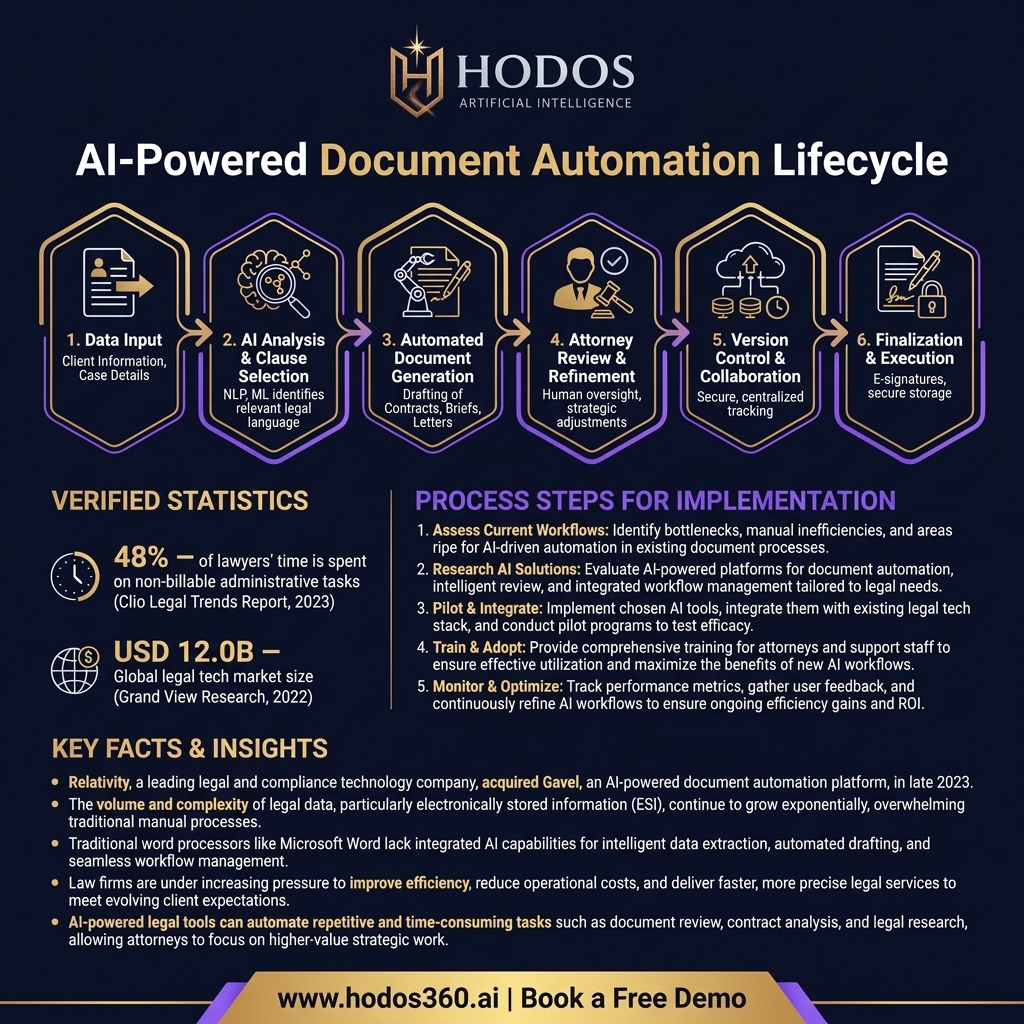
This allows for the intelligent generation of documents, where AI can suggest relevant clauses, ensure consistency across a suite of documents, and even flag potential compliance issues based on updated regulations. For instance, drafting a complex commercial contract no longer requires hours of manual input and cross-referencing; an AI can populate key data points, customize clauses based on predefined parameters, and generate a first draft in minutes, significantly accelerating the entire process.
Consider the realm of due diligence, a historically labor-intensive process involving the review of thousands of documents. AI-powered platforms can rapidly identify relevant information, extract key terms, and summarize findings, allowing human attorneys to focus on strategic analysis rather than rote review. Similarly, in litigation, AI can assist in drafting discovery responses by identifying responsive documents and generating initial answers, ensuring consistency and completeness.
The shift is from attorneys being document creators to becoming document *editors* and *strategists*, leveraging AI as a powerful co-pilot. This not only boosts efficiency but also enhances the quality and accuracy of legal work product, reducing the risk of human error.
The integration of AI into document automation also extends to sophisticated version control and collaboration.
Unlike traditional Word documents, which can lead to multiple conflicting versions and cumbersome tracking, AI-driven platforms offer centralized, dynamic document management. Learn more about AI Legal Management: The Essential Future for Law Firms. Changes are tracked intelligently, and different versions can be compared and reconciled with greater ease.
This is particularly crucial for large law firms and in-house legal teams working on complex, multi-party transactions or cases where maintaining a single source of truth for documents is paramount. The ability to audit changes, understand their impact, and ensure all parties are working from the most current and accurate version is a game-changer for project management and risk mitigation.
Furthermore, AI-powered drafting tools are evolving to incorporate predictive analytics. Based on historical data and legal precedents, these tools can offer insights into the potential outcomes of certain contractual clauses or litigation strategies. This moves beyond mere automation to providing genuine strategic value, helping attorneys make more informed decisions during the drafting process.
For example, an AI could analyze past court rulings on specific contract terms and advise on alternative phrasing that has a higher likelihood of enforceability or favorable interpretation. This level of intelligence transforms document creation from a reactive task into a proactive strategic exercise, aligning legal documentation more closely with desired business or litigation objectives.
The Broader Impact on Law Firm Management and Productivity
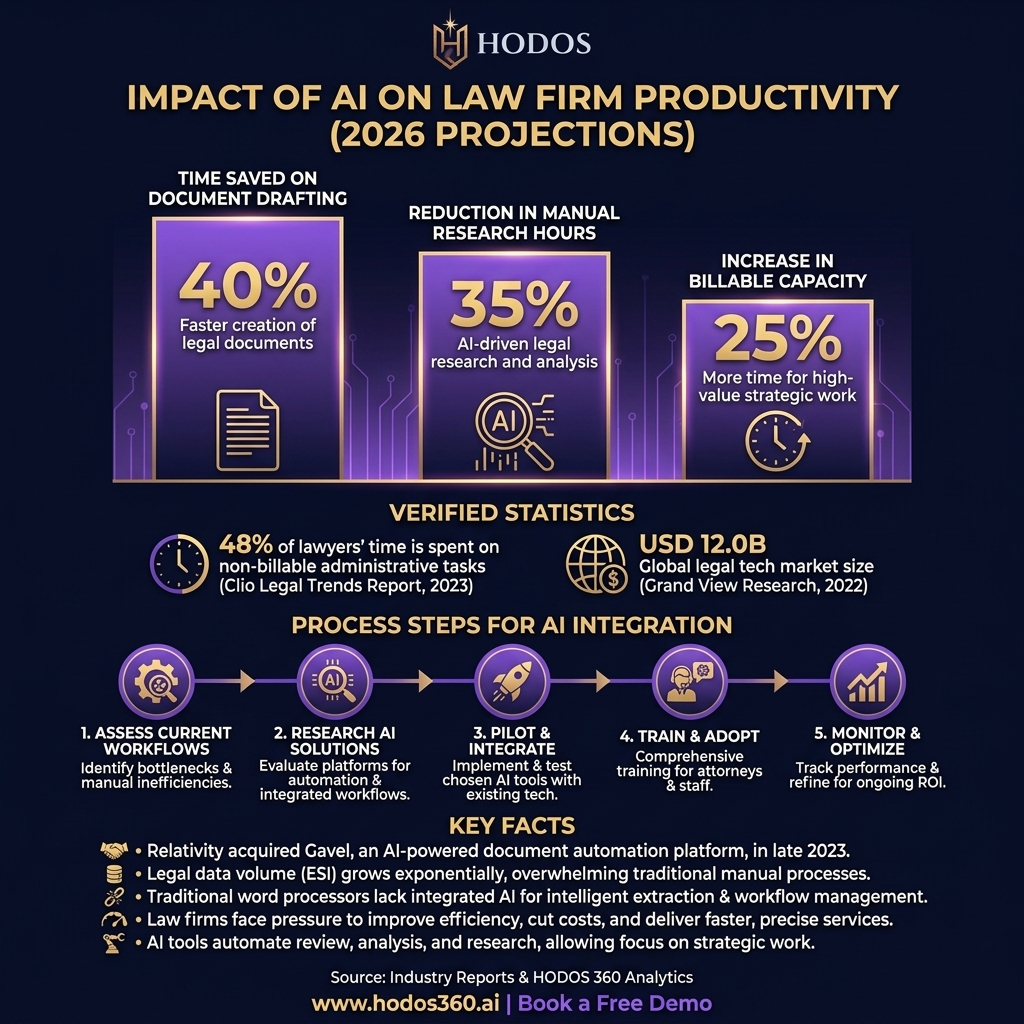
The shift towards advanced Legal AI workflows extends far beyond individual document tasks, profoundly impacting overall law firm management and productivity. By automating repetitive and time-consuming processes, AI frees up attorneys and support staff to focus on high-value, strategic work. This translates into tangible benefits: increased billable hours, improved client satisfaction due to faster service, and enhanced capacity to take on more cases without proportional increases in headcount.
A recent report by Gartner predicted that by 2027, generative AI will reduce the time lawyers spend on legal research and document review by 50%, fundamentally reshaping staffing models and operational strategies within firms.
Integrated AI platforms, such as HODOS 360's AI Law Firm Management System, offer a holistic approach to enhancing productivity.
These systems move beyond siloed solutions to provide a unified environment for case management, client intake, billing, document automation, and calendaring. Imagine a scenario where a new client inquiry comes in: an AI voice assistant qualifies the lead, schedules an initial consultation, and automatically initiates the client intake process, populating relevant data into the case management system.
Simultaneously, document automation tools prepare initial engagement letters and confidentiality agreements, all before a human attorney even picks up the phone. This level of automation streamlines the entire client journey, from first contact to case closure.
The impact on resource allocation and talent management is equally significant.
Learn more about AI Marketing: The Ultimate Guide for Law Firms. With AI handling much of the rote work, firms can re-skill their paralegals and junior associates to perform more analytical and strategic functions, fostering professional development and job satisfaction. This also addresses the growing challenge of retaining top legal talent, as professionals are increasingly drawn to innovative firms that offer engaging, intellectually stimulating work environments rather than repetitive administrative tasks.
Firms that invest in comprehensive AI solutions are not just buying technology; they are investing in their future workforce and building a more resilient, adaptive organization.
Furthermore, AI-powered analytics provide law firm leaders with unprecedented insights into their operations. From tracking attorney utilization rates and project profitability to identifying bottlenecks in workflows, these platforms offer data-driven intelligence that enables strategic decision-making.
For example, an AI system can analyze billing data to pinpoint which types of cases are most profitable, which tasks consume the most non-billable time, or even predict potential revenue streams based on historical performance. This level of operational visibility is crucial for optimizing business development strategies, refining service offerings, and ensuring the long-term financial health and growth of the firm.
It transforms firm management from reactive problem-solving to proactive strategic planning.
Integrating AI Across the Legal Practice Lifecycle
- ✓Client Intake & Onboarding: AI Voice Assistants can handle 24/7 client inquiries, qualify leads, and book appointments, while AI Law Firm Management systems automate intake forms and conflict checks, drastically reducing the time from initial contact to engagement.
- ✓Case & Matter Management: AI-powered legal workflows streamline task assignment, deadline tracking, and document organization, ensuring all case data is centrally accessible and intelligently categorized, enhancing collaboration and oversight.
- ✓Document Automation & Generation: Beyond basic templates, AI platforms like those enhanced by Gavel's capabilities allow for dynamic document creation, intelligent clause suggestion, and automated proofreading, significantly reducing drafting time and errors.
- ✓Research & E-Discovery: AI tools can rapidly sift through vast amounts of data, identify relevant documents, flag privileged information, and generate summaries, accelerating the discovery process and reducing associated costs.
- ✓Billing & Financial Management: AI can automate time tracking, invoice generation, and expense categorization, improving billing accuracy and providing real-time financial insights for better firm profitability management.
- ✓Marketing & Business Development: AI Marketing Platforms can create targeted content, automate social media posts, and analyze campaign ROI, helping firms attract new clients and build their brand more effectively.
- ✓Web & Mobile Presence: AI-powered website builders create responsive, SEO-optimized sites with high-converting templates, ensuring a strong digital footprint and easy access for clients and potential leads.
Navigating the Challenges and Ethical Considerations of Advanced Legal AI
While the promise of advanced Legal AI workflows is immense, their adoption is not without significant challenges and critical ethical considerations. One primary concern revolves around data security and client confidentiality. Integrating AI systems, particularly cloud-based platforms, requires robust cybersecurity measures to protect sensitive client information from breaches.
Law firms handle highly confidential data, and any vulnerability could lead to severe reputational damage and regulatory penalties. The ABA Model Rules of Professional Conduct, specifically Rule 1.6 on Confidentiality of Information and Rule 1.1 on Competence, mandate that attorneys take reasonable measures to protect client data and understand the risks and benefits of technology they employ.
This necessitates rigorous due diligence when selecting and implementing AI solutions.
Another substantial challenge is the potential for bias in AI algorithms. If AI models are trained on historical data that reflects societal biases or past discriminatory practices, they can perpetuate and even amplify these biases in their output, whether in document drafting, predictive analytics, or case assessment.
This raises serious ethical questions about fairness, equity, and access to justice. For example, an AI trained on historical sentencing data might inadvertently recommend harsher sentences for certain demographics. Legal professionals must be vigilant in scrutinizing AI outputs and understanding the limitations of the technology, ensuring that AI serves as an augmentative tool rather than an uncritical decision-maker.
Learn more about AI in MarTech: The Ultimate Guide to Predictive Power. Transparency in AI development and ongoing auditing of algorithms are essential safeguards.
Furthermore, the integration of new technologies often faces resistance from within law firms. Change management is a critical aspect of successful AI adoption.
Attorneys and staff, accustomed to traditional methods, may be hesitant to embrace new Legal AI workflows due to perceived learning curves, job security concerns, or a lack of understanding regarding AI's benefits. Overcoming this requires comprehensive training programs, clear communication about the strategic advantages of AI, and demonstrating how these tools augment rather than replace human expertise.
Law firm leaders must champion these initiatives, fostering a culture of innovation and continuous learning to ensure smooth transitions and maximize the return on technology investments.
The ethical landscape of AI in law is continuously evolving, demanding ongoing attention from legal professionals and regulators alike.
Questions surrounding accountability for AI-generated output, the unauthorized practice of law by AI, and the responsible use of generative AI in client-facing interactions are at the forefront of legal discourse. The European Union's AI Act, for instance, sets a global precedent for regulating AI, classifying systems by risk level and imposing strict requirements for high-risk applications, which will undoubtedly impact legal tech development and deployment worldwide.
Firms must stay abreast of these developments, ensuring their AI adoption strategies are not only technologically sound but also ethically robust and legally compliant. This requires a proactive stance on governance and a commitment to responsible innovation.
The Future of Legal Practice: A Collaborative AI-Human Ecosystem
The trajectory of Legal AI workflows points towards a future where legal practice operates within a collaborative AI-human ecosystem. In this paradigm, AI doesn't replace lawyers but rather augments their capabilities, allowing them to focus on the inherently human aspects of law: strategic thinking, client counseling, negotiation, and courtroom advocacy.
Routine, data-intensive tasks are intelligently offloaded to AI, freeing up valuable time for attorneys to engage in more complex problem-solving and client relationship building. This symbiotic relationship promises to elevate the quality of legal services, making them more accessible, efficient, and precise. Learn more about Essential AI Website Builder Guide for Law Firms.
The role of the lawyer will evolve from a generalist to a specialized expert, skillfully leveraging AI tools to deliver superior outcomes. This transformation redefines the value proposition of legal services in the digital age, emphasizing strategic insight over manual labor.

Key Takeaways and Strategic Steps for Law Firms
The legal industry stands at a pivotal juncture, where the adoption of advanced Legal AI workflows is no longer a luxury but a strategic imperative for survival and growth. The Relativity-Gavel acquisition is a powerful testament to this shift, demonstrating how integrated AI platforms are poised to redefine document automation and overall law firm management.
Firms must recognize that clinging to outdated, manual processes, particularly those centered solely around traditional tools like Microsoft Word, will inevitably lead to decreased efficiency, higher operational costs, and a significant competitive disadvantage. The future belongs to firms that embrace holistic, AI-powered solutions that streamline every aspect of their practice, from client intake to case resolution.
For law firm owners and managing partners, the immediate next steps involve a comprehensive assessment of their current technology infrastructure and workflows. This includes identifying bottlenecks in existing processes, evaluating the potential ROI of AI integration, and exploring platforms that offer end-to-end solutions. Investing in robust, integrated AI Law Firm Management Systems is crucial.
Furthermore, fostering a culture of innovation within the firm, providing adequate training for all staff, and establishing clear ethical guidelines for AI use are paramount. Engaging with reputable legal tech providers who understand the unique challenges of the legal sector is also vital to ensure successful implementation and long-term success.
Embracing Legal AI workflows is not just about adopting new software; it's about undergoing a digital transformation that re-imagines how legal services are delivered. It's about empowering attorneys to perform at their highest potential, enhancing client satisfaction, and ensuring the firm's resilience in an increasingly competitive market.
By proactively integrating AI into their core operations, law firms can unlock new levels of efficiency, precision, and strategic insight, positioning themselves at the forefront of the evolving legal profession. The journey beyond Microsoft Word is not just a technological upgrade; it's a fundamental redefinition of legal excellence for the 21st century.
Frequently Asked Questions
What is the primary driver behind law firms moving beyond Microsoft Word for legal documents?+
The primary driver is the escalating demand for efficiency, cost reduction, and accuracy that traditional tools like Microsoft Word cannot adequately provide. Manual processes lead to significant time sinks, errors, and challenges in managing complex legal data. AI-powered platforms offer intelligent automation, data extraction, and seamless workflow integration to overcome these limitations and enhance productivity.
How does AI document automation improve legal drafting and review processes?+
AI document automation significantly improves drafting and review by leveraging NLP and ML to intelligently generate documents, suggest clauses, and ensure consistency. It automates repetitive tasks, reduces human error, and accelerates the creation of complex legal documents. This allows attorneys to focus on strategic analysis and high-value work, acting as editors and strategists rather than manual drafters.
What are the key benefits of integrated AI platforms for law firm management?+
Integrated AI platforms offer holistic benefits, including streamlined case management, automated client intake, precise billing, and enhanced document automation. They provide data-driven insights for strategic decision-making, improve attorney utilization, and foster client satisfaction through faster, more efficient service delivery. This holistic approach optimizes overall firm productivity and operational efficiency.
What ethical considerations should law firms be aware of when adopting AI?+
Law firms must address critical ethical considerations such as data security and client confidentiality, potential algorithmic bias, and accountability for AI-generated outputs. Adherence to ABA Model Rules (e.g., competence, confidentiality) and awareness of evolving regulations like the EU AI Act are crucial. Transparency, ongoing auditing, and robust cybersecurity are essential for responsible AI implementation.
How can HODOS 360 assist law firms in transitioning to AI-powered workflows?+
HODOS 360 offers an AI-powered platform with services like AI Law Firm Management, AI Marketing, AI Voice Assistants, and Web & Mobile Development. This comprehensive suite helps firms transition by providing integrated solutions for case management, document automation, client acquisition, and operational efficiency, enabling a seamless adoption of advanced AI workflows across their entire practice.