
AI Browser Disruption: Essential Web Strategies for Law Firms
The digital ground beneath law firms is shifting, and the tremors are originating from the very interface through which clients discover and interact with legal services: the web browser. Just yesterday, MediaPost sounded the alarm with its article, "Advertisers Cannot Ignore The Disappearing AI Browser," highlighting a trend that legal professionals, often slower to adopt technological shifts, can ill afford to overlook. This isn't merely an incremental update; it’s a foundational re-architecture of how information is accessed and consumed, driven by the pervasive integration of artificial intelligence. The implications for law firm marketing, client intake, and overall digital presence are profound, demanding immediate strategic adaptation.
Historically, the browser has been a window to the internet, a neutral conduit for user-initiated searches and navigation. However, the rise of powerful AI models, exemplified by OpenAI's ChatGPT and Google's Search Generative Experience (SGE), is transforming this role. Instead of simply displaying search results, AI is increasingly acting as an intermediary, synthesizing information, answering queries directly, and even performing tasks, often without the user ever clicking through to a law firm's website. This shift, which saw early iterations like OpenAI experimenting with its own AI-powered browser features before potentially integrating them more deeply into core AI products, means that the traditional pathways for visibility and lead generation are being rerouted, creating both significant challenges and unprecedented opportunities for firms ready to innovate.
For law firms, whose business relies heavily on trust, authority, and discoverability, understanding this evolution is not just about staying competitive—it's about survival. The "disappearing AI browser" doesn't mean the internet is vanishing; rather, the *way* users interact with it is becoming more intelligent, more personalized, and less reliant on manual browsing. Firms that continue to optimize solely for traditional search engine results pages (SERPs) risk becoming invisible in this new AI-first environment. The imperative is clear: develop a digital strategy that anticipates and embraces the AI-driven web, ensuring your firm's expertise and services remain front and center for prospective clients. Ready to future-proof your firm's digital strategy? [Learn how HODOS 360's Web & Mobile Development can help.]
The Evolution of the Browser: From Conduit to AI Agent
The concept of a browser has been undergoing a quiet revolution, driven by advancements in large language models (LLMs) and generative AI. For decades, browsers like Google Chrome, Mozilla Firefox, and Apple Safari served as straightforward gateways, displaying web pages based on user input. However, the introduction of AI-powered features, such as predictive text, smart summaries, and integrated AI assistants, began to blur these lines. This culminated in the emergence of more ambitious projects, including early attempts by tech giants to create truly "AI browsers" that would proactively understand user intent, synthesize information from multiple sources, and even complete tasks without explicit navigation. The recent news from MediaPost regarding the "disappearing AI browser" points less to a failure of AI integration and more to a strategic absorption: standalone AI browsers may be sunsetting, but their core functionalities are being embedded directly into the foundational search and operating systems.
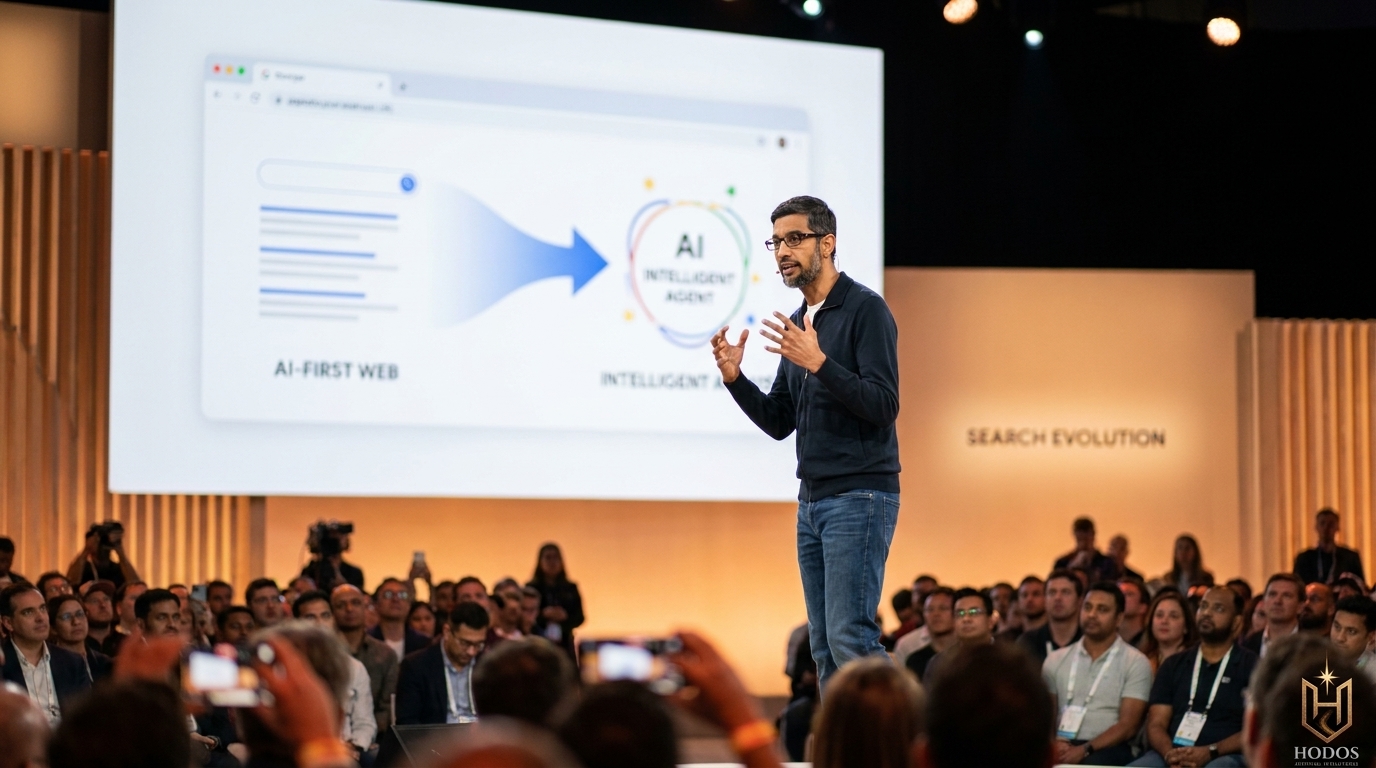
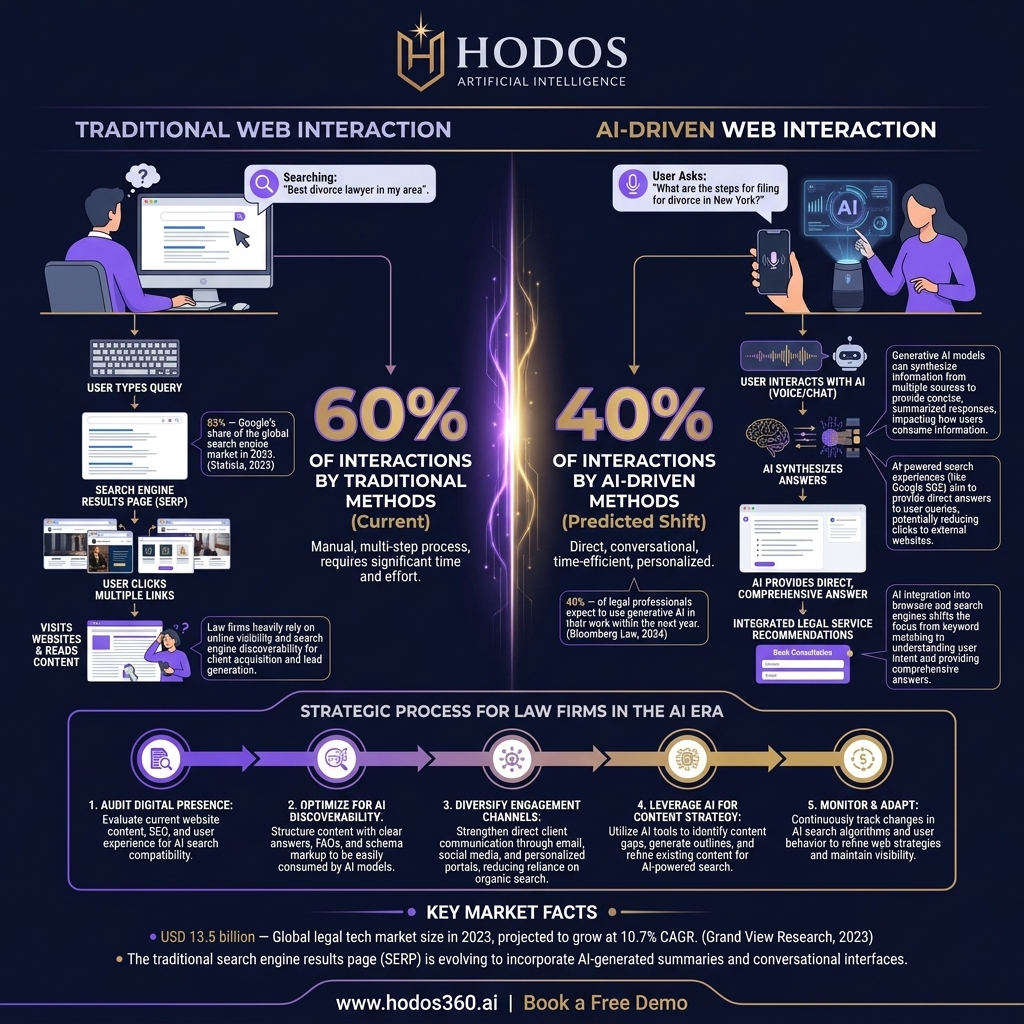
Consider the impact of Google's Search Generative Experience (SGE), which by mid-2026 has become a dominant feature for many users. SGE provides AI-generated overviews at the top of search results, directly answering complex queries and often negating the need for users to click through to individual websites. This means a prospective client searching for "best divorce lawyer in [city]" might receive a synthesized summary of key considerations and highly-rated local firms, curated by AI, before they even see traditional organic listings. This isn't just about search engine optimization (SEO) anymore; it's about optimizing for *AI comprehension and synthesis*. Firms that haven't structured their website content for AI readability and extraction will find their valuable information bypassed.
The competitive landscape for this AI-driven web is intense. Learn more about Voice AI Assistants: The Ultimate Law Firm Advantage. Companies like Anthropic, with its Claude AI, and Microsoft, deeply integrating OpenAI's ChatGPT into Bing and Windows, are vying for primacy in how users interact with digital information. Sam Altman, CEO of OpenAI, has consistently emphasized the vision of AI as a ubiquitous utility, seamlessly woven into every digital touchpoint. This vision implies that the traditional browser, as a distinct application, will either evolve into an AI-first interface or its functions will be distributed across various AI agents and platforms. For law firms, this means their digital presence must be robust enough to be discovered and understood not just by human users, but by sophisticated AI models that are increasingly acting as gatekeepers and curators of information.
Moreover, the trend extends beyond search. AI voice assistants, which HODOS 360 offers, are becoming primary interfaces for many users, especially on mobile devices. A client might ask their smart speaker, "Find a lawyer who specializes in intellectual property disputes." The AI's response will be drawn from its understanding of the web, emphasizing the critical need for law firm websites to be structured, semantic, and authoritative enough to be chosen by these AI intermediaries. This shift represents a fundamental challenge to traditional advertising models, as the direct line between an ad impression and a website visit becomes less certain, pushing firms to focus on brand authority and comprehensive, AI-optimized content.
Impact on Legal Marketing and SEO Strategies
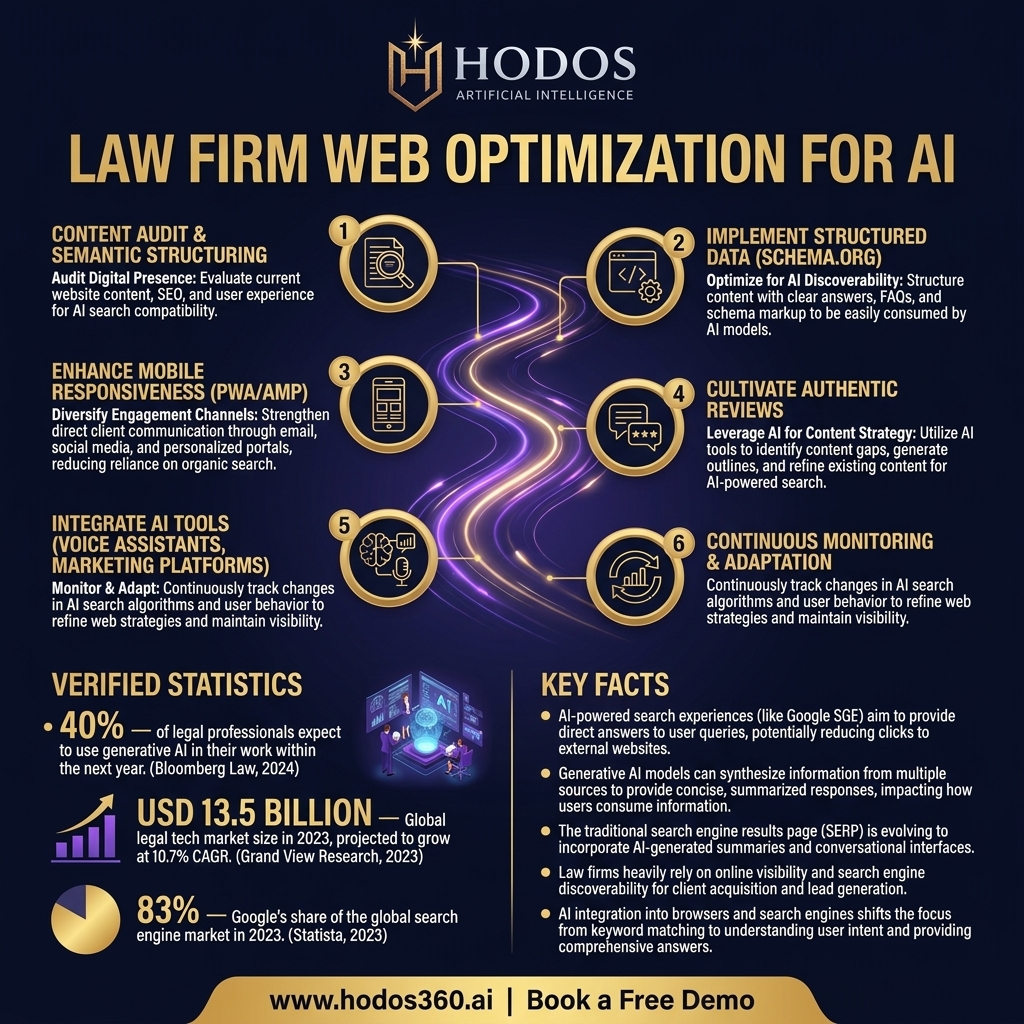
The implications for legal marketing and search engine optimization (SEO) are nothing short of transformative. For years, law firms invested heavily in keyword stuffing, link building, and technical SEO to rank high on Google's traditional SERPs. While these elements still hold some value, the rise of AI search overviews and generative AI responses means that the goal is no longer just to rank, but to be *selected* and *summarized* by AI. A recent Thomson Reuters survey indicated that only 35% of law firms have fully optimized their digital assets for AI-driven search and interaction, highlighting a significant gap between current practices and future necessities.
Firms must now shift their focus from simply appearing in search results to providing comprehensive, authoritative content that AI models can easily parse, understand, and trust. This involves a deeper emphasis on semantic SEO, structured data markup (Schema.org), and natural language processing (NLP) friendly content. Instead of short, keyword-dense articles, the preference shifts to long-form, expert-level content that thoroughly addresses client queries, demonstrates deep legal knowledge, and cites credible sources. This type of content is more likely to be deemed authoritative by AI, making it a prime candidate for inclusion in AI-generated summaries.
The challenge for legal advertisers is particularly acute. As MediaPost noted, if users are getting answers directly from AI overviews, the traditional ad click-through rates (CTRs) could plummet. Learn more about Voice AI: An Essential Leap for Law Firms' Client Engagement. This forces law firms to rethink their digital advertising spend. Instead of solely bidding on keywords, firms might need to invest more in brand building, thought leadership content, and strategies that position them as an undeniable authority in their niche. This could mean sponsoring AI-generated content, leveraging programmatic advertising that targets specific AI-curated audiences, or even exploring new forms of direct AI integration where firms can ensure their services are presented as preferred options by AI agents.
Furthermore, the shift impacts local SEO significantly. AI models are increasingly sophisticated in understanding local intent and context. For a law firm, this means ensuring their Google Business Profile (GBP) is meticulously updated, rich with client reviews, and consistently provides accurate information. AI-powered maps and local search features will prioritize firms with robust, verified local presences. Firms like 'Smith & Associates Law' in Austin, Texas, who by early 2026 had already invested in hyper-local, AI-optimized content and stellar client testimonials, found themselves consistently featured in AI-generated local legal recommendations, demonstrating a clear competitive advantage over those clinging to outdated SEO tactics.
Navigating the New Visibility Landscape
The new visibility landscape requires a multi-pronged approach beyond traditional SEO. It's about creating a digital ecosystem that is not only discoverable but also highly engaging and trustworthy for both human clients and AI agents. This involves a fundamental re-evaluation of content strategy, moving towards evergreen, pillar content that answers broad legal questions comprehensively, supported by shorter, timely articles. For example, a personal injury firm might publish an ultimate guide to "Navigating Car Accident Claims in California," meticulously detailing every step, legal precedent, and potential pitfall. This expansive resource then serves as an authoritative source for AI to draw upon.
Another critical aspect is the quality and authenticity of online reviews and testimonials. AI models are becoming adept at discerning genuine feedback from fabricated ones. Learn more about AI Legal Tech Boom 2026: Unlocking Billions in Valuation. Firms must actively encourage satisfied clients to leave detailed, authentic reviews on platforms like Google, Avvo, and Yelp. These social proofs are powerful signals to AI about a firm’s reputation and reliability. A firm with hundreds of genuine, detailed 5-star reviews is far more likely to be recommended by an AI assistant than one with sparse or generic feedback, irrespective of their traditional SEO rankings. This human element, verified by real client experiences, becomes a crucial differentiator in an AI-driven world.
Adapting Your Web and Mobile Presence for AI-First Interactions
With the diminishing role of the traditional browser click, law firms must proactively adapt their web and mobile presence to cater to AI-first interactions. This means building websites that are not just visually appealing and user-friendly for humans, but also highly structured, semantic, and machine-readable for AI. Gartner predicts that by 2028, over 60% of web interactions will be initiated by AI agents or embedded AI features, rather than traditional human-driven browser navigation. This statistic underscores the urgency for law firms to overhaul their digital infrastructure.
Responsive design is no longer a luxury but an absolute necessity. Your website must load quickly and display flawlessly across all devices—desktops, tablets, and especially mobile phones. AI agents prioritize fast-loading, mobile-friendly sites because they enhance user experience, regardless of whether that user is human or an AI parsing content. Furthermore, implementing Accelerated Mobile Pages (AMP) or Progressive Web Apps (PWAs) can significantly improve performance and user engagement, signaling to AI that your site provides a superior experience. A legal blog from 'LegalTech Insights' at LegalTech NYC 2026 emphasized that firms with PWAs saw a 30% reduction in bounce rates compared to those with traditional mobile sites.
Beyond technical optimization, content structure is paramount. Use clear headings (H1, H2, H3), bullet points, numbered lists, and short, concise paragraphs. Learn more about AI Web Apps: Ultimate Legal Firms' Guide to Next-Gen Development. Embed relevant keywords naturally, but prioritize clarity and comprehensive answers to potential client questions. Think of your website as a vast, interconnected knowledge base that an AI can easily navigate and extract information from. This includes meticulously crafted FAQs, detailed service pages, and an extensive blog that covers a wide array of legal topics relevant to your practice areas. Each piece of content should be a stand-alone authority on its subject.
Crucially, firms need to leverage structured data markup (Schema.org) to explicitly tell search engines and AI what their content is about. This includes marking up legal services, attorney profiles, contact information, client reviews, and event details. For example, using Lawyer or LegalService schema types helps AI understand the precise nature of your offerings. This semantic clarity ensures that when an AI agent is compiling an answer or recommending a service, it accurately understands and categorizes your firm's expertise, significantly increasing your chances of being featured in AI-generated responses. HODOS 360’s Web & Mobile Development service specializes in building AI-powered websites with these foundational elements, ensuring optimal discoverability.
Future-Proofing Client Acquisition in an AI-Driven World
The shift to an AI-driven web fundamentally alters the dynamics of client acquisition for law firms. Traditional funnels, reliant on direct website visits from search results or paid ads, are evolving. Now, the emphasis is on being present and persuasive at every stage of the client journey, often mediated by AI. McKinsey's 2025 report on legal technology highlighted that firms leveraging advanced web analytics saw a 20% increase in qualified lead generation, demonstrating that data-driven insights are crucial for adapting to these new models. This means understanding not just *what* clients search for, but *how* AI interprets and presents that information.
One emerging strategy is to cultivate a robust presence on specialized legal AI platforms or directories that are themselves optimized for AI discovery. As AI assistants become more sophisticated, they will increasingly draw from curated, authoritative sources. Ensuring your firm is listed, verified, and highly rated on these platforms becomes as important as traditional directory listings. Furthermore, proactive content generation through AI marketing platforms, which can generate high-quality articles, social media posts, and even video content, helps maintain a consistent, authoritative digital footprint that AI agents can continuously learn from and recommend.
Embracing AI voice assistants, such as those provided by HODOS 360, is another critical step. These assistants can act as the firm's first point of contact, qualifying leads, answering common questions, and even booking appointments 24/7. Learn more about AI Website Design: The Essential Guide for Law Firms. By providing seamless, multilingual support, these AI assistants capture potential clients who might otherwise be lost due to traditional office hours or language barriers. This integration creates a direct, AI-mediated pathway for client engagement, ensuring your firm is accessible and responsive in a world that increasingly expects instant gratification.
Finally, firms must invest in continuous monitoring and adaptation. The AI landscape is rapidly evolving, with new features and algorithms emerging constantly. What works today for AI discoverability might be obsolete tomorrow. Regular audits of your website's performance, AI search visibility, and client acquisition funnels are essential. This iterative process allows firms to quickly identify shifts in AI behavior or user preferences and adjust their digital strategies accordingly, ensuring long-term relevance and sustained growth in a highly competitive market. As Dario Amodei, CEO of Anthropic, noted at a recent tech summit, "The adaptability of AI requires parallel adaptability from those who seek to leverage its power." This sentiment holds particularly true for the legal sector.
Building Trust and Authority in the AI Era
In an era where AI can synthesize information from countless sources, the human elements of trust and authority become even more paramount. For law firms, this means focusing on verifiable credentials, transparent processes, and genuine client success stories. AI models are designed to identify authoritative sources, and a firm's consistent demonstration of expertise, ethical practice, and client satisfaction will be heavily weighted. The ABA's *Future of Legal Services* committee noted in its 2025 white paper that firms failing to adapt their online presence risked up to a 15% decline in new client inquiries within two years, largely due to a perceived lack of digital authority.
This also extends to how firms present their attorneys. Detailed attorney bios, showcasing experience, specializations, publications, and professional affiliations, are crucial. Learn more about Legal AI: The Ultimate Guide to Claude's Expanding Tools. These profiles provide AI with rich data points to establish credibility. Firms should also consider publishing white papers, case studies (with client permission), and legal analyses that further cement their position as thought leaders. By consistently producing high-quality, verifiable content that reflects genuine legal expertise, law firms can build a digital reputation that resonates powerfully with both human clients and the sophisticated AI agents guiding their search.
Strategic Imperatives for Law Firms in the AI-First Web
Navigating the complexities of the AI-first web requires a strategic and proactive approach from law firms. The era of passive web presence is over; firms must become active participants in shaping how AI perceives and presents their services. This involves a fundamental rethinking of digital strategy, moving beyond traditional SEO and embracing a holistic approach to online authority and discoverability. The legal industry, often slow to adopt, can no longer afford to lag behind. The firms that thrive will be those that see AI not as a threat, but as a powerful new channel for client engagement.
One imperative is to invest in robust, AI-optimized web development. This means building websites designed from the ground up to be easily parsed by AI, featuring clear semantic structures, rich structured data, and highly authoritative content. It's not enough to simply have a website; it must be a digital asset that actively communicates its value and expertise to sophisticated AI algorithms. This often requires partnering with specialists who understand both legal services and the nuances of AI-driven web architecture, ensuring your firm’s online infrastructure is future-proof and competitive.
Another critical step is to integrate AI into your marketing and client intake processes. This includes leveraging AI-powered content generation tools to maintain a consistent flow of high-quality, relevant content across all digital channels. It also means deploying AI voice assistants to provide 24/7 client support, lead qualification, and appointment booking. These tools not only enhance efficiency but also ensure that your firm is always available and responsive, capturing leads that might otherwise go to competitors. Firms like 'LexConnect Legal', a mid-sized firm in Chicago, reported a 40% increase in qualified leads within six months of fully integrating AI voice assistants and an AI-optimized website.
Finally, fostering a culture of continuous learning and adaptation within your firm is paramount. The legal tech landscape, particularly concerning AI, is in constant flux. Attorneys and legal staff must be educated on the latest AI trends, tools, and their implications for legal practice and client service. Regular training, workshops, and subscriptions to industry insights can keep your firm at the forefront of these changes. Those who embrace this continuous evolution will not only survive the "disappearing AI browser" era but will emerge as leaders, leveraging AI to enhance their practice, expand their reach, and better serve their clients. Don't let your firm get left behind. [Schedule a consultation with HODOS 360 to transform your online presence.]

Key Takeaways and Next Steps
The shift away from traditional browser-centric web interaction towards an AI-driven digital landscape is not a future possibility; it is a present reality. Law firms must recognize that the pathways to client acquisition and brand visibility are being fundamentally reshaped by AI agents and generative search experiences. Ignoring this trend, as MediaPost's article warns advertisers, is an existential risk for legal practices. The core takeaway is that a firm's digital presence must evolve from a passive brochure to an active, AI-intelligible knowledge hub, optimized for discovery and engagement by both human and artificial intelligence.
For law firm owners and legal professionals, the immediate next steps involve a strategic audit of your current digital assets. Assess how well your website, content, and online profiles are optimized for AI comprehension and semantic search. Are you using structured data? Is your content comprehensive and authoritative? Are you leveraging AI tools for marketing and client communication? This audit should identify gaps and prioritize areas for immediate improvement, ensuring your firm can effectively communicate its value in an AI-first environment.
Embrace the power of integrated AI solutions. Platforms like HODOS 360 offer a suite of services—from AI-powered web and mobile development that builds highly discoverable, responsive sites, to AI marketing platforms for content generation, and AI voice assistants for 24/7 client engagement—designed specifically to help law firms navigate this evolving digital frontier. By strategically adopting these technologies, your firm can not only mitigate the risks associated with the changing web landscape but also unlock new opportunities for growth, efficiency, and superior client service. To navigate this evolving digital landscape, a proactive approach is crucial. [Explore HODOS 360's comprehensive AI-powered web solutions today.]
Frequently Asked Questions
What does the 'disappearing AI browser' mean for my law firm?+
It signifies a shift where AI is increasingly mediating web interactions. Instead of directly navigating websites via a traditional browser, users are getting answers and recommendations from AI agents. For law firms, this means your website and content must be optimized for AI comprehension and synthesis, not just human readability, to remain visible and discoverable.
How do AI search overviews affect legal SEO?+
AI search overviews, like Google's SGE, provide synthesized answers directly in search results, reducing the need for users to click through to websites. This shifts legal SEO focus from merely ranking high to ensuring your content is authoritative, semantically clear, and structured so AI can easily extract and summarize it, positioning your firm as a trusted source.
What specific website changes should my firm make?+
Your firm should prioritize responsive design for mobile, implement structured data markup (Schema.org) for services and attorney profiles, and create comprehensive, authoritative content with clear headings and logical structure. These changes help AI understand and prioritize your site's information, making it more likely to be featured in AI-generated responses.
Can AI help with client acquisition in this new landscape?+
Absolutely. AI can enhance client acquisition by helping generate high-quality content for marketing, optimizing your web presence for AI discovery, and providing 24/7 client engagement through AI voice assistants for lead qualification and appointment booking. These tools ensure your firm is always accessible and responsive to potential clients.
Is traditional digital advertising still effective for law firms?+
Traditional advertising methods, while still relevant, need to adapt. With AI providing direct answers, click-through rates on ads might decrease. Firms should consider shifting investment towards brand building, thought leadership, and optimizing content for AI synthesis. Exploring programmatic advertising targeting AI-curated audiences and ensuring your firm's authority are key.