
Legal AI: The Ultimate Guide to Claude's Expanding Tools
For years, Eleanor Vance, a senior partner at Vance & Associates, grappled with the relentless tide of document review in complex corporate litigation. Endless hours, mounting costs, and the nagging fear of missing a crucial detail were constants. Then, a shift began. It wasn't a sudden revolution, but a gradual integration of intelligent tools that promised to alleviate these burdens.
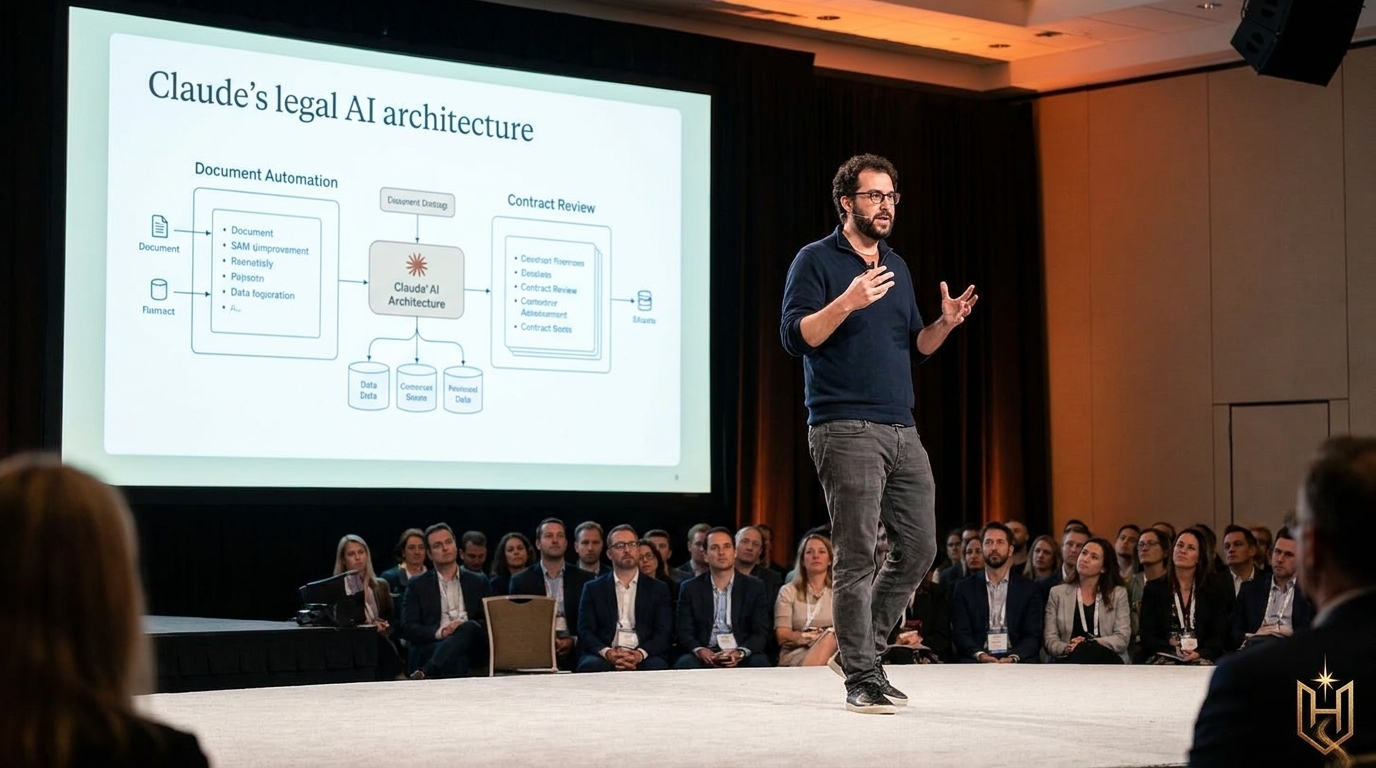
This evolving landscape reached a new milestone with Anthropic's recent announcement, spotlighted by "The Hans India," detailing the expansion of Claude’s legal AI capabilities through specialized plugins for lawyers. This isn't just incremental improvement; it signals a profound re-architecture of legal workflows, pushing the boundaries of what AI can achieve in a law firm.
This strategic push by Anthropic, a key player in the generative AI arena, is set to redefine operational efficiency and strategic decision-making for law firms globally. The introduction of these practice-area-specific plugins for Claude moves beyond generic large language model (LLM) applications, offering tailored solutions for critical legal functions like commercial counsel, employment law, and litigation support.
For firms like Eleanor's, it means the promise of drastically reduced review times, enhanced accuracy in contract analysis, and more robust support for complex legal research. The tension in the market is palpable: firms that embrace these advanced legal AI tools stand to gain a significant competitive edge, while those that hesitate risk falling behind in an increasingly AI-driven legal ecosystem.
As the legal industry continues its rapid digital transformation, understanding the nuances of these new AI offerings is paramount. This comprehensive guide will delve into Anthropic's vision, dissect the functionalities of Claude's latest legal plugins, analyze the competitive landscape, address crucial ethical considerations, and ultimately, provide a roadmap for law firms to leverage these advancements.
The goal is not just to inform, but to equip legal professionals with the knowledge to strategically integrate these powerful AI tools into their practice, ensuring they remain at the forefront of innovation and client service.
The Genesis of a New Era: Anthropic's Vision for Legal AI
Anthropic, founded by former OpenAI research executives Dario Amodei and his sister Daniela Amodei, emerged with a distinct philosophy centered on building safe and beneficial AI. Their "Constitutional AI" approach, which trains AI models using a set of principles rather than extensive human feedback, has positioned Claude as a formidable contender in the highly competitive generative AI space.
This commitment to safety and ethics resonates particularly well within the legal industry, where accuracy, confidentiality, and responsible AI use are non-negotiable. The legal sector, often seen as conservative, is now a key battleground for AI innovation, and Anthropic's measured, principle-driven development has garnered significant trust, attracting substantial investment from tech giants like Google and Amazon, fueling their aggressive expansion into specialized verticals.
The substantial financial backing, including a reported $750 million investment from Amazon in late 2023 and ongoing commitments from Google, underscores the market's confidence in Anthropic's long-term vision and the capabilities of Claude. This capital has enabled the company to invest heavily in research and development, pushing the boundaries of what large language models can achieve, particularly in complex domains like law.
Unlike some rivals that prioritize rapid deployment, Anthropic has focused on deep contextual understanding and reducing 'hallucinations' — a critical factor for legal applications where factual accuracy is paramount. This architectural focus, combined with Claude's impressive context window, allows it to process and analyze lengthy legal documents, contracts, and case files with an unprecedented level of detail and coherence, making it uniquely suited for the intricate demands of legal work.
Before the recent plugin launch, Anthropic had already laid groundwork in the legal tech sector, with various legal tech developers leveraging Claude's API to build specialized applications. These early integrations demonstrated Claude's potential in tasks such as summarizing legal texts, drafting initial legal briefs, and extracting key information from contracts.
Learn more about AI Marketing Revolution 2026: Autonomous Agents for Law Firms. Discussions at events like LegalTech NYC 2026 frequently highlighted Claude's emerging role as a backend engine for sophisticated legal solutions. This foundational work culminated in the strategic decision to launch a dedicated suite of plugins, signaling a direct and focused engagement with the legal market.
This move reflects a broader industry trend where general-purpose AI models are being refined and specialized to address the unique challenges and requirements of specific professional domains, ensuring that the technology is not only powerful but also practically applicable and contextually intelligent for legal professionals.
This expansion is more than just a product launch; it’s a strategic statement from Anthropic about their intent to be a dominant force in legal AI. By providing modular, task-specific plugins, they aim to integrate seamlessly into existing law firm workflows, offering targeted assistance without requiring a complete overhaul of a firm's tech stack.
This approach acknowledges the diverse needs of different practice areas and the varied technological maturity levels across law firms. The ability to plug into specific legal processes means that a firm can adopt AI where it offers the most immediate value, whether it’s in the laborious task of document review or the nuanced process of drafting specific legal clauses.
This targeted strategy positions Claude as an indispensable partner for legal professionals seeking to enhance their capabilities and streamline operations in an increasingly competitive and complex legal landscape.
Deconstructing Claude's Legal Plugins: A Deep Dive into Functionality
The recent unveiling of Claude's specialized legal plugins marks a significant evolution in legal AI, moving from broad capabilities to highly targeted functionalities designed to integrate directly into core legal workflows. These plugins are not merely extensions; they are precision instruments crafted to address specific pain points across diverse practice areas.
For instance, the 'commercial counsel' plugin transforms the way firms handle transactional law. Imagine a scenario where a corporate lawyer needs to draft a complex acquisition agreement. This plugin can analyze existing contracts, identify relevant clauses, flag potential risks based on industry standards, and even suggest alternative wording to optimize terms.
It accelerates the drafting process, ensures compliance, and provides a layer of due diligence that would otherwise require extensive manual review, thereby significantly reducing both time and potential for human error in high-stakes negotiations.
Similarly, the 'employment counsel' plugin offers invaluable support for human resources and labor law practices.
Firms can leverage this tool to quickly review and update employee handbooks, ensuring they comply with the latest federal and state regulations, such as those governed by the Fair Labor Standards Act. The plugin can also assist in drafting sensitive HR communications, analyzing historical case data to predict outcomes in employment disputes, and even generating initial responses to complex employee grievances.
This capability allows employment lawyers to focus on strategic advice and client consultation, rather than spending countless hours on repetitive document generation and policy review. The impact is profound: increased accuracy in legal advice, reduced compliance risks, and a more responsive legal service offering for clients navigating the complexities of labor law.
For litigation-focused firms, the 'litigation support' plugin is a game-changer. Learn more about Legal AI Adoption: An Essential Guide for Discerning Firms. This tool can drastically streamline e-discovery processes by rapidly sifting through vast volumes of documents, identifying relevant evidence, and flagging privileged information. Beyond discovery, it can summarize deposition transcripts, analyze witness statements for inconsistencies, and even help in generating preliminary outlines for opening and closing arguments by identifying key themes and legal precedents.
This isn't about replacing the litigator's judgment, but augmenting it with powerful analytical capabilities that can process data far beyond human capacity. Consider a firm like King & Spalding handling a major class-action lawsuit; the ability to quickly synthesize millions of documents into actionable insights can be the difference between winning and losing, ultimately reshaping the entire litigation strategy and significantly reducing the time and cost associated with large-scale legal battles.
These plugins are designed to integrate seamlessly into existing document management systems and legal research platforms, ensuring a smooth transition for firms adopting them. The goal is to provide a layer of intelligent automation that enhances, rather than disrupts, current practices. By automating the extraction of key data points, identifying contractual anomalies, and summarizing lengthy legal texts, lawyers are freed from the drudgery of routine tasks.
This newfound efficiency translates directly into more time for high-value strategic thinking, client interaction, and complex problem-solving—the very aspects that define a lawyer's expertise. The ability to quickly review, analyze, and generate legal content across these specialized areas positions Claude's plugins as essential tools for any law firm aiming to optimize its operational efficiency and deliver superior client outcomes in today's demanding legal market.
Enhancing Document Automation and Review
One of the most immediate and impactful benefits of Claude's new legal plugins lies in their capacity to revolutionize document automation and review. Traditionally, tasks like due diligence in M&A, contract abstraction for portfolio management, and regulatory compliance checks have been incredibly labor-intensive, often requiring junior associates to spend hundreds of hours manually sifting through documents.
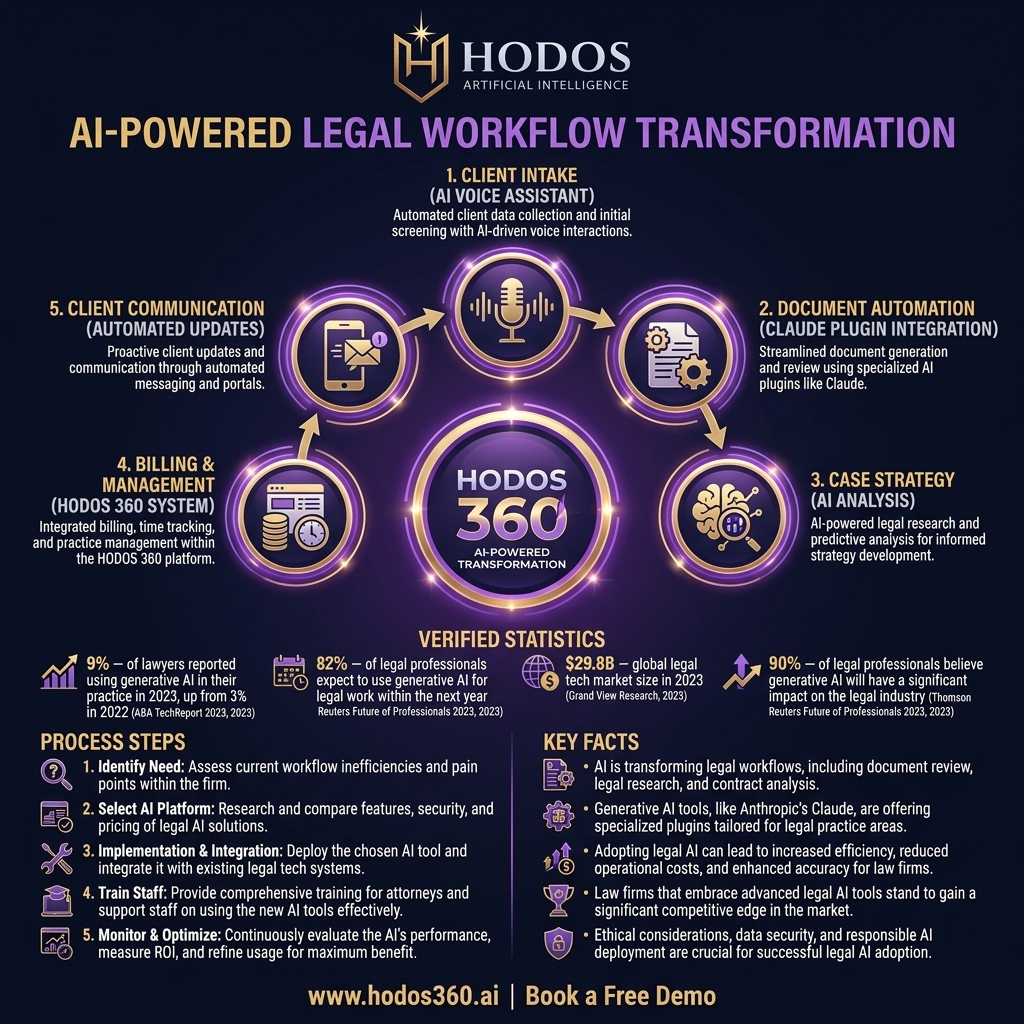
The 'commercial counsel' and 'litigation support' plugins, for instance, can now perform these tasks with remarkable speed and accuracy. They can identify specific clauses (e.g., force majeure, indemnification, governing law), extract key data points (parties, dates, values), and flag deviations from standard templates or regulatory requirements.
This capability drastically reduces the time spent on initial review, allowing legal teams to focus on nuanced analysis and strategic advice from the outset.
Furthermore, the plugins facilitate a more proactive approach to compliance. Learn more about Siri AI Revolution: Essential Legal Voice Assistant Strategies.
Instead of reactive reviews, firms can use Claude to continuously monitor large volumes of contracts against evolving regulatory frameworks. For example, if new data privacy regulations are enacted, the 'commercial counsel' plugin can quickly scan all client agreements to identify clauses that need updating, generating redlines and suggestions for amendment.
This proactive stance not only mitigates risk but also positions the firm as a forward-thinking, value-added partner to its clients. The integration of such robust document automation capabilities means that firms can handle larger volumes of work with existing resources, improve the consistency and quality of their outputs, and ultimately, offer more competitive pricing for routine legal tasks, redefining the economics of legal service delivery.
- ✓Accelerated Document Review: Reduces hours spent on due diligence, e-discovery, and contract analysis by up to 70%.
- ✓Enhanced Contract Drafting: Automates generation of standard clauses and identifies optimal language for complex agreements.
- ✓Automated Legal Research Summaries: Quickly synthesizes vast legal databases into concise, actionable summaries for case preparation.
- ✓Streamlined Client Intake Processes: Uses AI to gather and process client information efficiently, reducing onboarding time.
- ✓Improved Compliance Monitoring: Proactively flags regulatory deviations in documents and suggests necessary updates.
- ✓Data-Driven Case Strategy Support: Analyzes litigation data to identify patterns, predict outcomes, and refine legal arguments.
- ✓Multilingual Legal Assistance: Offers support for legal document processing and communication in multiple languages.
The Competitive Landscape: Claude vs. The Titans of Legal Tech
The legal AI market is a high-stakes arena, marked by intense competition and rapid innovation. Anthropic's push with Claude's legal plugins enters a space already populated by established giants and ambitious startups, each vying for dominance. One of the most talked-about competitors is Harvey AI, backed by OpenAI and famously partnered with elite firms like Allen & Overy.
Harvey's strength lies in its sophisticated generative capabilities, particularly in corporate law, where it assists with everything from contract analysis to regulatory compliance. The rivalry between Anthropic and OpenAI, extending into the legal domain, creates a dynamic tension: will firms opt for the safety-first approach of Claude or the raw generative power championed by Harvey?
This founder rivalry, featuring figures like Dario Amodei and Sam Altman, fuels innovation but also presents a complex choice for law firms evaluating their AI strategy.
Another significant player is Casetext's CoCounsel, which gained considerable traction before its acquisition by Thomson Reuters. This acquisition was a strategic move, integrating CoCounsel's powerful generative AI capabilities into Thomson Reuters' vast ecosystem, including Westlaw and Practical Law.
This represents a different competitive model: a comprehensive, integrated platform versus Anthropic's more modular, plugin-based approach. As legal tech analyst Zach Abramowitz often points out, firms must decide whether they prefer a best-of-breed solution that might require more integration effort, or an all-in-one platform that promises seamless data flow but might lack specialized depth in certain areas.
The market data reflects this divergence, with a recent Thomson Reuters report indicating that while 70% of law firms are exploring AI, the preference for integrated solutions vs. point solutions remains split, showcasing the ongoing market competition.
Established legal tech titans like LexisNexis and Thomson Reuters are not standing still.
LexisNexis has heavily invested in Lexis+ AI, leveraging its enormous proprietary legal databases to offer AI-powered legal research, drafting, and summarization tools. Learn more about AI Marketing: Essential Legal Safeguards for Law Firms. Similarly, Thomson Reuters, beyond its CoCounsel acquisition, continues to enhance its Practical Law AI with generative capabilities, aiming to provide comprehensive solutions across legal research, practice guidance, and workflow automation.
These incumbents possess immense advantages in terms of existing client bases, brand recognition, and decades of curated legal data. The challenge for Claude's plugins, therefore, is not just about superior technology, but about demonstrating compelling value propositions that can either integrate with these existing platforms or offer a sufficiently disruptive alternative.
This market competition ultimately benefits law firms, driving innovation and offering a wider array of sophisticated AI tools to choose from.
The strategic implications of this competitive landscape for law firms are profound. Firms are no longer just choosing software; they are choosing strategic partners that will shape their operational efficiency and competitive posture for years to come.
A recent ABA TechReport on AI adoption highlighted that while 60% of firms are experimenting with AI, only a fraction have fully integrated it into core workflows. This suggests a significant opportunity for solutions like Claude’s plugins that can demonstrate clear ROI and ease of integration.
The market is not just about who has the best algorithms, but who can best understand and serve the nuanced needs of legal professionals, turning powerful AI into practical, ethical, and transformative solutions. The ongoing funding rounds for various legal AI startups, with some exceeding hundreds of millions, further underscores the intense belief in this sector's growth, projecting the global legal tech market to reach tens of billions by 2030, according to McKinsey data.
Navigating Ethical Considerations and Practical Implementation
The integration of advanced legal AI tools like Claude's plugins, while offering immense benefits, also brings forth a host of critical ethical considerations that law firms must meticulously navigate. Foremost among these is the risk of hallucinations, where AI generates factually incorrect or nonsensical information.
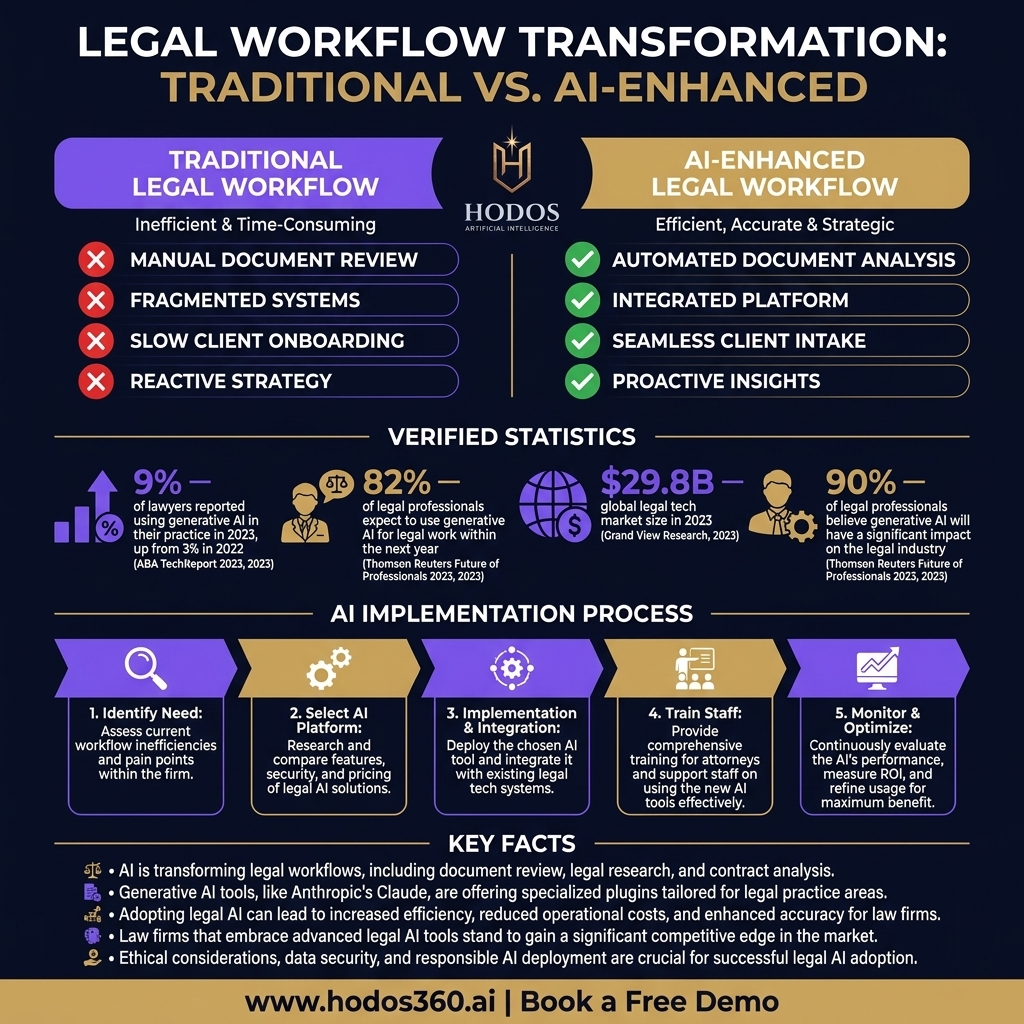
In the legal context, a hallucination could lead to erroneous advice, flawed legal documents, or misinformed strategic decisions, potentially exposing firms to malpractice claims. Lawyers have an unwavering duty of competence under ABA Model Rule 1.1 (Competence), which requires them to provide zealous and accurate representation.
Relying solely on AI output without human review directly contravenes this fundamental ethical obligation. Therefore, firms must implement robust verification protocols, ensuring that all AI-generated content is thoroughly reviewed and fact-checked by a qualified legal professional before it is used or disseminated.
Another paramount concern is data privacy and client confidentiality, governed by ABA Model Rule 1.6 (Confidentiality of Information).
When using cloud-based AI services, firms must ensure that client data is handled with the utmost security and privacy safeguards. This includes understanding how AI providers store, process, and potentially use client information, as well as ensuring compliance with relevant data protection regulations like GDPR and CCPA.
Firms must perform due diligence on AI vendors, scrutinizing their data security policies, encryption protocols, and terms of service. The potential for inadvertent disclosure or unauthorized access to sensitive client information is a significant risk, demanding a proactive and transparent approach to data governance. Firms must also consider the jurisdictional implications of data storage and processing, especially when dealing with international clients or cross-border legal matters.
Beyond these, the issue of algorithmic bias is a pressing ethical challenge. Learn more about AI Voice Assistants: The Essential Tool for Legal Context. AI models are trained on vast datasets, and if these datasets reflect historical biases present in legal records (e.g., racial, gender, or socioeconomic disparities in sentencing or legal outcomes), the AI can perpetuate or even amplify these biases in its recommendations or analyses.
This could lead to inequitable legal advice or discriminatory outcomes, undermining the very principles of justice. Law firms must be aware of the potential for bias, understand the limitations of their AI tools, and ensure that human oversight is always present to counteract any biased outputs.
The evolving regulatory landscape, exemplified by the EU AI Act enforcement, which classifies legal AI as a high-risk system requiring stringent transparency, data governance, and human oversight, underscores the global recognition of these ethical imperatives. Firms that proactively address these ethical dimensions will build trust and ensure responsible innovation.
Practical implementation of legal AI requires a strategic, phased approach rather than a wholesale adoption. Firms should start with pilot programs on specific, well-defined tasks, such as initial contract review or summarizing deposition transcripts, to evaluate the AI's effectiveness and identify potential challenges. Comprehensive training for all legal professionals, from partners to paralegals, is crucial to ensure they understand how to use AI tools effectively, interpret their outputs, and recognize their limitations.
Establishing clear internal policies for AI usage, including guidelines for data input, output verification, and client communication regarding AI assistance, is also essential. This structured approach allows firms to gradually build expertise, refine workflows, and integrate AI responsibly, maximizing its benefits while minimizing risks. The focus should always be on augmenting human intelligence, not replacing it, ensuring that the lawyer remains the ultimate arbiter of legal judgment and advice.
The Role of Human Oversight in AI-Powered Legal Workflows
The notion that AI will entirely replace lawyers is a pervasive misconception. Instead, the advent of tools like Claude's legal plugins firmly establishes a paradigm where AI acts as a powerful assistant, necessitating continuous and rigorous human oversight. This 'human-in-the-loop' approach is not merely a best practice; it is an ethical and professional imperative.
Lawyers are uniquely positioned to provide the nuanced judgment, strategic thinking, and ethical reasoning that AI, despite its advancements, cannot replicate. For example, while an AI plugin can efficiently identify relevant clauses in a contract, only a human lawyer can fully understand the client's specific business context, risk tolerance, and long-term objectives to advise on the strategic implications of those clauses.
Effective human oversight involves several layers. Firstly, lawyers must critically evaluate the inputs provided to the AI, ensuring clarity, completeness, and accuracy. Learn more about Voice AI: Essential Strategies for Law Firms' Future. Secondly, they must scrutinize the AI's outputs, verifying factual accuracy, checking for logical inconsistencies, and assessing the appropriateness of the generated content within the specific legal context.
This includes challenging any AI-generated summaries or drafts for potential biases or omissions. Thirdly, lawyers are responsible for the final legal advice and documents, bearing the ultimate professional liability. This continuous feedback loop—where AI performs the heavy lifting of data processing and initial drafting, and human lawyers provide the critical review, refinement, and strategic direction—is the cornerstone of responsible and effective AI-powered legal workflows.
It ensures that while efficiency gains are maximized, the integrity, quality, and ethical standards of legal practice are uncompromisingly upheld.
Future-Proofing Your Practice: The HODOS 360 Advantage
The legal industry stands at a pivotal juncture, where the strategic adoption of advanced legal AI tools like Claude's specialized plugins is no longer a luxury but a necessity for future-proofing your practice. The insights gleaned from Anthropic's focused expansion highlight a clear trajectory: the future belongs to law firms that can seamlessly integrate powerful AI capabilities into every facet of their operations, from client intake to case management and document generation.
However, the true competitive advantage isn't found in a patchwork of individual tools, but in a cohesive, integrated ecosystem that powers the entire firm. This is where a holistic approach to legal technology becomes indispensable, transforming disparate functions into a unified, intelligent workflow.
For law firms striving to harness the full potential of this technological revolution, a comprehensive solution is paramount.
While Claude's plugins offer specialized power, their true impact is magnified when integrated into a broader, more robust framework. This is precisely the vision behind HODOS 360’s AI Law Firm Management System. Our platform is designed as the central nervous system for the modern law firm, integrating AI-powered case management, sophisticated billing, streamlined client intake, and advanced document automation.
By providing a unified system, HODOS 360 ensures that the intelligence from tools like Claude's plugins can flow seamlessly across all operations, eliminating data silos and maximizing operational efficiency. Imagine a world where client data from an AI Voice Assistant seamlessly populates client intake forms, which then triggers AI-powered legal workflows for document generation, all managed within a single, intuitive system.
The strategic value of an integrated platform extends far beyond mere efficiency. It empowers law firm owners and attorneys to make data-driven decisions, gain deeper insights into practice performance, and allocate resources more effectively. For example, our system's AI-powered legal workflows can not only leverage specialized plugins but also intelligently route tasks, monitor deadlines, and provide predictive analytics on case outcomes and billing realization rates.
This level of comprehensive oversight and automation allows firms to not only keep pace with the rapid advancements in legal AI but to lead the charge, redefining client service and operational excellence. The future of law is interconnected, intelligent, and integrated, and choosing the right partner to navigate this transformation is the most critical decision your firm will make.
Embracing this future means moving beyond the reactive adoption of individual tools to a proactive strategy of building an intelligent, adaptive legal practice. The advancements made by companies like Anthropic with Claude’s plugins are foundational, offering incredible power for specific tasks. However, the ultimate success lies in how these powerful components are orchestrated within a larger, cohesive system.
HODOS 360 provides that orchestration, enabling law firms to not only benefit from the latest AI tools but to transform their entire operational model. By choosing an integrated solution, firms are not just investing in technology; they are investing in a future where efficiency, insight, and innovation converge to deliver unparalleled value to clients and a sustainable competitive advantage in the ever-evolving legal landscape.

Beyond Plugins: A Holistic Approach to Law Firm Transformation
While specialized plugins offer targeted solutions for specific legal tasks, a truly future-proofed law firm understands that isolated tools, no matter how powerful, are only part of the equation. A holistic approach to transformation involves connecting these advanced functionalities within a comprehensive practice management ecosystem.
This ensures that the efficiencies gained in document review, for instance, are not lost due to fragmented client intake processes or inefficient billing systems. An integrated platform fosters seamless data flow, reduces manual data entry errors, and provides a unified view of every aspect of the firm’s operations.
This interconnectedness is crucial for maximizing the return on investment in AI, as it allows insights from one area to inform and optimize others.
This holistic perspective is about creating a symbiotic relationship between advanced AI tools and overarching firm management. It’s about leveraging AI not just for individual tasks, but for strategic insights into practice performance, resource allocation, and client relationship management.
By integrating AI-powered legal workflows with core operational systems, firms can achieve a level of synergy that far surpasses the sum of its individual parts. This enables a firm to be more agile, more responsive, and ultimately, more profitable. It’s a transformation that moves beyond mere technological adoption to a fundamental re-imagining of how legal services are delivered, ensuring the firm remains competitive and relevant in an increasingly AI-driven world.
Frequently Asked Questions
What are Claude's new legal AI plugins?+
Claude's new legal AI plugins are specialized tools developed by Anthropic to enhance specific legal workflows. Examples include 'commercial counsel' for contract analysis, 'employment counsel' for HR compliance, and 'litigation support' for e-discovery and case strategy. These plugins are designed to integrate with existing legal tech stacks, offering targeted AI assistance for complex legal tasks, moving beyond generic LLM capabilities to provide tailored solutions for law firms.
How do these plugins benefit law firms?+
These plugins offer significant benefits by drastically improving efficiency, accuracy, and cost-effectiveness. They automate time-consuming tasks like document review, contract drafting, and legal research summarization, freeing lawyers to focus on high-value strategic work. This leads to faster turnaround times, reduced operational costs, enhanced compliance, and the ability to handle larger volumes of work with existing resources, ultimately improving client service and firm profitability.
Are legal AI tools like Claude safe and ethical for law firms?+
While powerful, legal AI tools require careful ethical consideration. Firms must address potential issues like AI hallucinations, data privacy, and algorithmic bias. Adherence to ABA Model Rules (e.g., Competence, Confidentiality) is crucial, requiring robust human oversight to verify AI outputs. Firms must also vet AI vendors for data security and comply with regulations like the EU AI Act. When used responsibly with strong human oversight, AI can be a safe and ethical asset.
How does Claude compare to other legal AI platforms?+
Claude distinguishes itself with its 'Constitutional AI' approach, emphasizing safety and its large context window, making it ideal for lengthy legal documents. It competes with platforms like Harvey AI (backed by OpenAI), Casetext's CoCounsel (acquired by Thomson Reuters), and in-house AI offerings from LexisNexis and Thomson Reuters. While competitors often offer integrated platforms, Claude's strength lies in its modular, specialized plugins, allowing firms to adopt targeted solutions that integrate into their existing workflows.
What steps should my firm take to adopt legal AI effectively?+
Effective legal AI adoption involves a strategic, phased approach. Firms should begin with pilot programs for specific tasks, provide comprehensive training for staff, and establish clear internal policies for AI usage, including output verification and client communication. Prioritize solutions that offer seamless integration with existing systems and ensure robust data security. The goal is to augment human intelligence, not replace it, ensuring continuous human oversight and ethical compliance throughout the implementation process.